

Inheritance is rarely just about the assets themselves; it is about the memories, the history, and the intention of those who came before us. For my family, that history was etched into the weathered cedar siding of our grandfather’s lakeside cabin. It was a place of fishing trips, summer thunderstorms, and quiet reflection. But as the years passed and the property market skyrocketed, the cabin became more than a retreat—it became a target for my brother, Julian, who viewed the world through the lens of efficiency and quarterly returns.
Julian has always been the ‘successful’ one. He moved to the city, climbed the corporate ladder, and eventually started a hedge fund that, by his own admission, ‘does very well for itself.’ He sees everything—from friendships to family heirlooms—as an investment that needs to yield a specific kind of dividend. When he decided that our shared ownership of the cabin was ‘inefficient,’ he didn’t approach me with a request. He approached me with a demand, weaponizing the very memories he claimed to care about to justify stripping me of my inheritance.
The dilemma started subtly. A casual comment at Thanksgiving about how ‘sad’ it was that the cabin sat empty during the shoulder season. Then, it escalated into a spreadsheet presented at a family dinner, detailing my family’s ‘lack of usage’ compared to his own. It was a calculated move, designed to make me feel like a squatter in my own heritage. But what he didn’t account for was the fact that I wasn’t going to let a balance sheet dictate my right to the place where I learned to swim.
This is a story about the intersection of wealth, ego, and the sanctity of family promises. It is a story about how, when someone believes their success grants them the right to rewrite the rules for everyone else, the only way to preserve your own dignity is to draw a line in the sand that even their lawyers can’t cross. The following pages detail the slow unraveling of a brotherly bond and the bitter confrontation that eventually moved from our living room to the courtroom.
The Spreadsheet of Discontent

The catalyst for our falling out wasn’t a shouting match; it was a laminated document. During a seemingly pleasant Sunday lunch, Julian pulled out a leather-bound folio. He cleared his throat, adjusting his silk tie as if he were presenting to a board of directors rather than his own sister. He claimed he had been ‘analyzing’ the cabin’s maintenance costs and usage logs for the last three years.
He pointed to a red bar on a graph that represented my family’s presence at the lake. ‘Look, it’s not that I don’t value you, Maya,’ he said, his voice dripping with that patronizing calm he saves for people he considers beneath him. ‘But strictly from an asset management perspective, the cost-per-day of your ownership is untenable. You’re essentially subsidizing a ghost town.’
I looked at the data. He had counted every weekend my husband and I had visited, conveniently ignoring the weeks we spent there in the off-season to handle repairs, pressure-washing, and winterizing the roof. To him, if you weren’t there with a cocktail in your hand, you weren’t ‘using’ the cabin. It was an exercise in erasure, designed to make me feel like I was holding up progress.
“I’ve taken the liberty of drafting a buyout agreement. It’s generous, well above market value, and it saves you the stress of property taxes. You really should thank me for making this easy for you.”
— Julian, during the ‘Presentation’
I felt a cold sensation in the pit of my stomach. This wasn’t about money; it was about control. He wanted the cabin to be his personal retreat, a place where he could host clients and impress investors without having to worry about ‘my’ family’s mess or ‘my’ toys in the shed. He wanted the deed to be clean, and he wanted me gone.
I pushed the folder back across the table. My hands were shaking, but my voice remained steady. I told him that I wasn’t interested in his buyout. I told him that the cabin was never about the math; it was about the fact that Grandpa specifically left it to both of us because he knew we needed a place to reconnect, regardless of our professional success.
Julian sighed, looking at the ceiling as if asking for patience from a higher power. ‘You’re being emotional, Maya. And that’s why you’ll never see the bigger picture. This property is rotting away because of your sentimental attachment. I’m doing this for the family. One of us needs to take responsibility for the assets, and you’ve clearly shown you aren’t capable of that.’
The Late-Night Digital Ambush

Things escalated quickly after that lunch. By Tuesday, I was flooded with messages in the family group chat. Julian had invited our cousins and our aunt into the fray, framing his ‘request’ as a logical family decision. He painted me as the obstructionist sister, the one keeping the family from realizing the ‘full potential’ of our legacy.
My phone buzzed incessantly. It was a barrage of text messages, some from relatives who were clearly being coached by Julian. They were using phrases like ‘liquidating stagnant assets’ and ‘investing in our future.’ It was clear he had been working the phones, spinning a narrative that made my refusal look like an act of selfish greed.
“Maya, please just look at the offer. Julian is offering double what the cabin is worth. You could buy a beach house. Why fight over a dusty old shed that you barely visit anymore?”
— Aunt Linda, in the Family Group Chat
I didn’t take the bait. Instead, I sent a screenshot of the original deed and the clause in Grandfather’s will that explicitly stated the cabin was not to be sold unless both parties agreed. I didn’t add any commentary; I simply let the document speak for itself. The silence in the group chat was deafening for a full hour.
Then, Julian messaged privately. The facade of the ‘helpful brother’ crumbled instantly. The text was short, aggressive, and entirely devoid of the polished veneer he had maintained earlier. He wasn’t playing the corporate card anymore; he was showing his true colors. He told me that if I didn’t sign the papers, he would find another way to force me out, legal or otherwise.
I realized then that this was a war of attrition. He was going to use his legal team, his money, and his social influence to wear me down. Every time I looked at my phone, I felt a spike of anxiety. I had to decide: was I going to fold under the pressure to preserve family peace, or was I going to stand my ground for what was rightfully mine?
I started documenting everything. Every email, every text, every ‘offer’ that was actually a threat. I needed a trail of evidence. I reached out to a family law attorney who specialized in property disputes, someone who wasn’t intimidated by men in expensive suits. It was the first step in a long, grueling process of defending my right to exist in my own family’s history.
The Legal Threat and the Hidden Clause
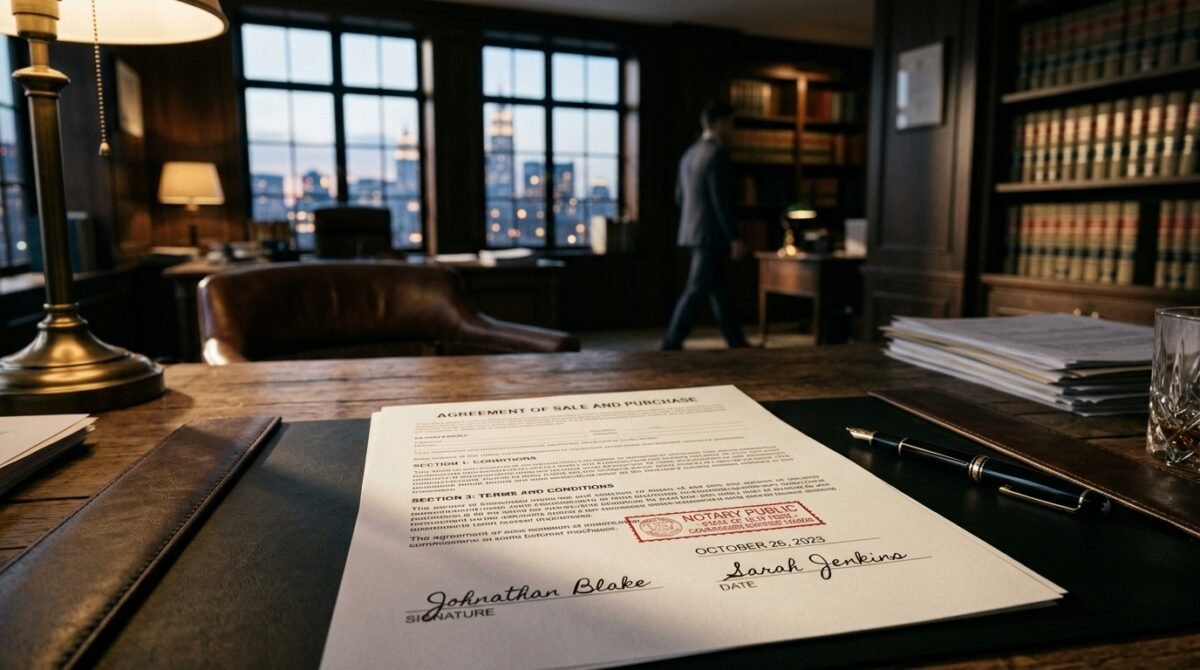
The letter arrived via courier on a rainy Thursday afternoon. It was thick, heavy, and embossed with the logo of a high-priced law firm. Julian wasn’t just posturing anymore; he was weaponizing the legal system. The letter alleged that I had failed to pay my share of ‘significant improvements’—improvements he had authorized without my knowledge or consent.
He was claiming I owed him over $40,000 for a new roof, a high-end HVAC system, and a dock expansion. He argued that since I hadn’t paid these bills, I was in default of our co-ownership agreement. It was a brilliant, albeit malicious, trap. He had essentially force-funded upgrades to the cabin to manufacture a debt I couldn’t possibly pay, thereby forcing a forced sale of my interest.
I sat on my porch, reading the legalese, feeling the walls closing in. He had thought of everything. He knew exactly how to make me look like the deadbeat owner, the one who couldn’t keep up with the maintenance. It was a classic power move by someone who had never been told ‘no’ in his entire life.
“Notice of Default: Your failure to contribute to capital improvements totaling $42,500 constitutes a material breach of the co-ownership agreement. Immediate payment is required to avoid further legal action, including the filing of a partition lawsuit.”
— Excerpt from the formal Legal Demand
But he had made a mistake. He had forgotten about the ‘grandfathered’ maintenance fund. When our grandfather passed, he left a small, dedicated savings account specifically for major repairs—a fund that Julian had assumed control of as the executor. I spent the entire weekend digging through old bank records, and sure enough, the ‘improvements’ had been paid for directly from that fund.
I called my attorney, Sarah, at 8:00 AM on Monday. I told her what I’d found. She laughed—a sharp, cold sound that gave me more confidence than any pep talk ever could. She told me that Julian hadn’t just made a mistake; he had committed potential fraud by claiming my ‘default’ on money that was already accounted for in the estate’s own trust.
The tables had turned. He wanted a legal battle? He was going to get one, and it was going to be fought on the battlefield of his own deceit. We spent the next two weeks preparing a counter-filing that wasn’t just a defense; it was a preemptive strike. I wasn’t just keeping the cabin; I was going to make sure he regretted ever trying to steal it.
The Sunday Dinner Silence
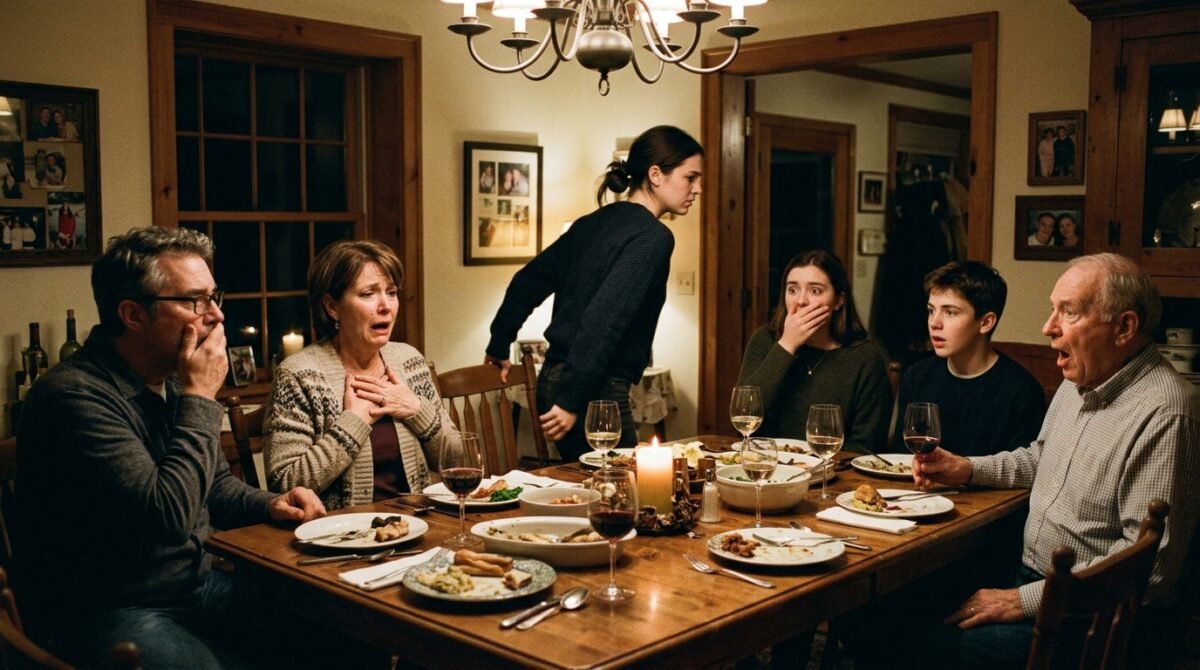
The family dinner was scheduled for a month after the legal threats began. My parents insisted we all get together, hoping that a face-to-face meal would ‘cool the temperature.’ Julian arrived with his usual confidence, his wife by his side, both of them dressed like they were attending a high-stakes charity gala. The tension in the room was palpable, vibrating in the silverware and the forced small talk.
The conversation revolved around everything except the cabin. We talked about the weather, the kids’ school projects, and the local sports team. But every time there was a lull, Julian would look at me with a smirk that said, ‘You’re going to lose.’ He was clearly banking on the fact that I wouldn’t have the guts to bring up the legal mess in front of our parents.
He was wrong. About halfway through the meal, while everyone was passing the roast, I looked him straight in the eye and asked him about the $40,000 ‘debt’ he claimed I owed. The room went silent so quickly it felt like the air had been sucked out. My mother dropped her fork; the sound echoed like a gunshot on the china.
“So, Julian, how does it feel to be the executor of an estate where you’ve been double-billing your own sister for repairs paid for by the trust? I’m sure the tax auditors would love to see that spreadsheet.”
— Me, breaking the silence
Julian’s face turned a shade of pale I had never seen before. He opened his mouth, then closed it, his eyes darting to my father, who was staring at him with a mixture of confusion and dawning realization. Julian tried to pivot, claiming it was ‘just an accounting oversight,’ but the damage was done. The lie was exposed in the light of day.
My father didn’t explode. He was quiet, the kind of quiet that is far more terrifying than rage. He looked at the documents I had brought—the printouts of the trust fund disbursements—and then he looked at his son. ‘Is this true, Julian? Did you try to charge your sister for work the estate already paid for?’
Julian stood up, his chair scraping violently against the hardwood floor. He didn’t answer. He grabbed his jacket, muttered something about ‘family disloyalty,’ and stormed out of the house. The rest of us sat there, stunned, the meal effectively ruined. It was the last time we ever had a ‘normal’ family gathering.
The Reddit Community Weighs In

That night, I felt the need to vent. I sat at my laptop and typed out the entire saga on the ‘Am I The Asshole’ subreddit. I didn’t hold back. I laid out the spreadsheets, the threats, the legal bills, and the final confrontation at dinner. Within an hour, the post had blown up. It wasn’t just a few comments; it was a flood of thousands of people analyzing every aspect of my dilemma.
The support was overwhelming. People from all over the world, many of whom had dealt with ‘wealthy, entitled siblings’ themselves, rallied behind me. They broke down the legal implications, pointing out that what Julian did wasn’t just mean—it was potentially criminal. The collective wisdom of the internet provided me with a roadmap for what to do next.
“This isn’t just about a cabin. It’s about a pattern of behavior. Your brother has spent his life using his money as a weapon. Document everything, block him everywhere, and if he files, you file a counter-suit for harassment and fraud. Do not let him bully you out of your heritage.”
— u/LegalEagleEye (Top Comment, 32.4k upvotes)
Another user noted the psychological aspect: ‘He hates that there’s one part of his life he can’t control. You are his Achilles’ heel because you don’t care about his money, and that terrifies him.’ It was an eye-opener. I had been looking at this as a property dispute, but the internet helped me see it as a boundary issue. I wasn’t just fighting for a cabin; I was fighting for my autonomy.
I spent the next three days reading through the advice. Some suggested selling the cabin just to be rid of the headache, while others urged me to hold on at all costs. The ‘NTA’ (Not The Asshole) verdicts were universal. The validation helped me realize that I wasn’t being ’emotional’ or ‘difficult’—I was being reasonable in the face of an unreasonable person.
I printed out the best advice and kept it in my folder. It served as a reminder that I wasn’t alone. In the isolation of my personal crisis, the internet had become my surrogate support group. It turned the tide of my own internal narrative, helping me shift from a victim of his schemes to a claimant of my own rights.
The Cease and Desist

After the dinner, things went quiet. Too quiet. For two weeks, I heard nothing from Julian. No emails, no texts, no legal threats. I was on edge, waiting for the other shoe to drop. My attorney, Sarah, warned me that he was likely regrouping, perhaps finding a new angle or a different way to pressure me. She recommended we take the initiative.
We drafted a formal cease-and-desist letter. It wasn’t just a polite request for him to leave me alone; it was a document outlining the evidence we had of his fraudulent billing and threatening a report to the state bar association if he continued to use his firm’s resources to harass me. It was a firm, definitive line in the sand.
When he received it, he didn’t call me. He sent an email. It was a masterpiece of passive-aggressive corporate speak, claiming he was ‘deeply disappointed’ in my decision to ‘involve legal entities’ in what he still insisted was a ‘simple family matter.’ He wasn’t apologizing; he was still trying to frame himself as the victim of my ‘unnecessary escalation.’
“I had hoped we could resolve this like adults, but if you insist on a legal path, don’t expect me to be the one reaching out for a compromise later. You are burning bridges that you will eventually need to cross.”
— Julian, in an email to me
I didn’t respond to the email. I forwarded it to Sarah, who filed it under our ‘harassment’ documentation. The act of not responding was the most empowering thing I had ever done. For years, I had felt the need to justify my actions, to explain my side, to try to get him to see reason. Now, I saw the futility of it.
The cabin remained in limbo. I started visiting it again, alone or with my husband. Every time I stepped onto the porch, I felt a sense of ownership that had nothing to do with a deed. It was the feeling of a place that couldn’t be taken away by a spreadsheet or an arrogant brother. I kept the place clean, left flowers on the table, and made sure the history of our grandfather felt present.
Julian’s absence from the cabin felt like a weight being lifted. For the first time in my life, I didn’t feel like a guest in my own home. I felt like the steward of something sacred. The legal battle was still looming, but for the first time, I felt like I was the one holding the winning hand.
The Final Offer

A month later, Julian’s lawyer reached out. It wasn’t another threat. It was a request for a meeting—a ‘mediation session’ to finally settle the issue. He knew that the fraud accusation was a ticking time bomb for his career, and he was clearly desperate to avoid a public trial that would expose his ‘accounting oversights’ to his investors.
I agreed, but on my terms. We met in a neutral office, not at the cabin, not at a family home. I arrived with Sarah, who sat beside me like a fortress. Julian walked in, looking tired. For the first time, the arrogance had faded. He looked like a man who was realizing that his money couldn’t buy his way out of every corner he backed himself into.
He offered to buy me out, but the price was triple his original offer. He also included a clause that would grant me full ownership of another small piece of land Grandfather had owned—an undeveloped plot in the mountains that he had always ignored. He was essentially trying to trade his way out of the disaster he had created.
“Take the money, Maya. It’s more than fair. It’s double the market rate. You can walk away from all of this, and we can keep the family name out of the headlines. Isn’t that what you want?”
— Julian, during the mediation
I looked at the paper. It was tempting. I could take the money, pay off my mortgage, and never have to deal with Julian again. I could wash my hands of the whole mess. But then I looked at the cabin—the memory of my grandfather teaching me how to bait a hook, the smell of the pine trees, the way the light hit the water at sunset.
I realized that if I took the money, I was letting him win. I was letting him commodify my history. I told him no. I told him I didn’t want his money. I wanted the cabin, and I wanted him to renounce his claim to it entirely in exchange for me dropping the fraud accusations. It was a hard pill for him to swallow, but he knew he had no leverage.
The silence in the room was heavy. He knew that if he refused, the next step was a formal complaint to the authorities. He had built his life on his reputation; the thought of it being destroyed over a cabin was finally, truly, terrifying to him. He looked at me, his face a mask of defeat, and he nodded slowly.
The Deed Signed

The process of transferring the deed was long and tedious. There were forms, notary signatures, and months of waiting for the county records office to process everything. But through it all, I didn’t waver. I kept the cabin, and Julian relinquished his share. It felt like a weight had been lifted off my chest, a physical lightness I hadn’t felt in years.
When the final confirmation arrived, I drove up to the cabin alone. I walked through the rooms, touching the old wood of the walls, the stone of the fireplace, the pictures of our grandfather on the mantle. It was mine. Entirely, legally, and spiritually mine. The battle had been brutal, but the victory was complete.
I sent a brief, polite email to Julian, letting him know the transfer was complete and that I hoped he would eventually find the peace he was so clearly lacking. I didn’t hear back, and I didn’t expect to. That was fine. The bridge wasn’t burned; it had simply been allowed to crumble, and I was finally standing on the other side.
“I am glad we could resolve this. I hope you find what you are looking for, even if it isn’t this cabin. I’m moving forward now, and I wish you the best in your own life.”
— My final email to Julian
My parents were hurt by the fallout, but they eventually understood. They saw that Julian’s actions had left me no choice. We still have Sunday dinners, but they are different now. They are quieter, more careful. Julian doesn’t come anymore, and honestly, the relief is palpable. The family dynamic has shifted, but it is a healthier, more honest version of what it used to be.
I learned a lot about boundaries through this. I learned that you cannot reason with someone who treats people as assets. I learned that your history is worth fighting for, even when the person on the other side has all the money in the world. And most importantly, I learned that sometimes, the hardest thing you do for your family is to stop letting them take advantage of you.
The cabin is still there, waiting for the next generation. I’m planning on taking my own children there this summer. We’ll fish, we’ll swim, and we’ll tell stories about our grandfather. We won’t be checking the usage logs, and we won’t be counting the costs. We will just be there, living in the history that I fought so hard to protect.
Conclusion
The story of the cabin was never just about a piece of land. It was about the audacity of entitlement and the strength required to reclaim one’s own narrative. When someone tries to devalue your memories and your heritage with a spreadsheet, remember that you have the right to stand your ground. Wealth is not a free pass to rewrite the rules of family, and your history is not for sale.
I have learned that boundaries are not just for others; they are for ourselves. By setting these boundaries, I didn’t just save a cabin; I saved my peace of mind. I hope this story encourages others to realize that their own stories and their own legacies are worth defending, regardless of who is standing on the other side of the argument.
What would you have done? Would you have taken the buyout, or fought for the deed? Let us know in the comments below. Have you ever had to draw a line in the sand with a family member over an inheritance? We want to hear your stories of resilience.
What's your verdict on this dilemma?
Vote below to contribute to the official community consensus.

Have a Dilemma Keeping You Up at Night?
Share your real-life feud, wedding chaos, or relationship crossroads anonymously with our editorial team.
What do you think ?
0 Comments🛡️ Comments are moderated to protect community integrity. Your comment will appear once approved by the editorial team.