
When my mother passed away, she left me two things: a profound sense of loss and the deed to the family home. My father, grieving and lost, eventually remarried a woman named Linda. For years, I kept my distance, content to let them live in the home I owned while I worked across the state. I thought I had struck a balance of ‘live and let live’ by allowing them to stay in the house rent-free, provided they maintained the property as it was in my mother’s memory.
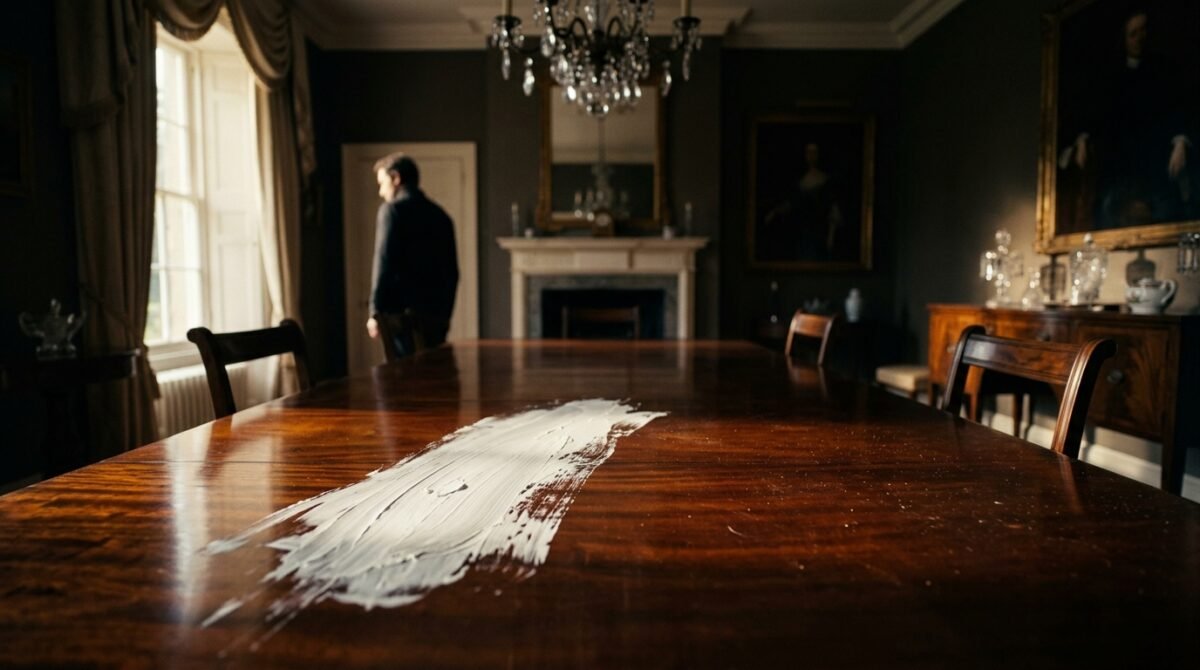
I was wrong. I underestimated the sheer audacity of someone who views another person’s legacy as their own blank canvas. It wasn’t just the house; it was the history. My mother’s dining set—an heirloom mahogany piece from the early 1900s—was the centerpiece of that home. It survived generations, through moves, through my childhood dinners, and through my mother’s final days. That was until Linda decided that ‘antique’ meant ‘outdated’ and took a paintbrush to it.
The phone call I received from my aunt, who stopped by for coffee and found the dining room looking like a DIY disaster, was the catalyst. My blood turned to ice. It wasn’t just a table; it was a violation of a sacred space. I didn’t scream. I didn’t cry. I simply pulled out the original deed and the trust documents that had sat in my safe for five years, and I realized that it was time for the ‘landlord’ to make an appearance.
This story is about more than just furniture. It is about the entitlement that people feel toward assets they didn’t earn, and the moment a daughter stops being a ‘guest’ in her own home and becomes the owner she was always destined to be. When boundaries are repeatedly ignored, the only language left to speak is the one written in ink and law.
The Morning the Mahogany Died
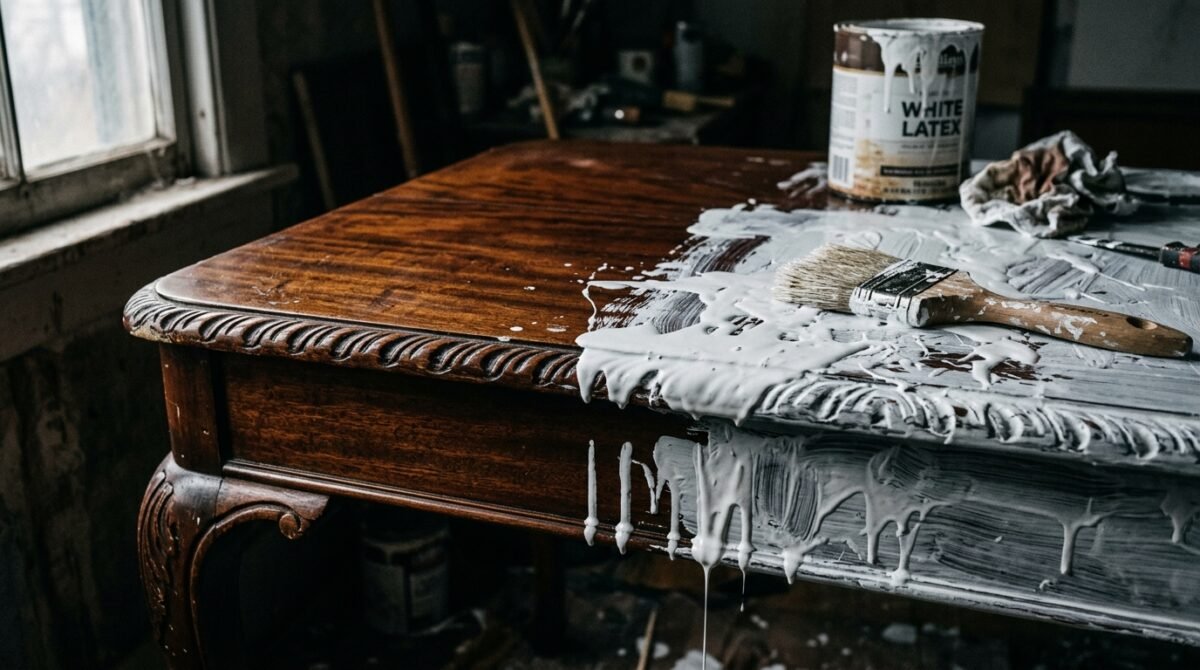
The message from my Aunt Sarah was short and sharp, lacking the usual pleasantries she reserved for our Sunday morning chats. She had dropped by the house to drop off a plant, expecting to see the warm, dark-toned dining room my mother had cultivated for decades. Instead, she was greeted by the smell of toxic fumes and the sight of a half-finished, sloppy ‘shabby chic’ paint job.
Linda had apparently decided that the rich, dark mahogany was too ‘heavy’ for her aesthetic. She had sanded down the intricate grain, ignoring the hand-carved details, and slapped on a coat of cheap, chalky white paint that was already peeling at the corners. The chairs were scattered across the floor, their velvet upholstery stained with white droplets.
“I just walked in, and I literally gasped. She’s turned your mother’s table into something you’d find at a clearance bin at a thrift shop. The wood is ruined, honey. She didn’t even use primer.”
— Aunt Sarah, via phone
I felt a physical pain in my chest. That table had survived the Great Depression, two moves, and the wear and tear of a growing family. It was the place where I did my homework, where we celebrated holidays, and where my mother took her last breath while holding my hand. To see it treated like a piece of garage sale junk was beyond insulting.
I sat on my office floor, staring at the wall, feeling a cold, clinical anger replace my grief. I had been too lenient. I had allowed Linda to treat the house like her own personal laboratory because I wanted my father to be happy in his twilight years. But this wasn’t about style; it was about erasing my mother’s existence from the only place that truly mattered.
I didn’t call Linda. I didn’t call my father. I went to my safe, retrieved the folder marked ‘Estate,’ and looked at the deed. My name was the only one on it. My father had a life estate, but that estate was predicated on the maintenance of the property. I realized then that I had been playing the role of a supportive daughter when I should have been acting as the legal owner.
The Confrontation in the Kitchen
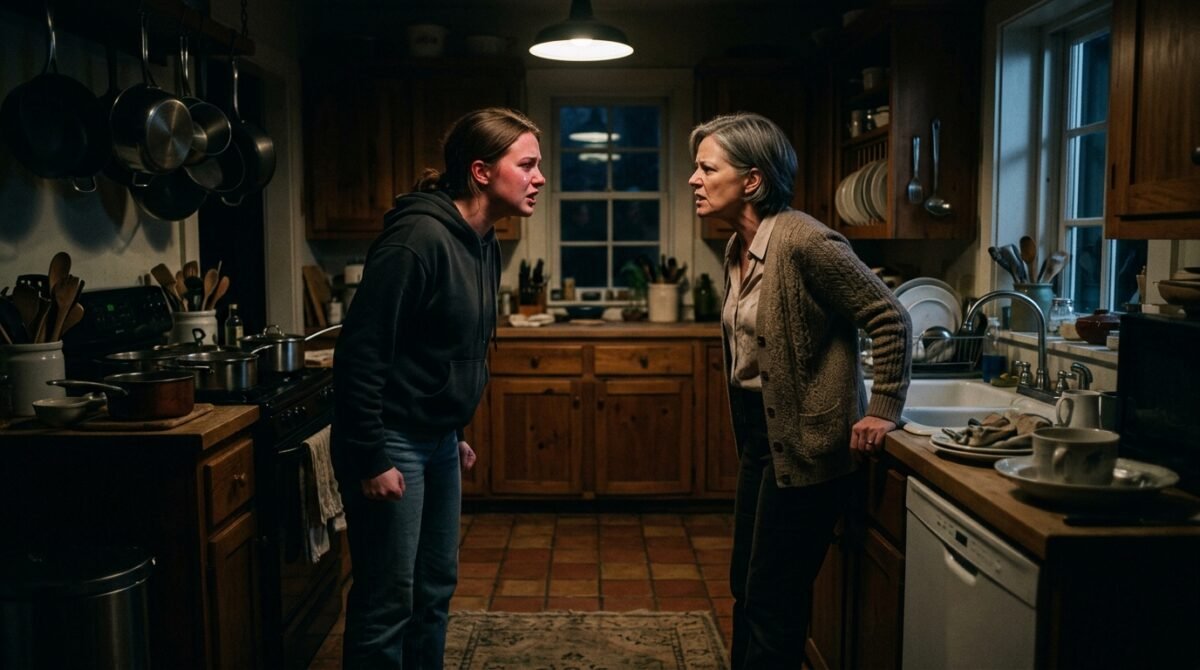
I drove the three hours home in a state of icy detachment. I didn’t announce my arrival. I walked through the front door, the key feeling heavy in my palm. The house was quiet, and the smell of paint thinner was overwhelming. I walked directly to the dining room, where the table sat like a wounded animal, stripped and covered in white smears.
Linda was in the kitchen, humming to herself, looking pleased with her handiwork. When she saw me, her expression shifted from surprise to annoyance, as if I were a child coming home past curfew. She didn’t even look guilty. She looked like she expected a compliment for her ‘hard work.’
“Oh, you’re here early. I wanted to surprise you! Doesn’t the room feel so much lighter? I’ve been meaning to do this for months. That dark wood was just so depressing. It’s a complete refresh!”
— Linda, in the kitchen
I looked at her, then back at the table. I walked over and touched the wet paint, my fingers coming away sticky and white. I didn’t raise my voice, which seemed to unnerve her more than if I had started screaming. I asked her calmly why she thought she had the right to alter an heirloom that wasn’t hers.
She laughed, a brittle, dismissive sound. She told me that since she lived there, she should be able to make it feel like ‘her home.’ She argued that ‘things are just things’ and that I was being overly sentimental about furniture that was clearly destined for the dump if it wasn’t updated. She was completely blind to the reality of the situation.
My father walked in then, looking tired. He tried to mediate, telling me that we could just paint over it if I was so upset, but he didn’t understand. The wood was permanently scarred. The grain was gone. The history had been sanded away. I looked at him and told him that he had allowed this to happen in the house that belonged to his late wife, and that silence was complicity.
The Deed and the Deadline
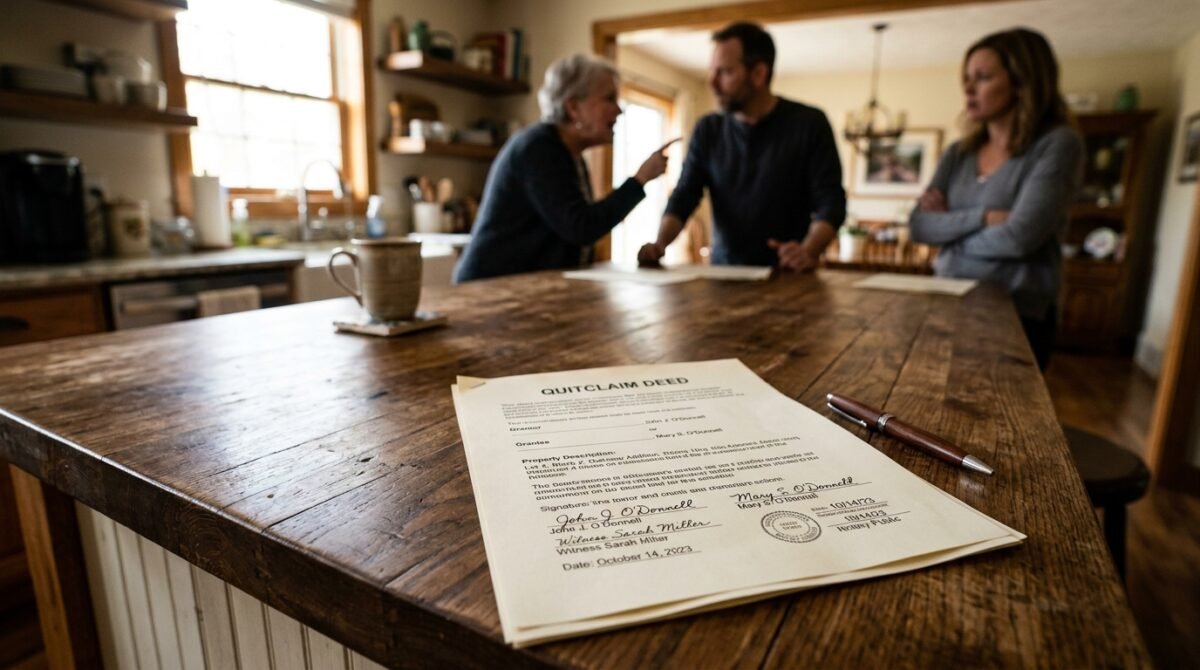
The next morning, I laid out the facts. I had called a furniture restoration expert earlier that evening, and the quote to repair the damage was astronomical—if it could even be repaired at all. The antique value was effectively destroyed. I pulled out the deed and placed it on the island. The silence in the house was heavy, broken only by the ticking of the grandfather clock in the hall.
I explained to them that I had been acting as an absentee landlord, but that the lease—if one could call it that—was conditional. I told them that the destruction of the table was a breach of the trust I had placed in them to maintain the home. I wasn’t going to evict them, but I was going to change the rules of the living arrangement drastically.
“This house is in my name. The furniture was specifically left to me in the will. You have treated both with total disregard. From this point forward, there will be no more ‘renovations’ without my written consent. Furthermore, you will pay for the professional restoration of this dining set, or I will initiate the process to reclaim possession of this house.”
— My ultimatum to Linda and Father
Linda turned bright red. She shouted that I was acting like a tyrant, that I was holding them hostage in their own home, and that I was trying to control her life. She claimed she didn’t know the table was worth anything, which I knew was a lie—she had commented on its value at least a dozen times over the years.
My father looked devastated, but he didn’t defend her. He sat there, staring at the paperwork, realizing for the first time that his daughter had grown into a woman who wouldn’t be swayed by his excuses. He realized that the house wasn’t his, and the power dynamic had shifted entirely within the span of a single conversation.
I left the house that afternoon, leaving them with a list of demands and a firm deadline. I didn’t say goodbye to Linda. I looked at my father and told him I loved him, but that the house needed to be a sanctuary, not a place where my mother’s memory was being erased by someone who didn’t respect it.
Leaked Texts and Family Fallout

By the time I reached my apartment, the family group chat was already blowing up. Linda hadn’t wasted a second. She had painted me as the villain, the ‘evil stepdaughter’ who was threatening to throw her father out on the street because of a ‘silly old table.’ She had sent screenshots of my texts to my aunts, uncles, and cousins, hoping to rally the troops.
“Can you believe she’s threatening to evict us over a piece of furniture? She’s clearly power-tripping and trying to punish me for trying to make the house nice. I’ve been living here for years and this is how she treats me!”
— Linda, in the family group chat
The responses were mixed. Some of my cousins, who didn’t know the full story, were shocked that I would threaten eviction. Others, who knew the history of the table and my relationship with my mother, were rightfully furious at Linda for touching it. The group chat quickly devolved into an all-out war of words, with people taking sides I didn’t even know existed.
I didn’t engage. I knew that jumping into the fray would only validate her narrative that I was ‘unhinged.’ I watched the messages pile up—accusations of greed, of being cold-hearted, and of holding onto the past to hurt my stepmother. It was exhausting to watch people who hadn’t visited the house in years weigh in on the ‘aesthetic choices’ of a room they hadn’t seen in a decade.
Finally, my Aunt Sarah stepped in. She posted a photo of the table before the painting and a photo of what it looked like now. The difference was stark. The ‘before’ photo showed a beautiful, cared-for antique; the ‘after’ photo looked like something from a nightmare. The group chat went silent for a moment before someone finally pointed out that paint doesn’t belong on heirloom wood.
I felt a strange sense of vindication, but it was hollow. I didn’t want this drama. I wanted my mother’s table back, and I wanted to know that my father was living in a place that honored the life they had built together. Instead, I had become the villain in a soap opera I never auditioned for, all because a woman wanted to play interior designer with someone else’s heritage.
The Professional Restoration Assessment

I hired a specialist in antique furniture restoration to provide a formal assessment. He spent four hours at the house while Linda stood in the doorway, arms crossed, tapping her foot. The expert’s face was a mask of professional disappointment as he examined the damage. He wasn’t just looking at the paint; he was looking at the chemical reaction between the low-quality latex and the original finish.
He explained that the sanding had been done with too coarse a grit, gouging the wood in several places. The ‘shabby chic’ style, as Linda called it, had destroyed the integrity of the mahogany. He estimated that the restoration would cost north of $6,000, and even then, there was no guarantee that the original luster could be fully restored to its pre-damage condition.
“The wood has been compromised, miss. It’s not just a surface issue. The sanding has removed the patina that takes decades to develop. You can strip it, yes, but the character of this piece is permanently altered. It’s a tragedy, honestly.”
— Professional Restorer
Linda tried to interrupt, claiming that he was being dramatic and that she could ‘fix it’ with a bit of wood stain. The restorer looked at her, his expression pitying, and told her that her amateur attempt was exactly what caused the problem in the first place. My father looked at the floor, his shoulders slumped. He looked older than he had the day before.
I handed the invoice to my father. I told him that I didn’t care where the money came from, but it would be paid. I told him that my relationship with them was contingent on the respect they showed for the property. I wasn’t just protecting a table; I was drawing a line in the sand regarding my boundaries. If they couldn’t respect the table, they wouldn’t respect me.
The tension in the house was thick enough to cut with a knife. As the restorer packed his tools, I felt a strange sense of clarity. This wasn’t about the money, and it wasn’t even about the table anymore. It was about the fact that I had allowed myself to be pushed around for years, and now, for the first time, I was standing my ground.
The Reddit Community Weighs In

I decided to take the story to the internet, specifically the AITA community, because I needed to know if I was losing my mind. I wrote a post detailing everything—the table, the history, the unauthorized ‘makeover,’ and the legal steps I took. I didn’t sugarcoat it. I laid out the facts and asked the question that had been haunting me: Was I the asshole for enforcing the deed?
Within an hour, the post had thousands of comments. The response was overwhelming. It wasn’t the ‘you’re the villain’ response I feared. It was a massive wave of support. People weren’t just focusing on the table; they were focusing on the boundary violations that had been occurring for years. The internet, in all its chaotic wisdom, seemed to agree that the table was just the tip of the iceberg.
“NTA. Your stepmother treated your property like it was her own, and she destroyed a family heirloom in the process. You are the landlord, and you have every right to expect your property to be maintained. She’s mad because for the first time in her life, someone told her ‘no’ and backed it up with the law.”
— u/PropertyRightsAdvocate (Top Comment, 32.5k upvotes)
There were hundreds of comments like that. Some people shared their own stories of family members destroying heirlooms, others offered legal advice on how to protect my assets, and a few even suggested I start charging rent to cover the potential damage. It was validating, but it also made me realize how common this type of behavior was. It wasn’t just me.
The community also pointed out the ‘gray areas.’ Some people suggested that I should have been clearer about my boundaries earlier. They argued that by letting them live there for free for so long, I had inadvertently sent the message that the house—and everything in it—was communal property. It was a fair point, one that stung but provided a necessary perspective.
I spent the entire evening reading through the threads. It was a surreal experience, seeing my life laid out in comments. People were debating the nuances of property rights versus familial obligations, and for a few hours, the chaos of my life was distilled into a logical, albeit heated, online discussion. It gave me the strength to stay the course.
A Father’s Realization

A few days after the post, my father called. He didn’t sound angry or defensive. He sounded tired. He told me that he had read the comments—not mine, but the situation he had been put in. He told me that he finally understood why I was so hurt. He confessed that he had been so focused on ‘keeping the peace’ between his wife and his daughter that he had completely ignored the fact that he was a guest in my home, too.
“I’ve been so worried about Linda’s feelings that I forgot to protect the things that mattered to you. I see now that the table wasn’t just furniture. It was the only tangible thing left of your mother that you felt you still had a say in. I’m sorry I let it get this far.”
— My father, over the phone
I wept. It was the first time he had truly acknowledged my pain without trying to minimize it or pivot to Linda’s perspective. It was a breakthrough, but it didn’t solve the damage. The house still felt strained, and the relationship between Linda and me was irrevocably changed. I realized that my father was a man caught between two worlds, and for the first time, he was choosing to see the reality of his situation.
He told me that he had put the money for the restoration in an escrow account. He wanted to make it right, even if Linda was still furious. He told me that she had been ‘giving him the silent treatment’ for days, but that he didn’t care. He was more concerned about our relationship. It was a small step, but it felt like a monumental shift.
I felt a burden lift from my shoulders. The anger I had been carrying wasn’t about the table anymore; it was about being seen. And by finally having that conversation with my father, I felt like I was being seen. The damage to the table was a tragedy, but the conversation with my father was the beginning of a repair that was far more important.
The Aftermath of the Restoration

The restoration took six months. During that time, I visited the house only once. I didn’t speak to Linda. I communicated with my father exclusively, and we kept our discussions focused on the repair progress and the logistics of the house. The tension was still there, but it was a quiet, cold tension rather than an explosive one. It was a stalemate, but one that I was winning.
When the table was finally returned to the house, it looked better than I had expected, but it was still different. The restorer had done a masterful job, but you could still see the faint outlines of the damage where the wood had been deeply gouged. It was a permanent reminder of the day everything changed. I stood in the dining room, looking at the table, and I felt a strange sense of peace.
Linda didn’t come into the room. She stayed in the bedroom, which I took as a victory. The house felt like it was finally breathing again, even if the atmosphere was still heavy. I knew that things would never go back to how they were, and in some ways, that was for the best. I wasn’t the girl who let things slide anymore.
I realized then that this entire saga had been a rite of passage. I had transitioned from a child living in the shadow of my mother’s legacy to an adult owner who demanded respect for that legacy. I had learned that my boundaries weren’t ‘punishments’ for others; they were the scaffolding that held my life together. And I had learned that if someone doesn’t like those boundaries, that is a reflection of their character, not mine.
Lessons in Ownership

The experience taught me that we often allow people to violate our boundaries because we are afraid of the conflict that comes with enforcing them. We think that if we are ‘kind’ and ‘accommodating,’ people will respect us. But true respect is earned, not just given. And in the case of my home and my mother’s furniture, I had been giving away my respect for free for far too long.
I started attending therapy to navigate the complexities of my relationship with my father and the resentment I felt toward Linda. It helped me realize that my anger wasn’t just about the paint; it was about the years of feeling like my feelings were secondary to the comfort of others. I began to set boundaries in other areas of my life, too—at work, in my friendships, and in my dating life.
“Setting boundaries is not about being mean or controlling. It is about defining what you are willing to accept and what you are not. When you fail to set a boundary, you are teaching people how to treat you.”
— My therapist, during one of our sessions
I feel stronger now. I am no longer the person who waits for others to respect me; I am the person who creates the space for that respect to exist. The dining room table is still in that house, but it is no longer the center of my life. I have moved on, and in doing so, I have found a sense of freedom that I never thought possible.
I still own the house, but I am currently looking into selling it. I realized that the house itself, while beautiful, is tied to too much history—both good and bad. I want to start fresh in a place that is entirely mine, a place where I don’t have to fight to protect my past from people who don’t understand its value. It is time to let go, truly.
Reflecting on the Community’s Impact

The Reddit thread is still active, occasionally getting new comments from people who have just discovered it. It has become a place for people to share their own stories of family boundary violations. It is heartening to see that so many others are finding the courage to speak up and protect what belongs to them. The community provided a mirror for my own situation, and I am grateful for that.
I learned that when you put your story out into the world, you lose control over it, but you gain a community. I am no longer the only one who has dealt with an ‘entitled stepmother’ or a family that values ‘peace’ over justice. There is a strange comfort in knowing that you are not alone, that your experiences are shared, and that your pain is valid.
I have stopped checking the thread as often as I used to. The initial need for validation has passed, replaced by a quiet confidence in my own decisions. I have done what I needed to do, and the consequences—while difficult—were necessary for my growth. I am the owner of my own destiny, and that is a much more valuable possession than any piece of furniture.
For those who find themselves in a similar situation: don’t wait until the paint is dry. Set your boundaries early, communicate them clearly, and be prepared to enforce them. You are the architect of your own life, and you don’t owe anyone access to your legacy if they aren’t willing to protect it with the same reverence that you do.
Conclusion
My journey from a silent, resentful daughter to a firm, decisive owner wasn’t easy, but it was essential. The heirloom dining table, once a symbol of my mother’s life and my own lack of boundaries, has now become a symbol of my transition into adulthood. It is a reminder that we are the guardians of our own stories, and we have the right to curate the people and the things that occupy our space.
If there is one thing I want the readers to take away from this, it is that you are allowed to be the ‘villain’ in someone else’s story if it means being the hero of your own. Boundaries are not just for others; they are a promise we make to ourselves. When we break that promise, we lose a little bit of who we are. I am done losing pieces of myself.
What about you? Have you ever had to enforce a hard boundary with a family member or step-parent that changed the trajectory of your relationship? Did you regret it, or was it the liberation you needed? Let’s keep this conversation going in the comments below—I want to hear your stories of boundary setting, inheritance drama, and the difficult art of standing up for yourself.
What's your verdict on this dilemma?
Vote below to contribute to the official community consensus.

Have a Dilemma Keeping You Up at Night?
Share your real-life feud, wedding chaos, or relationship crossroads anonymously with our editorial team.
What do you think ?
0 Comments🛡️ Comments are moderated to protect community integrity. Your comment will appear once approved by the editorial team.