
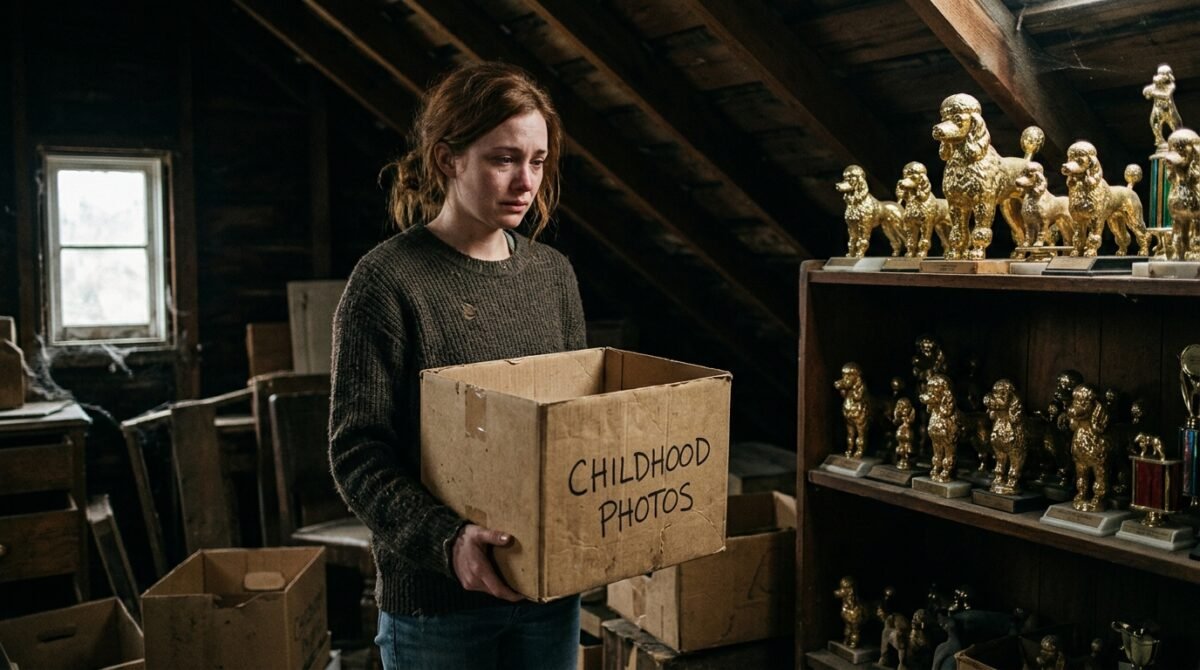
Growing up, my childhood was defined by a small, wooden trunk tucked under my bed. Inside were the tangible fragments of a life before the divorce: polaroids of my mother, handwritten notes from my grandmother, and the messy, amateur drawings that charted my growth from a toddler to a teenager. These weren’t just scraps of paper; they were my anchor. When my father remarried three years ago, I was cautious, but I tried to be welcoming. I never anticipated that my presence in his life would become an inconvenience to his new wife, Brenda.
Brenda had a singular obsession: her prize-winning Standard Poodles. Her home—which had once been my childhood sanctuary—slowly transformed into a shrine for dog grooming supplies, kennel crates, and an ever-expanding collection of gaudy, gold-plated show trophies. I thought I had struck a bargain when I moved out for college, leaving my trunk in the attic of my father’s house. I assumed that space was safe, a neutral zone between the life I had known and the new reality my father was building with a woman who viewed my existence as a lingering ghost of his past marriage.
The betrayal didn’t happen overnight. It was a slow, systematic erosion of my space. It started with small comments about ‘decluttering’ and ‘modernizing the aesthetic’ of the house. I had no idea that behind my back, Brenda was conducting a ruthless purge of anything that didn’t fit her curated vision of a suburban dog-show paradise. The moral dilemma here isn’t just about objects; it’s about the erasure of a person’s history in their own family home.
When I finally returned home for a weekend visit, I went to the attic to find a specific picture for a project. The trunk was gone. In its place stood a floor-to-ceiling display cabinet, glowing under spotlights, housing rows of plastic and metal poodle figurines. My heart stopped. I felt a cold, sharp dread that I couldn’t articulate. I didn’t just lose photos that day; I lost my sense of belonging in the only house I had ever called home.
This is the story of how I confronted them, the gaslighting that followed, and why I eventually had to make the hardest decision of my life: cutting off the man who traded his daughter’s memories for canine trinkets. It is a story about the true cost of setting boundaries when the people you love refuse to respect the space you occupy in their lives.
The Empty Trunk in the Attic
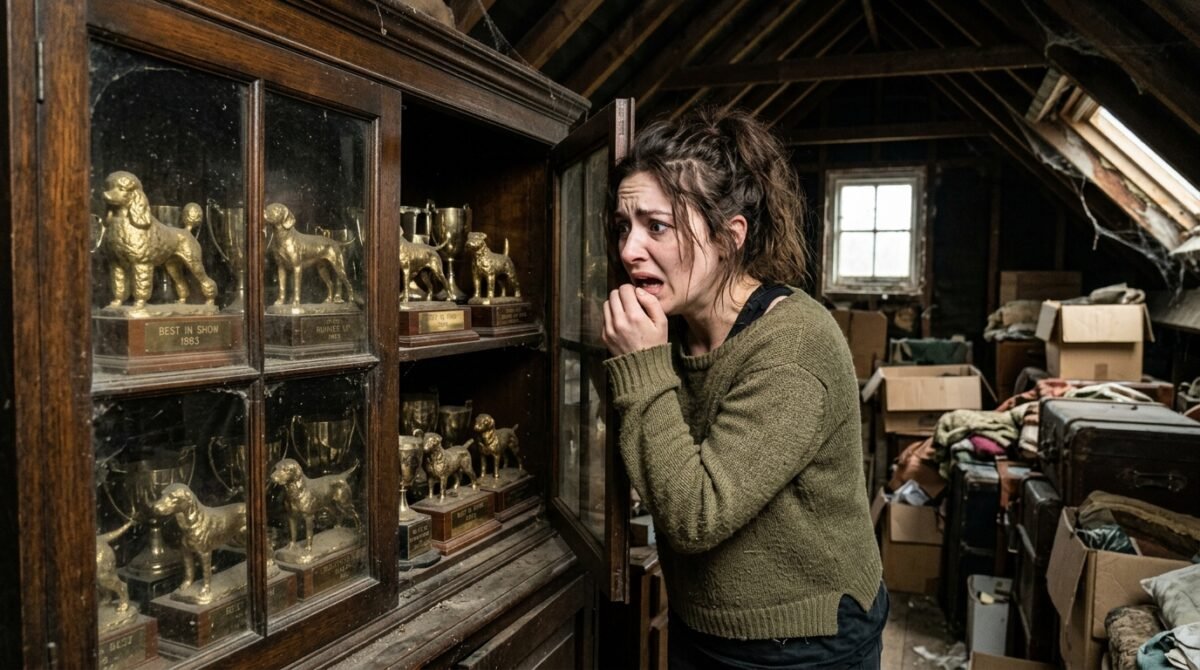
I remember the sound of my own footsteps on the attic stairs. It was a dusty, familiar creak that usually brought a sense of comfort. I had come home for a quick weekend trip, hoping to find a photo of my mom from my third birthday party. I had been planning a tribute video for her upcoming memorial anniversary, and that specific picture felt like a missing piece of the puzzle. I pushed the attic door open, the light filtering through the small circular window in the eaves, illuminating dust motes dancing in the air.
The space looked different. The boxes I had organized meticulously before leaving for my freshman year were pushed into the corners, shoved aside like trash. And there, where my trunk had sat for fifteen years, was a monstrosity of a display cabinet. It was glass-fronted and locked, filled with shimmering, gold-plated poodle trophies. Every single one was engraved with names like ‘Champion Duchess’ or ‘Best in Show: Fifi.’
I felt the blood drain from my face. I searched frantically, pushing aside a box of old winter coats and a stack of my father’s old college textbooks, but the wooden trunk was gone. I stood there, paralyzed, the silence of the house suddenly feeling heavy and suffocating. My hands were shaking so hard I had to grip the railing to keep from stumbling. I knew exactly where those photos were, or rather, where they weren’t.
“Brenda? What happened to the trunk that was here? The one with all my childhood stuff in it?” I shouted down the stairs, my voice cracking with a mix of fury and disbelief.
— Me, confronting the new reality
Brenda appeared at the bottom of the stairs, wiping her hands on a towel. She looked annoyed, as if I were interrupting her afternoon schedule. She didn’t even look up at me properly, her gaze fixed on a stray dog hair on her sleeve. Her response was chillingly casual, a dismissal that felt like a slap in the face.
“Oh, that old thing? It was taking up way too much room,” she said, not missing a beat. “I needed space for the trophy display, and that trunk was just full of clutter. I didn’t think you’d miss it, honestly. You’ve been gone for months. Who holds onto that kind of junk forever?”
The Discarded History
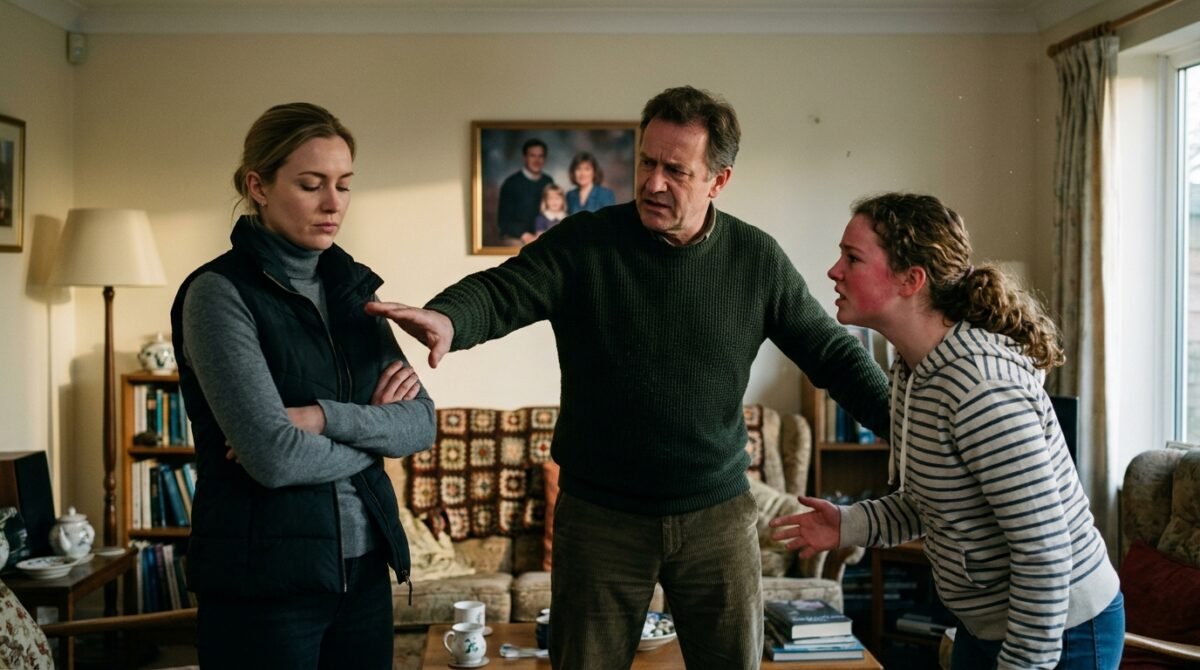
I couldn’t believe what I was hearing. ‘Clutter.’ She called my mother’s voice, my own baby pictures, and the records of my life ‘clutter.’ I marched down the stairs, ignoring the way she tried to brush past me to get back to the kitchen. I wanted to scream, but instead, I found myself strangely calm, a cold, hard knot forming in my chest. My father walked into the living room, holding a leash, looking between us with a confused expression. He was clearly trying to stay out of the line of fire.
“Brenda, where is the trunk?” I demanded again, my voice low and steady. “Those were my personal belongings. You had no right to touch them, let alone throw them away. Tell me exactly what you did with the contents of that trunk.”
Brenda rolled her eyes, looking at my father as if I were having a tantrum. “I didn’t ‘throw them away,’ per se. I put the stuff in the donation bin behind the community center. It was mostly just old papers and blurry photos anyway. I replaced them with something that actually brings value to this household. You should be happy I made the place look presentable.”
“You donated my childhood? You gave away my mother’s photos to a bin because you wanted to show off your dogs?” I was trembling now, the reality of her cruelty hitting me like a physical blow.
— My confrontation with Brenda
My father finally spoke, his voice weak and apologetic, as if he were trying to mediate a minor disagreement about dinner plans. “Honey, let’s not blow this out of proportion. Brenda just wanted to make the attic a nice space for the grandkids. We didn’t realize those specific photos were so important to you. We can go look at the bin if you really want, but it’s been three weeks, Sarah.”
The air in the room felt vacuumed out. ‘Three weeks.’ She had waited for me to leave and systematically erased me. My father’s complicity, his desire to avoid conflict with his new wife at the expense of his own daughter, was the sharpest part of the betrayal. He wasn’t even angry at her; he was just annoyed that I was making him uncomfortable.
The Digital Breadcrumb Trail

That night, I couldn’t sleep. I sat in the guest room, the house feeling like a tomb. I kept replaying the conversation in my head. Something didn’t sit right with the ‘donation bin’ story. Brenda was too meticulous, too obsessed with her image to just drop my things in a random bin. I pulled out my phone and did something I had never done before: I checked the shared family cloud account that my father had set up years ago.
I wasn’t surprised to see that Brenda had been syncing her own devices to it. I dug through the folders, scrolling past hundreds of photos of poodles in silly costumes. And then, I saw it. A folder labeled ‘Attic Purge.’ My heart started racing. I clicked on it, and there were photos of my trunk, open and empty. There were also screenshots of text messages between her and her sister.
“Finally got rid of that junk. The house feels so much lighter without her ‘history’ haunting us. The trophies look perfect where that dusty old box used to be. Don’t tell Bill I tossed the photos, he thinks they were donated. Let him think I’m a saint. #PoodleQueen #NewBeginning”
— Leaked text message from Brenda’s phone
The screen blurred as my eyes welled up with tears. She didn’t donate them. She had trashed them. She had enjoyed the act of destroying my past, treating it like a chore she was proud to finish. The hashtag, the flippant tone—it was all there, recorded for posterity. I took screenshots of everything, my fingers shaking as I saved the evidence to a private, encrypted drive.
This wasn’t just a mistake or a misunderstanding. This was a calculated act of malice. She had lied to my father, and he had blindly accepted it because he was too afraid to confront the woman he had chosen to marry. I felt a strange sense of clarity. The family I thought I was defending no longer existed. It had been replaced by a trophy case and a series of lies.
I spent the rest of the night planning my exit. I didn’t want to cause a scene in the morning, but I knew I couldn’t stay under that roof for another day. I packed my small bag, leaving behind the things I had kept in the guest room, and wrote a short, cold note for my father. It wasn’t an apology; it was a resignation from his family.
The Fallout on Social Media

I didn’t wait for a confrontation. I left before sunrise, leaving the note on the kitchen counter. I drove back to my apartment, the silence of the highway mirroring the numbness in my soul. By noon, my father was blowing up my phone. I didn’t answer. I knew exactly what he would say—that I was being dramatic, that Brenda was just trying to help, that family ‘moves on.’
I decided to go public, not to seek attention, but to force them to look at what they had done. I posted the screenshots of the texts on a throwaway account on a local community forum, asking for advice on how to handle the loss of sentimental property. The response was immediate and overwhelming. People were horrified. Within hours, the post had gone viral, reaching thousands of people who were equally disgusted by the blatant disregard for my history.
The comment section became a battleground of support for me and vitriol for Brenda. People were tagging my father’s workplace, calling out the behavior, and demanding to know how a parent could allow such a thing. It was messy, and it was painful, but for the first time in three years, I felt like someone was listening. I wasn’t just ‘the stepdaughter’ anymore; I was a person who had been wronged.
“You aren’t being dramatic. Your father allowed a stranger to destroy your identity in your own home. Do not forgive this. Go no-contact immediately. This isn’t just about photos; it’s about the fact that he values his current wife’s petty whims over his child’s history.”
— u/FamilyLawyer4Life (Top Comment, 18.2k upvotes)
Brenda tried to spin the story, posting a picture of her poodles on her own profile with a caption about ‘negativity’ and ‘jealous people,’ but the damage was done. The community had seen the receipts. The screenshot of her text message became a meme, a symbol of everything that was wrong with entitled, boundary-crossing stepparents. My phone continued to buzz, but I turned it off, finally finding a shred of peace.
My father sent me a final message that evening. It wasn’t an apology for the loss of the photos. It was an angry demand to take down the post, claiming that I was ruining their reputation. He still didn’t get it. He still thought the reputation of his household was more important than the soul of his daughter. I blocked his number, the finality of the action feeling like a weight lifting off my chest.
The Financial Valuation of Sentiment
In the weeks that followed, the legal reality of the situation began to set in. A friend of mine who is a paralegal suggested that I look into whether I had any grounds for a civil suit. It wasn’t about the monetary value—how do you put a price on a toddler’s first drawing or a photo of a mother who has since passed? But the principle of the matter was eating at me. I needed to see if the law recognized the destruction of sentimental property as something more than a minor annoyance.
I gathered what I could—lists of the items that were in the trunk, digital copies of the photos I had backed up elsewhere, and the evidence of Brenda’s admission. It was a sobering exercise. Putting a value on my history forced me to confront the sheer scale of the loss. I sat with a notebook, sketching out the contents of that trunk, realizing how much of my identity had been stored in that wooden box under the bed.
| Category | Item Description | Sentimental vs. Market Value |
|---|---|---|
| Photographs | Original prints of mother | Priceless / Infinite |
| Correspondence | Handwritten letters from grandmother | Priceless / Infinite |
| Childhood Keepsakes | First teeth, hospital tags | Priceless / Infinite |
| Total | Entire Life History | Beyond Monetary Compensation |
The reality was that the law could compensate me for the trunk, maybe even for the prints, but it could never replace the originals. That realization brought a different kind of pain, one that wasn’t about the anger anymore, but about the grief. I wasn’t fighting for money; I was fighting for the acknowledgment that what she did was wrong, a violation that reached deeper than the surface of the attic floor.
I decided not to pursue a lawsuit. The stress of dragging out the conflict, of having to sit in a room with them and argue about the worth of my past, seemed like it would only delay my healing. Instead, I used that energy to build a new archive, reaching out to relatives for digital copies of pictures I thought were lost forever. It became a project of reclamation rather than retaliation.
The Confrontation at the Family Reunion
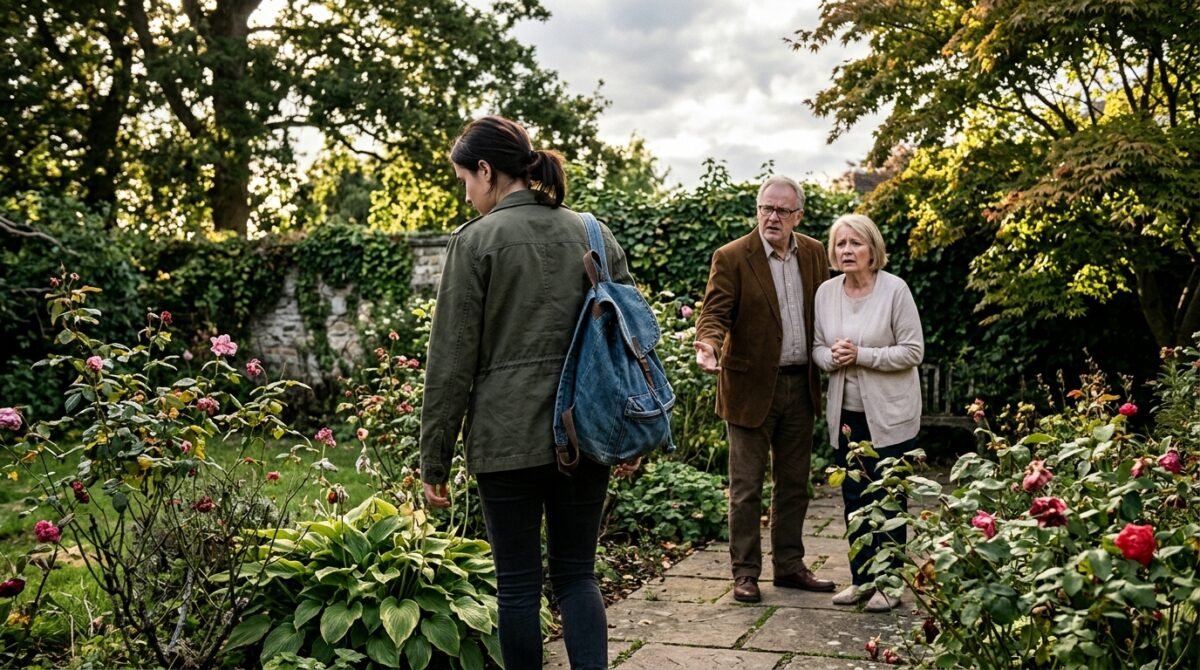
Six months later, my father forced an encounter. He knew I would be at my aunt’s house for the annual summer barbecue. I had hoped he would stay away, but he showed up with Brenda in tow. The tension in the backyard was palpable. When I saw them walk through the gate, my heart dropped, but I forced myself to stand tall. I wasn’t going to hide.
My father made a beeline for me, trying to put on a cheerful face for the rest of the family. Brenda stayed a few steps behind, her expression guarded. I watched the way they navigated the crowd—they were a team, a unit, and I was the outsider. It was a stark reminder of why I had cut them off in the first place.
“Sarah, it’s been a long time. Can we please talk? Brenda has something she wants to say, and I think it’s time we put all this behind us. We’re family, after all.”
— My father, attempting to force a reconciliation
Brenda stepped forward, her voice practiced and hollow. “I’m sorry if you felt hurt by the attic situation. I really didn’t mean to upset you. I just wanted the house to be comfortable for everyone. I hope you can move past this.” It wasn’t an apology. It was a justification wrapped in a apology-shaped lie. She still believed she was the victim of my ‘overreaction.’
I looked at them both—the man who raised me and the woman who had systematically erased my history—and felt nothing but pity. Not for them, but for the life they were living, built on such a flimsy, selfish foundation. I didn’t yell. I didn’t make a scene. I simply looked at my father and said the words I had been practicing for months.
“I don’t accept your apology because it isn’t one. You didn’t just ‘upset’ me; you destroyed the only record of my mother I had left in that house. And you, Dad, stood by and let it happen. I don’t think we have anything left to talk about.” I turned and walked away, leaving them standing there in the middle of the yard, the quietest I had ever seen them.
The Choice to Walk Away
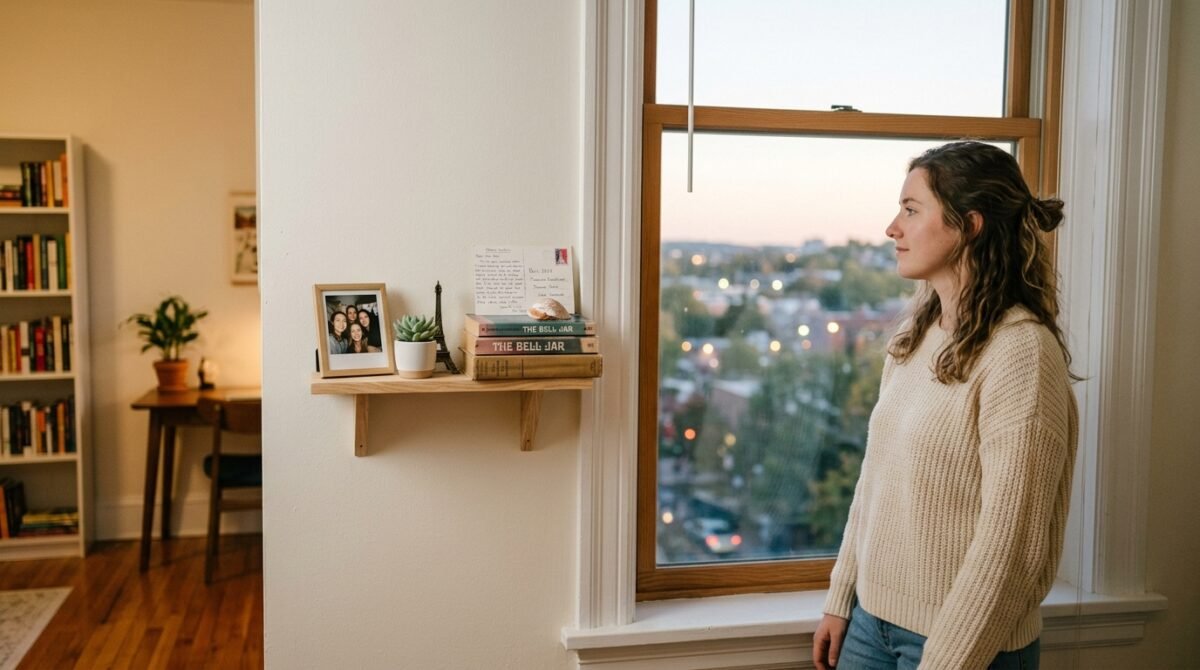
Leaving that reunion was the best decision I ever made. The ride home was long, but it was peaceful. I realized that the closure I had been looking for wasn’t going to come from them. It was never going to come from them. They were incapable of the kind of empathy and accountability I needed, and realizing that was a kind of freedom. I stopped waiting for an apology, stopped checking their social media, and stopped hoping that my father would wake up.
I started therapy, focusing on what it meant to grieve someone who was still alive—to mourn the father I thought I had and accept the reality of the one I was left with. It wasn’t an easy process, but it was necessary. I built new traditions, started new collections, and surrounded myself with people who valued my past as much as they valued my present.
The empty spot under my bed is no longer a place of loss. It’s just space, a blank canvas for whatever I choose to put there now. I learned that boundaries aren’t just about what we keep others from doing; they’re about what we allow ourselves to be. I chose not to be a victim, and I chose not to be a participant in their toxicity.
“You have to learn to love yourself enough to walk away from people who treat your history like trash. If they don’t respect where you came from, they don’t deserve to be a part of where you’re going.”
— My therapist, during our final session
I still miss those photos sometimes. There are days when I wish I could hold that specific polaroid of my mother again, when I wish I could read my grandmother’s handwriting in person. But I know now that my history lives in me, not in a box in an attic. And that’s a truth that no amount of poodle trophies can ever erase.
Reflecting on the Reddit Verdict

Looking back at the thread, the community’s reaction was a mirror for my own internal struggle. People didn’t just comment on the photos; they commented on the dynamic of the family. The consensus was overwhelming: the loss of the photos was just a symptom of a larger, systemic failure of boundaries. Many users shared their own stories of step-parents who tried to ‘redecorate’ their identities, and the common thread was always the same: it never stopped at photos.
The Reddit community provided a validation that I wasn’t getting at home. It gave me the courage to stand by my decision to go no-contact. When you’re in the middle of a toxic situation, it’s easy to feel like you’re the one who’s crazy. Reading thousands of comments saying ‘You are NTA’ (Not The A-hole) was a lifeline. It was a collective voice saying that I had a right to my own history.
“This wasn’t about the trophies. It was about power. She wanted to erase any reminder of the ‘before’ times, and your father let her because he’s a spineless enabler. You did the right thing by leaving. Don’t look back.”
— u/RedditVeteran (Top Comment, 15.4k upvotes)
I read through those comments during my darkest moments, and they reminded me that I wasn’t alone. They were a reminder that I had made the right choice, even when it was painful. The story became more than just my own; it became a part of a larger conversation about the rights of children in blended families and the importance of preserving one’s individual narrative in the face of erasure.
It’s strange to think that my pain became a viral moment, but I’m grateful for it. It taught me that there is power in telling the truth, even when it’s ugly. And it taught me that while we can’t choose our family, we can absolutely choose who we let into our lives—and who we leave behind in the attic.
Lessons in Hard Boundaries
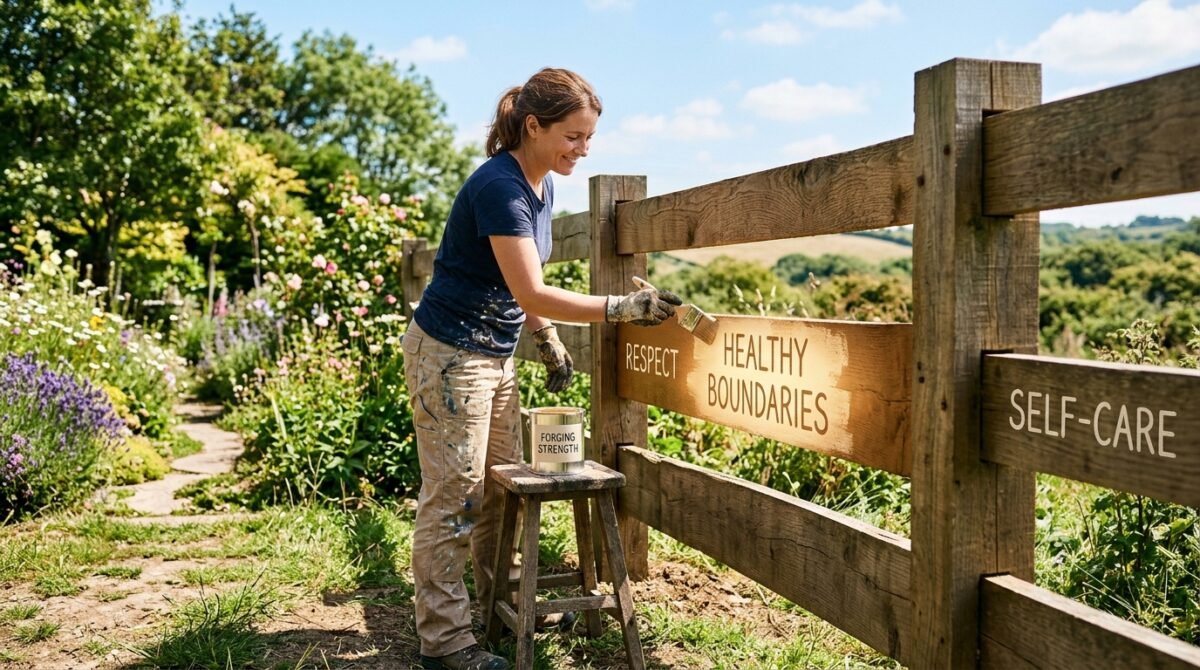
The biggest lesson I took away from this entire ordeal is that boundaries are not negotiable. In the past, I thought that compromise was the key to getting along with Brenda. I thought that if I gave an inch, she would give an inch. But some people don’t want compromise; they want total compliance. I learned that the moment you let someone push a boundary, they will inevitably push for the next one.
I used to feel guilty for being ‘difficult.’ I used to think that being the ‘bigger person’ meant absorbing the hurt and keeping quiet to maintain the peace. But I realized that the peace I was keeping was fake. It was a silence bought at the cost of my own self-worth. Now, I set my boundaries early and clearly, and I don’t apologize for them.
My father still tries to contact me occasionally, usually through intermediaries, trying to guilt-trip me into coming home for the holidays. But I’ve learned to say no. I’ve learned that saying no is a complete sentence. I’ve learned that I don’t owe him my presence if it comes at the expense of my own mental health.
“Setting a boundary is not an act of hostility; it’s an act of self-preservation. You are not responsible for how others feel when you decide to take care of yourself.”
— A piece of advice from a support group member
I’ve built a life that feels like mine again. I’ve surrounded myself with friends who respect my past and support my future. I’ve learned that the family you build for yourself is often much stronger than the one you were born into, especially when the latter is built on a foundation of trophies and lies.
The Final Chapter of the Attic Saga

It’s been over a year since I left. The attic is probably still filled with trophies, the light still hitting them in that same, artificial way. But I don’t think about it much anymore. The anger has subsided, replaced by a sense of indifference. And that, I think, is the true healing. When you no longer care what they think, when you no longer need their approval or their understanding—that’s when you’ve truly won.
I’ve started a new collection. It’s not of photos, but of experiences. I’m traveling, I’m learning, and I’m making memories that are entirely mine. I’m building a life that I can be proud of, one where there’s no room for people who would trade my history for a plastic figurine. And I know that if I ever do have a family of my own one day, I will make sure they know their history, and I will cherish every single piece of it.
My advice to anyone else going through something similar is this: listen to your gut. If something feels wrong, if someone is erasing you or your past, don’t wait for them to change. Protect yourself. Stand up for your history. And if you have to walk away, do it with your head held high, knowing that you’re doing it for yourself.
“The most important relationship you will ever have is the one you have with yourself. Guard it, cherish it, and never let anyone—no matter who they are—tell you that you don’t matter.”
— Closing thoughts on my journey
Thank you to everyone who supported me through this journey. Your words meant more than I can say. I’m finally home, even if it’s not the home I started with. And that is enough.
Conclusion
My journey from the attic-clearing betrayal to my current state of peace has been long and arduous, but it has defined who I am today. We often hold onto toxic family ties because of the guilt associated with walking away. But as I’ve learned, the true cost of staying is often far higher than the cost of leaving. My history was my own, and while I can’t reclaim the physical objects, I have successfully reclaimed the narrative of my own life.
This story serves as a reminder to all of us that no one has the right to erase your history, whether it’s through physical destruction or emotional manipulation. If you find yourself in a similar position, know that you are not alone, and your feelings of hurt and betrayal are entirely valid. You deserve respect, and your past deserves to be honored, not traded away for the sake of someone else’s vanity.
How about you? Have you ever had to draw a hard line with a family member who refused to respect your boundaries, even at the cost of the relationship? Share your stories below—let’s discuss what it really means to prioritize our own well-being when family dynamics become toxic. The community is here for you.
What's your verdict on this dilemma?
Vote below to contribute to the official community consensus.

Have a Dilemma Keeping You Up at Night?
Share your real-life feud, wedding chaos, or relationship crossroads anonymously with our editorial team.
What do you think ?
0 Comments🛡️ Comments are moderated to protect community integrity. Your comment will appear once approved by the editorial team.