
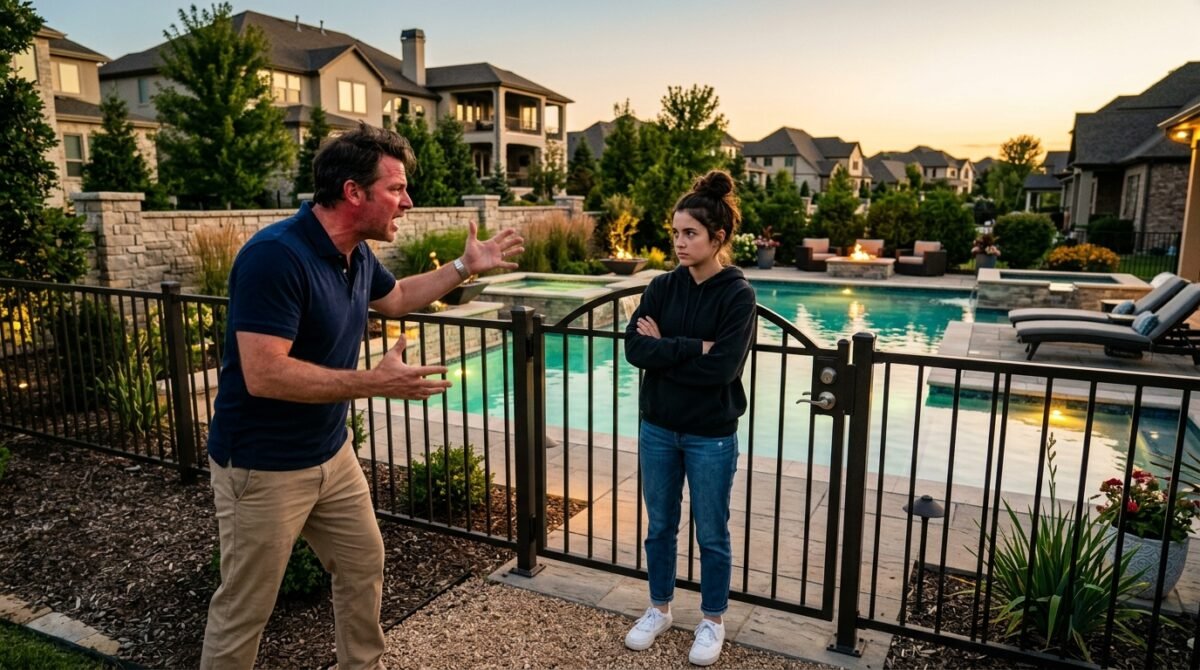
When my husband, Mark, and I purchased our home three years ago, the backyard pool was the singular reason we emptied our savings account. It was a private sanctuary, a place where we could decompress from our high-stress corporate jobs, host intimate dinners, and simply exist without the prying eyes of the world. We spent thousands on professional landscaping, soundproofing the fence, and installing a high-tech security system. It was never meant to be a public facility, yet my father-in-law, Arthur, viewed it as his personal clubhouse for his ‘Sunday Morning Socialites’ group.
Arthur had always been a man who mistook access for ownership. From the moment we gave him a spare key for emergencies, he treated our home like an extension of his own property. But the pool was the line in the sand—or rather, the tile. He saw the water as an asset to be leveraged for his own social standing, promising his retired friends unlimited access to our backyard while we were at work. He didn’t just invite them; he effectively listed our property as a local amenity in his social circle.
The dilemma reached a boiling point when I returned home early one Tuesday to find four strangers drinking gin and tonics on our lounge chairs while blaring classic rock. My father-in-law was standing near the deep end, gesturing grandly as if he were the master of the house. That evening, I sat Mark down, realizing that the boundary I needed to set wasn’t just with Arthur, but with the entire neighborhood social structure that had begun to view our backyard as common land.
This story isn’t just about a pool; it’s about the audacity of entitled family members and the quiet, calculated power of reading the fine print. When Arthur threatened to take me to the Homeowners Association to ‘force’ me to keep the pool open for the neighborhood’s benefit, he had no idea that I had spent the last six months reading every single amendment, bylaw, and covenant document the HOA had ever drafted. I wasn’t just fighting an argument; I was fighting a legal battle on my own turf.
What followed was a summer of escalating tension, leaked group chat screenshots, and a final board meeting that left Arthur red-faced and my neighborhood HOA completely paralyzed. This is the chronicle of how I defended my home against the people who thought they were entitled to it, and why sometimes, playing by the rules is the most dangerous weapon you can wield.
The Sunday Morning Intrusion That Started It All
It began as a subtle erosion of boundaries. First, it was just Arthur, claiming he needed to ‘check the pump’ for us. Then, it was Arthur and a friend. By the time June rolled around, the ‘Sunday Morning Socialites’ were a recurring fixture. I would walk into my own kitchen to find half-empty beer bottles on my granite counters and the smell of cheap cigars wafting through the screen door. When I confronted Arthur, his response was always the same: ‘Don’t be selfish, it’s just water.’
“Arthur, I don’t care if you think it’s just water. These are strangers in my backyard. I pay the mortgage, I pay for the chemicals, and I certainly don’t consent to hosting a weekly tavern in my garden.”
— Me, during the first major confrontation
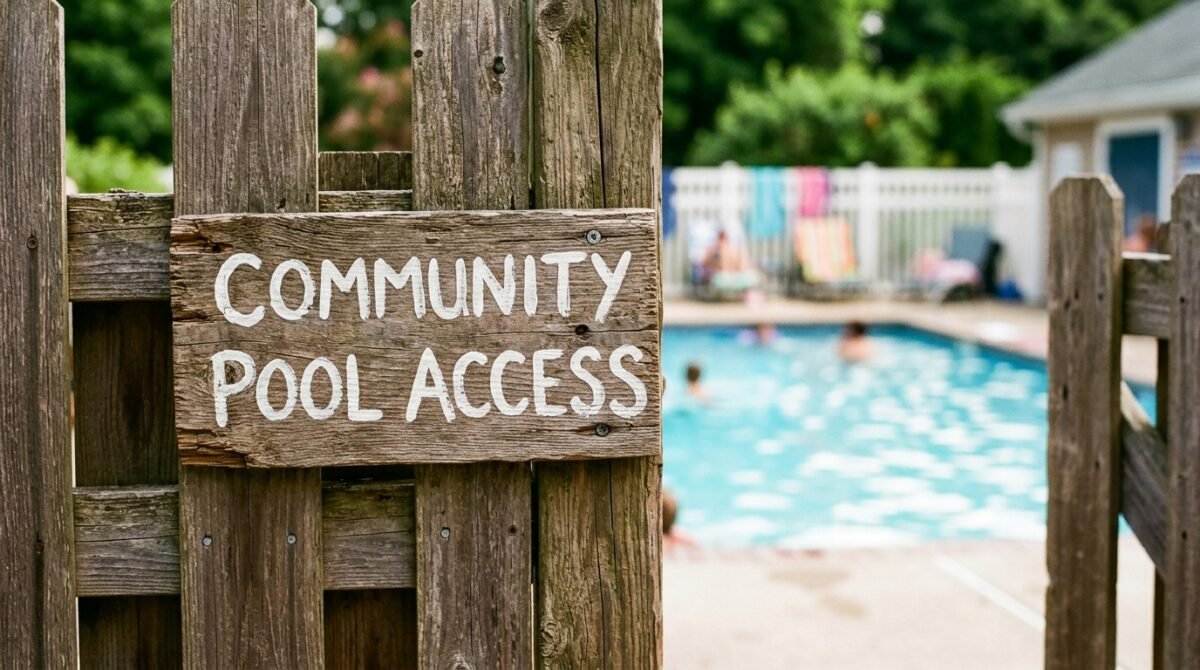
I felt a deep, gnawing sense of violation. Our home was supposed to be our fortress, yet every weekend felt like an invasion. Mark was caught in the middle, trying to play the peacekeeper, but his silence was only emboldening his father. The tipping point arrived on a humid July afternoon when I stepped onto the patio to find a literal sign nailed to our gate: ‘Community Pool Access – Members Only’. I felt my blood turn to ice.
I didn’t scream. I didn’t rip the sign down in a fit of rage. Instead, I took a photograph of it, walked back inside, and locked the sliding glass door. I knew then that the polite conversations were over. If Arthur wanted to treat our home like a community facility, I would make sure the community understood exactly what that meant under our HOA’s restrictive guidelines.
That night, I didn’t sleep. I scoured our deed and the neighborhood HOA handbook, searching for every clause regarding ‘nuisance activities’ and ‘unauthorized commercial use of residential property.’ I discovered that by inviting his friends and charging them a nominal ‘membership fee’ for pool maintenance, Arthur had inadvertently turned our home into a de facto business, a massive violation of our residential-only zoning.
The audacity of his actions was staggering. He had even set up a Venmo account for the ‘pool fund,’ which I found after scrolling through his phone when he left it on our kitchen island. It wasn’t just entitlement; it was a profit-generating scheme built on the foundation of our property rights. I had the ammunition, and I was ready to fire.
The Secret Group Chat I Was Never Meant to See
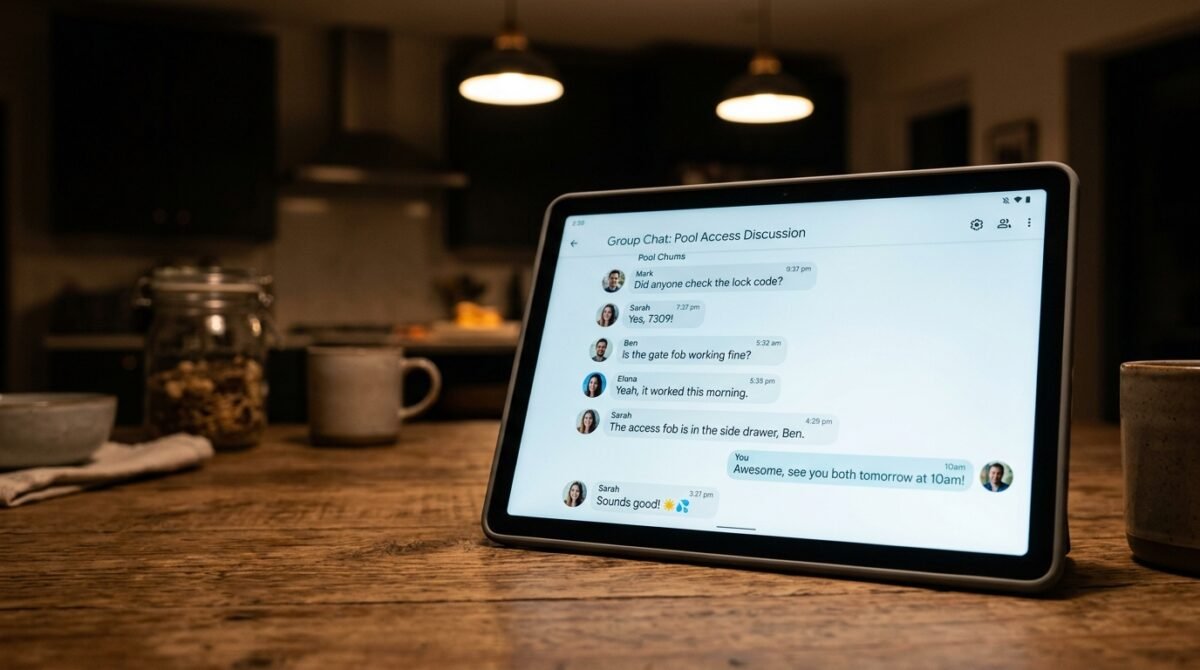
The discovery of the ‘Pool Club’ group chat happened by pure accident. Arthur had left his iPad logged into his email, and as I was trying to find a recipe for a dinner we were hosting, a notification popped up. It was a message from a neighbor, asking if the ‘water temperature was warm enough for a dip’ on Wednesday. Curiosity, or perhaps a sense of impending doom, led me to click it.
“Everything is set for tomorrow. The daughter-in-law is out of town for work, so the place is ours from 10 AM to 4 PM. Just leave the $20 in the envelope under the rock. Arthur says the security system is off because he has the master code.”
— Leaked Message from ‘Pool Club’ Group Chat
My heart was hammering in my chest. He had given them the master code. He had not only promised them our space but had also compromised our home security to make it easier for them to enter while we were gone. I sat there, reading through weeks of conversations where they discussed our furniture, our fridge, and even our personal decor. The betrayal wasn’t just about the pool; it was about the absolute lack of respect for our privacy.
I screenshotted everything. Every message, every mention of the ‘membership fee,’ every boast about how they could get away with it because Arthur was ‘the neighborhood patriarch.’ The level of entitlement was infuriating, but the evidence was gold. I forwarded the entire thread to my own cloud storage and then deleted the history on his iPad, leaving no trace that I had seen anything.
Mark returned home an hour later, oblivious to the fact that his father was running a secret pool club in our backyard. When I showed him the screenshots, he went deathly pale. For the first time, he didn’t try to defend Arthur. He just looked at me and asked, ‘What do we do?’ I looked him in the eye and said, ‘We do exactly what they fear most. We go to the HOA.’
The next day, I didn’t just go to the HOA; I went armed with a dossier. I had printed out the screenshots, documented the dates and times of the unauthorized ‘parties,’ and highlighted the specific articles of the HOA bylaws that they were violating. I was ready to burn the whole thing down to save the integrity of our home.
The HOA Board Meeting of My Dreams

Walking into the HOA board meeting felt like stepping into a lion’s den. The board members were all retirees, many of whom were friends with Arthur. They looked at me with varying degrees of irritation, clearly expecting me to be the ‘troublesome new homeowner’ causing a fuss. Arthur sat in the front row, looking smug, seemingly oblivious to the fact that I held the keys to his undoing.
The chairman cleared his throat and asked me to state my business. I kept my voice calm, steady, and devoid of the anger I was feeling. I presented my case, starting with the safety concerns. I highlighted that our insurance policy specifically excluded guests using the pool without supervision, and that Arthur had been providing unauthorized access codes to strangers. The room went silent.
“I am not here to complain about my father-in-law’s social life. I am here to report a systemic violation of our residential zoning laws and a massive liability risk that could bankrupt this entire neighborhood if someone were to drown in our pool.”
— My statement to the HOA Board
When I projected the screenshots of the group chat onto the meeting room screen, the atmosphere shifted instantly. Arthur’s face turned a shade of crimson I didn’t know was possible. The board members leaned in, their faces shifting from annoyance to genuine shock as they read the messages about the ‘membership fees’ being collected on HOA property.
The discussion turned from a petty neighbor dispute into a serious investigation of illegal commercial activity in a private residential zone. The board chairman was a stickler for rules, and he took one look at the evidence of the ‘Pool Fund’ and slammed his gavel. Arthur tried to interject, shouting that it was all a ‘friendly arrangement,’ but the damage was done. The legal implications of operating a ‘club’ on private property were too heavy for them to ignore.
By the time I left the meeting, the board had issued a formal cease-and-desist order to Arthur. They also threatened to fine him for every day the ‘pool club’ remained active. It was the most satisfying moment of my adult life. I watched as Arthur fumed, his friends avoiding eye contact with him, realizing they had all been implicated in a scheme that had just been nuked.
The Fallout and the Family Silence

The days following the board meeting were filled with a deafening silence. Arthur stopped coming over entirely, and Mark’s mother called me, accusing me of ‘tearing the family apart’ over a bit of water. I didn’t argue. I simply told her that if they couldn’t respect our boundaries, they weren’t welcome. It was the hardest thing I’d ever done, but it was necessary.
Mark was hurt, but he eventually understood. We had a long, tearful conversation where he admitted he had been afraid of his father for his entire life. Seeing me stand up to him gave him the courage to set his own boundaries, which in turn changed the dynamic of their relationship. We stopped doing Sunday dinners at Arthur’s house, and the space we created was finally ours again.
The neighborhood was different now. People stopped looking at our backyard with envy and started looking at it with a healthy sense of distance. The HOA enforcement was relentless, and Arthur was eventually forced to pay a substantial fine for the illegal activity he had been facilitating. It was a heavy price, but one that effectively killed the ‘Socialite’ club for good.
I started noticing small changes in my own mental health. The anxiety that used to grip me every weekend began to fade. I could walk out to my pool on a Saturday morning, sip my coffee, and see nothing but the blue water and the swaying trees. It was the peace I had paid for, and for the first time, it felt like it truly belonged to me.
The community reaction was mixed, but the majority of the younger families in the neighborhood supported me. They were tired of the older generation acting like they owned everything. I received anonymous notes of support in my mailbox, thanking me for ‘taking a stand’ against the neighborhood bullies. It was a strange kind of vindication, but it made me realize how many other people were struggling with similar boundaries.
Reddit Weighs In: The Verdict of the Internet

I decided to share a slightly redacted version of my story on a popular subreddit to see if I was truly the villain as my mother-in-law had claimed. The response was overwhelming. Within hours, the post had reached the front page, with thousands of people commenting on the boundary issues and the audacity of the father-in-law.
“Your FIL wasn’t just entitled; he was running a business on your dime and using your home as his leverage. You didn’t destroy the family, he did. You just showed them the consequences of their own actions. NTA.”
— u/JusticeForBoundaries (Top Comment, 32.4k upvotes)
The thread became a repository for similar stories of family entitlement. People shared tales of in-laws using their homes for storage, hosting parties without permission, and even attempting to move into spare rooms without invitation. It was both comforting and terrifying to see how common this kind of behavior was. The community support was a balm to the lingering guilt I felt.
One user, a lawyer, provided a detailed breakdown of the liability risks I had highlighted to the HOA. They explained that if someone had slipped and hit their head on the pool deck, Mark and I could have lost our home to a lawsuit. That realization effectively erased any remaining hesitation I had about the path I chose. I had saved my family from potential financial ruin.
The debate wasn’t entirely one-sided, of course. A few people argued that I should have tried to ‘talk it out’ one more time before involving the HOA. But the majority of the comments were firmly on my side. They saw the ‘Pool Club’ for what it was: a blatant, repeated violation of privacy that no amount of ‘talking it out’ was ever going to fix.
I kept the thread open for a week, reading through the anecdotes. It made me realize that setting boundaries is a form of self-respect. If I had let this slide, I would have been teaching my in-laws that my needs were secondary to their social calendar. Instead, I taught them that my home is a sanctuary, not a public utility.
Reflections on Boundary Setting and Family Dynamics

Looking back, the conflict wasn’t really about the pool. The pool was just the stage. The conflict was about power, control, and the assumption that age or family ties grant someone the right to bypass our autonomy. Arthur grew up in a generation where this kind of neighborly ‘communal use’ was common, but he failed to adapt to the reality of modern property rights and the legal weight of today’s HOA rules.
I learned that when you refuse to set a boundary, you aren’t being ‘kind’—you are being a doormat. By allowing Arthur to invite friends over, I had signaled that my property was fair game. It took a massive, explosive confrontation to correct that signal, but the results have been permanent. I don’t feel guilty anymore. I feel empowered.
Mark and I have grown closer because of this. We realized that we have to present a united front, regardless of who the other person is. Whether it’s our parents, our siblings, or our friends, our home is a joint project that requires mutual agreement on who gets to enter our space. It’s a lesson that most people learn in their twenties, but we learned it the hard way in our thirties.
Our relationships with Arthur and his social circle are changed forever, but they are ‘honest’ for the first time. There is no more pretending. They know exactly where the line is, and they know that I am not afraid to call the authorities if they cross it. That clarity is worth more than any Sunday dinner at their house.
I don’t regret the path I took. I regret that it had to come to that, but I don’t regret the action. Standing up for yourself, especially when you are being gaslit by people you are supposed to trust, is a vital act of self-preservation. My home is now truly mine, and that is a victory I will cherish for the rest of my life.
The Financial Reality of Our ‘Community Asset’

When I finally sat down to calculate the cost of the ‘Pool Club’s’ activities, the numbers were eye-opening. Between the extra water usage, the increased chemical costs, and the professional cleaning we had to hire after the unauthorized parties, we were out nearly $2,400 in just three months. Not to mention the wear and tear on our deck furniture, which had been subjected to heavy use by a group of people who clearly didn’t care about maintenance.
| Expense | Estimated Cost (3 Months) | Who Paid |
|---|---|---|
| Pool Chemicals | $650 | Us |
| Water Usage | $400 | Us |
| Furniture Repair | $850 | Us |
| Professional Cleaning | $500 | Us |
| Total | $2,400 | Us |
The financial ledger was the final piece of evidence I needed to justify my actions to myself. It wasn’t just an intrusion of space; it was a theft of resources. Arthur had been charging his friends a membership fee while I was the one footing the bill for the facility they were using. It was a classic case of exploitation, masked by the guise of ‘family gathering.’
I eventually sent an itemized bill to Arthur for the $2,400, noting that it was a ‘reimbursement’ for the damages and costs incurred during his unauthorized club operations. I knew he wouldn’t pay it, but the point was to make the cost of his actions tangible. He needed to see that his ‘friendly’ social club had a real, measurable financial impact on my family.
He ignored the bill, of course, but the message was received. The idea that he could continue to use our resources for his own gain was dead. We also tightened our security, replacing the locks and upgrading the security system to one that required a biometric fingerprint, ensuring no one could ‘accidentally’ get in ever again.
The financial impact of the cleanup was just the beginning. The long-term impact on our home’s valuation and the potential for increased insurance premiums were factors that the HOA board took very seriously. They didn’t just fine Arthur; they forced him to undergo a mediation process to understand the legal risks he had created for the neighborhood. It was a humiliating experience for him, but one that was entirely of his own making.
Negotiating the New Normal

The months that followed the HOA enforcement were a period of cooling down. We didn’t go no-contact immediately, but we entered a period of ‘enforced low-contact.’ Any interaction with Arthur happened in neutral territory—a public restaurant or a park—never at our home. It was a strict rule that we both enforced, and it changed the power dynamic significantly.
When Arthur complained about the ‘coldness’ of our new arrangement, we reminded him of the breach of trust regarding our house keys and the unauthorized group meetings. We didn’t get into an argument; we stated facts. ‘You lost the privilege of having access to our home, Arthur, because you violated our trust,’ was the standard line. It was firm, unwavering, and shut down any attempt to blame us for the new status quo.
Mark eventually started having short, scheduled visits with his father, but always at Arthur’s house or in public. I opted out of most of these visits, which was a point of contention for a while, but eventually, it became the accepted norm. I was protecting my peace, and I had earned that right through the chaos of the previous summer.
We also became much more active in our HOA. I wanted to ensure that no one else in the neighborhood could ever use our bylaws against us in the same way. We joined the safety committee and started advocating for clearer rules regarding short-term rentals and ‘club’ usage of residential spaces. It was our way of giving back and ensuring the neighborhood remained a peaceful place to live.
The neighbors who had been part of the ‘Pool Club’ eventually drifted away from Arthur, their own social circles disrupted by the drama. It was a sad, but inevitable result of their collective entitlement. They had tied their social standing to a pool that wasn’t theirs, and when that tether was cut, they had nothing left to bind them together.
Lessons Learned in the School of Hard Knocks

If there is one thing I’ve learned from this entire ordeal, it is that you cannot negotiate with entitlement. You can only set boundaries and hold them with consequences. When you try to be ‘nice’ to people who are actively violating your boundaries, they don’t see it as kindness; they see it as weakness.
I look back at the person I was before the pool drama, and I see someone who was too afraid of conflict to protect her own peace. The experience was traumatic, yes, but it was also a crucible that forged a stronger, more assertive version of myself. I no longer fear being the ‘bad guy’ when it means protecting my home and my family’s well-being.
Mark and I have also learned that a marriage is a fortress that requires constant maintenance. We have to be on the same page, especially when dealing with family pressures. If we hadn’t presented a united front, Arthur would have easily divided us and continued his operations. The fact that we stood together saved our relationship, not just our pool.
We have also learned the power of being informed. Reading the HOA bylaws, understanding our property rights, and documenting every incident was what allowed us to win. Ignorance is not bliss when it comes to property; it is a liability. By knowing the rules, we turned a hopeless situation into a legal victory.
The summer of the pool war is now just a memory, a cautionary tale we tell to friends over dinner. We don’t hold the anger anymore, but we hold the boundary. And that is the most important takeaway of all. Boundaries are not meant to keep people out; they are meant to keep the right things in—our peace, our privacy, and our home.
The Final Word: Standing Your Ground

I hope that if you are reading this and find yourself in a similar situation, you realize that you are not obligated to sacrifice your comfort for the sake of ‘family tradition’ or ‘being a good neighbor.’ Your home is your sanctuary, and you have every right to protect it from anyone, even those who claim to have your best interests at heart.
Don’t be afraid to document everything. Don’t be afraid to call the HOA or, if necessary, the authorities. When you are being exploited, you are not being mean by setting a limit; you are being righteous. And remember, the people who get angry when you set boundaries are the ones who benefited from you not having any in the first place.
My relationship with Arthur is not what it used to be, and in many ways, it is better because it is based on reality rather than exploitation. We are no longer playing the game of ‘us vs. them,’ because there is no ‘them’ anymore—there is only the clear, defined space between us. It is a healthier, more honest way to live.
For those of you who have been wondering, yes, the pool is still clear, quiet, and completely ours. We spend our weekends enjoying it, and every time I look out at the water, I am reminded of the strength it took to claim it back. It is a reminder that peace is something you have to fight for, but it is always, always worth it.
Thank you for letting me share my story. It has been a cathartic experience to put it all down, and I hope it helps at least one other person stand up for their own peace of mind. Remember: your home, your rules.
Conclusion
The saga of the ‘Pool Club’ taught us that silence is the biggest enabler of bad behavior. By refusing to speak up, we were essentially granting permission for the violation. Once we broke the silence, the power dynamic shifted, and the consequences followed. This experience has left us with a deeper appreciation for the sanctuary we call home and a firm resolve to protect it at all costs.
We are currently in a place of peace. We have learned to navigate family interactions with a clear set of expectations, and we have successfully reclaimed our backyard as our own. We no longer feel the need to justify our boundaries or defend our privacy to anyone. The experience was painful, but it was necessary for our long-term happiness and the health of our marriage.
Now, I turn it over to you. Have you ever had to deal with a family member who refused to respect your home or your boundaries? How did you handle the conflict, and what was the outcome? Let’s talk about it in the comments below—I would love to hear your stories and see how others have navigated these tricky waters. Are you a ‘keep the peace’ person, or do you believe in standing your ground no matter the fallout?
Poll: What would you have done?
1. Continued trying to talk it out with the FIL.
2. Gone straight to the HOA like we did.
3. Changed the locks without saying a word.
4. Sold the house and moved to get away from the drama.
What's your verdict on this dilemma?
Vote below to contribute to the official community consensus.

Have a Dilemma Keeping You Up at Night?
Share your real-life feud, wedding chaos, or relationship crossroads anonymously with our editorial team.
What do you think ?
0 Comments🛡️ Comments are moderated to protect community integrity. Your comment will appear once approved by the editorial team.