
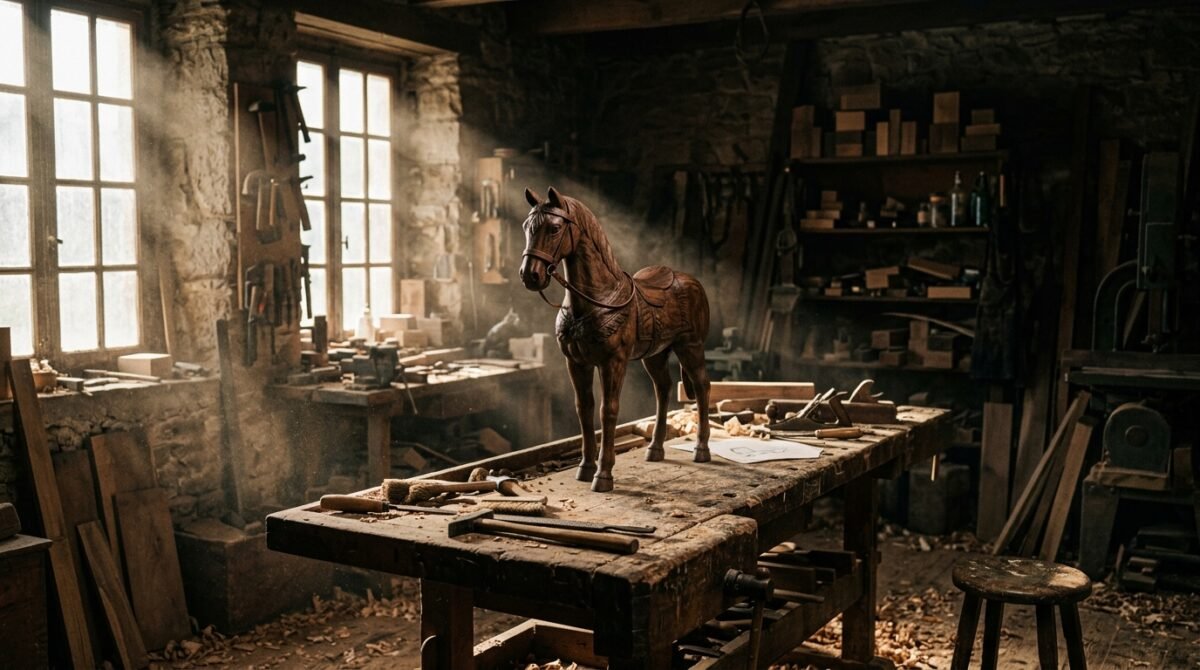
Grief is a strange, unpredictable thief. It takes away the people we love, but it often leaves behind a battlefield of material objects that hold memories too heavy to carry. My father was a man of few words, but he spoke through his cedar shavings and his lathe. For forty years, he sat in his basement workshop, hand-crafting intricate, heirloom-quality wooden toys for his grandchildren—toys that were meant to outlive him, to become the cornerstones of our family’s history.
When he passed away last autumn, the weight of his legacy didn’t just fall on his shoulders; it landed directly on mine and my sister, Sarah’s. As the executor of the estate, I was tasked with the logistical nightmare of preparing his home for sale. I had clear instructions: keep the workshop intact for a few months until the siblings could decide on the distribution of his tools and the specific items we wanted to keep as mementos. It was supposed to be a time of quiet reflection and mutual respect.
Sarah, however, has always been the type to prefer the aesthetic of a life over the substance of it. She is obsessed with the ‘minimalist’ lifestyle, a trait that she wears like armor. When she volunteered to ‘stage’ the house for the realtors, I should have seen the red flags. I should have known that her version of preparation involved clearing away anything that didn’t fit into a beige, staged catalog look.
I arrived at the house on a Tuesday morning to find the workshop—the holy ground of my father’s creative life—utterly gutted. The custom-built shelves, which had housed the intricate wooden trains, rocking horses, and whimsical animals he’d spent years perfecting, were empty. A cold, sinking feeling washed over me as I realized the scale of what had happened. She hadn’t just tidied up; she had purged.
What followed was a confrontation that bridged the gap between a simple sibling disagreement and a full-scale legal and emotional war. When I discovered the fate of those toys—dumped in a landfill as ‘clutter’ to appease the staging company—I knew that a simple apology wouldn’t suffice. I made a decision that would redefine our relationship forever: I calculated the professional artisan value of those lost treasures and deducted every cent from her share of the inheritance.
The Morning the Workshop Died
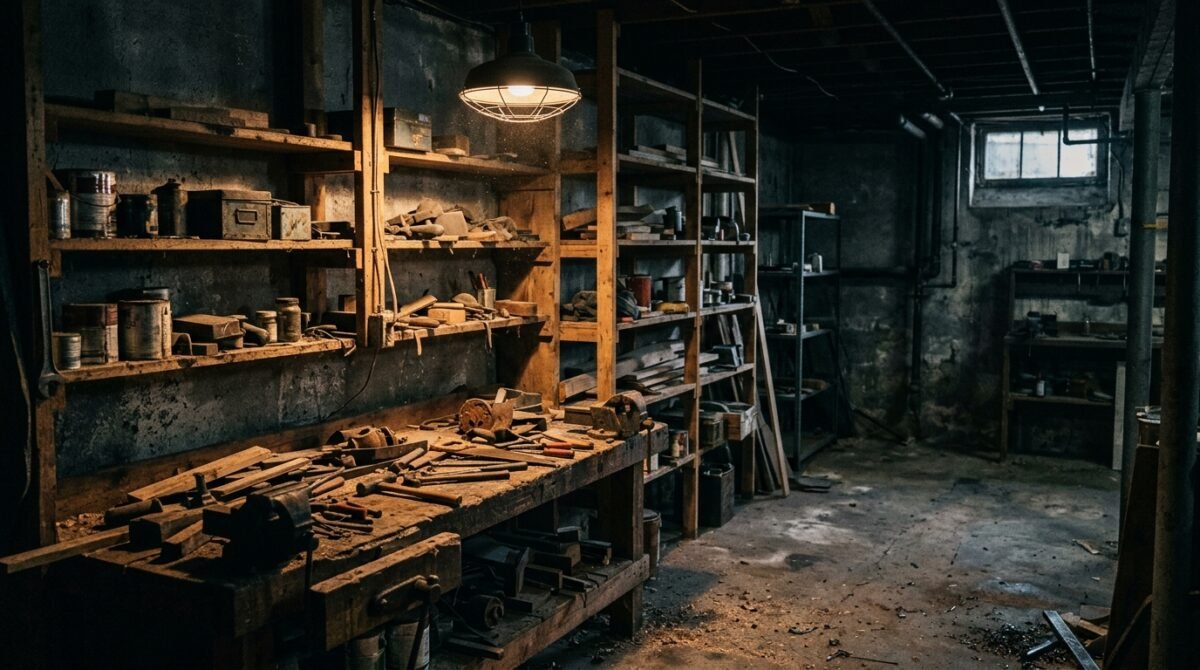
The morning of the discovery, I walked into the house with a thermos of coffee, expecting to spend the next few hours sorting through father’s woodworking journals. The air usually smelled like cedar and sawdust—a comforting, dry scent that felt like a hug. Instead, the house felt sterile, smelling only of industrial-strength lemon cleaner and damp, aggressive vacuuming.
I opened the door to the basement and stopped dead in my tracks. The workbench, once cluttered with chisels, sandpaper, and half-finished projects, was wiped clean. The shelves that had held my children’s favorite wooden trains and the rocking horse my father had spent six months carving were entirely bare. My heart hammered against my ribs as I rushed to the back corner where the ‘To Be Distributed’ bins had been placed.
They were empty. Only a few stray plastic bags and a discarded broom remained in their place. I felt a physical ache in my chest, a sense of vertigo that made the room spin. I didn’t want to believe it, but the reality was staring me in the face: someone had cleared out the history of our family as if it were nothing more than junk mail.
I pulled my phone out with trembling hands and called Sarah. She picked up on the second ring, her voice unnervingly cheerful. She was already at a staging warehouse, picking out throw pillows and neutral-toned rugs. The contrast between her casual demeanor and the hollowed-out tomb of my father’s life was jarring, bordering on insane.
“Sarah, where are the toys? The bins in the basement—the ones I marked ‘Do Not Touch’—they’re gone. Please tell me you moved them and didn’t… didn’t do what I think you did.”
There was a long, excruciating silence on the other end of the line. I could hear the faint sound of a store manager directing staff in the background. When she finally spoke, her voice was clipped, impatient, and utterly dismissive of the gravity of the situation.
“Honestly, I did us a favor. That basement looked like a hoarder’s den. The realtors said the house needs to appeal to young, modern buyers. Nobody wants to see a bunch of dusty, handmade wooden junk in the photos. I hired a junk removal service to take everything. The house looks so much bigger now, you should be thanking me.”
The Valuation of a Father’s Soul

I didn’t scream. I couldn’t. The shock was so profound that it manifested as a cold, clinical detachment. I spent the next three hours sitting on the concrete floor of that basement, staring at the empty space where the rocking horse had been. I realized then that to Sarah, our father’s life was just a series of obstacles between her and a quick property sale.
I contacted the junk removal company. The manager was apologetic, but firm: once the items are at the transfer station, they are processed immediately. There was no retrieving the hand-carved rocking horse, the detailed chess sets, or the nursery mobile that had belonged to three generations of our family. They had been pulped, crushed, and hauled away to a landfill in less than twenty-four hours.
I sat at my computer and began the process of documentation. I went through old photographs of the toys. I looked up prices for similar, high-end, artisan-made wooden collectibles. These weren’t ‘junk’—they were pieces of art. The rocking horse alone, based on the hours of labor and the quality of the walnut used, was valued at over $2,500 by a local craftsman who had known my father. The trains, the puzzles, the memory boxes—when I added it all up, the loss was staggering.
I pulled up the estate’s financial ledger. As the executor, I had the authority to handle the distribution of assets, provided I remained within the legal framework of the will. The will stated that the net proceeds of the estate were to be split 50/50, after all expenses and losses were accounted for. If Sarah had destroyed estate assets, that destruction was a liability.
I calculated the total value of the items she had discarded: $14,200. It wasn’t just about the money, and I knew that. It was about the lack of respect for the legacy our father had built. I typed out a formal document, itemizing every single piece she had thrown away, along with the estimated appraisal value for each. I saved it as a PDF and attached it to an email, my heart pounding with a mixture of rage and cold resolve.
I didn’t send it immediately. I waited until the sun went down, letting the silence of the house amplify my decision. This was the point of no return. If I sent this, there was no going back to the way we were. The bridge wouldn’t just be burned; it would be demolished.
The Digital Paper Trail

I hit send at 8:00 AM the next morning. The subject line was simply: ‘Adjustment to Inheritance Distribution.’ I included the itemized list, the photographs of the toys, and a brief, professional note explaining that as the executor, I had documented the destruction of estate property and would be deducting the total value from her portion of the final sale proceeds.
She called me within minutes. Her voice was no longer cheerful; it was shrill, filled with a frantic, entitled indignation that I had grown accustomed to over the years. She didn’t seem to grasp the concept that she had committed a form of theft. She saw herself as a victim of my ‘petty’ vindictiveness, completely ignoring the fact that she had destroyed irreplaceable family history.
“Are you joking right now? You are actually going to steal money from me because I cleaned up a house? You’re acting like a psychopath. Those were just wooden toys, not gold bars! This is absolutely insane, and I’m going to call my lawyer.”
I remained calm, my voice steady, which seemed to frustrate her even more. I told her that if she wanted to involve a lawyer, I welcomed it. I had the estate documents, the photos of the toys, and the correspondence where I had clearly labeled the bins and warned her not to touch them. I had a airtight case of fiduciary mismanagement.
“Sarah, the toys were estate property. You did not have the authority to dispose of them. By destroying them, you created a financial loss for the estate. I am simply balancing the ledger. If you want to argue that they had no value, you can explain that to an appraiser, but I suspect you’ll find that a judge disagrees with your assessment of what constitutes ‘junk.’”
The conversation ended with her screaming and hanging up. The silence that followed was heavy, but for the first time in weeks, I felt a sense of closure. I hadn’t just stood by while she steamrolled over my feelings; I had asserted control in the only language she seemed to understand: consequences.
A few hours later, I received a series of text messages from her. They were a chaotic stream of consciousness, oscillating between insults, bargaining, and desperate attempts to justify her actions as a way to ‘move on’ from the grief. She claimed she didn’t want the house to feel like a ‘shrine to a dead man,’ as if honoring our father was a crime against her interior design aesthetic.
The Family Group Chat Explosion

By the following evening, the drama had spilled over into the family group chat. My aunt, my cousins, and my mother’s sister were all suddenly privy to the war. Sarah, in her typical fashion, had framed the story to make herself look like the victim of a controlling sibling who was ‘holding money hostage’ over some dusty old toys.
“I just wanted to make the house look nice for the sale so we could all get our inheritance faster, and now OP is trying to steal my share because I threw out some old, broken toys that were literally rotting in the basement. I’m being bullied for trying to be helpful!”
— Sarah (Family Group Chat)
The responses were mixed, but I didn’t care. I posted a single message in the group chat, attaching the same itemized list I had sent to Sarah. I didn’t add any commentary; I simply let the numbers speak for themselves. I wanted everyone to see that this wasn’t about ‘broken toys’—it was about the lack of respect and the illegal disposal of assets.
My Aunt Martha, who had always been the voice of reason in the family, was the first to speak up. She had been the one to buy the rocking horse for my father to work on when I was a child. She recognized the photos immediately. Her comment in the group chat was short, but it silenced the rest of the chatter almost instantly.
“Sarah, those weren’t ‘broken toys.’ Those were your father’s life work. You destroyed family history because you didn’t want to look at it. I think OP is being more than generous by only deducting the value, rather than pursuing further legal action for the loss of heirlooms.”
— Aunt Martha (Family Group Chat)
The shift in tone was palpable. Sarah went radio silent. The narrative she had tried to weave—that I was a petty, controlling tyrant—was unraveling in real-time. She had banked on the family seeing my actions as an overreaction, but she hadn’t accounted for the fact that other people cared about those toys, too.
I kept my phone on ‘Do Not Disturb’ for the rest of the night. I didn’t need to read the excuses or the apologies that were likely coming. I had made my point, and for the first time since the funeral, I felt like I could actually breathe. The house was sold, the money was being handled, and the balance of power had been restored.
The Legal Reality Check
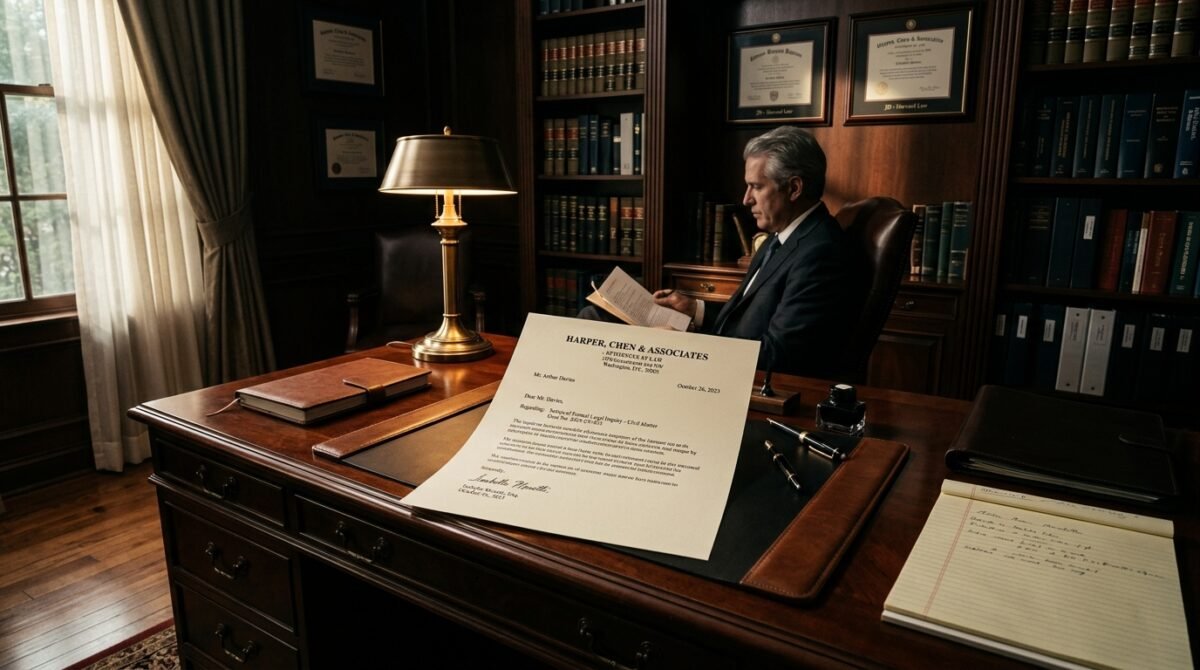
Two weeks later, I received a letter from a law firm. Sarah had finally followed through on her threat. She had hired a ‘consultant’—not even a full-fledged attorney, but a paralegal service that specializes in estate mediation—to draft a demand letter. They were claiming that my deduction was an ‘arbitrary penalty’ and that I had no legal standing to unilaterally reduce her inheritance.
I took the letter to my own attorney, a family friend who had handled my father’s estate planning for years. He read it, laughed, and tossed it onto his desk. He explained that my role as executor gave me significant latitude in protecting the estate’s value. Because I had evidence of the items’ worth and evidence that Sarah had destroyed them after being explicitly told not to, I was on solid ground.
We drafted a response. It wasn’t mean-spirited, but it was cold. We included the appraisal values, the photographic evidence, and the text message logs showing her intent to ‘clean out’ the basement. We also included a clause stating that if she insisted on litigating this, the legal fees would be deducted from the total estate value before the final distribution, which would end up costing her more than the amount she was trying to recover.
The threat of legal fees was the real kicker. Sarah has always been obsessed with money—not necessarily in a ‘saving’ way, but in a ‘lifestyle’ way. She didn’t want to spend her inheritance on legal fees to reclaim a sum that was arguably less than what a lawyer would charge for a full court battle. It was a strategic move that I knew would force her to back down.
When she received the letter, she didn’t call me. She didn’t text. She went to the realtor and signed the final papers for the house, effectively ending the period of our forced collaboration. I felt a strange sense of relief, the kind you only feel when a long, grueling illness finally breaks. The conflict was resolved, but the relationship was effectively dead.
The Echoes in the Workshop
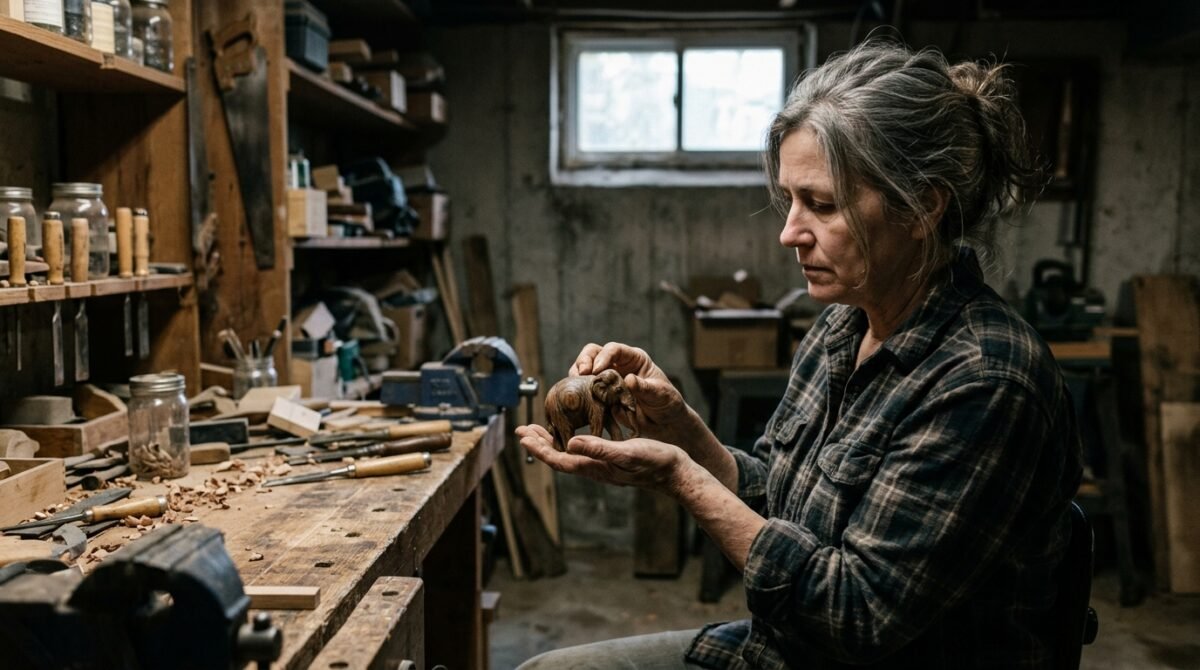
With the house sold and the money settled, I visited the empty house one last time before the new owners moved in. The house looked like a model home—sterile, bright, and completely devoid of character. It was exactly what Sarah had wanted, and it was exactly what I had grown to despise. The echo in the empty workshop was the loudest part of the house.
I walked the perimeter of the basement, running my hand along the walls where the shelving units had been. I found a tiny, wooden elephant—no larger than a marble—tucked away in a crack in the floorboards. It was the only survivor. My father must have dropped it years ago, and it had been forgotten in the shuffle of time. I picked it up, the wood smooth and cool against my palm.
It was a small, insignificant thing, but it represented everything I had fought to protect. I looked at the elephant, then at the empty room, and realized that my father’s legacy wasn’t in the toys. It was in the act of creation, in the love he put into the wood, and in the person I had become because of that influence. Sarah couldn’t destroy that. She could throw away the items, but she couldn’t erase the impact.
I realized then that I didn’t need the rest of the collection to feel close to him. I had the memories, and I had the elephant. I left the house, locking the door behind me for the final time. The chapter was closed. I drove away, not looking back at the house that had been the backdrop for the most painful months of my life.
I had done what I needed to do. I had protected the estate, I had stood up to my sister, and I had honored my father’s work in the only way I could under the circumstances. The financial deduction wasn’t just a punishment; it was a way of documenting the reality of what had been lost. It was the only way to make the loss visible to someone who was otherwise blind to it.
Reddit Weighs In: The Verdict of the Masses

I decided to post the story on a popular subreddit to see if I was truly the villain in this saga. The response was almost instantaneous. Within hours, the post had thousands of upvotes and hundreds of comments. People were passionate, and their responses were as varied as they were intense. Most of the community sided with me, recognizing the deeper issues at play.
“NTA. Your sister didn’t just throw out ‘toys’; she destroyed sentimental heirlooms and estate property. The fact that she claimed they were ‘junk’ shows she has zero respect for your father’s memory. The deduction is the only fair way to compensate the estate for her negligence.”
— u/WoodworkerDad (Top Comment, 18.5k upvotes)
There were, of course, dissenting opinions. Some people argued that I should have been more forgiving, given that we were both grieving. They suggested that the money wasn’t worth the family relationship. But the majority of the responses seemed to agree that the relationship was already broken, and my actions were a response to that, not the cause of it.
“It’s not about the money, it’s about the boundary. Sarah thought she could steamroll you because she’s always done it. By enforcing the deduction, you proved that her actions have consequences. She might hate you for it, but she’ll never pull a stunt like that again.”
— u/RealistAccountant (9.2k upvotes)
The Reddit thread became a place for people to share their own experiences with toxic siblings and inheritance disputes. It was validating to know that I wasn’t alone in this, that others had faced similar betrayals and had to make similarly difficult decisions. The community’s support provided a sense of peace that I hadn’t expected.
I read through the comments for hours. Some people even offered advice on how to move forward with low-contact, emphasizing the importance of protecting my own mental health. The consensus seemed to be that I had done the right thing, and that Sarah’s reaction was a reflection of her own character, not mine.
The Aftermath: A New Normal

Months have passed since the house was sold. The dust has settled, both literally and figuratively. Sarah and I are currently no-contact. It wasn’t a dramatic, explosive final argument; it was a slow, quiet drifting apart. The last time we spoke was to finalize the paperwork for the estate, and even then, it was strictly through our respective attorneys.
I’ve used the money from my share of the inheritance to set up a small college fund for my children, and I donated a portion of it to a local woodworking guild in my father’s name. It feels right, knowing that the value of his work is continuing to support the craft he loved so much. It’s a way of turning the tragedy of the loss into something positive for the future.
I still occasionally pick up the little wooden elephant. It sits on my desk, a small reminder of the lessons I learned through this ordeal. I learned about boundaries, about the importance of asserting oneself, and about the fact that sometimes, you have to be the villain in someone else’s story to be the hero in your own.
My children are older now, and they sometimes ask about their grandfather. I tell them stories about him, about his workshop, and about the things he made. I show them the elephant, and I tell them that he was a man who loved his work and his family. I don’t tell them about the arguments or the staging company. Those are my burdens, and I’m happy to carry them so they don’t have to.
The healing process has been slow, but I feel lighter. I no longer feel the need to justify my actions or to wait for an apology that I know is never coming. I have accepted the reality of the situation, and I am moving forward with my life, one day at a time, with a much clearer understanding of what truly matters.
The Philosophical Cost of Perfection

Looking back, I realize that Sarah’s need to stage the house was never really about selling it. It was about control. She wanted to present a version of our lives that was clean, neat, and uncomplicated. Our father’s workshop was the antithesis of that. It was messy, it was complex, and it was deeply, undeniably human. She couldn’t handle that.
There is a profound sadness in that, I think. To be so obsessed with the surface that you’re willing to discard the depth is a lonely way to live. I suspect that Sarah is still chasing that elusive ‘perfect’ life, moving from one staged environment to the next, never realizing that the things she finds so disruptive are actually the things that give life its meaning.
I don’t hate her. I think I just feel a deep, abiding pity for her. She missed out on the chance to keep a piece of our father, a piece that could have been a source of comfort and connection. She traded that for a slightly faster house sale and a clean, empty room. It was a bad trade, but it was hers to make.
In the end, we all have to decide what we’re willing to sacrifice for the sake of our own comfort. I chose to sacrifice the relationship for the sake of integrity and the preservation of our family’s history. It was a high price to pay, but as I sit here today, I know I would make the same decision again. I would rather have the truth, even if it’s painful, than a beautiful, curated lie.
I’ve learned that grief doesn’t make people better; it makes them more of who they already are. The loss of our father revealed the fault lines in our relationship that had been there all along. The toys didn’t cause the rift; they just made it visible. And once it was visible, I couldn’t pretend it wasn’t there anymore.
Final Reflections and Moving On

So, where does that leave us? The money is spent, the house is sold, and the family tree has a permanent knot in it. I don’t expect a reconciliation, and honestly, I’m not sure I want one. The distance has given me a clarity I never had when we were in the thick of it. I’ve realized that I don’t need to be defined by my sister’s choices, and I don’t need to be the keeper of her conscience.
I’ve started my own small woodworking hobby, nothing nearly as talented as my father, but I find a lot of peace in the process. It’s a way for me to connect with him on my own terms, without the pressure of inheritance or the drama of family expectations. I’ve found that the smell of cedar and the sound of the lathe are the best remedies for the stress I carried for so long.
I hope that if anyone is reading this and finds themselves in a similar situation—dealing with a sibling who doesn’t respect your boundaries or the memory of your loved ones—that you know it’s okay to stand your ground. You don’t have to be the martyr. You don’t have to sacrifice your own values for the sake of keeping the peace. Sometimes, peace is only found on the other side of a difficult decision.
The toys are gone, but the lesson remains. I am the executor of my own life now, and I’m making sure that what I build, what I create, and what I leave behind is something I can be proud of. The rest—the drama, the petty squabbles, the hurt—can stay in the past where it belongs. I’m moving forward, and for the first time, the future looks bright, simple, and entirely my own.
Conclusion
The story of my father’s toys and the fallout with my sister is a cautionary tale about the intersection of grief, entitlement, and the things we leave behind. It serves as a reminder that material objects are often the anchors to our past, and when those anchors are cut, the resulting drift can be overwhelming. But it also highlights the strength we can find in setting boundaries, even when it feels like the world is collapsing around us.
What do you think? Was the financial deduction the only way to hold my sister accountable, or was it an overreach that destroyed a relationship beyond repair? Could there have been a middle ground, or was the damage already done the moment the junk removal truck arrived? Join the conversation in the comments below—I’d love to hear your thoughts on how you would have handled this situation.
What's your verdict on this dilemma?
Vote below to contribute to the official community consensus.

Have a Dilemma Keeping You Up at Night?
Share your real-life feud, wedding chaos, or relationship crossroads anonymously with our editorial team.
What do you think ?
0 Comments🛡️ Comments are moderated to protect community integrity. Your comment will appear once approved by the editorial team.