
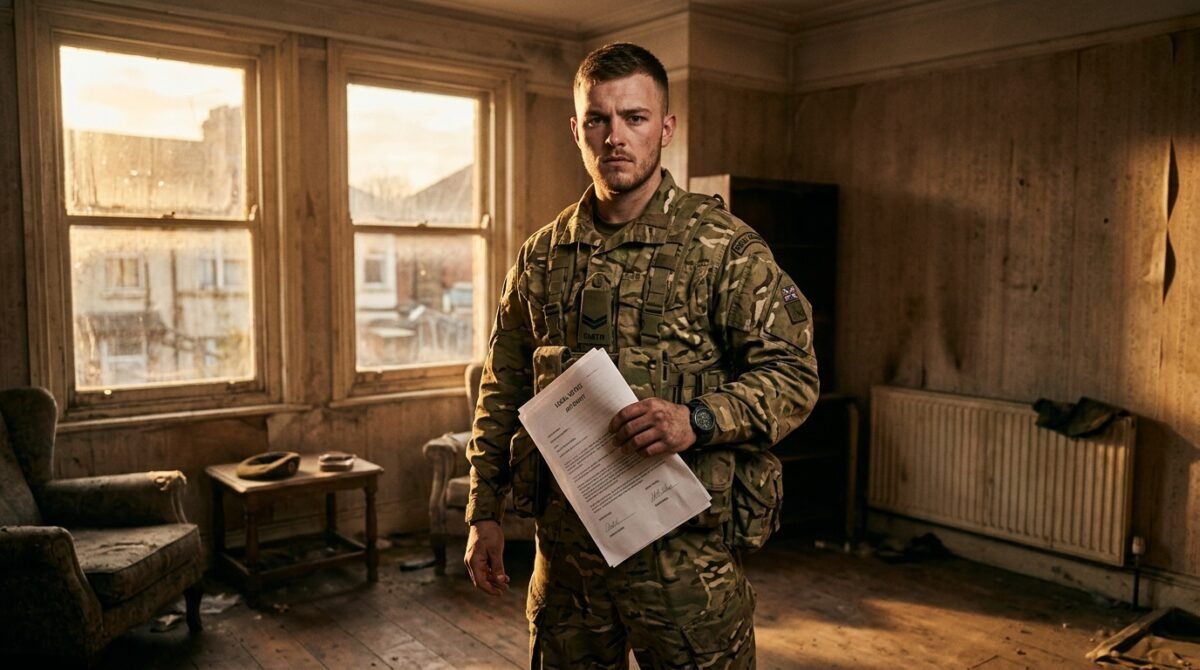
When my father passed away, the one thing he was adamant about was the house. It wasn’t just a building; it was the foundation of our family, the place where he and my mother spent their youth, and later, the home he shared with my stepmother, Sarah. My father was a man of his word, and in his final days, he ensured that the deed was updated to reflect a joint tenancy between Sarah and me. It was his way of ensuring that his legacy wouldn’t just vanish and that I, his only child serving in the military, would always have a place to return to.
For three years, the arrangement worked perfectly. I sent home payments for taxes and maintenance from my base overseas, trusting that Sarah was managing the property as a partner. We communicated via email; she sent me photos of the garden, updates on the roof repairs, and occasional notes about how much she missed Dad. It felt like a stable, albeit distant, family connection. I never suspected that while I was focusing on my duties, she was busy drafting a different kind of future—one where I didn’t exist.
The betrayal wasn’t a sudden explosion; it was a slow, calculated erosion of my trust. It began when the emails stopped arriving with the regularity I had grown accustomed to. Then, the maintenance requests stopped. I assumed she was busy or that the house was finally in top shape. Little did I know, she had spent months meeting with real estate agents, staging the home for photos, and hiding the truth behind a facade of normalcy that would eventually crumble under the weight of her own greed.
When I finally got the alert—an automated notification from a property tax monitoring service I had set up—the floor fell out from under me. The house was listed. Not just listed, but under contract. The realization hit me like a physical blow. She had decided that my father’s wishes were merely suggestions and that my stake in the property was an inconvenience to her newfound independence. I wasn’t just losing a house; I was losing the last physical connection to my father, auctioned off behind my back while I was protecting my country.
This is the story of how I stopped a multi-million dollar sale in its tracks, the legal war that followed, and the absolute destruction of a relationship I once thought was built on mutual respect. It is a cautionary tale about why, regardless of how much you trust someone, you should always keep a close eye on the paperwork that defines your life.
The Unexpected Notification in the Desert

I was sitting in a tent in the middle of a hot, dust-choked afternoon when the notification pinged on my tablet. It wasn’t a message from home; it was a digital alert from the county clerk’s office regarding a change in the property tax assessment. My pulse quickened. There was no reason for a change unless a transfer of ownership or a listing had occurred. I logged into the portal, my hands shaking with a mix of anticipation and dread. There it was, in cold, clinical text: ‘Property Listed for Sale – Status: Under Contract.’
I felt a cold sweat break out despite the heat of the region. I grabbed my satellite phone, feeling a sense of urgency I hadn’t felt since my last field exercise. I tried calling Sarah immediately, but the line went straight to voicemail. I sent her a message, trying to keep my voice steady in the text, though my heart was hammering against my ribs. I had to know if this was a mistake, a clerical error, or something far more sinister.
“Sarah, I just got a notification that the house is under contract. Please tell me this is some kind of mistake. You know that house is joint-owned. You cannot sell it without my signature.”
— My text to Sarah, 04:12 AM local time
Hours passed. The silence from her end was deafening. I checked the real estate listing site mentioned in the alert and saw the photos. It was our house, but it looked different. The furniture was staging; the walls had been painted a sterile, neutral gray. My father’s study, which I had asked her to keep as it was, had been cleared out. It felt like a violation, a surgical removal of our shared history. I couldn’t breathe properly; it was as if someone had reached into my chest and squeezed.
I finally got a response, but it wasn’t an apology. It was a cold, dismissive explanation that made my blood boil. She claimed that she had ‘legal advice’ that said she could move forward because I was ‘unavailable’ to manage the property. It was a lie, and we both knew it. She was counting on my inability to return home to fight it. She thought the distance would be my downfall, that I would just accept the check and walk away. She was wrong.
I spent the next forty-eight hours doing nothing but research. I reached out to a real estate attorney back home, someone my father had worked with for years. I had to be precise, cold, and calculating. If she wanted to play a game of legal chess while I was fighting a war, I would show her that I was more than capable of holding my own. I wasn’t going to lose my home without a fight that would haunt her for years to come.
The Paperwork Trap

My lawyer, Mr. Henderson, was a bulldog of a man who didn’t tolerate nonsense. When I explained the situation, he didn’t even blink. He told me that the joint tenancy agreement we had was ironclad. She couldn’t sell, transfer, or even mortgage the property without my signature. By attempting to list it under contract without my consent, she had opened herself up to a massive amount of liability. The real estate brokerage was also negligent for not verifying the ownership status properly.
We drafted a formal cease and desist, but I took it a step further. We filed an emergency motion to freeze the escrow funds and attached a lis pendens to the property. This would essentially cloud the title, making it impossible for the sale to close. I wanted to make sure that if she tried to bypass me, she would be met with a brick wall of legal consequences that would force her to stop the process immediately.
“You have thirty days to produce the original deed of sale showing my father’s intent to allow you sole control. Otherwise, the injunction will remain in effect until the court hears the matter. Your lawyer will be hearing from mine.”
— Formal notice sent to Sarah by my attorney
The aftermath was immediate. I started getting frantic calls from her, then texts, then emails. She had suddenly lost her composure. The ‘legal advice’ she claimed to have received had clearly been from a cousin who worked in a strip mall office or, more likely, she had just made it up to see if she could get away with it. She was panicked because the buyers were threatening to sue her for breach of contract, and she didn’t have the money to pay them back.
I remained unmoved. I didn’t engage in the emotional pleas. Every time she tried to pivot to ‘family’ or ‘how could you do this to me,’ I just responded with facts. ‘The house is joint-owned, Sarah. You tried to steal my half. Deal with the consequences.’ It was the most satisfying thing I had ever written. The power dynamic had shifted, and she knew it. She had tried to leverage my absence, and instead, I had used the law to trap her in her own greed.
The neighbors, who I had contacted via email, were also confused. Apparently, she had told them she was moving to a smaller place because she couldn’t afford the taxes. She had been playing the victim the entire time, using the house sale as a way to cash out while telling everyone a sob story about financial hardship. She didn’t realize that people talk, and the truth about the equity in the house was about to come out.
The Confrontation at the Dinner Table
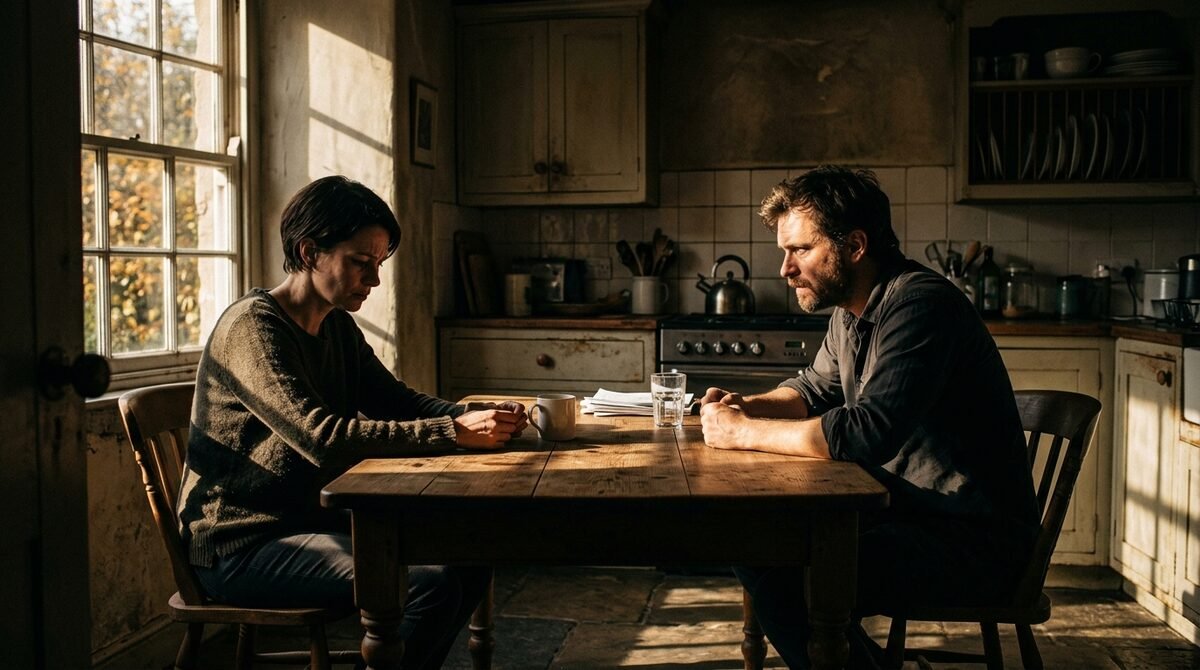
When I finally got back on leave, the tension was thick enough to cut with a knife. I went to the house, not as a guest, but as an owner. Sarah was there, looking frazzled and thin. The house was still ‘staged,’ which was a joke. I walked through the living room, touching the walls. The emptiness of the place was palpable. She tried to act like nothing had happened, offering me coffee, but I sat at the table and placed the legal folder in front of her.
She started to cry, saying that she had been under so much pressure and that she didn’t know how to handle the expenses. She claimed that she had intended to ‘split the money’ with me eventually. I laughed. It was a cold, hollow sound. If she had intended to split it, she would have called me before listing the house. She would have sent me the paperwork to sign. She would have been transparent. She wanted a payday, and she wanted me to find out when the money was already in her bank account.
“Do you think I’m an idiot, Sarah? You listed the house for $600k. You were going to take the full amount and disappear. Don’t lie to me. It makes you look even smaller than you already are.”
— My confrontation with Sarah in our kitchen
The conversation devolved into an argument that lasted for hours. She brought up my father, accusing me of disrespecting his memory by ‘holding her hostage’ in the house. I reminded her that my father bought the house for me as much as for her. He wanted me to have a place to come back to. She was the one who was desecrating his memory by selling the family legacy for a quick buck to cover her own poor life choices.
She finally admitted that she had accrued massive credit card debt and that the house was her only ‘out.’ She had been living beyond her means for years, and when the money ran out, she looked at the deed and saw a lifeline. She didn’t care about the history, the memories, or the fact that I was serving in the military. I was just a barrier to her solvency. My respect for her, which had been eroding for years, completely vanished in that moment.
I gave her an ultimatum: the listing comes down, the legal fees I incurred are deducted from her future share of the equity, and we put the house in a trust that requires both our signatures for any future transaction. If she didn’t agree, I would take her to court, drag all of her financial dirty laundry into the public record, and ensure she walked away with nothing. She looked at me with pure venom, but she knew she had no choice.
The Internet Weighs In

I posted my story on a popular forum, looking for advice on how to handle the next steps. I didn’t expect the response to be as overwhelming as it was. Thousands of people reached out, sharing their own experiences with inheritance theft and predatory family members. The support was incredible, but the most eye-opening part was the legal perspective. People who worked in real estate, law, and finance reached out to confirm that I had done the right thing by freezing the escrow.
“NTA. You saved your inheritance and held a thief accountable. Do not trust her for a single second moving forward. Keep the house in the trust and make sure she cannot access the equity without your explicit, written consent. She is not your family anymore; she is a business partner you can’t trust.”
— u/LegalEagle88 (Top Comment, 15.2k upvotes)
Others were more focused on the emotional aspect of the betrayal. They encouraged me to cut her off completely once the house matters were resolved. ‘The house is just wood and glass,’ one user wrote, ‘but the betrayal is a hole in your heart that won’t heal if you keep letting her back in.’ It made me realize that even if I saved the house, the relationship was dead. There was no going back to the way things were.
Some people tried to play devil’s advocate, suggesting that maybe she was just desperate, but they were quickly shouted down by the community. The consensus was clear: desperation does not justify fraud. If she had come to me, we could have found a solution. We could have refinanced, we could have sold it together, or we could have found a way for her to move on without destroying me in the process. Instead, she chose deception.
It helped me feel less alone in this. The validation was important. For a while, I had felt like the villain for ‘trapping’ her, but the community reminded me that I was just protecting myself. I wasn’t the one who started the war; I was just the one who was winning it. It gave me the confidence to stand my ground when her family started calling to tell me I was being ‘unreasonable’ and ‘cold-hearted.’ I blocked them all, one by one.
The Legal Cleanup

The process of cleaning up the legal mess took months. We had to interact with the buyers’ lawyers, who were understandably furious that they had been sold a house that wasn’t actually available to be bought. Sarah had to sign a retraction and pay a settlement fee to them. I made sure that the funds for that settlement came entirely out of her personal savings, not the property equity. She fought it, but my lawyer reminded her that the alternative was a court case that would reveal her fraud to everyone.
We finally established the trust. It was a formal, ironclad document that required both of us to sign off on any action involving the house. It effectively stripped her of the autonomy she had abused. I also insisted on a property manager being hired to handle the maintenance and tax payments. I wasn’t going to have her ‘managing’ the property ever again. It was the only way I could sleep at night, knowing that my father’s house was finally secure.
Sarah moved out shortly after the papers were signed. She couldn’t stand the sight of me, and frankly, the feeling was mutual. She moved into a small apartment across town, and I haven’t spoken to her since the day she handed over the keys to the property manager. It was a quiet exit, no dramatic final words, just the sound of a door closing. It felt like a weight had been lifted off my shoulders, a chapter of my life finally coming to a close.
“I hope you find whatever it is you’re looking for, Sarah. But we are done. Don’t call me, don’t write me. The lawyers will handle everything from here on out.”
— My final words to Sarah before she left
The house is still there, standing tall and proud. I visit it when I’m on leave, and for the first time in years, it feels like mine again. It’s not just a memory of my father; it’s a monument to the fact that I protected what was important. I’ve started decorating it my way, slowly replacing the staged furniture she picked out with pieces that actually mean something to me. It’s a work in progress, much like my recovery from the whole ordeal.
Reflecting on the Trust Gap

Looking back, I realize how much I ignored the warning signs. The little lies, the ‘forgotten’ receipts, the way she would get defensive whenever I asked about the house finances. I had labeled them as ‘quirks’ or ‘stress’ instead of seeing them for what they were: cracks in the foundation of our relationship. I wanted so badly to believe that she was the mother figure my father had loved that I blinded myself to the person she really was.
It’s a painful lesson to learn, especially when it costs you your trust in people. But I’ve learned that trust has to be earned, and more importantly, it has to be verified. I’m not as naive as I once was. I ask for receipts. I look at the legal documents. I don’t take people at their word when they say, ‘I have it handled.’ I’ve learned that ‘handled’ often means ‘hidden,’ and that is a lesson that has saved me more times than I care to admit.
I’ve also come to terms with the fact that I don’t need a mother figure in my life right now. I have my own life, my own career, and my own goals. The house is part of my past, and I’m going to make sure it’s part of my future, but I’m no longer tethered to the toxic cycle of trying to please someone who only sees me as a resource. It’s been a liberating realization.
I see others in similar situations on the forums, struggling with the guilt of cutting off toxic family members. I tell them the same thing I told myself: you are not responsible for their happiness, especially when they are actively trying to destroy yours. You don’t owe them your inheritance, your home, or your peace of mind. Standing up for yourself is not a betrayal; it’s a necessity.
The Aftermath and My Current Life

Today, the house is doing well. The property manager has been excellent, and I receive monthly reports on the state of the building, the taxes, and the insurance. Everything is as it should be. I’ve even started a small garden in the backyard, something my father always wanted to do but never had the time. It’s therapeutic. I spend my time there when I’m not deployed, planting seeds and watching things grow, knowing that no one can take this away from me ever again.
Sarah is, as far as I know, still dealing with her own mess. I hear through the grapevine—mutual acquaintances—that she’s struggling, but I don’t reach out. I don’t feel a sense of vindication or joy at her misfortune. I just feel relief that she is no longer a part of my story. It’s a clean slate. I’ve reclaimed my home, and in doing so, I’ve reclaimed a part of myself that I thought I had lost to the conflict.
I’ve also found new people to share my life with. I’ve become close to my father’s old friends, the ones who actually knew him and who never tried to manipulate me. They’ve welcomed me back with open arms, and it feels good to be surrounded by people who have no agenda other than to see me happy. It’s a stark contrast to the hollow, transactional relationships I had with Sarah.
“You’re just like him, you know. He would have handled it exactly the same way. He wouldn’t have let her push him around, and he would have made sure the house was secure for you.”
— A family friend during a recent visit
Hearing that meant the world to me. It confirmed that I did the right thing, that I honored my father’s wishes, and that I was the guardian of his legacy that he knew I could be. The house isn’t just a place to live; it’s a living memory of the man who raised me. And as long as I’m here, that memory is safe, and that legacy is preserved, no matter what challenges come my way.
Why Boundaries Save Legacies

If there is one thing I want people to take away from my story, it is that boundaries are not acts of aggression; they are acts of preservation. Whether it’s your money, your home, or your emotional well-being, you have a right to protect what is yours. People will often try to make you feel guilty for setting those boundaries, calling you names like ‘greedy’ or ‘unfeeling,’ but don’t let that shake you. The ones who hate your boundaries are usually the ones who benefited from you not having them.
I didn’t want to fight Sarah. I didn’t want to freeze the escrow or cloud the title. I wanted a peaceful, cooperative relationship where we both honored my father’s memory. But she gave me no choice. She forced me into a position where I had to choose between being a ‘nice person’ and being a person who survives. I chose to survive, and I have no regrets about that. My father would have expected nothing less.
When you are in the middle of a crisis like this, it’s easy to get lost in the noise of other people’s opinions. You worry about what the family will think, or what the neighbors will say, or if you’re making the right decision. But the only opinion that matters in the end is yours. You are the one who has to live with the consequences of your actions, so make sure they are actions you can stand behind, even when the pressure is at its highest.
I’ve realized that the strength I developed in the military—the ability to assess a threat, develop a plan, and execute it without hesitation—was the exact same set of skills I needed to save my home. It was a strange intersection of my two worlds, but it was essential. Don’t be afraid to use the tools you have to protect what is important to you. Life is not always a polite conversation; sometimes, it’s a battle, and you need to be prepared to fight for what is yours.
The Final Lesson of Ownership

I think about the house every day, but not in the way I used to. It’s no longer a source of stress or anxiety. It’s a home. I’ve learned that ownership isn’t just about a name on a deed; it’s about responsibility. It’s about taking care of something so that it can take care of you. Sarah saw the house as an asset to be liquidated. I see it as a responsibility to be stewarded. That fundamental difference in our perspectives was always going to lead to conflict.
I’ve also learned that people can change, but usually not in the way you want them to. Sometimes they reveal themselves to be something completely different than what you believed. And that’s okay. It hurts, it’s disappointing, but it’s the reality. You have to be able to accept the truth of who people are, rather than holding on to the fantasy of who you want them to be. It’s the only way to move forward with your eyes open.
I am grateful for the journey, even if it was a difficult one. It forced me to grow, to stand on my own two feet, and to become the adult I needed to be. I wouldn’t have been able to handle this five years ago. I would have folded under the pressure. But today, I know who I am, and I know what I’m worth. And I know that no one, not even family, has the right to take that away from me.
I want to thank everyone who supported me through this. The anonymous voices on the internet, the friends who stood by me, and the legal professionals who helped me navigate the mess. You all made a difference, and I will never forget it. This story is as much yours as it is mine. We are all just trying to navigate a world that isn’t always kind, and knowing that there are others out there who believe in standing up for what is right has been a source of comfort I can’t even describe.
Moving Forward: A New Chapter

As I look toward my future, I’m filled with a sense of calm that I never thought I’d find. The legal battles are behind me, the house is secure, and I’m ready to start a new chapter of my life. I’m not looking for revenge, and I’m not looking for closure in the form of an apology from Sarah. I’ve already found that within myself. I’ve closed the book on that part of my life, and I’m ready to start writing the next one.
I’m planning on staying in the house for as long as I can, keeping it in the family for as long as possible. It’s a piece of history, and I feel like it’s my job to protect it. I have big plans for renovations and updates, things that I’ve been saving for and that I’m excited to start. Every project is a testament to the fact that I’m still here, and I’m still standing.
If you are going through something similar—if you are dealing with a family member who is trying to take what is yours—know this: you have the power to stop them. It might be hard, it might be painful, and it might be a long road, but it is possible. You are not a victim unless you choose to be. You are the architect of your own life, and you have the power to draw the boundaries that will keep your home and your heart safe.
Thank you all for listening to my story. It’s been a long and winding road, but I’ve finally arrived at a place where I can breathe again. I hope that by sharing this, someone else can find the courage to stand up for themselves and protect what is truly theirs. Never settle for less than you deserve, and never let anyone make you feel small for wanting to keep what is rightfully yours.
Conclusion
My experience has been a stark, sobering look at the reality of family dynamics when financial stakes are high. It is incredibly easy to believe that blood is thicker than water until the moment the money enters the picture. For any of you reading this who might find yourselves in a similar situation, remember that legal protections exist for a reason. Do not feel ashamed of using them. A deed is not just a piece of paper; it is a boundary, and sometimes, you must defend that boundary with everything you have.
I’ve walked away from this with a house, yes, but also with a much clearer understanding of my own capacity for resilience. The internet community played a massive role in helping me realize I wasn’t the ‘villain’ for acting in self-defense, and I am grateful for that perspective. How do you feel about this? Would you have frozen the assets, or would you have tried to talk it out even after she betrayed you? Let’s talk in the comments below.
Reader Poll: Should I have offered her a small buyout to walk away, or was the ‘no-contact’ route the only way to ensure the house stayed protected?
What's your verdict on this dilemma?
Vote below to contribute to the official community consensus.

Have a Dilemma Keeping You Up at Night?
Share your real-life feud, wedding chaos, or relationship crossroads anonymously with our editorial team.
What do you think ?
0 Comments🛡️ Comments are moderated to protect community integrity. Your comment will appear once approved by the editorial team.