

When you spend three years building a life with someone, you learn the rhythm of their secrets. You learn which drawers they keep locked, why they suddenly start working late on Tuesdays, and exactly how they react when the topic of finances comes up. For me, the person was Mark, a man whose public persona was as sturdy and reliable as the suit he wore to his corporate firm. His parents, wealthy and well-meaning, viewed him as the golden child—the responsible, career-focused son who was finally ready to settle down with a girl ‘from a good background.’
The engagement wasn’t just a promise; it was a performance. We were the couple that everyone envied, the ones whose Instagram feed suggested a life of quiet luxury and inevitable success. But behind the scenes, the foundation was crumbling under the weight of a secret gambling addiction that I had spent months trying to mitigate. I believed I was the only thing holding the dam together, until the day I found out he had been siphoning our wedding savings into offshore accounts under the guise of ‘market investments.’
The break-up was quiet, cold, and final. I left with my dignity and my own savings, leaving him to deal with the wreckage he had created. But the story didn’t end there. Two months later, I received an invitation to a housewarming brunch. Mark’s parents were gifting him a starter house—a significant down payment and a mortgage co-sign. They were buying him a future he hadn’t earned, one built on the same lies that had cost me my own stability.
I wasn’t invited because I was still his partner, but because they believed I was the one who had ‘lost her mind’ and broken his heart. They were planning to set him up for a life of luxury, and in doing so, they were enabling a monster. I knew that if I stayed silent, I was complicit. This is the story of how I decided to destroy the illusion just hours before the closing papers were signed.
The Fabricated Life of a Golden Child
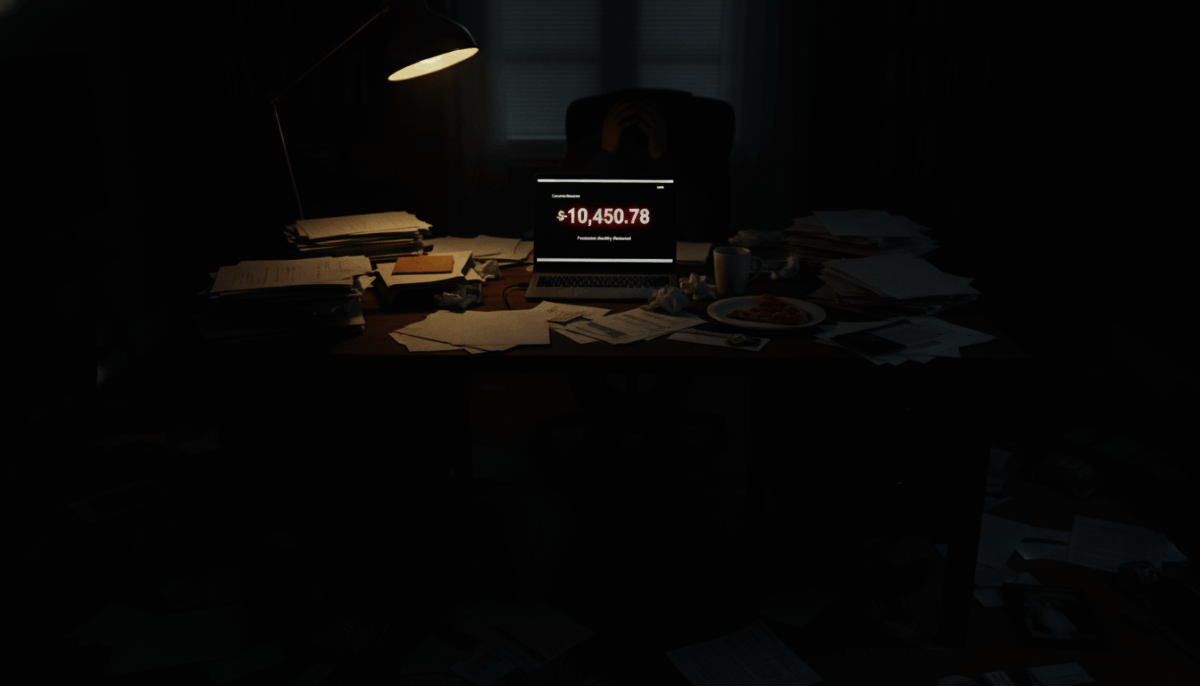
Mark was a master of the narrative. He came from a family where optics were everything. His father, a retired architect, and his mother, a prominent local philanthropist, had a vision of their son’s life that left no room for error. Everything had to be perfect, from the college he attended to the woman he chose to walk down the aisle. I was, for a long time, the perfect accessory to that narrative.
I remember the first time I suspected something was wrong. It wasn’t a bank statement or a mysterious call; it was a change in his behavior. He became twitchy, sweating during casual dinner conversations about the economy. He would leave his phone face down, a habit he had never exhibited before. When I asked him about our wedding fund, he would dismiss me with a practiced ease that made me feel small for even asking.
The financial strain began to show in subtle ways. Our joint account, which we used for groceries and rent, started hitting zero days before payday. Mark would always have an excuse—a bonus that was delayed, a client who hadn’t paid their invoice, a sudden investment opportunity that ‘couldn’t be missed.’ I felt like I was gaslighting myself, trying to reconcile the man I loved with the man who couldn’t seem to manage basic life expenses.
“I just need you to trust the process, Sarah. I’m doing this for us, for the house we’re going to buy. If you keep questioning my financial choices, you’re just showing me you don’t have faith in our future.”
— Mark, during a heated argument about our missing savings
I realized then that ‘trust’ was his favorite weapon. He used it to isolate me from my own intuition. By painting me as the untrusting, nagging partner, he effectively silenced any criticism of his spending habits. I was so blinded by the life we were supposed to have that I failed to see the house of cards he had built around us.
I eventually hired a forensic accountant after I found a receipt for a private casino club that cost more than our monthly rent. The report was devastating. It wasn’t just a few bad bets; it was a systematic looting of everything we had built. He had taken out credit cards in my name, signed loans I hadn’t authorized, and left me with a debt shadow that took me a year to clear.
The Invitation That Triggered the Truth

When the card arrived in the mail, it felt like a sick joke. A thick, cream-colored envelope with gold embossing, inviting me to ‘celebrate a new chapter’ in Mark’s life. His parents were gifting him a home—a beautiful starter house in an upscale neighborhood. It was the kind of security he hadn’t worked a day for, and the kind of security he would undoubtedly squander within a year.
I sat on my kitchen floor, staring at the invitation, feeling a cold fury wash over me. I had worked three jobs to pay off the debts he left behind, sacrificing my own peace of mind to ensure my credit score didn’t die with our relationship. And here he was, being rewarded for his deceit. His parents were buying his loyalty, completely unaware that the son they were coddling was a black hole of financial ruin.
The realization hit me: they were being defrauded just as much as I was. If they signed for this house, they would be tied to his debt for decades. They were setting themselves up for a catastrophe that would eventually drain their own retirement funds once Mark inevitably ran out of options. Was it my place to tell them? The social contract said no, but my moral compass said it was the only way to stop the cycle.
“He’s a good boy, Sarah. He just made a few youthful mistakes. We’re giving him a fresh start. We hope you can be the bigger person and come to the celebration. It would mean a lot to him to have you there to see how well he’s doing.”
— Mark’s Mother, via a phone call
The audacity was breathtaking. They viewed his addiction as a ‘youthful mistake,’ and they viewed me as the bitter ex who needed to be managed. I didn’t respond to her call. Instead, I spent the next three days gathering the physical proof I had kept from our relationship—the bank statements, the debt notices, and the emails I had saved as insurance.
I knew I wasn’t going to the brunch to celebrate. I was going to give them the truth. I didn’t care if it made me the villain in their narrative, because the truth, no matter how ugly, was the only thing that could save them from the financial ruin that was waiting around the corner.
The Sunday Brunch Confrontation

The brunch was held in a pristine, sun-drenched garden. The atmosphere was light, filled with the clinking of champagne glasses and the polite laughter of family friends. Mark looked impeccable, dressed in a crisp linen shirt, greeting guests with the practiced charm that had once made me fall in love with him. When he saw me walking across the lawn, his expression shifted from surprise to a flicker of genuine fear.
He approached me quickly, his hand gripping my elbow with a bit too much force. ‘What are you doing here, Sarah? You weren’t invited to make a scene,’ he hissed. I pulled away, my composure steady. I wasn’t here to scream or cause a public spectacle; I was here to deliver a document that would change his life forever. ‘I’m here to give your parents a gift, Mark. Something they should have had months ago,’ I replied.
His parents, seeing the interaction, drifted over with polite smiles that didn’t reach their eyes. ‘Sarah! We’re so glad you decided to come,’ his father said, though his body language suggested he was bracing for an argument. I didn’t wait for the pleasantries. I reached into my bag and pulled out a manila envelope. It wasn’t heavy, but the weight of what was inside felt like a mountain.
“I thought you deserved to know who you’re actually co-signing for. This isn’t a fresh start for Mark; it’s a hole you’re digging for yourselves. Read these, and then tell me if you still want to sign those papers tomorrow.”
— My words to Mark’s parents, in front of the gathered guests
The silence that followed was absolute. The birds seemed to stop singing, and the air turned heavy. Mark tried to grab the envelope from his father’s hand, but his mother pulled it back, her eyes narrowing as she began to scan the first page. The color drained from her face, and for the first time, I saw the mask of the perfect family crumble.
Mark’s face turned bright red, a mixture of rage and panic. He started to stutter, claiming it was all ‘old news’ and ‘misunderstandings,’ but the evidence was irrefutable. I watched as the reality of his double life hit his parents, their posture slumping as the pride they held in their son turned into a cold, hard shock.
The Aftermath: When the Illusion Breaks

The scene didn’t end in a dramatic exit. It ended in a slow, agonizing realization. His father took the documents and walked toward the study, his mother following him without a word. Mark tried to follow, but his father stopped him at the door with a single, sharp gesture. I was left standing in the garden with the guests, who were now staring with a mixture of curiosity and discomfort.
I didn’t wait around for the fallout. I walked out of the garden, feeling a lightness I hadn’t experienced in years. The weight of the secret, the burden of his lies, and the fear of his manipulation had finally been lifted. I knew that by the time they walked out of that study, the house purchase would be canceled, and Mark would be facing a very different kind of reality.
Later that evening, my phone blew up with messages. Some were from his mother, asking for clarification on specific dates, others were from Mark, ranging from pathetic pleas for forgiveness to vitriolic threats about legal action. I didn’t respond to any of them. I had given them the truth; how they chose to act on it was their burden to carry, not mine.
“I hope you’re happy. You’ve destroyed everything I worked for. My parents have cut me off, and they’re demanding I pay them back for the therapy they paid for last year. You are truly a bitter, vindictive person.”
— A text message from Mark, sent three hours after I left
I realized then that he still didn’t get it. He saw himself as the victim, even after I had provided proof of his systematic deception. He expected me to be the ‘bigger person’ and let him continue his cycle of abuse. But I had played that role for three years, and I was done. I wasn’t vindictive; I was simply refusing to be a silent participant in his ongoing fraud.
I blocked his number and went to bed with a sense of peace that was worth every second of the confrontation. The next day, I found out the house sale was officially off. His parents had indeed pulled the plug, and they were, according to a mutual friend, ‘reassessing their relationship’ with their son. It was the only outcome that made sense.
The Reddit Verdict: Echoes of the Internet
When I shared this story on an anonymous forum, the response was overwhelming. Thousands of people weighed in, and the discourse was as polarized as it was passionate. The debate centered on whether I had overstepped a boundary, or if I had performed a necessary public service by preventing a financial disaster.
Many users argued that I had every right to show the parents the truth. They pointed out that if you are co-signing a loan, you have a right to know the financial health of the person you are entering into a contract with. The idea that families should keep secrets even when they lead to financial ruin was heavily criticized as a toxic byproduct of ‘keeping up appearances.’
However, there were also those who felt that I should have stayed out of it. They argued that my motives were fueled by spite and that I should have let Mark fail on his own terms. They worried about the ‘messiness’ of getting involved in a family’s private business, even if that business was fundamentally built on a lie.
“OP, you didn’t just break up a house purchase; you broke up a generational cycle of enabling. That man was going to ruin his parents’ credit just like he tried to ruin yours. NTA. This is exactly what accountability looks like.”
— u/JusticeSeeker88 (Top Comment, 32.5k upvotes)
The community engagement was a window into how many people have faced similar situations—partners who hide debt, parents who enable bad behavior, and the immense pressure to keep quiet to protect a family’s reputation. It was validating to see that I wasn’t alone, and that my decision, while painful, resonated with so many who had been in the same position.
Reading the comments, I saw a reflection of the many ways people rationalize toxic behavior. Some users shared their own stories of ‘The Golden Child’ who could do no wrong, and how those stories always ended in financial, emotional, or legal catastrophe. It reinforced my belief that silence is often the fuel that keeps these fires burning.
Reflecting on the Cost of Truth

Looking back, I don’t regret what I did. The cost of telling the truth was losing my ‘perfect’ status in the eyes of his family, but the benefit was gaining my own freedom. I had spent so long managing Mark’s reputation that I had forgotten to protect my own peace of mind. By breaking the cycle, I forced a confrontation that was long overdue.
There is a specific kind of trauma that comes from being the partner of an addict who hides their problems behind a veil of success. It’s an exhausting, lonely existence. You constantly scan the horizon for the next disaster, trying to patch the holes in the boat while the captain continues to steer it toward the rocks. Leaving wasn’t just a breakup; it was an escape.
I’ve since moved on to a life that is much quieter, and significantly more honest. I value transparency in my current relationship more than anything else. We talk about money, we talk about our goals, and we talk about our fears. There are no secrets, no hidden accounts, and no need to curate a life for the benefit of anyone else’s perception.
“The most expensive thing you can buy is a secret. It costs you your peace, your integrity, and eventually, the people who love you most.”
— A reflection on the nature of financial dishonesty
I know that some people will always see me as the person who ‘blew up’ the engagement. They will focus on the public nature of the confrontation rather than the substance of the issue. But those people aren’t living my life, and they aren’t the ones who had to deal with the consequences of Mark’s actions. I stand by my decision to pull the veil back.
Ultimately, the lesson I learned is that we are responsible for the truth, even when it’s uncomfortable. We cannot fix someone else’s addiction, and we cannot protect them from the consequences of their own choices. All we can do is refuse to be a part of the lie. And sometimes, that refusal is the most powerful thing we can do.
The Anatomy of Financial Betrayal

To understand why this was necessary, one must look at the specific financial damage. It wasn’t just ‘a gambling problem.’ It was a systemic effort to drain every resource I had. When I look back at the ledgers now, it’s chilling. He would move money from our joint account into his personal crypto-wallet, then use high-interest credit cards to pay for our groceries. He was literally paying for our daily bread with debt while gambling away our future house savings.
The deception was layered. He had apps that hid his spending, and he had a ‘financial advisor’ who was actually just an online betting platform interface. He was living a double life that required constant vigilance. Every time I questioned a charge, he would gaslight me, telling me I was ‘stressed’ or ‘overreacting’ to normal market fluctuations.
I started keeping my own log, not because I wanted to trap him, but because I was losing my mind. I needed to see reality in black and white. When I eventually brought this evidence to his parents, I wasn’t just showing them ‘bad behavior.’ I was showing them a pattern of financial abuse that would have destroyed them if they had signed that mortgage with him.
| Category | Mark’s Claim | The Reality |
|---|---|---|
| Wedding Fund | Invested in low-risk stocks | Lost in offshore casino |
| Credit Cards | Used for minor household needs | Cash advances for bets |
| Joint Account | Used for daily living | Drained for deposits |
When his parents finally understood the extent of the fraud, the realization wasn’t just about money. It was the realization that they didn’t know their son at all. They had been nurturing a ghost, a version of him that existed only in their expectations. It was a painful, necessary collapse of the reality they had constructed.
When the Family Values the Image Over the Human

One of the most difficult parts of this ordeal was navigating his parents’ denial. They are good people, but they are deeply invested in the ‘perfect family’ narrative. They would rather have a successful, image-perfect son who is deeply flawed than an honest, struggling son who is working toward recovery. This, to me, is the root of the problem.
By gifting him a house, they weren’t helping him. They were subsidizing the status quo. They wanted him to look like he was doing well so they could brag about it at their country club. They were willing to overlook his erratic behavior as long as the facade of the ‘successful young professional’ remained intact. My intervention shattered that facade, and they hated me for it.
There is a lesson here for parents. When you enable your children to maintain an image, you are often enabling their destruction. You are telling them that their worth is tied to how they appear to the world, not to the integrity of their character. Mark learned this lesson well, which is why he was so good at hiding his addiction until it became impossible to manage.
“We don’t want to hear these stories, Sarah. We want our son to be happy. If you want to leave him, leave him, but don’t try to poison our relationship with him just because you’re hurt.”
— Mark’s Mother, during our first attempt at a conversation
That conversation was the turning point for me. When they chose the lie over the reality, I knew that I couldn’t rely on them to do the right thing when the house purchase came around. I had to take matters into my own hands, not because I wanted to hurt them, but because I had to protect them from themselves. It was a choice between being a ‘polite’ person or a ‘principled’ one.
The Legal and Emotional Fallout

The fallout was swift. Mark’s family threatened to sue me for ‘slander,’ although they quickly backed down when my lawyer sent them a packet of the documentation I had collected. They realized, quite quickly, that the truth was not libelous, especially when it was backed by bank statements and signed confessions of debt. The threats stopped, but the bridges were burned.
I had to undergo my own process of healing. For a long time, I felt guilty. Did I do the right thing? Was I just being petty? It took months of therapy to realize that my guilt was a remnant of his manipulation. I had been conditioned to feel guilty for holding him accountable. It was a cycle of abuse that I had to unlearn, piece by piece.
Mark eventually moved out of the city. I heard through the grapevine that he’s working in a different industry now, one that doesn’t require the same level of financial stability he was trying to fake. Whether he’s gotten help for his addiction is unknown to me, and frankly, I’ve stopped asking. His recovery is not my responsibility.
“The hardest part of leaving a toxic relationship is realizing that you don’t have to be the one to fix the other person. You can just leave. You can just choose your own peace over their chaos.”
— A thought from my therapist, which kept me grounded
My life has regained its color. I don’t wake up wondering if the bank account is empty. I don’t scan his phone for messages. I don’t apologize for things I didn’t do. I am, for the first time in a long time, the architect of my own life, and the foundation is solid, honest, and entirely my own.
Defining Boundaries in the Age of Social Media

One of the most interesting aspects of this entire situation is how social media exacerbates these problems. We live in a world where everyone is a curator of their own life. We post the vacations, the housewarmings, and the ‘perfect’ relationships, and we hide the debt, the addiction, and the misery. It’s a culture that rewards the mask and punishes the truth.
Mark was a master of this. His social media was a highlight reel of a life that was disintegrating. It created a pressure for me to play along, to be the supporting character in his fictionalized existence. It’s hard to break that spell when everyone around you is living by the same rules of performance. It takes a conscious effort to step out of the spotlight and face the reality of the shadows.
I’ve become much more private since the incident. I don’t feel the need to broadcast my life to validate my choices. The validation I need comes from within, from knowing that I acted with integrity when it would have been much easier to stay silent. It’s a lesson in the value of authenticity over approval.
“Stop living for the Instagram version of your life. Start living for the version that’s messy, real, and actually yours.”
— My advice to friends who struggle with the same pressure
The internet community, in its own way, provided a reality check. By seeing so many people react to my story, I realized that I wasn’t the only one struggling with these pressures. It’s a collective struggle to find truth in a world that is obsessed with optics. We are all trying to navigate this landscape, and sometimes, the best thing we can do is be the person who speaks the truth, even when it’s inconvenient.
Conclusion
In the end, this wasn’t about revenge; it was about integrity. I didn’t set out to destroy Mark’s life; I set out to prevent a financial catastrophe that would have ruined three people: Mark, his parents, and ultimately, my own sense of self. When we are faced with a choice between a lie that keeps the peace and a truth that breaks it, the choice is rarely easy, but it is almost always necessary.
I have moved on, and I hope they have as well. The house was never the issue; the house was merely the stage upon which his deception was finally brought into the light. I am now in a place where my life is my own, free from the weight of his secrets and the exhaustion of his performance. It is a quiet life, but it is a genuine one.
What about you? Have you ever had to be the one to ‘break the news’ that ruined a beautiful facade? Have you ever been in a situation where you had to choose between being the villain for the sake of the truth or the hero for the sake of a lie? Let’s talk about it in the comments below.
What's your verdict on this dilemma?
Vote below to contribute to the official community consensus.

Have a Dilemma Keeping You Up at Night?
Share your real-life feud, wedding chaos, or relationship crossroads anonymously with our editorial team.
What do you think ?
0 Comments🛡️ Comments are moderated to protect community integrity. Your comment will appear once approved by the editorial team.