
Christmas has always been a complicated production in our house, a delicate dance of seating charts, dietary restrictions, and the performative joy of gift-giving. My stepmother, Claire, is the conductor of this orchestra, and she takes her role as the family gatekeeper with terrifying seriousness. For years, I have walked on eggshells, trying to earn a crumb of her approval, but this year, the tension reached a boiling point that even the most festive tinsel couldn’t cover.
The catalyst for the explosion wasn’t an argument about inheritance or an uninvited guest. It was a gift. Not just any gift, but a meticulously planned, custom-commissioned portrait of my late mother that I had spent months arranging, intended for my father to cherish. I had handed the package to Claire days before the brunch, trusting her to place it under the tree as requested. I should have known better than to trust her with anything that took the spotlight off of her.
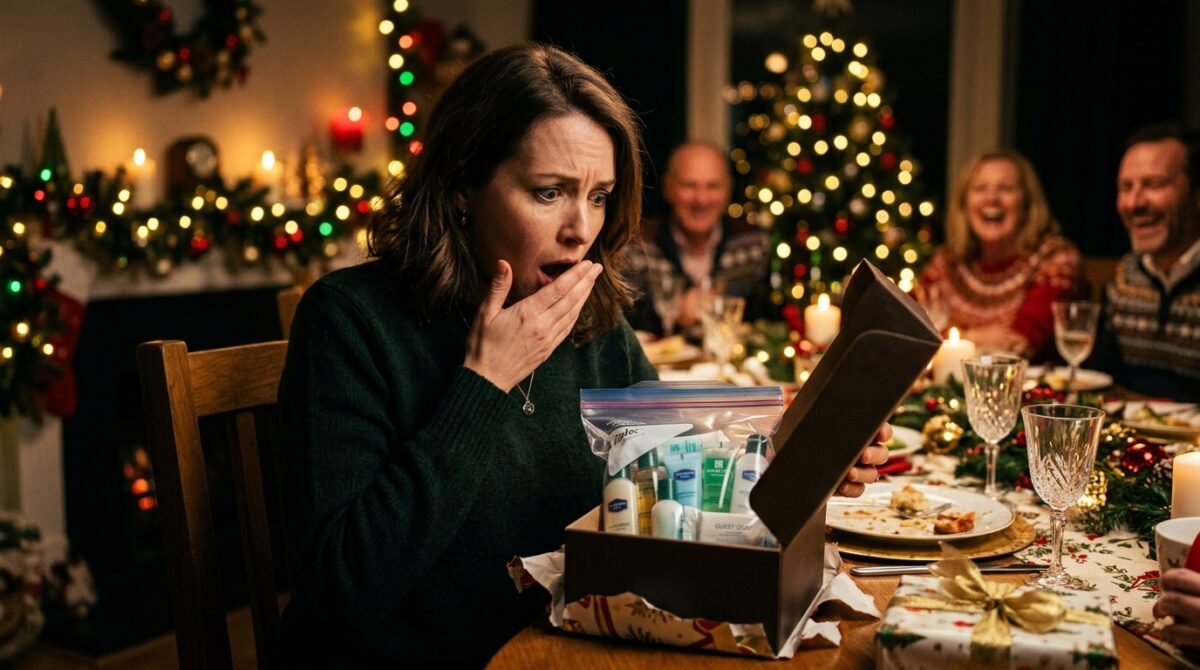
When I arrived at the brunch, the air was already thick with the scent of pine and manufactured cheer. Everyone was seated, sipping mimosas, while Claire presided over the gift pile like a queen holding court. When my name was called to open my gift from ‘the family,’ I felt a flicker of hope. That hope was extinguished the moment I tore the paper off a box that felt suspiciously light.
Inside, there was no custom frame. There was no thoughtful gesture. Instead, I found a collection of half-used hotel toiletry bottles—tiny, mismatched plastic containers of shampoo, body wash, and lotion that looked like they had been scavenged from a mid-range airport hotel room. The silence that followed was deafening, the kind of silence that marks the end of a long-standing peace treaty.
What followed was not just a walkout, but a full-scale dismantling of the carefully curated narrative my family had maintained for a decade. It was the moment I realized that my presence in this house was no longer a relationship, but a burden that I was no longer willing to carry. I stood up, left the hotel-branded trash on the table, and walked out of the house, leaving behind the ghost of the daughter I was expected to be.
The Commission That Cost A Small Fortune
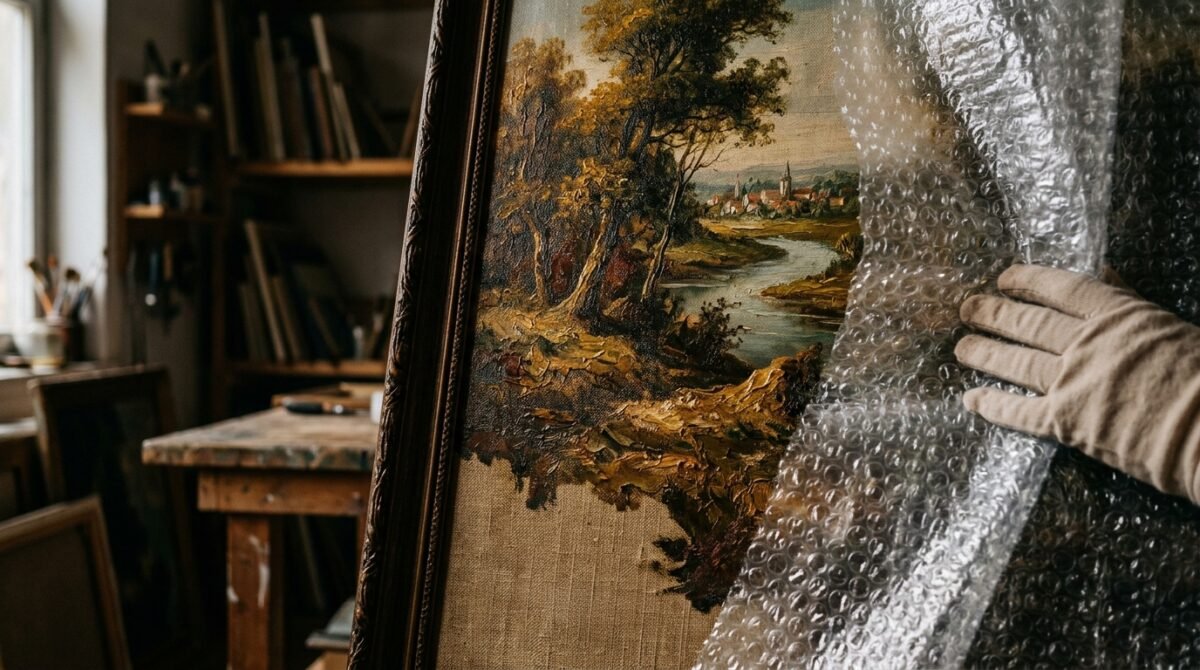
The story began four months prior. My mother passed away when I was twelve, and while my father had moved on with Claire, the void of her memory remained a sore spot. I wanted to do something special for my father this year—a high-quality, oil-on-canvas portrait of them together, based on a faded photograph from their first anniversary. I worked with a local artist for months, refining every detail, ensuring the lighting was perfect and the likeness was unmistakable.
The portrait cost me nearly three months of savings. I wasn’t just paying for the paint; I was paying for a piece of my history to be preserved. When I finally received the finished piece, it was breathtaking. I kept it hidden in my closet, wrapped in layers of bubble wrap, waiting for the right moment to present it. I knew Claire wouldn’t like the sentimentality of it, but I didn’t care. It was for my dad.
I brought it over to their place on December 23rd. I told Claire, ‘This is for Dad. Please, just keep it safe until the brunch. It’s very fragile.’ She had smiled that thin, practiced smile of hers and nodded. ‘Of course, darling. Put it in the guest bedroom closet. It will be perfectly safe there.’ I walked out of that house feeling lighter than I had in years, believing for once that I had done something right.
The days leading up to Christmas were filled with anxiety. I kept checking my phone, hoping for a hint of curiosity from my dad, but there was nothing. I assumed they were keeping the surprise under wraps. I didn’t realize until I walked into the dining room on Christmas morning that the gift had been moved, shifted, and eventually discarded.
Looking back, I see the warning signs. The way she would casually mention ‘clutter’ whenever I brought something sentimental into the house. The way she would rearrange my belongings if I left them on a table for more than ten minutes. She didn’t just want a tidy home; she wanted a home where the past didn’t exist unless she allowed it to.
“I just need you to keep this safe, Claire. It’s the most important gift I’ve ever bought for him. Please don’t let anything happen to it.”
— Me, pleading with her two days before Christmas.
The Mismatched Contents Of The Gift Box
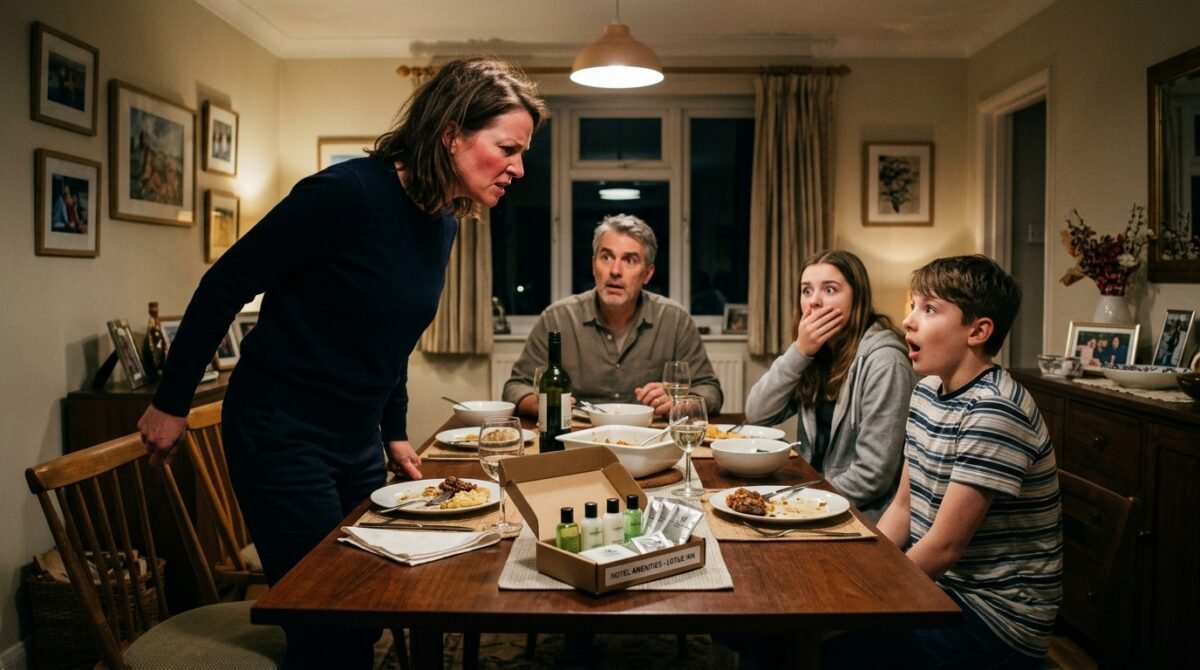
When I reached into the box at the brunch, I was expecting the weight of a wooden frame. Instead, my hand hit something plastic and rattling. I pulled out a handful of white plastic bottles. ‘Marriott,’ one read. ‘Holiday Inn Express,’ read another. There was even a tiny tube of toothpaste that had been squeezed to the point of collapse.
I stared at the pile for a long time. The entire room went quiet. My aunt, who was usually the first to fill any silence with gossip, stared at the box with her mouth slightly open. My father looked confused, his fork hovering halfway to his mouth. Claire, however, was beaming with a self-satisfied smirk that made my skin crawl.
“I thought you were always complaining about needing travel-sized things for your trips,” Claire said, her voice dripping with artificial sweetness. “I know how much you travel for work, and I thought this would be a much more practical gift than just more things to gather dust in your apartment.”
I looked at the box again. It wasn’t just the absurdity of the gift; it was the sheer, calculated malice behind it. She had gone out of her way to collect these. She had gathered trash and wrapped it as if it were a thoughtful consideration of my lifestyle. It was an insult designed to make me feel small, to remind me that in her house, my needs—and my memories—were secondary to her whims.
I didn’t scream. I didn’t cry. The rage was cold, a slow-burning fire that started in my chest and radiated out to my fingertips. I stood up, the chair scraping loudly against the hardwood floor. My father looked up at me, his eyes wide. ‘What’s wrong?’ he asked, clearly still oblivious to the gravity of the insult.
“You took my mother’s portrait, Claire. You took a gift that meant everything to me, and you replaced it with actual garbage from a hotel trash bin. Do you think I’m stupid?”
— My voice, steady but loud enough to stop the entire room.
The Silence Of A Father Who Didn’t See

My father’s reaction was almost worse than Claire’s malice. He didn’t defend me. He didn’t even acknowledge that something was wrong. He just looked between me and the box, clearly wanting to avoid any conflict that might ruin the brunch. He cleared his throat and tried to laugh it off, a sound that was hollow and desperate.
“Now, let’s not overreact,” he said, reaching for his wine glass. “Claire was just trying to be funny. You know she has a bit of a dry sense of humor. It’s Christmas, let’s just enjoy the meal. Maybe we can find your gift after we’re done eating.”
The ‘maybe’ was the final nail in the coffin. He didn’t know where it was. He hadn’t seen it. Claire had hidden it so well that he didn’t even know it had been replaced. The realization that he wasn’t even aware of my efforts for him broke something inside me. I realized that for years, I had been trying to bridge a gap that he had already filled with a replacement.
I looked at him, really looked at him, and saw a man who had long ago traded his autonomy for a quiet life. He wasn’t a bad man, but he was a weak one, and his weakness had allowed Claire to turn our family home into a fortress of her own ego. He wasn’t going to stand up for me. He was never going to stand up for me.
I took a deep breath, the smell of roasted turkey suddenly making me feel physically ill. ‘It’s not in the house, Dad,’ I said, my voice barely a whisper now. ‘She didn’t move it. She threw it out. Or worse, she’s holding it hostage. Either way, I’m done.’
“It’s not a joke, Dad. She took something irreplaceable and replaced it with garbage. If you can’t see why that’s a problem, then I don’t know what else there is to say.”
— Me, addressing my father during the confrontation.
Walking Out And The Door That Slammed Behind Me

I didn’t wait for them to finish their argument. I didn’t wait for an apology that I knew would never come. I grabbed my coat from the hallway closet, the heavy wool feeling like armor against the cold air outside. Claire followed me to the door, her face a mask of faux concern that didn’t reach her eyes.
“Are you really going to make a scene over a little misunderstanding?” she called out, her voice loud enough for the neighbors in the kitchen to hear. “You’re being incredibly dramatic, and you’re ruining everyone’s morning. Just sit down and have some coffee.”
I turned to look at her one last time. There was no fire left, just a cold, crystalline clarity. I didn’t owe her anything. I didn’t owe the family a performance of happiness. I opened the front door, the winter chill hitting me like a physical weight, and stepped out into the driveway. The sound of the door closing behind me was the loudest thing I had ever heard.
As I walked to my car, I could hear my phone buzzing in my pocket. A barrage of texts was already starting, a mix of pleas from my aunt to ‘just come back’ and demands from my stepmother to ‘not make a fool of yourself in public.’ I ignored them all, throwing my phone onto the passenger seat and starting the engine.
The drive home was a blur of tears and adrenaline. I felt like I had just escaped a prison, even though I was just leaving a house I had grown up in. I realized that the house hadn’t been my home for a long time. It was just a place where I went to be disappointed.
“Don’t come back until you’re ready to apologize for your behavior. This is not how we treat family.”
— A text message from Claire sent minutes after I left.
The Digital Fallout And The Group Chat Explosion
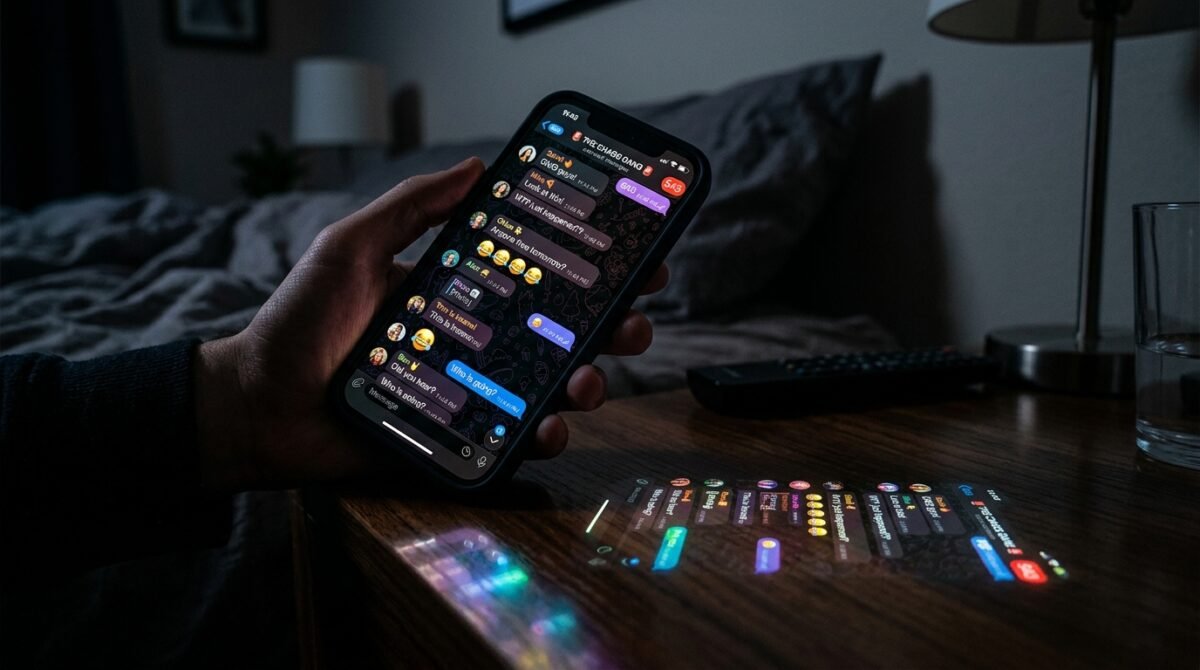
By the time I reached my apartment, the family group chat was in a state of absolute chaos. My phone was vibrating off the table with messages from cousins, aunts, and even people I hadn’t spoken to in years. Claire had clearly shared her version of the story, painting me as a spoiled, ungrateful brat who had ruined Christmas over a ‘misunderstanding about a gift.’
The messages were brutal. Some were direct attacks, others were ‘concerned’ questions about my mental health. I scrolled through them, reading the venomous words with a strange sense of detachment. It was like watching a movie about someone else. The sheer projection of their narrative was almost impressive.
I didn’t respond to any of them. I took a screenshot of the group chat, muted the notifications, and set my phone aside. I didn’t need to defend myself to people who were only interested in preserving the status quo. If they wanted to believe that I had thrown a tantrum over travel-sized soap, that was their prerogative.
I did, however, send one message to my father. It was short, direct, and final. I told him that I was taking some time to myself and that I would be in touch when I was ready. I didn’t expect a response, and true to form, I didn’t get one. He was likely too busy listening to Claire explain why the day was still salvageable.
The internet, however, was a different story. I had posted a brief, anonymous version of the situation on a forum I frequented, just to see if I was losing my mind. The response was immediate, overwhelming, and, for the first time that day, validating. People weren’t telling me I was dramatic; they were telling me I had been abused.
“She didn’t just replace the gift; she replaced you. She wanted to see if she could push you to the point of breaking and then blame you for the mess. You didn’t ruin Christmas; she did, months ago when she decided she couldn’t stand the memory of your mother.”
— u/TruthSeeker99 (Top Comment, 15.2k upvotes)
Finding The Portrait In The Attic

Three days later, I received a package in the mail. It was a box, significantly larger than the one I had opened on Christmas. Inside, wrapped in a plain brown paper, was the portrait. It wasn’t damaged, but it had clearly been discarded in a hurry. The frame was scratched in several places, as if it had been shoved into a tight space and then dragged out again.
There was no note. No apology from my father. Just the portrait. Seeing it again, I didn’t feel the surge of joy I had felt when I first commissioned it. I felt a deep, hollow ache. It was a beautiful piece of art, but it now carried the weight of the rejection I had faced. It wasn’t just a portrait of my mother; it was a symbol of the war I had finally, officially, lost.
I hung it up in my own apartment, right in the center of the living room. It was the first thing I saw when I walked in, and the last thing I saw when I left. It was a reminder that I was enough, even if my father couldn’t see it. It was a reminder that I had a past, a history, and a legacy that didn’t need their approval to be valid.
I spent the rest of the week in a state of quiet reflection. I started looking into family therapy, not for us, but for me. I needed to understand why I had stayed so long, why I had allowed myself to be molded into a shape that Claire could tolerate. I realized that my need for my father’s approval had blinded me to the reality of the situation.
The portrait was safe. I was safe. And for the first time, I felt like I was starting to build a life that was truly mine. The hotel toiletries were still in the box in my closet, a bizarre, trash-filled relic of a family dynamic that I was finally leaving behind.
“I found it in the attic, under a pile of old blankets. She told me you left it behind because you didn’t like the frame. I’m sorry. I didn’t know what to do.”
— A short note from my father, sent with the returned portrait.
The Reddit Trial: NTA Or ESH?
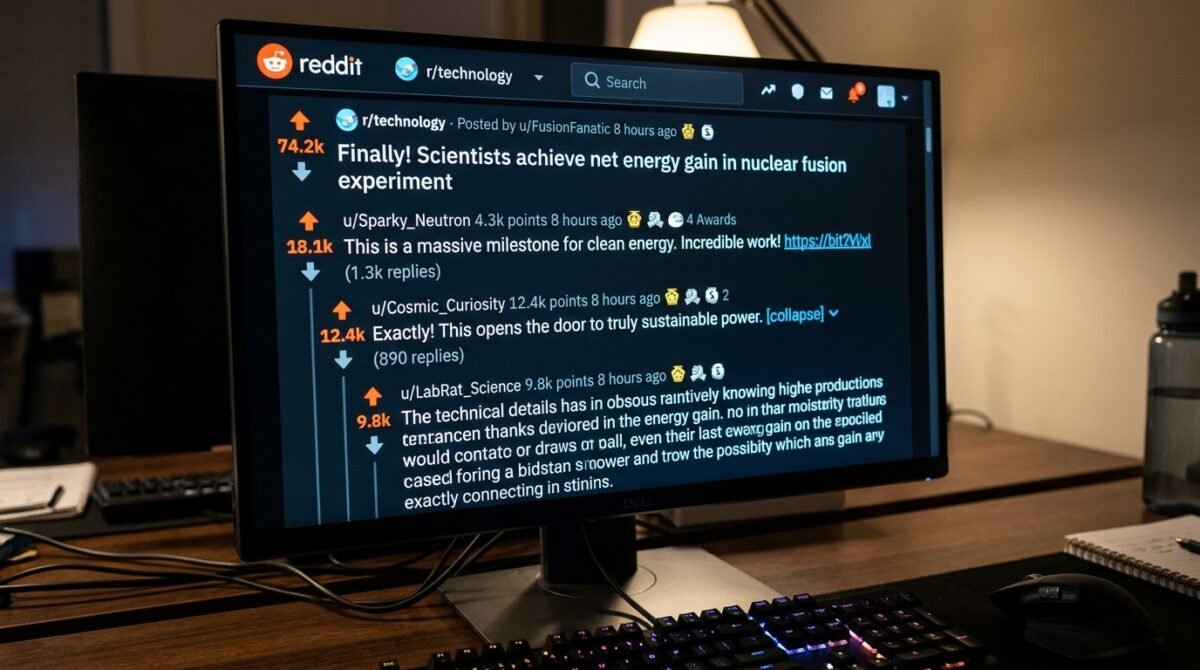
The online discussion about my story continued to grow. Thousands of people weighed in, debating the nuances of my reaction. Some were fiercely protective, telling me that I should have done more than just walk out—I should have confronted Claire in front of everyone, made her admit to the sabotage, and left my father with a firm ultimatum.
Others, however, were more pragmatic. They argued that I had handled it with grace, that walking out was the most powerful thing I could have done. They pointed out that trying to win a fight against a narcissist like Claire was a losing battle, and that by leaving, I had reclaimed my power in a way that words never could. The ‘NTA’ (Not The Asshole) votes were overwhelmingly in the majority.
I read through the comments for hours, finding solace in the shared experiences of others. It was comforting to know that I wasn’t alone, that there were thousands of people who had lived through similar betrayals. The community analysis was more than just validation; it was a roadmap for how to move forward, how to set boundaries, and how to heal.
There were also some who suggested legal action, or at least a formal demand for an explanation. They spoke about the ‘gaslighting’ and the ’emotional abuse’ in terms that I hadn’t yet been able to articulate. Seeing the situation labeled for what it was—abuse—was a turning point. It made the pain feel less like a personal failure and more like a response to an external reality.
I started to realize that the brunch wasn’t just a single event; it was the culmination of a decade of small, incremental erosions. Every time I had let Claire push a boundary, every time I had stayed quiet to keep the peace, I had been training her to treat me this way. I wasn’t just a victim of her malice; I was an accomplice to my own unhappiness.
“You didn’t ‘ruin’ Christmas. You gave yourself the greatest gift you could have: the freedom to never have to sit at that table again.”
— u/GraceUnderPressure (Top Comment, 8.9k upvotes)
Defining Boundaries In The New Year

The new year brought a new perspective. I decided to go ‘low contact’ with my father. I didn’t want to cut him off entirely—he was still my father, and I still held out hope that he might one day see the reality of his situation—but I was done with the performative family gatherings. I wouldn’t be attending any more brunches, dinners, or holidays where Claire was in charge of the menu or the seating chart.
I sent my father a letter. Not a long, rambling confession, but a clear, concise statement of what I needed. I told him that I loved him, but that I could no longer be a part of a household where I was treated with such blatant disrespect. I told him that if he wanted to see me, it would be on my terms, in a neutral location, without Claire.
The response was silence. I didn’t expect anything else. But for the first time, the silence didn’t feel heavy. It felt like space. Space to breathe, to grow, to be myself without the constant pressure of being someone else’s idea of a daughter. I felt a sense of relief that I hadn’t known was possible.
I started investing my time in my own life, in my own friends, and in my own future. I found a local support group for people dealing with family conflict, and for the first time, I felt like I was part of a community that actually cared about my well-being. I was no longer defined by the expectations of a house that didn’t want me.
The hotel toiletries were still in the box, but I had moved them to the back of the pantry, hidden behind the things I actually used. I didn’t throw them away, though. I kept them as a reminder of where I had been, and how far I had come. They were a souvenir of my departure, a testament to the day I decided to stop being a guest in my own life.
“I love you, Dad. But I’m not coming back to that house. If you want to see me, we can meet for lunch, but I need you to understand that I’m done with the way things are.”
— From my final letter to my father.
The Aftermath: A Life Reclaimed
It has been six months since that Christmas brunch. My father and I have met twice, once for coffee and once for a quick lunch. Both times, he tried to bring up ‘the incident,’ and both times, I shut it down. We talked about his work, about the weather, about anything other than Claire. It was awkward, it was strained, and it was the best we could do.
Claire hasn’t reached out, and for that, I am grateful. She continues to post photos of their perfect life on social media, images of her hosting dinner parties and decorating for holidays that I am no longer a part of. I scroll past them with a sense of detachment that borders on apathy. She can have that house, and she can have that life. It was never for me.
I have started to see the world differently. I am more aware of my own worth, more willing to speak up when something feels wrong, and more confident in my ability to set boundaries. I realized that my happiness isn’t dependent on the approval of people who don’t know how to give it. I am the architect of my own life, and I am building something that is sturdy, authentic, and entirely my own.
I still look at my mother’s portrait every day. It doesn’t bring me the sadness it once did. Now, it just brings me peace. It reminds me that I come from a place of love, even if that love was short-lived. It reminds me that I am capable of honoring my history without letting it hold me hostage to a future that doesn’t belong to me.
I don’t know what the future holds, or if I will ever have a ‘normal’ relationship with my father. But I know this: I am never going back. I am never going to sit at that table again. And for the first time in my life, I am okay with that.
“Sometimes the bravest thing you can do is just walk away. You don’t need to win the argument; you just need to win your own life back.”
— Advice from my therapist, which I have written on my mirror.
Looking Forward To A New Tradition

With the next holiday season approaching, I’ve decided to start my own traditions. I’ve invited a few close friends to my apartment for a dinner. It won’t be a fancy, over-the-top production. There won’t be a seating chart or a mountain of gifts. It will be simple, honest, and filled with people who actually care about each other.
I am looking forward to the quiet, the lack of pressure, and the genuine connection. I am looking forward to being the one in charge of the menu, and the one who decides how the room should feel. I am looking forward to a holiday that feels like a celebration, not a chore.
The past is a place I visit, but no longer a place I live. I have learned that I don’t need a family to be happy; I just need a community, and I have found one. I have learned that the people who love you will respect your boundaries, and the people who don’t are not your responsibility to fix.
I am ready for whatever comes next. I have the portrait, I have my voice, and I have the strength to stand tall. I am not the daughter I was expected to be, and I am finally, truly okay with that. I am just myself, and that, I’ve realized, is more than enough.
To anyone out there struggling with a similar situation, my advice is simple: trust your instincts. If a situation feels wrong, it probably is. If you feel small, you probably are. And if you have the chance to walk away, take it. It might be the hardest thing you ever do, but it will also be the best.
“Whatever you choose to do, make sure it’s for you. Not for them, not for the memories, and not for the status quo. Only for you.”
— My closing thought for anyone in my shoes.
Conclusion
Reflecting on this journey, I realize that the jar of hotel toiletries was never the point. It was a symptom of a much larger, deeper issue of erasure and entitlement that had poisoned my family life for years. By walking out, I wasn’t just rejecting a gift; I was rejecting the systematic devaluation of my existence within that home. The pain was real, but the freedom that followed was, and remains, entirely worth it.
We often stay in toxic situations because we fear the unknown or because we cling to the fantasy of ‘what could be.’ But sometimes, the best way to honor our past is to protect our future. I chose to save myself, and I hope this story serves as a reminder to anyone feeling trapped that you have the right to leave any table where you are not treated with the respect you deserve.
Now, I’d love to hear from you. Have you ever reached a point where you had to walk away from a family gathering, and how did you handle the aftermath? Does setting boundaries with parents get easier, or is it a lifelong negotiation? Share your thoughts in the comments below.
What's your verdict on this dilemma?
Vote below to contribute to the official community consensus.

Have a Dilemma Keeping You Up at Night?
Share your real-life feud, wedding chaos, or relationship crossroads anonymously with our editorial team.
What do you think ?
0 Comments🛡️ Comments are moderated to protect community integrity. Your comment will appear once approved by the editorial team.