

Growing up, most kids worry about their grades, their social life, or whether they’ll make the varsity team. For me, the primary focus of my teenage existence was the ‘monthly invoice.’ Every single month, like clockwork, my parents would slide a neatly typed slip of paper under my bedroom door. It was an itemized list of my share of the mortgage, the utilities, and the grocery bill. I started working at sixteen, flipping burgers and stocking shelves, just so I could afford the rent on the bedroom I’d been assigned since birth.
My friends thought it was a quirk, a strange eccentricity of my parents’ parenting style. My parents called it ‘teaching financial responsibility.’ I called it an extraction of my youth. Every dollar I made went into their hands, justified by the promise that I was learning the value of a hard day’s work. I missed out on road trips, concert tickets, and the simple freedom of being a teenager because my bank account was perpetually drained by the very people who were supposed to be providing for me.
Years passed, and I eventually escaped that house, grinding through college and landing a high-paying career in tech. I built my own life from the ashes of my forced frugality. I bought my own home, furnished it with things I chose, and finally experienced the comfort of financial security. I thought the transactions were over, that the ledger had been closed the day I moved my last box into my own apartment.
Then, the phone calls started. My parents, now approaching retirement age, suddenly realized that their golden years weren’t looking quite as golden as they had projected. They hadn’t saved, they hadn’t planned, and they had apparently assumed that I was their long-term retirement annuity. They didn’t ask; they demanded. And when I looked back at the decade of rent I’d already paid, I realized that for the first time in my life, I had the power to say the one word they never taught me: No.
The Monthly Invoice of My Adolescence
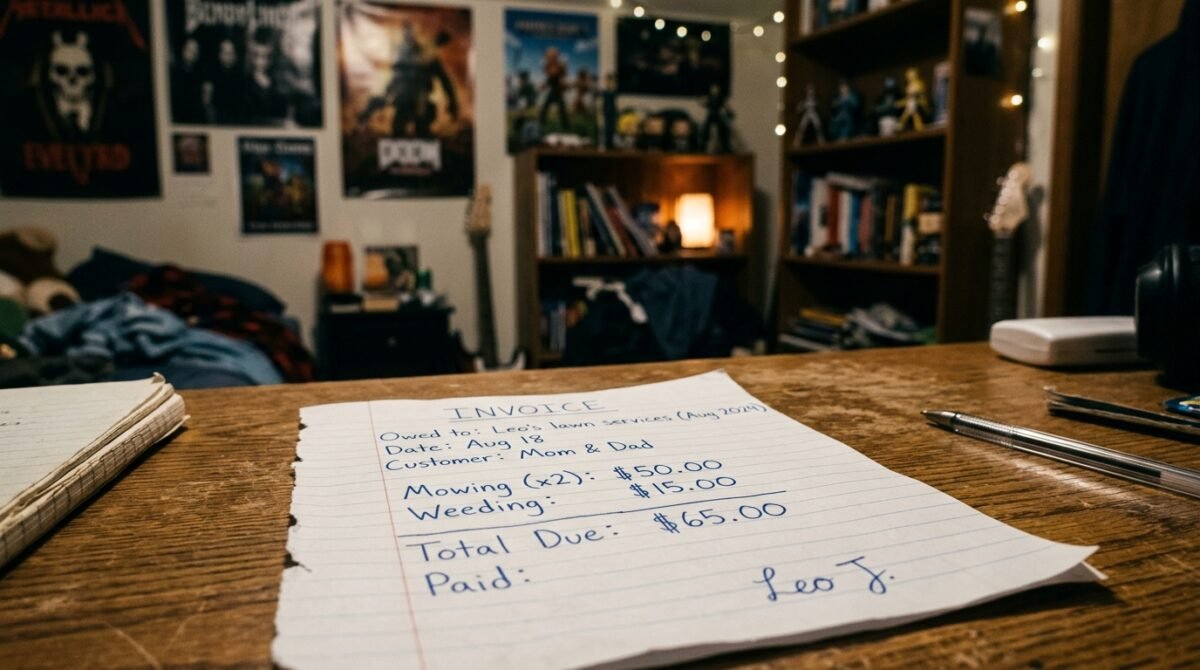
I remember the first time I received the invoice. It was the week after my sixteenth birthday. I had just gotten my first paycheck from the local diner, a meager sum for twenty hours of grease-splattered labor. My father walked into my room, placed a crisp sheet of printer paper on my desk, and left without saying a word. It felt clinical, detached, and entirely devoid of the warmth one usually associates with family.
The paper detailed my ‘contribution’ to the household. It wasn’t just rent; it was a per-diem for electricity, a surcharge for high-speed internet, and a calculated percentage of the water bill. They claimed it was to prepare me for the real world, but as I sat there, counting my remaining thirty dollars, the only thing I felt prepared for was resentment.
“You need to understand, son. Nothing in this life is free. If you want to live under this roof, you contribute. That is the agreement. We aren’t being mean; we are being realistic.”
— My Father, age 44
My mother was the architect of the system. She kept a spreadsheet on the family computer, a glowing green grid of numbers that tracked every cent I brought into the house. If I had a bad week at work, she would remind me of my ‘obligations’ with a tone that suggested I was failing a moral test. I saw my peers buying their first cars or saving for college, while I was literally paying my parents to keep the lights on in my own bedroom.
The psychological toll was immense. I learned to view every dollar as a source of conflict rather than a tool for growth. I stopped asking for anything—even a new pair of shoes—because I knew it would be added to the ‘debt’ column of their spreadsheet. My house didn’t feel like a home; it felt like a landlord-tenant arrangement where the landlord had absolute authority over my life.
By the time I graduated high school, I had paid them thousands of dollars. It was money that could have been invested, saved for tuition, or simply used to build a cushion. Instead, it was consumed by their household expenses. I felt like a boarder rather than a child, and the resentment grew deeper with every passing year until the day I finally packed my bags to leave for university.
The Silence of the Distance

When I left for college, I didn’t look back. I worked through every semester, taking on internships and part-time jobs that actually paid well, refusing to ever let myself be in a position where I was beholden to someone else for my survival. For four years, I was the ghost of the family. I checked in during holidays, but I kept the conversations surface-level. I wasn’t interested in explaining my financial success or my independence.
My parents, meanwhile, continued their life as if nothing had changed. They lived beyond their means, treating every moderate promotion at my father’s job as a signal to upgrade their lifestyle. They took lavish vacations, leased luxury cars, and hosted parties that cost more than my first year of rent. They were living in the ‘now,’ fully expecting their future to be taken care of by the very child they had squeezed for cash as a minor.
I watched from a distance as their social media feeds filled with travel photos and expensive dinners. I felt a strange sense of vindication, though it was tinged with a lingering bitterness. They had taught me that survival was about individual responsibility, and they were living proof of what happens when you decide to ignore your own lessons.
“Where are you staying for spring break? We’re heading to the coast. You should come, although you’d need to pay your own way, obviously. The ‘rent’ arrangement doesn’t apply to vacation, but you know how things go.”
— My Mother, via text message
I didn’t go. I spent those breaks in the library or taking extra shifts. I was building a fortress of financial stability. I wanted to ensure that no matter what happened, I would never, ever be in a position where I had to ask them for a loan or a place to stay. My financial independence became my armor, protecting me from the emotional manipulation they had perfected during my childhood.
When I finally landed my first ‘real’ job, I didn’t tell them the exact salary. I knew better. I told them I was ‘getting by,’ and I kept my mouth shut about my savings accounts and my investments. It was a necessary lie, a survival tactic that allowed me to maintain my distance while avoiding the inevitable requests for ‘assistance’ that I knew would come sooner or later.
The Unexpected Request

The call came on a Tuesday evening. I was just finishing up some work, finally feeling like I had a handle on my life. My father’s voice on the other end was uncharacteristically shaky. He didn’t lead with ‘how are you’ or ‘how is work.’ He led with the problem, as if we were still sitting in that house and I was still the teenager who had to pay for my own existence.
They were facing a shortfall. Apparently, the retirement accounts they had been ‘planning to deal with later’ had been decimated by poor investments and a sudden downturn in the market. They were looking at downsizing their home, and they expected me to contribute to a ‘bridge fund’ that would keep them in their current lifestyle until they hit full retirement age. It was a massive, six-figure request delivered with the casualness of a grocery list.
“We’ve done so much for you, and now that we are in a spot of trouble, we need our family to step up. You’re doing well, we see the photos, we see the lifestyle. It’s only right that you help us maintain the home you grew up in.”
— My Father, over the phone
I sat in silence for a long time. I could hear the clock ticking on the wall of my apartment, a stark contrast to the chaos brewing on the other end of the line. I thought about the thousands of dollars I had handed over as a teenager, money that could have been their contribution to a savings plan. I thought about the lack of support I received when I was struggling to pay for my own education.
The entitlement was staggering. They weren’t asking for help because they were destitute; they were asking for help to maintain a lifestyle they hadn’t earned, using the child they had treated as a business expense for years. The irony was so thick it was suffocating. I felt the old shame rising in my throat, the fear that I was somehow ‘obligated’ because they were my parents, but I pushed it down with the cold, hard logic of my own reality.
I didn’t answer immediately. I told them I needed to think about it. I needed to see the numbers. I needed to know exactly what they were asking for. I hung up the phone and walked to my window, looking out at the city skyline. I realized that this was the final test. This was the moment where I either continued their cycle of control or broke it once and for all.
The Spreadsheet Audit

I didn’t just ‘think’ about it; I conducted an audit. I spent the next forty-eight hours digging through old documents, finding the emails and the saved text messages from my teenage years. I created my own spreadsheet, listing every ‘rent’ payment I had made between the ages of 16 and 18. I adjusted for inflation and added a conservative interest rate. The total was staggering.
I sent them an email. I didn’t send a personal letter filled with emotional pleas; I sent a document. It was a professional, itemized bill. It showed the total amount I had contributed, the value of that money today, and a note at the bottom that read: ‘Account Balance Settled.’ I was making a statement: I had already paid my dues, and with interest.
“Dear Mom and Dad, after reviewing my records, I have determined that my financial obligations to your household were fully satisfied between 2012 and 2014. I have no remaining balance to provide to your retirement fund.”
— Email sent to my parents
The response was immediate and explosive. My mother called me screaming. She accused me of being cold-hearted, of being ungrateful for the ‘sacrifices’ they made to raise me. She talked about the cost of food, the cost of electricity, and the ‘hard work’ of parenting. She refused to acknowledge that those were their responsibilities, not mine.
My father joined in, sending me a flurry of text messages. He called me a ‘disappointment’ and a ‘traitor.’ He tried to guilt me by bringing up family memories, as if a few birthday dinners could erase the years of transaction-based trauma. They were clearly terrified, and their fear was manifesting as rage. They had built their entire retirement plan on the assumption of my compliance, and now that I was refusing, their entire house of cards was collapsing.
I felt a strange sense of calm. The more they yelled, the more I realized that I had made the right decision. This wasn’t about love; it was about power. And for the first time in my life, they had no power over me. I wasn’t living in their house, I wasn’t eating their food, and I wasn’t afraid of their anger. I was finally, truly, free.
The Family Group Chat Explosion

The drama didn’t stay between the three of us. My mother, in an act of desperation, decided to loop in the extended family. She created a group chat titled ‘Family Support’ and proceeded to dump her grievances into it. She told everyone about my ‘success,’ my ‘refusal to help,’ and my ‘cold, calculating attitude’ toward my own parents.
It was a tactical mistake. She expected the family to rally around her, to shame me into submission. Instead, she opened the door to a level of scrutiny she wasn’t prepared for. My cousins, my aunts, and my uncles began to weigh in. Some were shocked by my behavior, but others were shocked by the fact that my parents had been charging me rent when I was a teenager.
“Wait, you guys charged OP rent? At 16? That’s… that’s actually insane. No wonder they don’t want to help with your retirement now. You reap what you sow, Aunt Sarah.”
— My cousin, in the family group chat
The chat descended into chaos. The older generation was split. Some defended the ‘traditional’ value of paying one’s way, while others were horrified at the idea of parents treating their children like tenants. My parents were losing control of the narrative, and they didn’t know how to handle it. They tried to double down, claiming that I was ‘spoiled’ by my career success, but the arguments were falling flat.
I didn’t even have to defend myself. My cousins were doing it for me. They shared their own experiences, their own financial struggles, and their disbelief at my parents’ audacity. It was as if a dam had burst. The secrets of our family’s ‘financial responsibility’ were being laid bare, and the consensus was not favorable to my parents.
I eventually muted the chat, but not before I saw the screenshot of my mother trying to justify the ‘rent’ by saying, ‘It taught them character.’ The irony was lost on her, but it wasn’t lost on the family. The mask had slipped, and for the first time, my parents were the ones on the outside looking in, feeling the sting of judgment they had so often reserved for me.
The Visit That Wasn’t Invited

A week later, there was a knock at my door. I looked through the peephole and saw them. My parents, looking smaller than I remembered, standing on my welcome mat with a suitcase. They hadn’t called, they hadn’t warned me; they had just shown up, assuming that in person, they could exert the influence they couldn’t via text or phone.
I opened the door, but I didn’t invite them in. I stood in the threshold, a physical barrier between my home and their chaos. They looked past me, trying to catch a glimpse of the interior, as if sizing up my ‘wealth’ to see if they could squeeze a down payment out of me. It was a pathetic display of entitlement, and I felt nothing but a hollow pity.
“We’re here to talk, like a family. You don’t have to do this over email. We’ve had a long drive, and we’re tired. Just let us in, and we can figure this out.”
— My Father, standing on my porch
I didn’t move. I told them that this was not a good time, and that I was not going to discuss my finances with them. They tried to push, to talk over me, to use the ‘we are your parents’ card. I stood my ground. I told them that if they didn’t leave, I would call the building security. The look of shock on their faces was priceless.
They had never seen me like this. I wasn’t the teenager who was afraid of their anger; I was an adult who understood boundaries. They eventually turned around, muttering about ‘disrespect’ and ‘the way I was raised.’ I watched them walk back to their car, the same car they probably couldn’t afford anymore, and I realized that they were incapable of change.
Closing the door felt like the final step in my healing process. I hadn’t raised my voice, I hadn’t begged, and I hadn’t conceded. I had simply held my ground. The house was quiet, the air was still, and for the first time in my life, I felt truly at home. I had protected my peace, and that was worth more than any sum of money they could have asked for.
The Reddit Verdict

I posted my story on Reddit to see if I was losing my mind. I needed an objective perspective, even though I felt pretty confident in my decision. The response was overwhelming. Within a few hours, the post had thousands of upvotes and hundreds of comments. The consensus was resounding: I was not the asshole.
The stories in the comments section were heartbreaking. People shared their own experiences with parents who had treated them as financial assets rather than children. There were stories of parents stealing inheritances, charging exorbitant rent, and refusing to pay for basic necessities. I realized that my story wasn’t unique; it was a symptom of a larger, systemic problem with parental entitlement.
“NTA. Your parents set the terms of your relationship when you were 16. You were a boarder, not a child. You paid your rent, you fulfilled your contract. They have no standing to demand your support now. They are just mad that their business model failed.”
— u/FinancialTruthSeeker (Top Comment, 32.5k upvotes)
There were also some dissenting voices, of course. People who argued that ‘family is family’ and that I had a moral obligation to help them. I read those comments carefully, looking for a kernel of truth. But I couldn’t find one. The idea that blood ties grant a license to exploit is a dangerous myth, one that keeps people trapped in abusive cycles for decades.
The community support gave me the validation I didn’t know I needed. It confirmed that my boundaries were not just reasonable—they were necessary. It also helped me see my parents’ behavior for what it was: a choice. They chose to charge me rent, and they chose to live beyond their means. I was merely refusing to pay the cost of their bad decisions.
I kept checking the thread for days. It was like reading a collective manifesto of people who had been pushed too far. It was empowering to see that I wasn’t alone, and that thousands of people agreed that financial independence is the ultimate form of self-respect. I walked away from the screen feeling stronger, more sure of myself, and ready to move forward.
The Aftermath and My New Reality

Months have passed since that day. My parents have reached out a few more times, mostly through guilt-tripping emails and occasional calls that I rarely pick up. They’ve moved into a smaller, cheaper apartment, and I hear they’re still struggling to adapt to their new, more modest lifestyle. It’s sad, but it’s not my struggle to fix.
I’ve started a new chapter of my life. I’ve focused on my own growth, my own relationships, and my own financial security. I’ve realized that I don’t need their approval to be successful or happy. I’ve learned to set boundaries in other areas of my life, too, and it’s been incredibly freeing. I’m no longer the person who feels obligated to sacrifice for others at the expense of my own sanity.
“You’ve changed. You used to be so accommodating, so eager to please. Now, you’re just… distant. Why can’t you just be the child we raised?”
— My mother, in a recent voicemail
I laughed when I heard that. The child they raised was a tenant who was taught to value money over family. I am something else entirely now. I am an adult who values integrity, boundaries, and mutual respect. If they want to be a part of my life, they have to accept that the old terms of our relationship are gone forever. We aren’t a business, and I’m no longer their investor.
I’ve found peace in the distance. I’m still close with some members of my extended family, the ones who understood my position and supported me. They’ve become my chosen family, the ones who celebrate my success without asking for a piece of it. It’s a different kind of relationship, one built on love rather than obligation.
I’m finally starting to save for the things I really want—travel, experiences, and a future that belongs entirely to me. I’m no longer paying for my past; I’m investing in my future. And honestly? It feels like the best investment I’ve ever made. The ledger is truly, finally, closed.
Reflecting on the Cycle of Entitlement

Looking back, I see now that the ‘rent’ was never about money. It was about conditioning. By charging me for my own existence, they had normalized the idea that my life was theirs to exploit. They had created a dynamic where my value was tied to my ability to pay, and it took me years to decouple those two things in my own mind.
It’s a subtle but pervasive form of abuse. It’s not physical, and it’s not always overt, but it leaves deep scars. It teaches children that they are responsible for their parents’ failures, and that their success is a resource to be tapped. It’s a cycle that repeats until someone decides to break it, and I’m proud that I was the one who did.
“The hardest part of breaking a cycle is realizing that the people who raised you might be the ones holding the leash. You don’t have to pull back; you just have to drop the leash.”
— A piece of advice I read online
I think about the kids who are in the same position I was, working jobs to pay their parents, feeling the weight of the spreadsheet. If you’re reading this, please know that you are not a business asset. Your parents’ financial stability is their responsibility, not yours. You are allowed to prioritize your own future, your own dreams, and your own peace.
I don’t hate my parents. I just understand them. They are people who have made mistakes and have been unable to admit them. They are trapped in their own delusions of what a family should be, and they are suffering for it. But I don’t have to suffer with them. I have my own life to lead, and I’m going to make sure it’s a good one.
The moral of my story isn’t that parents are bad. It’s that the transactional model of parenting is doomed to fail. When you treat your children like customers, you lose the right to expect them to act like family. I’ve learned that lesson, and I’m going to carry it with me for the rest of my life. My children will never know what a ‘monthly invoice’ feels like.
The Final Verdict: Is Blood Thicker Than Debt?

The question of whether we owe our parents for the simple act of raising us is a complex one. Society is built on the idea of filial piety, the notion that children are forever in debt to the people who brought them into the world. But at what point does that debt become a burden that prevents the child from flourishing?
When my parents demanded my support, they were invoking a social contract that they had already violated. They had treated me as a peer, an employee, and a tenant. They didn’t treat me as a child to be nurtured. Why should I be expected to act as a caregiver to people who never prioritized my well-being?
“Family is supposed to be the safety net, not the trap. If you find yourself in a trap, it’s not ‘abandoning’ family to cut your way out. It’s saving yourself.”
— A thought from a supportive friend
I believe that support should be given out of love and choice, not obligation. I would have gladly helped my parents if they had come to me with humility, if they had treated me as an equal, and if they had shown they had tried to do their best. But they didn’t. They demanded, they insulted, and they expected. And that’s where the line was drawn.
We have to stop normalizing the idea that parents are entitled to their children’s money. We have to stop raising our children to be our retirement plans. We have to start teaching them that they are individuals with their own lives to lead. That, to me, is the true meaning of parenthood: preparing the next generation to be better than the one that came before.
I am not perfect, and I have my own flaws. But I am better than the person I would have been if I had succumbed to their demands. I am free, I am independent, and I am finally, truly my own person. That is my success story, and I’m going to keep writing it, one chapter at a time, without any help from their spreadsheet.
Conclusion
In the end, my story is a reminder that boundaries are not acts of cruelty—they are acts of self-preservation. I spent my youth paying for the space I occupied, and in doing so, I paid for the right to define my own terms. My parents wanted a retirement plan, but what they got was the reality of their own choices.
The community reaction has been a constant source of strength. It reminds me that I am part of a larger conversation about what it means to be a family in the 21st century. We are moving away from the era of blind obligation and toward an era of conscious connection, where relationships are built on mutual respect rather than outdated social constructs.
What about you? Have you ever had to draw a line in the sand with family, especially regarding money? I’d love to hear your experiences. Do you think I was too harsh, or was I well within my rights? Let’s keep the conversation going in the comments below.
What's your verdict on this dilemma?
Vote below to contribute to the official community consensus.

Have a Dilemma Keeping You Up at Night?
Share your real-life feud, wedding chaos, or relationship crossroads anonymously with our editorial team.
What do you think ?
0 Comments🛡️ Comments are moderated to protect community integrity. Your comment will appear once approved by the editorial team.