

Grief is a thief, but it is rarely as efficient as the people who surround you in its wake. When my mother died suddenly in a car accident five years ago, the world didn’t just stop; it fractured. I was twenty-two, freshly graduated, and suddenly responsible for managing a life insurance policy meant to ensure my future stability. I didn’t want the money. I wanted my mother. But the money was there, sitting in a trust account, a silent testament to a woman who worked two jobs to make sure I would never struggle the way she did.
My father remarried two years later. Elena, my stepmother, was always pleasant enough at surface level—a whirlwind of expensive perfumes, curated social media posts, and a frantic, unending ambition for her own son, Leo. Leo was sixteen, a boy who treated life like a buffet, and Elena was his primary caterer. She spent every waking moment trying to propel him into the world of professional karting, a sport that requires the kind of capital usually reserved for small space programs.
For years, I was the peripheral observer to their expensive obsession. I kept my distance, working as a junior architect and living in a modest apartment. I thought the money my mother left was safely tucked away, a private matter between me and the bank. I was wrong. Elena had been paying attention, and more importantly, she had been calculating. She didn’t see a grieving daughter; she saw a ledger, and in her mind, my mother’s legacy was merely the missing fuel for Leo’s engine.
The confrontation didn’t begin with a scream. It began with an invitation to dinner that felt heavier than usual. The air in their dining room was thick with the scent of roasted rosemary and the sharp, metallic tension of a scripted performance. I should have known better than to accept the invitation, but I wanted to believe that family meant something beyond transactional gain. That night, the facade crumbled, revealing a desperation that was both pathetic and terrifying.
I am writing this down now because the gaslighting has reached a point where reality itself feels negotiable. When you are being asked to sacrifice your security for someone else’s hobby, the moral lines are drawn in blood. This is the story of how my family tried to dismantle my mother’s memory to fund a teenager’s racing career, and how I finally learned that saying ‘no’ is the most powerful sentence in the English language.
The Tuesday Night Ambush Over Pot Roast
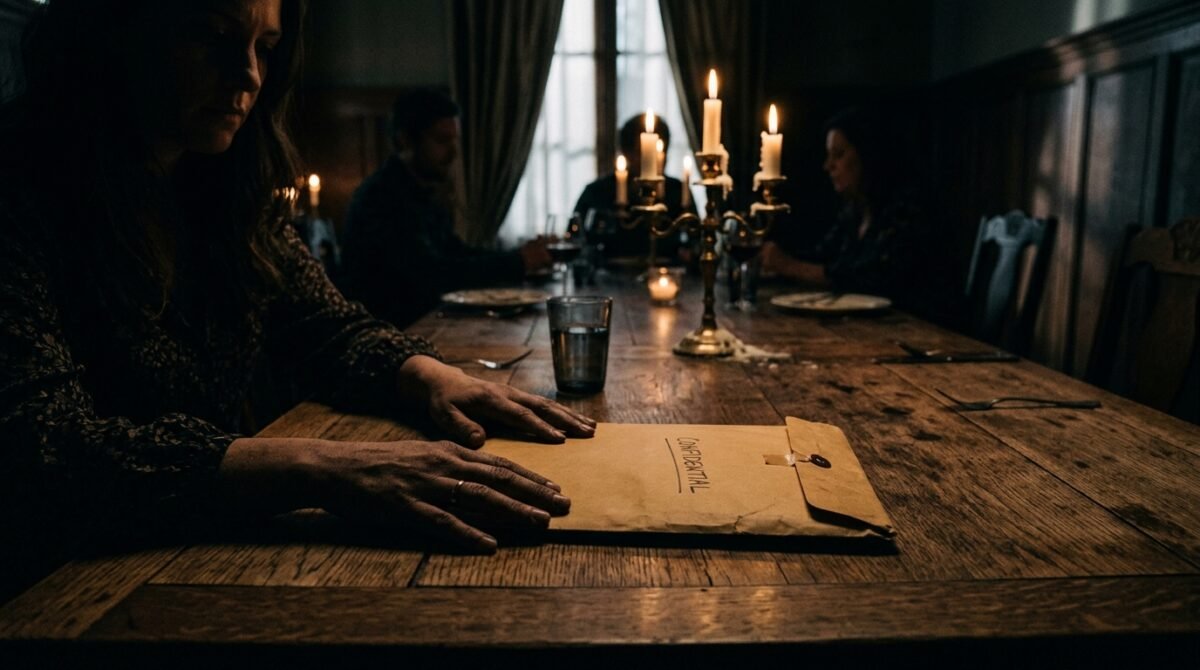
The dinner started with forced pleasantries. Elena was overly attentive, refilling my wine glass before it was even half empty, while my father stared intently at his plate. Leo was nowhere to be seen, likely at the track. I felt like a lamb being led to the slaughterhouse, though I didn’t yet know the menu.
After the main course, Elena cleared the table with a theatrical flourish. She returned not with dessert, but with a thick manila envelope. She placed it in the center of the table with the kind of calculated precision usually reserved for high-stakes business deals. My stomach dropped. I knew that envelope wasn’t full of birthday cards.
“We’ve been looking into the costs for the regional championship, and frankly, it’s a massive opportunity for Leo. He’s got the talent, but we’re short on the liquid capital required to secure the competitive chassis and the team sponsorship fees.”
— Elena, my stepmother, opening the negotiation
My father finally looked up, his eyes avoiding mine. He looked tired—defeated, really. He had been worn down by years of Elena’s relentless drive to make her son a star. He knew exactly what she was going to ask, and he had clearly decided to be a spectator to his own conscience.
“What does this have to do with me, Elena?” I asked, my voice steady despite the adrenaline surging through me. I didn’t want to play the game. I wanted to leave, but the silence in the room acted like a physical barrier, trapping me in my chair.
“It’s not just a hobby, it’s a career path,” she continued, ignoring my question. “And you have the funds sitting in that trust account. It’s just sitting there, losing value to inflation. It’s a waste, and Leo has a dream that could provide for all of us eventually.”
The absurdity of the statement hit me like a physical blow. She was talking about my mother’s insurance payout as if it were a dormant investment account she had the right to manage. I felt a cold, sharp anger crystallizing in my chest, turning into something cold and unyielding. The audacity wasn’t just in the request; it was in the expectation that I would feel honored to contribute.
The Calculus of Disrespect
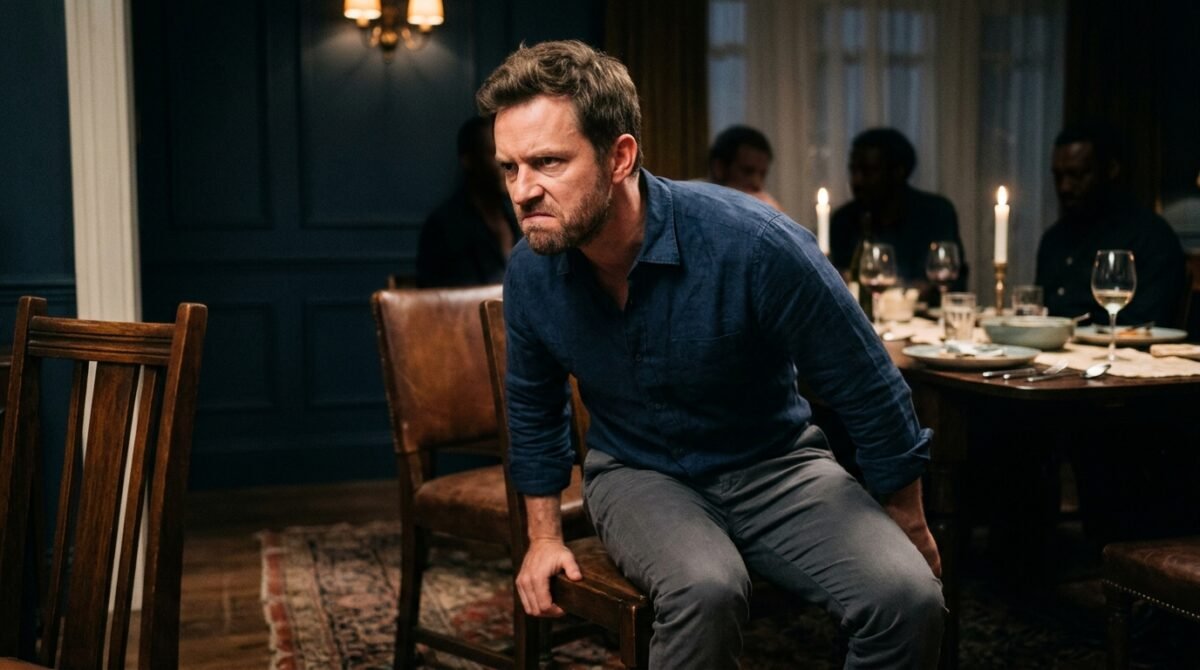
I stared at the envelope. I didn’t touch it. I couldn’t understand how someone could look at a person and decide their trauma was an asset to be liquidated. Elena’s face was a study in practiced concern, the kind of look she wore when she was trying to manipulate a situation to fit her narrative of the ‘supportive family.’
“That money is not an investment fund, Elena,” I said, my voice rising just enough to cut through the quiet. “That money is the only thing I have left from my mother. It was meant for my future—buying a home, retirement, or emergencies. It is not for karting.”
My father finally spoke, his voice raspy. “It’s just a loan, sweetheart. We would pay it back once Leo gets picked up by a factory team. It’s a bridge loan. It’s what families do. We support each other when someone has a chance to break out.”
“A loan? You want to borrow my mother’s death benefit to pay for a teenager’s racing hobby? Do you hear how insane that sounds?”
— My response to the ‘bridge loan’ proposal
Elena’s expression didn’t change, but her eyes hardened. She leaned in, her voice dropping to a whisper that felt like a threat. “You’re being selfish. You have a good job. Leo is sixteen. This is his one chance. Your mother would have wanted you to be generous. She was a generous person, wasn’t she?”
Using my mother against me was the ultimate low, a bridge I knew I would never cross back from. I stood up, the chair scraping loudly against the floor. The sound echoed in the room, a final, sharp note of discord that shattered any remaining illusion of family unity. I realized then that they weren’t asking; they were attempting to shame me into compliance.
I looked at my father, expecting him to see the ugliness of the moment. He didn’t. He was looking at his hands, his head bowed, trapped in the orbit of his new wife’s expectations. I left the envelope on the table. I left the house without saying goodbye. I knew, walking to my car, that the dinner hadn’t just been a failure—it had been a declaration of war.
The Digital Paper Trail

I expected a cooling-off period. I expected my father to call and apologize, or at least try to explain why he had allowed such a ridiculous conversation to happen. Instead, I got a flurry of messages. My phone vibrated incessantly for the next three hours, a digital barrage of guilt trips and demands.
“You really hurt your father today. He’s been through enough. Just think about the family reputation. Leo needs this, and you’re acting like a child holding onto a grudge.”
— A text message from Elena, sent at 11:42 PM
The audacity of the claim was staggering. She was reframing my boundaries as a personal attack on their dignity. I didn’t reply. I knew that any word I sent would be screen-shotted, edited, and used against me in whatever version of the truth they were manufacturing for the rest of the extended family.
By the next morning, I received an email. It was a formal-looking document, drafted by someone who clearly had no legal training but was trying to sound authoritative. It was an ‘investment agreement’ outlining the terms of the ‘loan.’ It included a repayment schedule that was laughably optimistic, assuming Leo would be earning millions within two years.
I took a screenshot of the email and the text messages. I didn’t engage, but I began to document everything. I realized that my stepmom wasn’t just greedy; she was a predator, and she was betting on my emotional attachment to my father to cloud my judgment. The more they pushed, the more I distanced myself, locking down my finances and ensuring no one had access to the trust.
I felt a strange sense of detachment. The anger was fading, replaced by a cold, surgical clarity. I had been a part of this family for years, but looking at these messages, I realized I had never really been part of their circle. I was a resource, an auxiliary bank, and now that I was drawing a boundary, I was an enemy. It was a lonely realization, but it was also freeing.
The Sunday Dinner No-Show

The following Sunday, there was a family gathering. My aunt, who was usually the mediator, sent me a message asking if I was coming. I told her I had plans. She pressed, saying it was important for everyone to get together and move past ‘the misunderstanding.’ I knew it wouldn’t be a move toward resolution; it would be a tribunal.
I didn’t go. Instead, I spent the day organizing my life. I moved my accounts, updated my passwords, and contacted an estate attorney to ensure that the trust was airtight. I had been naive to think that love alone would protect me. I needed the law. I needed to ensure that no matter how much they pressured my father, he couldn’t reach into my bank account.
My phone stayed silent for most of the day, which was a mercy. When the messages finally started coming in the evening, they were unhinged. Apparently, the table conversation had revolved entirely around my ‘disloyalty.’ My father had apparently told everyone that I was being ‘cold-hearted’ and ‘punishing them for trying to support Leo.’
“Your father is devastated. He can’t believe you would let a bit of money come between you and his only son’s potential. We’ve told the rest of the family how you’ve turned your back on us. Don’t expect any more invitations.”
— A follow-up text from Elena
They were trying to isolate me. They were using the rest of the family as an echo chamber to amplify their own entitlement. It was classic gaslighting—accusing the victim of the very behavior the perpetrator is exhibiting. I felt a surge of protectiveness over my mother’s memory. She had worked so hard for this, and the idea of these people turning my family against me to steal it felt like a violation of her life’s work.
I didn’t feel hurt. I felt a strange sense of resolve. I had always been the quiet one, the one who tried to keep the peace. But peace is a luxury you can’t afford when your foundation is being systematically dismantled. I was done being the silent victim of their ambition.
The Legal Irony
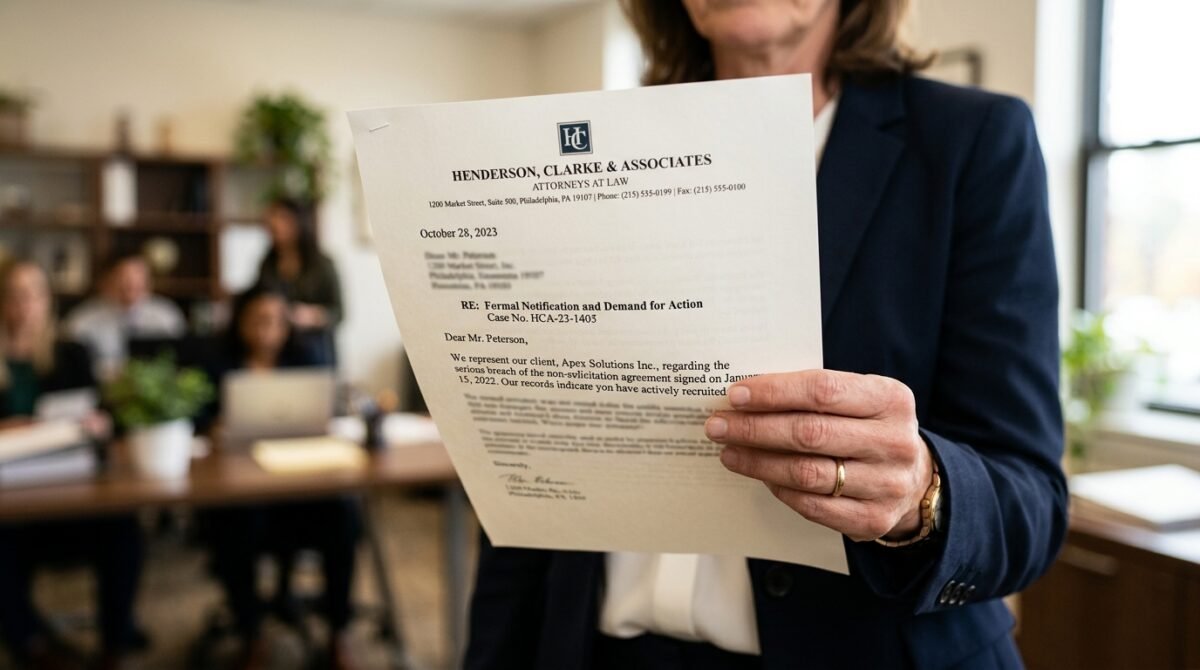
A week later, I received a certified letter. My heart hammered as I opened it. It was a formal request, written by a ‘legal consultant’ Elena had clearly hired—or perhaps, it was just someone she knew who was willing to draft a threatening letter for a few hundred dollars. It demanded I surrender the funds, citing ‘unjust enrichment’ and ‘family obligation.’
It was laughably illegal, but it was also chilling. The fact that she was willing to escalate to fake legal threats meant she was truly desperate. I spent that afternoon with my attorney, who laughed for a good five minutes after reading the letter. We drafted a response that was short, cold, and legally absolute. We didn’t even address the ‘family obligation’—we only addressed the law.
The response was sent back the next day. I can only imagine the scene when that letter arrived. I didn’t get a phone call, but I got a flurry of frantic, misspelled texts from Elena that I didn’t even bother to read. I blocked her number. I didn’t need to hear her screeching about injustice anymore.
I found myself thinking about my mother again. I wondered what she would think of this. Would she be angry? Or would she be proud that I was fighting for what she left behind? I think she would be proud. She knew the value of a dollar, and she knew the value of a person. She wouldn’t have let these people walk all over her, and she certainly wouldn’t have let them use her legacy to fuel someone else’s vanity project.
I felt a weight lift off my shoulders. For the first time in my life, I wasn’t waiting for my father’s approval. I wasn’t waiting for the family to decide I was being ‘reasonable.’ I was living my own life, on my own terms, and that was a victory that no amount of money could buy.
The Fallout and the Reddit Verdict

I posted about the situation on a popular subreddit under a throwaway account, just to see if I was losing my mind. The response was overwhelming. I wasn’t just getting validation; I was getting a mirror held up to the entire situation. People shared their own stories of inheritance theft and boundary violations, and for the first time, I felt like I wasn’t alone.
“This isn’t just about money; it’s about control. Your stepmother sees you as an extension of her own failed aspirations. Do not give her a single cent, or she will never, ever stop coming for more. The ‘loan’ is a myth. You are the villain in her story because you are the one thing she cannot manipulate.”
— u/StoicArchitect, 32.5k upvotes
The community was unanimous. The ‘NTA’ (Not The Asshole) verdict was the most common, but there were also warnings. People pointed out that once a boundary is set, the person trying to cross it usually gets more aggressive before they retreat. I was warned about potential stalking, emotional manipulation of my father, and attempts to turn the rest of the extended family against me.
I read through every single comment. It was like reading a map of the landscape I was currently walking through. The advice was practical and harsh. It confirmed that I had to be vigilant. It also gave me the courage to continue the no-contact approach I had started. I realized that my father was a lost cause for now, and that was the hardest part to swallow, but I couldn’t save him from his own choices.
The thread became a repository for my own growth. I started updating it as things unfolded, turning my trauma into a narrative that others could learn from. It wasn’t just about me anymore. It was about standing up for the people who had been bullied by their own families into giving up their security. It felt like I was honoring my mother in the best way possible: by becoming the strong, independent woman she raised me to be.
The Phone Call I Almost Answered

The final crack in the dam came when my father finally called from a burner phone. I saw the number, felt a spike of hope, and then realized it was him. I picked up, my hand trembling slightly. He sounded different—shaken, exhausted, and strangely hollow. He didn’t ask how I was. He went straight into the pitch.
“Elena is so worried, and we’re losing the spot on the racing circuit. If you just give us a small fraction, just five thousand, we can hold the place while we sort out the rest. It’s not even that much for you, really. Why are you being so difficult?”
“Dad, it isn’t about the amount. It’s about the fact that you think my life is something you can negotiate with. I’m not difficult. I’m just finished.”
— My final words to my father before hanging up
That conversation was the closure I didn’t know I needed. It proved that he had completely surrendered his autonomy to Elena. He wasn’t just a father anymore; he was an extension of her will. I hung up the phone and felt nothing. No anger, no sadness. Just an absolute, crystalline realization that the man I had worshipped as a hero in my childhood was long gone, replaced by a shell.
I blocked the number. I felt a profound sense of relief. The constant, gnawing anxiety that had sat in my chest since the dinner party finally evaporated. I had said my piece, I had held my boundary, and I had survived the fallout. It was the moment I finally stepped into my own adulthood, untethered from the expectations of the people who were supposed to love me.
I went to the gym that night and lifted heavier than I ever had. I walked home in the cool night air, feeling the space around me. I was alone, yes, but for the first time in years, I was free. The money was still in the bank, safe and sound, and my future was my own. I had won, not through some grand, dramatic showdown, but through the quiet, relentless act of choosing myself.
The Aftermath and the New Normal

It has been six months since the last attempt. The silence is deafening, but it’s a peaceful kind of silence. I still get the occasional email from family members who ‘just want to help,’ but I’ve learned to hit delete without reading them. I know what they want. They want me to be the bigger person, which is just another way of saying they want me to sacrifice myself so they can feel comfortable.
I’ve moved to a new city, changed my phone number, and started a fresh chapter. My career is flourishing, and I’ve taken up new hobbies—things I enjoy, things that are actually for me. I’m learning how to trust again, not just in others, but in myself. It’s a slow process, but it’s real.
I think about my mother every day, but it’s not the heavy, suffocating grief I used to carry. It’s a softer, more reflective kind of memory. I look at the life I’ve built and I see her influence in everything—my work ethic, my resilience, my commitment to my own autonomy. She gave me the tools to build a life, and I’m damn well going to use them.
I realize now that the karting career was never the real issue. The real issue was that they expected me to be a prop in their lives. They wanted me to be the supporting character who sacrifices her own growth to make their lives seem more impressive. I refused, and that refusal was their worst nightmare. I’m glad I did.
To anyone else dealing with family members who treat your boundaries like suggestions, know this: you are not responsible for their entitlement. You are not the villain for wanting to live your life. You are the architect of your own happiness, and you are the only one who gets to decide how you spend your life’s resources. Stand your ground. It’s the hardest thing you’ll ever do, but it’s the most important.
Reflections on Financial Entitlement

Looking back, the entire scenario feels like a fever dream. How does a person justify looking at a young woman who has just lost her mother and deciding that her grief-stricken inheritance is the perfect slush fund for their own vanity project? It highlights a pervasive issue in many families: the idea that because someone is ‘family,’ their assets are collective property.
I have spent a lot of time analyzing why I felt so much guilt initially. It’s conditioned, isn’t it? We’re taught that family comes first, that we should always help when we can. But those lessons are often weaponized by toxic individuals who want to exploit our empathy. I’ve learned that true family doesn’t demand; they respect boundaries. They don’t look at you as an ATM; they look at you as a partner in life.
The financial aspect was only the surface. The real betrayal was the lack of respect for my mother’s final wishes. That money wasn’t just cash—it was her love, her protection, her legacy. To have it treated as ‘liquid capital’ for a teenager’s hobby was the ultimate slap in the face. I’m glad I kept my cool and kept the receipts, because they relied entirely on me being too emotional to fight back.
I see many other people in similar positions, trapped in the guilt-tripping cycle. If I could give one piece of advice, it would be this: trust your instincts. If something feels like a violation, it is. Don’t look for excuses for them. Don’t try to find a middle ground where there is none. Sometimes, the only way to win is to walk away entirely.
I’m finally in a place where I can breathe. The money is there, tucked away, helping me build a life that is my own. I have no regrets about the way I handled it. I stood up for myself, I stood up for my mother, and I kept my life firmly in my own hands. That, to me, is the greatest success story of all.
Lessons Learned in the Fire

I didn’t lose my father; he was already gone. I didn’t lose my family; they were never really mine. I gained a self-respect that is unshakable. I learned that the people who scream the loudest about ‘family values’ are often the ones who violate them the most. It’s a painful lesson, but it’s one I’ll carry with me for the rest of my life.
I’ve started therapy to deal with the aftermath, and it’s been incredibly helpful. It’s helped me recognize the patterns I was raised with and to understand why I was so vulnerable to their manipulation. I’m breaking the cycle, one day at a time. I’m learning that it’s okay to be alone, and it’s okay to be the ‘bad guy’ in someone else’s distorted version of reality.
My advice to anyone reading this: if you have assets or life insurance, get a trust. Get a will. Make it so that your intentions are clear and legally binding, and don’t tell your family members about it. Protect your future, because when you’re gone, people will show their true colors. It’s better to have those protections in place than to rely on the hope that your family will ‘do the right thing.’
I am looking forward to the future now. I’m planning on taking a trip to the coast, just to enjoy the silence and the space. I’m finally living my life for me, and I couldn’t be happier. The struggle was worth it. It taught me who I am, and more importantly, it taught me who I want to be.
Thank you for letting me share my story. It’s been cathartic to get it all down, and I hope it helps someone else out there who is being pressured into giving up their own future. Remember: you are not a bank, you are not a tool, and you are not responsible for someone else’s failed dreams. Own your story.
Conclusion
Reflecting on the last several months, the most profound realization is that the people who wanted to spend my inheritance were never interested in my well-being. They were interested in their own convenience. The moral of this story isn’t just about money; it’s about the right to exist as an individual, independent of the expectations of others. Saying ‘no’ to my family didn’t just save my inheritance; it saved my soul.
The internet community, specifically the Reddit thread that served as my sounding board, reminded me that I was not alone. Thousands of people shared their experiences, and together we formed a collective voice against the entitlement that so often ruins families. It is time for us to stop treating financial abuse as a ‘family misunderstanding’ and start calling it what it is: a violation of trust.
I am curious, though. Have you ever had to draw a hard line with family over money or life choices? How did it go, and what did you learn about yourself in the process? Please share your thoughts below. It is time we start talking openly about the expectations that hold us back and the strength required to break free from them.
What would you have done in my position? Would you have given in to keep the peace, or would you have walked away? Let’s discuss in the comments.
What's your verdict on this dilemma?
Vote below to contribute to the official community consensus.

Have a Dilemma Keeping You Up at Night?
Share your real-life feud, wedding chaos, or relationship crossroads anonymously with our editorial team.
What do you think ?
0 Comments🛡️ Comments are moderated to protect community integrity. Your comment will appear once approved by the editorial team.