
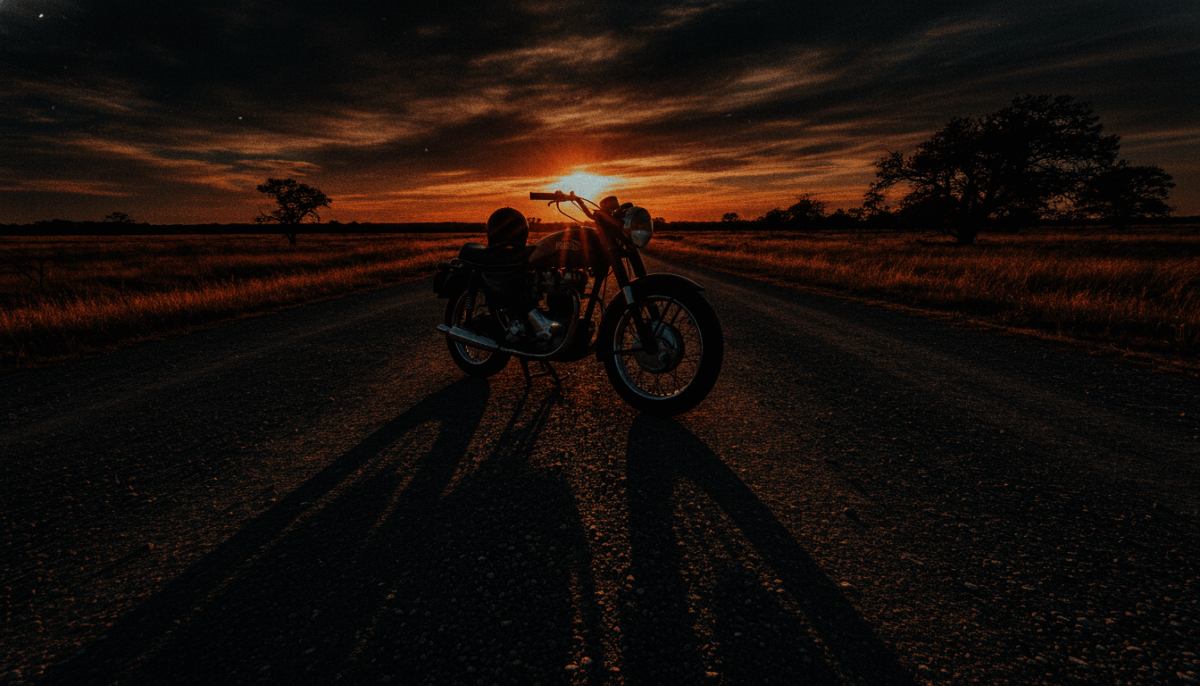
Marriage is built on the foundation of shared sacrifices and the small, deliberate gestures we make to show our partners that we truly see them. For my husband, Mark, that gesture was supposed to be the 1974 Honda CB750 I spent the better part of a year hunting down, sourcing original parts for, and meticulously restoring in our garage. It was a labor of love—grease-stained knuckles, thousands of dollars in hidden costs, and late nights spent watching YouTube tutorials just to get the engine purring like a kitten. I gave it to him on his thirty-fifth birthday, and for a month, he treated me like a queen. Then, the dynamic shifted.
It started with ‘late nights at the office’ and ‘weekend work projects’ that somehow always involved his new coworker, Sarah. I wasn’t the jealous type, or so I told myself. I trusted Mark. We had been together for seven years, and I believed our bond was ironclad. But when the motorcycle—my masterpiece, my gift—started disappearing from the garage on Saturday mornings under the guise of ‘maintenance rides,’ I began to feel a gnawing, cold sensation in the pit of my stomach. I was being sidelined in my own home, replaced by the very engine I had brought back to life.
The moral dilemma didn’t fully crystalize until I saw the photos. It wasn’t just a commute to the office; it was a curated adventure, a weekend escape that belonged to us, being handed over to someone who hadn’t contributed a single drop of sweat to the machine. The realization hit me with the force of a physical blow: I hadn’t just gifted him a bike; I had inadvertently subsidized his infidelity. The anger that followed wasn’t hot and impulsive; it was cold, precise, and calculated.
When I finally decided to sell the bike, I didn’t ask for his permission. I didn’t leave a note explaining my side of the story. I simply reclaimed what I had poured my soul into, knowing full well that the act of selling it would act as a detonator for our marriage. This isn’t just about a motorcycle; it’s about the erosion of respect, the violation of trust, and the painful process of reclaiming one’s dignity when a partner decides that your efforts are merely currency for their own selfishness. This is the story of how I chose to pull the plug.
The Six-Month Obsession in the Garage
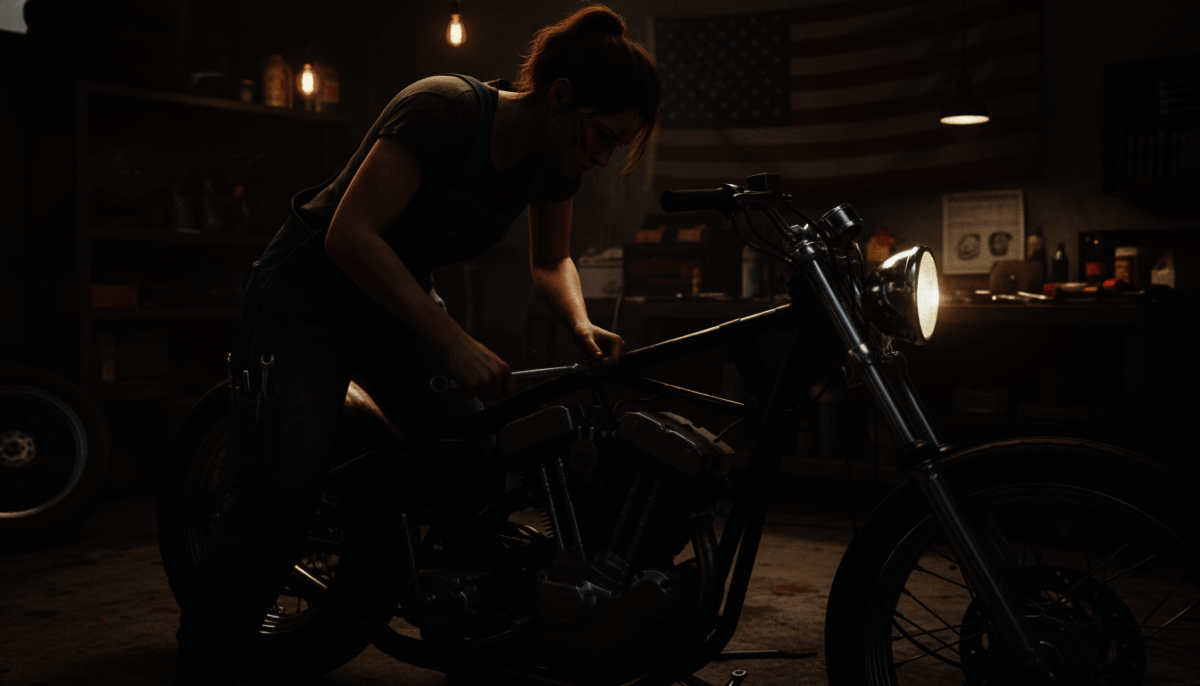
The restoration of the 1974 Honda CB750 wasn’t just a hobby; it was a mission. I remember the day I found it—a rusted-out, forgotten shell tucked away in a dusty barn in rural Pennsylvania. The seller looked at me like I was insane, but I saw the lines of the frame, the potential of the engine, and the look of pure, unadulterated nostalgia that I knew would light up Mark’s eyes. Over the next six months, my life became a cycle of engine degreaser, sanding blocks, and frantic calls to parts dealers in Japan.
My weekends were spent in the garage, often with the radio humming in the background, nursing the carburetor and polishing the chrome until I could see my own exhausted face reflected in it. I skipped dinners with friends and sacrificed my vacation budget to ensure the bike didn’t just run—it sang. I wanted this to be the perfect gift, a symbol of the ‘us’ I was trying to cultivate, a reminder of the time we spent riding together before life, bills, and mundane responsibilities got in the way.
Mark knew I was working on ‘a project,’ but he had no idea what it was. He would occasionally wander into the garage, grab a beer, and lean against the workbench, laughing at my greasy overalls. He had no clue that every bolt I tightened was a silent promise of affection. He was always so supportive then, or at least he seemed to be, promising that as soon as my project was finished, we would take a road trip down the coast.
“You’re going to be a master mechanic by the time this is over, honey. Are you sure you don’t want me to help you with that wiring? It looks like a nightmare.”
— Mark, during one of our few evening conversations in the garage.
I always declined his help, wanting the reveal to be total and absolute. I wanted him to see that I was capable of building something beautiful for him, something that would define our next chapter. I didn’t realize that while I was building a future, he was looking for an exit strategy. The irony of it all is that the very machine that was supposed to bring us closer became the bridge he used to cross over to someone else. Looking back, I can see the foreshadowing in the way he started checking his phone more often, his tone becoming clipped, his focus drifting toward his phone screen whenever the garage door opened.
The Unannounced Sunday Morning Disappearance

The first time it went missing, I didn’t panic. Mark told me he was going for a ‘shakedown run’ to keep the engine seals supple, a perfectly reasonable explanation for a vintage machine that requires constant attention. He came back three hours later, smelling of gasoline and fresh country air, looking relaxed in a way I hadn’t seen in months. I assumed he had gone for a coffee and a scenic ride, maybe to clear his head after a stressful week. I felt a swell of pride that my gift was actually being used as intended.
But then it started happening every weekend. Saturday morning, he’d be gone before I even brewed the coffee. Sunday, he’d return just in time for a late lunch, looking entirely too refreshed. When I asked him where he was going, the answers became increasingly vague. ‘Just riding, you know, hitting the backroads near the state line,’ he’d say, not meeting my eyes. He stopped inviting me along, claiming the bike was ‘still a bit temperamental’ and that he didn’t want me stranded on the side of the road if something went wrong.
I started tracking the mileage on the odometer. It was an old-school mechanical gauge, easy to check. In three weeks, he had put over 800 miles on the bike. That’s not a shakedown run; that’s a tour. I began to feel an itch of suspicion that I couldn’t scratch. Why was he so protective of the bike? Why did he suddenly have so much ‘solo time’ on his schedule when he used to complain about not having enough time for me?
“I thought you wanted to ride together. I’ve been waiting for you to invite me out, but you act like you’re doing some kind of secret agent mission every Saturday.”
— My attempt to broach the subject without sounding like a crazy wife.
His deflection was immediate and sharp. He laughed it off, calling me paranoid and sensitive. He suggested I was just jealous that he was enjoying his hobby, which, in a twisted way, made me feel guilty for even asking. I was the one who restored the bike; I was the one who paid for the parts. How could I be jealous of my own gift? But the silence in our house grew louder with every mile he clocked on that odometer, and the distance between us felt more like a canyon than a living room.
The Leaked Group Chat Reality Check

The truth didn’t come from a dramatic confrontation; it came from a notification. Mark had left his phone on the kitchen counter while he was in the shower. A notification popped up from a group chat titled ‘Weekend Warriors,’ but the preview wasn’t about motorcycles. It was an image—a selfie taken from the back of my Honda, showing a woman’s boots resting on the passenger pegs, her hand resting on Mark’s waist. The caption read: ‘Best weekend yet. Can’t wait for the coast trip next month.’
My heart stopped. I recognized those boots. Sarah, his coworker from the marketing department, had worn them to the company holiday party. The realization was instant, cold, and nauseating. He wasn’t doing maintenance rides; he was taking her on dates. He was using the machine I had poured my heart into to cultivate a romance with someone else, right under my nose, while I was at home waiting for him to come back to *me*.
I didn’t scream. I didn’t throw the phone. I just stood there, the silence of the kitchen becoming deafening. I opened the chat. There were dozens of messages, detailing ‘secret spots,’ romantic overlooks, and jokes about how ‘the bike runs better when you’ve got the right company.’ They were making plans for a long-distance ride that would take them three states away, all while Mark told me he had a ‘conference’ that same weekend.
“Should I tell her about the bike or keep letting her think you bought it yourself? She’s obsessed with it, by the way. Loves the vintage feel.”
— Text from Sarah to Mark in the ‘Weekend Warriors’ chat.
The audacity was staggering. He had not only cheated on me but had effectively ‘gifted’ my labor to her. He was playing the hero with my resources. I sat at the kitchen table and read the entire history of their chats, every lie, every stolen moment, every calculation to keep me in the dark. By the time he walked out of the shower, whistling, I had already made up my mind. The bike wasn’t his anymore. It was mine, and it was going to be gone by sunset.
The Cold Calculation of Reclaiming My Work

I didn’t wait for an explanation. I didn’t want to hear his excuses, his gaslighting, or his pathetic attempts to minimize what he had done. While Mark was distracted in his home office, I went to the garage, pulled the bike into the driveway, and checked the fluids one last time. I had a buyer in mind—a local collector I’d met during the parts sourcing phase who had been begging me to sell it for weeks. He had offered me double the value of the parts, knowing the quality of the work I had put in.
I called him on the spot. ‘It’s yours if you can be here in an hour. Cash only, no questions asked.’ He was there in forty minutes. I watched as he loaded the Honda onto his trailer, the metallic paint gleaming in the afternoon sun. I felt a strange, hollow sense of relief. It was like amputating a gangrenous limb—painful, yes, but necessary to stop the poison from spreading any further.
When Mark finally walked into the garage to get his helmet for his ‘late afternoon ride,’ the space was empty. The workbench was clean. The bike, the gear, and the memories were gone. He stood there for a long time, looking at the empty floor, then came running into the house, his face a mask of confusion and rising panic. He didn’t even notice the look on my face; he was too busy looking for his toy.
“Where is it? Where is the bike? Did someone steal it? I left it right here, I swear to God, it was here!”
— Mark, running into the kitchen, his voice cracking with panic.
I looked at him, calm as ice. I didn’t raise my voice. I didn’t need to. I told him exactly what I had done, and for the first time in seven years, I saw the genuine fear of losing control in his eyes. He tried to yell, to call me a thief, to threaten me with legal action, but I just held up my phone, showing him the screenshot of the group chat. The room went silent. The color drained from his face, and he slumped against the wall, the betrayal hanging in the air like smoke.
The Fallout and the Family Confrontation

The next forty-eight hours were a blur of screaming matches, tearful breakdowns, and the slow, agonizing death of my marriage. Mark tried to frame my sale of the bike as ‘theft’ and ‘spiteful destruction of property,’ conveniently omitting the part where he was using that property to facilitate an affair. He called his mother, who called me, demanding to know why I was being ‘so dramatic’ and ‘ruining a perfectly good marriage over a little miscommunication.’
The family group chat, which usually only buzzed with holiday plans and birthday wishes, became a battlefield. My sister-in-law took his side immediately, claiming that even if he had made a ‘mistake,’ selling the bike was ‘nuclear’ and ‘disproportionate.’ My own mother, surprisingly, was the one who leveled the playing field, pointing out that if he could lie about the bike, he was lying about everything else.
It wasn’t about the money. It was about the fact that he had weaponized my love against me. I had spent months in the dirt and grime to bring that machine to life, and he had treated it like a rental car for his weekend trysts. Every time he rode it with her, he was rubbing my nose in the fact that he didn’t value my time, my effort, or our commitment. The bike was just the physical manifestation of his disregard.
“You didn’t just lose a bike, Mark. You lost the woman who built it for you. There’s a big difference, though I doubt you’re smart enough to see it.”
— My text reply to the entire family group chat after my mother-in-law’s accusations.
The house felt like a tomb. We were living in separate rooms, the silence punctuated only by the sound of lawyers being contacted. He kept trying to ‘negotiate,’ promising to cut off Sarah, promising to go to counseling, as if this were a problem that could be fixed with a few sessions and an apology. He didn’t understand that the bike wasn’t the problem; it was the symptom. The disease was his complete lack of respect for the woman he had vowed to cherish.
Reddit Weighs In: The Verdict of the Internet

When I posted my story on Reddit, I expected a mix of responses, but the sheer volume of support caught me off guard. Within three hours, the post had hit the front page. Thousands of people, many of them fellow mechanics or people who had been through similar betrayals, were dissecting the situation with surgical precision. The consensus was overwhelmingly on my side, not just about the bike, but about the deeper issue of emotional and financial abuse.
The comments were a mix of ‘You dropped this, queen’ and detailed legal advice on how to protect my assets during the inevitable divorce. Many people pointed out that the bike was legally mine to sell, as I had the receipts, the title in my name, and the documentation of the restoration. I wasn’t just a scorned wife; I was a woman who had reclaimed her own labor. The vindication was intoxicating, even if the situation itself was heartbreaking.
“OP, you didn’t just sell a bike, you sold his access to your life. The fact that he was taking a coworker on dates using your hard work is next-level gaslighting. NTA. Do not back down, do not apologize, and get a good lawyer.”
— u/AutoMechanicQueen (Top Comment, 32.4k upvotes)
There were dissenters, of course. Some users argued that ‘two wrongs don’t make a right’ and that selling the bike was an act of escalation that would hurt me in the divorce proceedings. But for every person who called me petty, there were ten who understood that when someone breaks the fundamental rules of a marriage, the social contract is voided. The internet didn’t just offer support; it offered a mirror, showing me that my reaction wasn’t crazy—it was the only rational response to an irrational betrayal.
Reading the comments helped me realize that I wasn’t alone in this. The sheer number of people who had been cheated on, lied to, and used by their partners was staggering. It made me feel less like a failure and more like a survivor. I realized that my self-worth wasn’t tied to the success of my marriage, but to the strength of my own character, which had been put to the ultimate test and had come out on the other side.
The Legal Reality of the Split

The divorce proceedings started in earnest the following month. My lawyer was a shark, and when I showed him the screenshots of the ‘Weekend Warriors’ chat and the receipts for the bike, he practically salivated. The narrative Mark tried to spin—that I was a vengeful, unstable partner—fell apart the moment we presented the evidence of his affair. The bike, which he had tried to claim as a marital asset, was proven to be a gift I had purchased and restored with my own funds, long before he had ‘claimed’ it as his own.
The financial ledger was a mess. Mark had been funneling money into ‘weekend trips’ while I was paying for home repairs. We sat in mediation for hours, the air thick with tension. He still didn’t get it. He looked at the paperwork, the bank statements, the texts, and he still tried to argue that I had ‘ruined’ his life. He didn’t seem to care that his own actions had laid the foundation for every piece of paper on that desk.
| Category | Mark’s Claim | The Evidence |
|---|---|---|
| Motorcycle | Marital Property | Purchased/Restored by OP (Sole Fund) |
| Weekend Trips | Work Expenses | Hotel/Dining with Coworker |
| Garage Repairs | Shared Cost | Paid 100% by OP |
The mediator eventually told us to take a break. I went to the bathroom, splashed cold water on my face, and looked in the mirror. I didn’t see the woman who had spent months crying over a motorcycle. I saw someone who was ready to start over. The legal battle was just the paperwork of letting go. I wasn’t just losing a husband; I was losing the burden of having to police someone else’s morality.
The Quiet After the Storm

Three months after the final papers were signed, I found myself back in my garage. It was empty of the bike, but it was full of possibilities. I had started working on a new project—a vintage desk I’d found at an estate sale. It wasn’t about pleasing anyone else anymore. It was for me. The silence in the garage wasn’t lonely; it was peaceful. I could work for hours without checking my phone, without worrying about who was out on the road, without the crushing weight of expectation.
Mark had tried to reach out, of course. A few desperate texts about how he ‘didn’t realize what he had’ until it was gone, how he ‘regretted everything.’ I didn’t respond. The bridge wasn’t just burned; it had been dismantled, sold for parts, and the proceeds were sitting in a high-yield savings account that he couldn’t touch. I had moved on, and in a way, I had to thank him for showing me who he really was before I wasted any more of my life.
I realized that the greatest gift I ever gave myself wasn’t the motorcycle—it was the decision to walk away when the truth became too heavy to carry. I had reclaimed my time, my labor, and my peace of mind. The garage, once a place of secret frustration, had become a sanctuary. I was no longer defined by the mistakes of my partner or the betrayal of my trust.
“I don’t want your apology. I want the time back, but since I can’t have that, I’ll take the silence you’ve left behind. Don’t contact me again.”
— My last, and only, response to his persistent messages.
I am at peace now. The bike is probably halfway across the country, being ridden by someone who appreciates the work that went into it, and I am here, building something new, something that belongs entirely to me. The lesson was hard-won, but it was worth every single penny and every single drop of sweat.
Lessons from the Wreckage

Looking back, the biggest red flag wasn’t the motorcycle or the coworker—it was the slow, steady erosion of my own boundaries. I had allowed myself to become the ‘supportive wife’ who did all the work while he took all the credit. I had prioritized his happiness over my own intuition, ignoring the small voice that told me something was wrong because I was afraid of the conflict that would come from speaking up. That’s a trap I will never fall into again.
Relationships are not meant to be a one-way street of service. They are meant to be a partnership where both parties feel seen, valued, and respected. When that balance shifts, and you find yourself doing more for your partner than they are doing for themselves, you aren’t building a foundation; you’re building a pedestal for someone who will eventually look down on you. I learned that you cannot fix someone who doesn’t want to be fixed, and you certainly cannot love someone into being a better person.
I also learned the power of ‘no.’ I said no to his excuses, I said no to his gaslighting, and I said no to a future that would have been filled with more lies and more heartbreak. It was the hardest ‘no’ of my life, but it was the most important. It taught me that my dignity is worth more than any marriage, and that I have the power to walk away when the terms of that marriage are no longer being honored.
If you’re out there, wondering if you’re overreacting to the signs of betrayal in your own life, trust your gut. You don’t need a group chat, a smoking gun, or a confession to know when the trust has been broken. The feeling in your gut is usually the truth, and you owe it to yourself to listen to it before you lose yourself completely in the process of trying to hold onto something that was never really yours to begin with.
Moving Forward: A New Chapter

Today, my life is entirely different. I’ve started a small business restoring vintage furniture, a passion I discovered while working on that desk in the garage. It’s profitable, fulfilling, and most importantly, it’s mine. I don’t have to share my successes, and I don’t have to apologize for my time. I’ve learned to value my own labor, and I’ve found a community of people who respect the work I do. I’m not looking for a partner; I’m looking for a life that I can be proud of.
Mark is still out there, somewhere, probably trying to convince someone else that he’s the hero of his own story. I don’t know where he is, and honestly, I don’t care. His story ended for me the day I sold the bike. I’ve moved on to a better, more authentic version of myself, one that doesn’t need to be validated by a man who couldn’t see the value in what was right in front of him. The healing process has been slow, but it has been steady, and I wouldn’t trade the lessons I’ve learned for anything.
I’ve realized that the most important relationship you will ever have is the one you have with yourself. When you respect yourself, you set a standard for how others treat you. And when they fail to meet that standard, you have the strength to hold them accountable. I’m no longer afraid of being alone, because I’ve found that being alone is far better than being with someone who makes you feel lonely.
So, here’s to the broken parts of our lives—the things we have to sell, the people we have to leave, and the pieces we have to put back together. They don’t define us; they refine us. I’m stronger, I’m wiser, and I’m finally, truly free.
Conclusion
The story of the motorcycle is, in essence, a story about reclamation. It’s easy to get lost in the details of the betrayal—the dates, the texts, the secret trips—but the heart of this experience is the moment I stopped asking for permission to be respected and started acting on my own behalf. I didn’t just walk away from a marriage; I walked toward a version of myself that understood my worth wasn’t negotiable.
If you are reading this and finding yourself in a similar position, know that your intuition is a powerful tool. You don’t need permission to leave, to set boundaries, or to reclaim what you’ve poured into a relationship that no longer serves you. Trust your gut. Your peace of mind is the most valuable asset you own, and it’s worth protecting at any cost.
What about you? Have you ever had to walk away from a project, a relationship, or a commitment because you realized your efforts were being used against you? Let’s talk about it in the comments. Is there ever a point of no return where the only option is to walk away entirely? Share your experiences and let’s discuss the complexities of setting boundaries when trust has been shattered.
What's your verdict on this dilemma?
Vote below to contribute to the official community consensus.

Have a Dilemma Keeping You Up at Night?
Share your real-life feud, wedding chaos, or relationship crossroads anonymously with our editorial team.
What do you think ?
0 Comments🛡️ Comments are moderated to protect community integrity. Your comment will appear once approved by the editorial team.