
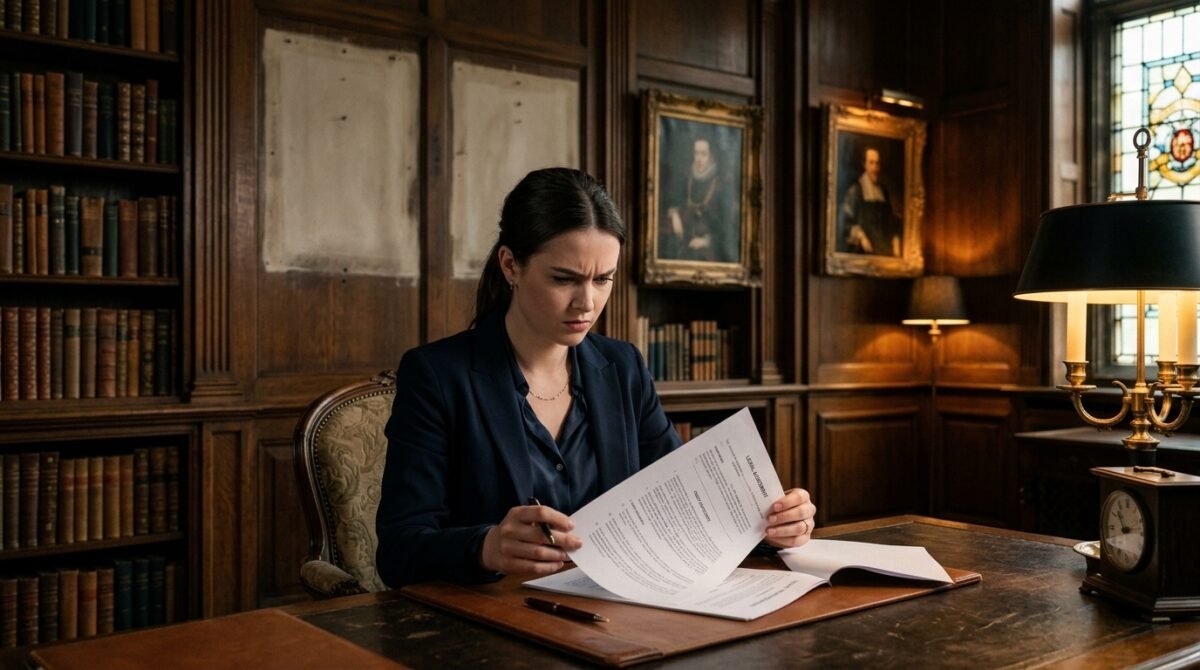
Grief is a strange, shapeshifting beast. For years, I kept the memory of my mother alive not just through photos, but through the three exquisite, 19th-century oil paintings she left behind in her will. They were the heartbeat of our living room, capturing the soft, hazy light of a long-lost countryside. I never imagined that these canvases, which survived war and travel, would become the target of a bizarre, calculated theft by a woman who hadn’t even been in our lives when my mother was alive.
My stepmother, Elena, entered the picture three years after my mother passed away. Initially, she was pleasant, perhaps even a bit invisible. But as the years rolled on, that mask began to slip, revealing an insatiable appetite for a lifestyle she couldn’t afford on her own. The tension reached a breaking point when her daughter from a previous marriage, Chloe, developed a taste for elite-level equestrian training—a sport that carries a price tag almost as heavy as the horse itself.
I was working in another state when I received the news that the paintings were gone. Not stolen by a burglar, but ‘relocated’ by Elena, who claimed they were cluttering up the house and needed to be liquidated to ‘invest in the family’s future.’ The family’s future, it turned out, was the local riding academy. I didn’t scream; I didn’t beg. I called my lawyer. This is the story of how I chose to protect my legacy, even if it meant burning every bridge in my father’s house to the ground.
The dilemma isn’t just about art; it’s about the erasure of a person’s existence to fund a stranger’s vanity. It touches on the deep, visceral anger that comes when someone tries to rewrite your history, thinking you’re too soft to stand in their way. As the walls closed in and the legal notices started flying, I realized that some people don’t understand the value of an heirloom—they only understand the value of an auction house gavel.
In the following sections, I will break down the slow, agonizing realization of betrayal, the gaslighting from my father, the cold reality of the legal system, and the eventual reckoning that left my stepmother scrambling for a defense. This wasn’t just a petty squabble; it was a battle for the soul of my family history, and I didn’t come to lose.
The Empty Wall at 6 AM
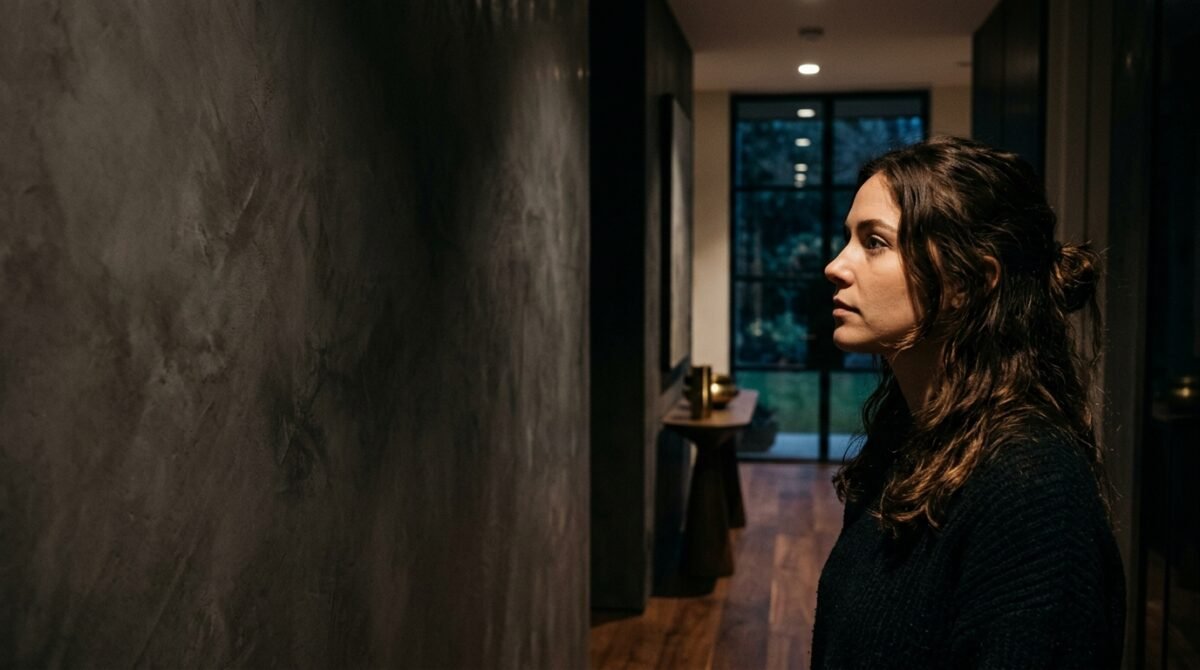
I arrived home for the holidays, expecting the familiar sight of the Dutch landscapes hanging in the study. Instead, I found blank, pale rectangles on the wallpaper, glaring at me like missing teeth in a smile. My heart plummeted into my stomach. I knew immediately what had happened, though I couldn’t fathom the audacity. My father was in the kitchen, nursing a coffee, acting as if the world hadn’t tilted on its axis.
I walked into the kitchen, my boots echoing on the hardwood. I didn’t want to start with an explosion, but the sight of the empty walls had drained my patience. I looked at my father, who wouldn’t meet my eyes. He was fidgeting with his watch, a sure sign he knew exactly what was coming. I asked him, as calmly as I could, where the paintings were. He muttered something about ‘spring cleaning’ and ‘redecorating,’ but the stutter in his voice gave him away.
“Where are the paintings, Dad? The ones Mom left to me in the will. Don’t lie to me. I know the house didn’t just decide to shed its skin.”
— Me, confronting my father.
Then Elena walked in. She was wearing an expensive silk robe, looking entirely too satisfied with herself. She didn’t even pretend to be apologetic. She looked at me with that practiced, condescending smile that usually preceded a demand for money or a lecture on ‘growing up.’ She told me that the paintings were ‘stored’ safely, implying that I should be grateful she was taking care of them.
The audacity was staggering. She framed it as a favor, claiming that they were worried about the humidity in the room—a ridiculous excuse for a house with a state-of-the-art HVAC system. I realized then that this wasn’t about preservation; it was about liquidation. She had probably already set up an appointment with a broker. I felt the cold, hard logic of a trap snapping shut, but I was the one who had the key to dismantle it.
I stood there, feeling the weight of my mother’s ghost, and I realized that my father had surrendered his spine the day he married her. He sat there, silent, while she spoke over him. It was a pathetic display of cowardice that hurt more than the theft itself. I left the kitchen without another word, knowing that the time for civil conversation had passed.
The Equestrian Fund Discovery

Later that evening, I did what any person in my position would do: I snooped. I didn’t feel guilty about it for a second. I logged into my father’s shared office computer, which he had foolishly left unlocked. What I found was a digital paper trail that spelled out the disaster in clear, undeniable black and white. There were emails from a high-end auction house, titled ‘Evaluation of 19th Century Dutch Oil Paintings,’ and a separate invoice from a local equestrian center.
The timeline was sickening. The auction house had already assessed the value at nearly sixty thousand dollars. The equestrian center’s invoice for the season, including training, boarding, and competition fees, was roughly forty-five thousand. The math was simple: sell the memory of my mother, fund the hobby of a girl I barely knew. I felt a surge of rage so hot it felt like physical pain.
“I don’t care if you want to be a world-class rider, Chloe. But you don’t get to ride on the back of my mother’s legacy. This is theft, pure and simple.”
— My internal monologue while looking at the invoices.
I took screenshots of everything. I backed up the files to a secure cloud drive. I knew that my stepmother would try to wipe the history once she realized I was onto her, but I was faster. The arrogance of these people was their undoing. They truly believed I would just roll over, cry for a bit, and accept the ‘life update’ they were force-feeding me.
I found a thread of messages between Elena and her daughter. The language was chillingly transactional. They discussed the paintings not as art, but as ‘liquidity events.’ They referred to my mother’s collection as ‘that old junk’ and ‘the ticket to the championships.’ Reading those messages, I felt the last shred of empathy I had for Elena evaporate. She wasn’t just a gold-digger; she was a predator.
I realized then that I wasn’t just fighting for paintings; I was fighting to prove that I still existed. If I let this happen, what would be next? My mother’s jewelry? The house itself? I needed to act before the hammer hit the auction block. I wasn’t going to let them win. I grabbed my bag, left the house, and drove straight to my lawyer’s office, even though it was nearly midnight.
The Cease and Desist Arrival
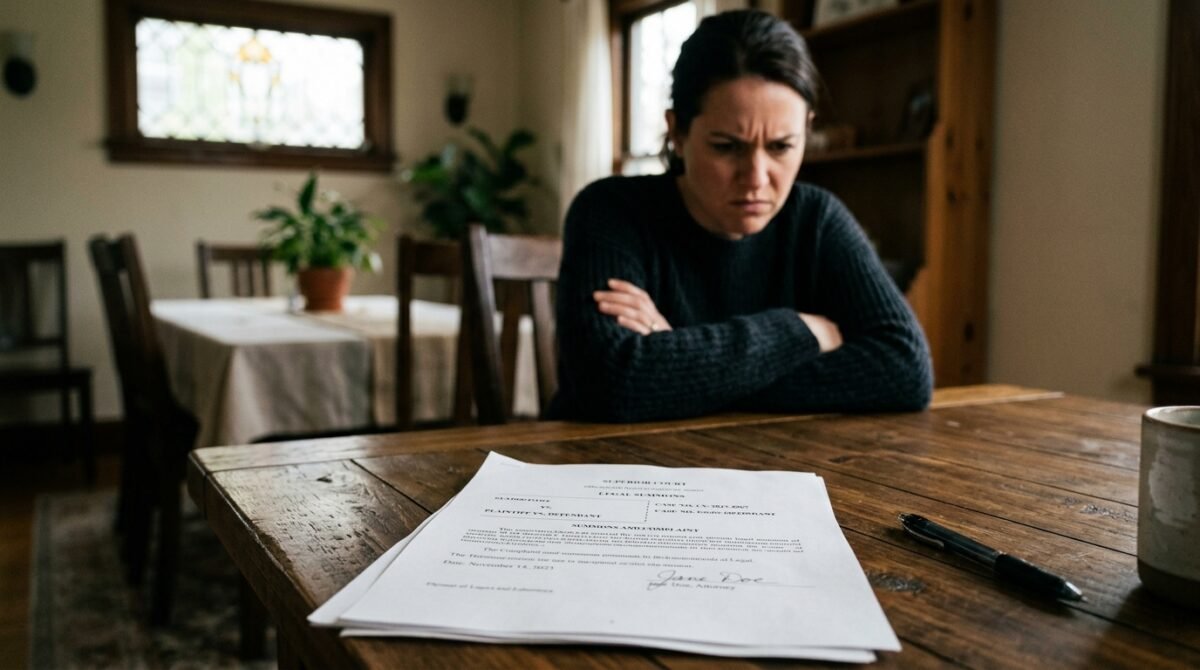
Three days later, the atmosphere in the house was suffocating. Elena was acting nervous, constantly checking her phone, while my father was avoiding me like the plague. I was sitting in the living room, reading a book, when the courier arrived. He didn’t ask for Elena or my father; he asked for the homeowner, which technically, because of the living trust my mother set up, was a joint situation involving me.
I signed for the envelope and walked into the dining room where Elena was having tea. I didn’t say anything. I just placed the thick, official-looking document on the table right next to her porcelain cup. The seal of the law firm was embossed in gold. It was a formal Cease and Desist, accompanied by a demand for the immediate return of the property. The look on her face was worth every penny of the retainer fee.
“What is this? You’re serving me papers? In my own home? Have you lost your mind?”
— Elena, voice trembling with rage.
I stood my ground. My hands weren’t shaking. I told her that if the paintings weren’t returned to their original places within twenty-four hours, the next document she would receive would be a court summons for grand larceny and a civil suit for conversion. I explained that because the paintings were explicitly listed in my mother’s probate documents, selling them was not just a family disagreement—it was a federal-level headache.
My father finally spoke up, but he only made it worse. He tried to tell me that we were ‘a family’ and that ‘family helps each other.’ I laughed in his face. I told him that helping each other implies mutual respect, not the systematic pillaging of a dead woman’s estate. He looked like he was about to cry, but I had no pity left for him. He had chosen his side, and now he had to live with the consequences.
Elena stood up, her chair scraping harshly against the floor. She threatened to call the police to have me removed, but I reminded her that as a co-beneficiary of the estate, I had every right to be there. The police would only serve to document the theft she was currently committing. She turned bright red, grabbed the papers, and stormed out of the room. It was the first time I felt like I had regained control of my own life.
The Group Chat Explosion

The next morning, the family group chat—which I had forgotten to leave—started blowing up. My step-siblings, my aunts, and even some distant cousins were chiming in. Elena had played the victim, claiming I was ‘harassing her’ and ‘trying to ruin Chloe’s dreams’ because I was ‘bitter and lonely.’ She didn’t mention the paintings, of course. She framed it as me being jealous of her daughter’s success.
I didn’t argue with them. I didn’t engage in their petty name-calling. Instead, I dropped the evidence. I screenshotted the auction house correspondence and the equestrian invoice. I posted them directly into the chat with a simple, ‘Here is why I sent the legal notice.’ The silence that followed was deafening. It lasted for a good hour before the chat started erupting in a different way.
“Oh my god, did she really try to sell the heirlooms? That’s disgusting. Elena, please tell me this is a misunderstanding.”
— My cousin, reacting to the screenshot.
My aunts were horrified. My father’s sister, who had always been a fan of my mother, was particularly vocal. She called out my father for allowing this to happen. The tide of public opinion in the family had shifted instantly. Elena tried to double down, claiming the money was ‘for the good of the family,’ but she was being dismantled by her own relatives in real-time.
I watched it all unfold from my phone, feeling a strange sense of detachment. It was like watching a train wreck from a safe distance. I realized that my stepmother’s power was built on secrets and manipulation. Once the light was shined on her, she had no defense. She was just a woman with expensive tastes and a lack of morals. The chat was a chaotic mess of apologies, denials, and realizations.
By the end of the day, my father had left the chat. He couldn’t handle the heat. I realized that this was his way of coping—running away when things got too complicated. But I was still there, and I wasn’t going anywhere. I had the truth, I had the law, and I had the moral high ground. The paintings would come back, or heads would roll.
The Courtroom Encounter
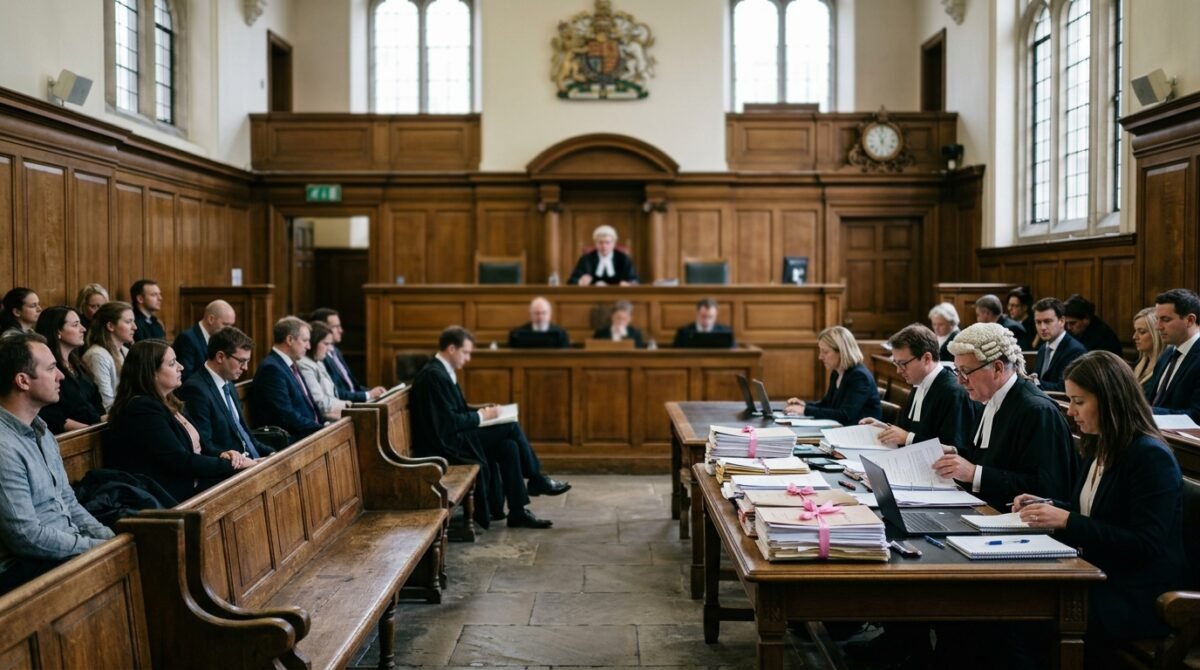
The matter eventually escalated to a civil hearing. We weren’t going to jail, but we were absolutely going to court. The courtroom was cold, clinical, and smelled of floor wax. I sat on one side with my lawyer, and Elena sat on the other, looking like she had just realized she was playing a game she couldn’t win. My father was sitting between us, looking like a man who had aged ten years in a week.
The judge was a no-nonsense woman who didn’t care about family drama; she cared about the chain of custody and the legal status of the items. When my lawyer laid out the provenance of the paintings and the proof of the unauthorized sale attempt, the judge’s expression barely changed, which was a good sign. Elena’s lawyer tried to argue that the items were ‘abandoned’ by me, but that claim was shot down in seconds.
“Counselor, are you seriously suggesting that a piece of art being stored in a family home for ten years constitutes abandonment? I suggest you rethink your strategy.”
— The Judge, shutting down Elena’s defense.
It was fascinating to watch Elena try to pivot. She went from being the ‘caring stepmother’ to the ‘misunderstood manager of family assets.’ It was a pathetic performance. She kept looking at my father, hoping he would back her up, but he remained silent. He had finally realized that his marriage was on the line if he defended her, but his legacy was on the line if he didn’t.
When I was called to the stand, I didn’t perform. I spoke plainly. I talked about my mother, the history of the paintings, and how they represented my connection to the woman who gave me everything. I didn’t need to be dramatic; the facts were enough. I could see the judge nodding. She understood the weight of the situation. It wasn’t about the money; it was about the desecration of a memory.
By the time the hearing ended, the judge had ordered a temporary injunction. The paintings had to be returned to a secure, neutral storage facility, and the sale was officially blocked. It was a partial victory, but for me, it was everything. I had stopped the bleeding. Elena looked defeated, her face pale as she realized that her plans for the equestrian season were officially dead in the water.
The Reddit Verdict
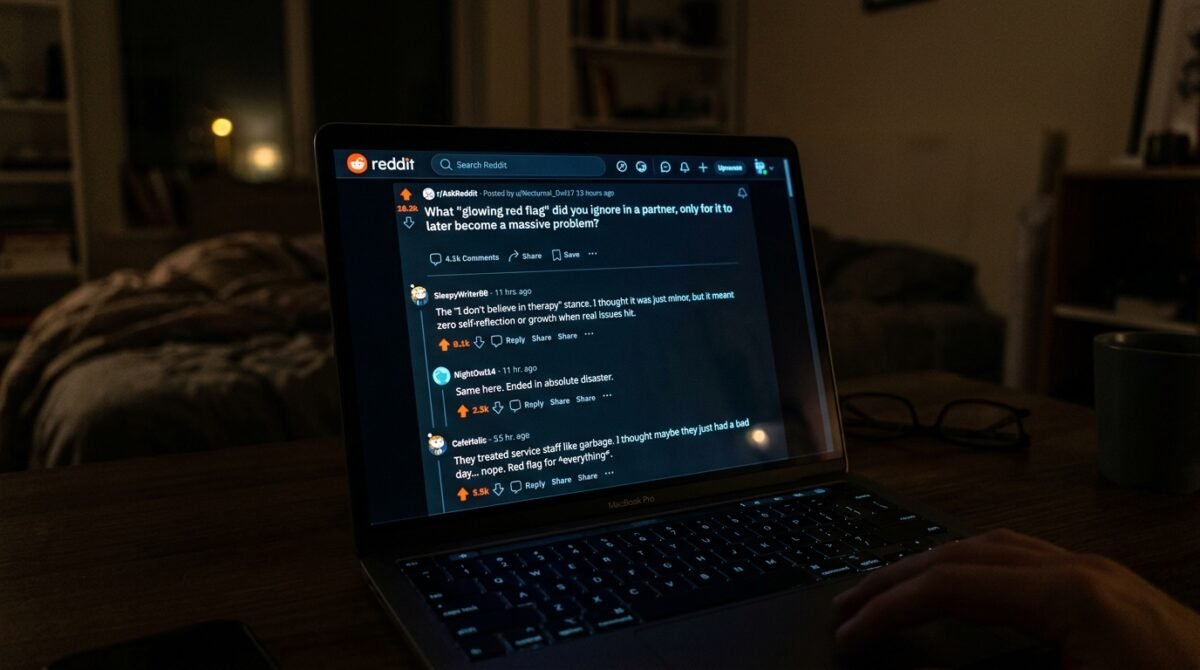
While all of this was happening, I posted a condensed version of my story on a popular subreddit. I wanted to see if I was crazy. I wanted to know if I was being too hard on them. The response was overwhelming. Thousands of people flooded the thread, offering support, legal advice, and, more importantly, validation. The consensus was clear: I was the furthest thing from the villain.
“NTA. This isn’t just about paintings. This is about your father allowing his new wife to erase your mother’s existence. You are doing the right thing. Don’t let them gaslight you into thinking otherwise.”
— u/JusticeSeeker99 (Top Comment, 18.2k upvotes)
There were hundreds of similar comments. People shared their own stories of step-parents trying to sell off belongings after a death. It was a common, ugly pattern. The community helped me realize that the guilt I felt for ‘tearing the family apart’ was actually just me finally setting boundaries. I wasn’t the one who broke the family; the family was already broken by the greed and the lack of respect.
Some users warned me that Elena might try to retaliate in other ways. They suggested I secure my personal documents, check my credit, and make sure my own financial assets were protected from any ‘family’ access. I took their advice seriously. I spent the next few days scrubbing my digital footprint and ensuring that my father had no access to any of my accounts or the trust itself.
The thread became a repository of wisdom for anyone dealing with narcissistic in-laws. I felt less alone. I realized that my story was part of a larger, systemic problem where people think that marriage gives them a right to everything a partner brings into the union, regardless of the history. It was empowering to see so many people stand up for the sanctity of boundaries.
I found myself answering questions late into the night, helping others who were currently going through what I had just escaped. The process of telling my story was, in itself, a form of therapy. It helped me process the anger and turn it into something productive. I wasn’t just a victim; I was a survivor of a calculated heist, and I was going to make sure the world knew how to spot one.
The Final Reckoning

A month later, the final judgment was delivered. The paintings were ordered to be returned to my possession, and all legal fees for the entire proceeding were placed on my father and Elena. It was a total wipeout. But the real aftermath happened back at the house. I went back to collect my things, and the air was thick with the kind of silence that happens after a war ends.
My father was sitting in the living room, surrounded by boxes. He looked smaller, older. He didn’t even try to make excuses. He asked me if I would still visit, and I told him, honestly, that I couldn’t. I couldn’t be in a house where my mother’s memory was treated as a disposable commodity. It wasn’t a punishment; it was a necessary separation for my own health.
“I’m not doing this to hurt you, Dad. I’m doing this because I have to preserve what’s left of Mom. You chose a different path, and I have to respect that. But I won’t be a part of it.”
— Me, saying goodbye to my father.
Elena stayed in her room the entire time I was packing. She didn’t come out to apologize or even to glare. She knew she had lost. Chloe, the daughter, didn’t even look at me. I felt a strange flicker of pity for her, realizing she was just a pawn in her mother’s twisted game, but that pity was quickly eclipsed by the relief of finally being free from that toxic environment.
As I walked out the door with the paintings secured in their protective crates, I took one last look at the house. It was a beautiful place, but it had become a cage. I felt the weight of the last few months lifting off my shoulders. I had spent so long fighting to prove that I was right that I hadn’t realized I was also fighting for my own autonomy.
I drove away without looking in the rearview mirror. I had my paintings, I had my dignity, and I had a newfound sense of peace. The cost was high—a fractured family, a complicated relationship with my father—but the alternative was a lifetime of being erased. And that was a price I was never willing to pay.
The Aftermath and Healing
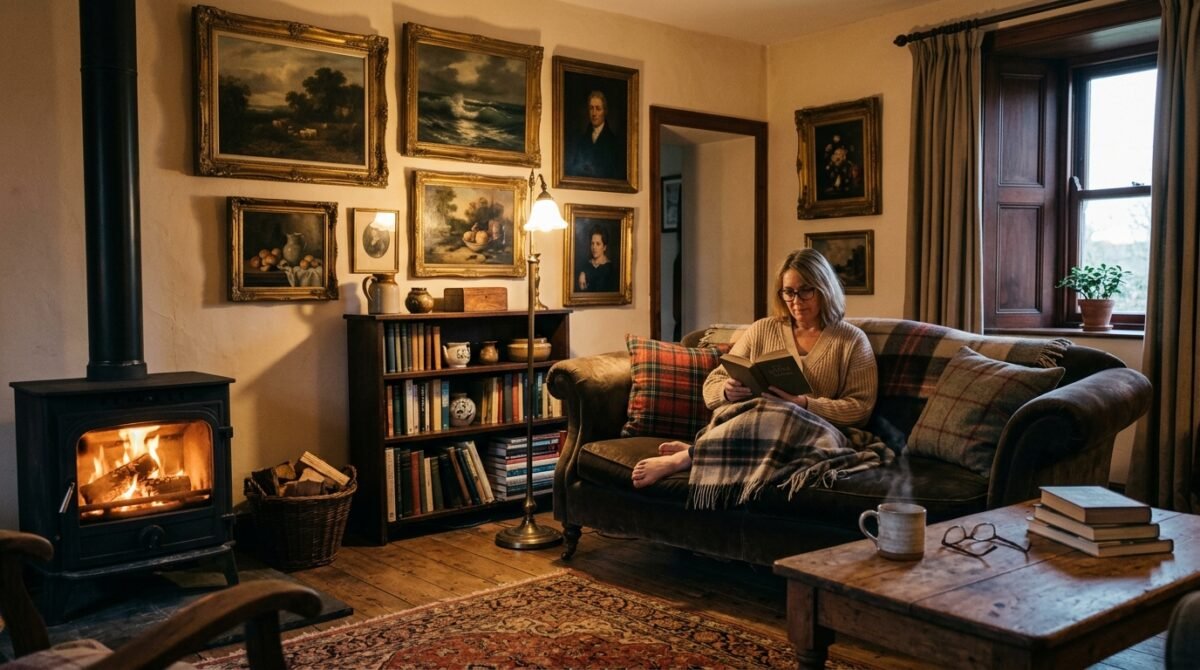
It has been six months since the trial. The paintings are hanging in my own apartment now, bathed in the natural light of my living room. Every time I look at them, I don’t feel the anger of the past; I feel the quiet strength of the person who refused to let them be taken. My father and I speak occasionally, short, polite phone calls that dance around the elephant in the room. He is trying to reconcile, but I am keeping my distance.
I’ve learned that sometimes, the family we are born into is not the family we are meant to keep. Boundaries aren’t just walls; they are the foundation of self-respect. I’ve started therapy to deal with the fallout of the betrayal, and it has been a game-changer. I’m learning how to trust again, and how to spot the signs of people who treat relationships as transactions rather than bonds.
“The hardest part wasn’t the lawsuit. It was admitting that the person I grew up with was capable of letting my past be sold for a hobby. Once I accepted that, the rest was easy.”
— My reflection during a therapy session.
My stepmother is still in the house, but their financial situation has changed. Without the ‘liquidity’ she hoped for, the equestrian lessons were cut back, and the lifestyle they were trying to project has become unsustainable. I don’t take joy in their struggle, but I do take satisfaction in the fact that they couldn’t reach into my life to fix their problems.
I’ve also started a local group for people who have been through similar inheritance battles. We meet once a month to discuss the legal and emotional hurdles of dealing with death, money, and toxic family dynamics. It’s a way of giving back the support I received on Reddit, and it has been incredibly rewarding. We aren’t just sharing our pain; we are sharing our survival stories.
I know there will be more challenges ahead. Life is rarely a straight line. But I know now that no matter what comes my way, I have the courage to face it. I am no longer the person who would have stayed silent out of a sense of duty. I am the person who knows the value of my own history, and I am the one who will protect it, come what may.
The Moral of the Story

If there is one thing I want anyone reading this to take away, it is this: never assume that your rights are respected simply because they are ‘yours.’ In the eyes of the law, and especially in the eyes of people who believe they are entitled to your life, you have to be your own advocate. You have to document everything, you have to be firm, and you have to be willing to walk away from the people who don’t value your worth.
The story of the paintings is a microcosm of a much larger issue. We live in a society that often prioritizes the present desire over the past commitment. We see it in relationships, in careers, and in family dynamics. But the past—the legacy, the memories, the things we hold dear—is what makes us who we are. To give that up is to give up a piece of ourselves, and that is a sacrifice no one should ever have to make.
“Heirlooms are not just objects. They are the physical anchors of our identity. When someone tries to sell your history to fund their vanity, they are telling you exactly what they think of you.”
— My concluding thoughts on the situation.
I hope that my experience serves as a warning to anyone currently being gaslighted or manipulated. You don’t have to be the ‘nice’ person who lets everything go. You can be the ‘difficult’ person who stands up for themselves. You can be the person who says ‘no’ and follows it up with a legal filing. Sometimes, ‘difficult’ is just another word for ‘having a backbone.’
I am grateful for the outcome, even if the journey was painful. I have my mother’s paintings, and more importantly, I have my voice. I hope you find yours, too. Whether it’s an inheritance, a boundary, or a dream, don’t let anyone else be the one to determine its value. That is your job, and yours alone. Stay strong, keep your documents ready, and never be afraid to fight for what is rightfully yours.
Conclusion
My journey through this legal and emotional minefield has been the most transformative experience of my life. I went from a daughter grieving her loss to a person who stood up against a calculated erasure. The paintings are now safe, but the most important thing I saved was my integrity. There is a deep, profound peace in knowing that I protected my mother’s memory exactly as she would have wanted—with strength, with dignity, and with a refusal to be manipulated.
We all have our own ‘paintings’—the things that define us, the connections that ground us, and the memories that sustain us. It is up to us to protect them from those who would sell them for their own gain. I hope my story empowers you to identify when you are being taken advantage of and to act with confidence. Your story is yours to write, not theirs to rewrite.
What would you have done? If you found yourself in my position, would you have sought a legal solution immediately, or would you have tried to talk it out further? Share your experiences in the comments below—I read every single one, and your stories mean the world to me.
What's your verdict on this dilemma?
Vote below to contribute to the official community consensus.

Have a Dilemma Keeping You Up at Night?
Share your real-life feud, wedding chaos, or relationship crossroads anonymously with our editorial team.
What do you think ?
0 Comments🛡️ Comments are moderated to protect community integrity. Your comment will appear once approved by the editorial team.