
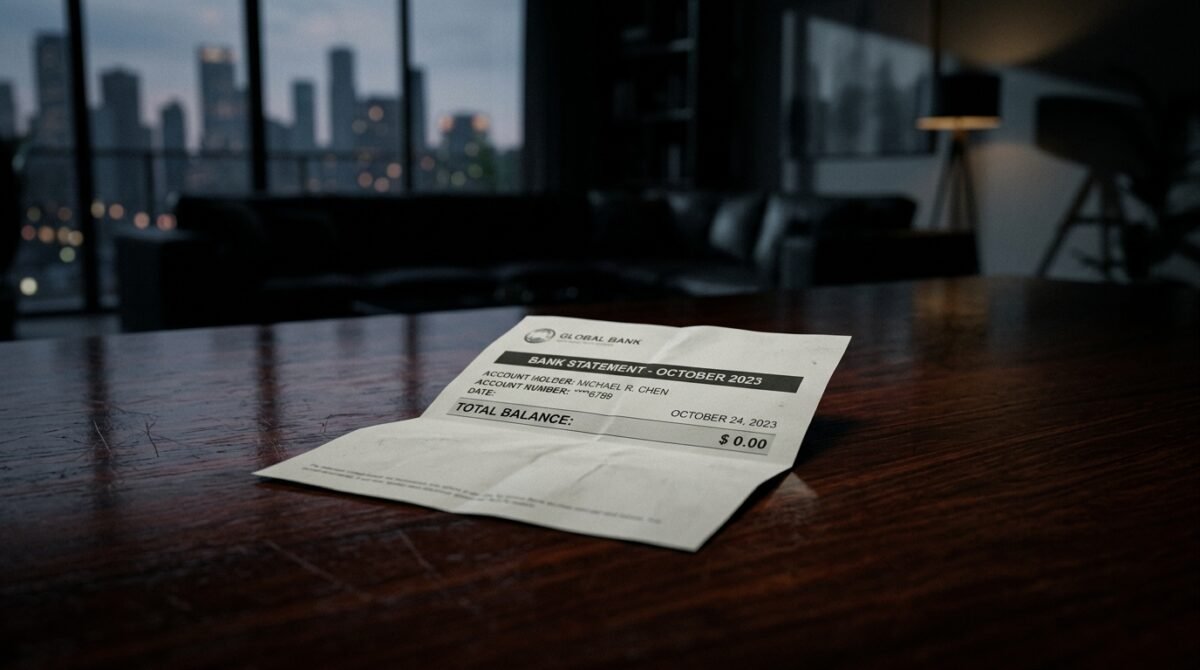
Growing up, the promise of higher education was the one constant in my life. Every birthday check from my grandparents, every dollar I earned from my summer job lifeguarding, and every modest contribution from my parents went into a high-yield savings account explicitly labeled ‘College Fund.’ It was supposed to be my ticket out, my foundation, and the reward for years of academic discipline. I never touched it, not even when I wanted a car at sixteen or a new laptop in my junior year of high school.
My parents, however, had a different philosophy when it came to their second marriage. My stepbrother, Leo, was their golden child—a charismatic but chronically directionless young man who treated life like an optional extracurricular activity. When Leo announced he wanted to take a ‘luxury gap year’ to find himself across the Mediterranean, I didn’t think twice about it, assuming he had saved his own money or that my stepfather had a separate plan for him. I was wrong. I was so incredibly wrong.
The betrayal wasn’t sudden; it was a slow, calculated erosion of my trust. It started with ‘borrowing’ small amounts for ‘family emergencies’ that never seemed to materialize as anything other than weekend getaways for Leo. When I finally logged into my account to prepare for tuition payments, I didn’t just find a deficit; I found an empty void. The realization that my future had been sacrificed at the altar of my stepbrother’s entitlement shattered the foundation of my home life.
This isn’t just a story about money. It’s about the devastating realization that the people tasked with protecting my future were the ones who dismantled it for the sake of appearances. As I stand on the precipice of adulthood, I have had to make the hardest decision of my life: to cut off the people who taught me that love, in this family, was always transactional. This is how I fought back, how I reclaimed my independence, and why I will never look back.
The Disappearing Act of My Future

I remember the exact moment the floor fell out from under me. It was a Tuesday evening, the kind of mundane night where I was supposed to be finalizing my housing deposit for the fall semester. I sat at my laptop, humming to myself, feeling the quiet pride of someone who had done everything right. I opened the banking portal with a sense of security, expecting to see the balance that represented four years of my hard work and the generous gifts from my extended family.
The screen flickered, and my heart skipped a beat. The balance read $12.42. I refreshed the page, assuming it was a glitch in the interface, but the number remained hauntingly, insultingly small. Panic, cold and sharp, washed over me. I clicked on the transaction history, expecting to see a fraudulent hack, but what I saw instead were transfers to travel agencies, luxury hotels in Florence, and high-end flight bookings. Each transaction was dated within the last three months.
I felt my breath hitch in my throat. These weren’t just random charges; they were the logistical paper trail of Leo’s grand European tour. Every cent I had saved for my education had been systematically drained, transfer by transfer, to fund cocktails on the Amalfi Coast and private tours of ancient ruins for a boy who hadn’t worked a single day in his life. The physical sensation was visceral—a tightening in my chest that made it hard to breathe.
“I just wanted to make sure Leo had a chance to broaden his horizons. You’re young, you can always work more later. He needed this now.”
— My Mother, during the initial confrontation
When I confronted my mother, she didn’t look remorseful. She looked tired, as if I were the one inconveniencing her with my unreasonable expectations. She spoke as if my stolen money were a communal resource, a family pot that was free to be distributed to whoever was ‘in need’ of a life experience. It was the moment I realized that in her eyes, my life was merely a support system for Leo’s.
I sat there, staring at her, unable to fathom how she could justify this. She had effectively stolen my future to buy her son a vacation. The audacity was suffocating, and for the first time, I saw the true hierarchy of our household. I was the responsible one, and therefore, I was the one whose needs were always considered negotiable.
The Dinner Table Declaration
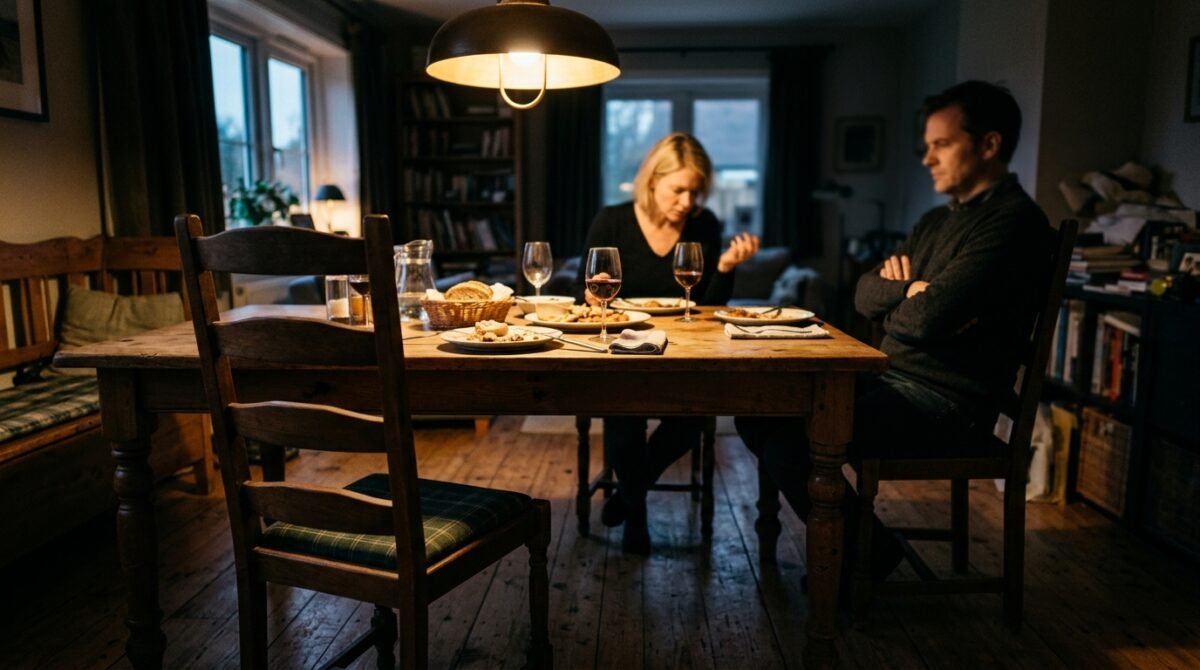
The family dinner that followed was a masterclass in gaslighting. My stepfather sat at the head of the table, carving a roast as if we were a normal, happy family. Leo was absent, presumably still posting photos from a yacht in Greece, oblivious to the fact that his ‘gap year’ had essentially been financed by my college tuition. The air in the room was thick with a tension so palpable it felt like a physical weight.
I didn’t eat. I just stared at my plate, waiting for one of them to mention the elephant in the room. Finally, I spoke, my voice shaking with a mix of rage and disbelief. I told them that I had seen the bank statements and that I wanted to know when the money would be returned. The reaction was swift and dismissive, a coordinated effort to make me feel small and ungrateful for even asking.
“You are being incredibly dramatic. It is just money. We are family, and family helps family when they need it most. Why are you acting like a victim?”
— My Stepfather
My stepfather’s tone was condescending, the kind of voice one uses to talk to a child who doesn’t understand the ‘big picture.’ He acted as if the money had been a charitable donation rather than a restricted fund for my life goals. I realized then that they had no intention of paying me back. They viewed my savings as an endless well to be tapped whenever Leo’s lifestyle became too expensive to sustain.
I looked at my mother, hoping for an ally, but she just looked away. She was complicit, silent, and entirely on his side. It was a betrayal that went beyond the money; it was the betrayal of my autonomy. By stealing my funds, they had effectively stripped me of my agency and my path to independence. They had decided that my future was less important than Leo’s comfort.
I excused myself from the table, not because I was satisfied, but because I realized that arguing with them was pointless. They had already made their choice, and they were perfectly comfortable with the outcome. I went to my room and began to pack a bag. I knew then that I could no longer live under their roof, nor could I continue to accept their version of reality as the truth.
Leaked Texts and the Golden Child
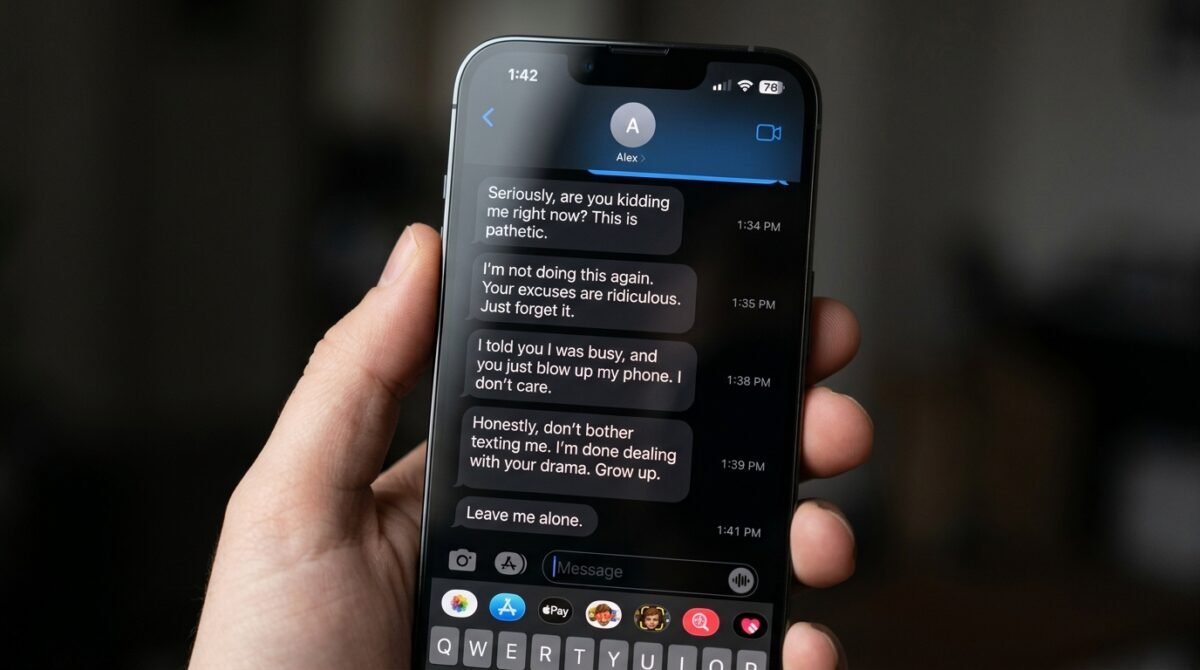
The next morning, while they were out, I did something I had never done before: I checked the shared iPad that Leo had left behind. I didn’t feel guilty. After what they had done to me, my conscience was clear. I found a string of messages between Leo and my mother that made my blood run cold. It wasn’t just about the money; it was about the contempt they felt for me.
“Don’t worry about her. She’s going to get a job and save it back up. She’s always been so boring and focused on school anyway. You enjoy your trip!”
— My Mother’s text to Leo
Reading those words, I felt a strange kind of relief. The ambiguity was gone. I wasn’t just imagining that they valued him more; I had the proof. They weren’t just stealing my money; they were actively mocking my ambition. My mother, the woman who raised me, was laughing at my struggle in private. It was a level of cruelty I hadn’t thought her capable of.
I scrolled further. There were texts about how I was ‘too independent’ and needed to be ‘brought down to earth.’ It was clear they viewed my drive as a threat to their dynamic. Leo, in turn, was joking about how he was going to buy me a cheap gift from the duty-free shop to ‘make up’ for the thousands he’d spent. It was sickening. They were playing a game, and I was the punchline.
I took screenshots of everything. I didn’t know what I would do with them yet, but I knew that the truth was my only leverage. I had spent years trying to be the perfect daughter, the one who didn’t cause trouble, the one who worked hard, all for what? To be treated like an ATM for a spoiled stepbrother and a mother who didn’t care about my future. That was the day the ‘perfect daughter’ died.
I left the house that afternoon, taking only my essentials. I had a small savings account in my own name—one they didn’t know about—and a part-time job that I had been working throughout high school. It wasn’t much, but it was mine. I left a note on the kitchen counter, not an explanation, but a statement of fact: I was done, and they would never see me again.
The Legal Reality Check

Once I was settled in a small, temporary apartment, the reality of my financial situation hit me. I had enough to cover rent for a few months, but college was looking increasingly impossible. I contacted a lawyer to see if there was any way to recover the funds. The initial consultation was sobering. Because the account was technically a joint custodial account, my mother had the legal right to access the funds, even if the intent was for my education.
The lawyer explained that since the money was ‘gifted’ into the account, it was legally considered my mother’s property until I turned eighteen, and in some jurisdictions, even beyond that. It was a massive oversight in how the account was set up, and my parents had exploited it perfectly. I felt a surge of helplessness, but it was quickly replaced by a cold, hard determination to move forward without them.
“You have a moral claim, but the legal path is messy and expensive. If you want to win, you have to be prepared for a long, ugly battle that might not end in your favor.”
— My Lawyer
I decided not to pursue the legal route. I didn’t have the money to pay for a lawyer, and I didn’t want to spend the next two years of my life tied to them in a courtroom. I chose to cut my losses, both financially and emotionally. I realized that the price of my freedom was the money they had stolen, and in a way, it was the best investment I ever made. It bought me the clarity to see exactly who they were.
I started working full-time, picking up double shifts at a local restaurant. The work was exhausting, but it was honest. Every dollar I made went into a new account, one that only I could access. I felt a sense of pride that I had never experienced before. I wasn’t waiting for a handout; I was building my own life, brick by brick. The sting of the betrayal remained, but it was becoming a fuel for my ambition.
My parents tried to reach out, of course. They sent emails, left voicemails, and even had family members call me to tell me I was being ‘unreasonable.’ They wanted me to return for a ‘family discussion’ to ‘resolve these misunderstandings.’ I didn’t take the bait. I blocked every number, deleted every email, and focused entirely on my own goals. I was done with the drama; I was focused on the future.
Why the Internet Chose a Side

I eventually decided to share my story on a popular forum. I needed to know if I was crazy, if I was indeed being ‘dramatic’ as my stepfather claimed. The response was overwhelming. Thousands of people reached out, sharing their own stories of financial betrayal and toxic family dynamics. The consensus was clear: I was not the villain, and I was certainly not being unreasonable for cutting ties with people who had violated my trust so egregiously.
“This isn’t about the money. This is about them showing you exactly how much they value you compared to the stepbrother. Believe them when they show you who they are. Go no-contact and never look back.”
— u/JusticeSeeker (Top Comment, 32.5k upvotes)
The validation from strangers was more healing than any apology my parents could have offered. I read comments from people who had been through similar situations and had come out the other side stronger, more independent, and happier. It helped me realize that family isn’t just about blood; it’s about mutual respect and support, two things I never had at home.
Some people, of course, tried to play devil’s advocate. They suggested that I should try to forgive them for the sake of ‘family harmony.’ I found those comments amusing. There is no harmony in a household where one person is treated as a piggy bank for another. I was done trying to keep the peace at the expense of my own sanity and future.
The thread became a viral sensation, which was both terrifying and empowering. It showed that my story resonated with so many people because it touched on a universal fear: the fear that the people who are supposed to protect us are capable of letting us down in the most profound ways. My post became a testament to the fact that it is possible to survive and thrive even after a massive betrayal.
I kept updating the thread with my progress, showing that I was working, saving, and planning for college. The community cheered me on, offering advice, financial tips, and words of encouragement. For the first time in my life, I felt like I had a support system, even if it was just a collection of anonymous usernames on the internet.
The $1,400 Restaurant Bill Lesson

A few months later, I received a notification that my stepfather had tried to use my old credit card, which I had canceled shortly after leaving. It was a small, petty move, but it reminded me of just how entitled they felt. I laughed when I got the alert from the credit card company that the transaction was declined. I could almost picture him standing there, red-faced, wondering why his ‘family’ card wasn’t working.
I found out later from a relative that they had gone to a high-end restaurant and assumed they could just charge it to my old account. They hadn’t realized that when I left, I didn’t just walk away; I took my financial life with me. They were left with a $1,400 bill and no way to pay it, which led to a very public and humiliating argument with the restaurant staff.
“I don’t care how you pay it, just pay the bill. We don’t care about your family issues here.”
— Restaurant Manager to my stepfather
It was a moment of poetic justice. They were so used to being able to manipulate my finances that it never occurred to them that their gravy train had permanently left the station. The incident was the final nail in the coffin of our relationship. My stepfather was furious, not because he was wrong, but because he was embarrassed. He didn’t care about my well-being; he cared about his own comfort.
I felt a deep sense of relief knowing that I was no longer responsible for their mistakes. I had untangled myself from their mess, and I was finally free. The incident served as a reminder that I had made the right decision. If I had stayed, I would still be paying for their dinners, their vacations, and their lifestyle, all while my own dreams withered away.
I spent that evening celebrating my independence. I treated myself to a nice dinner, paid for by my own hard-earned money. It was the best meal I had ever had. Not because of the food, but because I knew that every bite was earned, and no one could ever take that sense of accomplishment away from me.
The Certified Letter That Changed Everything

About a year into my independence, I received a certified letter from my mother. I almost didn’t open it. I was so tempted to just throw it directly into the trash, but curiosity got the better of me. Inside was a check for a fraction of what they had taken and a long, rambling letter asking for ‘forgiveness’ and suggesting that we ‘move past’ the incident for the sake of the family.
The check was an insult. It was less than twenty percent of what they had stolen, and it was attached to a string of conditions. They wanted me to attend a family therapy session, visit them for the holidays, and ‘admit’ that I had overreacted. It was a blatant attempt to buy back my compliance, not an earnest apology.
“We miss you, and we realize we made some mistakes. Let’s start over. Here is some money to help you with your tuition, just come home for Christmas.”
— My Mother’s letter
I tore the check in half. I didn’t need their money, and I certainly didn’t need their ‘forgiveness.’ I realized that they hadn’t learned a single thing. They still believed that they could control me with money and that my values were for sale. I drafted a short, cold response, stating that the check was unacceptable and that I had no interest in re-establishing contact.
I felt powerful in that moment. For so long, I had been the one waiting for them to acknowledge my pain, waiting for them to apologize. By rejecting their offer, I was taking the power back. I wasn’t waiting for them anymore. I was moving on, and I didn’t need their validation to do it. The letter was the final chapter in our story.
I sent the letter, and then I blocked their contact information again, just to be sure. I didn’t look back. I didn’t wonder what they were doing, or how they were reacting. I was busy, I was happy, and I was finally, truly free. The weight that had been on my shoulders for so long finally lifted, and I was ready to embrace the life I had built for myself.
Rebuilding on My Own Terms

Rebuilding my life wasn’t easy, but it was incredibly rewarding. I started taking community college classes at night, paying for them as I went. I worked hard, studied harder, and for the first time, I felt like I was doing it for me, not for my parents’ approval or for some vague future goal that they held over my head. My grades were excellent, and I was making connections that would help me in the long run.
I also started to rebuild my sense of self. For years, I had defined myself by my role in my family—the responsible one, the one who didn’t cause trouble. Now, I was just me. I discovered hobbies I enjoyed, made friends who valued me for who I was, and started to see a future that was entirely my own. It was a terrifying, beautiful, and exhilarating process.
“I finally feel like I’m in the driver’s seat of my own life. It’s scary, but it’s the best feeling in the world.”
— My journal entry, one year after moving out
I learned that resilience isn’t about not being hurt; it’s about what you do with the pain. I used my experience to fuel my ambition, to set better boundaries, and to value my own worth more than anyone else’s opinion. I realized that the best revenge isn’t success; it’s living a life that is so fulfilling and independent that the opinions of those who hurt you no longer matter.
I started mentoring other young people who were going through similar situations. Helping them find their voice and their independence gave my struggle a higher purpose. I wasn’t just a victim; I was a survivor, and I was using my experience to help others. It was a powerful transformation, one that I wouldn’t have had if my parents hadn’t forced my hand.
My future is now wide open. I am planning on transferring to a four-year university, and I know that I will make it. I am no longer defined by the money that was stolen from me, but by the life I have built with my own hands. I have learned that the most valuable thing I own is not a bank account, but my integrity and my freedom.
The Lessons in Loss

Looking back, I see the whole ordeal not as a tragedy, but as a catalyst. If my parents hadn’t stolen that money, I would probably still be living in their house, following their rules, and waiting for their permission to exist. I would be a shadow of myself, constantly seeking validation from people who were never capable of giving it. The betrayal was the catalyst for my liberation.
I learned to spot manipulation from a mile away. I learned that when someone says ‘family comes first,’ they often mean ‘my comfort comes first.’ I learned that financial independence is the most important tool for setting boundaries. Most importantly, I learned that I am enough, all on my own. I don’t need my parents’ money, their approval, or their presence to lead a successful and meaningful life.
“The most important lesson I learned is that your future belongs to you, and you are the only one responsible for protecting it.”
— My personal reflection
I have forgiven them, not because they deserve it, but because I don’t want to carry the weight of that anger anymore. Forgiveness isn’t about them; it’s about me letting go of the hurt so I can be free. I have moved on, and I am not looking back. I have built a life that I love, one that is entirely of my own design.
To anyone out there struggling with a similar situation, know that you are not alone. It is okay to set boundaries. It is okay to walk away from people who don’t respect you. It is okay to prioritize your own future. You are worthy of so much more than the way you are being treated. Keep fighting, keep saving, and keep moving forward. Your future is yours to claim.
I am now finishing my final year of university, and I have a job offer waiting for me. I am proud of everything I have achieved, and I am excited for everything to come. I have reclaimed my life, and I have done it on my own terms. The ‘golden child’ may have gotten a luxury trip, but I got something much better: I got myself.
Why We Need to Talk About Financial Abuse

The more I speak about this, the more I realize how common financial abuse within families is. We are taught to trust our parents blindly, to assume that they always have our best interests at heart. But the reality is that parents are people, and people are flawed. They can be selfish, entitled, and manipulative, just like anyone else. We need to start talking about these issues openly and honestly, without the shame or the fear of being seen as ‘ungrateful’.
Financial abuse is a silent form of control, and it can be devastating. It’s not just about the money; it’s about the power dynamic. When someone has control over your finances, they have control over your life. They can limit your choices, manipulate your decisions, and keep you dependent on them. Breaking that cycle is one of the most difficult things you can do, but it is also one of the most important.
“Financial abuse is a silent pandemic. If you see it, name it. If you’re living it, know that you don’t have to stay.”
— Advice from a financial advocate
I hope my story encourages others to be more aware of their own financial situations. Check your accounts regularly, keep your documents safe, and don’t assume that just because someone is ‘family,’ they are automatically trustworthy. Protect your future, because no one else is going to do it for you. Your hard work is yours, and you deserve to reap the benefits of it.
We need to stop normalizing the idea that parents have a right to their children’s money. We need to stop excusing bad behavior because ‘they are family.’ We need to hold people accountable for their actions, regardless of their role in our lives. Only then can we create a culture of respect and support, where everyone is treated with the dignity they deserve.
I am grateful for every step of this journey, even the painful ones. They have made me who I am today, and I am proud of the person I have become. I have learned to stand tall, to speak my truth, and to walk away from what no longer serves me. I am looking forward to a future that is bright, independent, and entirely my own.
Conclusion
My journey from a bank balance of $12.42 to the threshold of a successful career has been the defining experience of my life. I lost a family, but I gained something far more precious: my own life. I learned that when you cut away the rot, you aren’t just losing something—you are creating space for something new, something healthy, and something entirely your own.
The moral of this story isn’t just about money; it’s about the audacity to choose yourself when everyone around you expects you to sacrifice your future for their comfort. It’s about recognizing that love isn’t a debt to be paid or a commodity to be traded. It is a choice, and I chose to invest in myself.
I invite you to reflect on your own boundaries. Have you ever felt pressured to prioritize someone else’s comfort at the cost of your own well-being? Does your family respect your independence, or do they see it as a threat? Share your thoughts, your struggles, and your triumphs in the comments below. Let’s start a conversation about what it really means to have a healthy, respectful family dynamic.
Community Poll:
How would you have handled the situation?
1. Tried to mediate and salvage the relationship.
2. Pursued legal action immediately.
3. Did exactly what OP did: cut ties and moved forward.
4. Other (Please share in the comments!)
What's your verdict on this dilemma?
Vote below to contribute to the official community consensus.

Have a Dilemma Keeping You Up at Night?
Share your real-life feud, wedding chaos, or relationship crossroads anonymously with our editorial team.
What do you think ?
0 Comments🛡️ Comments are moderated to protect community integrity. Your comment will appear once approved by the editorial team.