
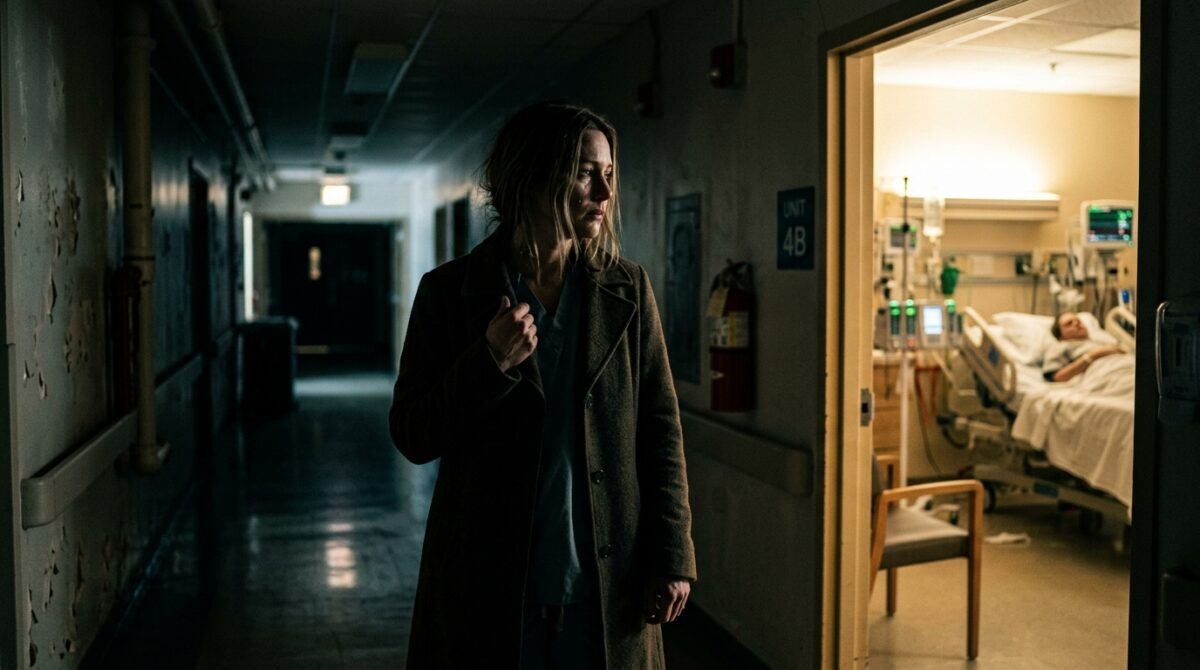
Growing up, my half-brother, Julian, was the architect of my most painful memories. He didn’t just tease me; he dismantled my confidence with surgical precision. From locking me in the basement to convincing our extended family that I was the problem child, he ensured my youth was defined by his shadow. I eventually escaped, moved thousands of miles away, and built a life where his name was never spoken.
That silence was shattered three months ago by a frantic phone call from my mother, a woman who had spent two decades telling me to ‘just ignore’ Julian’s cruelty. Her voice wasn’t filled with the usual disappointment; it was frantic, trembling, and entirely focused on a medical diagnosis that Julian had apparently been hiding for years: acute myeloid leukemia.
The request came less than a minute into the call. The doctors needed a donor, and as it turned out, I was the only match in the entire extended family. My mother didn’t ask; she demanded, framing it as a divine opportunity for reconciliation. The expectation was that I would drop everything, undergo the invasive medical procedure, and offer my marrow to the man who once held my head under the water at our neighborhood pool.
I sat in my kitchen, staring at the empty cup of coffee, feeling the cold, hard weight of a moral dilemma I never asked for. On one side was the absolute biological imperative to save a life. On the other was the visceral, soul-deep trauma of a person who had spent years trying to make me feel like I didn’t deserve to exist. The pressure began to mount, not just from my mother, but from the entire family, who suddenly found their voices to tell me what a ‘good person’ would do.
This is the story of how I drew a line in the sand. It is a story about the audacity of people who demand sacrifice from those they neglected, and the terrifying, liberating realization that ‘family’ is not a synonym for ‘obligation.’ This is how I stood my ground, faced the wrath of my relatives, and realized that some bridges aren’t meant to be saved—they are meant to be burned for warmth as you walk away.
The Late Night Call From The Ghost Of My Past
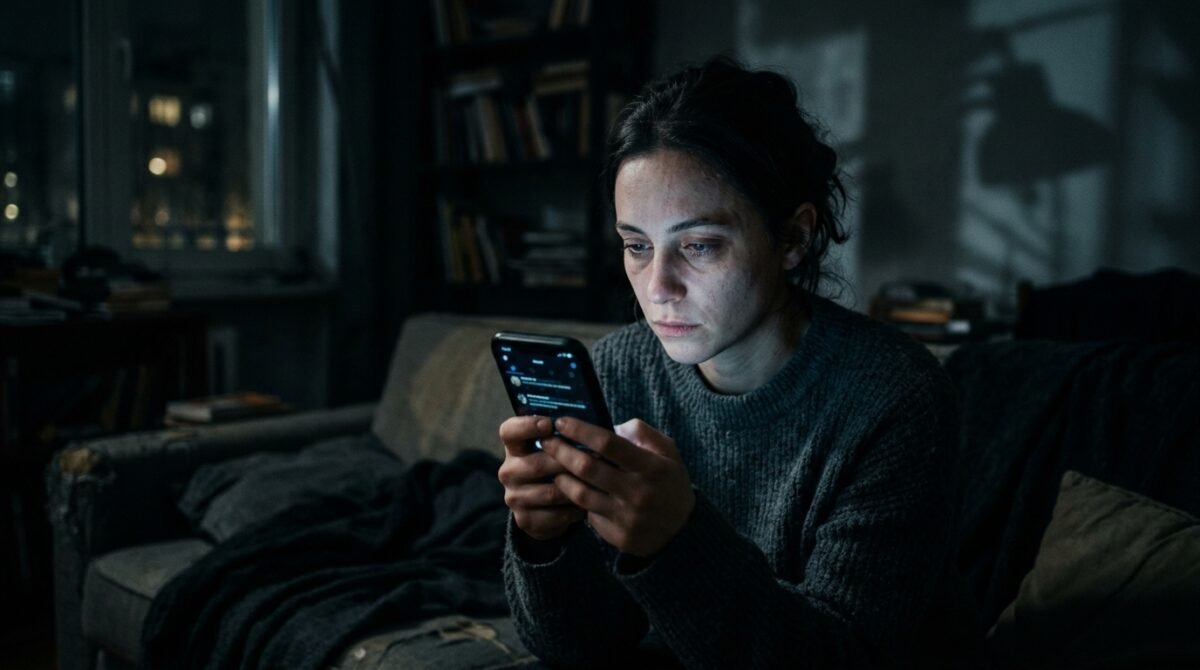
It was 2:00 AM on a Tuesday when my phone buzzed. It was an unfamiliar area code, but my stomach dropped before I even picked up. I knew it was my mother. When I answered, there was no ‘hello,’ just a breathless, sobbing monologue about how Julian was dying and how the doctors were out of options. She spoke as if my existence were merely a storage unit for the biological parts Julian needed to continue his life.
The air in my apartment felt heavy, suffocating. I stood by the window, watching the city lights, feeling entirely detached. She kept repeating the phrase ‘he’s still your brother,’ as if blood ties were a magical spell that erased two decades of emotional abuse, physical intimidation, and the systematic destruction of my self-esteem. She didn’t ask how I was doing; she didn’t even acknowledge that we hadn’t spoken in four years.
“You are the only match, and you are literally his only hope. You can’t just let him die. Whatever happened in the past is just that—the past. This is his life we are talking about, and you have the power to save him.”
— My Mother, during the initial call
I listened to her rattle off the logistics. The hospital, the recovery time, the ‘hero’ narrative she was already constructing for me to play. It was a role I had played my whole life: the quiet, sacrificial younger sibling who existed to support Julian’s ego or, in this case, his health. The irony was so sharp it almost felt comical.
I asked her if Julian knew she was calling me. The silence that followed was deafening. She admitted that he didn’t, but that he would ‘thank me later’ once he was on the mend. It was a terrifying glimpse into their dynamic: even on his deathbed, Julian was still the center of the universe, and my mother was still his willing enabler, even at the expense of my autonomy.
I told her I would think about it, but my mind was already made up. I hung up the phone and realized that my heart rate hadn’t even spiked. I wasn’t panicked; I was just cold. The person on the other end of that phone was a stranger to me, and the man she wanted me to save was a villain who had shaped the darkest corners of my personality. I spent the rest of the night staring at the ceiling, wondering when I had become so comfortable with the idea of saying no to the people who raised me.
The Inevitable Group Chat Ambush
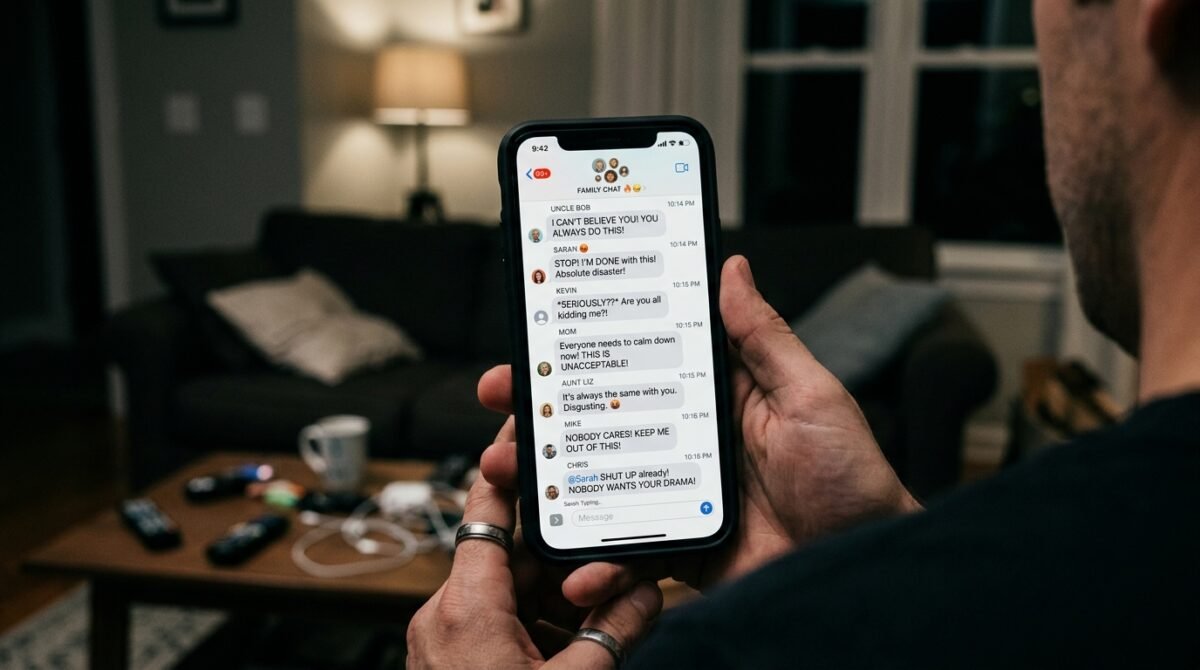
By noon the next day, the entire family had been alerted. My phone started vibrating with notifications from a group chat I hadn’t been part of in years. It was a digital firing squad. Aunt Sarah, who hadn’t sent me a birthday card in a decade, suddenly had a lot of opinions about my moral compass. The messages came in rapid succession, painting me as a heartless monster who was holding a ‘blood ransom’ against my dying brother.
I didn’t reply at first. I just read the messages, watching them escalate from concern to outright threats. They were discussing my ‘selfishness’ and debating whether they should contact my employer or show up at my house. It was a masterclass in manipulation, designed to make me feel small, guilty, and desperate for their approval.
“We know how you feel about the past, but this isn’t about being friends. It’s about basic human decency. Are you really going to live with the knowledge that you could have saved him and didn’t? You’re better than this.”
— Aunt Sarah, in the family group chat
The audacity was staggering. They were leveraging my childhood pain as if it were a minor squabble over a borrowed toy. They didn’t mention the time Julian broke my arm, or the years I spent in therapy trying to undo the damage he caused. To them, Julian’s life was an objective good, and my comfort—or my trauma—was a negligible variable in the equation.
I finally decided to respond, but I didn’t give them the emotional outburst they were looking for. I typed a short, clinical message stating that my medical history and decisions were private and that I would not be participating in the transplant. The response was immediate and vitriolic. They accused me of spite, of being ‘the reason’ the family was falling apart, and of being a sociopath.
I watched as the messages piled up. I felt a weird sense of liberation. For years, I had been afraid of their judgment. I had spent my entire adolescence contorting myself to avoid being the target of their collective ire. Seeing them lay it all out like this, in such an ugly, transparent way, didn’t hurt. It just confirmed that I had made the right choice by leaving.
I muted the chat and put my phone on ‘Do Not Disturb.’ I realized then that they weren’t trying to save Julian; they were trying to save their own image of what a ‘good family’ looked like. If I donated, they could all pat themselves on the back for being a tight-knit unit. By refusing, I was breaking the illusion, and that, in their eyes, was the real sin.
The Confrontation At My Front Door
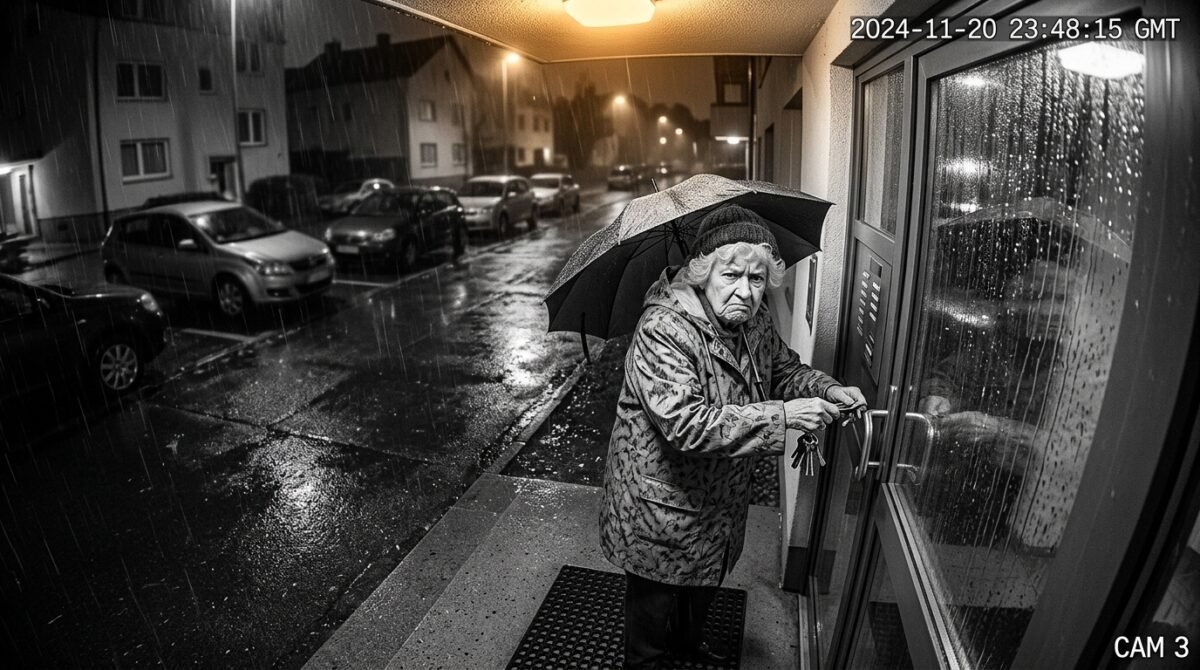
Three days later, my mother showed up at my apartment building. I saw her on the security camera, pacing back and forth, clutching a purse that I knew contained pictures of Julian when he was a toddler. She was trying to trigger my nostalgia, hoping that a photo of a small, innocent version of him would override the reality of the monster he grew up to be.
I didn’t let her in. I spoke to her through the intercom, my voice steady and calm. She begged me to come downstairs, claiming she just wanted to talk. I told her there was nothing to say. When she started crying, I felt a twinge of pity, but it was quickly replaced by the memory of how she would walk past my room when I was sobbing after one of Julian’s ‘pranks’ and never once intervened.
“You don’t understand, the doctors said he only has months. How can you be this cold? He’s your blood! You’re literally throwing your own brother into a grave because you want to punish him for stuff that happened when you were kids!”
— My Mother, screaming through the intercom
I told her that my decision wasn’t about punishment; it was about preservation. I told her that I had spent years building a life where I didn’t have to look over my shoulder, and that donating marrow would force me back into the orbit of people who had never protected me. I told her that if she was so desperate for a match, she should have raised a son who didn’t alienate the only person capable of saving his life.
She gasped, clearly stunned by my coldness. I think she expected me to break down, to apologize, to offer to go to the hospital. But the version of me that existed to please her had died a long time ago. I watched her stand there for a full ten minutes, yelling at a metal speaker, until security finally asked her to leave the premises. It was the most satisfying thing I had ever witnessed.
I went back to my desk and continued my work. I was shocked by how focused I was. I expected to be haunted by guilt, but there was only silence. The silence felt like the first breath of clean air I had taken in years. I had finally realized that their opinions, their threats, and their demands had no power over me unless I chose to give it to them.
The Professional Intervention That Backfired
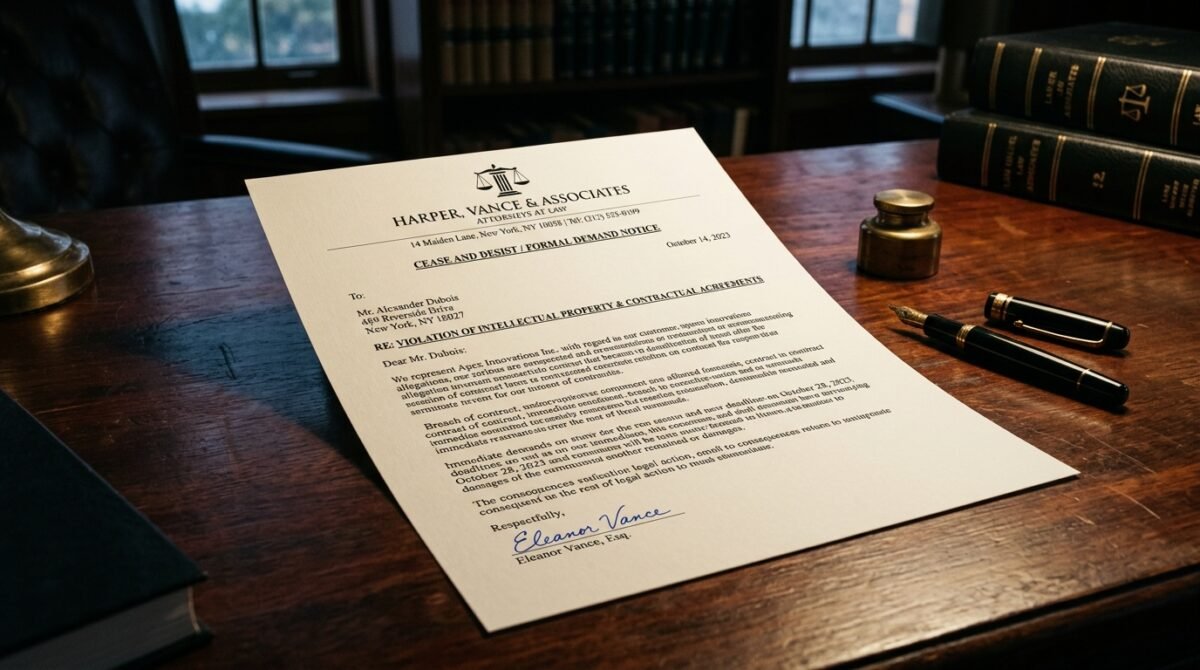
The next escalation came from an unexpected source: Julian’s attorney. A formal letter arrived, threatening a lawsuit for ’emotional distress’ and suggesting that I had a legal obligation to assist a family member in medical need. It was a desperate, grasping attempt to intimidate me, and it showed just how far gone they really were. They were literally trying to sue me into surgery.
I took the letter to my own lawyer, a friend I’d made during my first year in this city. He laughed for a solid five minutes after reading it. He explained that there is no law in this country that requires a person to undergo a medical procedure for the benefit of another, regardless of the biological relationship. The letter was garbage, designed to scare someone who didn’t know their rights.
“This is pure posturing. They know they don’t have a leg to stand on. They’re just hoping you’re too scared or too guilt-ridden to call their bluff. Ignore it. If they reach out again, I’ll send a cease and desist.”
— My Lawyer, reviewing the threat
The irony was that by involving lawyers, they had completely destroyed any chance of me changing my mind. I was done being the ‘good’ person. If they wanted to play hardball, I would play harder. I realized then that my family’s entire strategy was based on my compliance. They never expected me to fight back. They expected me to be the quiet, obedient victim.
I didn’t respond to the letter. I let my lawyer handle it. A week later, he sent a single, blistering email to their council, citing the history of harassment and our intention to file a counter-suit for emotional abuse if they persisted. I never heard from the attorney again. It was a quiet victory, but a significant one.
My family, however, didn’t take the hint. They started posting on social media, making vague, passive-aggressive posts about ‘family loyalty’ and ‘the tragedy of lost souls.’ My cousin, who I hadn’t spoken to since college, sent me a message asking if I was ‘really going to be the one who kills Julian.’ I didn’t even read it. I hit ‘block’ and moved on with my day.
The Anonymous Reddit Thread That Shook Me
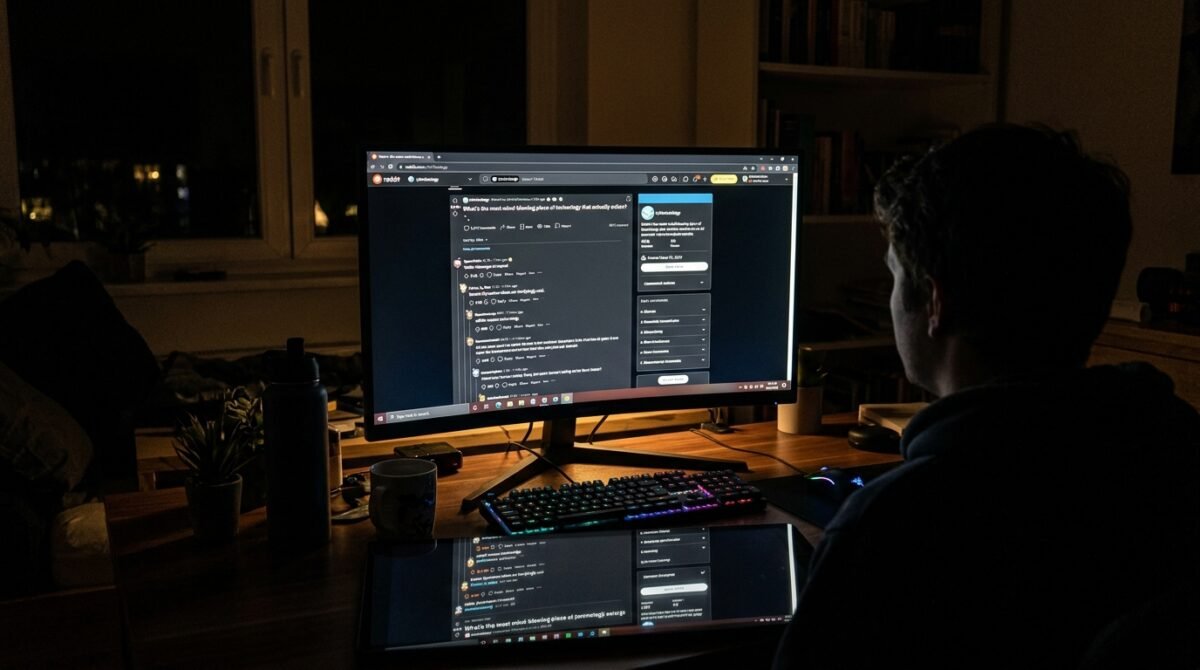
Feeling isolated, I turned to the only place I felt I could be honest: an anonymous forum. I didn’t expect much, just a space to vent. I wrote a concise post outlining the situation: the history of bullying, the medical demand, and the guilt-tripping from my family. I hit ‘post’ and went to bed, expecting a few sympathetic comments or maybe some ‘YTA’ trolls.
When I woke up, the thread had thousands of upvotes. The community had latched onto the story in a way I hadn’t anticipated. There were hundreds of comments, most of them fiercely defending my right to say no. People shared their own stories of being forced to ‘forgive and forget’ abusers just because they shared DNA. It was a massive wave of validation that I hadn’t realized I needed.
“Your body, your choice. You are not a spare parts factory for people who treated you like garbage. If they wanted a donor, they should have raised a decent human being instead of a bully.”
— u/SupportiveStranger (Top Comment, 32.4k upvotes)
Reading through those comments, I realized that I wasn’t the monster. I was a survivor who had set a boundary. The ‘family values’ argument that my mother kept pushing was being systematically dismantled by total strangers who saw the situation for what it was: a person being exploited by their abusers. It was the most therapeutic thing that had happened to me in years.
There were some dissenting voices, of course. Some argued that morality transcends personal history, and that ‘saving a life is the ultimate good.’ I read those, too, and found them interesting. They helped me articulate my own philosophy. My philosophy wasn’t that Julian deserved to die, but that I didn’t owe him my life or my body, especially when he had spent so long trying to make mine miserable.
I spent the entire day reading the thread, laughing at the absurdity of some of the comments and crying at the tenderness of others. It made me realize that I had a support system, even if it wasn’t the one I was born into. It was a community of people who understood that boundaries are not acts of cruelty, but acts of self-preservation.
The Final Attempt At Reconciliation
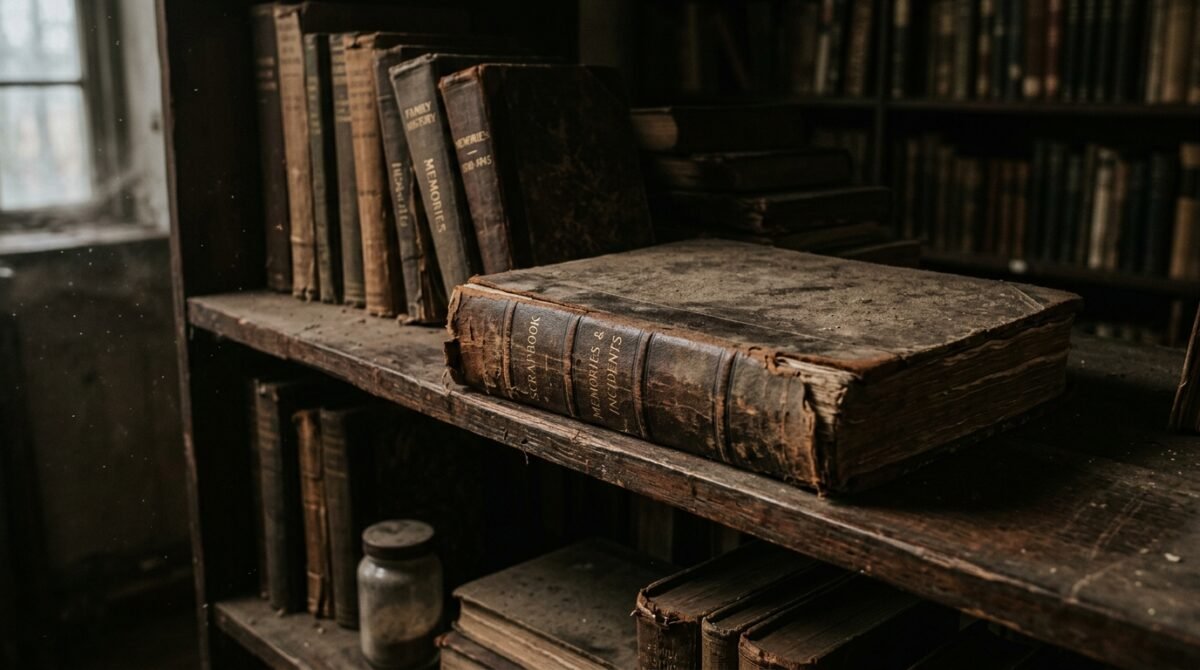
A month later, I received a package in the mail. It was a scrapbook of photos from my childhood, sent by my mother. It was filled with pictures of me and Julian at various events—birthdays, holidays, beach trips—all staged to make us look like the perfect, happy siblings. It was a blatant, desperate attempt to rewrite history. She had even included a note, begging me to look at ‘how happy we used to be.’
I looked at the photos and felt nothing but a deep, hollow sadness. I remembered those days, and I remembered the reality behind the smiles. I remembered Julian pinching my arm behind the camera, or the times I was forced to sit next to him even though I was terrified of what he’d do when my parents weren’t looking. She was selling me a lie, and she expected me to buy it with my own blood.
“Please look at these photos and remember who you are. We are a family. We don’t turn our backs on each other. Julian is waiting for you to do the right thing. Don’t let your pride keep you from saving your brother.”
— The note included with the scrapbook
I took the scrapbook, put it back in the box, and taped it shut. I didn’t burn it—that felt too dramatic. I just put it in the back of my closet, next to the other relics of a childhood I was finally ready to let go of. I wrote a short, final letter to my mother, stating clearly that I would not be contacted again regarding this matter and that I had moved on.
I felt a strange sense of closure. The constant pressure from them had stopped, probably because they realized I wasn’t going to break. The silence that followed was peaceful. I had spent so much of my life worrying about what they wanted, and for the first time, I was only worrying about what I wanted. It was a powerful transition.
I started therapy again, specifically to deal with the residual guilt. My therapist helped me understand that the feeling of ‘I should do this’ was just a conditioned response, a survival mechanism I’d developed to appease my family. Once I identified it as a mechanism rather than a moral imperative, it started to lose its grip on me. I was becoming my own person, and it felt incredible.
Life After The Refusal

Six months have passed since that first phone call. I heard through the grapevine that Julian is still searching for a donor. My family has stopped reaching out to me, which is the best outcome I could have hoped for. I still have days where I wonder if he’s going to survive, but I’ve learned to compartmentalize that thought. His survival is not my responsibility.
I’ve moved to a new city, changed my phone number, and started a job that I love. I’m surrounded by people who like me for who I am, not because of some obligation. I’ve realized that the ‘family’ I was so desperate to please was actually the source of my deepest insecurities. By cutting them off, I didn’t lose anything—I gained myself.
“I used to think that saying no made me a bad person. Now I realize that saying no is the only way to ensure I survive. You can’t pour from an empty cup, and my cup was emptied by them years ago.”
— My personal journal entry
I still think about that Reddit thread sometimes. I think about the thousands of people who supported my decision and the hundreds who were forced to make similar choices. It makes me feel less alone. It makes me realize that we are all just trying to navigate these messy, complex relationships the best we can, and sometimes, the best we can do is walk away.
If you’re in a position where you’re being asked to sacrifice your health or your happiness for someone who has treated you poorly, know that you are not a bad person for saying no. You don’t owe your abuser anything, not even a chance at life. Your health, your body, and your peace of mind are yours to protect.
I am finally happy. It’s a quiet, simple, and profound kind of happiness that I never thought I’d experience. I wake up in the morning without dread, I go to sleep without nightmares, and I look in the mirror and see someone I actually like. That, to me, is the greatest success story of all.
Reflecting On The Moral Complexities

I often reflect on the ‘morality’ of my choice. People love to talk about the ‘high road’ and the ‘noble act’ of forgiveness. But what does it really mean to forgive someone who never asked for it, and who would do it all again if given the chance? I’ve come to the conclusion that forgiveness is a gift you give yourself, not a debt you owe to someone else.
My refusal wasn’t an act of hate; it was an act of finality. It was the closing of a chapter that had been open for far too long. If I had donated the marrow, I would have been acting out of fear, not out of love. And I refuse to let my life be governed by fear ever again. I deserve to live a life that is defined by my own choices, not by the demands of those who never truly cared for me.
“The most important boundary you will ever set is the one that protects your own existence from those who would use it for their own ends.”
— My therapist, during one of our final sessions
The family structure I grew up in was built on the idea that some members are more important than others, and that the ‘lesser’ members must serve the ‘greater’ ones. I was the ‘lesser’ one for my entire life. By saying no, I was finally asserting that I have the same right to exist as anyone else. I have the same right to protect my body and my peace.
It’s strange how something as simple as a medical procedure can reveal the entire architecture of a family. The demand was a litmus test, and my family failed it. They showed me that they would sacrifice me in a heartbeat to save their favorite son. That knowledge, while painful, is the most valuable thing I could have gained from this entire experience.
I hope that Julian finds a donor. I really do. But I also hope that he finds the time to reflect on his own life and why he is in this position. We are all responsible for the bridges we burn, and we are all responsible for the ones we leave standing. I have no regrets about the bridge I burned. It was the only way to clear the path forward.
Lessons For The Future
If I could go back and tell my younger self one thing, it would be this: Your silence is not your obligation. You are not a prop in someone else’s drama. You are the lead actor in your own life. Every time you say ‘yes’ to appease others, you are saying ‘no’ to yourself. And after a while, you start to disappear.
This experience has taught me the importance of radical self-honesty. I had to look at my own motivations, my own guilt, and my own fear, and I had to be honest about where they were coming from. Once I stripped away the societal expectations and the family pressure, the decision was simple. The hard part wasn’t making the decision; the hard part was living with the consequences.
“We teach people how to treat us by what we accept, what we tolerate, and what we refuse.”
— An anonymous quote I found during my healing journey
I am no longer the person who waits for permission to exist. I am no longer the person who apologizes for taking up space. I am a person who knows their worth, and I am a person who is willing to defend it. That is a lesson that will serve me for the rest of my life, regardless of what happens next.
To anyone out there struggling with a similar dilemma: Listen to your gut. Your body is the only thing you truly own. You don’t owe anyone access to it, not even in the name of ‘family.’ You are allowed to prioritize yourself. You are allowed to be happy. You are allowed to say ‘no,’ and you never have to justify it to anyone who doesn’t respect your boundaries.
I am moving forward with a clear conscience and a light heart. The past is behind me, and the future is mine. I finally feel free, and for the first time in my life, I am genuinely looking forward to what comes next.
Why I Am Choosing To Stay No Contact

People ask me if I’ll ever reconcile with them. My answer is always a firm no. You don’t build a healthy relationship on a foundation of betrayal and exploitation. My family proved that when the chips were down, they would prioritize Julian’s life over my own bodily autonomy. That is not a foundation; that is a trap. I have no interest in being trapped ever again.
I’ve realized that my ‘family’ was more of a collective of people who used me to validate their own status and ego. When I stopped playing my part, they didn’t try to understand me; they tried to coerce me. That is the behavior of people who don’t love you—they love what you do for them. I deserve better than that, and I am finally providing it for myself.
“Closure isn’t something you get from the people who hurt you. It’s something you give to yourself by walking away and never looking back.”
— A piece of advice that changed my life
I’ve built a new family—a chosen family—that respects my boundaries and celebrates my successes. They don’t demand anything from me; they just want to be part of my life because they enjoy my company. It’s a completely different dynamic, and it’s been the most healing experience of my adult life. I’m finally learning what it means to be truly loved.
I don’t harbor any ill will toward my biological family. I pity them, in a way. I pity the fact that they live in a world where manipulation is a primary form of communication. I pity the fact that they are so disconnected from their own humanity that they would treat a relative like a resource. But I don’t want to be part of that world anymore.
I am finally the author of my own story. I choose who gets to be in it, and I choose who gets left behind. I am choosing peace, I am choosing self-respect, and I am choosing to be the person I was always meant to be, before they tried to crush it out of me. The story of my life is no longer about them; it is about me.
Conclusion
In the end, this experience wasn’t about a bone marrow transplant. It was about reclaiming the agency that had been stolen from me in childhood. By saying ‘no,’ I forced my family to face the truth they had spent decades suppressing: that they had treated me as an object, and that I was finally no longer willing to be one.
The moral of this story isn’t that we should all cut off our families. It’s that we are all responsible for the boundaries we set, and that ‘family’ is a word that should imply safety, respect, and mutual love. When it becomes a mechanism for exploitation, we have a moral obligation to ourselves to step away. I chose to save myself, and in doing so, I finally learned what it feels like to live.
What about you? Have you ever had to draw a line in the sand with someone you were ‘supposed’ to love? Do you believe that blood ties carry inherent obligations, or are they conditional based on mutual respect? I’d love to hear your thoughts and stories in the comments below.
What's your verdict on this dilemma?
Vote below to contribute to the official community consensus.

Have a Dilemma Keeping You Up at Night?
Share your real-life feud, wedding chaos, or relationship crossroads anonymously with our editorial team.
What do you think ?
0 Comments🛡️ Comments are moderated to protect community integrity. Your comment will appear once approved by the editorial team.