

For twenty years, my existence in my father’s life was an afterthought, a footnote in his grand narrative of professional success and social climbing. While I scraped by, working double shifts and putting myself through school, my half-brother, Julian, was the golden boy—the one who could do no wrong, even when he was doing absolutely nothing. My father, Arthur, spent those two decades chasing Julian’s approval, a fool’s errand that left me entirely invisible. I was the child who showed up for birthdays, who checked in during hospitalizations, and who stood by silently as I was consistently deprioritized.
The waterfront lot in question was never actually ‘his’ to give away. Years ago, during a period of financial instability for my father, I had stepped in. Through a series of legal maneuvers and a significant loan that I insisted be collateralized by the land, the property deed ended up in my possession. It was a safeguard, a piece of insurance against a man who treated his children like assets in a volatile market. My father knew this, of course, but his ego was a powerful sedative, allowing him to rewrite history in his own mind until he truly believed the land was his familial legacy to bestow upon his favorite son.
When he announced at a forced, uncomfortable Sunday dinner that he had ‘gifted’ the lot to Julian, the room went silent. Julian didn’t even blink, his entitlement so deeply ingrained that he likely assumed the land was his by divine right. He hadn’t spoken to our father in twenty years, yet here he was, ready to claim the spoils of a war he hadn’t fought. My father looked at me with a mixture of smug satisfaction and expectation, waiting for me to be the good, obedient daughter who would facilitate the transfer.
I didn’t say a word at the table. I just sipped my wine, feeling the cool weight of the original deed sitting in my safe at home. The moral dilemma wasn’t whether I had the right to sell—it was whether I wanted to watch them scramble when they realized their arrogance had finally hit a brick wall of reality. I chose the latter. I decided that if they wanted to treat my hard work like an inheritance for the undeserving, they were going to learn exactly how much that ‘gift’ was actually worth in the open market.
This story is about the dissolution of false expectations and the cold, hard reality of boundaries. It’s about the moment I stopped being the backup plan and started being the sole owner of my own destiny. The following chapters detail the fallout, the legal maneuvers, and the final, brutal realization that blood doesn’t buy equity.
The Sunday Dinner That Sealed Their Fate
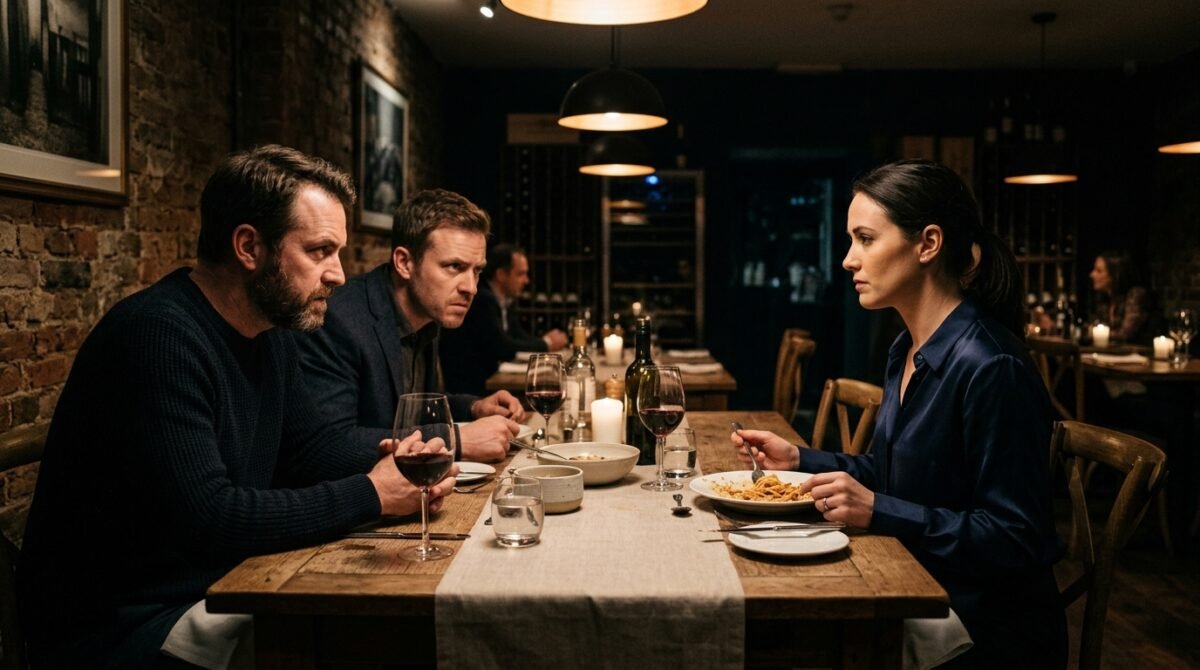
The dinner was a staged affair, meant to celebrate Julian’s return to the fold. My father had spent the last month gushing about how Julian was ‘finally ready to settle down’ and how he deserved a place to ‘build his legacy.’ I sat across from them, listening to the clink of silverware against fine china, feeling the temperature in the room drop as the conversation turned toward the property. My father was acting as if the deed was merely a suggestion, a formality he could bypass with a wave of his hand.
Arthur leaned back, his wine glass held aloft. ‘It’s settled then. The waterfront lot will be yours, Julian. It’s the perfect spot for the estate you’ve been talking about. I’ve already told my lawyer to prepare the transfer paperwork. Of course, you’ll need to work with your sister to get the signature from the holding company, but that’s just a formality.’
I looked at Julian, who didn’t even glance my way. He was already scrolling through his phone, likely looking at architectural designs. ‘That’s a great location, Dad. I’ve been looking at the tax assessments. It’s going to appreciate significantly in the next five years. Good call on keeping it in the family.’
“I think you both have forgotten one very important detail,” I said, my voice quiet but steady. “That property isn’t in the family trust. It’s in my personal asset portfolio. It was never a gift to you, Dad. It’s my collateral.”
The silence that followed was heavy, suffocating. My father’s face drained of color, his hand trembling slightly as he set his glass down. He hadn’t expected me to speak up. He had spent years assuming I was just a vessel for his wishes, a background character in his life. He looked at me, his eyes wide with a mix of shock and dawning fury.
Julian finally looked up, a smirk playing on his lips. ‘Okay, so you sign the papers. What’s the big deal? It’s family, isn’t it? Dad promised it to me, and you’re just the middle-man. Don’t be difficult. It’s beneath you.’
The Late Night Call and the Mask Slipping

The fallout began immediately after I left the house. My phone buzzed incessantly for three hours. It started with subtle, manipulative texts from my father, attempting to gaslight me into believing that the property was always intended for Julian. He framed it as a matter of ‘family legacy’ and ‘healing past wounds,’ ignoring the fact that those wounds were largely self-inflicted by his own neglect.
Then, the tone shifted. Julian took over, his messages becoming increasingly aggressive and demanding. He clearly wasn’t used to being told ‘no’ by someone he deemed inferior. He threatened legal action, not realizing that his threats were empty. He didn’t have a leg to stand on, and every message he sent was just more evidence of his entitlement.
“You’re acting like a spoiled brat. This land is Dad’s, and he’s decided it goes to me. You’re just the secretary holding the paperwork. Send the transfer docs by morning or I’m bringing in the family lawyer to sue for your removal.”
— Text from Julian, 11:42 PM
I took screenshots of every single message. I wasn’t just standing my ground; I was building a case. I knew that if this reached a courtroom, I needed to show that I was not merely an executor, but the rightful owner who had been targeted by financial abuse and harassment. I went to bed that night feeling a strange sense of clarity. For the first time in my life, I wasn’t afraid of them.
I didn’t respond to a single message. I knew that silence was the most infuriating thing I could offer them. Julian kept calling, his voice increasingly unhinged on my voicemail, shouting about his ‘rightful inheritance’ and how he would ‘ruin’ me. It was pathetic, honestly. Watching a grown man throw a tantrum over land he hadn’t even paid a dime for was a masterclass in entitlement.
By the time I woke up the next morning, my father had changed tactics. He started calling me ‘darling’ and ‘sweetheart,’ trying to appeal to my ‘good nature’ and ‘family duty.’ It was a disgusting display of emotional manipulation, and it only confirmed that I had made the right choice in distancing myself from them long ago.
The Realtor’s Call That Ended the Dream
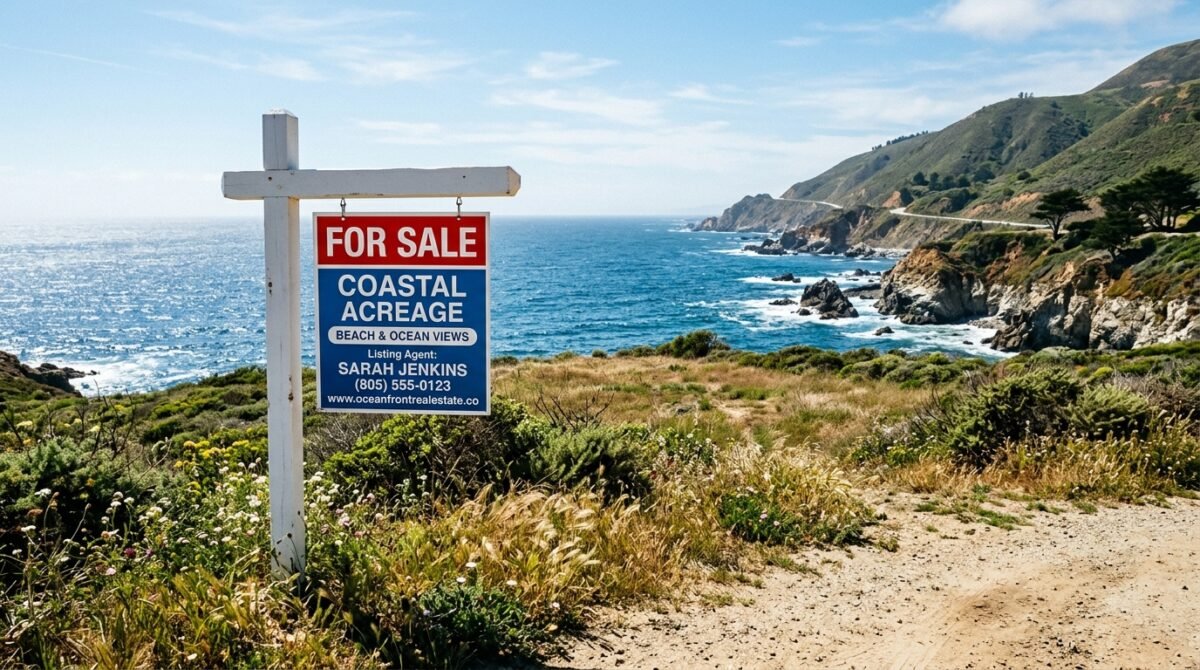
I didn’t wait for them to make the next move. Early the next morning, I called the high-end real estate agency I had scouted weeks prior. I didn’t care about keeping the land in the family. I didn’t care about the sentimental value my father attached to it. That land was my financial freedom, and I was ready to cash it out before they could tie me up in any frivolous lawsuits.
The realtor, a sharp woman named Elena, was thrilled. ‘This is a premium piece of real estate,’ she told me. ‘If we list it now, we could have a buyer within the week. Given the current market, you’re looking at a significant return.’ I gave her the go-ahead. I didn’t even tell her about the family drama; I just told her I wanted it off my books as quickly as possible.
The sign went up on the property line the next day. A bright, bold ‘FOR SALE’ sign stood right in the center of the view that Julian was already planning to build his house around. It was a petty, beautiful sight. I drove by that afternoon, just to see it. It felt like a weight was being lifted off my chest, a physical manifestation of the boundary I had finally established.
“I saw the sign. What are you doing? You have to take that down right now. Dad is calling the police. You can’t just sell his property!”
— Text from Julian, 2:15 PM
I laughed when I read it. The police? They had no jurisdiction here. This was a civil matter, and the law was firmly on my side. The deed was ironclad, and I had the financial records to prove my initial investment that secured it. I was in a position of complete power, and I intended to use it to the fullest extent.
The realtor called me an hour later. ‘Your father just showed up at my office,’ she said, her tone professional but laced with amusement. ‘He’s demanding we stop the listing. I told him he has no standing. Should I call security?’ I told her to call the police if he didn’t leave. The escalation was happening, just as I had anticipated, and I was ready to ride the storm until the very end.
Reddit Weighs In: The Community Verdict

I posted a summary of the situation on a popular sub-reddit for family drama. I needed an objective perspective, or at least the validation that I wasn’t the villain in this scenario. Within minutes, the post had exploded. The consensus was overwhelming, but the comments were a fascinating cross-section of legal advice, moral outrage, and personal anecdotes about toxic families.
“NTA. Your father sounds like a classic narcissist who treats his children like props. He never gave you the land; you bought it. He’s just mad he can’t spend your money to buy his other son’s affection. Sell it and go no-contact immediately.”
— u/JusticeSeeker88 (Top Comment, 32.4k upvotes)
The thread became a hub for people who had dealt with similar ‘golden child’ dynamics. They shared their own stories of being pushed aside in favor of siblings who did nothing but take. It was comforting to know that I wasn’t alone, that this was a well-documented pattern of behavior. The advice was unanimous: stop engaging, protect the assets, and cut the cord.
“People like your father rely on the ‘but they’re family’ excuse to manipulate you. The moment you chose to treat your own daughter as an extension of your property, you lost the right to that relationship. Sell the land and use the money for therapy or a down payment on your own life.”
— u/LegalEagleEye (15.2k upvotes)
There were a few contrarians, of course. Some argued that I should ‘keep the peace’ and just let Julian have the land, claiming that money wasn’t worth the family relationship. I ignored them. They didn’t understand that the relationship had been dead for twenty years; I was just finally performing the autopsy.
The community support gave me the resolve I needed to stay the course. When I felt a twinge of guilt, I would re-read the comments. They reminded me that I had earned everything I had, and that I owed nothing to a man who had spent two decades ignoring my existence until he needed something from me. The internet, for all its toxicity, was exactly the support system I needed at that moment.
The Lawyer’s Office: A Final Confrontation

The inevitable happened: I was served with a cease and desist notice. My father’s lawyer, an aging man who clearly lived in the shadow of my father’s ego, sent a formal letter demanding that I cease all efforts to sell the property. It was a laughable document, full of legal jargon that didn’t apply to the situation. I took it to my own attorney, a shark who specialized in real estate disputes, and she had a field day with it.
We set up a meeting at the lawyer’s office to resolve it. I walked in, prepared for a fight, and found my father and Julian sitting there, looking smug. They thought they had finally cornered me. My father started in on a monologue about how I was ‘tearing the family apart’ and how this would ‘ruin my reputation’ in the community. I let him talk for ten minutes, watching the sweat start to bead on his forehead.
“Are you finished? Because my attorney is going to show you exactly why this meeting is a waste of everyone’s time. You have no legal claim to this property. I have the deed, I have the original mortgage records, and I have the proof that you haven’t contributed a cent to its maintenance in fifteen years.”
My attorney laid out the documents on the table. It was a masterclass in efficiency. She showed them the deed, the tax payments I had made personally, and the lack of any legal agreement supporting their claim. My father’s lawyer looked at the papers, then at my father, and I saw the realization hit him: he had been lied to. My father hadn’t told him the truth about the ownership status.
The air left the room. Julian’s face turned bright red, and my father looked like he had been struck. They had thought this was a leverage play, a way to force me into submission. Instead, they had exposed their own dishonesty and complete lack of legal standing. My lawyer leaned back and smiled. ‘My client is moving forward with the sale. If you continue to interfere, we will file for harassment and defamation. Is there anything else?’
The Final Sale and the Silence That Followed

The sale went through in record time. A young couple, looking to build their first home, bought the lot. They were thrilled, and I was relieved to see it go to people who would actually appreciate the land rather than use it as a pawn in a petty family game. The money hit my account, a sum that ensured I would never have to rely on my father for anything ever again.
I didn’t tell them when the sale was finalized. I didn’t send a note. I simply blocked their numbers and deactivated my secondary accounts. I moved on. The silence that followed was the most peaceful thing I had ever experienced. There were no more midnight texts, no more guilt trips, no more performative dinners. It was just me and my life, finally unencumbered by their expectations.
I heard through the grapevine—a mutual acquaintance who still talked to my father—that he had tried to take legal action against me, but his lawyer dropped him when he realized there was no case. My father ended up having to pay for the wasted time, a fitting end for a man who spent his life trying to manipulate the world to his liking. Julian, I heard, moved on to his next target, a woman with a large inheritance he could try to control.
“I’m free. I don’t know how else to describe it. For the first time in my life, I don’t owe anyone an explanation for how I live my life or how I spend the money I earned.”
I took a trip to the coast, not to the lot, but to a place where I could sit and watch the ocean without the weight of property taxes or familial duty. I felt a profound sense of relief. The lesson was hard-won: you don’t owe your life to people just because you share their DNA. If they treat you like an asset, you have every right to liquidate them from your life.
The experience changed me. I became more cautious with my finances, more protective of my time, and infinitely less tolerant of people who try to test my boundaries. I am no longer the person who shows up to save the day for people who don’t care about me. I am the hero of my own story, and that’s more than enough.
Reflecting on the Cost of Estrangement

People often ask if I regret the permanent nature of the estrangement. It’s a common question when I tell this story. They want to know if I miss my father, or if I wish I had handled it differently, perhaps with more grace. My answer is always the same: grace is for people who respect you, and regret is for people who think they left something important behind. I left behind a weight, not a relationship.
Estrangement isn’t something you arrive at overnight. It’s the final step in a long process of realization. It’s the moment you stop hoping for change and accept the person for exactly who they are. My father was never going to change. He was always going to prioritize the ‘golden child’ over the ‘reliable child.’ Understanding that was the key to my peace.
“You don’t lose a family member when you cut contact; you lose the illusion of what you wanted that relationship to be. Once you accept that the illusion was never real, the loss becomes manageable.”
The cost of staying would have been far higher. It would have cost me my financial independence, my mental health, and my dignity. By choosing to walk away, I protected those things. The financial windfall from the sale was just a bonus—the true value was the reclamation of my autonomy. I am the architect of my life now, and I don’t permit outside influence on my floor plans.
I’ve learned that boundaries are the only thing that keeps a relationship healthy. When someone refuses to respect those boundaries, you are not the one ending the relationship—they are, by their own actions. I didn’t end the relationship with my father; he ended it the moment he decided my contributions were disposable. I just made it official.
If you find yourself in a similar situation, remember that you are not a side character in someone else’s play. You are the lead. Don’t let someone else’s script dictate your actions. Take the keys, take the deed, and build your own damn house.
Lessons Learned: The New Financial Reality

Coming into that kind of money changed my perspective on a lot of things. It wasn’t just about the dollar amount; it was about the security it provided. For years, I had been living in survival mode, always worried about the next emergency or the next bill. Having a cushion meant I could actually plan for the future, invest in myself, and stop worrying about the ‘what ifs’ that had kept me up at night.
I started by paying off my student loans—the final relic of the time I spent trying to build a life that my father didn’t value. That felt like the final brick in the wall between my past and my future. Then, I diversified my investments, ensuring that I would never be in a position where I was dependent on anyone for my well-being again. I became a student of financial literacy, not because I wanted to be rich, but because I wanted to be safe.
“Financial independence is the ultimate form of self-care. It’s the ability to say ‘no’ to anyone who threatens your peace without having to worry about where your next meal is coming from.”
I also invested in myself—therapy, education, and the occasional indulgence that I had denied myself for so long. It was important to show myself that I was worth the effort, that I was worthy of the rewards I had earned through my hard work. I stopped seeing money as a tool for others to use, and started seeing it as a reflection of my own labor and worth.
It’s funny how money changes your perspective on people, too. I started noticing who was around me, who was asking for favors, and who was genuinely happy for my success. I became much more selective about my inner circle. If someone couldn’t respect my boundaries when I was struggling, they certainly didn’t deserve to be around me when I was succeeding.
This is the most important lesson I’ve taken from all of this: your value isn’t determined by your family. It’s determined by your own actions and your ability to stand up for yourself. If your family can’t see your worth, find people who can. And if you have to burn a few bridges to find your way home, let them burn. You’ll be better off without the baggage.
The Aftermath: Finding Peace in the Silence

Today, my life is quiet, but it’s a good kind of quiet. It’s the kind of peace that comes from knowing you’re in control. I don’t look back at the waterfront lot. I don’t think about what my father is doing, or who Julian is trying to manipulate next. That chapter is closed, the book is returned to the shelf, and I’m busy writing the next one.
I’ve reconnected with friends who have been supportive of my journey, and I’ve built a community of people who value me for who I am, not what I can do for them. It’s a small, tight-knit group, but it’s real. We talk about our lives, our struggles, and our successes, and there’s no judgment, no hidden agendas, and no entitlement. It’s a far cry from the environment I grew up in.
“Silence isn’t empty; it’s full of answers. When I finally stopped listening to the noise of my father and brother, I could finally hear my own voice. And it turns out, my voice is exactly what I needed to hear.”
I’ve even started a small project, something I’ve always wanted to do but never had the time or money for. It’s not big, but it’s mine. And that’s what matters. I’m not doing it for anyone else, for approval, or for legacy. I’m doing it because it brings me joy. And for the first time in my life, that is enough.
The scars remain, of course. You don’t go through something like that without being changed. But I’ve learned to wear them as a reminder of what I survived and what I reclaimed. I’m stronger, sharper, and more resilient than I ever was before. I know exactly what I’m capable of, and I know that there’s nothing that can shake the foundation I’ve built for myself.
To anyone out there struggling with a toxic family, remember this: you are the author of your own story. You don’t have to follow the plot they’ve written for you. You can pick up the pen, rewrite the ending, and start fresh. It might be hard, it might be scary, but it’s worth it. You are worth it.
The Legacy You Build, Not Inherit

We spend so much of our lives thinking that ‘legacy’ is something we are given—a name, a piece of land, a fortune, a reputation. But I’ve learned that the only legacy that matters is the one you build for yourself. It’s the character you cultivate, the boundaries you set, and the peace you create. It’s not about what you inherit; it’s about what you choose to keep.
My father’s legacy was one of manipulation and shallow relationships. He thought that by giving Julian the land, he was creating a legacy. But he wasn’t. He was just fueling a cycle of entitlement and deceit. The real legacy in our family ended the day I decided to stop playing along. I chose to value integrity, self-reliance, and honesty. That is the legacy I am building now.
“A legacy isn’t built on land or money; it’s built on the strength of your character. My father left behind a family that doesn’t talk to him. I’m leaving behind a life that I can actually be proud of.”
I don’t need my father’s name or his approval to feel complete. I don’t need his land to feel secure. I have my own name, my own accomplishments, and my own sense of self. And that is a far more powerful inheritance than anything he could have ever given me. I am the culmination of my own efforts, and I wouldn’t trade that for anything.
It’s important to remember that we are not our parents. We don’t have to carry their burdens, their secrets, or their failures. We have the agency to choose a different path. We can acknowledge the past, learn from it, and then set it aside to make room for something better. That’s what I did. I chose to be different.
If you take anything from this story, let it be this: you are the primary stakeholder in your own life. Don’t let anyone else hold the deed to your future. Be the owner, the manager, and the sole beneficiary of your own happiness. It’s the best investment you’ll ever make.
Conclusion
Looking back at the trajectory of these past few years, the sale of the waterfront lot wasn’t just a financial transaction; it was a psychological exorcism. By detaching my identity from the expectations of a man who viewed me as a utility rather than a daughter, I finally found the clarity to build a life that belongs entirely to me. The legal battles and the public fallout were painful, but they were the necessary fires that forged my new reality.
The internet community’s response was a revelation. It proved that millions of people are walking through the fire of toxic familial expectations, and there is a massive, unspoken solidarity among those who finally choose to say ‘enough.’ We are the ones who stop the cycles. We are the ones who refuse to be the collateral damage of someone else’s ego. I hope my story serves as a reminder that no one has a claim on your life unless you give it to them.
I am curious to hear from you. Have you ever had to draw a line in the sand regarding family expectations or inheritance? Did you find the peace you were looking for, or is the battle still ongoing? Let’s discuss in the comments below.
Poll: If you were in my position, would you have sold the lot, or kept it to avoid the family drama?
- Sell it immediately and take the money.
- Keep it and deal with the family stress.
- Try to mediate and find a compromise.
- Cut off contact before even mentioning the sale.
What's your verdict on this dilemma?
Vote below to contribute to the official community consensus.

Have a Dilemma Keeping You Up at Night?
Share your real-life feud, wedding chaos, or relationship crossroads anonymously with our editorial team.
What do you think ?
0 Comments🛡️ Comments are moderated to protect community integrity. Your comment will appear once approved by the editorial team.