
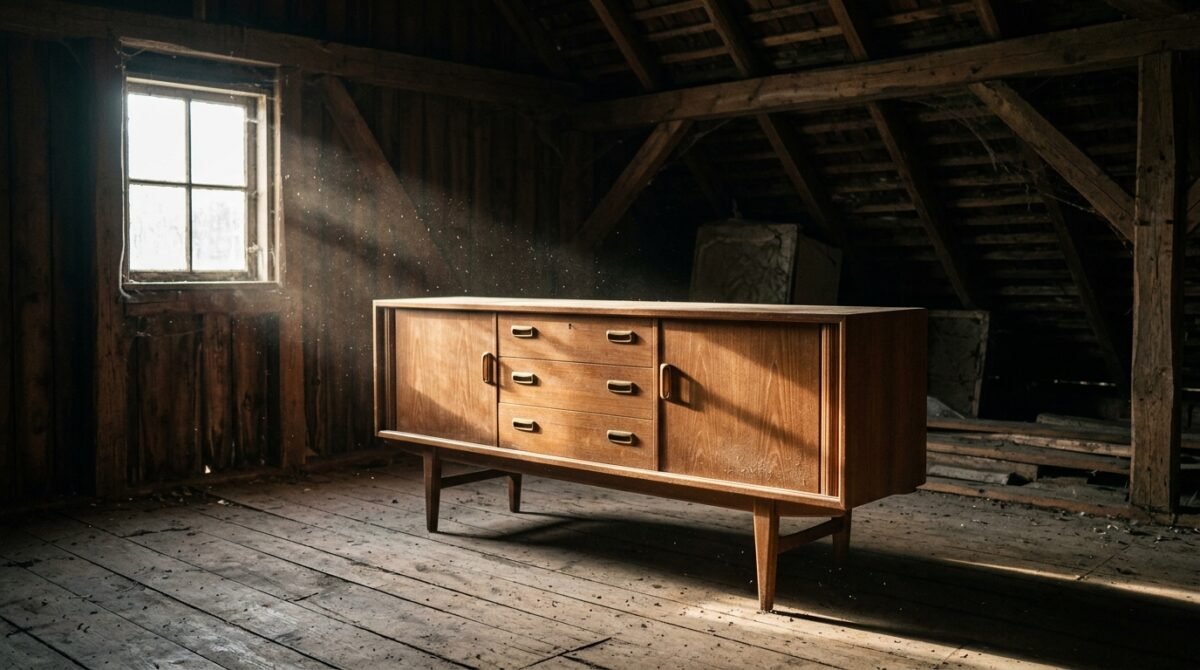
Inheritance is rarely just about the assets. For my family, it was a litmus test for respect, a battlefield of unspoken grievances, and a catalyst for a fracture that would eventually turn into a canyon. When my grandmother passed, the house was filled with the silence of a life well-lived, but the air was thick with the vultures circling her estate. She was a woman of impeccable taste, and her collection of mid-century modern furniture—pieces she had curated during the golden age of design—was the crown jewel of her belongings.
In her final will, she was crystal clear. Every piece, from the pristine Eames chair to the hand-carved walnut dining set, was to go to me. There were no caveats, no shared custody agreements, and certainly no mention of my Aunt Sarah. My grandmother knew Sarah better than anyone; she knew about the petty squabbles, the entitlement that defined Sarah’s life, and the way she viewed everyone else’s possessions as her own personal inventory.
I remember standing in the living room the day after the funeral, feeling the weight of the furniture and the crushing pressure of the atmosphere. Sarah didn’t comfort me; she didn’t ask how I was holding up. Instead, she walked around the room with a measuring tape, treating the space like a showroom she was preparing to liquidate. The moral dilemma wasn’t whether I was entitled to the pieces—the legal documents were ironclad—but how I would handle the inevitable collision between my boundaries and her bottomless, unearned expectations.
This is the story of how a collection of wood and fabric became the breaking point. It is a story about the audacity of entitled family members who believe that blood relation is a currency that buys them your labor, your time, and your hard-earned assets. It is also the story of what happens when you finally decide that silence is no longer an option and that burning the bridge is, in fact, the only way to save yourself.
The Measuring Tape Incident
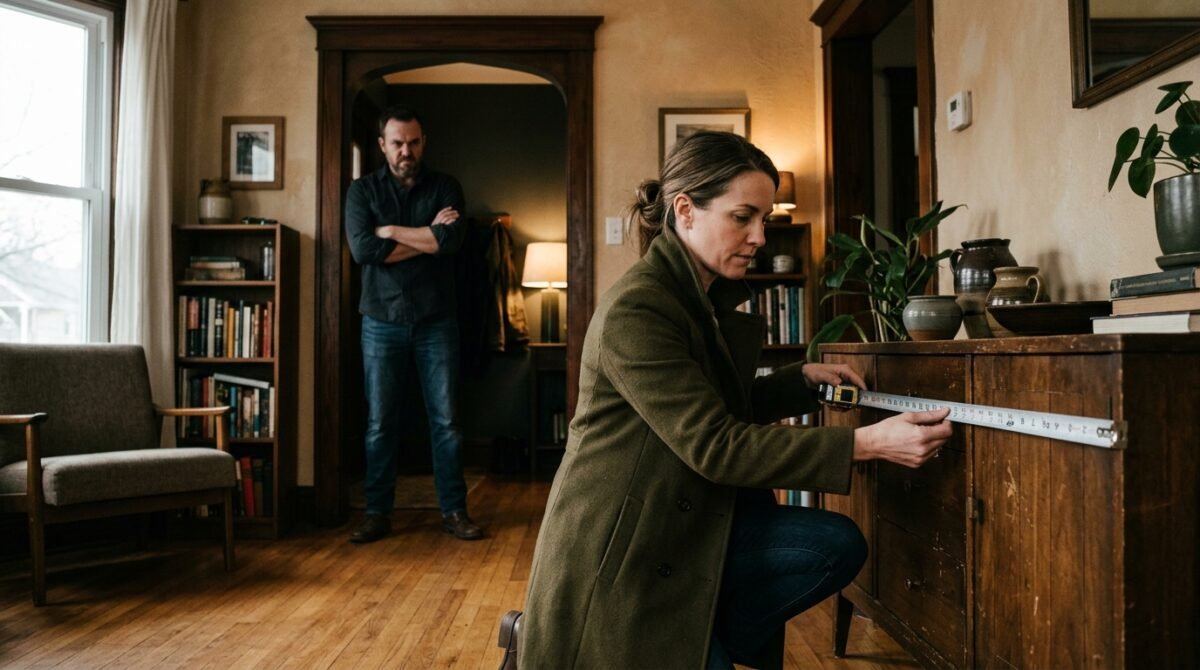
It started three days after the burial. I was still wearing black, still trying to process the fact that my grandmother’s voice would no longer grace my phone on Saturday mornings. I walked into her living room to find my Aunt Sarah standing in the center of the space, a retractable metal tape measure clacking as she extended it across the surface of the antique Danish sideboard.
She didn’t look up when I entered. She just continued to jot down numbers in a small, leather-bound notebook. The scene felt invasive, like a home invasion where the intruder wasn’t stealing property yet, but was already mentally curating the haul. I stood in the doorway for a long minute, watching her calculate the dimensions of items that were, by every legal and emotional standard, mine.
“Sarah, what exactly are you doing? Those aren’t for sale, and they certainly aren’t for you to measure.”
She turned, her face unbothered, wearing that practiced, thin-lipped smile that had haunted my childhood. She didn’t offer an apology or a condolence. She simply gestured toward the sideboard as if she were doing me a favor by acknowledging its existence. Her voice was smooth, patronizing, and utterly devoid of genuine sentiment.
“Oh, don’t be dramatic. I’m just helping you out. You clearly can’t fit all of this in your tiny apartment, and I’m just seeing what will fit in my guest room back home. It’s better that they stay in the family, don’t you think?”
I felt a cold surge of anger hit my chest. I had worked for years to furnish my own home, and I had no intention of gifting my inheritance to someone who had never visited my grandmother in the last five years of her life. The audacity was suffocating. I realized then that the conversation wasn’t a request—it was a declaration of intent. She had already decided that the furniture was hers; she was simply informing me of the logistical logistics of the transfer.
I stood my ground, my hands trembling slightly as I gripped the doorframe. I wasn’t just defending furniture; I was defending the legacy of someone who had loved me. I told her that the furniture was mine to keep, to use, or to do with as I pleased, and that her guest room wasn’t part of the equation. Her reaction was a sharp, biting laugh that echoed through the empty house.
The Logistics of Entitlement

The next morning, my phone buzzed incessantly. It was a chain of messages from Sarah, sent at 6:00 AM, outlining a detailed plan for a moving truck she had ‘found’ for me. She had assumed that not only would I give her the furniture, but that I would also cover the cost of professional movers to get it from the estate house to her suburban home, three states away. It was a masterclass in audacity, a symphony of presumption that left me staring at my screen in disbelief.
The texts were itemized. She had calculated the weight, the packing materials needed, and even suggested I pay for a climate-controlled van to ensure the wood didn’t warp. She framed it as a family responsibility—an opportunity for me to ‘step up’ and show how much I valued family unity. Every message was punctuated with emojis that suggested her demand was a reasonable, even generous, request.
“I’ve booked the truck for the 15th. You just need to be there to supervise the loading. It’s going to be a long day, so make sure you have some snacks for the crew. I’ll pay for the lunch for the movers, since I’m doing the heavy lifting by taking these off your hands!”
— Text message from Aunt Sarah
I didn’t respond immediately. I took a screenshot and sent it to my mother, who simply replied with a tired sigh, ‘Just ignore her, she’s always like this.’ But ignoring her wasn’t working anymore. The demands were becoming increasingly granular, involving specific schedules and even requests for me to provide the original receipts for the furniture, as if she needed to prove their value for her own records. It was as if she were already planning to flip them for a profit.
I spent the afternoon walking through the house, touching the velvet of the chairs and the cool, smooth surface of the dining table. My grandmother had spent decades finding these pieces. She used to tell me stories about driving to auctions in the 1970s, back when no one cared about ‘mid-century’ design. These pieces were memories, not commodities for an aunt who had forgotten my grandmother’s birthday for the last decade.
The anger I felt shifted from defensive to offensive. I realized that if I simply kept the furniture, the harassment would never end. She would continue to show up, continue to demand, and continue to use the ‘family unity’ card to guilt-trip me into compliance. I needed to remove the source of the conflict entirely, and I needed to do it in a way that made it impossible for her to ever get her hands on these pieces.
The Secret Transaction

I didn’t tell anyone. Not my mother, not my siblings, and certainly not Sarah. I reached out to a high-end vintage furniture dealer in the city, someone known for dealing with estate collections of high value. I sent them photos of the collection—the pristine Eames lounge, the George Nelson clocks, the Danish teak sideboard. The response was immediate and enthusiastic. They weren’t just interested; they wanted the entire lot.
The appraisal was staggering. I had known the furniture was nice, but I hadn’t realized the market value had skyrocketed to such an extent. The dealer offered a sum that would easily cover my student loans and provide a significant down payment on a house. For a brief moment, I felt a pang of guilt, wondering if my grandmother would have been upset. Then, I remembered Sarah’s tape measure. My grandmother had wanted *me* to have them, and if I chose to transform them into my future, that was my prerogative.
We scheduled the pick-up for the day before Sarah had planned for her ‘moving truck’ to arrive. I spent the entire day packing the small items myself, clearing the rooms until all that remained were the heavy pieces. The house felt lighter, not just physically, but emotionally. For the first time in weeks, the tension in my shoulders began to recede. I wasn’t just getting rid of furniture; I was clearing out the toxicity that had been attached to these objects.
“Are you sure you want to let all of this go? These are museum-quality pieces. They aren’t going to be easy to replace if you change your mind later.”
— The Vintage Dealer, while loading the truck
I looked at the dealer and smiled for the first time in a month. I wasn’t changing my mind. I was choosing peace over possession. I watched as they carefully wrapped the sideboard in thick moving blankets and carried it out the door. With every piece that left the house, the power Sarah held over me evaporated. She would come here expecting a warehouse of free loot, and instead, she would find an empty, echoey shell.
The final transaction was completed via wire transfer that afternoon. As the notification popped up on my phone, I felt a strange sense of liberation. I hadn’t just sold furniture; I had sold the leverage Sarah thought she had over me. The deal was done, the money was safe, and for the first time, I felt ready to face the inevitable fallout.
The 6:00 AM Kitchen Intrusion
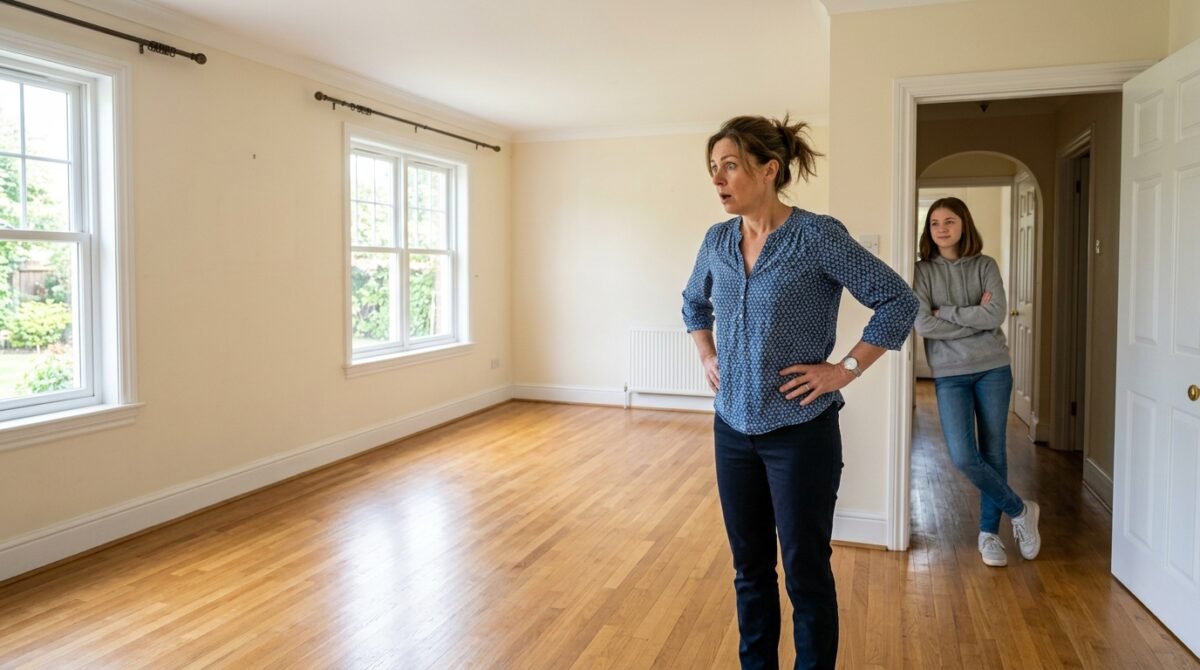
The morning of the ‘move’ arrived with a crisp, biting chill. I had stayed at the house overnight, knowing full well that Sarah would likely try to gain entry before the movers arrived. Sure enough, at 6:00 AM, the sound of a key turning in the lock echoed through the hallway. It was the key my grandmother had given her years ago, a key I had foolishly forgotten to retrieve.
Sarah burst in, trailed by two men in uniforms who clearly looked as confused as I felt. She was energized, buzzing with the excitement of a scavenger who had finally reached the prize. She didn’t even notice me sitting at the kitchen table, nursing a cup of coffee. She walked directly into the living room, her stride confident and her voice loud as she began issuing instructions to the movers.
“Watch the edges of the sideboard, please. It’s antique teak and very fragile. And the Eames chair goes in the climate-controlled container, not the stack. Do you have the packing peanuts for the glassware in the china cabinet?”
I walked into the room, leaning against the doorframe, watching her orchestrate the theft of my belongings. She was in her element, the queen of her own imagined kingdom. She didn’t turn around when I spoke. I didn’t raise my voice; I simply let the words hang in the still air of the room. It was the most satisfying moment of the entire ordeal.
“You’re going to have a hard time moving that, Aunt Sarah. The house is completely empty. The furniture was picked up yesterday afternoon.”
She stopped dead. The silence that followed was absolute. She turned, her face a mask of confusion, then slowly, a deep, purplish rage began to bloom across her cheeks. She looked around the room, her eyes darting from corner to corner, desperately searching for the pieces that had been there only days before. The realization that she had been outplayed hit her with the force of a physical blow.
The Group Chat Explosion

The fallout was immediate. By noon, I had been added to a family group chat that I had specifically muted weeks ago. It was a deluge of vitriol, accusations, and passive-aggressive commentary from Sarah and her immediate circle of supporters. They were calling me everything from a ‘greedy, ungrateful brat’ to a ‘traitor to the family legacy.’ My phone didn’t stop vibrating for three hours.
My mother, caught in the middle, was panicking, asking me what I had done and why I couldn’t have just ‘let her have one or two things’ to keep the peace. I didn’t defend myself to them. I simply let the notifications pile up, a testament to the toxic dynamic I was finally severing. They were all participating in the outrage, performing their loyalty to Sarah because it was easier than standing up for the truth.
“I cannot believe you would sell family treasures for quick cash. Your grandmother would be absolutely disgusted by your behavior. You have officially ruined any chance of a relationship with this side of the family.”
— Aunt Sarah, in the family group chat
I typed a single, calm response. I didn’t apologize. I didn’t explain the logic of the sale beyond the fact that the furniture was mine to do with as I wished. I knew that anything I said would be twisted and used against me, so I kept the response brief and final. It was a line drawn in the sand, a boundary that no amount of shouting or shaming would ever be able to cross.
The chat continued to spiral, but I didn’t read the rest of the messages. I archived the conversation and blocked Sarah’s number. The relief was instantaneous. It wasn’t about the money—though the money was a nice buffer—it was about reclaiming my agency. For years, I had been the ‘easy’ target, the one who would accommodate the demands to avoid the drama. That version of me no longer existed.
Why the Sunday Dinner Table Went Silent
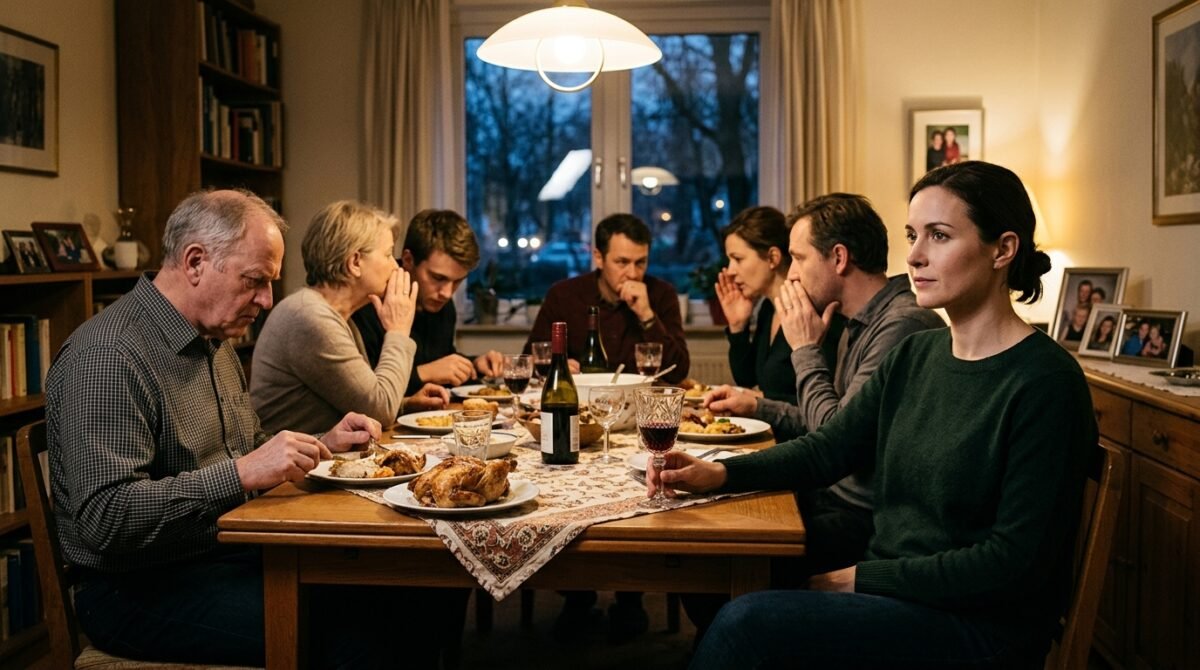
The next family gathering was, predictably, a disaster. I debated skipping it, but I decided that hiding would only validate their narrative. I arrived, sat down, and the entire room went silent. The atmosphere was so thick with tension you could have cut it with a knife. My cousins wouldn’t make eye contact, and my aunt refused to even look in my direction, pointedly turning her back to me whenever I was in the room.
It was a masterclass in social ostracization. Every time I spoke, the room would grow quiet, and the responses to my comments were clipped and cold. It was clear that Sarah had painted me as the villain of the piece, the heartless grandchild who had discarded family history for a paycheck. I sat through the meal, ate my food, and made light conversation with my grandmother’s old neighbors, ignoring the icy glares from the other side of the table.
“I heard you’re living it up on that money. How does it feel to know you sold your soul for a down payment? I hope the furniture was worth losing your family over.”
— A cousin, leaning over during the main course
I looked at my cousin, who had never once asked me how I was doing after the funeral, and smiled. I didn’t get angry. I didn’t defend myself. I just leaned in and spoke in a voice calm enough to be heard by the surrounding tables. ‘The furniture was mine,’ I said. ‘And I’m doing just fine. Are you?’ The question took the air right out of her sails.
I realized then that they were all projecting. They were angry not because I had sold the furniture, but because I had shown them that it was possible to say ‘no.’ I had shattered the illusion that they were entitled to my compliance. That was the real crime. I wasn’t just a person who sold furniture; I was a person who had broken the social contract of the family, and they were terrified that the contagion of my independence might spread.
The Reddit Trial

I posted the story on a popular subreddit a few days later, just to see if I was losing my mind. I needed an objective perspective, something to cut through the gaslighting I’d been enduring for weeks. I laid out the timeline, the demands, the entitlement, and the final decision. I expected a mix of responses, but the overwhelming support was staggering. Thousands of people agreed that I was well within my rights.
The community analyzed the situation with a clinical coldness that I hadn’t been able to muster. They pointed out the patterns of abuse, the financial coercion, and the absurdity of my aunt’s demands. It was validating to see my internal struggle reflected back to me in the words of strangers who had no skin in the game. It reinforced the idea that I had made the right choice, regardless of the emotional cost.
“The furniture was yours, period. Your aunt tried to pull a power move by dictating where your property went and how you should pay for it. Selling it was the ultimate power move back. NTA, and don’t look back.”
— u/EstateLawyerFan (Top Comment, 28.5k upvotes)
The thread became a repository for similar stories. People shared their own tales of predatory relatives, of estates torn apart by greed, and of the peace that finally came when they stopped trying to appease the unappeasable. I read through hundreds of comments, feeling the weight of the last few months finally lifting. I wasn’t alone in this, and more importantly, I wasn’t wrong.
Some users, of course, took the side of ‘family first,’ suggesting that I should have at least offered to sell them to her at a discount. I responded to a few of these, explaining the history of the relationship and the lack of respect shown to my grandmother. The consensus remained: when you treat people like commodities, you don’t get to complain when they sell themselves to the highest bidder.
The Legal Threat That Failed
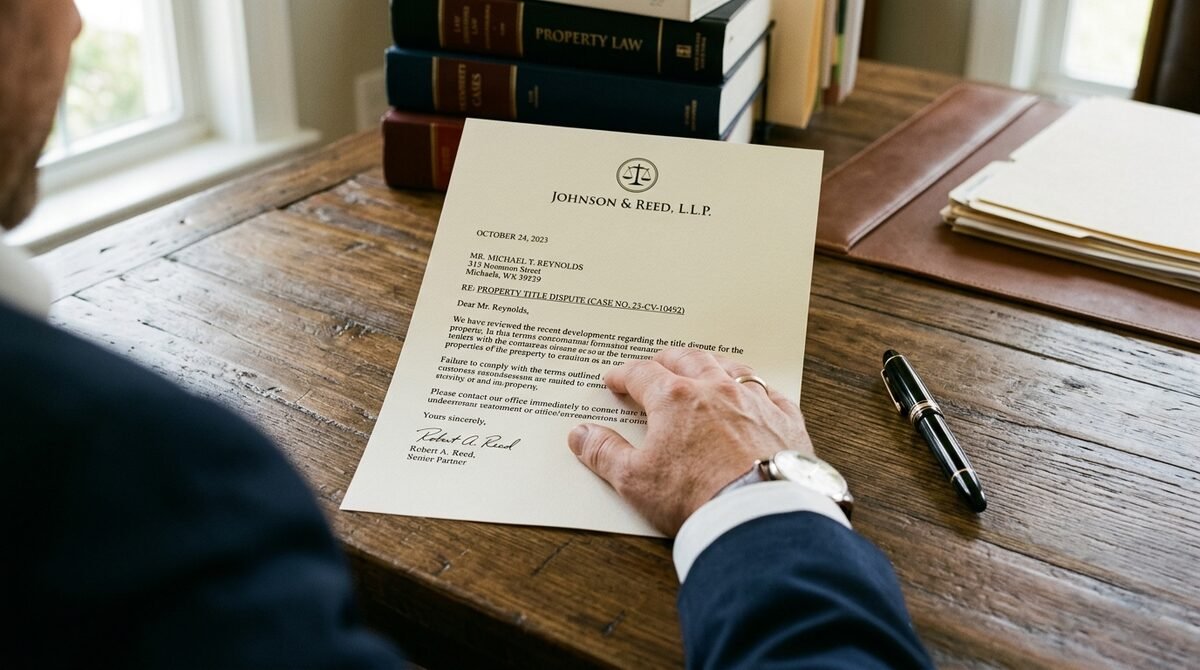
A week after the dinner, I received a letter in the mail. It was a formal, typed document on heavy cardstock, claiming that the furniture was part of an ‘oral agreement’ between my grandmother and my aunt. It was a laughable document, filled with legal-sounding jargon that meant absolutely nothing. It was a bluff, an attempt to intimidate me into giving her a share of the money from the sale.
I laughed when I read it. My grandmother, a woman who meticulously documented everything, would never have made an oral agreement with Sarah, especially not about her most prized possessions. I contacted the lawyer who had handled the estate, and he chuckled when I read the document over the phone. He told me to keep it for my records but not to respond, as any engagement would only give her the impression that she had a case.
“This has no legal standing. It’s a common tactic used to bully people into settlements. If you respond, you validate the premise. If you ignore it, it dies on the vine. Keep your head down and stay silent.”
— Estate Attorney, on the phone
I followed his advice to the letter. I put the envelope in a file folder and tucked it away in my desk. I never heard another word about it. The ‘legal threat’ was just another weapon in her arsenal of manipulation, and once it failed to trigger a panic response from me, she moved on to other forms of drama. It was a powerful lesson in the futility of bluffing when you have no cards to play.
The silence that followed was heavy, but it was the silence of a battle won. I realized that my aunt had thrived on my reactions, on the chaos she could create by pushing my buttons. By refusing to engage, by remaining stoic and firm, I had taken the oxygen out of her fire. She was still out there, probably telling anyone who would listen what a monster I was, but I didn’t have to listen anymore.
The Price of Peace

Looking back now, months later, I realize that the money I made from the furniture was secondary. The true value of the sale was the boundary it forced me to set. If I hadn’t sold it, I would have spent the rest of my life dealing with Sarah’s demands, her intrusions, and her manipulation. I would have been the ‘good niece’ who gave away her inheritance to keep the family happy, and in the process, I would have lost myself.
I’ve used the money to start a new chapter. I’m in a new apartment, a place that is entirely mine, furnished with items I picked out myself, items that don’t come with baggage or history. I’ve gone low-contact with most of my extended family, and the ones who still want to be in my life have learned to respect my boundaries. It’s a quieter life, a more peaceful one, and it’s entirely worth the cost.
“Boundaries aren’t about punishing other people; they’re about protecting your own peace. When you finally stop trying to control how others view you, you realize you have all the power you ever needed.”
I don’t think about the Eames chair or the sideboard much anymore. When I do, I don’t feel loss—I feel grateful. Grateful that my grandmother left me something that was valuable enough to buy my freedom. She knew, even if I didn’t, that the greatest gift she could give me wasn’t a piece of furniture, but the strength to walk away from people who didn’t respect me.
The lesson was harsh, but it was necessary. I learned that family isn’t just about blood; it’s about mutual respect, support, and the ability to set aside personal greed for the sake of another’s well-being. My aunt failed that test, and in the process, she taught me everything I needed to know about her. I haven’t looked back since, and I don’t intend to.
The Final Reflection

The community reaction on Reddit continued for weeks, with new users finding the post and adding their own experiences. The most touching comments were from people who had been in similar situations and felt empowered by my story to set their own boundaries. It wasn’t just my story anymore; it had become a collective narrative about the importance of self-respect in the face of toxic family dynamics.
I’ve moved on to other things, focusing on my work and my personal growth. I still check the subreddit occasionally, reading the new stories and offering advice where I can. It’s a strange, digital brotherhood of people who have learned that you don’t owe your peace to anyone, not even your relatives. It’s a lesson that stays with you, a quiet anchor in the storms of life.
“I just wanted to say thank you for sharing your story. Because of your post, I finally told my uncle no when he demanded I give him my grandmother’s jewelry. It was the hardest thing I’ve ever done, but I feel so much lighter today.”
— u/GratitudeSeeker, in a follow-up comment
I realize now that the furniture was never the point. It was just the object that brought the underlying issue to the surface. If it hadn’t been the sideboard, it would have been something else—money, time, or emotional labor. Sarah was always going to demand, and I was always going to have to decide whether to give or to stand firm. The furniture sale was the moment I chose myself.
I’m happy, I’m at peace, and I’m surrounded by people who love and respect me. I don’t need the validation of my extended family, and I certainly don’t need the approval of people who view me as a resource rather than a person. I have my life, I have my boundaries, and I have the clarity that only comes from knowing exactly who you are and what you will no longer tolerate.
Conclusion
My journey with my grandmother’s estate was never just about a collection of mid-century furniture. It was a transformative experience that forced me to confront the toxic patterns of entitlement that had governed my family’s relationships for years. By choosing to sell the collection, I wasn’t being ‘greedy’ or ‘heartless’; I was reclaiming my agency and protecting my boundaries from someone who viewed me only as a means to an end.
The fallout, while painful, was necessary. It clarified who truly cared about my well-being and who was only interested in what they could extract from me. It allowed me to build a life on my own terms, free from the weight of expectations I never asked for and debts I never owed. The furniture is gone, but in its place, I have found a profound sense of peace and the unwavering confidence to stand my ground.
We often equate family with an obligation to sacrifice, but true family thrives on mutual respect and genuine care. When those are absent, you have the right to protect yourself, even if it means severing ties. I hope my story serves as a reminder that your worth is not defined by how much you give to others, but by how well you protect your own heart and mind.
What about you? Have you ever had to draw a hard line with a family member over an inheritance or an entitled demand? How did you handle the pressure, and what was the outcome of your decision? Let’s talk about it in the comments below.
What's your verdict on this dilemma?
Vote below to contribute to the official community consensus.

Have a Dilemma Keeping You Up at Night?
Share your real-life feud, wedding chaos, or relationship crossroads anonymously with our editorial team.
What do you think ?
0 Comments🛡️ Comments are moderated to protect community integrity. Your comment will appear once approved by the editorial team.