
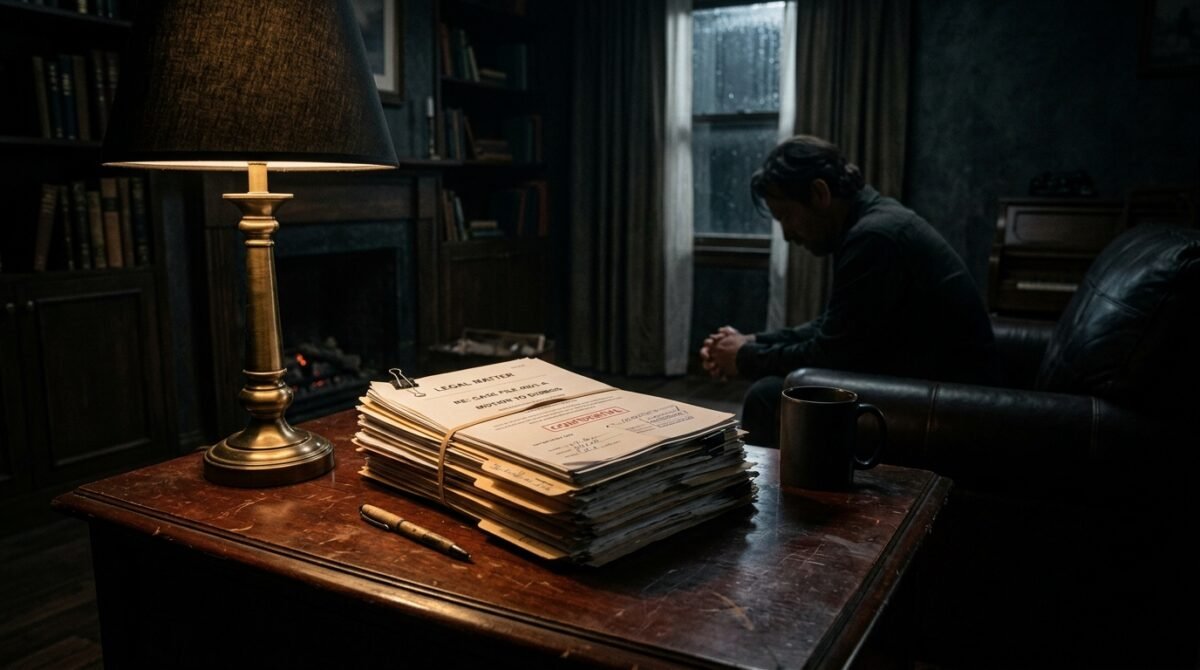
Growing up in our household felt like participating in a sport where the rules were constantly rewritten to ensure only one player could ever win. My brother, Julian, was the undisputed star of the show. He was the ‘Golden Child’—the one who could do no wrong, whose academic mediocrity was framed as ‘potential,’ and whose temper tantrums were dismissed as ‘spirited.’ I, on the other hand, was the reliable one. I was the safety net, the one who worked weekends to pay for my own books while Julian received tuition checks and luxury car payments without ever asking.
When our parents passed away within a year of each other, I expected the finality of their favoritism to manifest in the will. I wasn’t wrong. The legal documents were clear: the family home, the investment accounts, and even the sentimental heirlooms were bequeathed entirely to Julian. I was left with a collection of old photographs and a profound sense of relief that the cycle of conditional love was finally over. Or so I thought.
The silence in the aftermath was brief. It wasn’t long before the reality of estate maintenance hit Julian like a freight train. Without our parents to subsidize his lifestyle or cover his sporadic employment gaps, he found himself staring down a property tax bill that he simply couldn’t cover. He didn’t come to me with an apology for the unfair distribution of assets; he came to me with a demand, framed as a ‘family duty.’ He expected me to chip in for the taxes on a house that I didn’t own and was never going to inherit.
This isn’t just a story about money. It’s a story about the audacity of entitlement and the moment I finally decided that being the ‘reliable child’ was a title I no longer wanted to wear. The following account traces the breakdown of our relationship and the inevitable confrontation that forced me to reclaim my autonomy, regardless of what the rest of the family thinks.
The Envelope That Should Have Been a Warning

It started on a Tuesday morning. I was in the middle of a conference call when a thick, cream-colored envelope arrived. I didn’t recognize the handwriting at first, but the return address—my childhood home—sent a chill down my spine. I hadn’t been back to that house since the funeral, and I hadn’t spoken to Julian in weeks. I set it aside, intending to open it after the work day, but curiosity—and perhaps a lingering sense of familial obligation—got the better of me.
Inside was not a sentimental note or a request for a catch-up dinner. It was a formal tax assessment notice for the primary residence, accompanied by a post-it note in Julian’s jagged handwriting. It read: ‘Mom and Dad didn’t leave enough liquidity for the tax season. I need your half by the end of the month to keep the house in the family.’ My stomach dropped, not out of fear, but out of pure, unadulterated disbelief.
I sat at my kitchen table, staring at the numbers. The property taxes were staggering, a sum that would easily consume three months of my savings. Julian was asking me to subsidize his residency in a mansion he had inherited solely because he was the favored child. He didn’t even ask if I was doing well; he assumed my financial stability was his personal slush fund.
“I don’t understand how he thought this would work. He didn’t ask; he issued a directive. It was as if he believed Mom and Dad’s will was a suggestion, but his needs were a law.”
I called him immediately, my pulse racing. I needed to know if this was a mistake, or if the arrogance had truly reached these levels. He picked up on the first ring, his voice sounding entirely too casual, as if he were calling to discuss the weather rather than a multi-thousand-dollar financial demand. That initial conversation set the stage for everything that followed.
“I got your note, Julian,” I started, keeping my voice steady. “I’m curious why you think I’m responsible for the taxes on a home that you own entirely. You have the assets, the house, and the bank accounts. Why are you reaching out to me?” There was a long silence on the other end, followed by a scoff that sounded eerily like our father. He wasn’t interested in a conversation; he was interested in compliance.
The Morning Kitchen Confrontation
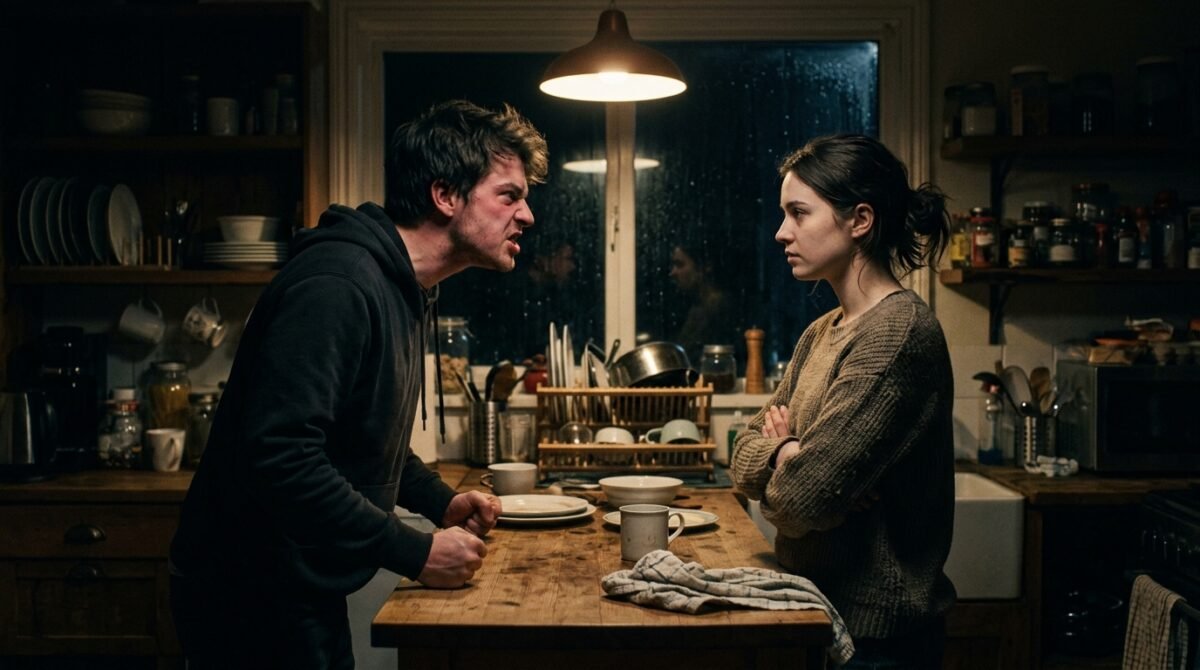
When my polite rejection didn’t work, Julian decided to escalate. He showed up at my apartment unannounced at 6:30 AM on a Saturday, a time when I was barely conscious and certainly not prepared for a psychological ambush. I opened the door to find him pacing in the hallway, looking disheveled and frantic. He didn’t wait for an invitation; he pushed past me into the kitchen, smelling of stale coffee and desperation.
“You’re really going to let me lose the house, aren’t you?” he barked, throwing his keys onto my counter. He started listing the reasons why it was ‘unfair’ for him to pay, despite the fact that he was currently living in a house with no mortgage and significant equity. He argued that because we were siblings, the house was technically ‘our’ history, and therefore ‘our’ responsibility. It was a masterclass in gaslighting.
I stood my ground, leaning against the refrigerator. I realized in that moment that he had never seen me as an equal. I was a tool, a resource to be tapped when he ran dry. He started crying, the same performative tears that had gotten him out of detention in high school. It was disgusting, but more than that, it was exhausting. I felt a strange sense of clarity washing over me.
“You have a five-bedroom house, Julian. Sell it if you can’t afford the taxes. I am not your secondary income stream, and I am certainly not your landlord’s insurance policy.”
He looked at me with genuine shock. He had expected me to fold, to offer a payment plan, to offer to help ‘find a solution.’ When he realized the bank of sibling support was closed for business, his demeanor shifted from pleading to aggressive. He started shouting, accusing me of being cold-hearted and ungrateful for everything our parents had provided for us. I simply pointed to the door.
The argument didn’t end in a resolution; it ended in a stalemate. He left, slamming the door so hard that the pictures on my wall rattled. I spent the rest of the day in a haze of adrenaline, realizing that I had finally crossed a line I should have crossed a decade ago. The house was no longer a symbol of our childhood; it was a cage, and I had just found the key to my own exit.
The Group Chat Explosion

I knew the fallout would be immediate. Within an hour of Julian leaving my apartment, the family group chat began pinging incessantly. It started with a long, rambling message from my aunt, who had always played the part of the family mediator, though she was really just a glorified enabler. She didn’t have the full story, of course; Julian had painted a picture of me abandoning him in his time of need.
“I can’t believe you’re being this cruel to your own brother. He’s grieving, and you’re obsessed with money. Family is about supporting one another, even when it’s hard. Do the right thing.”
— Aunt Linda, Family Group Chat
I didn’t respond immediately. I watched as other cousins chimed in, their messages dripping with performative outrage. None of them offered to help Julian themselves, of course; they were perfectly happy to volunteer my time and money. It was the classic family dynamic—everyone loves to preach about unity until they have to pay for it.
Finally, I typed out a response. I kept it professional, factual, and brutally honest. I explained the inheritance situation, the tax burden Julian was facing, and my refusal to pay for a house I did not own. I didn’t sugarcoat the fact that Julian had been left every single cent of the estate. The chat went completely silent for almost an hour after my message hit the thread.
The silence was the most satisfying part of the entire ordeal. By laying out the truth, I had stripped away the narrative of ‘the grieving brother.’ Now, the conversation had shifted from ‘why won’t you help’ to ‘why does he have everything if he can’t manage it.’ The shift in tone was palpable, and I could see the cracks forming in the family’s collective delusions.
Of course, Julian didn’t let it lie. He started sending me private messages, threatening to sell the heirlooms he knew I cared about—items he hadn’t even mentioned in the will but had somehow taken possession of anyway. It was a low blow, a desperate attempt to regain control. I blocked him on every platform, knowing that this was the final bridge to burn.
The Lawyers Get Involved
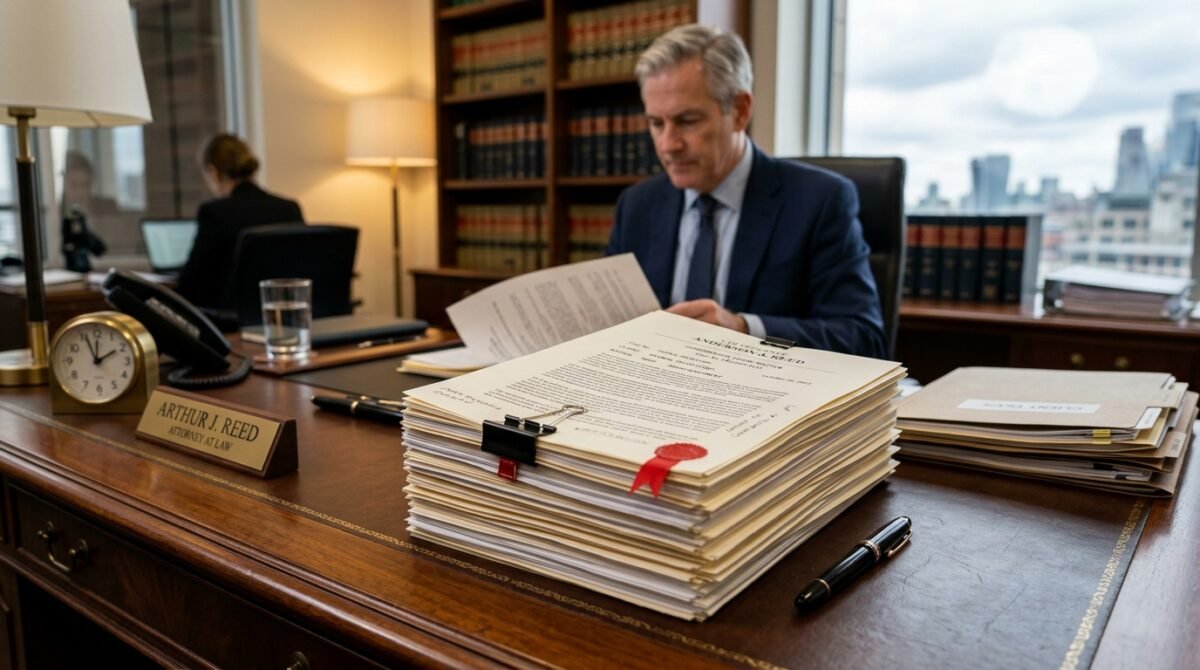
A few days later, a certified letter arrived. I opened it with a steady hand, expecting another demand. Instead, it was from a law firm representing Julian. He was attempting to sue me for ‘unpaid maintenance’ on the property, citing a vague clause in the will about family members having access to the home. It was laughable, a desperate legal maneuver from someone who had clearly spent too much money on a lawyer and not enough on his tax bill.
I called my own attorney, a woman who had helped me navigate the initial probate process. She laughed for a full thirty seconds when I read the document to her. It was clear that Julian was trying to bully me, hoping I would be too intimidated by the legal jargon to fight back. He didn’t realize that I had saved every text, every email, and every note he had ever sent me.
We drafted a response that was essentially a ‘come and get it’ notice. We outlined the exact distribution of assets and noted that, per the will, I had zero interest or legal obligation to the property. We also included a cease-and-desist regarding his harassment and his threats to sell the heirlooms that were technically not part of the inheritance as they had been gifted to me by our mother years prior.
“The legal system isn’t a weapon for you to use because you failed to budget for your lifestyle. If you proceed with this suit, we will be seeking a countersuit for the items you have unlawfully withheld from my possession.”
The response was effective. The lawsuit never materialized. Julian realized that the more he involved the courts, the more scrutiny he would invite into his finances. He couldn’t afford to have a judge look at his bank accounts, especially given how quickly he had burned through the inheritance. He was playing a game of chicken, and he had finally realized I wasn’t going to swerve.
The quiet that followed was the first peace I had felt in years. Without the constant threat of his demands or the noise of the family’s judgment, I was able to focus on my own life. I began to realize that the ‘Golden Child’ wasn’t just a label for him; it was a cage for me, and by cutting him off, I had finally broken the bars.
The Reddit Community Weighs In
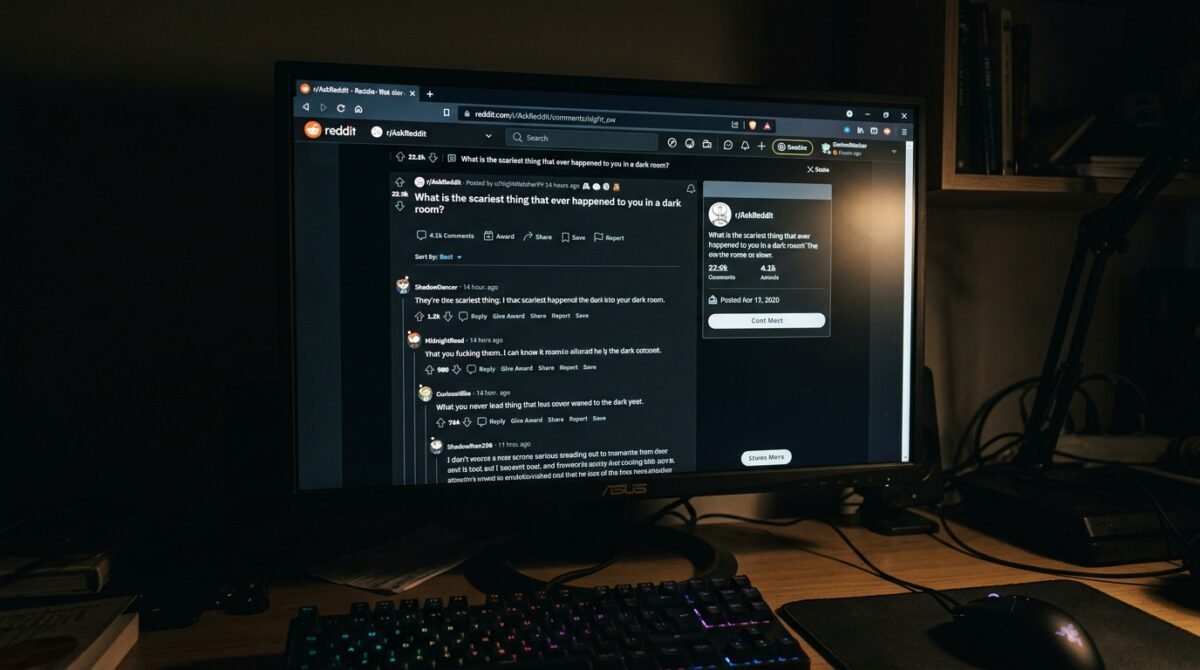
I decided to post my story on a popular forum, wanting to see if I was actually the villain the family made me out to be. I laid out the facts: the inheritance, the taxes, the demand, and the legal threats. I didn’t hold back on the details. I wanted the cold, hard truth from strangers who had no emotional investment in my family’s drama.
The response was overwhelming. Within hours, the post had thousands of upvotes and hundreds of comments. The consensus was immediate and unanimous: I was not the asshole. The validation was almost dizzying. For years, I had been told that my boundaries were ‘mean’ or ‘selfish,’ but here, hundreds of people were telling me that my boundaries were the only rational response to a toxic situation.
“You are not his parent. You are not his bank. You are not his tax consultant. He chose to take the inheritance, which means he chose the responsibility that came with it. Let him sink or swim.”
— u/ReasonableObserver (Top Comment, 32.1k upvotes)
Reading the comments felt like therapy. There were people sharing their own stories of being the ‘reliable’ sibling, the one who was always asked to pick up the slack until they finally said no. It was a community of people who had survived the same kind of emotional manipulation, and their support was a lifeline I hadn’t realized I needed.
Some commenters pointed out the legal aspects, warning me that Julian might try to claim ‘adverse possession’ or other obscure legal tactics if I ever set foot on the property again. Others advised me to change my locks and secure my own assets, just in case he tried to escalate further. Their advice was practical, grounded, and deeply appreciated.
Of course, there were a few ‘you only get one family’ types, but they were quickly drowned out by the majority. It was refreshing to see such a clear distinction between ‘family’ and ‘enabling.’ The community gave me the confidence to double down on my no-contact stance, knowing that I wasn’t just doing what was right for me, but what was necessary for my own mental health.
The Selling Point

A month later, I saw the ‘For Sale’ sign in front of the house while driving through my old neighborhood. It felt like a monument to my victory. Julian hadn’t been able to keep the house after all. He had tried to force me to pay for his luxury, and when that failed, he had been forced to face the reality of his own financial mismanagement. It was a hard lesson, but one he clearly needed.
I didn’t reach out. I didn’t offer to help him move. I simply drove past, the familiar landscape looking less like a home and more like a relic of a past life. I thought about the heirlooms he had threatened to sell and realized that, in the end, they were just ‘things.’ They didn’t define me, and they certainly weren’t worth the price of my peace.
The house sold within weeks, mostly because it was a prime property in a sought-after neighborhood. Julian moved into a smaller apartment, and from what I gathered from the grapevine, he was still complaining about how ‘unfair’ the world was. He wasn’t the Golden Child anymore; he was just a guy with a bad attitude and a limited bank account. The irony wasn’t lost on me.
I found myself reflecting on our parents. They had set this up, intentionally or not. They had created a dynamic where Julian was rewarded for his existence, while I was ignored for my contributions. They had left him the house, but they had also left him a standard of living he couldn’t sustain. In a way, their favoritism had ultimately been his downfall.
“The house was his inheritance, but it was also his leash. He couldn’t move forward because he was so busy trying to maintain the past that he never learned how to live in the present.”
I felt a strange, quiet sadness for him. Not the kind of sadness that leads to forgiveness, but the kind that comes from realizing someone has wasted their entire life trying to be the favorite rather than being a person. I had grown up, moved on, and built a life that was entirely my own. He was still waiting for someone else to come along and fix his life for him.
The Final Boundary

Months later, I received a letter in the mail. It wasn’t a lawyer’s notice, and it wasn’t a demand. It was a handwritten note from Julian. It was brief, lacking any real apology, just a request to meet for coffee to ‘talk about the future.’ I held the letter for a long time, feeling the weight of the paper in my hand. It was an invitation to return to the cycle.
I didn’t answer it. I didn’t even keep the letter. I put it straight into the shredder. I had spent enough of my life talking about the future with Julian, always wondering how I could support him, how I could help him, how I could be the ‘good’ sibling. I had realized that ‘the future’ with Julian was just a repeat of the past, and I was done with reruns.
It was a turning point in my personal growth. I realized that boundaries aren’t just about what you say ‘no’ to; they are about what you say ‘yes’ to. I said ‘yes’ to my own peace, my own financial freedom, and my own autonomy. I said ‘yes’ to a life where I didn’t have to carry the weight of someone else’s expectations.
My friends asked if I felt guilty. I told them honestly that I didn’t. I had given him plenty of chances, and I had been more than fair. The guilt belonged to the people who had created the dynamic, not to me for refusing to play my part in it. I was finally free to be exactly who I wanted to be, without the shadow of the ‘Golden Child’ looming over my decisions.
“I am not the person who owes him anything. I am the person who finally decided that my life is my own, and that is a boundary I will never move again.”
I started traveling, focusing on my career, and investing in relationships that were built on mutual respect rather than obligation. The silence from Julian stopped being a threat and started being a comfort. I had reclaimed my life, and for the first time, the future looked entirely like something I was choosing for myself.
Reflecting on the ‘Golden Child’ Syndrome

Looking back, I understand the psychology of it all a bit better. Julian wasn’t just a spoiled brat; he was a victim of a system that taught him he was special just for existing. He never had to develop resilience, empathy, or financial literacy because those things were always provided by our parents. When that supply was cut off, he was left with nothing but a sense of entitlement that the world refused to validate.
Many people struggle with this dynamic, where one sibling is treated as the ‘golden’ one and the other as the ‘caretaker.’ It’s a toxic cycle that ruins relationships and prevents people from ever becoming their own person. My story isn’t unique, but I hope my refusal to comply serves as a reminder that the cycle can be broken. You don’t have to be the caretaker for someone who refuses to care for themselves.
The financial aspect was just the catalyst. The real issue was the refusal to acknowledge me as an adult with my own life, my own goals, and my own resources. By demanding my money, Julian was really demanding my submission. He wanted me to accept that his needs would always supersede mine, just as they had throughout our childhood.
I’ve spent a lot of time in therapy, untangling the knots of my upbringing. I’ve learned that saying ‘no’ is not an act of aggression; it’s an act of self-preservation. And while it might feel like a loss to lose a sibling, you have to ask yourself what you’re really losing. Is it the relationship, or is it the idea of a relationship you never really had?
“You have to stop grieving the person you wanted them to be and start accepting the person they actually are. Only then can you find the freedom to move on.”
I am in a much better place now. The bank account is healthy, the stress is gone, and I am surrounded by people who value me for who I am, not for what I can provide for them. And that, more than anything, is the true inheritance.
Lessons Learned in Autonomy

If I could go back and tell my younger self anything, it would be to set these boundaries sooner. I spent so much time being the ‘good’ sibling, the one who never caused trouble, that I became invisible. I was the reliable one until I was the one being taken for granted. Don’t let your desire to be ‘good’ keep you from being strong.
Financial independence is not just about money; it’s about having the power to say ‘no’ to people who don’t have your best interests at heart. If you are ever in a position where you are being asked to subsidize someone else’s lifestyle, ask yourself if they would do the same for you. If the answer is no, then you already know what you need to do.
The family will talk. They will call you selfish, cold, and ungrateful. Let them. Their opinion of you is none of your business. Your business is your own health, your own life, and your own future. If they cannot respect your boundaries, they do not deserve to be part of your inner circle. It’s that simple, even if it’s not easy.
I’ve learned that the people who get the most angry when you set a boundary are the ones who benefited the most from you having none. That’s a truth that has held up through every interaction I’ve had with my family since this whole mess began. It’s not about me being mean; it’s about me being healthy for the first time in my life.
“Don’t set yourself on fire to keep others warm. Eventually, you’ll just burn out, and they’ll still be looking for a bigger flame.”
I’m proud of the person I am today. I’m not the ‘reliable one’ anymore; I’m the independent one. And that is a title I am happy to carry for the rest of my life. The past is the past, and I am ready for whatever comes next, knowing that I am in the driver’s seat of my own future.
The Aftermath and Moving Forward

It has been a year since the house was sold. I haven’t heard from Julian, and frankly, I don’t expect to. He has moved on to other things, and I have moved on to a life that is entirely my own. There is no more drama, no more group chat explosions, and no more demands on my time or money. The quiet is blissful.
I still occasionally hear news from the rest of the family, but I’ve learned to filter it. I don’t engage with the gossip, and I don’t offer updates on my life to those who only want to use them to fuel the family narrative. I am living my best life, and that is the only response I need to give to anyone who wonders how I’m doing.
I’ve invested in myself, both personally and professionally. I’ve taken up hobbies I never had time for because I was too busy managing family obligations, and I’ve built a circle of friends who respect me for who I am. The transformation has been profound, and I am grateful for the ‘tax incident’ that forced the issue to a head.
If you are reading this and find yourself in a similar position, know that you are not alone. You are not obligated to carry the weight of your family’s failures or their expectations. You are your own person, and you have the right to define your life on your own terms. Do not be afraid to stand your ground, even when it feels like the world is against you.
“You are not defined by the roles your family assigned you. You are defined by the choices you make to break free from them.”
I am looking forward to the future with a sense of optimism that I never had before. I am no longer waiting for permission to be happy, and I am no longer looking over my shoulder to see if I’m living up to someone else’s standard of what a ‘good’ sibling should be. I am free, and that is worth more than any inheritance.
Conclusion
This experience taught me that blood does not equate to obligation. I spent years holding up a structure that was never built for me, and when I finally stepped away, the entire thing collapsed under its own weight. The realization that I was never the ‘golden’ one wasn’t a tragedy—it was the beginning of my liberation.
I hope that by sharing this story, I can encourage others to examine their own family dynamics. Are you the one who is always expected to give, to pay, to fix, and to apologize? Are you carrying the burden of someone else’s life because you’re afraid of what it means to say no? Your value is not tied to your utility, and your family’s inability to see that is not your failure.
What about you? Have you ever had to draw a hard line with a family member over money or expectations? How did you handle the backlash, and what did you learn about yourself in the process? Join the conversation in the comments below—I’d love to hear your experiences and how you’ve reclaimed your own boundaries.
What's your verdict on this dilemma?
Vote below to contribute to the official community consensus.

Have a Dilemma Keeping You Up at Night?
Share your real-life feud, wedding chaos, or relationship crossroads anonymously with our editorial team.
What do you think ?
0 Comments🛡️ Comments are moderated to protect community integrity. Your comment will appear once approved by the editorial team.