
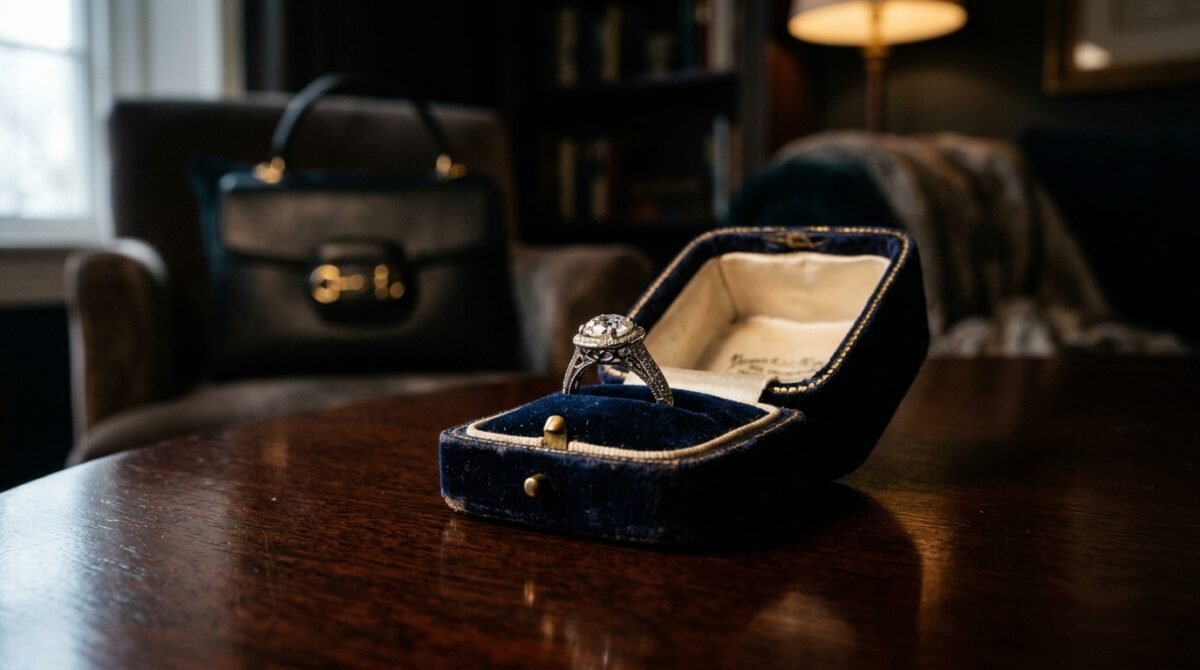
Grief is a strange and unpredictable architect. It builds rooms in our hearts that we didn’t know existed, and sometimes, it tears down the walls of our relationships with shocking velocity. My mother passed away two years ago, leaving behind a small, modest estate and a collection of jewelry that was meant to be shared between my sister, Sarah, and me. Among those items was her engagement ring—a delicate, antique piece that represented the foundation of my parents’ thirty-year marriage.
For months after the funeral, that ring sat in a velvet-lined box on my nightstand. It was supposed to be a shared treasure, a piece of history we would pass down to our own children. Sarah had always been the flashy one, the sibling who prioritized brand names over substance, while I was the one who kept the books and held the family together. I believed, in my naivety, that our shared loss would bridge the gap between our wildly different values.
The trouble began when Sarah started ‘borrowing’ things without asking. At first, it was sweaters or books, but then it grew into larger items. I brushed it off, telling myself she was just struggling with the loss, that she was acting out in a way that wasn’t malicious. But when the ring disappeared from my room, the excuse of grief stopped holding water. The discovery of what she had actually done—trading a mother’s legacy for a temporary status symbol—was not just a betrayal; it was a fundamental shift in my perception of her.
I am not a person who enjoys conflict. I prefer harmony, structure, and tradition, especially during the holidays. Thanksgiving has always been the one day of the year where our family could pretend everything was perfect. But this year, the prospect of sitting across from Sarah, knowing what she had done to our mother’s memory, felt like an act of betrayal against the woman who raised us. I had to make a choice: uphold the facade of family togetherness or protect my own peace by drawing a hard, unforgiving line.
The Empty Velvet Box and the Missing Legacy

It was a Tuesday afternoon when I noticed the box was light. I had been dusting my nightstand, a ritual that often involved opening the box just to touch the cool gold of my mother’s ring. When I flipped the lid, I saw nothing but the indentation in the fabric where the ring had rested for nearly two years. My heart didn’t just skip a beat; it plummeted into my stomach, leaving me breathless.
I searched the room, then the house, convinced I had misplaced it. I checked the drawer, the jewelry organizer, and even the bathroom vanity. When I called Sarah, my voice was shaking, not with anger, but with a terrifying, mounting dread. She picked up on the third ring, her tone sounding oddly clipped and distracted. I asked her point-blank if she had taken the ring, and there was a pause—a long, agonizing silence that felt like a confession in itself.
“Sarah, please tell me you didn’t touch Mom’s ring. I looked everywhere for it. You were the only one who came into my room while I was at the grocery store this morning.”
— Me, during the initial confrontation
She didn’t deny it. She didn’t even try to fabricate a story about losing it or ‘borrowing’ it for a special occasion. She just sighed, a sound of profound annoyance, as if my concern was a minor clerical error she had to address. She told me it was ‘just jewelry’ and that I was being ‘dramatic’ about something that was gathering dust anyway. She claimed she needed the money for an ‘investment,’ but the pieces were beginning to fit together in a way I didn’t want to accept.
The reality hit me when I saw her Instagram post the following day. There it was: a photo of her sitting in a high-end cafe, a brand-new, designer handbag sitting prominently on the table. It was a luxury piece, the kind that costs several thousand dollars—the exact amount of the appraisal we had done on the ring just last year. My sister hadn’t lost the ring; she had liquidated our mother’s history to feed an addiction to material validation.
The betrayal felt physical, a cold ache in my chest that made it impossible to focus on work or daily tasks. I wasn’t just losing a physical object; I was witnessing the total erosion of the person I thought my sister was. Every time I looked at my phone, I saw her posing with that bag, and every time, I felt the sharp sting of the realization that she valued a piece of leather more than the only thing I had left of my mother’s vows.
The Confrontation at the Coffee Shop

I knew I couldn’t let this go. I arranged to meet Sarah at a neutral location, hoping that the public setting would force her to act with at least a semblance of decency. I brought the printout of the ring’s appraisal, a small, heavy piece of paper that felt like a gavel. When she arrived, she was carrying the bag. It was almost comical, if it weren’t so deeply painful. She acted as if nothing had happened, ordering an expensive latte and complaining about the traffic.
I waited until she finished her initial monologue about her day before I pushed the paper across the table. I didn’t yell; I didn’t create a scene. I just asked her how she could possibly justify the trade-off. Her reaction wasn’t shame; it was defensive, aggressive deflection. She started listing all the ways I had ‘controlled’ the inheritance, claiming that since I was the executor, I was hoarding the assets for myself.
“You have the house, you have the savings account, you have the memories. What did I have, an empty promise? I turned that ring into something I could actually use. You should be happy I finally have something nice.”
— Sarah, during our tense sit-down
I looked at her, really looked at her, and realized she was incapable of seeing the emotional weight of the objects. To her, everything was a currency. The house, the photos, the ring—they were all just assets to be traded for temporary dopamine hits. I realized then that my attempts to reason with her were futile. She didn’t see the ring as Mom’s; she saw it as a check waiting to be cashed.
The conversation devolved quickly. She accused me of being ‘stuck in the past’ and told me that Mom wouldn’t have wanted us to fight over ‘old trinkets.’ The audacity of using our mother’s name to justify her theft made my blood boil. I felt a sudden, sharp clarity: there was no point in trying to preserve a relationship that was built on such a lopsided foundation of respect and honesty.
I left her at the table, leaving the appraisal paper behind. I knew at that moment that the Thanksgiving dinner we had been planning for weeks was no longer a possibility. You cannot break bread with someone who has burned down the foundation of your trust. As I walked out into the cold air, I felt a strange sense of liberation, even as my heart continued to break.
The Unsent Invitation

Thanksgiving had always been my domain. I loved the planning, the menu, the way the table looked with the lace runner our mother had hand-stitched. This year, the prospect of having Sarah there felt like a violation of the sanctity of the holiday. I sat at my laptop for hours, drafting and deleting messages to our extended family. How do you explain that you’re uninviting your own sister without sounding like you’re airing dirty laundry?
I decided to be direct but private. I texted Sarah, keeping it brief and cold. I told her that in light of recent events, she was no longer welcome at my home for the holiday. I didn’t frame it as a ‘time-out’ or a ‘discussion.’ I framed it as a consequence. I knew she would explode, and I prepared myself for the fallout that would inevitably spill into the family group chat.
“Sarah, I’ve decided you aren’t welcome at Thanksgiving this year. You violated my trust in a way that I cannot move past right now. I need space, and I won’t have the holiday turned into a battlefield. Please respect this boundary.”
— My text to Sarah
True to form, she didn’t just accept it. The texts started flooding in within minutes. She called me selfish, dramatic, and a ‘gatekeeper’ of the family legacy. She even threatened to tell our aunt that I was cutting her out for no reason. I muted the notifications and put my phone in a kitchen drawer. The silence that followed was the most peaceful I had experienced in weeks.
The rest of the family was a different story. My aunt called, concerned about the ‘drama.’ I had to decide how much to reveal. Do I tell them the truth, or do I protect Sarah’s reputation at the cost of my own sanity? I realized that by hiding what she did, I was enabling her cycle of behavior. If she wanted to act like a person who steals from her family, she had to deal with the consequences of being treated like one.
I chose to be honest. I told my aunt exactly what happened: the ring, the pawn shop, the designer bag. The silence on the other end of the line was validating. She didn’t defend Sarah. She didn’t offer excuses. She just said, ‘I see,’ and that was enough. The support of one family member, even just one, gave me the strength to stand by my decision when the rest of the family started weighing in.
The Group Chat Explosion

The family group chat, which usually only buzzed with recipes and birthday wishes, became a war zone. Sarah had clearly decided to play the victim, painting me as the heartless sibling who was ‘ruining the holiday’ over a minor misunderstanding. She sent screenshots of my text—conveniently omitting the context—to make it look like I was being cruel for no reason. The notifications were relentless.
“It’s just a ring! Can you believe she’s canceling Thanksgiving over a piece of metal? Everyone, tell her she’s being ridiculous. She’s literally holding the holiday hostage because I bought myself one nice thing.”
— Sarah, in the family group chat
My cousins started chiming in, some confused, others taking sides. I had to step in. I didn’t want to get into a shouting match, so I laid out the facts in a calm, measured message. I explained the theft, the lack of apology, and the fact that the ‘one nice thing’ was our mother’s only engagement ring. I invited them to look at the photos of the ring if they had any doubts.
The shift in tone was immediate. The defenders who had been telling me to ‘just let it go’ suddenly went quiet. The realization that this wasn’t about a petty disagreement, but about a deep, material betrayal of a deceased parent, seemed to sink in for everyone. It turns out, people have a very low tolerance for those who treat family heirlooms as disposable assets.
I didn’t argue with Sarah. I simply told her that until the ring was returned or its value was settled, I would not be engaging in any holiday festivities with her. I turned off the phone entirely for the rest of the day. The anxiety was still there, but it was accompanied by a feeling of righteousness. For the first time, I wasn’t the one trying to fix everything; I was simply holding the line.
That night, I realized that I had been carrying the weight of our family’s ‘peace’ for too long. If keeping the peace meant sacrificing my boundaries and allowing my sister to treat me with disrespect, then it wasn’t peace—it was just submission. I was done submitting.
The Reddit Verdict

I turned to the anonymous void of the internet to see if I was losing my mind. I posted the story on a popular forum, detailing the ring, the bag, and the exclusion from Thanksgiving. Within minutes, the comments started rolling in. Thousands of them. It was a deluge of support that I hadn’t expected. People weren’t just agreeing with me; they were sharing their own horror stories of family theft.
“NTA. Your sister didn’t just take an object; she took a piece of your history. A designer bag can be bought at any mall, but you can’t buy back a mother’s engagement ring. You aren’t ruining Thanksgiving; she ruined it when she traded her integrity for a purse.”
— u/FamilyFirstOnly (Top Comment, 32.5k upvotes)
There were some dissenting voices, of course. A few people argued that ‘family is family’ and that I should prioritize the relationship over ‘stuff.’ But those comments were quickly buried by others who pointed out that respect is a two-way street. The consensus was overwhelming: I was not the villain in this story. The validation helped soothe the lingering guilt I felt about my sister.
Reading through the comments, I saw patterns I hadn’t noticed before. The way Sarah manipulated the narrative, the way she played the victim, the way she used ‘grief’ as a shield—it was all classic behavior, I was told. People suggested I start documenting everything, check my other belongings, and maybe even involve legal authorities if the ring wasn’t returned.
The internet, for all its toxicity, acted as a mirror for my situation. It helped me see that what I was doing was not ‘mean,’ but necessary. I wasn’t punishing her for fun; I was enforcing a boundary that she had trampled on. The support from strangers gave me the courage to continue staying the course, even when I felt the urge to reach out and make amends.
I realized that if I let this go, it would just happen again. The ring was only the beginning. If I didn’t set a hard boundary now, what would she take next? My mother’s journals? The silver? My own sanity? The internet helped me realize that by protecting my home, I was actually protecting myself from further exploitation.
The Unexpected Visit

Two days before Thanksgiving, there was a knock at my door. I looked through the peephole and saw Sarah. She wasn’t smiling, and she wasn’t carrying the bag. She looked tired, almost hollow. My heart pounded against my ribs. I had prepared myself for this moment, but seeing her standing there on my porch, looking so small, made the resolution I had built over the last week feel fragile.
I opened the door, but I didn’t invite her in. I stood in the doorway, a physical barrier between her and the sanctuary of my home. She started to apologize, but it felt practiced, like lines from a script. She told me she was sorry I was ‘upset,’ and that she would try to get the money back if I would just let her come over for dinner. She still didn’t understand. She thought this was about the money, not the betrayal.
“Sarah, I don’t want an apology based on you wanting to come to dinner. I want you to understand that what you did was a violation. You sold our mother’s life for a purse. Until you understand that, we have nothing to talk about.”
— Me, at the door
She tried to push past me, but I didn’t budge. I told her that if she didn’t leave, I would call the police. That stopped her. The shock in her eyes was the first genuine emotion I had seen from her in weeks. She turned and walked away, not saying another word. Watching her go, I felt a strange mixture of sorrow and relief. The bridge wasn’t burned; it was just closed for renovations.
I went back inside and locked the door. I realized that my sister and I were moving in different directions. She was chasing an image, a version of ‘success’ that she thought would fill the hole our mother left behind. I was trying to find a way to live with the loss, to build a life that honored the memory of our family rather than trading it away.
That night, I didn’t eat dinner. I sat in my living room and listened to the silence. It was heavy, but it was honest. There were no secrets in the house, no hidden lies, no stolen treasures. For the first time in years, the space felt truly mine. I wasn’t just a sibling; I was a person with boundaries, and that felt like a triumph.
Reflections at the Empty Table

Thanksgiving arrived with a strange, quiet solemnity. I decided not to invite anyone else. I cooked a simple meal for myself, something that honored the traditions Mom had taught me, but without the pressure of hosting a family that had been torn apart by this event. I set the table for one, but I put out two chairs—one for me, and one that remained empty. It was a tribute to the hole that had been left in our family.
As I ate, I thought about the ring. I wondered where it was now, who was wearing it, or if it was still sitting in some shop display case. I realized that the ring was just a piece of metal and stone. The real loss was the relationship with my sister. That was the thing that couldn’t be replaced or pawned. I had to mourn the death of the sister I thought I had, just as I had mourned our mother.
“It’s funny how you spend your whole life trying to keep a family together, only to realize that some people don’t want to be kept. Sometimes, the most loving thing you can do is let them go.”
— My internal reflection during dinner
I realized that Sarah’s actions weren’t a reflection of me. They were a reflection of her own internal struggles, her need for validation, and her complete lack of moral grounding when it came to our family’s history. That didn’t make what she did ‘okay,’ but it made it easier to detach. I didn’t have to carry her shame anymore. That was hers to bear.
The day passed slowly. I spent time looking through old photo albums, feeling the weight of the memories. I realized that Mom wouldn’t have wanted me to sacrifice my peace for the sake of appearances. She would have wanted me to be strong, to be independent, and to surround myself with people who respected the legacy she left behind. I felt a sense of pride in myself for the first time in a long time.
I wasn’t the ‘gatekeeper.’ I was the protector. I was protecting the memories, the house, and the integrity of our family name. If that meant being the ‘bad guy’ in Sarah’s narrative, then I would wear that label with pride. I had learned a hard lesson, but I had learned it well: you cannot force someone to be a better person, but you can certainly stop them from being a bad person in your own home.
The Legal Ultimatum
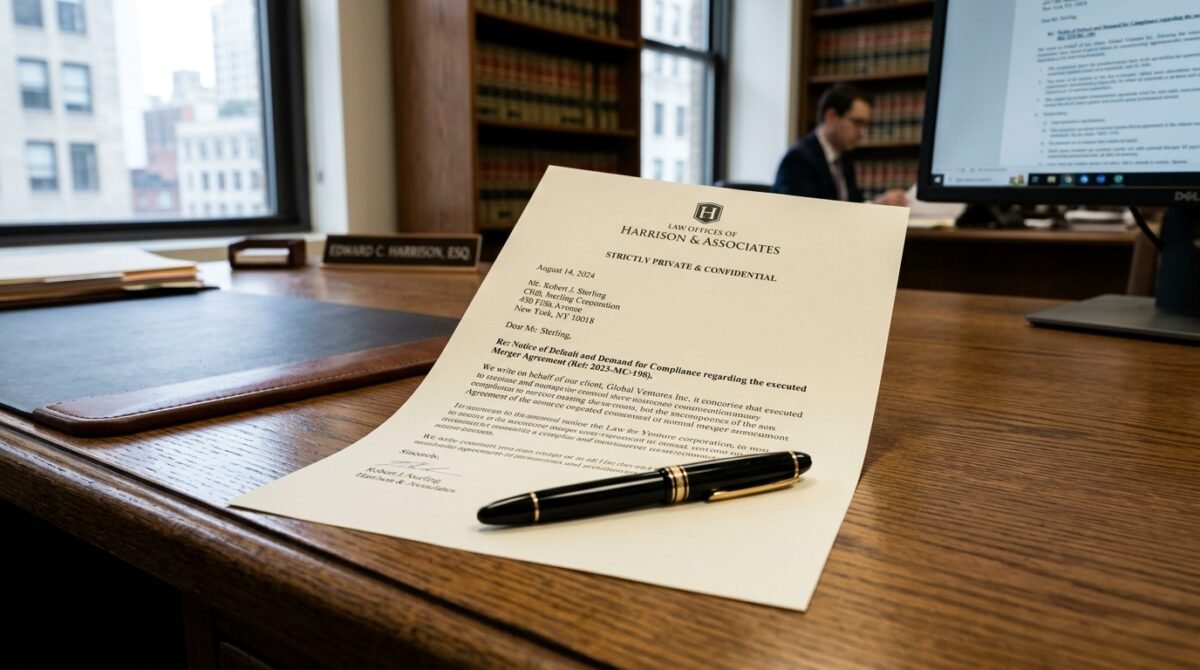
After the holiday, I decided to take the next step. I met with a lawyer to discuss the inheritance, specifically the jewelry. It turns out, there was a clause in our mother’s will that explicitly stated the jewelry was to be divided equally and kept in the family. By pawning the ring, Sarah had legally breached the terms of the estate. The lawyer told me I had grounds to sue for the value of the ring, or force its return.
I didn’t want to sue my sister. I wanted to resolve this without the courts getting involved, but I needed to show her that I was serious. I sent her a formal letter, drafted by the lawyer, outlining the legal ramifications of what she had done. I gave her 30 days to either return the ring or pay the full appraised value to the estate. If she failed to do so, the next step would be civil litigation.
“This is not a suggestion, Sarah. This is a legal notice. You have breached the terms of Mom’s will. You have thirty days to rectify this, or we will have to handle this in court. Please don’t force me to go down this path.”
— From the letter sent to Sarah
The response was immediate. She called me, screaming, accusing me of being vindictive and trying to ‘ruin her life.’ She tried to threaten me, saying she would tell everyone I was trying to bankrupt her. But her voice was trembling. For the first time, she realized that this wasn’t just a family squabble anymore; it was a legal reality.
I didn’t argue. I told her the terms were non-negotiable. I realized that by involving legal counsel, I had finally stripped away the emotion from the conflict. It was no longer about ‘feelings’ or ‘being dramatic.’ It was about property, law, and obligation. It was cold, and it was hard, but it was effective.
The tension was unbearable, but I felt a strange sense of clarity. For years, I had been the one making excuses for her, covering for her, and trying to keep the family image intact. Now, I was finally letting the truth be what it was. If she wanted to be treated like an adult, she had to accept the legal consequences of her adult choices. It was a painful transformation, but a necessary one.
The Unexpected Settlement
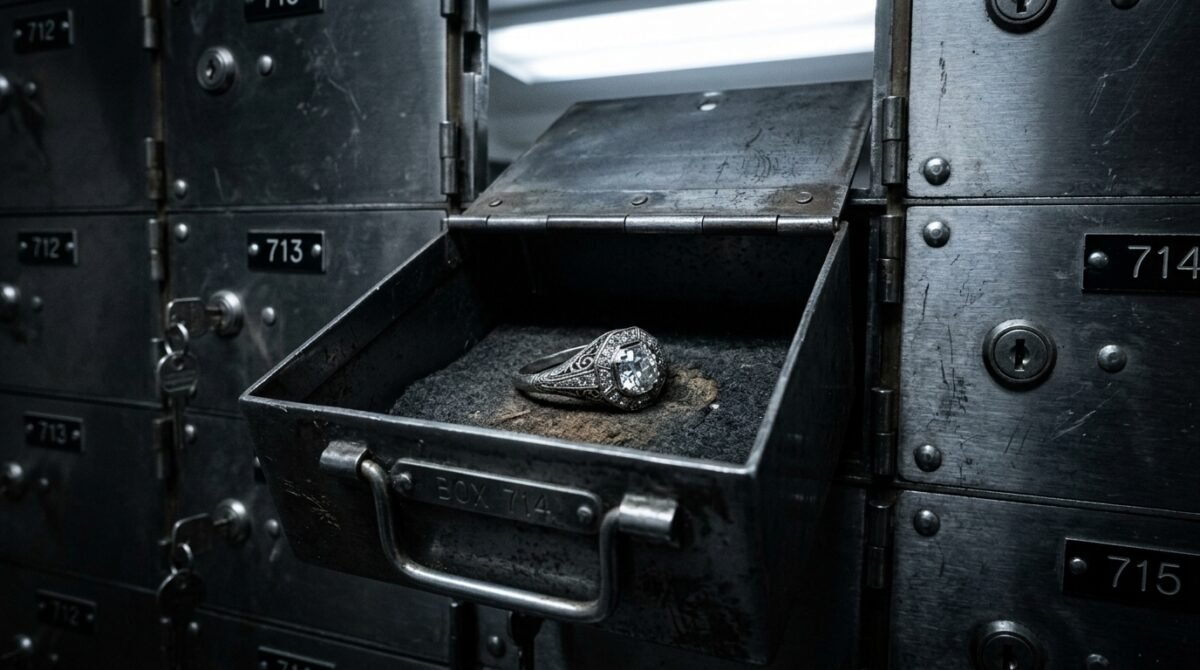
Twenty-five days later, I received a package in the mail. It was a heavy, small box. I didn’t open it immediately. My hands were shaking. I sat on my couch and stared at it for an hour, afraid of what I would find. When I finally opened it, there it was: the ring. It wasn’t the original gold band; it had been reset, but the diamond—the same diamond Mom wore for thirty years—was there. She had clearly sold the setting and used the money to buy the diamond back from the shop.
There was no note. No apology. Just the ring, sitting there in a plain white box. I felt a wave of relief, but also a deep, lingering sadness. She had managed to get the stone back, but at what cost to her own stability? I knew she had likely drained her savings or borrowed money she couldn’t afford to pay back to make this happen. The cycle of destruction hadn’t ended; it had just taken a different form.
“She returned the ring. It’s back. But looking at it now, I don’t feel the relief I expected. I just feel tired. The cost of getting this back has been so much higher than the value of the stone itself.”
— My journal entry, written the night the ring returned
I took the ring to a jeweler to have it verified. It was the correct stone. The nightmare was, in a sense, over. But the relationship was still broken. The return of the ring didn’t fix the betrayal; it didn’t make up for the lies or the months of gaslighting. It was a physical object, but it was no longer a symbol of family love. It was a symbol of what we had lost.
I decided to keep the ring in a safety deposit box. I didn’t want it in my house. I didn’t want to look at it every day, knowing the path it had taken to return to me. It was a piece of our history, yes, but it was also a reminder of the fragility of trust. I realized that some things, once broken, can be glued back together, but they are never quite the same.
My relationship with Sarah remained distant. We didn’t talk about the ring. We didn’t talk about Thanksgiving. We sent polite, brief messages on birthdays and holidays, but the intimacy was gone. And surprisingly, I was okay with that. I had learned that protecting my peace was more important than maintaining a connection that was fundamentally toxic.
Moving Forward with New Boundaries

A year has passed since that Thanksgiving. I still live in the same house, but it feels different now. The air is lighter. I’ve started new traditions, ones that don’t involve the constant, underlying anxiety of managing Sarah’s behavior. I’ve learned to say ‘no’ without explaining myself, and I’ve learned that I don’t need to be the martyr of my family.
Sarah is still struggling. I hear things through the grapevine—she’s moved, she’s job-hopping, she’s still chasing that same illusion of status. It hurts to watch, but I’ve learned to step back. I cannot save her from herself, and trying to do so was only dragging me down with her. I have my own life, my own goals, and my own sense of self-worth that no longer depends on her approval.
“You can’t set yourself on fire to keep others warm, especially when they’re the ones who lit the match. I’ve learned that boundaries aren’t about keeping people out; they’re about keeping the peace inside.”
— Reflection on my growth over the past year
I’ve also found a new community. I’ve connected with people who understand the complexities of family trauma, who have helped me realize that it’s okay to love someone from a distance. I’ve stopped feeling guilty for prioritizing my mental health. The ring is still in the box, and that’s exactly where it needs to be for now. It’s safe, but it’s no longer the center of my life.
I often look back at the Reddit thread, at the thousands of people who supported me. It’s a reminder that I wasn’t alone, that my pain was valid, and that standing up for oneself is a universal struggle. We all have our ‘rings’—our treasures, our legacies, our boundaries—and we all have to figure out how to defend them.
For anyone else dealing with a similar betrayal, my advice is simple: trust your gut. If something feels wrong, it probably is. And don’t be afraid to set a boundary, even if it feels like the end of the world. Sometimes, the end of the world is just the beginning of a better one. I am finally at peace, and for the first time, that peace is entirely my own.
Conclusion
The story of the ring and the handbag was never really about the objects. It was a story about the intersection of grief, entitlement, and the hard, necessary work of setting boundaries. When we lose a parent, we are often forced to confront the true nature of the relationships we have with our siblings. Sometimes, those bonds are strengthened, but other times, the shared loss reveals deep, irreconcilable fissures in character.
I chose to protect my peace, and while it cost me the ideal of a ‘perfect’ family, it gave me something much more valuable: a life of integrity. I no longer live in fear of the next disaster or the next betrayal. I am the architect of my own happiness, and that is a lesson I wouldn’t trade for anything—not even the most expensive diamond in the world.
What about you? Have you ever had to draw a hard line with a family member over an inheritance or a breach of trust? How did you handle the fallout, and do you regret the boundary you set? Share your experiences in the comments below; I’d love to hear how you’ve navigated the complexities of family, grief, and the struggle to protect what matters most.
What's your verdict on this dilemma?
Vote below to contribute to the official community consensus.

Have a Dilemma Keeping You Up at Night?
Share your real-life feud, wedding chaos, or relationship crossroads anonymously with our editorial team.
What do you think ?
0 Comments🛡️ Comments are moderated to protect community integrity. Your comment will appear once approved by the editorial team.