
For most people, a high school reunion is a milestone marked by excitement, a dash of anxiety, and perhaps a touch of vanity. For me, it was supposed to be a celebration of ten years of hard work, personal growth, and finally feeling comfortable in my own skin. I had spent months planning my outfit, saving for the ticket, and obsessively caring for the one feature I truly loved: my hair. It was waist-length, thick, and healthy, a physical manifestation of the patience I had cultivated since my teenage years. My sister, Sarah, had always been the golden child, but as we grew older, a thin, venomous layer of resentment began to coat every interaction we shared.
The week leading up to the reunion, Sarah had been unusually ‘helpful.’ She insisted on hosting me at her apartment to save me the hotel costs. I thought it was a peace offering, a way for us to bridge the distance that had grown between us. I was naive. I failed to recognize that beneath her faux-supportive exterior, she was watching me prepare for my night of glory with a growing, jagged intensity. She didn’t want me to shine; she wanted me to be humiliated.
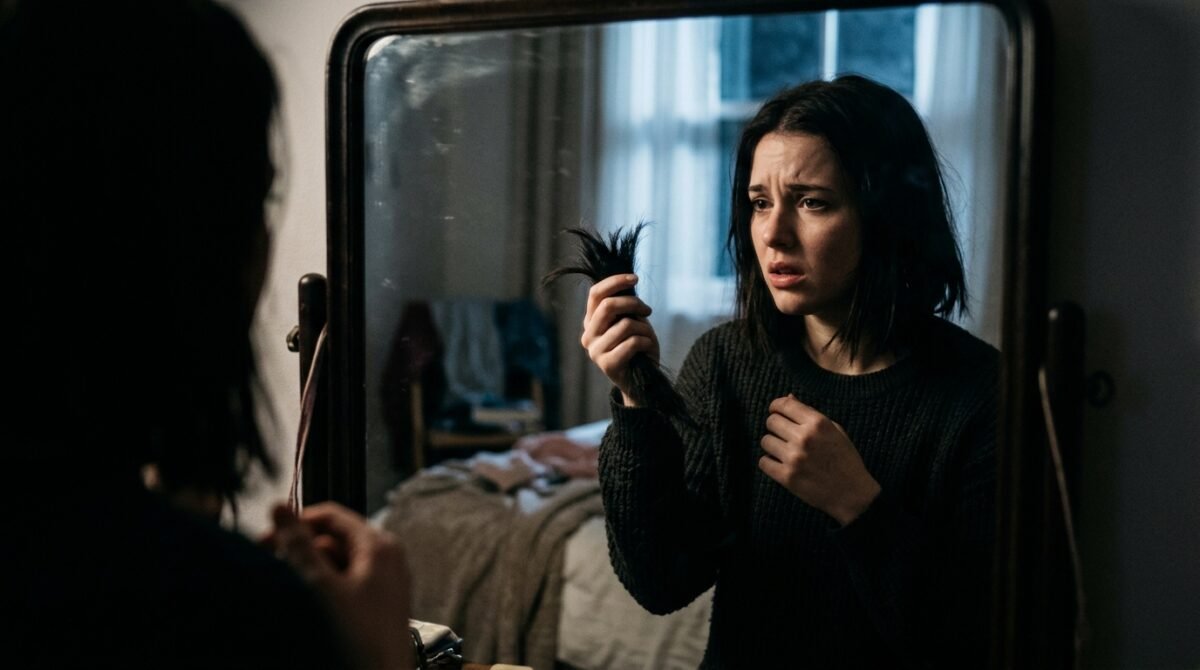
I went to bed the night before the reunion feeling peaceful, dreaming of reconnecting with old friends. I woke up to a sensation that was initially impossible to process: the cold draft of air against my shoulder, the faint, lingering smell of hairspray, and the sickening realization that my pillow was covered in dark, severed strands. The silence of the apartment was suffocating. When I finally looked in the mirror, the scream that tore out of my throat wasn’t just about my hair—it was about the absolute, chilling violation of my own home.
Sarah didn’t even try to hide it. She was standing in the doorway, a pair of kitchen shears still in her hand, her expression vacant and disturbingly satisfied. She claimed it was a ‘joke,’ that I was ‘too vain,’ and that she just wanted to ‘take me down a peg.’ But this wasn’t a prank. It was a calculated, physical assault on my confidence. That morning, I didn’t reach for my hairbrush or a hat to cover the wreckage; I reached for my phone and dialed the local non-emergency line, effectively ending our relationship in one swift, legal motion.
The Subtle Unraveling of Sisterly Bonds
Looking back, the signs of Sarah’s descent into resentment were there for years, buried under passive-aggressive comments about my career and my dating life. She had always been the one who needed the spotlight, and when I started finding success—landing a promotion, finally feeling secure in my appearance—her behavior shifted. It wasn’t overt hatred, but a constant, grinding erosion of my self-esteem. She would make comments like, ‘Oh, that dress is brave for someone with your frame,’ or ‘It’s so funny how you’ve finally decided to put effort into your looks after all these years.’
I ignored it, telling myself that it was just sibling rivalry and that Sarah would grow out of it. We are a family, after all, and ‘family comes first’ was the mantra drummed into us since childhood. I thought that by inviting her to see my progress—the plans for my reunion, my excitement about seeing old classmates—I was showing her that I still valued our connection. I wanted her to be a part of my life, unaware that I was inviting a saboteur into my inner circle.
“Are you sure you want to wear that to the reunion? It’s a bit much, isn’t it? Maybe you should aim for something more… subtle, so you don’t look like you’re trying too hard.”
— Sarah, two days before the reunion
I brushed it off. I was so blinded by my own excitement that I interpreted her concern as misplaced sisterly advice. I didn’t see the jealousy flickering in her eyes when I showed her the dress, or the way she stared at my hair with a strange, predatory intensity while she helped me pack. It was a domestic setting, cozy and safe, or so I thought. The reality was that I was living with someone who was actively measuring my happiness and finding it offensive.
The day before the event, the tension was palpable. She kept offering me tea, constantly asking about my plans for the next night, and ensuring I was well-fed. Looking back, the ‘helpfulness’ was nothing more than a reconnaissance mission. She needed to know exactly when I would be asleep, exactly how heavy my slumber would be, and exactly how to execute her plan without alerting me. I was the lamb, and she was the wolf in the kitchen, sharpening her shears.
Waking Up to a Nightmare
I went to sleep around midnight, completely exhausted. The reunion was in eighteen hours, and I was full of anticipation. I remember the feeling of the pillow against my cheek, the warmth of the duvet, and the absolute silence of the house. I slept deeply, perhaps too deeply—I still wonder if she put something in that final cup of chamomile tea she insisted I drink. When I opened my eyes, the room was bathed in the pale, blue light of early morning, and my neck felt strange. It felt light, unanchored.
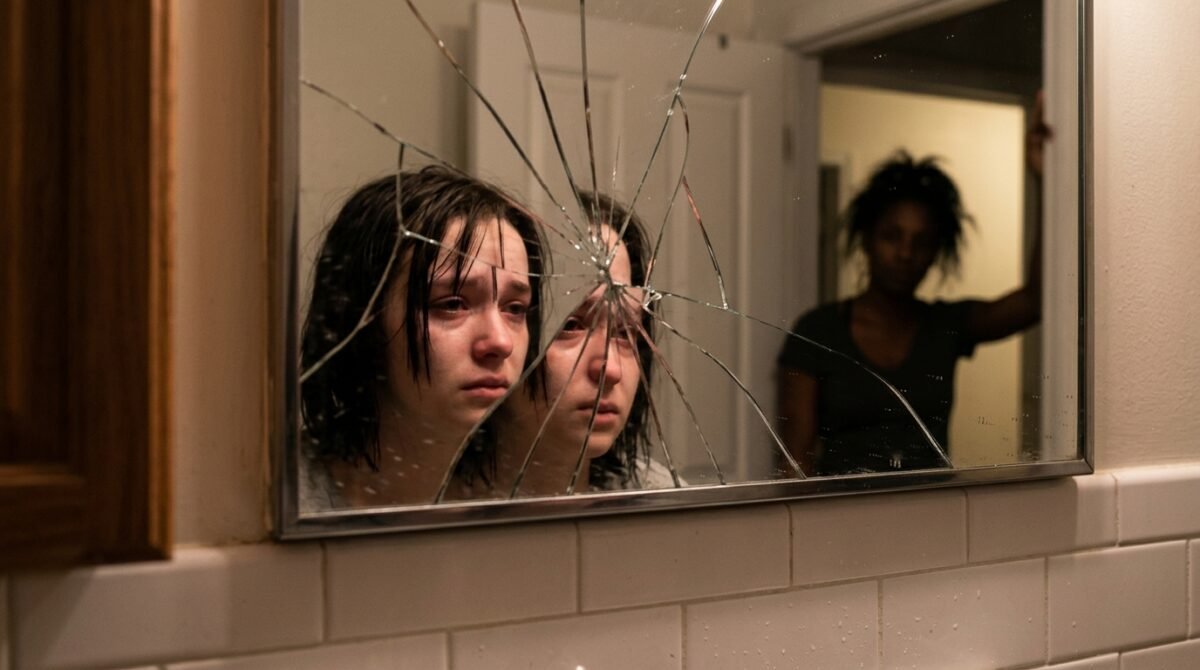
I sat up and reached for my head, but my fingers met a sharp, blunt edge instead of the long, smooth flow of my hair. I scrambled out of bed, heart hammering against my ribs, and rushed to the bathroom. The sight that met me there is burned into my memory forever: a massive, ragged chunk, easily ten inches long, was missing from the left side of my head. The cut was uneven, jagged, and cruel. It wasn’t a trim; it was a hack job designed to ruin me.
“I don’t think it was malicious, I just wanted to see your reaction. You’re always so perfect, always so put-together. It felt good to see you lose your composure for once.”
— Sarah, defending her actions
My first reaction was silence. I stood there, trembling, as the gravity of what she had done crashed down on me. She had violated my bodily autonomy in the most intimate space possible. I didn’t cry then; the anger was too hot, too searing for tears. I walked back into the living room where Sarah was sitting on the couch, sipping coffee as if nothing had happened. She looked up at me, her eyes tracking my messy, ruined hair with a twisted sense of accomplishment.
I asked her if she had done it, and she didn’t even lie. She just shrugged, a small, patronizing smile playing on her lips. She tried to frame it as a ‘sisters being sisters’ moment, a dark joke that I should have found funny. ‘It’s just hair, it will grow back,’ she said, as if that erased the violation. That was the moment the scale tipped. I realized that my sister didn’t see me as a person; she saw me as an obstacle to be pruned.
The Legal Pivot
Most people in my position would have slapped their sister, cried, or simply packed their bags and left. And, for a brief moment, I considered all of those. But then I looked at the kitchen shears still sitting on the counter, and I felt a cold, sharp clarity. This wasn’t a fight; this was an assault. She had entered my room while I was incapacitated and physically altered my appearance without my consent. The ‘joke’ narrative was a way to strip me of my right to be angry, and I wasn’t going to let her have that.
I grabbed my phone and walked out of the apartment, not saying a word. I checked into a hotel down the street and spent the next three hours writing down every detail. I didn’t call my parents, I didn’t call our cousins, and I didn’t call Sarah. I called the police. I reported the incident as a physical assault. When the officer arrived, he was skeptical at first, expecting a domestic squabble. Then he saw the photographs I had taken of the hair and the state of my room. His expression changed from pity to professional concern.
I pressed charges. The process was grueling. There were statements, a visit to the police station, and the uncomfortable reality of having to justify why this was a crime and not just ‘family drama.’ My parents were furious—not at Sarah, but at me. They called me incessantly, demanding to know why I was ‘ruining the family’s reputation’ over something as trivial as hair. They told me that I was being vindictive, that Sarah was clearly going through something, and that I should just drop the charges.
“You are going to regret this. A police record is a permanent stain, and for what? A haircut? You are destroying your sister’s future over your own vanity. How could you be so cold?”
— My mother, via phone call
Their reaction only confirmed that I had made the right choice. My family had spent my entire life teaching me that my boundaries were flexible as long as they weren’t being crossed by someone ‘important.’ By pressing charges, I wasn’t just defending my hair; I was drawing a line in the sand that said my body, my peace, and my safety were not toys for Sarah to play with. I didn’t go to the reunion. Instead, I spent the weekend documenting the fallout and preparing for the legal road ahead.
The Group Chat Explosion
News of the legal proceedings leaked into the family group chat within forty-eight hours. My phone became a war zone. I had muted it initially, but curiosity—and a grim sense of morbid fascination—eventually forced me to check the messages. The discourse was a toxic mix of victim-blaming, gaslighting, and outright hostility. My aunts were chiming in, talking about ‘forgiveness’ and ‘blood is thicker than water,’ while my cousins were whispering about the ‘drama’ I had caused.
Sarah was playing the victim, of course. She sent a message to the group claiming she had been ‘worried about my mental state’ and that the haircut was an attempt to get me to ‘stop obsessing over my appearance.’ It was a masterclass in manipulation. She had flipped the narrative so that she was the concerned sister and I was the unstable, litigious one. I watched as people I had known my entire life started taking sides based on her distorted version of events.
“OP, we all know you’ve been under a lot of stress, but calling the cops? That’s extreme. Sarah is your sister. She’s probably just as shocked by your overreaction as we are. Just drop it.”
— Aunt Linda, in the family group chat
I didn’t argue. I didn’t defend myself. I just took screenshots of every single message. I knew I wouldn’t be able to change their minds, and I realized that their inability to see the wrongness of what Sarah had done was a symptom of a much larger, systemic issue in our family. I wasn’t fighting for their approval anymore; I was fighting for my own sanity. I eventually left the group chat, effectively cutting off the primary conduit for their harassment.
It felt like a weight being lifted off my shoulders. For years, I had been trying to maintain the image of the ‘perfect, happy family,’ even when it meant swallowing my own discomfort. Leaving that chat was the final act of rejection toward that toxic dynamic. I was finally free to be the ‘villain’ they wanted me to be, because at least as the villain, I was in control of my own narrative.
The Confrontation in Court
The court appearance was surreal. Walking into that building, I felt like I was walking into a different life. Sarah looked smaller than I remembered, her bravado dampened by the presence of a public defender and the reality of the charges. My parents were there, sitting on the opposite side of the aisle, looking at me with a mixture of betrayal and confusion. It was the first time I realized that, to them, I had ceased to be their daughter and had become a nuisance.
When it was my turn to testify, I kept my composure. I didn’t raise my voice; I didn’t look at Sarah. I simply told the truth. I described the night, the violation, and the aftermath. I explained that this wasn’t about hair—it was about the fact that I had been violated in my own private space. The judge listened, his face impassive, while Sarah’s lawyer tried to paint me as someone who was blowing a ‘sisterly squabble’ out of proportion. It was insulting, but I had prepared for it.
“The defendant characterizes this as a ‘joke,’ but there is nothing humorous about an unauthorized, forced physical alteration. This is an assault on personal autonomy, plain and simple.”
— My legal counsel, addressing the judge
I watched Sarah as the proceedings continued. She didn’t look remorseful; she looked annoyed. She was genuinely angry that she had been caught and that she was being made to answer for her actions. There was no ‘aha’ moment where she realized the severity of what she had done. There was only the cold, hard realization that she wasn’t going to get away with it this time. That, in itself, was the closure I needed.
The judge didn’t throw the book at her, but he didn’t dismiss the case either. There was a fine, a mandatory anger management program, and a restraining order. It wasn’t the dramatic, cinematic justice I might have wanted, but it was enough. It was a formal, legal acknowledgment that I had been wronged. As we walked out of the courthouse, I didn’t look back. I got in my car, drove home, and started the process of building a life that didn’t include them.
The Aftermath and the New Reality
The weeks following the court case were quiet. The initial storm of family phone calls and social media drama eventually died down. People realized that I wasn’t going to back down, and they stopped trying to intervene. It was a lonely time, but it was also the first time in my life that I didn’t feel like I was walking on eggshells. I started going to therapy to deal with the lingering anxiety, and I started working on my own identity, one that wasn’t defined by my family’s expectations.
My hair eventually grew out, though it took a long time to get back to the length it had been. Every time I looked in the mirror, I was reminded of that night, but the sting had faded. It no longer represented a loss; it represented a boundary. I had lost a sister, but I had gained a sense of self-respect that was worth far more than any length of hair. I realized that the people who had stood by me—friends, a few distant cousins—were the ones who actually mattered.
I eventually decided to share my story on an online forum. I wasn’t looking for validation, but I was curious to see how others would react. The response was overwhelming. Thousands of people commented, shared their own stories of family betrayal, and offered support. It turned out that I wasn’t the only one who had been told to ‘keep the peace’ at the expense of their own well-being. The collective support was a powerful reminder that I hadn’t done anything wrong.
“You didn’t ruin the family; your sister ruined the relationship by violating your trust. She chose to be a bully, and you chose to protect yourself. Never let them gaslight you into thinking otherwise.”
— u/SupportiveStranger (Top Comment, 32.4k upvotes)
I still don’t speak to Sarah. My parents occasionally send me emails, but they are cold and brief, usually complaining about some minor inconvenience. I don’t respond. I’ve learned that some relationships aren’t meant to be saved, and some people aren’t capable of change. I am living my life, and for the first time, it’s exactly the life I want to live. I am no longer waiting for their approval or fearing their judgment.
Revisiting the Reddit Verdict
The internet, as it often does, had a very strong reaction to my story. The thread went viral, reaching the front page of the subreddit within hours. It was fascinating to read through the thousands of comments, seeing the diverse perspectives on family, boundaries, and the law. Some users were adamant that I had done the right thing, while others, primarily from more traditional or ‘family-first’ cultures, struggled to understand why I wouldn’t just forgive her.
The debate highlighted a major divide in how we view family. One side argued that blood ties are absolute and that minor crimes should be handled internally. The other side—the side that resonated with me—argued that no amount of shared DNA gives someone the right to violate your autonomy. The sheer volume of support made me realize that my experience was far from unique; it was just one instance of a much larger, often hidden struggle with toxic family dynamics.
“This isn’t about hair. This is about control. Your sister has been trying to control you for years, and when she couldn’t do it with words, she resorted to physical violence. You were absolutely right to involve the police.”
— u/LegalEagleEye (15.2k upvotes)
There were even legal professionals who chimed in, providing context on why pressing charges was the correct decision. They explained that by not doing so, I would have been tacitly signaling that my sister’s behavior was acceptable. The validation was immense. I didn’t feel like a ‘villain’ anymore; I felt like a survivor who had taken the steps necessary to break a cycle of abuse. The comments section became a support group of sorts, a place where people shared their own stories of standing up to toxic family members.
It wasn’t all positive, of course. There were the ‘devil’s advocates’ who insisted I was ‘ruining the family name,’ but their comments were quickly buried by the flood of support. Reading those debates, I realized that the people who were angry at me for pressing charges were the same kind of people who would have enabled my sister’s behavior in the first place. Their anger was a testament to the fact that I had successfully broken the status quo.
The Lessons in Autonomy
If I could go back and talk to my younger self, the one who was still trying to maintain a relationship with Sarah, I would tell her to start setting boundaries much earlier. I would tell her that ‘family’ is not a blank check for abuse, and that it is okay to walk away from people who do not respect your personhood. I spent so much time trying to be the ‘good’ sister that I forgot how to be a person who deserved respect.
The physical act of cutting my hair was the final straw, but the real work was realizing that I had been letting her cut away at my confidence for years. The legal battle, while draining, was a necessary process for me to reclaim my own agency. It wasn’t about revenge; it was about restoration. I had to show myself that I was worth defending. I had to prove that I wouldn’t let someone else define who I was or what I was capable of.
“Boundaries aren’t walls to keep people out; they’re gates to protect what’s inside. You finally learned how to close your gate, and that’s a beautiful thing.”
— A comment from my therapist
Today, my hair is long again, but it’s just hair. It’s no longer the symbol of my identity. My identity is now tied to my resilience, my courage, and my ability to prioritize my own well-being over the comfort of others. I’ve learned that I don’t need a perfect family to have a perfect life. I have built a chosen family that respects my boundaries and celebrates my successes without jealousy. That is the true victory.
For anyone else dealing with similar dynamics, I want to say this: you are not responsible for the behavior of others, even if they are your family. You are only responsible for how you respond. And sometimes, the most loving thing you can do for yourself is to walk away, to involve the authorities, and to refuse to play by a rulebook that was written to keep you down. Your peace is worth the cost of their disappointment.
When the Family Narrative Breaks
I think the hardest part of the entire situation was watching the ‘family narrative’ crumble. We had spent decades pretending everything was fine, even when it clearly wasn’t. By pressing charges, I wasn’t just exposing Sarah; I was exposing the entire family’s willingness to look the other way. My parents had built their lives on the idea of a ‘perfect, harmonious family,’ and my actions shattered that illusion. It was an uncomfortable truth, one they weren’t prepared to face.
There was a long period where I felt guilty for being the one to break the silence. I wondered if I could have handled it differently, if I could have just dealt with it privately. But then I remembered the way Sarah looked at me—that smug, satisfied look—and I knew that silence would have only emboldened her. She wouldn’t have learned anything; she would have just waited for the next opportunity to pull the rug out from under me. I didn’t break the family; I simply revealed the cracks that were already there.
“You were the scapegoat, and you refused to play the part anymore. That’s why they’re angry. You didn’t just stand up to Sarah; you stood up to the entire system that expected you to sacrifice yourself.”
— A perspective from a reader online
It’s strange how people react when you stop playing your assigned role. For years, I was the ‘flexible’ one, the one who didn’t cause trouble, the one who was always ‘too understanding.’ When I suddenly became the one who wouldn’t be trifled with, the panic in the family was palpable. They tried to guilt-trip me, to pressure me, to make me feel small. But none of it worked because I had already accepted that I didn’t need their version of me to be happy.
I’ve come to realize that the ‘family name’ is just a social construct. It doesn’t hold any actual value if it’s being used to protect abuse. I am proud of the name I have now, even if it’s one that the rest of my family whispers with disdain. I am my own person, and that is a far greater achievement than being a well-behaved member of a toxic family unit.
The Value of Genuine Connections
Since the incident, I’ve been much more intentional about the people I allow into my life. I no longer feel the need to justify my presence to anyone, and I don’t feel obligated to maintain relationships out of a sense of duty. If someone doesn’t add value, support, or respect to my life, I don’t feel guilty about moving on. It’s been a liberating, albeit difficult, transition.
I’ve found that the people who genuinely care about me were the ones who supported my decision to press charges. They didn’t ask me to drop it; they asked me how I was doing. They didn’t prioritize the family’s image; they prioritized my well-being. These are the people I choose to surround myself with now. They are my real family, the ones who deserve my time and my energy. It’s a small circle, but it’s a strong one.
“It’s amazing how much room you have in your life once you stop letting toxic people take up all the space. You deserve to be surrounded by people who lift you up, not those who try to cut you down.”
— A message from a close friend
I still think about Sarah sometimes. I don’t hate her, and I don’t wish her harm. I just hope that she eventually finds the help she needs to deal with the jealousy and insecurity that drove her to do what she did. But her journey is her own, and I am no longer a part of it. I have my own path to walk, one that is paved with self-respect and clear, firm boundaries.
The reunion that I missed? I had my own ‘reunion’ with a few high school friends a month later. It was small, it was low-key, and it was perfect. We talked, we laughed, and I didn’t have to worry about anyone looking at me with malice or trying to ‘take me down a peg.’ I was just me, and that was enough. It was a stark contrast to the night I had planned, but it was a much better one.
Conclusion
The journey from victim to someone who reclaimed their power hasn’t been easy, but it has been incredibly rewarding. I’ve learned that the most important relationship you will ever have is the one you have with yourself. When you protect that, everything else eventually falls into place. I am not the same person I was before my sister cut my hair, and I am grateful for that. I am stronger, more resilient, and more aware of my own worth.
I hope that my story encourages anyone else trapped in a toxic family dynamic to realize that they have options. You don’t have to accept mistreatment just because of a shared surname. Your autonomy is your own, and you have every right to defend it, legally if necessary. It’s a hard road, but the freedom on the other side is worth every step.
What about you? Have you ever had to cut a toxic person out of your life, even if they were family? How did you deal with the guilt, and what did you learn about setting boundaries in the process? Share your stories in the comments below; let’s support each other in reclaiming our peace.
What's your verdict on this dilemma?
Vote below to contribute to the official community consensus.

Have a Dilemma Keeping You Up at Night?
Share your real-life feud, wedding chaos, or relationship crossroads anonymously with our editorial team.
What do you think ?
0 Comments🛡️ Comments are moderated to protect community integrity. Your comment will appear once approved by the editorial team.