
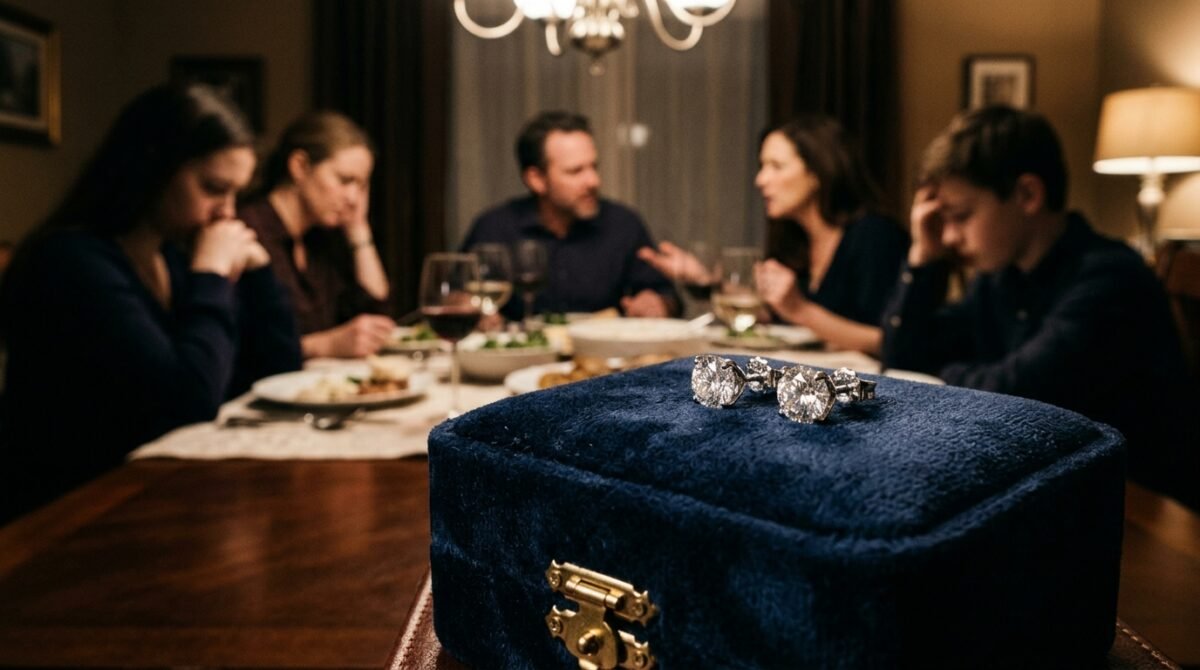
We all have that one family member who treats boundaries like suggestions, but my sister-in-law, Sarah, has always operated on the belief that my life is merely an extension of her own. Growing up, our families were intertwined, and I suppose I grew accustomed to her casual disregard for personal property. It started small—a borrowed sweater that never returned, a favorite book missing from my shelf. But the line was crossed permanently when she decided that my grandmother’s heirloom diamond studs were the missing accessory for her ‘perfect’ fall family portraits.
The diamonds were more than just jewelry; they were a symbol of a legacy I was meant to pass down to my daughter. They weren’t meant for a casual photoshoot, nor were they meant to be handled by someone who thinks ‘careful’ is a relative term. When I agreed to let her borrow them for the shoot, I was hesitant, but I succumbed to the pressure of ‘family unity’ and the guilt-tripping that is her signature move. I didn’t realize that in her mind, the exchange was already permanent.
The realization didn’t hit me until three days after the shoot. I was cleaning them, getting ready for a gala, when I noticed the light didn’t catch the facet quite right. The weight felt different—too light, almost hollow. My stomach dropped as I grabbed my jeweler’s loupe. The clarity was synthetic. The setting was plated base metal. She hadn’t just ‘misplaced’ them; she had swapped them for plastic junk, banking on the fact that I wouldn’t notice until it was too late.
The following Sunday, I walked into my mother-in-law’s dining room with a singular purpose. I wasn’t there for the pot roast or the pleasantries. I was there for my grandmother’s legacy. The air in the room was thick with tension, though Sarah remained blissfully unaware, sporting the real diamonds on her own ears as she chatted with my mother-in-law. I knew then that I wouldn’t be walking out of that house with just my property; I would be walking out with my self-respect, regardless of the fallout.
What followed wasn’t just a disagreement; it was an absolute dismantling of a toxic dynamic that had festered for years. This is the story of how I stopped being the ‘accommodating sister-in-law’ and finally drew a line that she couldn’t cross again. It’s a story about the cost of audacity and why sometimes, the only way to heal a family is to excise the rot completely.
The Subtle Art of the Persistent Request

It began two weeks before the photoshoots. Sarah had been planning these portraits for months, obsessed with a ‘timeless, elegant aesthetic’ that I knew was just code for ‘I need to look wealthier than I am.’ She called me daily, her voice dripping with artificial sweetness. She wanted my white-gold diamond studs, the ones that had been in my family for three generations. I told her no, multiple times, citing their value and the fact that they were heirlooms.
She didn’t take no for an answer. She shifted to a campaign of emotional manipulation, texting me photos of her daughter, talking about how the portraits were for ‘posterity.’ She kept saying, ‘It’s just for one afternoon. You’re being so cold, and we’re family. Don’t you want your niece to look her best?’ It was a calculated effort to wear me down, and unfortunately, it worked. I finally relented, on the explicit condition that she would handle them like gold—literally.
“I just need them for the two-hour shoot, and I promise they will go straight back into their box. You are seriously overreacting, it’s just jewelry. If you were actually close with the family, you wouldn’t be making this such a huge ordeal. It’s about the kids, not your precious rocks.”
— Text message from Sarah, two days before the shoot
I remember the day I handed them over. I placed the velvet box in her hands, watching her thumb graze the diamonds with a bit too much casual confidence. I gave her a stern warning, reminding her that these were insured for a significant amount and that if anything happened, it would be a police matter. She laughed it off, calling me ‘dramatic’ and ‘paranoid.’ I felt a knot in my stomach that I couldn’t quite shake, a premonition that I was making a mistake.
Looking back, the signs were there. Her husband, my brother-in-law, looked away the moment I brought up the insurance. He knew. He had to have known that this wasn’t just a loan; it was a test of what she could get away with. I felt like an idiot for trusting her, but I also felt like the ‘bad guy’ for setting conditions. That was the trap she laid—making me feel guilty for protecting my own property.
The shoot went off without a hitch, or so I was told. She sent me a sneak peek of the photos, and there they were—shining, bright, and unmistakably mine. I saw the way she wore them, a bit too prominently, as if she were trying to claim them for herself in the digital space. I should have gone to pick them up that very evening, but I waited. I gave her the grace I thought she deserved, a decision I would regret for the rest of my life.
The Discovery Under the Jeweler’s Loupe
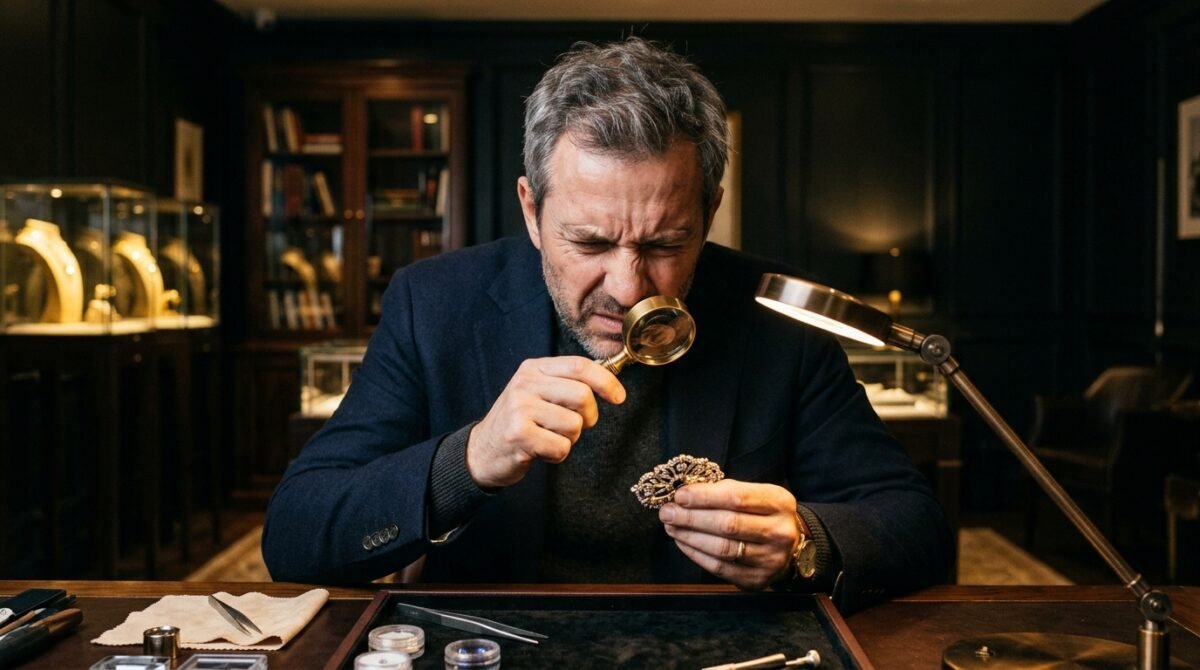
Three days later, I finally retrieved the box from Sarah’s porch. She hadn’t even bothered to face me, just left it sitting there in the rain. I took the box inside, wiped it dry, and opened it. Everything looked standard, but when I picked up the first earring, the weight was wrong. It felt like plastic. My heart hammered against my ribs. I sat at my vanity, trembling, and pulled out my jeweler’s loupe.
The moment the magnification hit the stone, I knew. It wasn’t a diamond; it was a cubic zirconia in a cheap, nickel-plated setting that looked like white gold to the naked eye, but felt entirely different in my hands. The craftsmanship was abysmal, a poor imitation meant to fool someone who wasn’t paying attention. I felt a cold wave of nausea wash over me. She hadn’t just borrowed them; she had stolen them and tried to gaslight me with a toy.
I spent the next hour pacing my living room, my mind racing. Why would she think she could get away with this? Did she really think I wouldn’t notice the difference? The audacity required to swap a multi-thousand-dollar heirloom for something you could buy at a mall kiosk was staggering. It wasn’t just a theft; it was an insult to my intelligence, my family history, and our entire relationship.
“I cannot believe you thought this was a good idea. You replaced my grandmother’s diamonds with plastic junk. Do you have any idea what you’ve done? I want the real ones back immediately, or I am calling the police and pressing charges for grand larceny. This isn’t a joke, Sarah.”
— My text to Sarah, immediately after discovering the switch
She didn’t reply for four hours. When she finally did, her response was so nonchalant that I almost threw my phone across the room. She claimed there must have been a ‘mix-up’ at the studio, that someone else must have swapped them, and that I was being ‘hysterical’ for jumping to conclusions. The gaslighting was immediate and intense, shifting the blame onto me for even suggesting she would do such a thing.
She even had the gall to tell me that my diamonds were ‘old-fashioned’ and that her plastic pair was ‘more modern.’ I realized then that she didn’t just want the look; she wanted to replace what I had with her own version of reality. She wanted me to believe that the switch had been a mistake, a cosmic accident, instead of the calculated, entitled theft that it clearly was.
The Sunday Dinner Confrontation
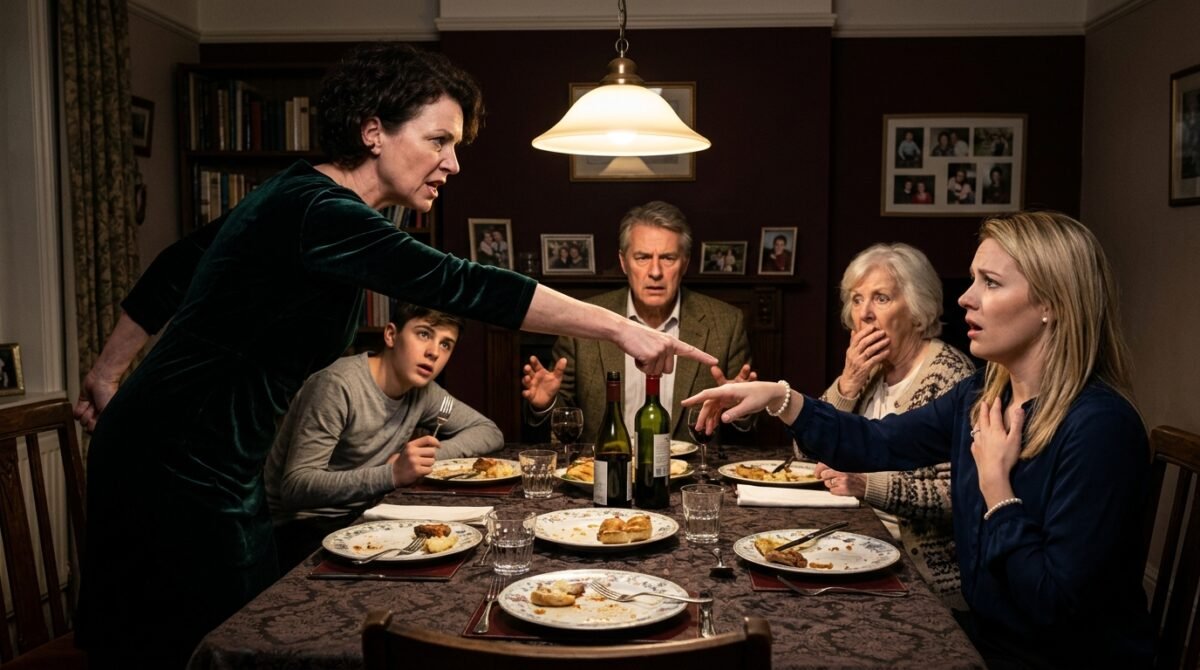
Sunday dinner at my mother-in-law’s house was always a fraught affair, but that evening, the tension was palpable enough to cut with a knife. I arrived early, sitting in the living room with my mother-in-law, watching the door. When Sarah walked in, she was wearing them. She was wearing my diamonds, clear as day, pinned to her ears as if she hadn’t just spent the last few days lying to my face about a ‘mix-up.’
The moment she walked in, the room went quiet. I didn’t say a word, just stared at her ears. She noticed, of course. She sat down, adjusted her hair, and gave me a smug, defiant smirk. She thought she had won. She thought that because we were in a ‘polite’ setting, I wouldn’t dare cause a scene. She underestimated how much those diamonds meant to me and how little I cared for her social games.
As we sat at the table, the conversation was strained, full of awkward small talk about the weather and the upcoming holidays. My brother-in-law was sweating, refusing to make eye contact with me. My mother-in-law was oblivious, talking about her garden. I let it play out for ten minutes, waiting for the right moment. When there was a lull in the conversation, I leaned forward, my voice low and steady.
“Sarah, those earrings look lovely. It’s funny how they managed to find their way back to your ears after you told me they were lost in a ‘mix-up’ at the studio. Why don’t you take them off and hand them to me now, before I involve the police in this dinner?”
— My voice at the dining room table
The silence that followed was deafening. My mother-in-law stopped mid-sentence, fork hovering in the air. Sarah’s face went pale, then bright red. She stammered something about how she didn’t know what I was talking about, but the look in her eyes—the raw, panicked realization—told everyone at the table exactly what was happening. I didn’t care about the ‘scene.’ I was done being the victim of her entitlement.
She tried to double down, claiming I was ‘harassing’ her in front of the family. My brother-in-law finally spoke up, telling me to ‘calm down,’ which was the final straw. I stood up, walked around the table, and stood directly in front of Sarah. I didn’t raise my voice; I didn’t have to. I just held out my hand and repeated my demand. The power dynamic in the room had shifted, and she knew it.
The Truth Spills Out in the Foyer

After the dinner table fell apart, the argument moved to the foyer. Sarah was crying, claiming that I was ruining the family dynamic over ‘a stupid piece of metal.’ She still wouldn’t admit to the swap, even with the diamonds clearly on her ears. It was a masterclass in denial. She kept saying that she ‘deserved’ something nice for once, as if that justified theft. It was the most pathetic, entitled display I had ever witnessed.
My brother-in-law was trying to shuffle everyone into the other room, but I wasn’t letting this go. I told him that if he didn’t make her take them off, I was going to call the police right there from the driveway. He looked at me, then at his wife, and for the first time, he seemed to see her for who she was. He whispered something to her, a sharp command that made her stop crying instantly.
She reached up, her fingers trembling, and unclipped the diamonds. She didn’t hand them to me; she dropped them on the console table, a bitter, resentful expression on her face. ‘There,’ she hissed. ‘You’re so obsessed with your things. You’ll never be happy because you value objects more than people.’ I picked them up, checked them to make sure they hadn’t been damaged, and put them in my pocket.
“This isn’t about the objects, Sarah. It’s about the fact that you think you’re entitled to everything I have. You lied to my face for days, you gaslit me, and you tried to replace an heirloom with a piece of plastic. We are done. I don’t want you in my life, and I don’t want to see you at family gatherings anymore.”
— My parting words to Sarah
The finality of my words seemed to stun her. She opened her mouth to argue, but no words came out. She had spent her whole life using drama to get her way, and she didn’t know how to handle someone who was simply, coldly finished with her. I turned my back on her and walked out the front door, the night air feeling cooler and cleaner than it had in weeks.
I didn’t look back. I didn’t care what they said about me once I left. I had my diamonds, and I had my sanity. The bridge was burned, and honestly? It felt like a massive weight had been lifted off my shoulders. I had spent years walking on eggshells around her, and for the first time, I felt the freedom of not caring if she was angry.
The Aftermath: Fallout in the Group Chat

By the next morning, the fallout had hit the family group chat. My phone wouldn’t stop buzzing with messages from cousins, aunts, and uncles, all weighing in on the ‘incident.’ Most were shocked, some were siding with Sarah, and others were staying strictly neutral. It was the classic family-drama circus. I muted the chat immediately, but not before seeing the absolute venom Sarah was spewing about me.
She painted me as the villain, of course. She told everyone that I had ‘attacked’ her at dinner and that I was ‘unhinged’ over a pair of earrings. She didn’t mention the plastic knockoffs. She didn’t mention the theft. She just focused on my reaction, weaponizing her own victimhood to gather allies. It was effective, but it also showed me exactly who was willing to believe her without hearing my side.
My mother-in-law reached out, trying to play peacemaker. She told me that Sarah was ‘going through a hard time’ and that I should just let it slide for the sake of the family. I told her that theft isn’t something you ‘let slide’ and that if she wanted to keep hosting events, she would have to decide whether she wanted to host a thief or me. It was a hard line, but it was necessary.
“I cannot believe you would embarrass Sarah like that. She is family. We all make mistakes, and you chose to humiliate her in front of everyone. Can’t you just move past this and be the bigger person for once? It’s just jewelry, and you already got it back.”
— Text from mother-in-law, morning after the incident
I realized then that the whole family was part of the problem. They had enabled her for years, training her to believe that she could take whatever she wanted without consequences. By standing up to her, I wasn’t just fighting Sarah; I was fighting the entire system of enabling that kept her entitled. It was exhausting, but it was worth it. I wasn’t going to be the martyr for their dysfunction anymore.
I ended up blocking half the family members who wouldn’t stop pestering me. It was a massive digital purge, but it felt incredibly cathartic. I spent the day with my kids, doing things that actually mattered, and for the first time in a long time, I didn’t feel like I was waiting for the other shoe to drop. The peace was worth every bridge I had to burn.
The Reddit Verdict: Echoes of Validation

I decided to post the story on a popular subreddit, just to see if I was actually the crazy one. The response was overwhelming. Within hours, thousands of comments flooded in, most of them fiercely defending my decision. It wasn’t just about the diamonds; it was about the universal experience of dealing with entitled relatives who think they own your life. The solidarity I found online was surprising and deeply validating.
People shared their own stories of jewelry theft, boundary-crossing in-laws, and the ‘gaslight Olympics’ that so many families participate in. It was like reading a collective manifesto on why ‘family’ isn’t an excuse for abuse. I felt less alone, less like the ‘cold’ person my sister-in-law tried to make me out to be. It was a reminder that boundaries are not just okay—they are essential.
“NTA. You didn’t ‘disown’ her; you stopped being a doormat. She stole from you, lied to you, and then tried to gaslight you in front of your family. If she’s not invited to dinner, it’s because she’s a thief, not because you’re ‘mean.’ Stay strong, OP.”
— u/FamilyDramaExpert (Top Comment, 32.5k upvotes)
The analysis provided by the community was sharp. They pointed out that her behavior—the projection, the victim-playing, the immediate shift to a group chat smear campaign—were classic signs of someone who had never been told ‘no’ in their entire life. They warned me about what would come next: the escalation, the ‘apology’ that isn’t really an apology, and the attempt to rewrite history. I was prepared for it all.
One comment in particular hit home, talking about how ‘family’ is often used as a weapon to silence people who are being mistreated. It gave me the vocabulary to explain my boundaries to the family members who were still pushing. I wasn’t being ‘divisive’; I was being protective. And there is a world of difference between the two, even if people don’t want to admit it.
It wasn’t just validation; it was a roadmap for the future. I learned about ‘gray rocking’—the technique of being so uninteresting that the narcissist loses interest in you. I learned about the importance of keeping physical evidence, which I had luckily already done. The community became a sounding board for every move I made, giving me the confidence to stick to my guns even when the family pressure intensified.
The Cease and Desist
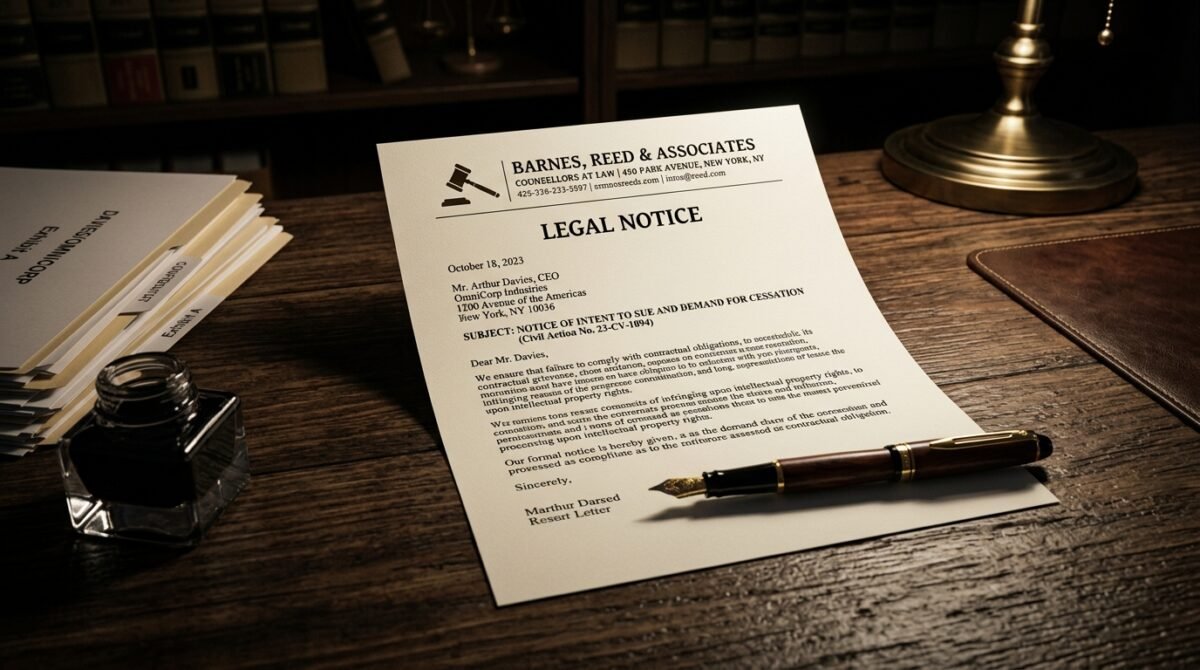
A week later, I received a certified letter from a lawyer. Sarah was claiming I had ‘defamed’ her on social media by calling her a thief, and she was demanding an apology and a retraction. It was the most laughable thing I had ever seen. She actually thought that legal intimidation would work on me after she had committed literal theft. I didn’t even call a lawyer; I just gathered my evidence.
I had photos of the diamonds, the messages where she tried to gaslight me, and the testimony of my mother-in-law, who had seen the whole thing unfold at the dinner table. I knew she didn’t have a case, but the attempt to intimidate me only made me more determined. It was proof that she had no moral compass—only a sense of entitlement that she was willing to defend with legal threats.
I sent a simple response to her lawyer: a copy of the text messages where she admitted the earrings were ‘lost’ in a mix-up, and a statement that if she continued this, I would file a counter-suit for the theft and the emotional distress she had caused. I didn’t hear back. It was clear she was just trying to scare me, and when she realized I wasn’t afraid, the legal path ended as quickly as it had begun.
“If you continue to threaten me with legal action, I will be providing the police with the evidence of your theft, including the fake earrings you provided as a replacement. Consider this my final response. Do not contact me again.”
— My response to the attorney’s letter
It was a turning point. By taking that step, I showed her that there were actual consequences for her actions. She couldn’t just throw tantrums and send lawyers to get her way. She had to deal with the reality of being an adult. It was the first time she had faced real, tangible resistance, and it broke the cycle of her controlling behavior.
I felt a strange sense of pity for her. She had to go through all this because she couldn’t just buy her own jewelry or respect someone else’s property. Her life must be incredibly hollow if she has to steal from her family to feel important. I was done being the target, and I was done being the person she used to define her own, twisted version of reality.
Reflecting on the ‘Family’ Myth

As the weeks turned into months, the dust began to settle. The family is still divided, but for the first time, I don’t feel the need to fix it. I’ve come to realize that ‘family’ is a word people use to force you to accept treatment they would never tolerate from a stranger. If a coworker had stolen my diamonds and tried to gaslight me, I would have had them fired and possibly arrested. Why was the standard lower for family?
I started thinking about all the other things I had put up with over the years—the ‘borrowed’ items, the disrespectful comments, the constant demands. It was all a pattern, a structure that relied on my silence. By breaking that silence, I had freed myself. The relationships I lost were clearly built on a foundation of my compliance, not on mutual respect. If they couldn’t exist without me being a doormat, they weren’t worth keeping.
My children are growing up seeing a mother who respects herself. That, to me, is the greatest lesson of this entire ordeal. They are learning that property matters, that truth matters, and that you don’t owe anyone your time or your kindness if they are actively working to undermine you. I am no longer teaching them to be victims in the name of ‘family loyalty’; I am teaching them to be autonomous, strong individuals.
“You know, I don’t miss the Sunday dinners. They were always a chore, and now that I don’t have to go, I realize how much stress they actually caused me. It’s funny how you don’t notice the weight until you finally put the burden down.”
— Conversation with my partner, sitting on our porch at sunset
The quiet moments are the best. No more worrying about who is taking what, no more anxiety about the next drama she would stir up. Just peace. I still wear the diamonds, but now they are just earrings. They aren’t a symbol of a legacy I have to protect from my own family; they are just something beautiful that I own. The emotional weight of them has vanished along with the toxic influence of my sister-in-law.
I don’t regret a thing. Not the scene at dinner, not the group chat explosion, not the legal standoff. It was a necessary evolution. We are all forced to grow at some point, and for me, this was the moment I became the person I was always meant to be—someone who doesn’t apologize for expecting respect.
The Final Cut

I saw her at a mutual friend’s wedding last month. She tried to make eye contact, to see if there was any opening for her to slide back into my good graces. I didn’t look at her. I walked right past her as if she were a piece of furniture. It was the most satisfying moment of the entire saga. She didn’t exist to me, and the fact that she couldn’t control my reaction was clearly eating her alive.
She is still the same person, of course. She hasn’t changed. She probably never will. But she has lost the ability to affect me, and that is all that really matters. I’ve realized that the greatest punishment for someone like her isn’t anger or retaliation; it’s irrelevance. When you stop giving them the energy they crave, they starve.
I’ve moved on to new traditions. We have Sunday brunches with friends who actually respect each other. We travel, we talk about things that matter, and we laugh—really laugh, not the nervous, polite laughter of a family dinner where everyone is walking on eggshells. The life I’ve built is authentic, and it’s protected by the boundaries I had to fight so hard to set.
“It’s incredible how much energy you get back when you stop spending it on people who drain you. I don’t think about her anymore. She’s just a chapter that I’ve closed, and the rest of the book is looking much better.”
— My reflection on the situation
I know some people might think I was too harsh, that I should have ‘forgiven’ her for the sake of the family. To those people, I say: you are the reason people like Sarah feel entitled to steal. Forgiveness is not a prerequisite for existence, and it is certainly not something you are owed after you have violated someone’s trust and property. I have forgiven myself for waiting so long, and that is enough.
If you are in a similar situation, know this: you are not crazy. Your feelings are valid. And you are allowed to walk away. You don’t have to stay in a room where you are being stolen from, lied to, or mistreated. The world is too big to be small in a room full of people who don’t respect you.
Lessons Learned in the Aftermath

Looking back, the most important lesson I learned is that transparency is a double-edged sword. I was so afraid of being seen as the ‘bad guy’ that I let myself be victimized. I learned that you don’t have to explain yourself to people who are committed to misunderstanding you. My refusal to argue my case to the family members who were on her side was one of the smartest things I did.
I also learned the value of a ‘no’ that doesn’t include an explanation. When I started saying ‘no’ to her requests, she would demand to know why. I used to give her long, rational reasons, which she would then dismantle. Now, I just say no. It’s a complete sentence. If they want an explanation, they can make one up. It’s not my job to manage their emotional response to my boundaries.
The financial aspect was a wake-up call, too. I started keeping a better inventory of my valuables, not because I expect people to steal them, but because it gives me a sense of security. Knowing exactly what I own and where it is has changed my relationship with my material possessions. They are just things, and I am the one in control of them, not anyone else.
“Setting boundaries is not about controlling others; it is about controlling your own environment. I realized that I was spending my life trying to keep the peace, while Sarah was spending hers trying to stir the pot. Now, I just let her stir, as long as it’s not in my soup.”
— My concluding thought on boundaries
I’ve also started mentoring a younger cousin who is dealing with similar issues in our family. It’s been healing to be able to tell her that she doesn’t have to be the martyr. I tell her about the diamond studs, the fake ones, and the Sunday dinner. It’s become our little family secret, a story we share to remind each other that we are worth more than the things people try to take from us.
We are all a work in progress. I still have bad days, and I still have moments where I wonder if things could have been different. But then I remember that feeling of finding the plastic earrings in the box, and the clarity returns. I am exactly where I need to be, and I am so glad I finally stood up for myself.
Conclusion
The story of the diamond studs is not just about a piece of jewelry. It is a testament to the power of reclaiming one’s narrative in the face of persistent, toxic entitlement. What started as a simple request for a loan escalated into a battle for respect, self-worth, and truth. By standing my ground, I didn’t just get back my inheritance; I secured my future as a person who demands, rather than requests, basic human decency.
In the aftermath, the silence that replaced the dinner-table arguments has been the sweetest sound of all. I have learned that the people who truly care about you will respect your boundaries without question, and those who don’t are simply not meant to be part of your story. The bridge I burned was an obstacle, not a loss, and the path forward is clearer than ever.
Reflecting on this, I invite you, the reader, to consider the boundaries you may be neglecting in your own life. When was the last time you felt forced to say ‘yes’ when you wanted to say ‘no’? What are the things you are protecting, and what are the things you are letting people take from you? Share your thoughts below. Have you ever had to draw a hard line with family, and if so, how did you handle the aftermath? Let’s keep the conversation going—because we all deserve to be the authors of our own lives, not just characters in someone else’s drama.
What's your verdict on this dilemma?
Vote below to contribute to the official community consensus.

Have a Dilemma Keeping You Up at Night?
Share your real-life feud, wedding chaos, or relationship crossroads anonymously with our editorial team.
What do you think ?
0 Comments🛡️ Comments are moderated to protect community integrity. Your comment will appear once approved by the editorial team.