
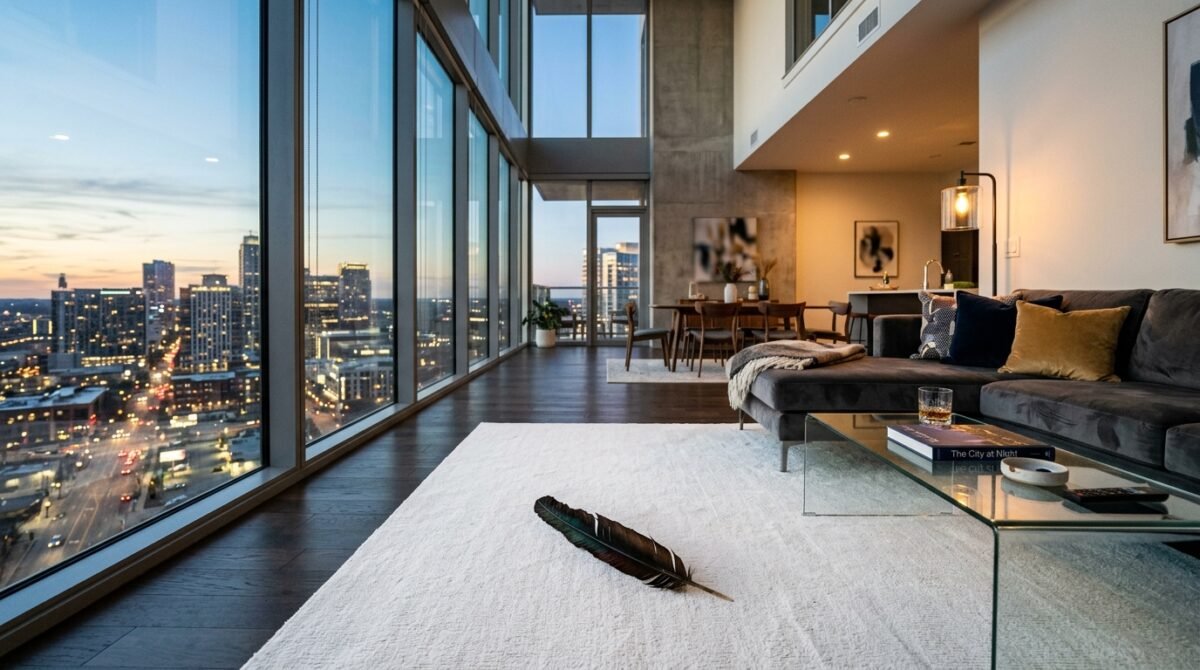
Living in a high-rise downtown was supposed to be the pinnacle of my young professional life. It was sleek, silent, and strictly ‘no pets allowed.’ My roommate, Julian, seemed like the perfect match: quiet, tidy, and rarely home. We shared the rent, split the utilities, and lived in a state of mutual, polite indifference that felt like a blessing in a city of eight million people. That was until the silence started to break.
It began as a subtle, rhythmic thrumming in the floorboards—the kind of vibration you ignore while binge-watching shows or finishing a late-night project. Then came the smell. It wasn’t the usual scent of damp laundry or forgotten gym gear; it was earthy, pungent, and unmistakably organic. I attributed it to the building’s ancient ventilation system, but the deeper I delved into the mystery, the more I realized that the nightmare was unfolding right behind the locked door of the spare bedroom.
The moral dilemma was agonizing. I had signed a joint lease, and my credit score was my lifeblood. If I confronted Julian and he denied it, I was stuck. If I went to the landlord, the entire unit would be evicted for a lease violation that wasn’t even mine. But as the ‘clucking’ became a dawn-breaking cacophony that defied the laws of physics, I realized I was living with someone who had completely lost touch with reality, and I had to make a choice before our lives were dismantled by the landlord’s inevitable discovery.
This is the story of how a quiet, luxury apartment on the 22nd floor became the epicenter of an urban agricultural disaster, the breakdown of a friendship, and the final, explosive moment where I realized that handing the keys to Animal Control was the only path to saving myself from total catastrophe.
The Subtle Hum of the Spare Bedroom

For three weeks, Julian insisted the spare bedroom was his new ‘workspace’ for a freelance design project. He kept the door locked at all times, citing the need to keep his expensive equipment in a sterile environment. I didn’t question it. We were two adults living in a shared space; autonomy was the golden rule. But the ‘work’ started making sounds that definitely didn’t come from a computer.
I began to notice Julian leaving the apartment with large, heavy bags of mysterious grain, which he claimed were ‘premium coffee beans’ he was roasting for a boutique side hustle. The smell began to permeate the hallway, a thick, musky scent that felt entirely out of place in our clinical, glass-and-steel building. I started waking up at 4:30 AM to a sound that was muffled, yet rhythmically aggressive.
One night, I found Julian hovering by the door with a spray bottle, looking disheveled and frantic. He jumped when I entered the kitchen, his eyes darting toward the spare bedroom door. His hands were covered in a fine, dusty grit that looked suspiciously like pine shavings.
“Julian, is everything okay? The neighbors have been complaining about the noise, and honestly, the smell is starting to get to me. What exactly are you doing in there?”
— Me, attempting to maintain civility
“It’s just… it’s just the acoustics, man. The insulation in this place is garbage. I’m working on a sound installation piece for a gallery. It’s supposed to be immersive. Just give me another week, okay?”
— Julian, sweating profusely
I left it at that, not wanting to press, but the ‘sound installation’ was clearly becoming a point of contention. I spent that night reading building reviews online, trying to see if anyone else had issues with HVAC noise. Little did I know, I was about to walk into a reality that defied every logic of urban living.
The 5:00 AM Awakening
The breaking point wasn’t a conversation; it was the sheer, unadulterated volume of a rooster crowing at sunrise. It wasn’t just one; it was a chorus. It sounded like a farmyard had been dropped into the middle of our living room. I sat bolt upright in bed, heart hammering, initially thinking I was dreaming or that a television show was playing at full volume.
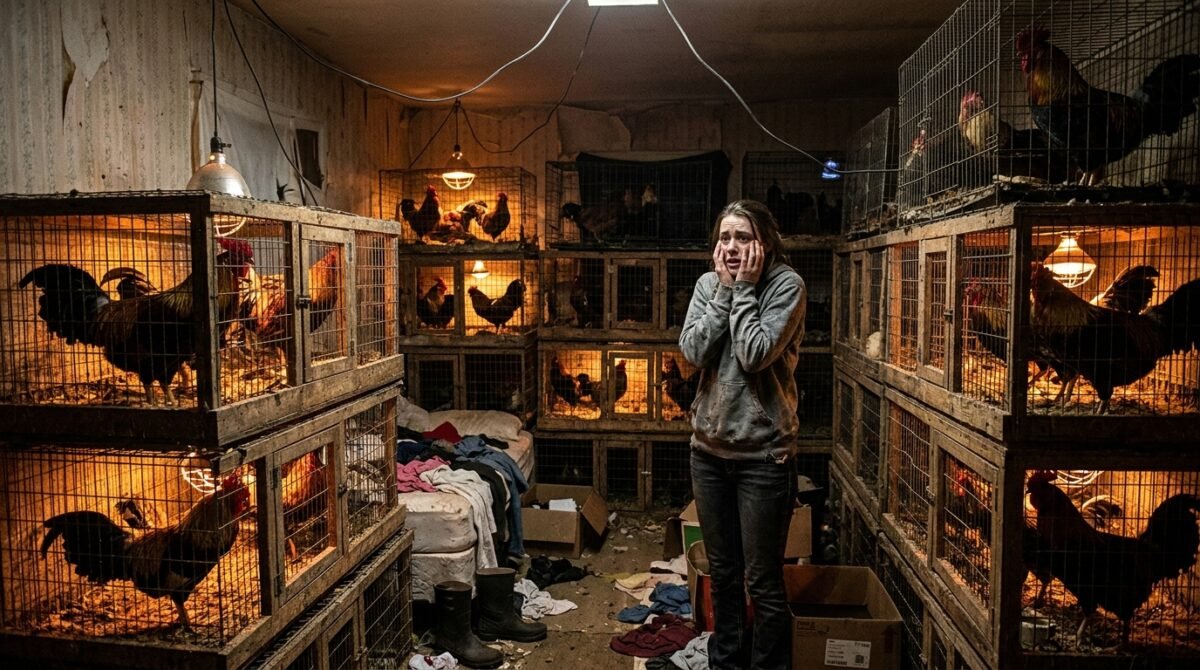
I grabbed my phone, checking the time: 5:12 AM. The crowing continued, a discordant symphony of territorial dominance. I marched into the living room, my blood boiling. I didn’t even knock on the spare bedroom door. I grabbed the handle and yanked it open, expecting a laptop and perhaps a few speakers. Instead, I was met with a wall of feathers, frantic movement, and the overwhelming stench of ammonia.
Twenty roosters. They were crammed into cages stacked floor to ceiling, their eyes wild and frantic. Julian was asleep on a mattress on the floor, surrounded by the chaos. The room looked like a scene from a post-apocalyptic horror movie, with plastic tarps covering the hardwood floors and heat lamps rigged up to the ceiling fan.
“Julian! Wake up! Are you insane? There are twenty birds in this room! We are on the 22nd floor of a luxury apartment building! Do you have any idea what you’ve done?”
— Me, screaming at the top of my lungs
“Don’t touch the cages! You’ll stress them out! They’re an investment, okay? They’re rare heritage breeds. I’m going to sell them for thousands once they hit breeding maturity. You just don’t understand the market!”
— Julian, scrambling to stand up
He was serious. He wasn’t joking. He believed that he had found a loophole in the lease and a way to make a fortune. The sheer absurdity of the situation hit me like a physical blow. I had to get them out, and I had to do it before the property manager arrived for the monthly inspection on Tuesday.
The Failed Negotiation
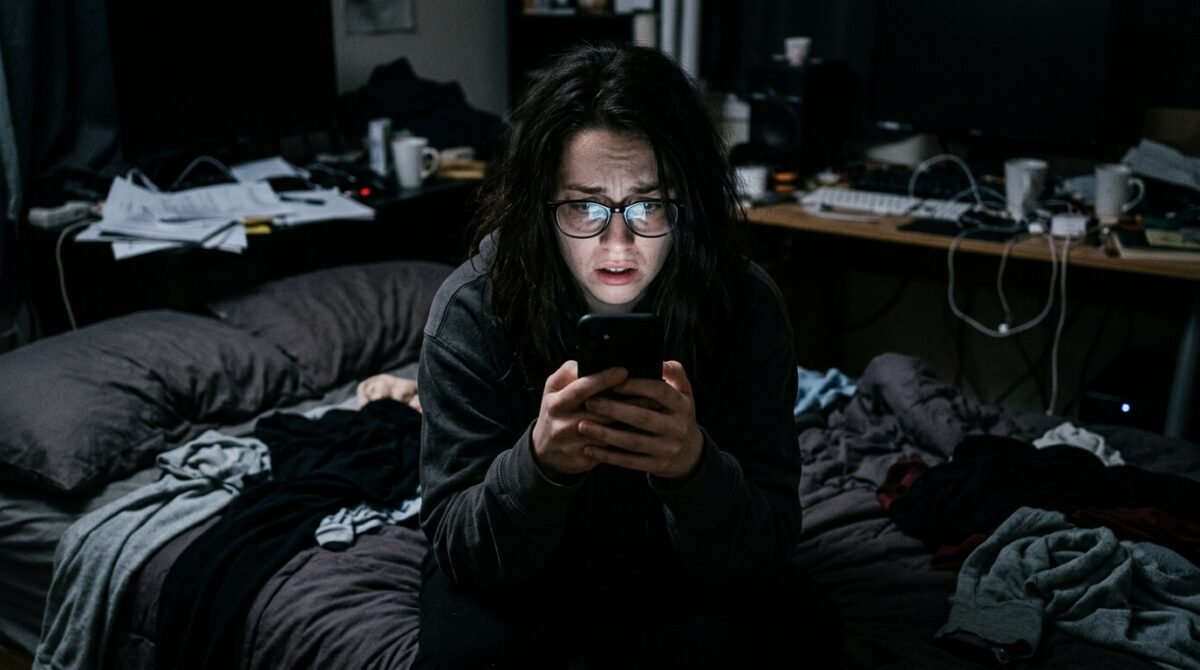
The next twelve hours were a blur of panic and strategic thinking. I told Julian he had until the end of the day to get the birds out, or I was going to contact the authorities. He laughed at me, claiming that since I was on the lease, I was an accomplice. He argued that if the landlord found out, we would both lose our deposits and get blacklisted from every rental agency in the city.
I retreated to my room and locked the door, feeling the weight of the situation crushing my chest. I started looking up local animal welfare laws and the terms of our lease agreement. It was explicit: No pets, no livestock, and immediate eviction for any breach of contract. Julian was essentially holding our living situation hostage to his bizarre, half-baked get-rich-quick scheme.
He spent the day texting me, trying to gaslight me into thinking this was a ‘shared’ project. He claimed he had mentioned it months ago when I was distracted by work, and that I had implicitly agreed to it. The manipulation was textbook, but the reality of the clucking coming through the walls made it impossible to ignore.
“You need to stop being so rigid. Think about the potential here. We sell these to high-end hobbyists, we pay off our rent for the year, and we keep the rest. It’s a win-win. Just keep your mouth shut until next week.”
— Text message from Julian
I didn’t reply. I had already made a call to a local wildlife rescue and the city’s animal control department. I knew that if I did this, I was burning the bridge to my housing, but I had no choice. Living in a room with twenty roosters was not just a violation; it was a health hazard and a ticking time bomb.
The Phone Call That Sealed the Deal
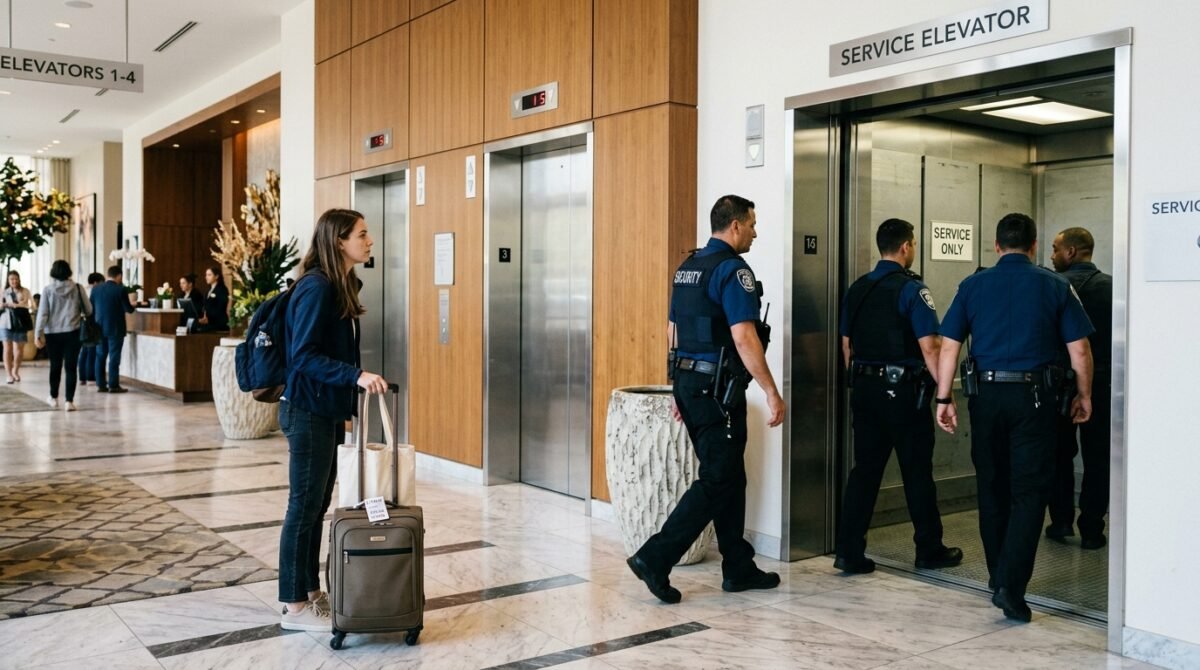
When the animal control officer arrived at the front desk, I was waiting in the lobby with my ‘go bag’ packed. I had moved my most important documents, my laptop, and my clothes out of the unit in the middle of the night. I felt like a spy defecting from a hostile nation, but the relief was palpable. I had left a note for the building manager explaining the situation as clearly and concisely as possible.
The officer looked skeptical at first, asking if I was sure about the number of birds. I told him to listen closely. Even from the hallway, you could hear the faint, muffled sound of a bird flapping against a cage. The officer’s expression changed from professional indifference to pure, unadulterated shock. He radioed for backup, and I knew there was no turning back.
Julian was still asleep when they breached the door. I heard the commotion from the lobby: the shouting, the squawking, and the inevitable sound of cages being dismantled. It was the loudest sound I had ever heard, a mix of animal panic and human indignation. I stood by the elevators, watching the lobby security staff scramble toward the service lift.
“I am an entrepreneur! This is my personal property! You cannot just walk into my unit and seize my assets! This is a violation of my privacy!”
— Julian’s voice echoing from the hallway
“Sir, you are in a high-density residential high-rise. This is not a farm. This is a public health violation. You are being evicted, and there are animal cruelty charges pending.”
— The Animal Control Officer
Watching Julian get dragged out in handcuffs was the most surreal experience of my life. He looked at me, not with remorse, but with pure, distilled hatred. He screamed that I had ruined his life, that I was a ‘traitor,’ and that he would make sure I never found an apartment again. I just turned my back and walked out the front door.
The Aftermath: Legal and Financial Fallout
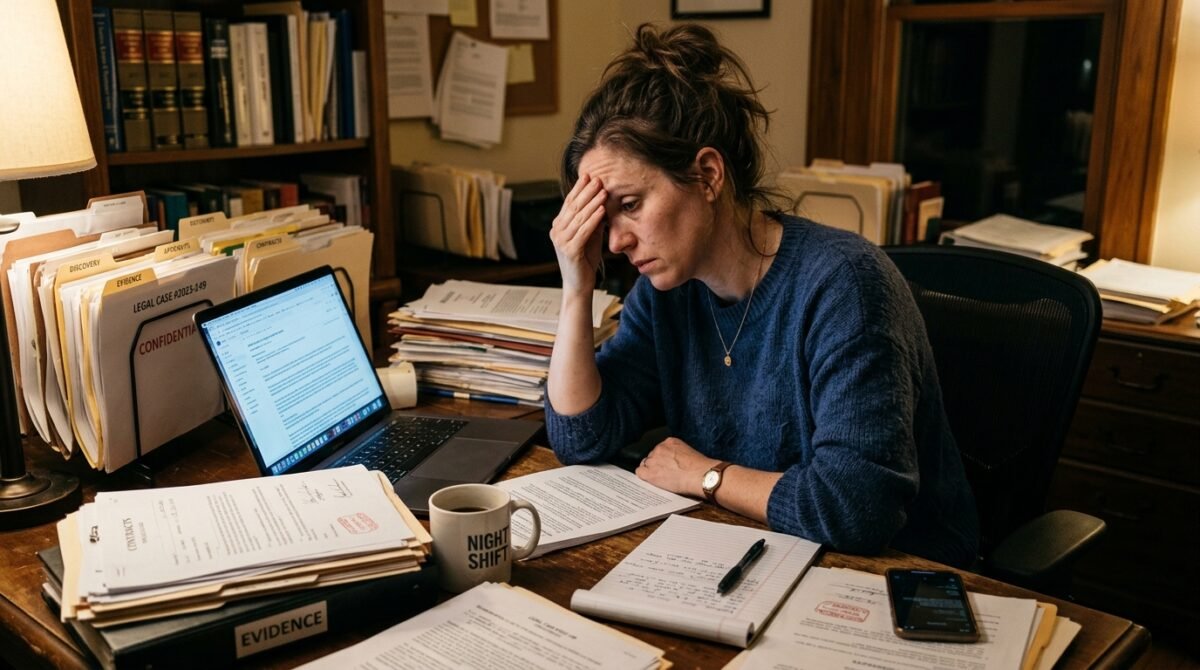
The fallout was instantaneous. My phone didn’t stop buzzing for three days. My landlord, who I had previously considered a fair and reasonable person, was livid. I was told that despite my cooperation, the entire unit was considered compromised. The smell, the damage to the floors from the bird waste, and the sheer volume of cleaning required meant that the security deposit was gone, and there was talk of suing for damages.
I ended up crashing on a friend’s couch while I navigated the legal headache. My credit score took a hit because of the eviction, even though I had tried to get out of the lease legally. It was a brutal lesson in the risks of joint tenancy. I had spent so much time trying to be the ‘cool roommate’ that I had allowed someone else to dismantle my life in the span of a few months.
I hired a lawyer to help negotiate a release from the lease, showing them my initial emails to the landlord and the documentation I provided during the raid. It was an uphill battle. The building management wanted someone to blame, and Julian was currently undergoing a psychological evaluation, making him effectively judgment-proof.
“You signed the same lease, OP. The contract doesn’t distinguish between you and your roommate regarding the condition of the property. You are both liable for the damages to the unit.”
— My lawyer, delivering the hard truth
It was a sobering moment. The financial cost of those twenty roosters was going to be in the thousands. I felt a deep sense of anger, not just at Julian, but at my own passivity. I had prioritized keeping the peace over my own common sense, and that decision was costing me a fortune.
The Internet Weighs In
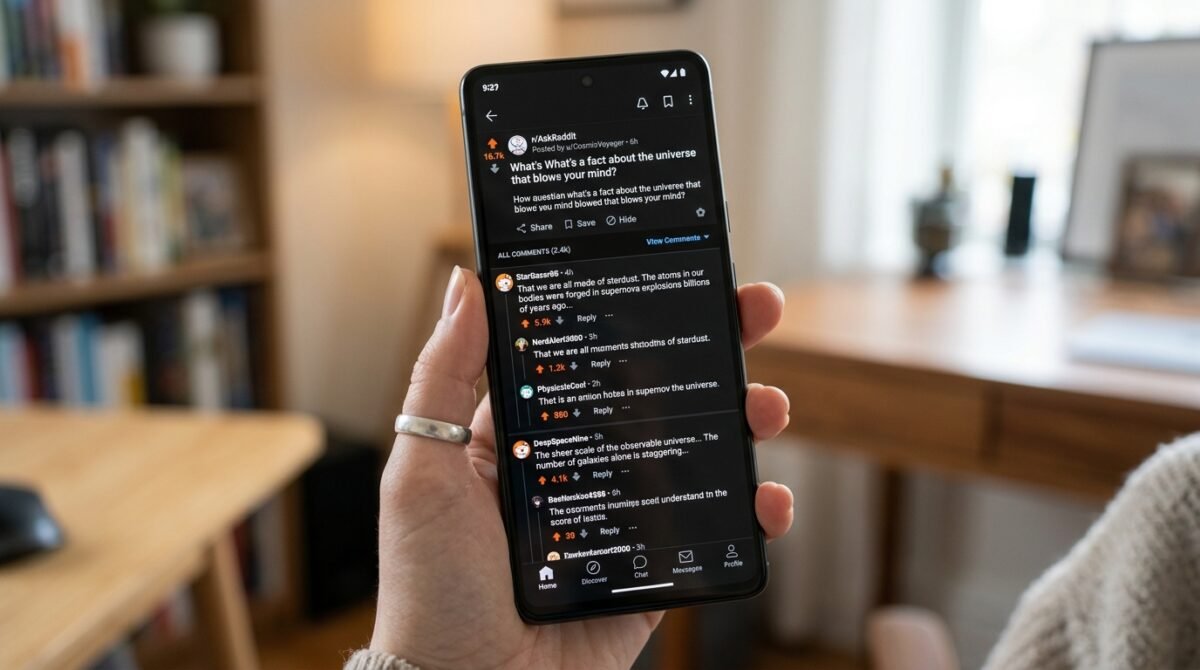
I posted my story on a popular forum, expecting a mixture of disbelief and support. What I got was a tidal wave of analysis. People were fascinated by the logistical impossibility of the situation. How did he feed them? How did he hide the smell? The curiosity was intense, but the moral judgments were even stronger. Many users pointed out that I should have acted the moment I suspected something was wrong, regardless of the ‘cool roommate’ social contract.
The thread became a repository for other people’s nightmare roommate stories. It was cathartic to see that I wasn’t the only one who had been caught in a web of someone else’s dysfunction. The consensus was overwhelmingly on my side, but there were those who argued I was still the ‘jerk’ for involving animal control instead of trying to ‘fix’ it with Julian first. I ignored those people. You don’t ‘fix’ a poultry farm in a high-rise.
“NTA. You saved the building from a massive health disaster and the birds from an environment that was clearly cruel. A rooster in a high-rise is not a pet, it’s a symptom of a mental break.”
— u/CityLifeExpert (Top Comment, 32.1k upvotes)
“The fact that you were worried about your deposit while your roommate was running a literal farm in your spare room is the most millennial thing I’ve ever heard. You should have called the cops on day two.”
— u/Realist101 (15.2k upvotes)
Reading the comments provided a strange comfort. It validated my decision to act decisively. The internet, for all its toxicity, was able to see the situation with a clarity that I lacked in the heat of the moment. It taught me that sometimes, you have to burn the house down to save yourself from the fire.
The Psychological Toll

Weeks later, I still wake up at 4:30 AM. It’s a phantom sound—the memory of those roosters crowing still echoes in my mind. The trauma of the situation is subtle but pervasive. I have trouble trusting my new roommates, and I find myself hyper-vigilant about noises, smells, and locked doors. It’s a lingering reminder of how quickly a stable life can turn into a surreal, chaotic mess.
I started seeing a therapist to deal with the anxiety. We talk about the need for boundaries and why I felt so obligated to ‘keep the peace’ even when my instincts were screaming at me to run. It’s been a long process of unlearning the habits of a people-pleaser. I’ve realized that my need for harmony was actually a form of avoidance, and that avoidance nearly ruined me.
Julian has reached out a few times, sending long, rambling emails about how I ‘betrayed the brotherhood.’ I haven’t responded to a single one. I’ve blocked him on every platform and changed my phone number. The closure I wanted wasn’t in an apology, but in the complete removal of his presence from my life.
“The hardest part isn’t the money. It’s the feeling that I let someone I trusted turn my home into a prison. I’m learning to set boundaries, even when it feels like I’m being ‘difficult’ or ‘unreasonable’ to others.”
— My journal entry, one month later
I’m finally starting to feel like myself again. I moved into a smaller studio apartment, just for myself. No roommates, no shared leases, no mysteries. Just silence, which is, in my opinion, the greatest luxury of all.
Lessons from the Poultry Crisis

Looking back, the biggest lesson I learned is that ‘politeness’ is a dangerous currency. I was so afraid of looking like a difficult roommate that I allowed a dangerous situation to flourish under my own roof. I ignored the signs because I didn’t want to engage in the confrontation. That is a mistake I will never make again.
If you see something that makes you uncomfortable, speak up immediately. Don’t wait for it to become a ‘thing.’ Don’t wait for your roommate to provide an excuse. Trust your gut. If your environment feels off, it probably is. The social cost of being ‘difficult’ is far lower than the cost of being complicit in a disaster.
I’ve also learned to be much more discerning about who I choose to live with. I don’t care how ‘chill’ someone seems or how much we have in common. I prioritize stability, communication, and basic common sense. I ask questions now. I set expectations. I’m not just a tenant; I’m a steward of my own living space.
“We were raised to be ‘nice.’ But nice doesn’t stop a crazy person from keeping livestock in your bedroom. Nice doesn’t protect your credit score. Sometimes, being ‘mean’ is just being responsible.”
— A thought from a friend during the fallout
The experience was a crucible. It burned away the last vestiges of my naive desire to be liked by everyone. I am perfectly happy being the person who calls the authorities when things go sideways. It’s a small price to pay for sanity.
The Future of My Living Situation

I am currently living alone, and the difference is night and day. I don’t have to worry about what’s happening in the spare room. I don’t have to worry about who is coming in or what they are bringing with them. I have total control over my home, and that is a feeling I will never take for granted again.
I still get the occasional pang of anxiety when I hear a loud noise in the hallway, but it’s fading. I’ve started a small garden on my balcony—actual plants, not roosters—and it brings me a sense of peace that is entirely legitimate. I’m reclaiming the idea of ‘nature’ in the city on my own terms.
I’ve also become much more involved in my building’s tenant association. I want to make sure that if anyone else is dealing with a nightmare roommate, they have a place to turn before it reaches the level of animal control. I want to be the person who helps someone else speak up before it’s too late.
“My home is my sanctuary. If you can’t respect the basic rules of living, you don’t get to be part of my world. That’s the boundary I’ve set, and it’s non-negotiable.”
— My closing thoughts on the matter
It’s been a long road, but I’m finally at peace. The roosters are gone, the lease is settled, and the nightmare is behind me. It was a hell of a story, and one that I hope serves as a warning to anyone else who thinks they can just ‘ignore’ the problem.
Community Reflection: Where Do You Draw the Line?

This story has sparked so many conversations with friends and strangers alike. Everyone has a limit, a moment where the social contract breaks down. For some, it’s pets. For others, it’s unpaid rent or unwashed dishes. My limit turned out to be livestock, which I think is a fairly reasonable threshold for most of society.
The debate about whether I should have handled it differently still rages in the comments. Some people think I should have tried to help Julian. Others think I waited way too long. I’ve come to realize that the ‘right’ way is the way that keeps you safe and sane. There is no moral reward for suffering through someone else’s madness.
So, I ask you: what is your absolute limit for a roommate? What is the one thing you would never tolerate, and how far would you go to protect your peace of mind? Would you call the authorities, or would you try to fix it internally? I’m genuinely curious to see how others weigh the cost of a friendship against the need for a stable home.
“Don’t let anyone hold your life hostage. If the situation is toxic, the only winning move is to leave, even if it means leaving everything behind.”
— A piece of advice I wish I had heard earlier
Thank you for letting me share this bizarre, chaotic, and ultimately life-changing experience. I hope you never have to deal with anything like this, but if you do, remember: you have the power to take your life back. Don’t wait for the rooster to crow at 5:00 AM.
Conclusion
In the final analysis, my experience with the ‘rooster roommate’ was a crash course in the necessity of personal boundaries. We are often taught that conflict is a failure of character, but sometimes, conflict is the only way to re-establish the order required for human dignity. I lost my deposit, I lost a roommate, and I gained a fair amount of stress, but I also gained a lifetime of clarity. I am no longer the person who waits; I am the person who acts.
The community support—even the harsh criticisms—helped me process the absurdity of it all. It’s easy to look back now and laugh at the sheer, dark comedy of twenty roosters in a luxury high-rise, but in the moment, it was a test of my resolve. I’m stronger for it, and my apartment is finally, wonderfully, silent. What would you have done in my shoes? Would you have confronted him sooner, or would you have been paralyzed by the same social pressure? Let’s keep the conversation going in the comments below.
What's your verdict on this dilemma?
Vote below to contribute to the official community consensus.

Have a Dilemma Keeping You Up at Night?
Share your real-life feud, wedding chaos, or relationship crossroads anonymously with our editorial team.
What do you think ?
0 Comments🛡️ Comments are moderated to protect community integrity. Your comment will appear once approved by the editorial team.