
Living in a shared apartment requires a delicate balance of respect, communication, and basic hygiene. We all know the drill: don’t leave dishes in the sink for a week, keep common areas relatively tidy, and for heaven’s sake, don’t start an unauthorized agricultural experiment in the shared living room. But for me, the baseline for ‘reasonable behavior’ was shattered the moment I unlocked my front door last Sunday night.
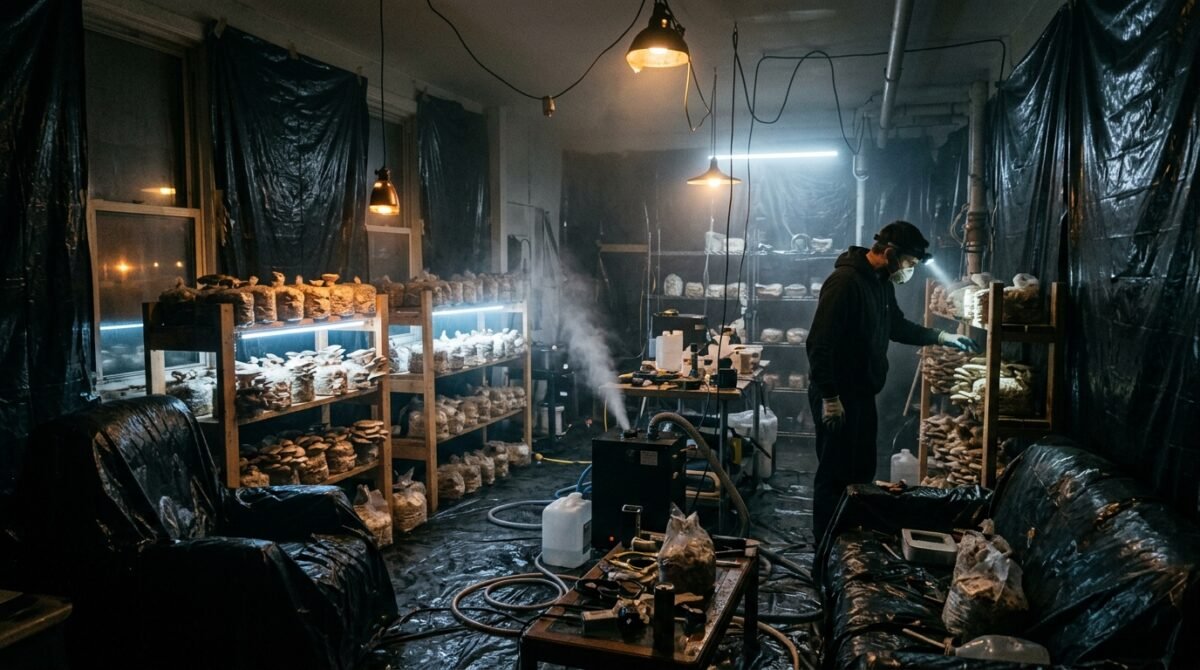
I had been away for a three-day weekend, visiting my parents out of town. The silence of the apartment was the first thing that struck me, followed immediately by the suffocating, thick air. As I walked into the common area, my eyes couldn’t quite process the scene. The entire space had been hermetically sealed with heavy-duty black plastic sheeting, taped to the ceiling and walls. The air was heavy, damp, and smelled distinctly of wet forest floor and rot.
I stumbled toward the kitchen light, only to find the living room transformed into a high-humidity, dark, and sterile environment. Industrial humidifiers were humming in the corners, their mist creating a ghostly haze that clung to the furniture. I wasn’t looking at a living space anymore; I was looking at a full-scale, commercial-grade fungal grow operation. My roommate, Greg, hadn’t just crossed a line—he had built a bunker on top of it.
The sheer audacity of the situation left me gasping for air, not just from the humidity, but from the realization that my home was no longer mine. Over the next few days, as the truth about his ‘side hustle’ unraveled, I found myself locked in a legal, financial, and emotional battle that tested every boundary I thought I had. This is the story of how my apartment became a biohazard, and why I had to force the person I trusted most out of my life.
The Initial Confrontation and the ‘Business Opportunity’ Defense
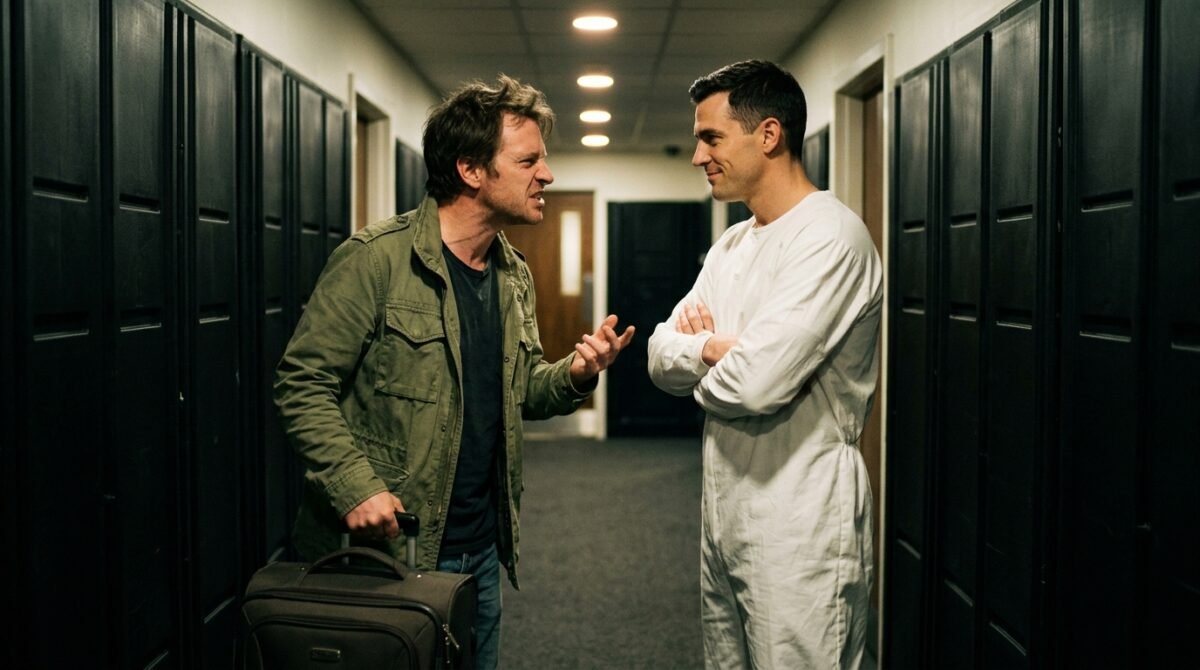
When Greg finally emerged from his bedroom, wearing a Tyvek suit and carrying a spray bottle, he didn’t look guilty. He looked like a visionary who had been interrupted by a minor inconvenience. I stood in the middle of our foyer, my suitcase still in my hand, staring at the wall of black plastic that used to be the path to our sofa.
He gestured vaguely at the plastic-covered room, his face lit with a manic, business-like intensity. ‘I knew you’d be surprised, but I didn’t want to spoil the surprise before the cycle started. We’re going to be making serious money on these gourmet oyster mushrooms. This is a high-yield, low-maintenance setup, and I’ve already got buyers lined up at the local farmers market.’ I felt the blood drain from my face as I realized he was serious.
“Greg, you have sealed off our entire living space with plastic. This is not a hobby, this is a health hazard. I can’t even see the television, let alone sit on my own couch. How much money did you think this was going to make exactly?”
He laughed, a dry, dismissive sound that only made my skin crawl further. ‘You’re looking at the immediate impact, not the long-term ROI. By the end of this month, we’ll have recouped the cost of the humidifiers and the substrate. Plus, think about the fresh produce we get to eat! I’m doing this for us, really. It’s an investment in our shared financial future, even if you’re too narrow-minded to see the vision right now.’ My jaw hit the floor. The audacity to frame his landlord-violating, mold-inducing infestation as an ‘investment in our shared future’ was breathtaking.
I stood there, trying to calculate the sheer number of lease violations he had committed in seventy-two hours. We had a strict clause about commercial activity and property modifications. If the landlord found out, we would both be out on the street. I told him he had to take it down immediately, but he just sighed and went back to misting the plastic. He acted as if I were the one being unreasonable, the one stifling his entrepreneurial spirit.
The atmosphere in the apartment had shifted from ‘shared living’ to ‘hostile work environment.’ He had turned the thermostat up to seventy-eight degrees to maximize humidity, turning the rest of the apartment into a sweltering sauna. I realized then that talking to him as a friend was no longer an option; I was dealing with someone who had completely detached from reality to pursue a profit-driven delusion.
The Midnight Text from the Landlord’s Inspection

The situation turned from a personal dispute into a full-blown crisis two days later. My landlord, Mr. Henderson, texted me at 11:30 PM. He wasn’t a man who enjoyed late-night communications, which meant something was wrong. He had been conducting a routine walkthrough of the building’s HVAC and plumbing, and he had noticed something strange about our utility consumption and the humidity levels bleeding into the hallway.
“Hey, I noticed a massive spike in your electricity usage and your front door is sweating. I’m doing an inspection tomorrow at 8 AM. Ensure access is clear to all rooms. Everything better be up to code.”
— Mr. Henderson, Landlord
I read the text and felt my heart hammer against my ribs. I sprinted to Greg’s door and pounded on it. He opened it, looking disheveled and smelling of damp compost. I shoved my phone in his face. His reaction wasn’t panic—it was annoyance. He actually rolled his eyes at me. ‘So? I’ll just tell him it’s an art installation. Or I’ll tell him we’re having a temporary humidity issue. Don’t be such a coward. You’re going to ruin this whole project before it even hits the peak harvest.’
I told him point-blank that I wasn’t going to lie to the landlord to save his illegal fungal farm. I gave him a twelve-hour ultimatum: the plastic comes down, the humidifiers get turned off, and the substrate gets tossed, or I was calling the landlord myself to report the situation. Greg turned cold. The ‘entrepreneur’ facade dropped, replaced by a calculated, predatory look. He told me that if I called the landlord, he would tell them I was in on the deal from the start and that the security deposit was mine to lose.
The next few hours were spent in a state of absolute psychological warfare. I sat in my room, listening to the hum of the industrial humidifiers as they worked overtime. I could hear him moving things around, the sound of plastic rustling like dry leaves. He was clearly trying to hide or consolidate his operation, but the smell of damp earth was already seeping under the door frame of my own bedroom. The air quality was becoming noticeably heavy, and I started to develop a tickle in my throat.
It wasn’t just about the money anymore; it was about the power dynamic. Greg had decided that my comfort and my lease standing were secondary to his mushroom empire. He had effectively taken me hostage in my own home, banking on my passivity to keep the secret. But he didn’t realize that I had already reached my breaking point. I started documenting everything—every bag of substrate, every humidifier, every patch of mold forming on the ceiling where the condensation was dripping.
The 8:00 AM Reckoning
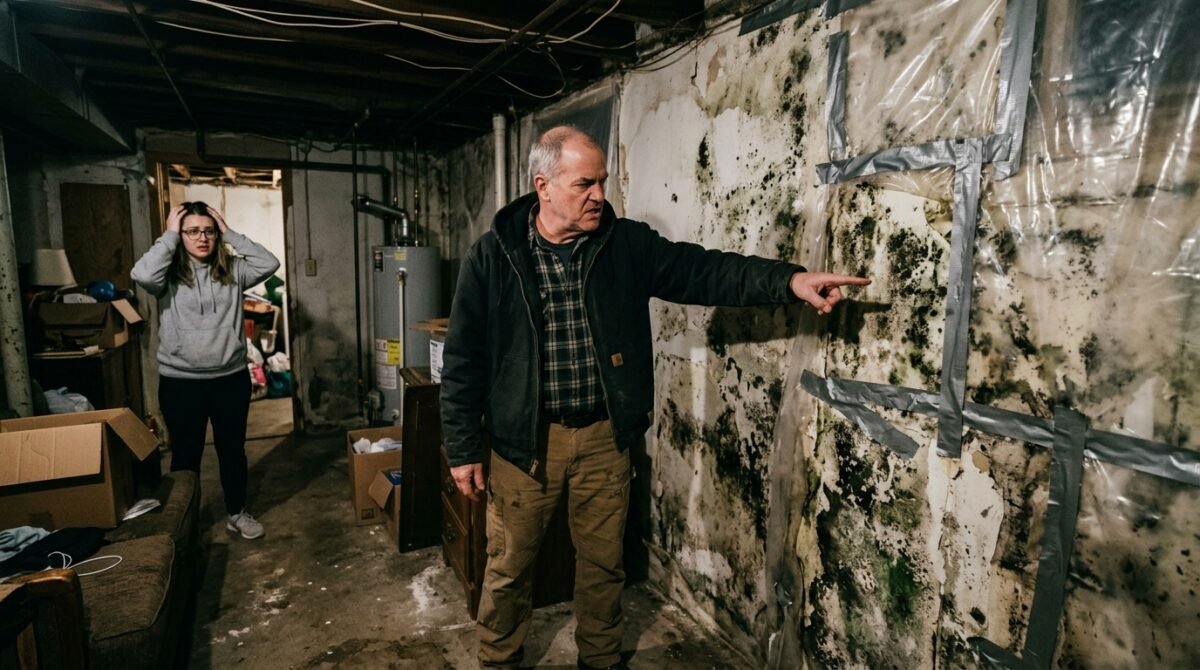
When Mr. Henderson knocked on the door at 8:00 AM sharp, the apartment was a tomb. I had stayed up all night, unable to sleep in the humid, oppressive air. Greg had tried to drape a large tapestry over the plastic, but the edges were still clearly visible. The humidity had caused the wallpaper in the hallway to peel, exposing the dark, damp drywall underneath. It was obvious that something was very, very wrong.
I opened the door, and Mr. Henderson didn’t even say hello. He walked straight into the living room, his eyes scanning the plastic-wrapped walls. He peeled back a section of the sheeting and recoiled. The sight of hundreds of bags of fungal spores and substrate, organized in rows like soldiers, seemed to stun him into silence for a full minute. Then, the shouting started. It wasn’t the kind of shouting that leads to a compromise; it was the kind that leads to eviction.
“What in the hell is this? You’ve destroyed the drywall, the flooring is buckling, and the smell of rot is already in the ventilation. Get this out of my building now. You have twenty-four hours to vacate, or the police are coming with an eviction order.”
Greg stood there, trying to argue about his ‘tenant rights’ and the legitimacy of his business. It was pathetic. He tried to point at me, claiming I had approved of the setup, but I had my phone ready. I played the audio recording I had captured the night before, where he threatened to frame me if I spoke up. Mr. Henderson’s expression shifted from anger at both of us to a cold, singular focus on Greg. He told me that he could see the difference, and that I wasn’t the one who would be held liable for the property damage.
The sheer relief of being believed was almost overwhelming. Greg, realizing the game was up, started tearing at the plastic, his movements frantic and uncoordinated. He didn’t care about the mushrooms anymore; he was just trying to salvage what he could, but the damage was done. The floor underneath was black with water damage, and the ceiling was sagging from the constant moisture. We weren’t just looking at an eviction; we were looking at a massive bill for remediation.
As Mr. Henderson walked away to finalize the paperwork, Greg turned on me. He wasn’t yelling anymore; he was whispering, his voice trembling with a mix of fury and fear. He accused me of being a traitor, of being too small-minded to ever succeed in business, and of sabotaging his future. He packed his belongings into trash bags, leaving the ruined mushroom kits for me to deal with. He didn’t even apologize for the three thousand dollars in damages he had just caused.
Cleaning Up the Biohazard
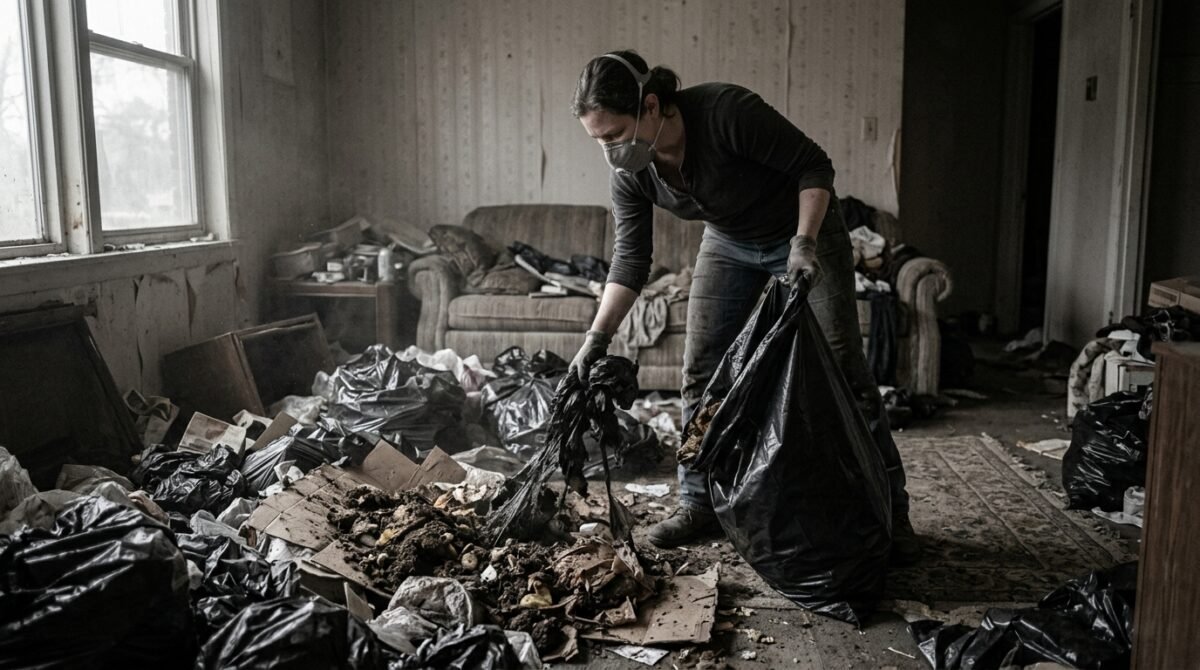
Once Greg was gone, the silence of the apartment was heavy, but at least the humidity had dropped slightly. I stood in the center of what used to be our living room, staring at the debris. It looked like a crime scene. Piles of wet, decaying organic material, discarded plastic, and the lingering stench of mildew that seemed to have permeated the very structure of the walls. I had to wear a respirator mask just to handle the cleanup.
I spent the next forty-eight hours scrubbing walls, stripping the moldy wallpaper, and hauling dozens of bags of ruined fungal substrate to the dumpster. My hands were raw and my back ached, but every item I removed felt like a weight being lifted from my life. It was a physical manifestation of the toxicity that Greg had brought into my home. Every time I found a hidden humidifier tucked behind a chair, I felt a new surge of righteous anger.
“I thought I was just dealing with a messy roommate, but this was a total violation of reality. I’m literally scraping my home off the floor one inch of mold at a time. I don’t think I’ll ever trust a roommate again.”
Friends came over to help, and their shock only reinforced the absurdity of it all. One friend, who had been to our place just a week before, couldn’t believe how much it had changed. ‘I was just here for a beer, and we were sitting on that couch. Now the couch is ruined, the carpet is mildewed, and you’re living in a construction zone. He’s absolutely insane.’ They helped me document the damage for the insurance claim and the legal action I was preparing to take.
The financial toll was becoming clear. Between the remediation services required to remove the mold, the replacement of the flooring, and the potential loss of the security deposit, I was facing a bill in the thousands. I reached out to a lawyer, who advised me to file a small claims suit against Greg for the damages, using the documentation and witness statements I had collected. It wasn’t about the money as much as it was about holding him accountable for the destruction of my home.
I spent my nights sleeping in my room with the window open, despite the cold, trying to air out the place. The psychological impact of having my sanctuary turned into a literal petri dish was profound. I found myself looking at every corner of the room, expecting to see a new sprout or a patch of dampness. The sense of safety I had taken for granted was completely gone, and it would take a long time to regain that sense of normalcy.
The Online Fallout and the Reddit Thread
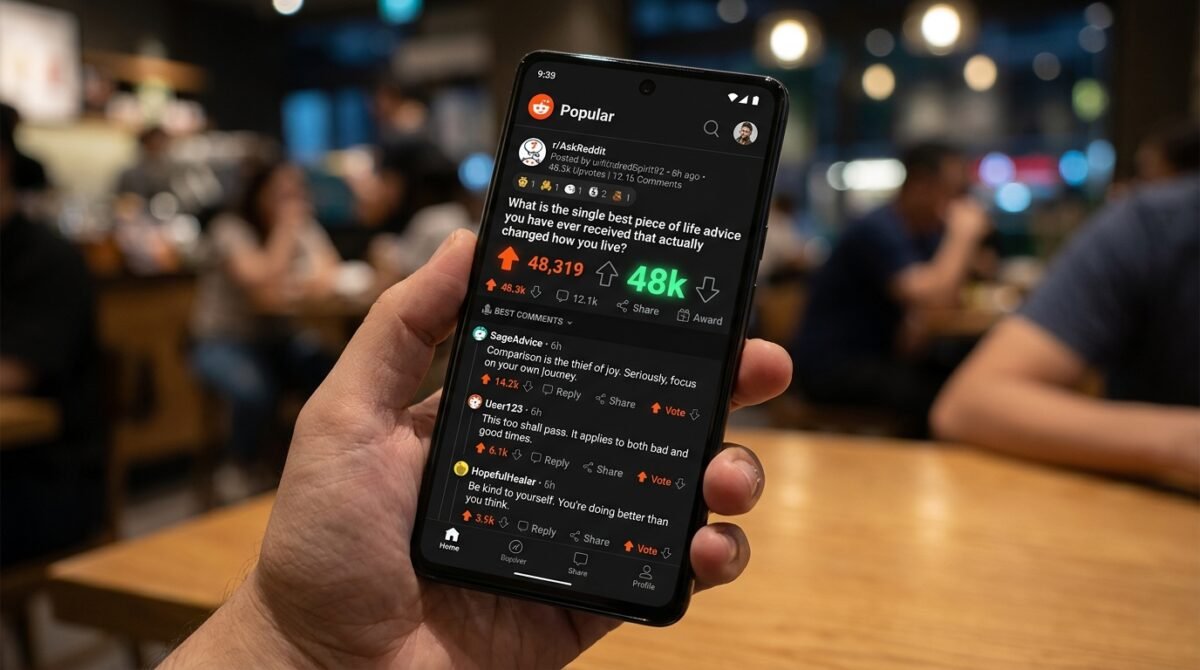
I didn’t think it would go viral, but I needed to vent. I posted the full story on a popular forum, including the pictures of the plastic-covered living room and the texts where he threatened to frame me. Within hours, the post had thousands of upvotes and a comment section that was a mixture of shock, horror, and surprisingly sound legal advice. People couldn’t believe that someone would actually try to grow mushrooms in a shared living room without telling their roommate.
“OP, you need to go scorched earth on this guy. This isn’t just a ‘bad roommate’ story; this is a ‘call the health department and sue for damages’ story. The mold remediation alone is going to cost a fortune. Don’t let him off the hook.”
— u/PropertyLawyerPro (Top Comment, 18.2k upvotes)
The community was incredibly supportive, with many sharing their own horror stories about roommates and property damage. Reading the comments helped me realize that I wasn’t the crazy one. I had been gaslit for weeks, made to feel like I was the one being ‘unsupportive’ and ‘narrow-minded’ about a business venture that was clearly a disaster. The validation was exactly what I needed to stop doubting myself and focus on the legal battle ahead.
There were, of course, the contrarians who suggested that maybe I should have ‘helped him pivot’ or that I was being too harsh by calling the landlord. Those comments were quickly drowned out by the sheer volume of people pointing out the obvious: you don’t do this to people. You don’t turn a shared space into a biohazard, and you don’t threaten to destroy someone else’s credit score because they won’t help you with your illegal project.
I started receiving direct messages from people who knew Greg, telling me that this wasn’t the first time he had pulled a ‘big idea’ scheme. It was part of a pattern of reckless, narcissistic behavior that he had been hiding behind a charming exterior. Knowing that he had done this before made me feel even more justified in my decision to cut him off completely and pursue the legal route. He wasn’t just a misguided entrepreneur; he was a serial manipulator.
The thread became a repository of evidence. People were tagging mold remediation specialists, legal advice subreddits, and even local tenant rights organizations. I felt a sense of empowerment that I hadn’t felt in months. I was no longer a victim in my own apartment; I was a person taking control of their life and fighting back against someone who had tried to ruin it.
Legal Hurdles and the Discovery of Hidden Debt

As I dug deeper into my legal options, I discovered that Greg’s ‘mushroom business’ was just the tip of the iceberg. Through my lawyer, I found out that he had been taking out credit cards in the name of the ‘business’ and had been delinquent on several payments, leading to debt collectors calling the apartment. The address he had been using for his LLC was our residential address, which was yet another violation of our lease agreement.
The complexity of the situation increased tenfold. I wasn’t just suing for apartment damages; I was now dealing with potential identity theft and credit complications. My lawyer advised me to freeze my own credit and monitor my accounts daily. It was a sobering reminder that living with someone often involves a level of financial entanglement you don’t realize until it’s too late. The betrayal felt personal, deep, and far-reaching.
“I feel like I don’t even know who he is. Every day I find out something else—a new lie, a new debt, a new way he compromised our living situation. I trusted him to be a roommate, but he was operating like a con artist.”
Greg tried to reach out to me via email, offering a ‘settlement’ if I would drop the threat of legal action and stop posting about him online. The email was classic manipulation: he blamed his stress, his financial situation, and ‘the pressure of modern entrepreneurship’ for his actions. He even suggested that if I just let him come back to ‘finish the harvest,’ he could pay me back in a few months. I didn’t even bother replying; I just forwarded it to my lawyer.
The process of documenting his financial misconduct was grueling. I had to compile bank statements, utility bills, and correspondence, all while dealing with the stress of the impending eviction and the need to find a new place to live. It was exhausting, but it was necessary. I knew that if I didn’t take this all the way to court, he would just do the same thing to the next person he lived with. I felt a moral obligation to stop him.
The hardest part was the realization that I had let this slide for so long. I had been so worried about being ‘the chill roommate’ that I had allowed him to walk all over me until the floorboards were literally rotting under our feet. That realization was the most painful part of the entire experience. It taught me a hard lesson about boundaries—when someone shows you they don’t respect your space, you have to act immediately, not wait for them to change their behavior.
The Final Move-Out and the Final Inspection

The day I finally turned in my keys to Mr. Henderson was one of the best days of my life. The apartment was still empty, and the air was finally fresh. Mr. Henderson walked through the unit, inspecting every corner. He had been surprisingly understanding once he realized the full scope of Greg’s deception, and we had come to an agreement that I would help him with the cleanup in exchange for a portion of my security deposit being returned.
As I walked out of the door for the last time, I felt a weight leave my shoulders. I was moving into a studio apartment—my own, private, mushroom-free sanctuary. No more roommates, no more shared living room dramas, no more worrying about what kind of experiment was brewing behind a closed door. It was the ultimate freedom, and I relished every second of it.
“I’m finally free. My new place is small, it’s quiet, and most importantly, it’s entirely mine. No plastic, no humidifiers, no secret agendas. Just peace and quiet. I’ve learned my lesson: roommates are a gamble, and I’m officially retired from the game.”
Greg, on the other hand, was nowhere to be found. He had skipped town, leaving behind a trail of unpaid bills and legal summons that were piling up at his parents’ house. I heard from a mutual friend that he was trying to start another ‘venture’ in a different city, which made me even more committed to following through with the lawsuit. He couldn’t just keep running away from his responsibilities.
The cleanup cost had been massive, but the satisfaction of knowing that I had handled the situation with integrity and resilience was worth it. I had been through the fire, and I had come out on the other side with my reputation intact and a much clearer understanding of what I would and wouldn’t tolerate in my life. I had reclaimed my autonomy, and that was something no amount of money could buy.
I took one last look at the building as I drove away. It wasn’t just a place where I lived; it was a site of trauma, growth, and eventually, a hard-earned victory. I felt a sense of closure that I hadn’t expected. I had faced a nightmare, I had fought back, and I had won. I was finally moving forward, leaving the plastic and the mold far, far behind me.
Reflecting on the ‘Roommate Gamble’

Looking back, the signs were there from the very beginning. The way Greg talked about ‘hustles’ more than jobs, the way he would leave things in the common area and act like he was doing me a favor, the constant disregard for shared space. I had ignored those red flags because I wanted to be a ‘good roommate’ and keep the peace. But I realized that peace is not the same as respect.
I think a lot of people fall into the trap of thinking that living together is just about splitting rent. It’s not. It’s about sharing a life, and when one person in that dynamic decides that their life is more important than yours, the whole system collapses. You have to communicate boundaries clearly, and you have to be prepared to enforce them, even if it means losing the person’s friendship or the convenience of the shared space.
“Living with someone is a contract of mutual respect. The moment that is broken, the contract is null and void. Don’t let yourself be the one who pays the price for someone else’s delusion. If they show you they don’t care, believe them.”
I’ve become much more discerning about who I let into my space. I have a list of non-negotiables now: no businesses in the living room, no secrets about the apartment, and total transparency about any changes to the environment. It might make me sound like a control freak, but after the mushroom nightmare, I’ve earned the right to be one. I’d rather be alone than live with someone who treats my home like a petri dish.
The community support I received also taught me that we’re all going through similar struggles. Whether it’s a roommate who steals your food, a landlord who ignores maintenance, or a partner who doesn’t respect your boundaries, the common thread is the need for self-respect and the courage to advocate for yourself. We’re all in the same boat, and sometimes just sharing the story is the first step toward healing.
I’m finally starting to settle into my new place, and I’m enjoying the silence more than I ever thought possible. There’s a sense of peace in knowing that I have total control over my environment. Every day I wake up and see a living room that is clean, dry, and free of plastic. It’s a small, simple joy, but it’s a joy that I fought for, and that makes all the difference.
The Aftermath: Where Are They Now?

Greg’s ‘mushroom empire’ officially folded about three weeks after he skipped town. I found out through the grapevines of social media that he tried to launch a similar setup in another city, but the landlord there caught on much faster than Mr. Henderson did. He’s currently facing a string of lawsuits from multiple people he’s burned, and he’s effectively been blacklisted in the local rental market. It’s not the outcome I wanted—I just wanted him to leave me alone—but it’s the outcome he earned.
I’ve managed to get my credit back in order, and the legal battle is slowly winding down. My lawyer is confident that we’ll get a default judgment in our favor since Greg hasn’t responded to any of the summons. It’s a long, slow process, but it’s progress. I’ve learned so much about the legal system in the last few months that I feel like I could pass a bar exam, which is definitely not a skill I ever expected to have.
“He thought he was the smartest person in the room, but he ended up being the most exposed. The internet doesn’t forget, and neither do the courts. You can’t just run away from your mistakes forever, and eventually, the bill comes due for everyone.”
My parents have been incredibly supportive, and they’ve helped me get back on my feet financially. They were the ones who reminded me that I’m more than just a victim of a bad situation. I’m a person who stood up for myself, and that’s a win in their eyes. We have dinner together every Sunday now, and for the first time in years, I don’t have to worry about where I’m going or what I’m doing when I get back to my apartment.
I occasionally check in on the Reddit thread, and it’s still getting comments from people who are just discovering the story. It’s become a bit of a cautionary tale, which I’m happy about. If my experience can help even one person realize that they’re in a toxic living situation before it goes as far as a mushroom grow-op, then the whole nightmare was worth it. I’ve even started a small blog where I write about boundary-setting and the realities of modern co-living.
I think the most important thing I’ve learned is that we have the power to change our circumstances. It’s not easy, and it often involves a lot of pain and sacrifice, but we are not trapped. We have the right to live in a space that we feel comfortable in, and we have the right to say ‘no’ to people who don’t respect that. It’s a lesson that I’ll carry with me for the rest of my life.
Lessons from a Biohazard
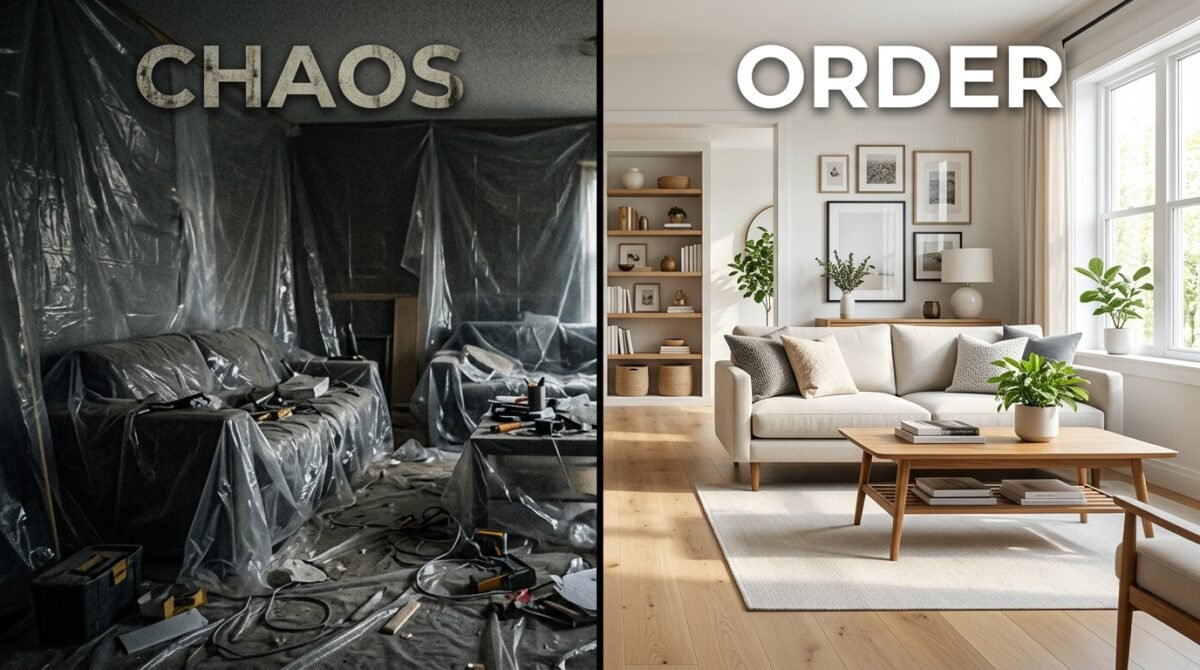
If there’s one thing to take away from this entire ordeal, it’s that your home is your sanctuary. It’s the one place in the world where you should feel completely safe, secure, and in control. When you let someone else violate that space, you’re not just risking your stuff; you’re risking your mental health. I learned the hard way that ‘chilling out’ about boundaries can quickly lead to a total breakdown of your living environment.
I also learned that it’s important to trust your gut. From the first time Greg mentioned his ‘big idea,’ my intuition was screaming at me that something was off. I ignored it, and I paid the price. Now, I listen to that inner voice. If something feels suspicious, I don’t wait for confirmation; I start asking questions immediately. I’d rather be seen as ‘difficult’ or ‘demanding’ than be blind-sided by someone else’s recklessness.
“I’ve learned that the most important thing in any living situation isn’t the rent or the location—it’s the character of the people you’re living with. You can fix a leaky faucet, but you can’t fix a lack of integrity. Choose your housemates wisely, and never be afraid to set hard, non-negotiable boundaries.”
I think that we’re often socialized to be polite and accommodating, especially when it comes to friends and roommates. We don’t want to be the one to start an argument, so we let small things slide until they become big things. But in a living situation, silence is often interpreted as approval. If you don’t speak up, you’re essentially giving the other person permission to keep doing whatever it is that’s bothering you.
I’ve also learned the value of documentation. Whether it’s a text message, a photo of a mess, or a record of a conversation, having evidence is key to protecting yourself. I didn’t think I would need it, but it was the single most important thing I had when the situation turned serious. Don’t be afraid to keep a paper trail; it’s not being petty—it’s being smart.
I’m finally at a place where I can look back at the whole thing and laugh, just a little. The sheer absurdity of the mushroom grow-op is something that still stuns me, but it doesn’t sting anymore. I’ve reclaimed my home, my peace, and my future. I’m stronger for it, and I’m ready for whatever comes next—as long as it doesn’t involve any industrial-grade plastic sheeting.
Conclusion
This story of the mushroom nightmare serves as a sobering reminder that boundaries are not suggestions—they are the foundation of any healthy living arrangement. When trust is replaced by secrecy, and shared space is sacrificed for individual gain, the results are rarely just a disagreement; they are a disaster waiting to happen. The cost of ‘keeping the peace’ often ends up being far higher than the cost of speaking your truth.
We hope this narrative helps you identify the red flags in your own life before they grow into full-blown crises. Whether you are dealing with a roommate who pushes boundaries or simply want to protect your peace, remember: your space is yours. You have the right to live without fear of biohazards or secret agendas.
What about you? Have you ever had a roommate situation go so far off the rails that it made you question your reality? Did you stand your ground, or did you end up walking away? We want to hear your stories and your advice for maintaining boundaries in shared housing. Join the conversation in our reader poll below!
Community Debate Poll:
1. Should the OP have called the landlord sooner?
2. Have you ever had a roommate turn your common space into a ‘side hustle’ zone?
3. Would you have sued for damages or just walked away to save your sanity?
What's your verdict on this dilemma?
Vote below to contribute to the official community consensus.

Have a Dilemma Keeping You Up at Night?
Share your real-life feud, wedding chaos, or relationship crossroads anonymously with our editorial team.
What do you think ?
0 Comments🛡️ Comments are moderated to protect community integrity. Your comment will appear once approved by the editorial team.