
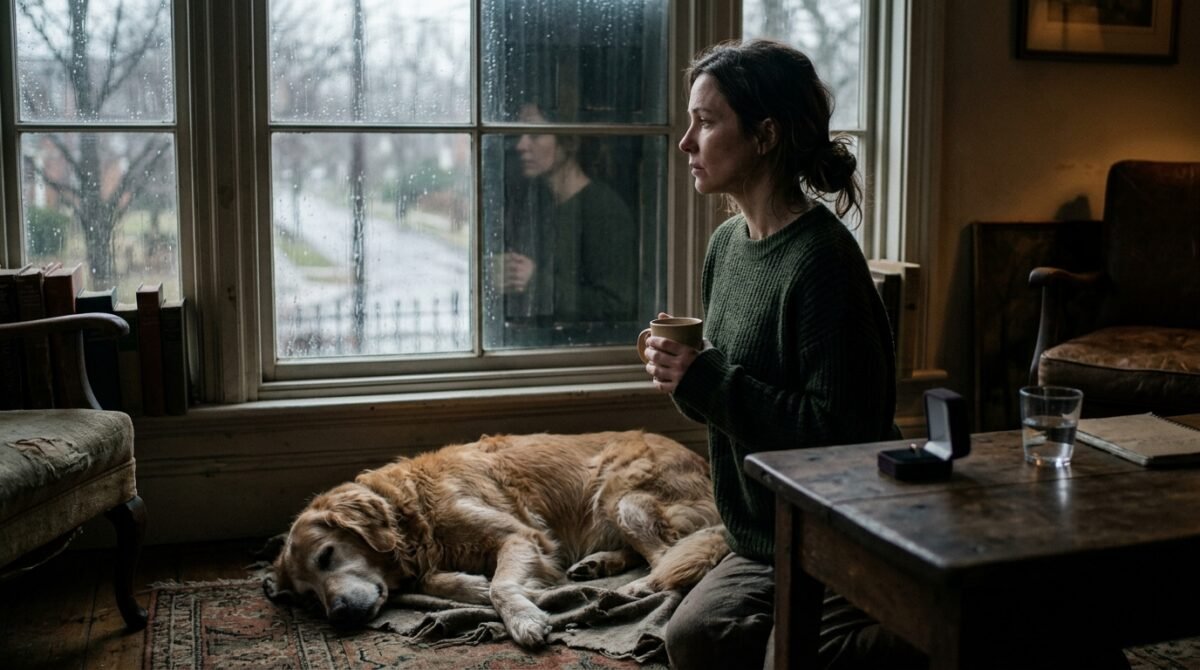
They say that love is blind, but I think it is more accurate to say that love is often deaf to the warning signs we choose to ignore. For three years, I believed I had found my person in Mark. We shared a home, a bank account, and the tentative, excited plans for a summer wedding that felt like the natural progression of our lives together. But beneath the surface of our domestic bliss, there was a simmering, unspoken tension regarding my constant companion: Barnaby.
Barnaby is a 14-year-old lab-mix rescue I adopted when he was just a puppy. He has been through law school with me, two career changes, the death of my father, and the isolation of the pandemic. He is not just a pet; he is the witness to my life. Yet, Mark always viewed him as an inconvenience—a shedding, aging presence that stood between us and the ‘pristine’ life he envisioned. I brushed off the comments about hair on the sofa and the cost of vet bills, assuming they were just typical growing pains of a couple merging their lives.
The mask slipped completely on a Tuesday evening, a night that started with take-out and ended with a shattered engagement. It wasn’t a slow drift apart, but a sudden, violent collision of values. Mark decided that the time for ‘compromise’ was over and that our future could only exist if I deleted a significant, living part of my past. He presented me with a choice that no partner should ever have to make, and in doing so, he forced me to realize that our definitions of family were fundamentally incompatible.
This story isn’t just about a dog. It’s about the boundaries we draw in the sand, the realization that some people view love as a finite resource to be managed, and the courage it takes to walk away from a future that asks you to betray your own integrity. When I handed back that ring, I wasn’t just ending an engagement; I was choosing the only version of myself that I could live with.
In the following sections, I will break down the slow erosion of our relationship, the gaslighting that led up to the final confrontation, and the aftermath of choosing a loyal friend over a man who viewed devotion as a threat. Let’s look at how a dream wedding became a wake-up call for what really matters in a life partner.
The Slow Creep of Resentment
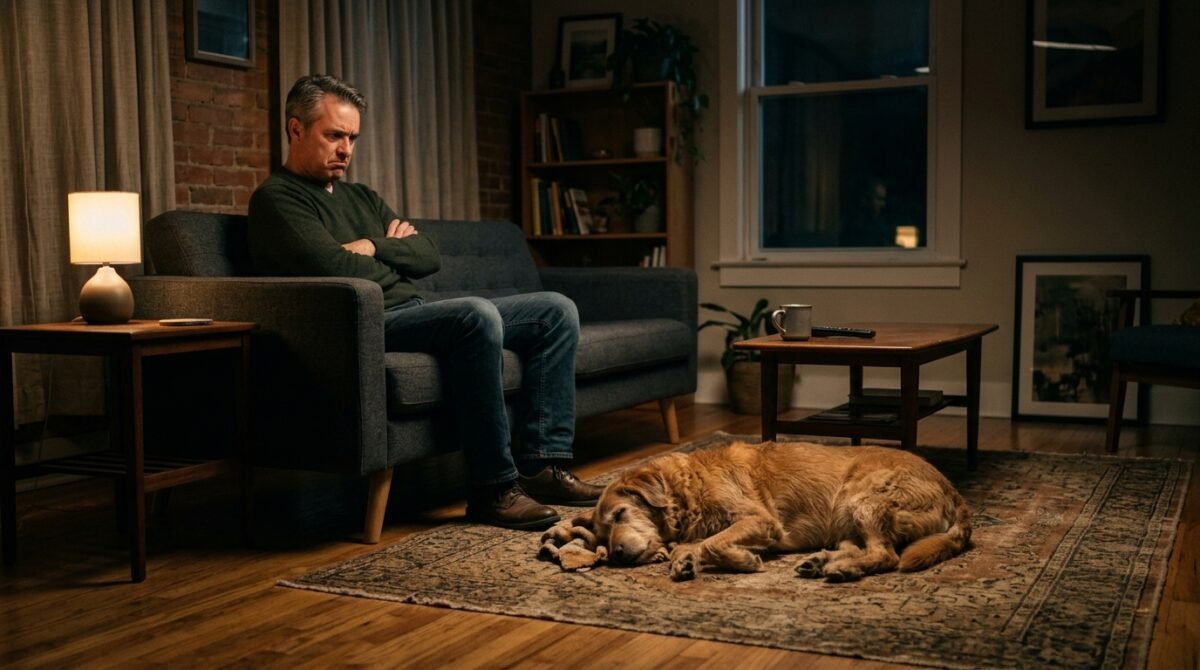
It didn’t start with an ultimatum. It started with subtle, biting comments that slowly chipped away at the joy of having Barnaby around. Mark would come home from work, step over a chew toy, and sigh with a theatrical heaviness that made me feel like I was hosting a disaster rather than living in a home. He would compare our living space to the sterile, minimal apartments he saw on Instagram, suggesting that my dog was the primary reason our home didn’t look like a showroom.
I tried to appease him. I hired professional groomers twice a month, bought expensive air purifiers, and kept the house spotless. I thought if I solved the ‘problem’ of the dog’s presence, the resentment would vanish. I was wrong. The resentment wasn’t about the hair or the smell; it was about the fact that I had a priority in my life that he could not control or override.
“I just think it would be nice, once, to come home and not have to worry about stepping in something or having fur on my suit. Is that really so much to ask for in our own house?”
— Mark during a dinner conversation
The requests started to get more specific. At first, it was ‘no dogs on the bed.’ I complied, even though it broke my heart to hear Barnaby pacing at night. Then it was ‘no dogs in the living room while we eat.’ I complied. Each concession felt like a small death of my autonomy, but I was so invested in the ‘us’ narrative that I ignored the sinking feeling in my gut. I told myself I was being a supportive partner by making space for his preferences.
Looking back, I see the pattern clearly now. He wasn’t asking for consideration; he was testing my boundaries to see how much of my identity I would sacrifice for the sake of his comfort. Every time I said ‘yes’ to his demands, he grew bolder, and my own voice grew quieter. It is a slow, insidious process, and it happens much faster than you realize.
By the second year, the tension was palpable. My friends stopped coming over because they felt the shift in energy. They noticed how I would constantly watch Barnaby, checking to see if he was bothering Mark, rather than enjoying the company of my friends. I had turned my home into a pressure cooker, all to prevent Mark from having another ‘bad day’ because of a creature who simply wanted to be near me.
The Financial ‘Burden’ Argument
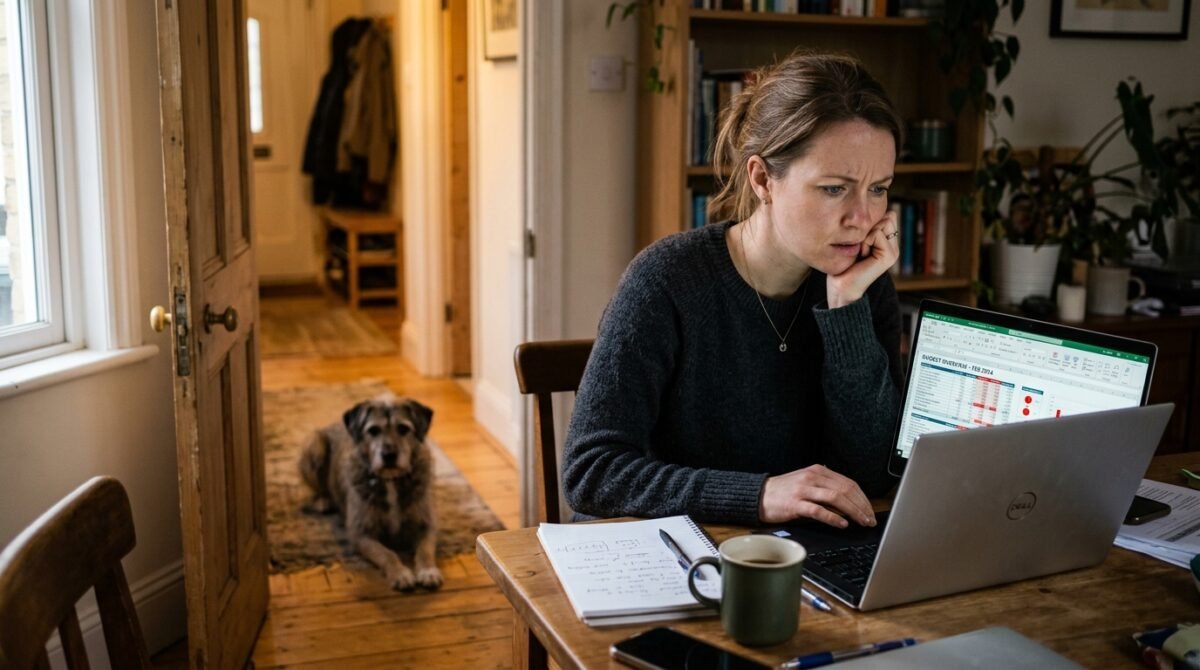
The conflict escalated when Barnaby needed specialized care for his arthritis. The vet bills, while manageable for me, became a point of intense contention for Mark. He saw the money I spent on Barnaby’s health as money that should have been redirected toward our wedding fund or our shared savings account. He started keeping a mental ledger, counting every dollar I spent as if it were a direct theft from our joint future.
One Saturday afternoon, we were reviewing our budget when he brought up the ‘dog expense’ issue. He had prepared a spreadsheet, which he presented to me with a smug, calculated expression. He categorized every vet visit, prescription, and high-quality food purchase as a ‘non-essential luxury’ that was stalling our progress toward buying a house. I was shocked that he felt entitled to dictate how I spent my personal income, let alone how I cared for a living creature I had committed to long before I met him.
“Look, I’ve crunched the numbers. If we cut the non-essential spending on the dog, we could have the down payment for the house six months earlier. It’s simple math, and it’s about our future, not just your past.”
— Mark explaining his ‘budget’
I tried to explain that Barnaby’s life was not a line item on a balance sheet. He was a family member. I reminded him that I had always been financially independent and that my contributions to our shared goals were already meeting my commitments. But Mark didn’t want to hear about ethics or emotional bonds; he wanted to talk about efficiency. He viewed my dog as a depreciating asset that was actively hurting our net worth.
The argument lasted for hours. I felt sick to my stomach as I realized he wasn’t just worried about the money—he was using the money as a weapon to make me feel guilty for loving something more than his financial plan. It was a cold, calculated attempt to make me feel irresponsible and selfish for choosing to care for an aging dog.
I kept firm on the budget, but the damage was done. The seed of doubt had taken root. I started to wonder if he really cared about our future, or if he just wanted to mold me into a version of a partner that suited his rigid, soulless vision of life. I realized that if I gave in now, there would always be another ‘line item’ in my life that he would try to cut.
The Tuesday Night Ultimatum
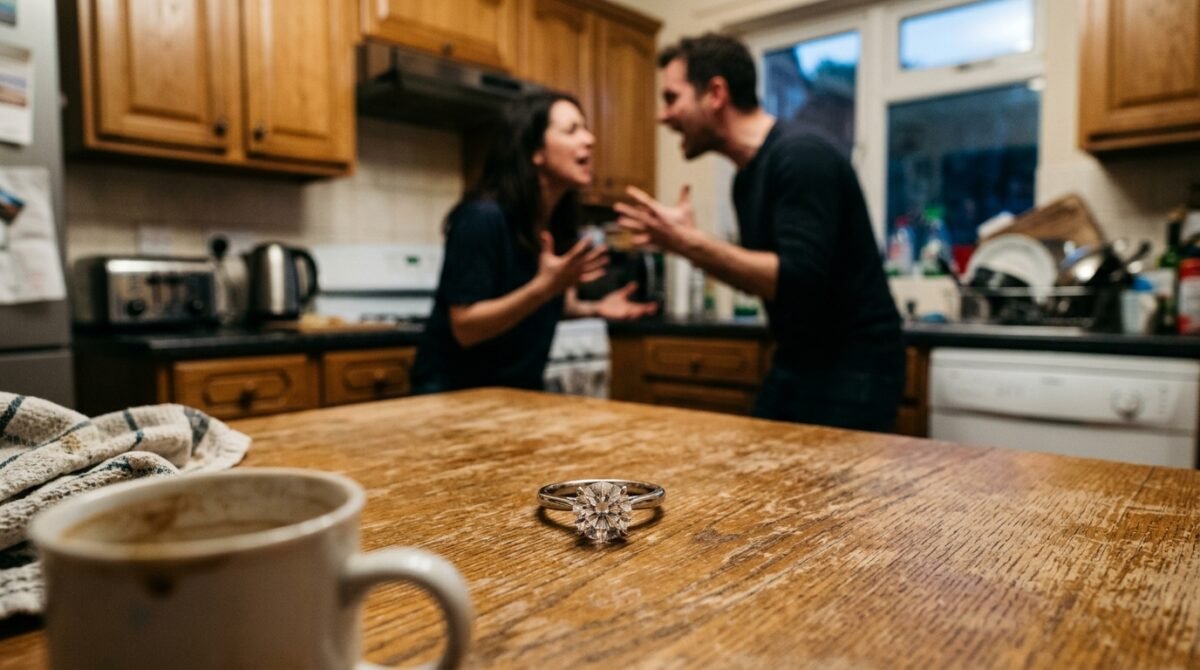
The breaking point arrived on a rainy Tuesday. I had come home from a long day at the office to find the house smelling of bleach. Barnaby was locked in the laundry room, pacing and whining. My heart stopped. I immediately let him out, and he rushed to me, trembling. I walked into the kitchen to find Mark sitting at the table, looking like he was waiting for a business negotiation to begin. He didn’t even look up when I entered.
He told me he had an appointment with a local shelter the next morning. He had already called them, claiming Barnaby was ‘becoming too much to handle’ and that he was ‘rehoming’ him for the sake of our household’s mental health. My blood went cold. The audacity of him acting without even consulting me, let alone behind my back, was staggering. I stood there, clutching my dog, feeling like a stranger in my own home.
“I’ve made the arrangements. It’s not fair to either of us that we live in this environment anymore. Tomorrow, I’m taking him to the facility. We’ll be much happier when it’s just the two of us, I promise.”
— Mark, moments before the breakup
I didn’t yell. I didn’t cry. A strange, calm clarity washed over me. I looked at Mark—really looked at him—and saw a man who was capable of cold-blooded cruelty, all framed as ‘doing what’s best for us.’ He was so convinced that I was so desperate for his approval that I would just roll over and accept this. He had completely underestimated the bond I had with my dog.
I told him that he had two choices. He could cancel the appointment and apologize, or he could pack his bags because he was no longer welcome in a home where he felt entitled to dispose of my family. He laughed, thinking I was testing him. He didn’t realize that in that moment, the wedding, the house, and the future we had planned ceased to exist for me. It was over, not because of a dog, but because of the character flaws he had finally revealed.
He spent the next hour trying to argue, trying to explain why his ‘logic’ was superior to my ’emotional attachment.’ It was the most pathetic display of arrogance I had ever witnessed. I walked into the bedroom, packed his essential bags, and put them by the front door. When I returned to the kitchen, I placed my engagement ring on the table. The silence in the room was absolute.
The Aftermath and the Move
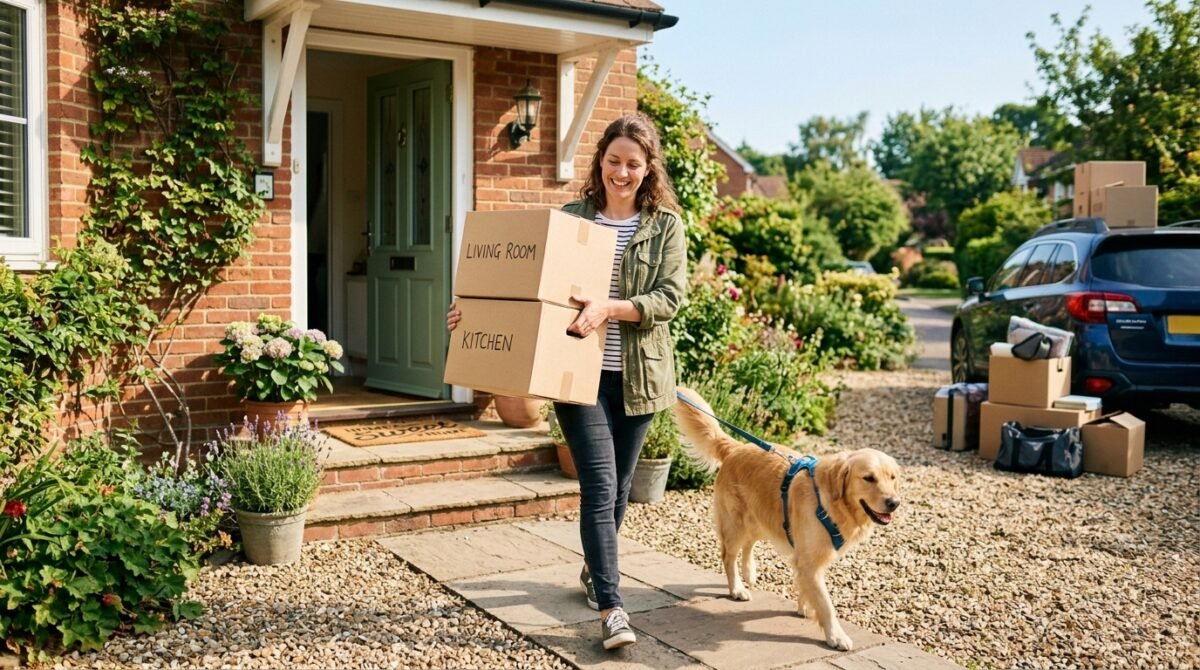
The next few days were a blur of logistics and emotional fallout. Mark couldn’t believe I was serious. He spent the first night on the couch, convinced I would come to my senses and beg him to stay. When I didn’t, he started to get angry, then desperate, then manipulative. He called his mother, who then called me, telling me that I was being ‘hysterical’ and throwing away a ‘good life’ over a dog that didn’t have much time left anyway.
Hearing that, even from his mother, only reinforced my decision. It wasn’t just Mark; it was a systemic lack of empathy in his entire family. They viewed the world through a lens of utility and convenience. I realized I would have spent the rest of my life feeling like I was being judged for my heart. I started packing my own things, as I owned the house we were living in. I told him he had to be out by the weekend.
“You are trading a man who loves you for an old animal that will be dead in a year. Is this really the hill you want to die on?”
— A text message from Mark’s mother
Moving out the things we had bought together was painful, but it was also cathartic. Every item that belonged to him felt like a weight being lifted from my life. I gave back all the gifts his family had given me. I wanted no ties left to that chapter of my life. Barnaby followed me from room to room, his tail wagging softly, as if he knew that the bad energy was finally leaving.
My friends were incredible. They showed up in droves to help me move his stuff and get the house back to feeling like a sanctuary. We had pizza on the floor, and for the first time in three years, I felt like I could breathe. I wasn’t worried about the carpet, or the smell, or the budget. I was just there, with my dog, in a space that was finally mine again.
Looking back, I think about the wedding we almost had. I think about the dress, the venue, the money we would have spent, and the life we would have built. It would have been a beautiful facade, a perfectly curated, loveless prison. I am so glad I found out who he was before I signed a marriage license. I saved myself a lifetime of feeling small.
Community Reaction: Reddit Weighs In
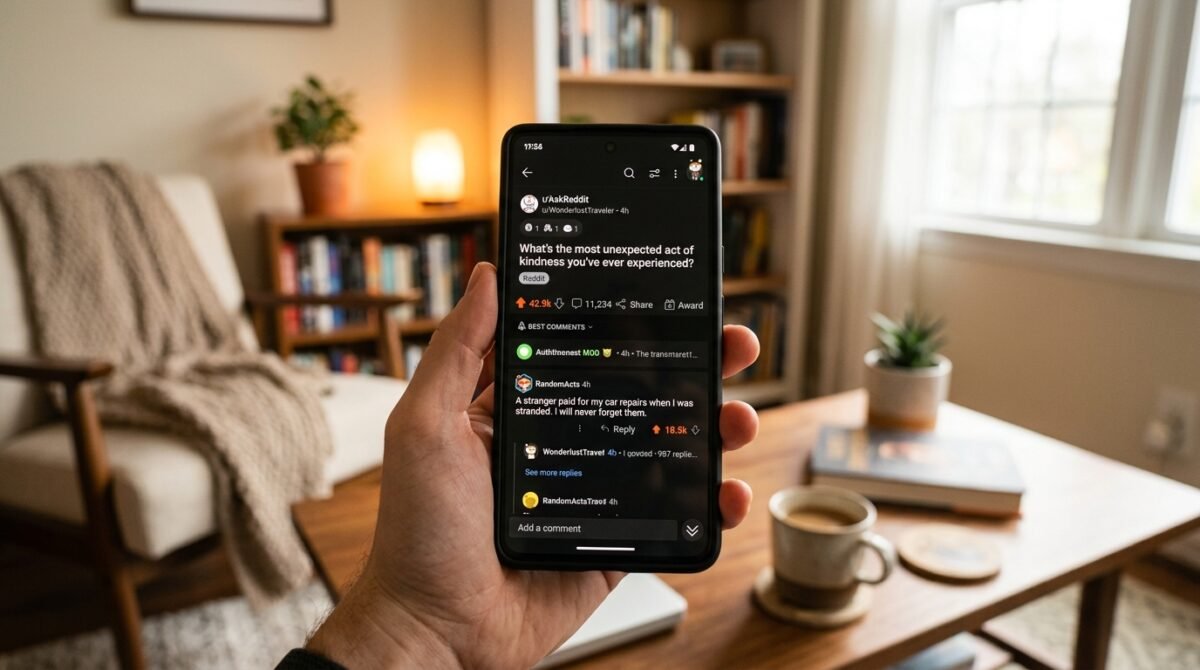
When I finally posted the full story on a popular relationship subreddit, the response was overwhelming. Thousands of people reached out to share their own experiences with partners who demanded they give up their pets. The consensus was loud and clear: an ultimatum regarding a pet is a massive red flag. Many commenters pointed out that the dog was just a proxy for the power he wanted to exert over me.
The top comment came from a user who had been through a similar situation. They emphasized that a partner who forces you to choose between them and your existing family (pets included) has already failed the test of partnership. They argued that anyone who can look at a 14-year-old animal and see only an obstacle to their own lifestyle is fundamentally lacking in the empathy required for a healthy relationship.
“This wasn’t about the dog. This was a power play. He wanted to see if he could make you discard something you love just to prove he was your #1 priority. You made the right choice, OP. Anyone who demands you abandon a senior pet is not a partner; they’re an antagonist.”
— u/DogLover4Ever (Top Comment, 32.5k upvotes)
Others brought up the legal and ethical implications. Some pointed out that a man who would secretly contact a shelter to ‘rehome’ a dog he doesn’t own is capable of much worse. They warned that if we had children, he would likely be just as controlling and dismissive of their needs if they didn’t fit into his ‘ideal’ vision of family life. It was a sobering realization that made me feel even more grateful for the breakup.
There were, of course, a few dissenting voices. Some people argued that maybe I was too attached to the dog and that in a marriage, you have to prioritize your spouse. But the community largely shut those voices down, pointing out that ‘prioritizing your spouse’ doesn’t mean ‘doing whatever they want at the expense of your values.’ True partnership is about alignment, not subordination.
The thread became a safe space for people to vent about the ‘hidden costs’ of their relationships. It turned from a story about a breakup into a broader discussion about what we owe to those who have been with us through thick and thin. It was heartening to see so many people standing up for the ‘silent’ members of their families, the pets who offer unconditional love in exchange for nothing more than a warm spot on the floor.
The Psychology of the ‘Controlling Partner’
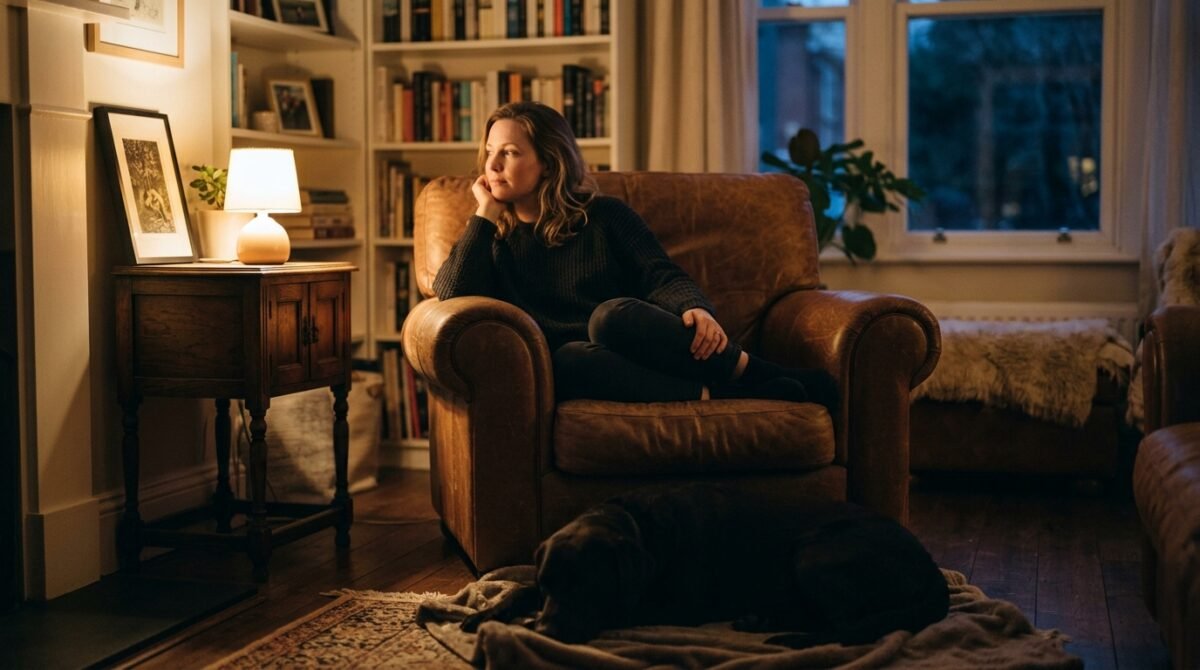
I spent a lot of time in therapy after the breakup, trying to understand why I had stayed so long. My therapist helped me see that Mark was a classic example of a partner who uses ‘logic’ and ‘practicality’ as a tool for emotional manipulation. By reframing his demands as ‘reasonable’ or ‘for our own good,’ he made me question my own sanity for wanting to keep my dog.
He didn’t want a partner; he wanted a subordinate who would help him build the life he wanted. My independence and my prior commitments were a threat to that control. It wasn’t about the dog’s hair or the cost; it was about the fact that the dog was a reminder of a life he didn’t participate in and couldn’t control. He needed to eliminate the competition for my affection and attention.
“When a partner starts using words like ‘efficiency,’ ‘budget,’ and ‘standard of living’ to justify removing things that bring you happiness, they aren’t trying to improve your life. They are trying to edit you into a person that is easier for them to manage.”
— My therapist, during a session
I realized that I had been slowly losing myself, piece by piece, to keep the peace. I had stopped doing things I enjoyed, stopped seeing friends who he didn’t ‘get along with,’ and started filtering my own thoughts before speaking them out loud. It was a form of self-erasure that I hadn’t even noticed until it was almost complete.
The dog was the catalyst for the end, but the end would have happened regardless. If it wasn’t the dog, it would have been my job, my hobbies, or my family. He would have found some other ‘practical’ reason to demand I change my life to suit his preferences. I am thankful it was the dog, because Barnaby was the one thing I would never, ever compromise on.
Understanding this dynamic was the most painful part of my recovery, but it was also the most liberating. I learned that my boundaries are not negotiable, and that anyone who asks me to lower them is not worthy of my time or my love. I am now in a much better place, one where I am valued for exactly who I am, and where my love for my dog is seen as a beautiful quality, not a flaw.
Redefining ‘Family’
One of the most important things I’ve learned since the breakup is that family is defined by loyalty, not by biology or social expectations. Mark’s family looked at me with pity, as if I had made a terrible mistake. They didn’t understand that for me, a commitment is a commitment, whether it’s to a human or an animal. A 14-year-old dog has earned his place at my side through years of devotion.
I have started spending more time with people who understand this. I’ve found a community of fellow pet owners who value their animals as family members. We don’t talk about ‘rehoming’ or ‘costs’; we talk about the joy of having a companion who has seen us through the hardest parts of our lives. It’s a different kind of connection, one based on mutual respect and genuine care.
“People who don’t understand the bond with a pet will never understand the depth of your soul. You didn’t just save your dog; you saved your spirit.”
— A friend after the breakup
I am no longer interested in the ‘traditional’ life path that Mark wanted. I am interested in a life that is authentic, where my priorities are respected and my choices are my own. I have discovered a new sense of purpose in advocating for senior dogs and helping others who are facing similar dilemmas with their partners.
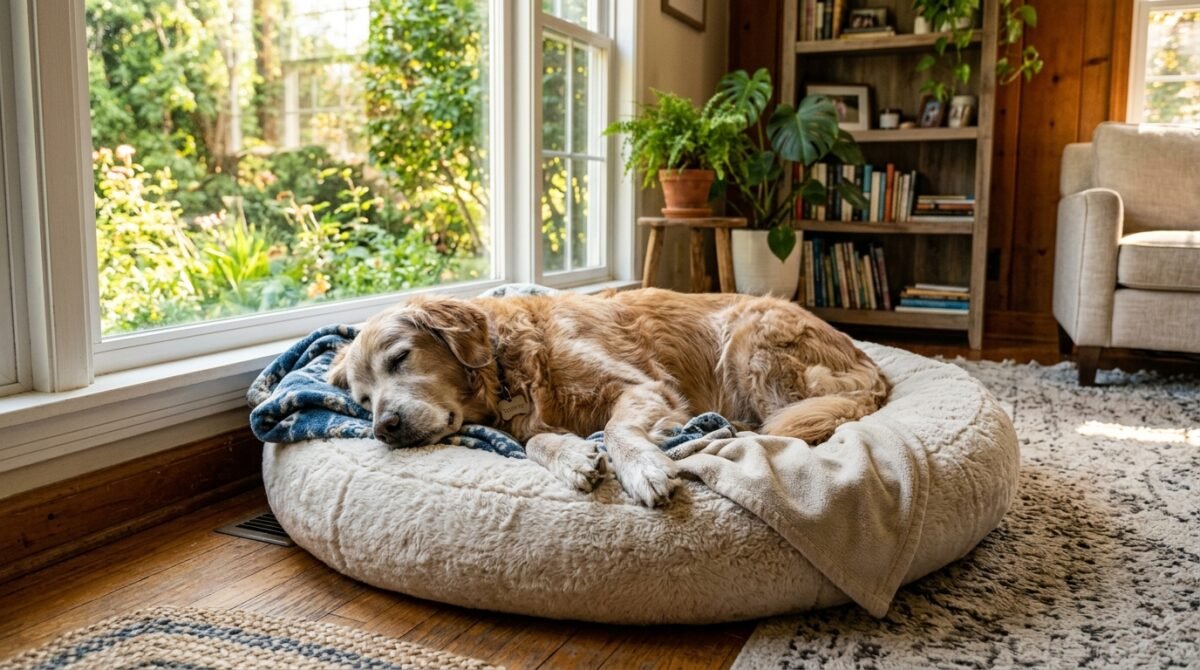
Barnaby is now 15. He is slower, and he spends most of his day sleeping in the sun, but he is happy. He is safe. And he knows he is loved. That is enough for me. I don’t need the house in the suburbs or the status of being a ‘fiancée.’ I have a life that is my own, and that is worth more than any wedding.
If you are in a situation where you feel like you have to choose between your integrity and your relationship, take this as your sign: choose your integrity. Choose yourself. Because the right person will never, ever ask you to betray the things that make you who you are. They will love you, and your dog, and your history, and they will be grateful to be a part of it all.
The Legal and Ethical Reality of Pets
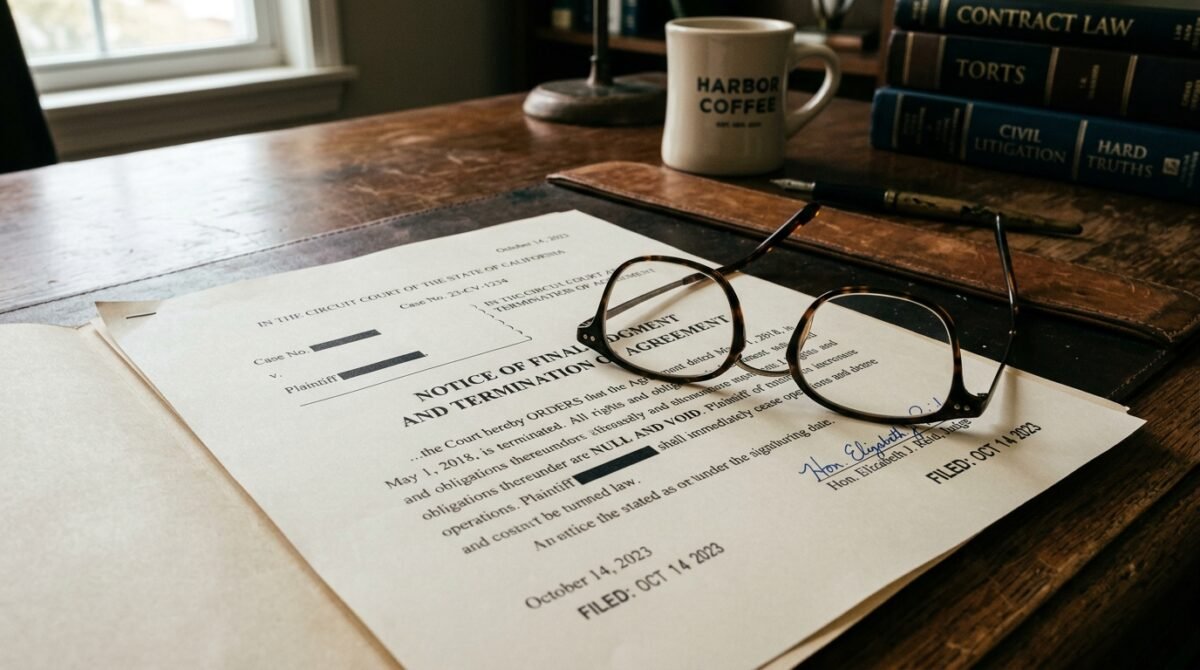
When we were in the middle of the argument, Mark kept bringing up the legal ‘ownership’ of the dog. He thought because he was paying for a portion of the household expenses, he had a say in the dog’s fate. He didn’t understand that while the law might view a dog as property, our personal morality should view them as sentient beings with rights to our care.
I consulted with a lawyer just to be sure, and they confirmed that the dog was legally mine, as I had adopted him years before I met Mark. Mark had no legal standing to rehome him. The fact that he even *tried* to do it behind my back shows a complete disregard for not just my feelings, but the law. It was an act of attempted theft, disguised as an ‘arrangement.’
“Your pet is not a piece of furniture you can trade in for a newer model. If your partner treats them like that, they will treat you like that once you lose your ‘newness’ to them.”
— A legal advisor’s perspective on pet custody
This reality check was the final nail in the coffin for our relationship. I realized that Mark viewed everyone and everything in his life as a resource to be optimized. If I weren’t performing to his standards, or if I were seen as a ‘cost’ instead of a benefit, I would be next. It was a chilling realization that confirmed I had made the right decision.
People often get caught up in the ‘who owns the dog’ debate, but the real question is ‘who earns the dog’s loyalty.’ Mark never put in the work. He never walked him, he never brushed him, he never cared for him when he was sick. He wanted the status of being a ‘pet owner’ without the responsibility of being a ‘pet guardian.’
I urge anyone who is in a relationship where their pet is being treated as an inconvenience to look at the big picture. Are you being treated with the same cold, calculating lens? If so, it’s time to ask yourself if this is the kind of life you want to lead. Don’t let someone else’s lack of heart become your own burden.
Moving Forward: A Life Without Ultimatums

Life is much quieter now, but it is a good kind of quiet. I have spent the last few months focusing on myself and on Barnaby. We go for slow walks in the park, we sit on the porch in the evening, and we enjoy the peace of a home that is truly ours. I have even started dating again, but I’ve made one thing very clear from the start: my dog is part of the package.
The beauty of this boundary is that it filters out the wrong people immediately. I don’t have to waste time wondering if someone is ‘the one’ because the moment they show a lack of care for my dog, I know they aren’t. It’s a very efficient way to find people who share my values, and it has saved me a lot of heartbreak in the long run.
“The right partner won’t just tolerate your dog; they will be the one who sits on the floor and brushes him when you’re too tired.”
— A piece of advice from a friend who ‘gets it’
I have learned that the things we think we ‘need’ to be happy—the perfect wedding, the perfect partner, the perfect life—are often just expectations we’ve adopted from others. When you peel them away, what’s left is what really matters: your health, your peace, and the people (and pets) who love you for who you are.
I am grateful for the experience, as hard as it was. It taught me who I am and what I am capable of. I am capable of saying ‘no.’ I am capable of walking away from a life that doesn’t fit. And I am capable of choosing love over convenience. That, to me, is the greatest lesson of all.
If you are reading this and you feel stuck, know that you have the power to change your story. You don’t have to live by someone else’s rules, and you don’t have to sacrifice your soul for a ring. Your life is yours to build, and you deserve to share it with someone who respects the things that make you human.
Reflections on the ‘Perfect Wedding’ Trap
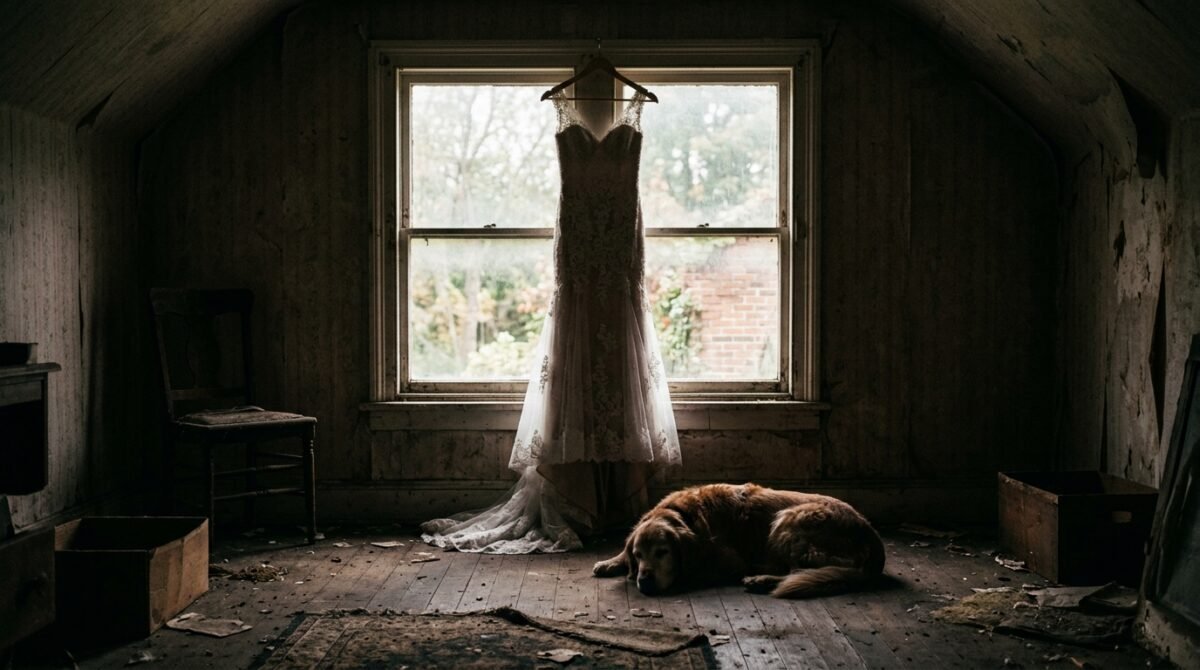
We get so caught up in the idea of the wedding—the day, the photos, the status—that we forget that the wedding is just a single day, while the marriage is a lifetime. Mark was obsessed with the wedding. He wanted everything to be perfect for the public, even if it meant sacrificing the private reality of our life. He wanted the ‘perfect’ wife to match his ‘perfect’ life, and my dog didn’t fit that image.
It’s easy to see now how empty that dream was. He didn’t want a partner; he wanted an accessory. And when I refused to be an accessory, he tried to ‘edit’ me. It’s a common story, but it’s one that we rarely talk about because we’re so embarrassed that we were the ones who were fooled. We shouldn’t be embarrassed. We should be proud that we woke up.
“A wedding is just a party. A marriage is a partnership. If your partner isn’t on your team, you’re not getting married; you’re just signing up for a long, slow argument.”
— A piece of advice from a family mentor
I think about the money I ‘lost’ on the wedding planning, but I see it as money well spent to learn a valuable lesson. If I had gone through with that wedding, I would have spent the rest of my life trying to live up to someone else’s standards. I would have been miserable, and I would have been alone in my own marriage.
I hope that by sharing my story, I can help someone else see the signs before they go too far. Don’t ignore the little things. Don’t ignore the way your partner treats the things you love. Because those ‘little things’ are usually the biggest indicators of who your partner really is. They show you their true heart, and you should listen.
You are worthy of a partner who celebrates your past, respects your present, and is excited about your future. You are worthy of a love that doesn’t ask you to discard the parts of yourself that make you human. Keep your standards high, and never, ever settle for anything less than that.
Conclusion
Choosing to end my engagement was the hardest decision of my life, but it was also the most important. I learned that my love for my 14-year-old rescue dog was a measure of my character, not a flaw. A partner who demands you abandon your commitments for their comfort isn’t someone who deserves your devotion—they are someone who is looking to control your world until there is nothing left of you.
I am now living a life that is truly my own, surrounded by love and loyalty. Barnaby is still with me, and every day I spend with him is a reminder that I made the right choice. The wedding didn’t happen, the house is no longer ‘perfect,’ but I have found something much better: a life built on a foundation of integrity and mutual respect.
What about you? Have you ever had to choose between a partner and a pet, or faced an ultimatum that made you realize the relationship was over? Let’s discuss in the comments below—I want to hear your stories of choosing yourselves.
What's your verdict on this dilemma?
Vote below to contribute to the official community consensus.

Have a Dilemma Keeping You Up at Night?
Share your real-life feud, wedding chaos, or relationship crossroads anonymously with our editorial team.
What do you think ?
0 Comments🛡️ Comments are moderated to protect community integrity. Your comment will appear once approved by the editorial team.