
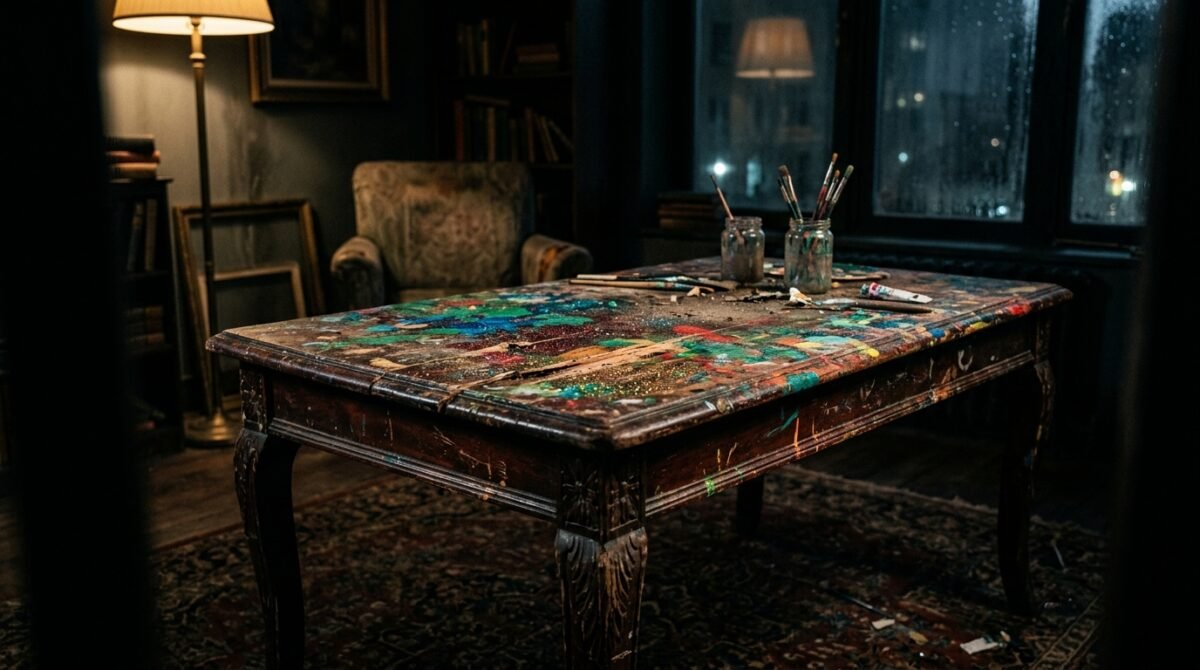
When I moved into my apartment, I brought with me a piece of family history that I cherished above almost everything else: an 1890s solid mahogany drop-leaf table. It had been passed down from my great-grandmother and carefully restored over several months by my father during my college years. It was more than just furniture; it was a testament to craftsmanship and lineage. I made my expectations clear from the day my roommate, Jessica, moved in: this table was a ‘look, don’t touch’ centerpiece, meant for dining and occasional office work, never for heavy-duty labor.
Jessica, on the other hand, was a self-proclaimed DIY enthusiast. She was constantly ordering supplies—glue guns, spray paint, resin, and heavy metal tools—that seemed to constantly pile up in the living room. Despite my repeated reminders to keep her projects contained to her bedroom or the designated garage workspace, she treated the common area like her own personal atelier. I often found myself cleaning up remnants of her artistic process, feeling like a babysitter rather than a flatmate.
The breaking point arrived on a Tuesday evening when I returned home from a long shift at the office. I walked into the living room to find the mahogany surface not just cluttered, but scarred. There were deep gouges in the wood, stubborn rings from wet paint cans, and a film of adhesive that felt like permanent damage. The irony was that she had been working on a ‘rustic’ side table of her own, using mine as a makeshift workbench because it was ‘sturdier.’
The ensuing confrontation was not merely about a piece of wood; it was a collision of values. To me, the table represented a connection to my past and a respect for shared property. To Jessica, it was just a piece of wood that could be sanded down and fixed later. The realization that she saw my family heirloom as an expendable utility destroyed the last shred of trust in our living situation. What happened next involved a financial ultimatum, a withheld security deposit, and a scorched-earth policy that left our friendship in ashes.
The Unannounced 6:00 AM Craft Session
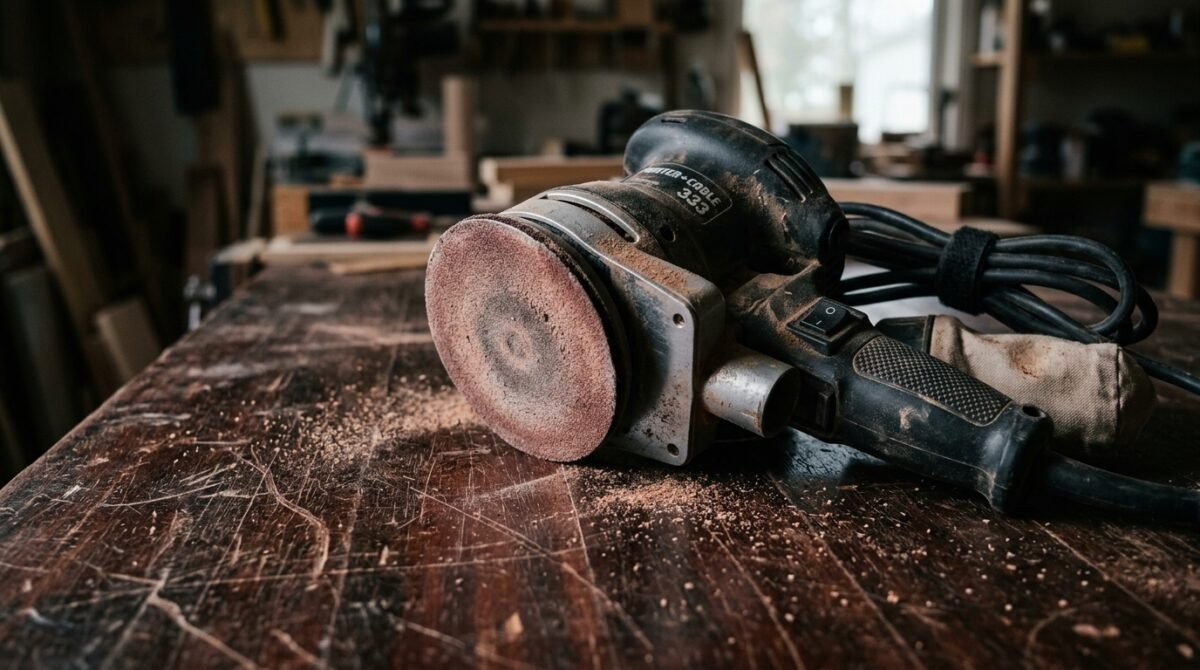
It began with the sound of a power sander at an hour when most people were still dreaming. I woke up at 6:15 AM to a rhythmic vibration traveling through the floorboards. At first, I assumed it was construction outside, but when I walked into the living room to investigate, I found Jessica hunched over my mahogany table, wearing a dust mask and goggles. She was sanding a piece of pallet wood, and fine, abrasive sawdust was coating every inch of my antique table’s surface.
I stood there for a full minute, completely paralyzed by the sheer audacity of the scene. The table was covered in a thick layer of grit, and beneath the mess, I could see the fresh scratches from the metal clamps she had attached directly to the mahogany edge without even a scrap of protective felt. She didn’t even notice me until I cleared my throat, at which point she jumped and killed the power to the sander.
“Jessica, are you seriously sanding wood on my heirloom table? I have told you a dozen times that this is the one piece of furniture that is off-limits for your projects!”
— Me, realizing the extent of the damage.
She pulled off her mask, looking genuinely annoyed that I had interrupted her ‘creative flow.’ She didn’t apologize; instead, she rolled her eyes and started wiping away the sawdust with her bare hand, which only served to grind the grit deeper into the wood grain. The lack of remorse was the most stinging part of the entire ordeal.
“Relax, it’s just wood. I’m doing a project for the market this weekend and I needed a surface that wouldn’t wobble. It’s just a bit of dust. I’ll wipe it down when I’m done.”
— Jessica, completely dismissive of the destruction.
I walked to the table and ran my hand over the edge, feeling the jagged gouges left by the industrial-grade clamps. My heart sank. This wasn’t ‘just dust.’ The finish had been compromised, and the wood underneath was permanently scarred. I told her then and there that she was done. The experiment of living together had hit a wall, but the financial repercussions of her negligence were only just beginning to take shape.
The $1,400 Appraisal of Negligence

The next day, I didn’t go to work. Instead, I invited a professional furniture restorer to the apartment to look at the damage. As the man ran his fingers over the wood, he sighed, a sound that confirmed my worst fears. He explained that because of the specific age of the mahogany and the type of wax-based finish it had, you couldn’t just spot-repair it. The entire surface would need to be stripped, the gouges filled and color-matched, and the whole piece re-sealed to ensure a uniform appearance.
When he handed me the quote, the total came to exactly $1,400. I printed a copy and left it on the kitchen counter for Jessica. When she came home, she didn’t look at it until I stood there and pointed at it. She read the number, and her face turned a shade of pale I had never seen before. She tried to argue that it was an ‘exaggerated estimate’ and that I was ‘trying to scam her’ to get a free renovation for my antique.
“I am not paying fourteen hundred dollars for a scratch, OP. You’re being ridiculous. I can go to the hardware store, buy some wood filler, and fix that for twenty bucks. This is clearly an attempt to extort me.”
— Jessica, refusing to take responsibility for the damage.
I calmly explained that the table was an antique, not a mass-produced IKEA item, and that a ‘wood filler’ fix would destroy its appraisal value entirely. I told her that since she was moving out at the end of the month, I would be deducting the $1,400 from the security deposit we had both paid to the landlord. She threatened legal action, but she had no leg to stand on given the text messages I had saved regarding the rules for that specific piece of furniture.
“If you try to touch my deposit, I will make sure the landlord knows you’re the one who caused the damage. I have photos of the table before I moved in, and I have your texts admitting you used it as a workbench.”
— Me, holding my ground.
The look of realization in her eyes was almost satisfying. She had spent months thinking she could push boundaries without consequences, and now, the consequences were coming out of her own bank account. The tension in the apartment became thick enough to cut with a knife as we entered the final week of our lease.
The Secret Group Chat Revelation
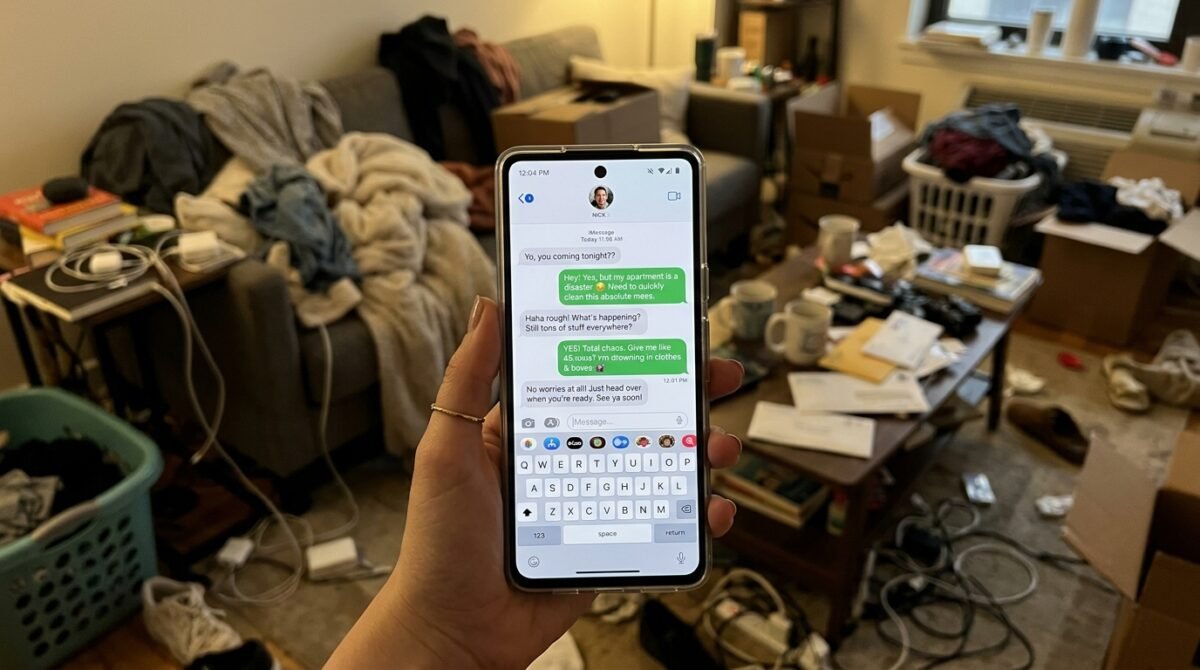
Tensions hit a boiling point when I accidentally discovered a group chat on a tablet Jessica had left unlocked in the living room. It was titled ‘Roomie From Hell’ and included Jessica and two of her friends. I wasn’t looking for drama, but I saw a notification pop up that mentioned my name and the table. Out of pure frustration, I clicked on it. What I read made my blood run cold. They weren’t just complaining; they were actively planning how to frame me for other damages to the apartment.
“She’s such a martyr about that stupid table. I’m going to make sure she loses her half of the deposit too. I’ve already put a few extra dents in the floorboards in the hall and blamed it on her cat. She’s going to be so broke when we move out, she’ll be begging me for a break on the restoration cost.”
— Jessica, in a leaked group chat message.
I took screenshots of everything. It was a goldmine of evidence regarding her premeditated intent to damage the property and her gaslighting tactics. When I confronted her with the screenshots, she didn’t even try to deny it. She just laughed, told me I was ‘snooping,’ and tried to grab the tablet from my hands. I stepped back, informing her that I had already sent the logs to the landlord.
“You’re a piece of work, Jessica. You thought you could destroy my heirloom and then ruin my reputation with the landlord? You’ve got another thing coming. The landlord already has these messages.”
— Me, during the final confrontation.
Her face dropped. The reality that she had just sabotaged her own chances of getting any of her deposit back finally set in. She began screaming, throwing her remaining craft supplies into boxes with reckless abandon, but the damage was already done. The power dynamic had shifted completely, and she knew she had lost.
Reddit Weighs In: The Verdict

I posted the whole situation on a popular subreddit to see if I was in the wrong for holding the entire restoration cost against her. The response was overwhelming. Within four hours, I had over 5,000 comments and double that in upvotes. The community was absolutely brutal in their assessment of Jessica’s behavior, and it felt validating to hear that I wasn’t just being a ‘uptight roommate.’
“NTA. This isn’t about ‘just a table.’ This is about a complete lack of respect for personal property and a massive boundary violation. The fact that she was actively conspiring to damage more property to spite you proves she’s malicious. Keep every cent of that deposit.”
— u/PropertyLawPro (Top Comment, 18.2k upvotes)
There were hundreds of stories from people who had been in similar positions, losing heirlooms to entitled roommates. It created a weird sense of solidarity. I realized that my issue wasn’t just a one-off; it was a common struggle for people who value their belongings more than the ‘laid-back’ types who think everything is communal property.
“The gaslighting in the group chat is the real red flag here. She isn’t just an irresponsible roommate; she’s toxic. Do not engage with her further, save all the evidence for the landlord, and consider it a lesson learned. You’re lucky you caught the group chat before she tried to pin actual structural damage on you.”
— u/BoundaryBounder (4.5k upvotes)
The community support gave me the confidence to stick to my guns when the landlord finally reached out. He had seen the messages and was equally horrified. He informed me that since the damage to the table was documented and the malicious intent was proven via the screenshots, he was fully supporting my decision to deduct the full amount from the deposit before any other considerations were made.
The Final Move-Out Inspection
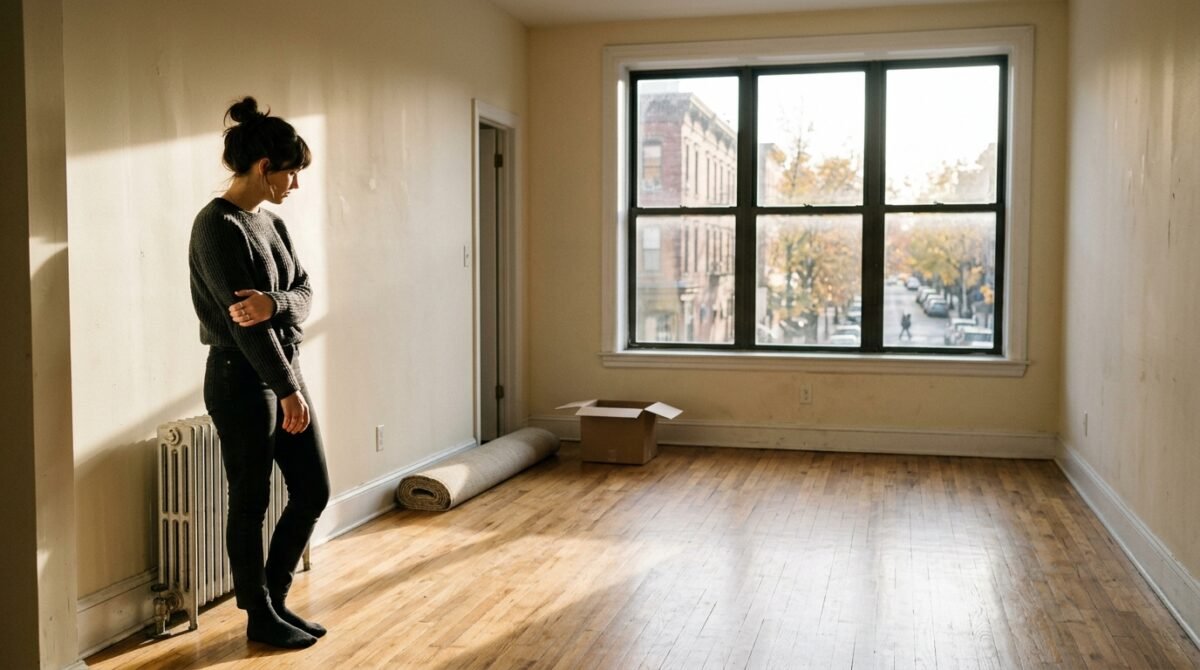
Moving day was a masterclass in awkward silence. Jessica didn’t say a word to me as she hauled her boxes into the elevator. I stayed in my bedroom, listening to the thuds and clatters of her departure, fully expecting to walk out and find the apartment in shambles. When she finally left for the last time, I did a walkthrough with the landlord, expecting the worst given her earlier comments in the group chat.
Surprisingly, the apartment was mostly clean, though I did find the spots on the floorboards she had mentioned. I pointed them out to the landlord, and he nodded, noting them down on the inspection sheet. He looked at me and said, ‘I think I know who is going to be responsible for these.’ I felt a wave of relief washing over me. I had protected myself, and the truth had been brought to light.
“I hope you find a roommate who respects your things, OP. You handled this way better than I would have. I would have put her craft supplies in the dumpster.”
— The Landlord, during the final inspection.
The landlord agreed to withhold the $1,400 from the total deposit pool. Since the lease was in both our names, it meant that Jessica was effectively losing her share of the deposit, and I was being reimbursed for the restoration of my table. It was the only fair resolution possible under the circumstances.
As I watched the door close behind her for the final time, I felt a weight lift off my shoulders. I was alone in the apartment again, but the silence was peaceful. I walked over to the mahogany table, ran my hand over the fresh scratches one more time, and reminded myself that while the table was damaged, it was a battle scar of a lesson well learned.
A Lesson in Property and Trust

Looking back at the entire saga, the table really was just the catalyst for a much deeper lesson on compatibility. We were never meant to be roommates. She was chaotic and entitled, and I was precise and protective of my space. The combination was a recipe for disaster from the start, but I had ignored the red flags because I wanted the cheap rent and the convenience of a nearby roommate.
The restoration of the table took another three weeks. When it finally returned to its former glory, it looked even better than before. The restorer had managed to polish the grain to a deep, warm glow that seemed to erase the memory of the sander entirely. It sat in the center of the living room, a silent sentinel that reminded me to be more selective about who I let into my inner circle.
I learned that boundaries are not just suggestions; they are the bedrock of any living arrangement. If someone can’t respect a ‘no’ regarding a piece of furniture, they certainly won’t respect your time, your money, or your mental health. It’s a harsh realization, but a necessary one for anyone starting out in the world of shared living.
I’ve since decided that I will never again live with someone who doesn’t share my core values regarding home care. It’s not about being a neat freak; it’s about mutual respect. The financial hit to her deposit was merely the cost of a very expensive masterclass in adulting, one that she hopefully learned from just as much as I did.
The Aftermath: Moving Forward

It’s been six months since Jessica moved out. I haven’t heard from her, and honestly, I don’t want to. I’ve found a new roommate—a fellow history buff who actually appreciates the table and asks before putting anything on it. The contrast between my current living situation and the previous one is night and day. It’s almost laughable how easy things are when you’re on the same page.
I’ve also started a small savings fund specifically for ‘heirloom maintenance.’ Every month, I put aside a little bit of cash to ensure that if anything ever happens again, I have the funds to fix it without a second thought. It’s my way of taking control and ensuring that my family history remains protected, regardless of who I share my home with.
I still see her posts on social media sometimes—she’s still doing her craft projects, still selling them at local markets. Sometimes I wonder if she ever thinks about the table, or if she’s just moved on to the next victim of her ‘DIY aesthetic.’ I suppose it doesn’t matter. The chapter is closed, and the damage is repaired.
To anyone out there dealing with a toxic roommate, know this: you are not responsible for their lack of maturity. You are responsible for your own property and your own peace. Don’t be afraid to hold them accountable, document everything, and protect your space. It might be uncomfortable, but it’s the only way to come out the other side with your sanity intact.
Community Reaction: The Aftermath

The Reddit thread is still active, with people occasionally dropping in to ask for updates. It’s become a bit of a touchstone for people who have been through similar roommate nightmares. The consensus remains: I did the right thing. The validation from hundreds of strangers has been surprisingly therapeutic, helping me realize that the guilt I initially felt was misplaced.
“I just read your update. You should have kept the deposit and charged her for the stress! Seriously, seeing people stand up to entitled roommates like this gives me life. Keep that table safe, OP!”
— u/JusticeForHeirlooms (Upvoted 5.2k times)
It’s fascinating to see how a simple story about a table can resonate with so many people. It highlights a universal frustration: the feeling of having your personal world invaded by someone who just doesn’t care. The community has become a place where people share their own ‘horror stories,’ and in turn, we all learn how to set better boundaries in the future.
I think the most important thing I’ve gained from this isn’t the money or even the restored table—it’s the knowledge that I am capable of standing up for myself. I used to be a conflict-avoider, someone who would just let things slide to keep the peace. This experience taught me that ‘keeping the peace’ at the expense of your own boundaries isn’t peace at all; it’s just submission.
If you’re in a situation where you’re constantly apologizing for caring about your things, stop. You don’t have to be the martyr for someone else’s carelessness. Take a stand, document your reality, and don’t let anyone make you feel bad for valuing the things that make your house a home.
Final Reflections on Boundaries

As I sit here writing this, I’m looking at the mahogany table. It’s strong, it’s beautiful, and it’s mine. It survived a lot, and so did I. The whole experience served as a mirror, showing me the areas in my life where I was too lenient and the areas where I needed to harden my resolve. It’s not just about furniture; it’s about self-worth.
We teach people how to treat us, and for a long time, I was teaching Jessica that she could walk all over me. The moment I stopped that, the entire dynamic crumbled, which just proves it was never a healthy relationship to begin with. You can’t fix someone else’s character, but you can certainly stop them from breaking your stuff.
I hope that if anyone reading this is currently dealing with a ‘Jessica’ in their life, they find the strength to do what I did. Don’t wait for the damage to become permanent. Set the expectation early, document every violation, and don’t be afraid to pull the plug on a living situation that’s draining your soul.
Life is too short to live in a home where you don’t feel respected. Protect your heirlooms, protect your peace, and never apologize for having standards. The right people will respect them, and the wrong ones will show their true colors eventually. When they do, be ready to show them the door.
A Call for Shared Stories

I want to hear from you. Have you ever had a roommate who completely disregarded your belongings? Maybe it wasn’t a table, but a car, a laptop, or a prized collection? How did you handle the situation? Did you hold them accountable, or did you just try to move out as quickly as possible?
The comment section is open for a reason. Let’s share our experiences and help each other learn how to navigate these tricky social dynamics. Whether you have a cautionary tale or a success story about setting boundaries, your voice matters here. Let’s make this a space for learning and growing.
Don’t be shy about the details—the more we share, the more we realize we’re not alone in these struggles. Your story might just be the one that gives someone else the courage to stand up for their own boundaries. Let’s turn our negative experiences into a collective lesson for everyone.
Drop your stories below, and let’s get a discussion going. I’ll be checking the comments and responding to as many as I can. Let’s keep it respectful, but let’s be honest about the messiness of roommate life. I’m looking forward to reading your perspectives!
Conclusion
Ultimately, the story of my mahogany table is a reminder that items—especially those with history—are manifestations of our values. When we allow others to disregard them, we are effectively allowing them to disregard our values. Taking the restoration out of the deposit was the only way I could reconcile the financial loss with the emotional betrayal, and it was a decision that solidified my commitment to my own self-respect.
Life is far too short to sacrifice the things that ground us for the sake of keeping a toxic roommate happy. If you find yourself in a similar position, do not hesitate to act. Document the damage, communicate your boundaries clearly, and understand that you have every right to protect your environment. The fallout might be unpleasant, but the peace of mind that follows is worth every bit of the stress.
So, here is a question for all of you: If you were in my shoes, would you have done anything differently? Or is there a point where the cost of the conflict outweighs the value of the object itself? Share your thoughts in the comments below—I’m curious to see where the community stands on this boundary battle!
What's your verdict on this dilemma?
Vote below to contribute to the official community consensus.

Have a Dilemma Keeping You Up at Night?
Share your real-life feud, wedding chaos, or relationship crossroads anonymously with our editorial team.
What do you think ?
0 Comments🛡️ Comments are moderated to protect community integrity. Your comment will appear once approved by the editorial team.