
It started as a hobby. That is what my husband, Mark, told me when he first started helping his best friend, Dave, get his ‘groundbreaking’ podcast off the ground. Dave had been unemployed for three years, bouncing from pyramid schemes to failed crypto ventures, while Mark worked a steady 9-to-5 that kept our household afloat. I never minded them spending Friday nights recording in our garage. It was a harmless outlet, or so I thought.
The shift happened when the ‘production costs’ began to eat into our joint savings. It wasn’t just microphones and lighting anymore. It became travel, high-end software subscriptions, and eventually, a full-blown obsession. I was so busy managing my own career and our chaotic schedules that I didn’t see the financial trap closing around us until it was far too late. The second car, a modest sedan we used for emergencies and my commute, simply vanished from our driveway one Tuesday afternoon.
When I came home to find an empty parking spot, I assumed Mark had taken it to the mechanic. When I called him, he laughed nervously and told me it was ‘an investment in our future.’ He had sold it to a local dealership for quick cash to fund a ‘sponsorship deal’ that Dave claimed would make them thousands. That was the moment the scale tipped from frustration to cold, hard clarity.
I realized then that I wasn’t married to a partner; I was married to an enabler who valued his friend’s ego over his wife’s ability to get to her job. I didn’t scream. I didn’t cry. I walked to the dealership, did the math, and made a decision that would ensure I was never again dependent on his ‘financial vision.’ This is the story of how I took back my autonomy, one electric vehicle lease at a time.
The Vanishing Sedan and the Podcast Delusion
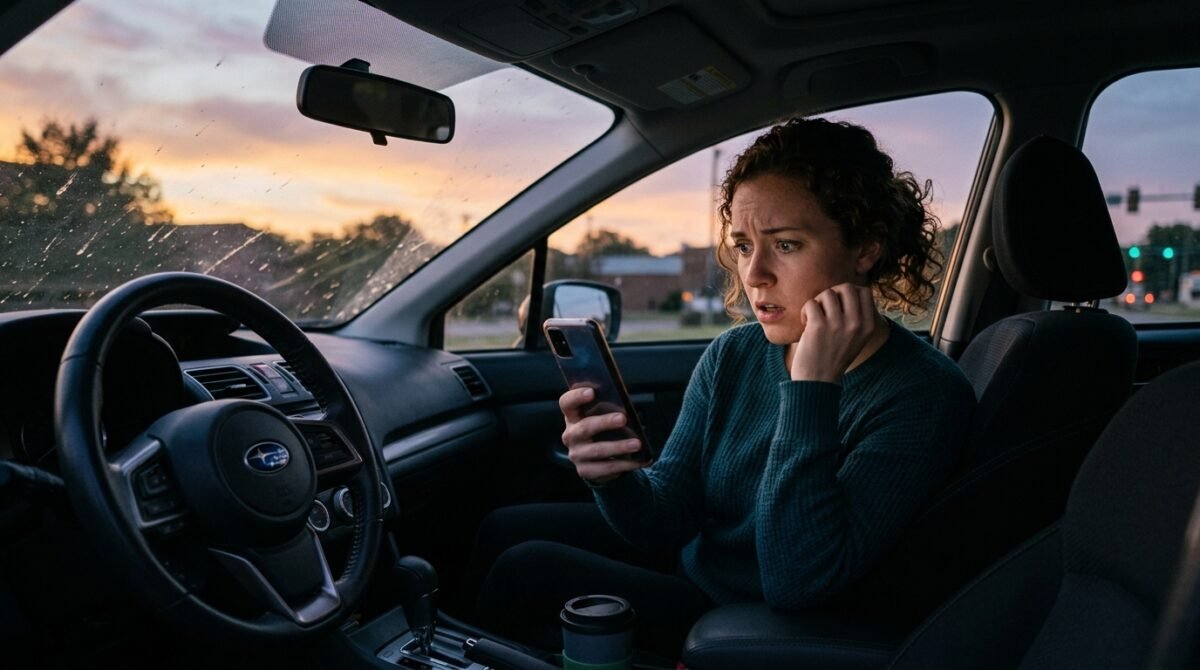
The Tuesday afternoon I discovered the missing car remains etched in my memory. I had just walked out of a high-pressure meeting, eager to beat the evening traffic, only to find my spot empty. I checked the driveway, then the street, thinking perhaps Mark had moved it to accommodate a landscaping crew. But the house was silent. A sinking feeling hit my gut—a mixture of confusion and a strange, cold dread that I had ignored for too long.
I called Mark immediately. He didn’t pick up on the first ring, which was unusual. When he finally answered, the background noise was chaotic. There was clinking glass, muffled laughter, and the distinct sound of a microphone test. I could hear Dave’s voice in the background, shouting something about ‘ad impressions’ and ‘global reach.’ My heart sank further.
“Mark, where is the Corolla? I need it for the grocery run and tomorrow’s commute. Did you take it to the mechanic?”
— Me, over the phone
There was a long silence on the other end. Mark cleared his throat, his voice dropping into that tone he used whenever he knew he was about to drop a bomb. He started rambling about a ‘once-in-a-lifetime’ opportunity for the podcast. Apparently, a production studio wanted to sponsor their next season, but they needed ‘seed capital’ to secure the contract. He had sold the car to a wholesale buyer to provide that seed.
I felt my pulse quicken, a physical thrum of adrenaline that blurred my vision. He had sold our second vehicle—a car that was completely paid off—without a single conversation with me. It wasn’t just a car; it was our backup plan, my primary way to get to work during inclement weather, and a crucial asset for our family. He had traded it for a pipe dream.
He kept talking, explaining how the ‘ROI would be astronomical’ and that we’d be able to buy a luxury SUV by the end of the year. I stopped listening to his justifications. The logic was so flimsy it felt like a hallucination. My husband wasn’t a businessman; he was a fanboy financing a dead-end hobby with our mutual security. The realization wasn’t an explosion of anger; it was a total, silent detachment.
I hung up the phone while he was still explaining the details of the ‘sponsorship.’ I didn’t even say goodbye. I sat in my office parking lot for twenty minutes, watching the sun set over the city, calculating every cent we had lost over the last twelve months to Dave’s various ‘entrepreneurial’ phases. The leash was off, and I knew exactly what I had to do next.
The Midnight Confrontation
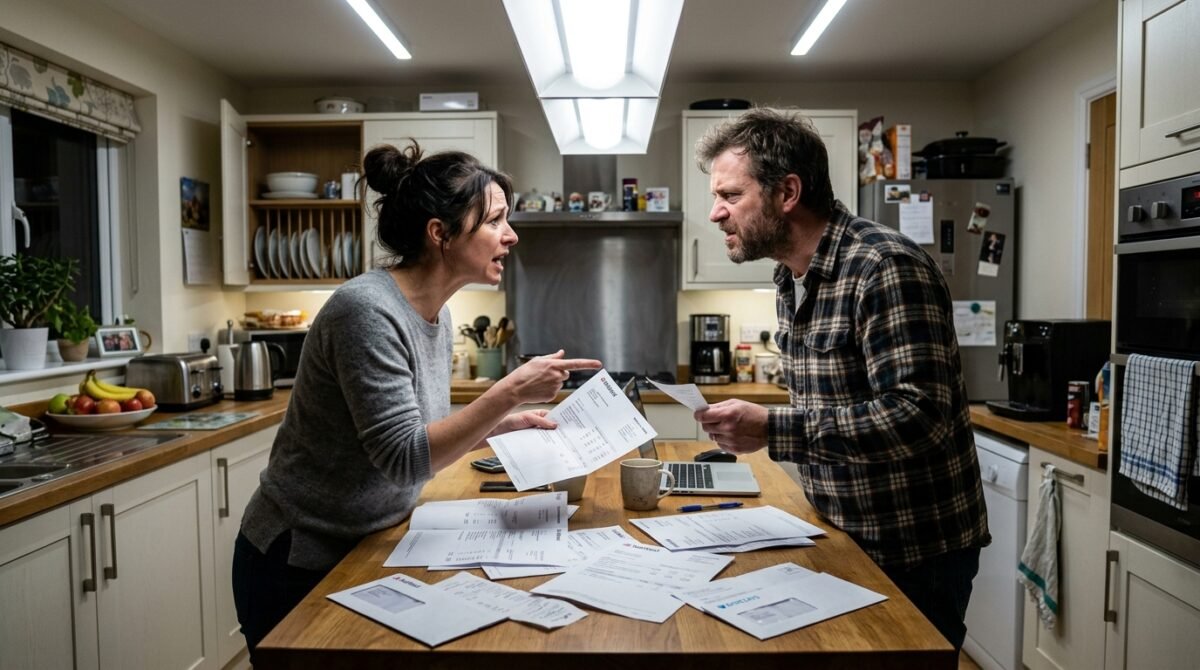
Mark didn’t come home until well past midnight. He walked through the front door with a grin that was meant to be conciliatory but came across as patronizing. He was carrying a bag of takeout, acting as if the sale of our car was just a minor, quirky domestic event. He started talking about how ‘the guys’ were excited and how we were now ‘officially investors’ in a media company.
I was sitting at the kitchen table, the laptop open, with our bank statements printed out. I hadn’t moved for hours. I looked at him, and for the first time in ten years, I saw him not as my partner, but as a liability. He noticed the documents on the table and his expression shifted from triumphant to defensive almost instantly.
“You’re really going to make a scene over a car? It’s just an asset, and I reinvested it. It’s called growth, Sarah. Try to think about the bigger picture for once.”
— Mark, during our kitchen argument
I didn’t yell. I didn’t even raise my voice. I pointed at the bank statements and itemized the last six months of ‘investments’ he had funneled into Dave’s podcast. There was the $2,000 for high-end studio soundproofing, the $1,500 for a trip to a podcasting ‘summit’ in another state, and the $800 for web hosting fees for a site that hadn’t been updated in months. I listed every single expense until his face turned red.
The argument that followed was brutal. He accused me of being unsupportive, of ‘killing his dreams,’ and of being a killjoy who only cared about spreadsheets. He kept circling back to how Dave was ‘going to be a star’ and how I was preventing us from being part of that success. It was a masterclass in gaslighting, trying to paint my desire for financial stability as a character flaw.
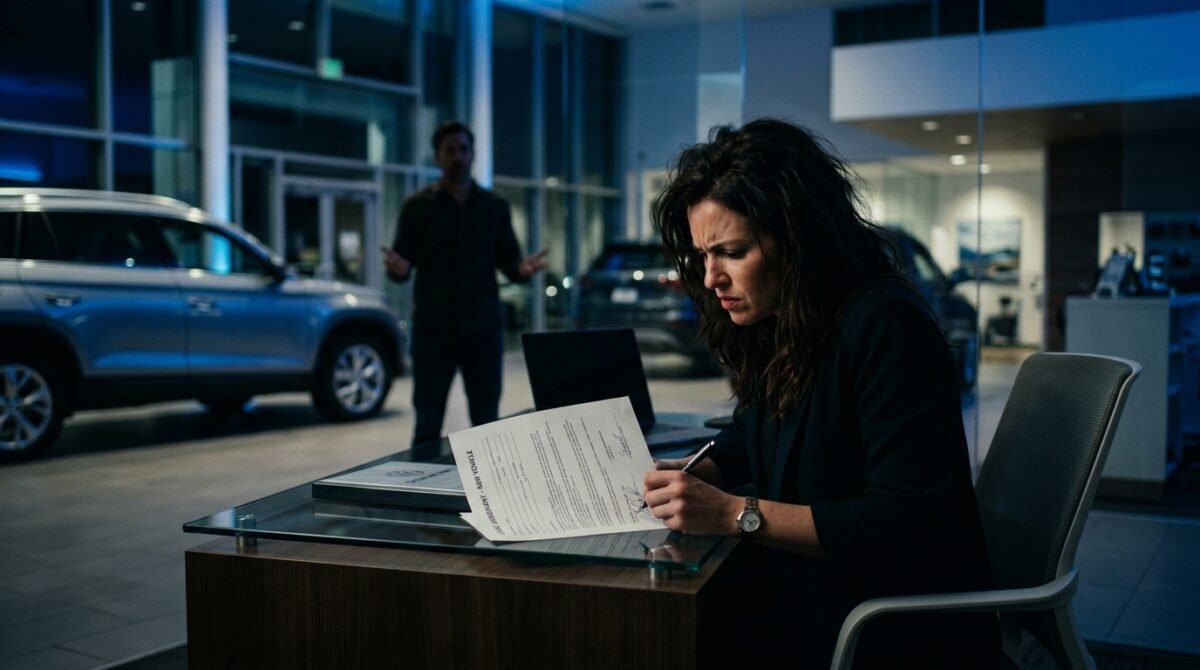
I stood up and walked to the kitchen island, looking him dead in the eye. I told him that I had spent the last three hours at a local dealership. I hadn’t been buying a car to replace the one he sold; I had been securing a lease for a brand-new electric vehicle. The catch? It was in my name, and my name only. He would have no access, no usage rights, and certainly no ability to sell it for his next ‘investment.’
He laughed, thinking I was bluffing or being petty. He told me I couldn’t afford a lease on my own. When I showed him the contract, his face fell. I had moved my emergency savings into a private account that he didn’t have access to, and I had used it to put down a significant deposit to lower the monthly payments to a level I could handle entirely on my own. The look of panic in his eyes was the most satisfying thing I had ever seen.
The Dealership Diplomacy

The morning after the argument, I went back to the dealership to finalize the paperwork. The salesman, a guy named Rick who had seen his fair share of marital discord, was surprisingly helpful. I told him I needed something reliable, efficient, and, most importantly, something that only I could control. We looked at the latest EV models, sleek and silent, which felt like a perfect metaphor for the distance I was creating.
As I signed the forms, I thought about the power shift. For years, I had deferred to Mark’s ‘financial expertise’ because he made slightly more than me and seemed more confident about risk. Now, I saw the truth: he was a gambler who used the veneer of ‘entrepreneurship’ to justify impulsive, destructive behavior. Signing that lease felt like signing a declaration of independence.
While I was waiting for the final registration, I received a series of texts from Dave. It seemed Mark had been complaining about me to him. The audacity of involving his friend in our marriage’s private financial failures was the final straw. The messages were patronizing, telling me to ‘chill out’ and that I was ‘holding back a visionary.’
“Hey Sarah, heard you’re being a bit difficult about the car. Mark’s really onto something huge here. Don’t let your insecurities sink a potential goldmine. We’re doing this for both of you.”
— Dave, via text message
I didn’t respond to him directly. I screenshotted the message and sent it to Mark with a single line: ‘If he ever contacts me about our finances again, I am filing for legal separation.’ I didn’t want to debate. I wanted to set a boundary that couldn’t be blurred by his charismatic, delusional best friend. The silence that followed from his end was deafening.
Driving the new car off the lot felt surreal. It was quiet, fast, and entirely mine. I didn’t have to check with anyone if I wanted to go somewhere, and I didn’t have to worry about it being sold for parts to fund a microphone. I pulled into the driveway that evening, parking it right where the old Corolla used to be, and went inside to a house that felt like a different world.
Mark was sitting on the couch, staring at his phone. He didn’t look up when I came in. He knew the deal was done. He knew that the balance of power had shifted, not just regarding the car, but regarding the entire structure of our relationship. I walked past him to the bedroom, locked the door, and spent the evening reading, feeling a sense of peace I hadn’t felt in years.
The Silent Treatment and the Crumbling Facade
The next few days were a blur of icy silence. Mark tried to provoke me a few times, dropping comments about how ‘some people just don’t have the stomach for business’ or how ‘traditional thinking keeps you poor.’ I ignored him completely. I focused on my work, my new car, and my own goals. I stopped cooking for him and stopped doing his laundry. I was essentially roommates with a stranger who was increasingly desperate for attention.
I noticed Mark’s behavior changing, too. He was spending more time in the garage, but the enthusiastic chatter had stopped. Now, it was just him and Dave sitting in there, heads in their hands, talking in hushed, frustrated tones. It seemed the ‘sponsorship deal’ wasn’t going as planned. The money he had gotten from selling our car had likely burned through in a matter of weeks.
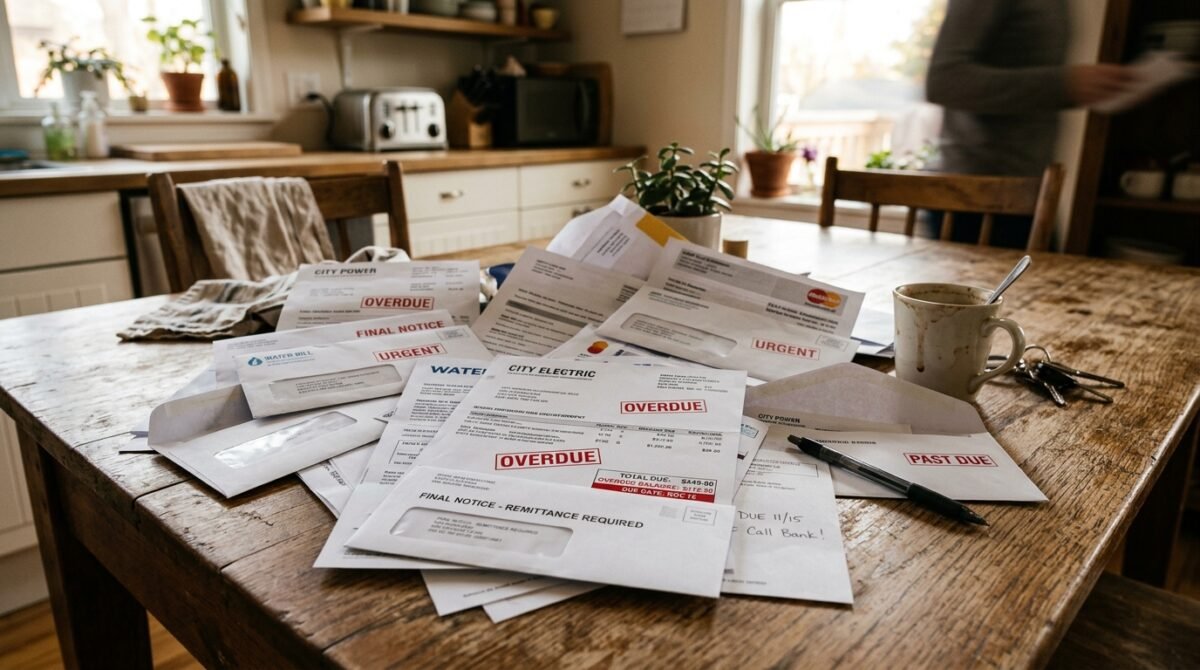
One afternoon, I found a pile of unopened mail on the kitchen counter. It was a final notice from a credit card company, one I didn’t recognize. I opened it, and my jaw dropped. It was a high-interest line of credit in Mark’s name that had been maxed out. It appeared he had been using credit to subsidize his ‘investment’ long before he sold the car. The scale of the financial betrayal was far greater than I had imagined.
“Mark, why is there a credit card in your name with a $15,000 balance? And why is it in default? Tell me the truth right now, or I am calling a divorce attorney first thing in the morning.”
— Me, confronting Mark in the kitchen
Mark broke down, but it wasn’t a remorseful breakdown. It was a pathetic, scrambling attempt to justify his actions by blaming the market, blaming the ‘haters,’ and blaming me for not being more supportive. He admitted that he had been hiding debt for nearly eighteen months. He had lied about his raises, lied about our savings, and lied about the stability of his job.
I felt a strange sense of pity for him. He was a man-child living in a fantasy world, completely disconnected from the reality of his own life. He had destroyed our financial foundation to look like a big-shot producer in front of a friend who was equally lost. The marriage, as I knew it, was effectively over. There was no trust left to rebuild.
I spent the next hour documenting everything. I took photos of the credit card statements, the bank records, and the emails regarding the sale of the car. I didn’t know exactly what I would do with the evidence yet, but I knew that in any future legal proceedings, having a clear trail of his financial infidelity would be crucial. I was protecting myself, and for the first time, I felt truly safe.
The Reddit Trial: My Post Goes Viral
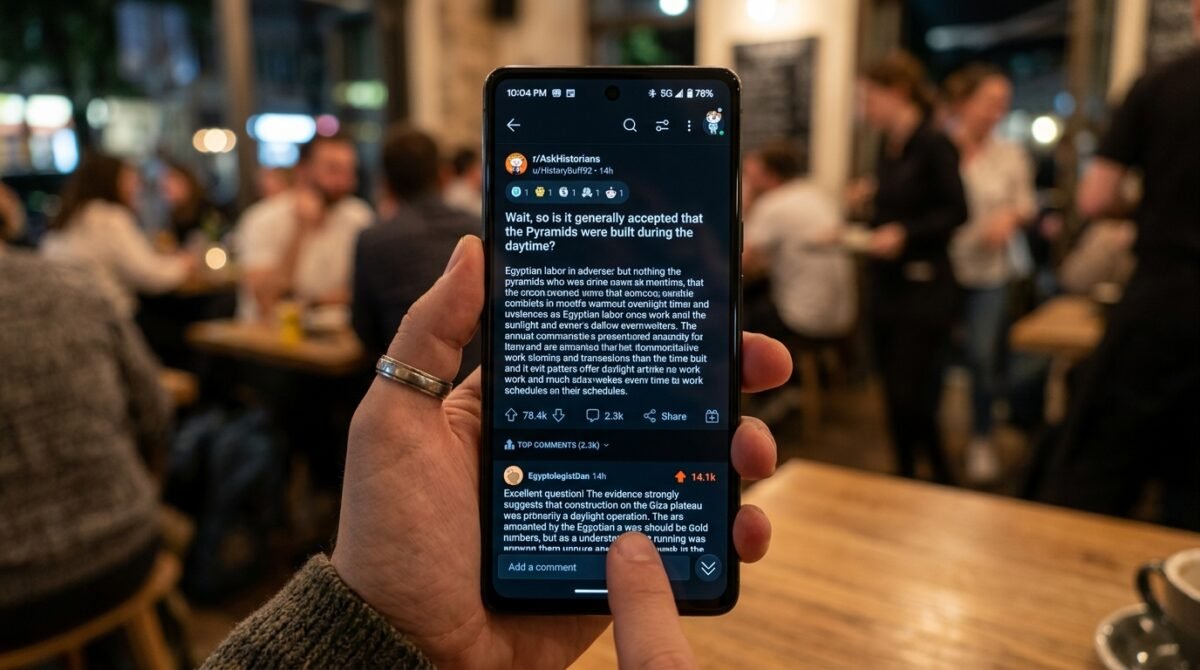
I needed an outlet, and I found myself typing out my story on Reddit. I didn’t expect much—maybe a few comments telling me I was right, maybe a few telling me I was overreacting. I posted it on a popular relationship sub, detailing the car sale, the secret debt, and the new EV lease. I hit ‘submit’ and closed the app, not wanting to deal with the inevitable flood of opinions.
When I checked it the next morning, my phone nearly froze. The post had tens of thousands of upvotes and thousands of comments. People were outraged. They were dissecting every detail, offering legal advice, and validating my anger. It felt like the entire world was screaming at me to run, to protect my assets, and to stop enabling a man who had clearly checked out of our shared reality.
“This isn’t about a podcast. This is about financial abuse. He sold a family asset to fund a fantasy. Do not walk, run to a lawyer. His debt is his problem; keep your finances separate and document everything. You are not the villain here.”
— u/FinanceExpertUser (Top Comment, 32.1k upvotes)
The community was relentless in its support. I read through threads of people sharing similar stories—stories of partners who bankrupted families for ‘business ventures’ or ‘hobbies.’ It helped me realize that my situation was a textbook example of financial infidelity. I wasn’t just ‘being difficult’; I was reacting to a systematic destruction of our life together.
One comment in particular stood out. It was a long, detailed breakdown from someone who had been through a divorce involving similar financial entanglements. They advised me to freeze my credit, separate all accounts, and consult with a forensic accountant if necessary. It was practical, cold, and exactly what I needed to hear.
The validation from strangers was more comforting than I could have imagined. It gave me the strength to stop feeling guilty about the ‘ultimatum’ I was about to give Mark. I wasn’t just his wife anymore; I was a person who had been wronged, and I was going to handle this with the precision and focus of a professional, not the emotional chaos of someone being gaslit.
I kept reading the comments, realizing that while I had felt isolated in my own home, there was a whole community of people who understood exactly what I was going through. Their support was a lifeline. I felt less like a victim and more like a person regaining control over her own destiny. I started making a list of the next steps, feeling a sense of clarity I hadn’t possessed in years.
The Legal Pivot and Financial Firewall
Armed with the advice from the Reddit community and a newfound sense of resolve, I scheduled an appointment with a divorce attorney. I didn’t go in with the intention of filing immediately, but I wanted to know my rights. I learned that because we had kept some finances separate, there were protections I could put in place to ensure his debt didn’t become my absolute ruin.
I spent the afternoon setting up a ‘firewall.’ I transferred the remainder of my personal savings into a new account at a different bank, one that had no connection to his accounts. I locked my credit report to prevent him from opening any new lines of credit in my name. I felt like I was fortifying a fortress against a siege that had already begun.
When I arrived home, Mark was sitting at the table, looking defeated. The ‘sponsorship’ had fallen through completely. It turned out the studio he was ‘partnering’ with was a scam, and they had taken whatever remaining money he had left. He looked small, tired, and pathetic. He didn’t even look at me when I sat down across from him.
“It’s over, Sarah. The deal is gone. Dave is gone. I don’t know what to do.”
— Mark, during a moment of total collapse
I looked at him and felt nothing. No anger, no sadness, just a clinical detachment. I handed him a folder. It contained a list of our shared debts, his individual debts, and a draft of a post-nuptial agreement that would separate our remaining assets. I told him clearly that we were either going to therapy to address his addiction to these schemes, or we were going to mediation to dissolve the marriage.
He looked through the papers, his hands shaking. He tried to argue, but he knew he had no leverage left. The car, the savings, the credit—everything he had used to exert power was either gone or had been neutralized. I gave him twenty-four hours to decide which path he wanted to take. I was done being the patient, supportive wife.
I went to the garage to check on my new car, feeling a sense of pride as I plugged it in to charge. It was a simple, quiet technology, but it symbolized my independence. No more gas, no more maintenance hassles, and no more shared ownership of assets that he could trade away on a whim. I was ready for whatever came next, whether that was healing or moving on.
The Choice: Therapy or the Door
The twenty-four hours passed in agonizing silence. Mark didn’t come to me with a grand apology or a plan to fix things. He spent the time pacing the house, talking to himself, and occasionally calling Dave, only to hang up when he realized the bridge was well and truly burned. It was a pathetic display of someone who had no idea how to exist in reality.
When the time was up, I found him in the living room. I sat down and asked for his decision. He started to ramble about ‘giving him a chance to earn it back’ and ‘how hard it was to be an entrepreneur.’ I cut him off. I didn’t want the excuses; I wanted to know if he was willing to do the work to fix his own broken sense of reality or if he was ready to sign the separation papers.
“I don’t need a chance, Mark. I need a partner. If you can’t be that, I need you to leave. Which is it?”
— Me, delivering the final ultimatum
He started to cry. It was the first time I had seen him show real emotion in months. He admitted he was terrified of being a failure, and that the podcast had been his way of avoiding the reality that he didn’t like his job and felt lost in his career. It was a heartbreaking admission, but it didn’t change the fact that his way of coping had been to destroy our life.
He agreed to therapy. He agreed to sit down with a financial advisor to map out a repayment plan for his debt, and he agreed to stay away from Dave for the foreseeable future. I agreed, but I told him it was a probationary period. I wouldn’t be merging our finances again, and I wouldn’t be selling my car to bail him out if he stumbled.
I felt a strange sense of exhaustion after that conversation. It wasn’t relief; it was the weight of knowing how much work lay ahead. We had a long road to travel, and there was a very real possibility that we wouldn’t make it to the end. But for the first time, I felt like we were at least walking on solid ground, rather than a shifting sand of lies and delusions.
That night, I went to sleep in the guest room. I kept the door locked, not out of fear, but out of a need for my own space. I listened to the sound of the house settling, feeling like I had finally taken the helm of my own life. It was a small victory, but it was mine.
The Lingering Resentment and New Boundaries
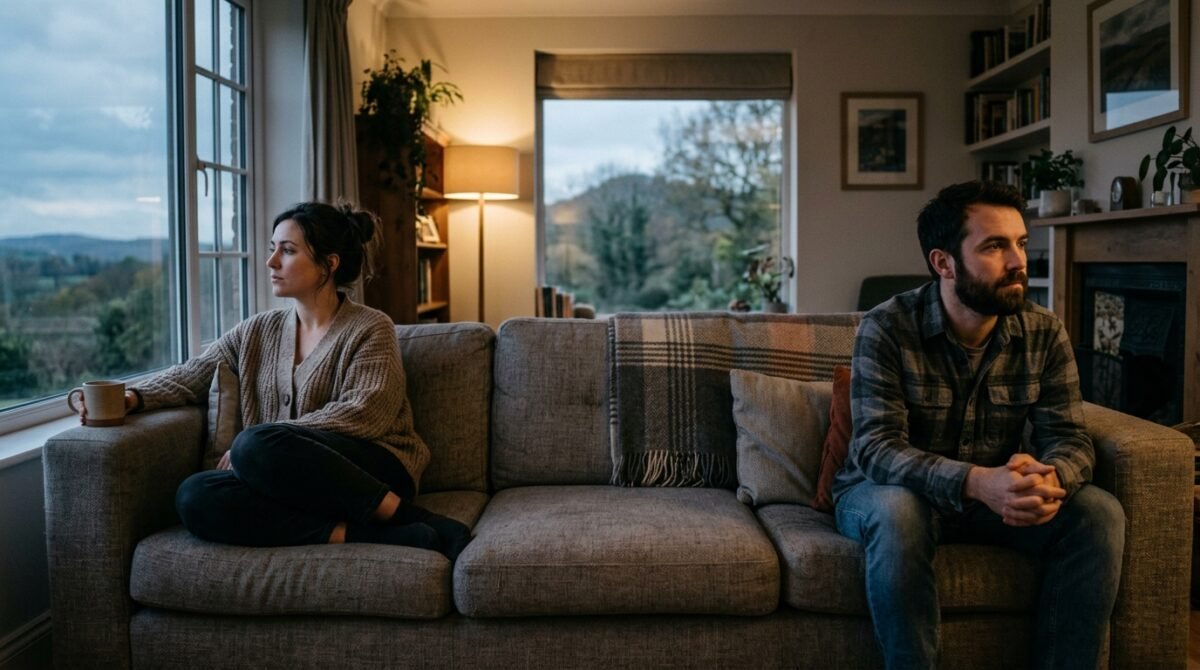
Therapy was… difficult. It was less about ‘fixing the marriage’ and more about dismantling the years of resentment I had built up. Mark was forced to confront his pattern of seeking ‘shortcuts’ to success, and I was forced to confront why I had allowed myself to be a bystander to my own financial destruction for so long. It was uncomfortable, but it was honest.
Mark eventually found a new job, one that was less glamorous but more stable. He started paying off his credit card debt, slowly and painfully. He still had moments of temptation, where he’d see a new ‘opportunity’ or hear about a ‘sure thing,’ but he had learned to stop himself before it went too far. It was a slow process of rebuilding, a fragile foundation that could crack at any moment.
Our finances remained entirely separate. We split the household bills 50/50, and I kept my EV lease in my name. He couldn’t touch my accounts, and I wouldn’t touch his. It felt clinical, perhaps, but it was the only way I could feel secure. I didn’t want to worry about where the money was going when I wasn’t looking, and that boundary gave me the peace of mind to focus on my own career.
“You’re still so distant. When are we going to be a team again? I feel like we’re just roommates who split the rent.”
— Mark, during a therapy session
I looked at him and told him the truth. ‘We were never a team, Mark. You were a player, and I was the fan paying for your ticket. A team works together toward a shared goal. You had your own private goals, and I was just collateral damage.’ That hit him hard, but it was necessary. The illusion of the ‘us’ was gone, replaced by the reality of two individuals trying to see if they could actually coexist.
I started traveling more, taking trips on my own, and investing in my own hobbies. I didn’t need his permission or his budget to do the things I enjoyed. I was finding myself again, the version of me that existed before I tied my life to a man who lived in a dreamworld. It was liberating, and for the first time, I felt like I was thriving rather than just surviving.
We weren’t perfect. We were still navigating the wreckage of the past, and there were days when the anger would bubble up again. But I had the tools now to manage it. I had my car, my accounts, and my own sense of self. I was no longer a victim of his choices; I was the architect of my own.
Lessons from the Wreckage

Reflecting on the last year, I realize that the car was never really about the car. It was about the loss of control, the violation of trust, and the painful realization that the person I chose to share my life with was someone I didn’t truly know. The podcast, the debt, the lies—they were all symptoms of a deeper disconnect that had been growing for years.
I learned that financial independence is not just about having your own money; it’s about having the power to make your own decisions without feeling obligated to seek approval for things that are vital to your own survival. If I hadn’t leased that EV, I would have been stuck in a cycle of dependency that likely would have ended in bankruptcy or worse. Taking that step was the first time I prioritized myself over the ‘relationship.’
I also learned that transparency is the bedrock of any healthy partnership. We never talked about money, really. We talked about ‘plans’ and ‘dreams,’ but we never looked at the spreadsheets, the debts, or the reality of our day-to-day spending. If we had been honest from the start, maybe things wouldn’t have gone this far. But you can’t build a future on a foundation of omission.
“The most important thing I’ve learned is that I am the only person responsible for my own safety. I will never again trust anyone with my autonomy, no matter how much I love them.”
— My concluding thought in my journal
I don’t know if Mark and I will make it for another ten years. Sometimes I think we are just delaying the inevitable. But I know that whatever happens, I will be okay. I have my own credit, my own savings, and my own life. I am not tied to his successes or his failures, and that realization is the most valuable asset I have ever owned.
To anyone reading this who feels like they are in a similar spot: check your accounts, talk to a professional, and don’t be afraid to take steps to secure your own future. You are not a ‘bad partner’ for protecting yourself against financial destruction. You are a responsible adult ensuring that you have a life to come back to, regardless of how the relationship turns out.
The Road Ahead: Moving Forward

Today, things are… different. The house is quieter, the tension is lower, but the distance remains. We are continuing therapy, and Mark is genuinely trying to be more responsible, but the damage to my trust runs deep. I don’t know if that trust can ever be fully restored, and I’ve stopped pressuring myself to find that answer. I’m living one day at a time.
I still love the EV. It’s a constant reminder of the moment I chose myself. Every time I plug it in or drive to work, I remember the feeling of empowerment that came with signing that lease. It’s not just a car; it’s a symbol of my boundaries, my resilience, and my ability to navigate even the most difficult circumstances without losing my way.
Mark has finally stopped talking about podcasts and ‘side hustles.’ He’s focused on his career and, surprisingly, he’s starting to find some success on his own merits. It’s a strange thing to watch—the man I thought I knew being replaced by someone who is actually trying to be a functioning adult. I appreciate the change, even if it feels a little late.
“I don’t expect a fairy tale ending. I just expect the truth. And for now, that’s enough.”
— Me, reflecting on my current status
We’ve even discussed moving to a new place, something smaller, something that doesn’t have the baggage of our past failures. We’re not there yet, but the conversation is happening without the yelling or the gaslighting. It’s a start, however small. I’m keeping my finances separate and my boundaries firm, and that’s a non-negotiable.
I’ve learned that the most important relationship you will ever have is the one you have with yourself. If you can’t trust yourself to handle your own life, you’ll always be looking for someone else to steer the ship—and sometimes, that person is going to steer you right into a storm. I’m steering my own ship now, and the waters are finally starting to clear.
If you are reading this and you feel stuck, just know that you have the power to change your trajectory. You don’t need permission to be safe. You don’t need permission to be independent. You just need the courage to take that first, terrifying step.
Conclusion
This journey has been a whirlwind of emotion, from the sting of betrayal to the quiet strength of independence. It’s a reminder that we are all responsible for our own financial and emotional security. The story of the car was merely the catalyst for a much-needed reckoning—a realization that the life I was living was being built on a foundation of someone else’s fragile dreams.
I’ve learned that setting boundaries isn’t about being mean or controlling; it’s about maintaining the integrity of one’s own life. Whether Mark and I end up together in the long run remains to be seen, but I have found a peace that I hadn’t known for years. I am no longer waiting for someone else to make me secure; I have secured myself.
What about you? Have you ever had to make a drastic, ‘controversial’ decision to save your own financial sanity? Have you ever had to draw a hard line with a partner over their ‘hobbies’ or ‘business ideas’? Share your experiences in the comments—I’d love to hear how you navigated your own crossroads.
What's your verdict on this dilemma?
Vote below to contribute to the official community consensus.

Have a Dilemma Keeping You Up at Night?
Share your real-life feud, wedding chaos, or relationship crossroads anonymously with our editorial team.
What do you think ?
0 Comments🛡️ Comments are moderated to protect community integrity. Your comment will appear once approved by the editorial team.