
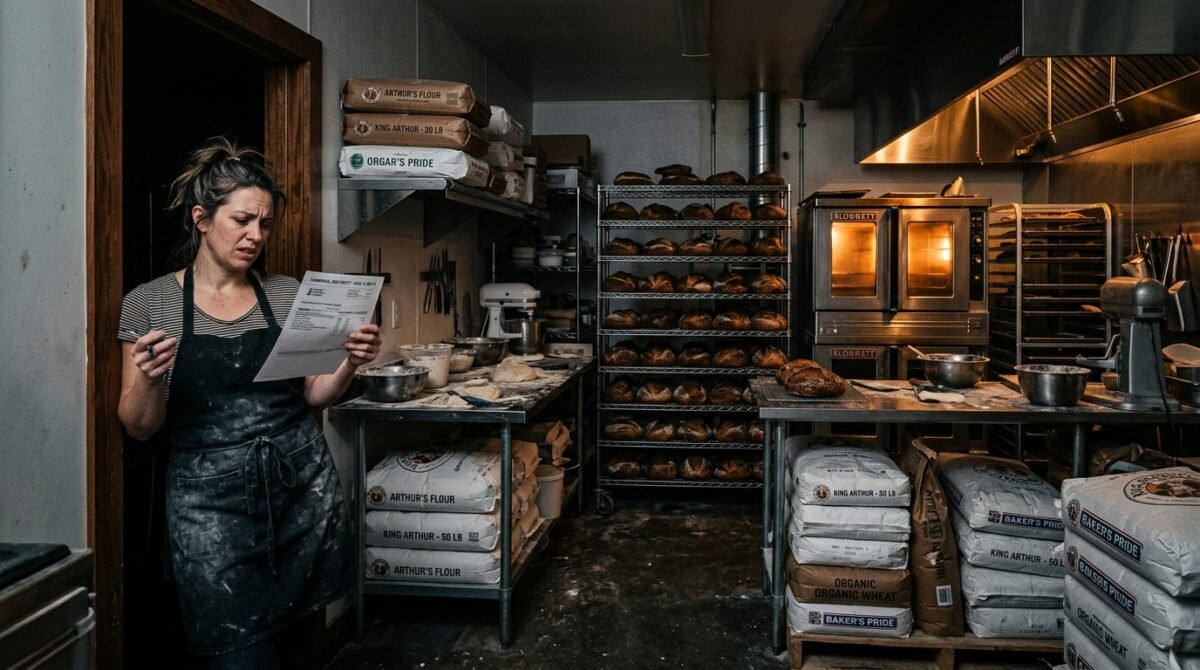
Living with a roommate is an exercise in compromise, from the unspoken rules of dishwashing to the delicate negotiation of thermostat settings. We had managed to coexist peacefully for nearly two years, until Sarah discovered the world of artisan sourdough. What started as a harmless hobby involving a single jar of starter quickly metastasized into a full-scale, unlicensed commercial operation right in the heart of our shared apartment.
The transformation was sudden and invasive. Our modest kitchen, once a place for quick breakfasts and occasional dinners, became a production floor. By the time I realized the severity of the situation, the counters were permanently covered in flour, the refrigerator was crammed with proofing baskets, and the hum of the oven had become the soundtrack of my nightly existence.
The moral dilemma, however, wasn’t just about the mess or the loss of common space. It was the crushing weight of the utility bills. As the industrial-sized fermentation and baking cycles ramped up, our electricity and gas usage skyrocketed, yet Sarah maintained the delusion that she was merely ‘practicing a craft’ and that our split-bill arrangement should remain untouched.
When I finally brought up the mounting costs, the reaction was not one of apology or realization, but one of defensive entitlement. Sarah insisted that because the bread was a ‘shared benefit’—even though I rarely saw a loaf and certainly didn’t order the twenty-four-hour production schedule—she shouldn’t have to contribute a single cent toward the surge in utilities.
This article chronicles the descent from casual baking to total kitchen warfare, the psychological toll of living in a bakery-turned-apartment, and the explosive community response when I finally decided to stop playing the silent roommate and started fighting for my financial sanity.
The Rise of the Midnight Starter

It began innocently enough. Sarah came home one Tuesday with a bubbling jar of goo she affectionately named ‘Dough-ris.’ At first, it was cute. We shared a few loaves, enjoyed the smell of fresh bread, and I even complimented her progress. It was a wholesome addition to our routine, a minor shift in the ecosystem of our home.
Then, the pace accelerated. The ‘hobby’ became an obsession. Sarah started researching fermentation temperatures and hydration percentages, which meant our oven was suddenly being preheated at 4 AM so the loaves could hit the heat at the exact moment of peak proofing. I started waking up to the sound of metal racks clanging and the rhythmic thud of dough being kneaded on the granite countertop.
The space in our pantry disappeared, replaced by twenty-pound bags of artisanal flour. The freezer, once a place for my meal-prepped lunches, became a graveyard of failed experiments and frozen discard. I tried to voice my concerns early on, but I was dismissed with a wave of a floured hand and a promise that she was ‘just getting a feel for the rhythm.’
“You just don’t get the science of it, Jamie. The timing has to be perfect. If I don’t catch it at 3 AM, the structure is ruined. It’s an art form.”
— Sarah, explaining the early hours
I didn’t realize then that ‘art form’ was code for ‘I will be utilizing every watt of our electricity to feed my ego.’ I was too polite, too accommodating, and far too patient with the encroaching chaos. I assumed she would eventually burn out, but as I would soon discover, she was only just warming up her ovens.
The Utility Bill That Broke the Camel’s Back

The utility bill arrived on a Tuesday, usually a mundane event. I logged into our shared portal, expecting the usual total of around $120. Instead, I saw a number that made my stomach drop: $485. I refreshed the page, thinking there must be a clerical error. There was no error. The electricity usage had tripled, and the natural gas bill—due to the constant oven cycles—had followed suit.
I printed the bill and waited for Sarah to return from her shift. When she walked through the door, the kitchen was already at a balmy eighty-five degrees, despite the fact that it was mid-October. She was busy sliding a tray of boules into the oven, the fan whirring like a jet engine.
I held up the paper, my hands slightly shaking. I didn’t want to start a fight, but I also wasn’t prepared to subsidize a small-scale manufacturing company. I pointed to the breakdown of usage, specifically the massive spikes that correlated with her ‘baking window’—a twelve-hour stretch starting at midnight.
“Sarah, we need to talk about this. The bill is nearly five hundred dollars. I can’t afford this, and it’s clearly because of the oven running all night, every night.”
— My confrontation with Sarah
She didn’t even look up from the dough. She just wiped her hands on her apron and gave me a look of mild irritation, as if I were interrupting a surgical procedure rather than a hobby. It was the first time I realized that for her, this wasn’t just a passion; it was an identity, and any criticism of the cost was, in her mind, a criticism of her talent.
The Economics of Artisan Entitlement
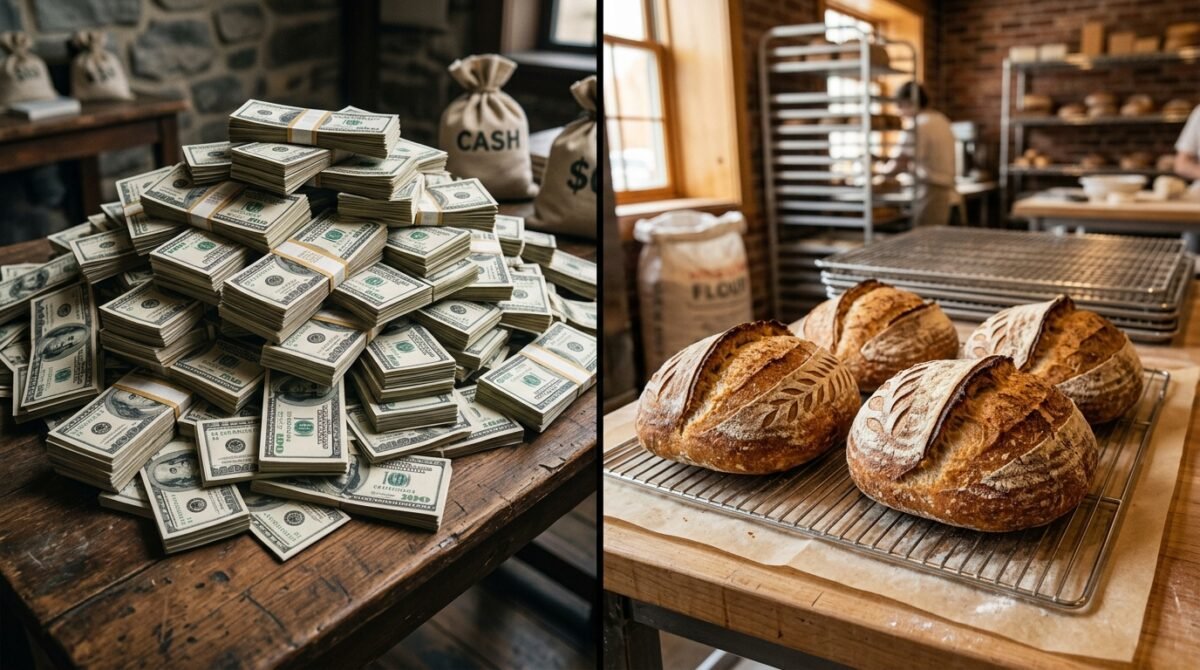
When I pressed for a conversation about splitting the excess costs, Sarah’s logic became increasingly convoluted. She argued that since I was ‘part of the household,’ I should be happy to support her ‘small business endeavor.’ She claimed that the bread was a ‘shared resource’ and that because I had access to the sourdough, I was technically a customer who was getting a massive discount.
I countered that I hadn’t eaten a loaf in three weeks. The bread was being sold to her coworkers, taken to pop-up markets, and packaged for local delivery. None of that money was coming back into the household account. It was a private enterprise using public resources—my money included.
The argument escalated quickly. She accused me of being unsupportive and petty, while I pointed out that my definition of support didn’t include paying for the electricity used to generate her side-hustle profits. The kitchen became a battleground of financial statistics versus creative martyrdom.
“You’re really going to charge me for electricity? After all the times I’ve left a loaf on the counter for you? That’s friendship, Jamie. Or lack thereof.”
— Sarah’s defensive rebuttal
The audacity was breathtaking. She was effectively asking me to pay for the privilege of her making money off our shared living space. I realized then that there was no room for logic in her worldview. She had constructed a narrative where she was the starving artist and I was the greedy roommate standing in the way of her success.
The Midnight Kitchen Intrusion
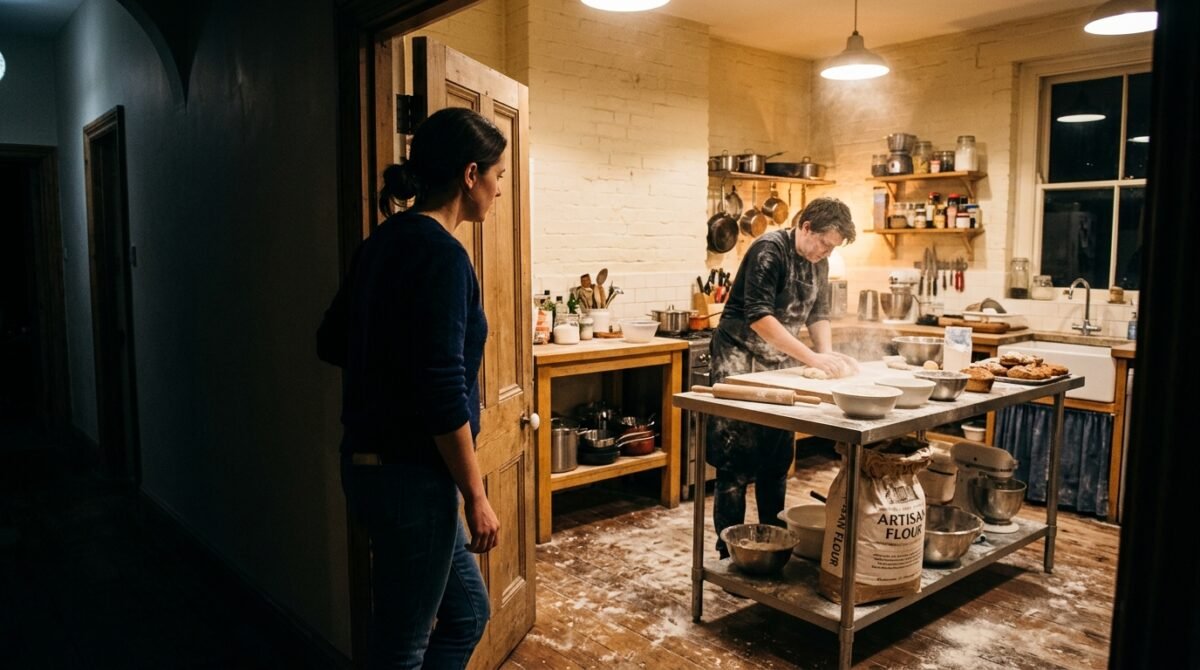
Things took a turn for the worse when I started locking the kitchen. It was a petty move, I’ll admit, but I was at my breaking point. I couldn’t sleep through the sound of the oven timer, and the heat was making our shared living room unbearable. She responded by bringing a spare key to the landlord, claiming there was a ‘maintenance issue’ she needed access to.
The landlord, who was elderly and barely understood what was happening, didn’t bother checking with me. He just gave her the go-ahead. I woke up at 3:30 AM to the smell of burnt flour and the sound of heavy metal sheets slamming against the rack. I walked into the kitchen, and there she was, surrounded by four different proofing stations.
I didn’t yell. I was too exhausted. I just stood there, watching her work. She didn’t even acknowledge me at first, just continued shaping the dough with clinical precision. It felt like an invasion of my personal peace. My home was no longer a sanctuary; it was a factory floor where I wasn’t even an employee—I was just an obstacle.
“Get out. It’s 3 AM. If you’re going to run a business, get a commercial space. This is an apartment, not a commercial bakery.”
— My exhausted plea for sanity
She laughed. It was a cold, dismissive sound that echoed in the tiled room. She told me to go back to my room if the noise bothered me, as if my inability to sleep in my own home was a character flaw rather than a direct consequence of her actions.
Leaked Group Chat Evidence

The breaking point came when a notification popped up on our shared smart-home tablet—a legacy device we used for grocery lists. It was a message from her ‘Bakery Support’ group chat. The screen was open, and I couldn’t help but glance at the conversation. The things they were saying about me were appalling.
They were laughing about how ‘the roommate’ was too cheap to pay for the ‘growth of the business’ and how they were planning to scale up to three ovens next month. They even had a plan to start a subscription service, using our address as the pick-up point. I was being used as a staging ground for a business I didn’t even agree to.
“Don’t worry about Jamie. They’re just jealous that I’m actually making something of myself. They’ll cave once they realize they have no choice.”
— Message from Sarah to her business group
The sheer arrogance of it hit me harder than the utility bill. She wasn’t just being a thoughtless roommate; she was actively plotting to expand the business at my expense. I took a photo of the screen, saved the evidence, and started planning my next move. It was time to stop being polite.
The Landlord’s Unexpected Involvement
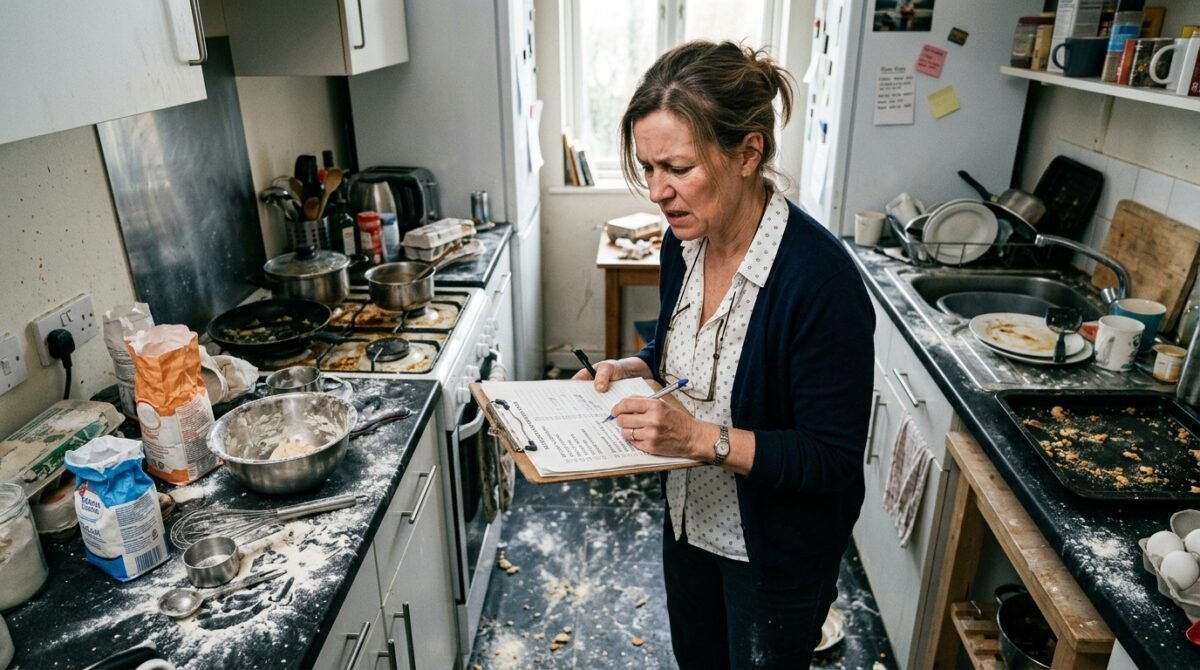
I decided to go to the source of the problem: the landlord. I compiled the utility bills, the screenshots of the bakery group chat, and a detailed log of the late-night oven activity. I framed it not as a petty roommate squabble, but as a violation of our lease agreement, which explicitly prohibited commercial activity on the premises.
The landlord was shocked. He had thought she was just ‘doing a bit of baking for friends.’ When he saw the photos of the industrial equipment she had squeezed into the kitchen, his attitude shifted from confused to furious. He didn’t want the liability of an unlicensed commercial kitchen in his building, especially one that was a fire hazard.
He arrived the next day for an ‘inspection.’ Sarah was in the middle of a massive bake, and the sight of him walking through the flour-covered floor was priceless. He didn’t even give her a chance to explain. He just looked at the massive oven, the stacks of flour, and the professional proofing racks and shook his head.
“This is a residential lease, not a commercial permit. You remove this equipment by the end of the weekend, or you are both being evicted. I don’t care what your side-hustle is.”
— The landlord’s ultimatum
Sarah looked like she had been slapped. The reality of the situation finally settled in. She couldn’t just bully me into submission; she was now facing the loss of her housing. The look on her face was a mixture of panic and pure, unadulterated rage directed squarely at me.
The Great Bakery Eviction
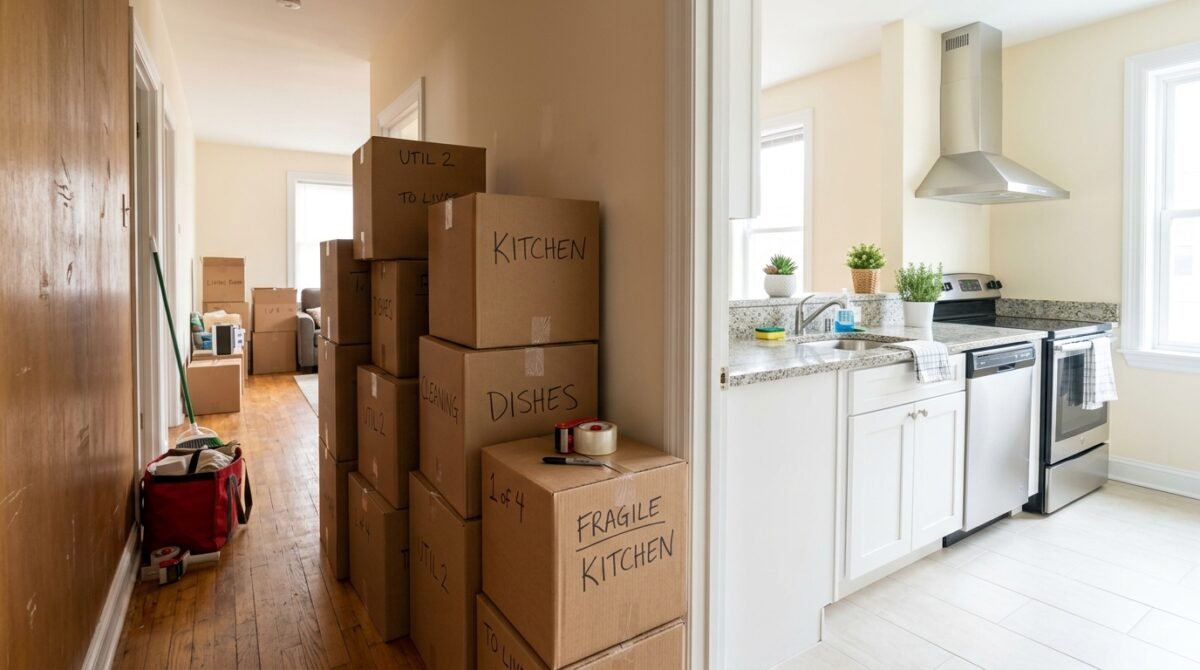
The following weekend was a flurry of activity. Sarah had to rent a storage unit to move her equipment out, and the apartment finally began to return to a state of normalcy. It wasn’t easy; the tension between us was thick enough to cut with a knife. We communicated only through cold, functional sticky notes.
She blamed me for the ‘death of her dream,’ as she put it. She acted as if I had personally destroyed her chance at success. She seemed unable to comprehend that the failure was entirely her own—her inability to respect boundaries, her refusal to pay for the resources she consumed, and her complete disregard for the person she lived with.
I watched as she hauled the last of the proofing baskets out to her car. I didn’t feel triumph. I felt an immense sense of relief, followed by a heavy realization that our friendship was irreparably broken. You can’t come back from someone actively mocking your financial struggles behind your back while using your home as a private factory.
“You’ve ruined everything. I could have made this work if you weren’t so obsessed with money. You’re small-minded.”
— Sarah’s parting words as she packed the oven
I just shrugged. If being ‘small-minded’ meant I wanted to live in a clean apartment and pay a normal utility bill, then I was perfectly content with that label. The silence in the apartment that night was the most beautiful sound I had heard in months.
The Fallout in the Friend Circle

The aftermath was messy. Sarah went to our shared friend group, spinning a tale where I was the villain who had ‘jealously’ sabotaged her small business. Some people bought it, mostly those who enjoyed the free bread she used to bring to parties. Others, however, had seen the photos I posted of the kitchen mess and the astronomical utility bills.
I didn’t try to defend myself too hard. I just let the receipts speak for themselves. People started to realize that her ‘business’ had been built on a foundation of entitlement and the exploitation of our shared space. The narrative began to shift from ‘poor Sarah’ to ‘what were you thinking?’
It was a lesson in who my real friends were. The ones who took the time to ask for my side of the story were the ones who stuck around. The ones who sided with Sarah because they missed their free sourdough were the ones I was happy to leave behind. It was a necessary culling, painful but effective.
“I just think it’s funny how you think you’re the victim here. You were literally running a factory in a two-bedroom apartment. What did you expect?”
— A mutual friend finally confronting Sarah
Eventually, the drama died down. Sarah moved out at the end of the lease, and I found a new roommate—someone who, thankfully, prefers baking cookies in a normal-sized oven, once in a while, on a Saturday afternoon.
The Reddit Verdict: NTA or ESH?

When I finally posted my story to a popular subreddit, the response was overwhelming. Within hours, the post had reached the top of the feed. The community didn’t hold back, and the debate was as heated as the ovens that had caused the problem in the first place. I spent the night reading through thousands of comments.
The consensus was overwhelming. Most people were shocked that I had let it go on for so long. They pointed out that my mistake wasn’t in standing up to her, but in being too passive while she was effectively robbing me. The legal and financial advice was also eye-opening, with many warning about the tax implications of her ‘unlicensed business.’
“NTA. You aren’t a business partner, you aren’t an investor, and you aren’t an employee. You are a tenant. She had no right to turn your living space into a commercial warehouse without your consent.”
— u/BreadWinnerTruth (Top Comment, 32.5k upvotes)
Some users pushed back, suggesting I should have tried to negotiate a ‘business partnership’ earlier, but most agreed that when someone shows that level of entitlement, negotiation is a waste of time. The support from the community gave me the validation I didn’t know I needed.
Reflections on Boundaries and Business

Looking back, the most important lesson wasn’t about sourdough or utility bills; it was about boundaries. I had fallen into the trap of thinking that being a ‘good roommate’ meant being a doormat. I equated conflict avoidance with peace, but all I was actually doing was letting someone else dictate the terms of my life.
I learned that when someone starts a business, no matter how small, they have a professional responsibility that doesn’t just evaporate because they are doing it in their kitchen. Sarah lacked that sense of responsibility. She wanted the benefits of a commercial enterprise without any of the overhead or the respect for her surroundings.
I’ve become much more assertive since then. I don’t let people use my space, my money, or my time without clear agreements in place. It’s a hard-won lesson, but a necessary one. Peace in my own home is worth so much more than any amount of ‘free’ bread, and I will never again trade my comfort for someone else’s unchecked ambition.
“The cost of your peace is never too high to pay. Stop apologizing for wanting a home that feels like a home.”
— A piece of advice from an anonymous commenter that stuck with me
My kitchen is now a space for cooking, for relaxing, and for living. There are no industrial ovens, no stacks of flour, and most importantly, no 3 AM wake-up calls. I finally have my sanity back, and that is a success story worth more than any artisan loaf.
Conclusion
The sourdough saga taught me that your home is your sanctuary, and no amount of ‘creative passion’ justifies the invasion of that space or the theft of your financial security. Boundaries are not optional; they are the foundation upon which healthy relationships are built. When those boundaries are ignored, you have to be ready to enforce them, even if it means losing a friend or a living arrangement.
Today, I live in a quiet apartment where the only thing baking in the oven is the occasional lasagna, and the utility bills are consistently predictable. I learned that I am capable of standing up for myself and that my needs are just as valid as anyone else’s, even if they aren’t ‘artistic’ or ‘entrepreneurial.’
Have you ever had a roommate situation that spiraled out of control because of a ‘side hustle’ or an unrequested business expansion in your home? How did you handle the delicate balance of friendship and financial fairness? Let’s keep the conversation going in the comments below—tell me your horror stories or your successful strategies for setting boundaries!
What's your verdict on this dilemma?
Vote below to contribute to the official community consensus.

Have a Dilemma Keeping You Up at Night?
Share your real-life feud, wedding chaos, or relationship crossroads anonymously with our editorial team.
What do you think ?
0 Comments🛡️ Comments are moderated to protect community integrity. Your comment will appear once approved by the editorial team.