
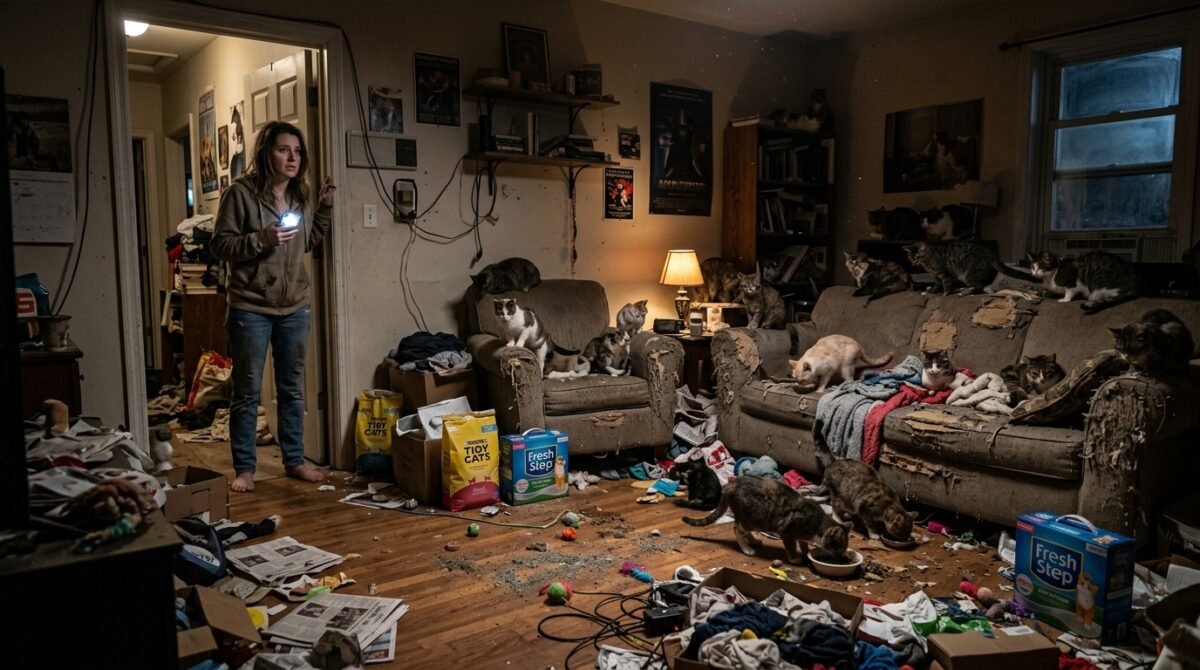
Living with a roommate is supposed to be a transactional agreement: you split the bills, you respect the common spaces, and you keep your private life contained. When I moved in with Sarah, I thought we had a perfect understanding. We were both working professionals, we both appreciated a clean living space, and we both had an unspoken agreement that our home was our sanctuary after long shifts in the city. Little did I know that Sarah harbored a secret, obsessive drive to ‘save’ every stray cat she encountered, a drive that would eventually turn our two-bedroom apartment into a legitimate biohazard.
It started innocently enough. One rescue kitten, brought home with a teary-eyed story about finding it shivering in an alleyway. Then, two more. I was lenient, perhaps too lenient, assuming these were temporary foster situations. But as the months bled into one another, the transient nature of these animals vanished. The apartment began to change. The scent of pine and lavender air fresheners was slowly replaced by the sharp, stinging odor of ammonia and damp fur. My kitchen counters, once a place for my coffee maker and cookbooks, became staging grounds for specialized cat food and medication.
The moral dilemma I faced was suffocating. On one hand, I valued Sarah as a friend and I understood that her intentions—however misguided—were rooted in compassion. On the other hand, my health, my sanity, and my legal standing as a tenant on the lease were being systematically destroyed. Every time I brought up the issue, I was met with defensive gaslighting and emotional blackmail. I was the villain, she claimed, for wanting to prioritize my comfort over the lives of ‘helpless creatures’ she had essentially kidnapped from the streets.
The breaking point wasn’t a single event, but a culmination of suffocating conditions. Finding cat feces on my bedspread for the third time in a week was the final nail in the coffin. I realized that my apartment was no longer my home; it was a holding pen for a troubled individual’s uncontrolled impulses. With a heavy heart, I did the only thing I felt was left to do: I contacted our landlord and reported the situation. This is the story of how that phone call destroyed my friendship, saved my health, and ignited an absolute firestorm in our shared social circle.
The Slow Creep of the Feline Invasion
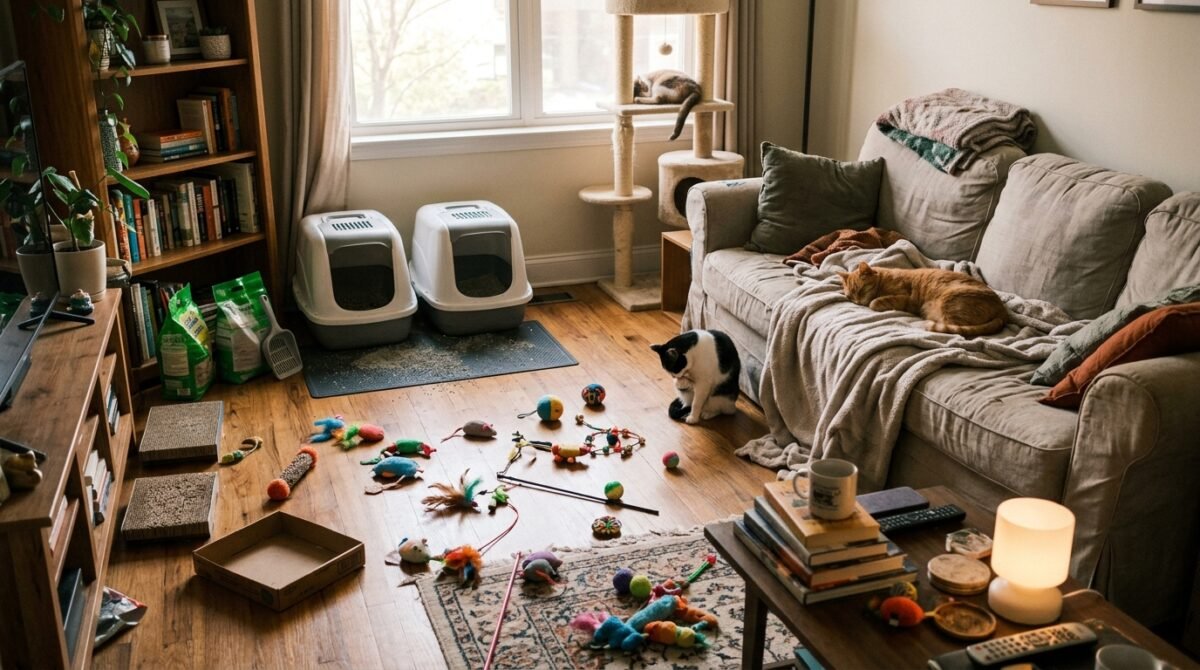
The first few months of our lease were idyllic. We had a rotation for chores, we shared a Netflix account, and we generally enjoyed each other’s company. Sarah had mentioned she loved cats, but I hadn’t realized the depth of her fixation. When ‘Luna’ arrived, she was a tiny, fragile thing, and I genuinely felt for her. It was supposed to be a week-long stay while Sarah found a rescue organization to take her. That week turned into a month, and the month turned into a permanent residency.
I remember the day the second cat arrived. I came home from work to find another tabby prowling around the kitchen island. When I asked Sarah about it, she gave me that wide-eyed, innocent look that I would soon come to loathe. ‘She was about to be hit by a bus, what was I supposed to do, just walk away?’ she asked. I let it slide. I wanted to be a good roommate. I didn’t want to be the person who said no to saving an animal.
By the time the third and fourth cats appeared, the apartment had started to show the strain. The living room rug, a nice woven piece I had purchased, was permanently stained. The scratch marks on the doorframes began to accumulate. I started noticing that whenever I sat down on the couch, I would leave with a layer of hair on my work trousers. I was constantly vacuuming, constantly lint-rolling, and constantly apologizing to guests who came over and immediately smelled the ‘cat scent’ that I was trying so desperately to mask with heavy-duty candles.
“Look, Sarah, I love animals, but we are in a two-bedroom apartment. There is no room for four cats. We need to find homes for at least two of them by the end of the month.”
— Me, during the first of many failed ‘roommate meetings’
Sarah’s reaction was immediate and defensive. She didn’t acknowledge the mess or the space constraints. She went straight to the moral high ground. She told me that I was cold-hearted and that I clearly didn’t understand the responsibility of stewardship. She made me feel like I was the one failing the test of character. I backed down, and that was my biggest mistake. Silence, I learned, is interpreted as consent by those who refuse to respect boundaries.
The Ammonia Threshold and the Kitchen Takeover
The tipping point for the air quality happened in late autumn. With the windows shut against the chill, the apartment became a sealed chamber of feline waste. I found myself waking up with a sore throat every single morning. I started keeping my bedroom door locked at all times, but the scent seemed to seep through the vents. It was becoming impossible to breathe, let alone host a dinner or even relax on the sofa.
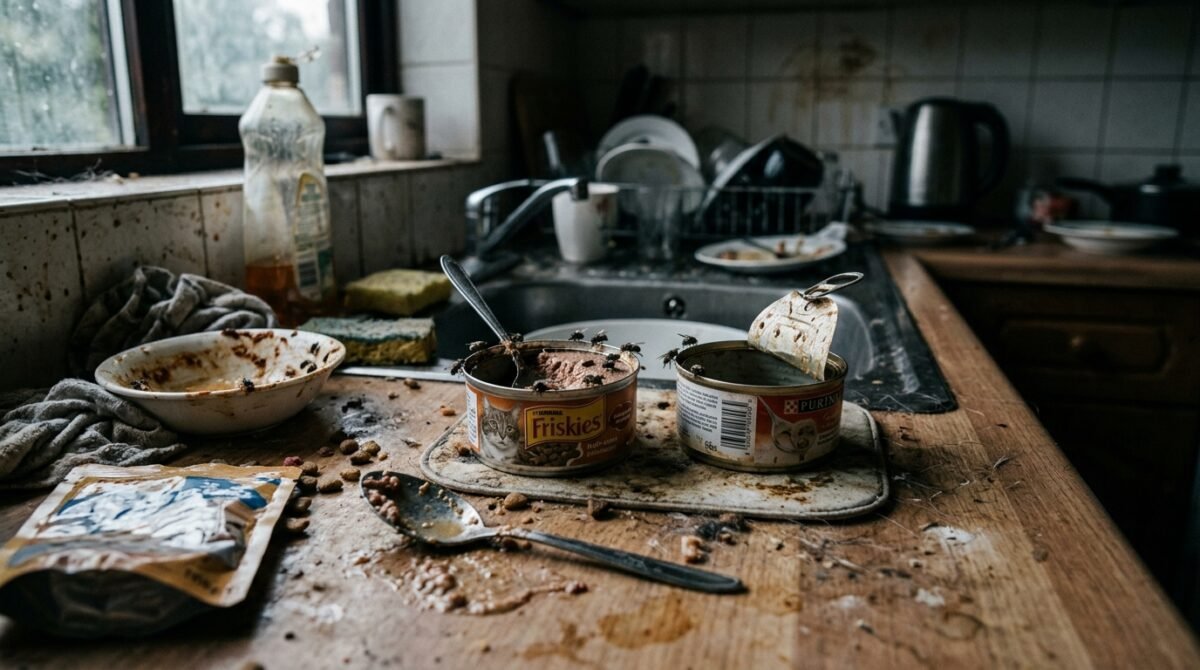
Then there was the kitchen. It became a biohazard zone. Sarah had taken to leaving wet food cans out for hours, attracting flies that buzzed incessantly around the sink. I couldn’t cook a meal without having to scrub down the counter first, and even then, I worried about the hygiene of the space. My culinary hobby—something I relied on to de-stress—was completely off-limits. I started ordering takeout every night, which was burning a hole in my budget, just to avoid the kitchen entirely.
I tried to set a boundary regarding the kitchen. I told her that if she was going to keep the cats, she had to keep the food in her room or at least clean up immediately. She laughed it off, telling me I was being ‘neurotic.’ She started leaving open bags of kibble on the floor, which only encouraged the cats to swarm my feet every time I entered the common area. It was no longer a home; it was an obstacle course of fur, food, and excrement.
“I don’t know how you can live like this. The air is literally stinging my eyes. We need a professional cleaning service, or these cats need to go. This isn’t a shelter, Sarah!”
— My text message to Sarah after finding a flea on my arm
The flea discovery was the absolute peak of my disgust. I felt violated. My skin crawled for hours. I took a scalding shower, scrubbed my sheets, and spent the entire next day doing laundry at a laundromat because I couldn’t trust our own washer. When I confronted her, she blamed the building, not her cats. She told me the landlord hadn’t sprayed for bugs in years. I knew that was a lie; I had seen the exterminator only three months prior.
The Secret Census of Ten Felines
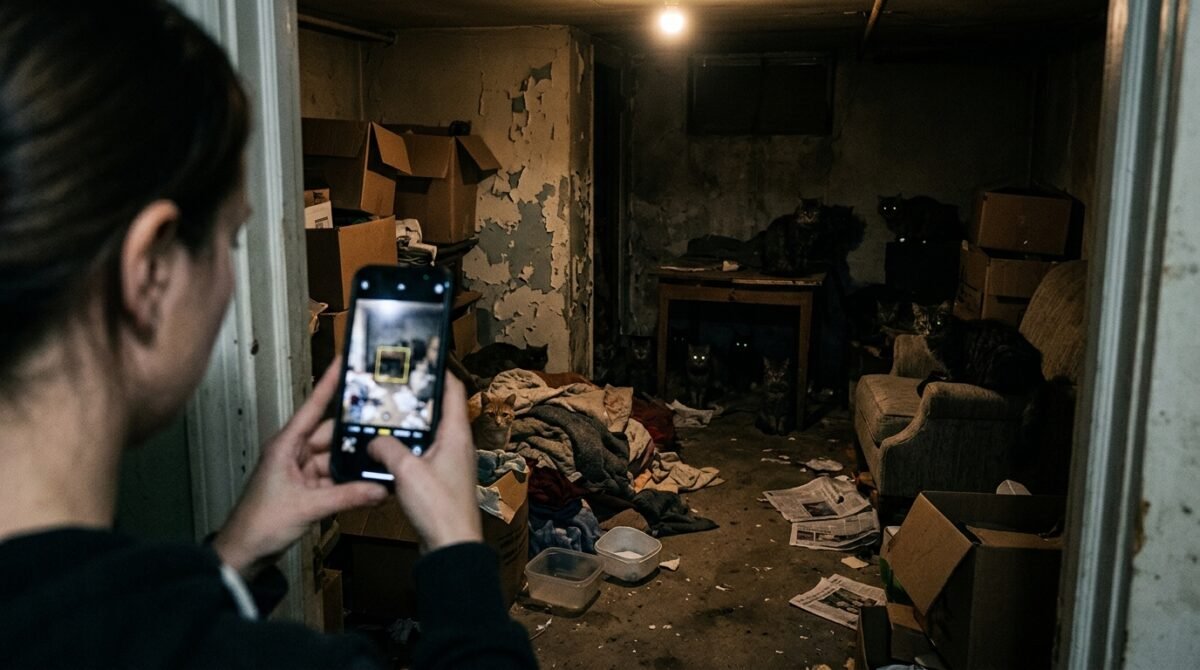
I decided to count them. It sounds ridiculous, but I needed to know the scale of the madness. I spent one Saturday afternoon when Sarah was out at work doing a ‘sweep’ of the apartment. I counted seven in the living room, one in the bathroom, one in her bedroom, and one hiding behind the refrigerator. Ten cats. Ten adult, non-neutered, territorial animals living in a space designed for two humans. The realization hit me like a physical blow to the stomach. I was living in a hoard.
The sheer logistics of it were mind-boggling. How was she feeding them? How was she cleaning up after them? I realized then that she wasn’t. She was doing the bare minimum—dumping kibble and hoping for the best. The litter boxes were overflowing, which explained why the cats had started using the rugs and my bedroom carpet as alternative bathrooms. It was a health crisis unfolding in real-time, and I was the only witness to the devastation.
I sat on my bed and cried. I felt trapped. I was on the lease for another eight months, and I didn’t have the funds to break it or move out immediately. Sarah was the one who had introduced me to the landlord, and she had a good rapport with him. If I complained, would he believe me? Or would he just evict us both and ruin my rental history? I felt like a hostage in my own apartment, forced to watch my living standards plummet while she played the role of the saintly animal rescuer.
I took photos. I took videos of the litter boxes, the ruined furniture, and the cats swarming the food bowls. I needed evidence. If this was going to end, it wasn’t going to be a ‘he-said, she-said’ situation. I had to be clinical. I had to be prepared. I started logging every interaction, every smell, every piece of ruined property. My phone became my weapon, a digital ledger of the decline of our living space.
The Confrontation in the Hallway
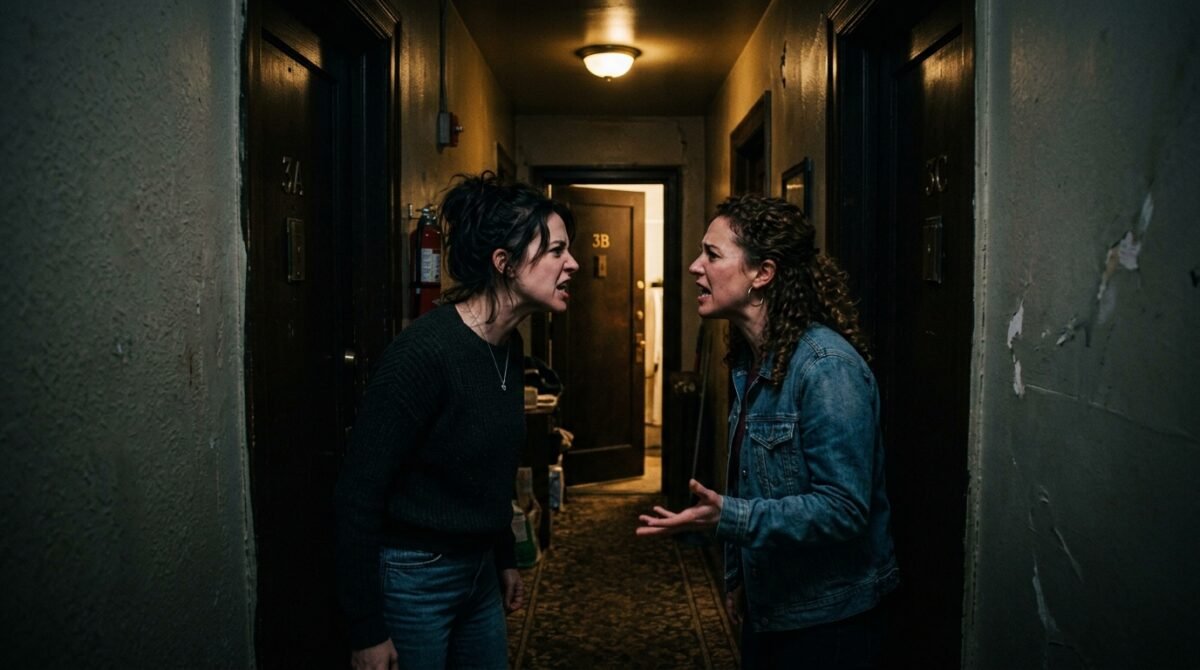
I finally cornered her on a Tuesday evening. She walked through the front door, smelling like wet animal, and I didn’t give her the chance to settle in. I had the photos pulled up on my laptop. I laid them out on the kitchen table, the ones that showed the absolute state of the living room carpet and the overflowing boxes. I told her that I was no longer asking; I was mandating that at least eight of these cats be rehomed by the end of the week, or I would take action.
She didn’t cry this time. She got angry. She stood there, arms crossed, and told me that she had ‘saved’ these lives from a cold, lonely death. She called me selfish. She said that my comfort was nothing compared to the ‘sanctity of life.’ She didn’t seem to care that the lives she had saved were now living in squalor. Her logic was completely detached from reality, warped by a savior complex that blinded her to the suffering she was causing both me and the animals.
“You’re acting like a martyr, Sarah, but you’re actually just a hoarder. Look at these photos! This is feces, not ‘saving lives.’ If you don’t call a rescue or a shelter by Friday, I am calling our landlord. I am not going to lose my security deposit because you decided to adopt a colony.”
— Me, during the final, heated confrontation
She looked at me with such genuine hatred that I realized the friendship was already dead. It had died the moment she decided that these cats were more important than our mutual respect. She told me that if I called the landlord, I would be the one responsible for the ‘death of these cats’ if they were taken to a high-kill shelter. She used that to try and leverage my guilt one last time. But for the first time, I didn’t feel guilty. I felt nothing but a cold, hard resolve.
The Email to the Landlord

I didn’t call. I wrote an email. I wanted a paper trail. I attached the photos, the video, and a detailed list of the damages, including the ruined carpeting and the smell that was permeating the hallway. I also CC’d my own personal email address to ensure I had a record of the communication. My hands were shaking as I hit ‘send,’ but as soon as the email left my outbox, a massive weight lifted from my chest. It was done.
I expected the landlord to react quickly. He was a stickler for his property, and the lease clearly stated a ‘one-pet-only’ policy. I had even attached the section of the lease in the email, highlighting the specific clause she was violating. I knew this would lead to an eviction notice or at the very least, a strict ultimatum. I prepared to pack my bags, as I knew the relationship was now completely fractured and I would likely need to move out regardless of the outcome.
The next morning, the landlord showed up at the door. He didn’t even knock; he used his key. I heard him stop dead in his tracks in the living room. The smell, even with the windows open, was still potent. I came out of my room to find him looking at the cats with an expression of pure, unadulterated horror. Sarah was still in her room, likely sleeping through the morning, but the landlord’s voice rang out, demanding to know what on earth was happening in his building.
Sarah emerged, disheveled and frantic. She tried to start her ‘rescue’ speech, but the landlord cut her off. He wasn’t interested in her hero complex. He was looking at the ruined flooring, the shredded window treatments, and the cat hair matted into the baseboards. He told her she had 24 hours to rectify the situation or the police would be called to assist with an immediate eviction. It was the most satisfying moment of my entire year.
The Fallout and the Pack-Up
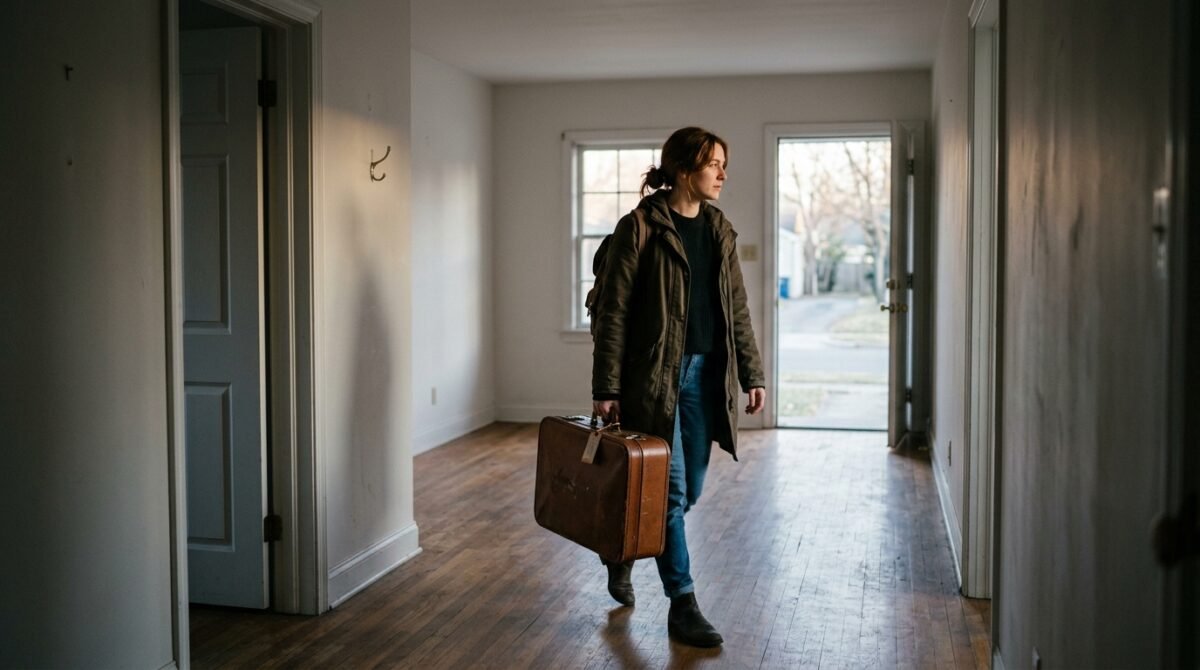
The next 24 hours were a blur of chaos. Sarah panicked. She started texting everyone she knew, trying to find homes for the cats, but she was delusional about how many people would take ten cats on a moment’s notice. She spent the entire day crying and yelling at me, calling me names, and blaming me for the destruction of her ‘family.’ I stayed in my room, packing my own belongings and keeping my headphones on to drown out the noise of her sobbing and the cats meowing.
She eventually managed to drop off three cats with a friend, but that left seven. The landlord returned, this time with an animal control officer. That was the end of the line. The officer was firm and professional. They knew exactly how to handle hoarding situations. Sarah tried to resist, trying to hide one of the kittens in her laundry basket, but the officer caught her. Watching them carry those cats out in crates was heart-wrenching, even for me, but I knew it had to happen.
The apartment was a shell of its former self. Once the animals were gone, the silence was deafening. The smell, however, lingered like a ghost. I started looking for a new place that night. I didn’t care about the commute or the rent; I just wanted out. I paid for a deep-cleaning service to come in and try to salvage the security deposit, but we both knew it wouldn’t be enough. The floorboards were stained, and the drywall would likely need replacing.
“You have ruined my life. I hope you’re happy. Those cats were the only things that kept me going, and you took them away because you couldn’t handle a little bit of fur.”
— Sarah, as she was packing her last box
I didn’t answer her. What was there to say? She had let her mental health issues consume our living space and our friendship. I wasn’t the one who ruined her life; she had done that herself by refusing to live in reality. I finished my packing, left the key on the counter, and checked into a motel until I could find a sublet. I didn’t look back as I walked out the door for the last time.
The Reddit Trial: Am I The A-hole?

I posted about it on Reddit later that week. I needed to know if I was crazy. I needed to know if, despite all the evidence, I was somehow the villain. The response was overwhelming. Within hours, the post had thousands of upvotes and comments. People from all over the world were weighing in, and for the most part, the consensus was clear. I wasn’t the villain; I was a tenant who had been pushed to the absolute edge.
It was strange, reading the perspectives of strangers who had been through similar situations. Some shared stories of roommates who turned apartments into bird sanctuaries, others into dog kennels. It made me realize that this type of behavior—the savior complex combined with a total lack of social awareness—was more common than I thought. It validated my feelings of frustration and my decision to put my own health first.
There were a few people who told me I was ‘too harsh’ and that I should have tried to help Sarah find resources rather than reporting her. But the majority of the community shut those comments down immediately. They pointed out that I wasn’t a social worker or a therapist; I was a roommate who signed a lease for a living space, not a boarding house for stray animals. The boundary between being a supportive friend and being an enabler was clearly defined in the comments.
“NTA. This isn’t just about ‘a few cats.’ This is a biohazard. This is animal hoarding, which is a serious psychological issue. You saved yourself from a lawsuit and a health crisis. You did the right thing.”
— u/User992 (Top Comment, 18.2k upvotes)
Reading those comments was like having a weight lifted off my shoulders. I wasn’t the ‘cat killer’ Sarah had tried to paint me as. I was a person who had been taken advantage of and who finally decided to protect themselves. The validation of the internet didn’t fix the friendship, but it definitely helped me move past the guilt I had been carrying for months.
The Financial Toll and the Legal Reality

The financial aftermath was severe. Between the loss of the security deposit, the cost of cleaning services, and the sudden expense of moving, I was out several thousand dollars. I kept receipts for everything, though I knew the chances of getting Sarah to pay me back were slim to none. We had a verbal agreement about splitting expenses, but that was long gone. I filed a claim in small claims court, but after a few months, I realized the legal fees would likely outweigh what I could actually recover.
I eventually decided to let it go. I moved on. I saw the money as a ‘stupidity tax’—a payment for the lesson I learned about setting boundaries early and never, ever ignoring the red flags. I stopped checking her social media, stopped asking mutual friends about her, and focused entirely on my own life. I reclaimed my peace of mind, which was worth far more than the money I had lost in the process.
I also learned about the legal implications of hoarding. If I had stayed any longer, I could have been held liable for the damages to the property, even if I wasn’t the one who brought the cats in. My name was on the lease, and that meant I was responsible for the condition of the apartment. Reporting the situation when I did was, legally speaking, the only way to protect my own credit and rental reputation.
It was a cold, hard lesson in adulthood. You can’t just be ‘nice’ to everyone at the expense of yourself. You have to understand your rights, and you have to be willing to enforce them, even when it’s uncomfortable. Sarah was a friend, but she was a toxic one, and I realized that true friends would never put you in a position where you have to choose between your health and their whims.
Reflecting on the Savior Complex
In the months that followed, I did a lot of thinking about Sarah. I realized that her behavior wasn’t just about the cats; it was about her need to feel needed, her need to be the hero in a story that she was creating. She didn’t care about the cats as individuals; she cared about the narrative of being the person who saved them. That’s why she didn’t care that they were suffering in a two-bedroom apartment. The narrative mattered more than the reality.
It’s a dangerous mindset. I’ve seen it in other areas of life—people who ‘rescue’ others from problems they don’t want to be rescued from, or people who take on burdens they have no capacity to handle. It’s a way to avoid looking at your own life and your own problems. It’s a distraction. By focusing on the cats, Sarah was able to ignore the fact that her own life was falling apart, that she wasn’t happy, and that she didn’t know how to build a healthy, sustainable life for herself.
I feel bad for her, in a distant, clinical way. I hope she got the help she needed. I hope she realized that hoarding animals isn’t a substitute for personal growth or professional therapy. But I also know that I am not the person to help her. I am not a therapist, I am not a rescue organization, and I am not her victim anymore. My responsibility ends at my own front door, and that is a lesson I will never forget.
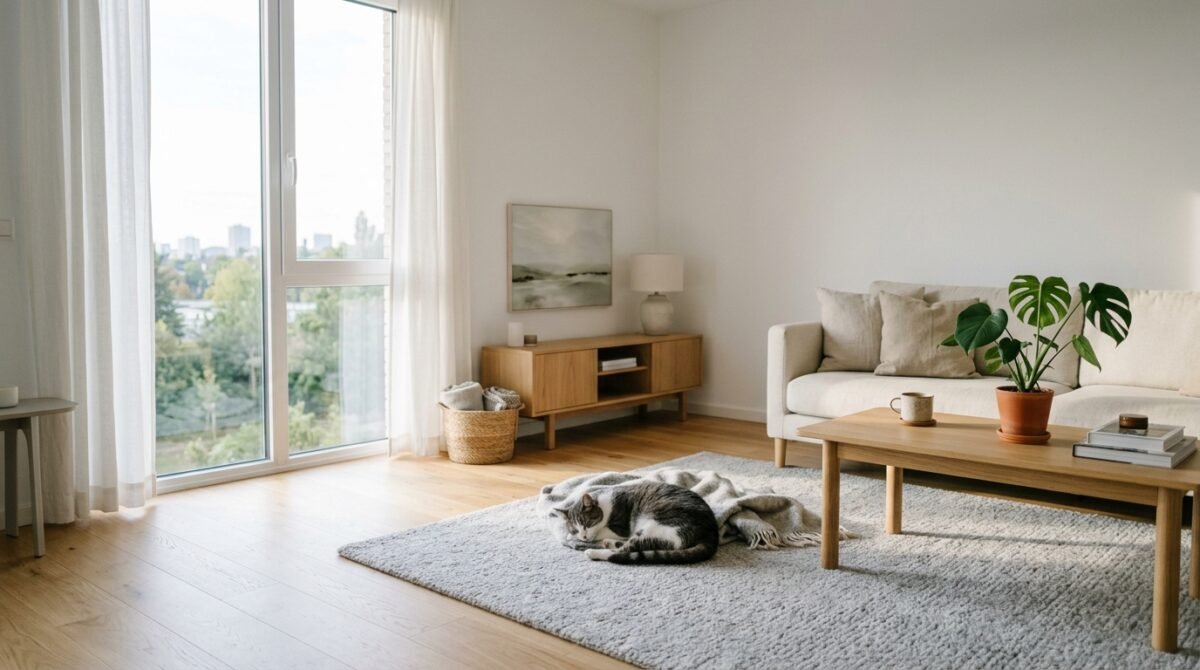
Life is much quieter now. I live alone, in a clean, bright, and mostly quiet apartment. I still love cats, and I might get one someday when I’m ready, but I will never again allow my home to be compromised by someone else’s lack of boundaries. I learned that the hard way, but I also learned that I am capable of making the tough decisions when I need to.
Life After the Cleanup

Today, I’m in a much better place. I have a new roommate who respects the shared space and understands that a home is a place for humans first. We have a chore chart that we actually follow, and when we have a problem, we talk about it like adults. It’s almost boring, in the best possible way. I no longer wake up with a sore throat, and I no longer worry about what I’m going to step on when I walk into the living room.
I’ve moved on from the trauma of the hoarding situation. I’ve found new hobbies, I’ve reconnected with old friends, and I’ve learned to value my own peace more than any friendship. I’ve realized that I don’t owe anyone my comfort, my health, or my home. I am responsible for my own well-being, and that is a responsibility I take very seriously now. It was a dark chapter in my life, but it was also a transformative one.
If you’re reading this and you’re in a similar situation, please know this: you are not being a bad person for wanting to live in a healthy, clean environment. You are not a bad person for standing up for yourself. You are not responsible for the poor choices of others, no matter how much they try to guilt you. Take the photos, make the call, and protect your own life. It’s worth it.
I still think about those cats sometimes. I hope they found good homes. I hope they are safe and loved. But I don’t feel guilty anymore. I did what I had to do, and that is enough. The story of the apartment with ten cats is over, and I am finally the one in control of my own narrative.
Conclusion
Looking back, the entire experience was a masterclass in the necessity of boundaries. We often equate being a ‘good friend’ or a ‘good roommate’ with being endlessly tolerant of bad behavior, but that is a dangerous fallacy. True friendship is built on mutual respect, and when that respect is eroded by one party’s inability to see past their own needs, the relationship has already ceased to exist. I didn’t end that friendship; I simply acknowledged that it had already ended long before I made that phone call.
The moral of this story isn’t that cats are bad, or that rescuing animals is wrong. The moral is about the sanctity of the home and the importance of personal autonomy. We all deserve a space that is ours, a place that feels safe, clean, and welcoming. When someone violates that, they are violating your ability to live a healthy, productive life. Never, ever feel guilty for protecting your peace.
Now, I turn it over to you. Have you ever lived with someone whose personal lifestyle choices completely compromised your living situation? Have you had to make a tough call that ended a relationship but saved your sanity? Share your stories below—the community is here to listen and, more importantly, to validate your need for a healthy home.
What's your verdict on this dilemma?
Vote below to contribute to the official community consensus.

Have a Dilemma Keeping You Up at Night?
Share your real-life feud, wedding chaos, or relationship crossroads anonymously with our editorial team.
What do you think ?
0 Comments🛡️ Comments are moderated to protect community integrity. Your comment will appear once approved by the editorial team.