
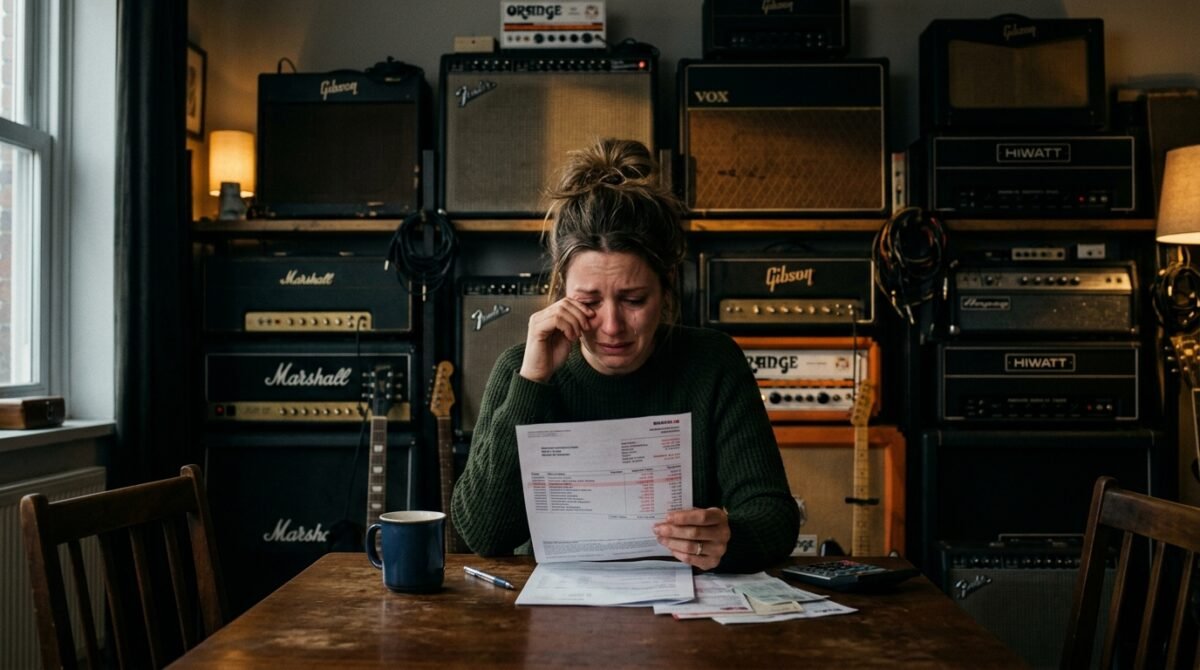
For three years, the ‘Adoption Jar’ sat on the top shelf of our pantry—a physical manifestation of hope, sacrifice, and the family we were desperate to build. Every extra shift I worked, every holiday bonus Mark received, and every birthday check from our parents went into that high-yield savings account. We had finally hit our target: $15,000. It was the amount our agency told us was the bare minimum for legal fees and home study costs. We were ready. Or so I thought.
Mark, my husband of six years, had always been a musician at heart. In his twenties, he toured with a moderately successful indie band, a time he referred to as the ‘golden era.’ I loved his passion; I loved the way he hummed melodies while making coffee. I never saw his nostalgia as a threat. I saw it as a quirk, a soft spot in his soul that made him who he was. I didn’t realize that his nostalgia was a hungry beast, waiting for the right moment to consume our future.
The unraveling didn’t happen with a bang. It happened with a subtle, synthetic scent of new electronics and a sudden lack of transparency. When I went to check the account to pay our application fee, the balance returned a figure so low it made my vision blur: $42.18. My heart didn’t just stop; it fractured into a thousand jagged pieces. I wasn’t just looking at a missing balance; I was looking at the systematic dismantling of my life’s work.
The moral dilemma here isn’t just about the money. It’s about the fundamental breach of trust. How do you reconcile a partner who claims they want a family with a partner who prioritizes a Marshall stack and a vintage tour bus rental over the life of a human child? This is the story of how I found out, how I confronted the wreckage, and why I had to walk away from the man I thought I knew.
The Morning the Savings Vanished

It was a Tuesday morning, the kind of quiet, ordinary day that feels heavy with impending doom. I had my coffee in one hand and my laptop in the other, ready to log into our bank portal to initiate the wire transfer for our initial adoption agency retainer. I remember the exact feeling of the keys under my fingers—a steady, rhythmic confidence. I felt like we were finally crossing the threshold into the life we had planned for so long.
When the screen loaded, I blinked. The account showed a balance of forty-two dollars and eighteen cents. I refreshed the browser. Nothing changed. I navigated to the transaction history, assuming there must be a mistake, a bank error, or perhaps some bizarre security glitch. Instead, I saw a string of vendor names that made no sense: ‘Vintage Gear Hub,’ ‘Custom Tour Bus Rental,’ ‘Premier Sound Reinforcement.’
My hands started shaking so violently that I nearly dropped the laptop. I sat there in the silence of our kitchen, the hum of the refrigerator suddenly sounding like a jet engine. I checked the dates. The money had been pulled in three large chunks over the last two weeks, all while Mark was supposedly ‘working late’ at his studio job. He wasn’t working. He was building a monument to his own vanity.
“I just wanted to feel alive again, Sarah. We’ve been living like accountants for three years. I needed to know I still had ‘it’ before we were too old to even pick up a guitar.”
— Mark, during the initial confrontation
When he walked through the door later that evening, he didn’t look like a man who had committed financial abuse. He looked excited. He was carrying a small box of guitar picks, humming a tune. He didn’t notice me sitting there in the dark, the laptop open, the bank statement printed out and placed dead center on the kitchen island. The air in the room was thick with the weight of everything that was about to be destroyed.
The Justification of a Mid-Life Crisis
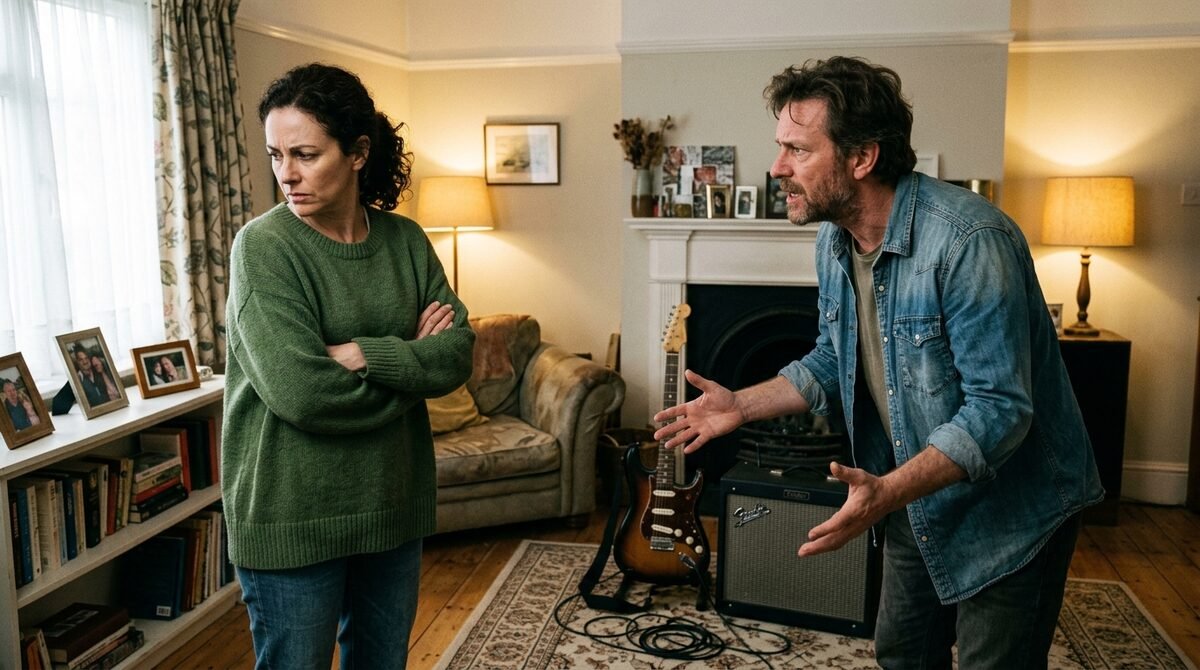
When Mark finally saw me, his face shifted from excitement to a hollow, defensive mask. He tried to brush it off as ‘an investment’ in our future, claiming that if the tour went well, he would make back triple the money. He talked about ‘brand building’ and ‘securing our legacy.’ It was the most delusional string of sentences I had ever heard from a grown man.
I kept asking him how he thought he would pay for the adoption, and his answer was always the same: ‘We have time.’ He didn’t seem to grasp that the timeline for our adoption wasn’t dictated by his tour schedule or his need for validation. It was dictated by the biological reality of my age and the rigorous, inflexible requirements of the social services department.
He spent the next hour pacing the floor, trying to convince me that this was a ‘calculated risk’ for the benefit of our future family. It was gaslighting of the highest order, attempting to frame a selfish act of self-indulgence as a heroic attempt to provide for our future child. He was trying to cast himself as the visionary, ignoring the fact that he was the thief.
“You’re acting like I spent it on gambling or drugs. This is my career, my art! This is for us, Sarah. Once we’re back, we’ll have more money than we know what to do with. Don’t you believe in me?”
— Mark, attempting to justify the spending
I realized then that Mark didn’t want a child. He wanted to remain the center of his own universe. A child would require him to be selfless, to be present, and to be responsible. A nostalgia tour was just an extension of his existing, comfortable fantasy where he remained the star of the show, forever young and forever adored by a crowd that likely didn’t even remember his band’s name.
The Secret Group Chat Revelation

The next day, while Mark was at ‘rehearsal,’ I found his iPad unlocked on the coffee table. I didn’t want to look, but the notification pinged—a message from a bandmate asking about the ‘budget for the after-party.’ My curiosity turned into a cold, hard necessity for the truth. I opened the group chat labeled ‘The Comeback Tour’ and started scrolling back through weeks of messages.
The conversation wasn’t about music. It was about how to hide the spending from me. They were laughing about ‘the old ball and chain’ and making jokes about how easy it was to move money without me noticing. One message, from his lead guitarist, stood out in particular, a jagged piece of evidence that shattered any remaining illusion of his ‘artistic’ intent.
“Make sure to keep the receipts out of the house. Sarah’s the type to check the mail, so use the PO Box. We’re going to live like rock stars for six months, man. No diapers, no nursery, just pure, unadulterated freedom.”
— Leaked text from Mark’s bandmate
Reading those words was like being punched in the solar plexus. It wasn’t just that he spent the money; it was that he had actively plotted against me, laughing at my aspirations while I worked overtime to fund them. The betrayal wasn’t impulsive; it was premeditated. He had been living a double life for months, and I had been the oblivious financer of his secret rebellion against adulthood.
Why the Sunday Dinner Table Went Silent
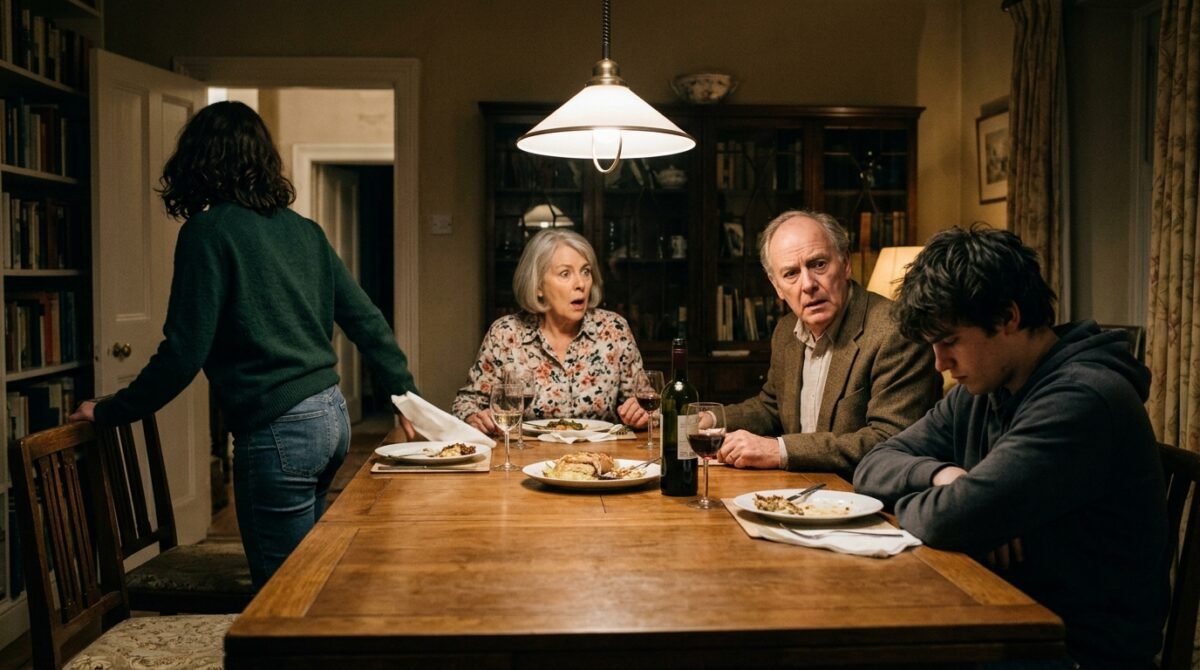
I didn’t keep the secret. That Sunday, we went to his parents’ house for dinner as we always did. The table was set with his mother’s fine china, and the atmosphere was nauseatingly cheerful. I sat there, listening to Mark talk about his upcoming ‘project’ to his parents, his voice filled with a fake, practiced enthusiasm that made my skin crawl.
I waited until there was a lull in the conversation, right after his mother asked about our adoption timeline. I looked Mark directly in the eye, took a breath, and laid it all out. I told his parents exactly where the $15,000 went. The silence that followed was so absolute you could hear the clock ticking on the wall. Mark’s father put his fork down, his face turning a deep, mottled red.
Mark tried to interrupt, to spin it as a misunderstanding, but I pulled out the printouts of the bank statements and the screenshots of the group chat. I didn’t yell; I didn’t cry. I just stated the facts, one by one. I watched the realization wash over his parents—the realization that their son was not the ambitious musician he claimed to be, but a middle-aged man having a pathetic, destructive tantrum.
“I hope the vintage speakers were worth it, Mark. Because that’s all you have now. You don’t have a wife, you don’t have a future child, and you certainly don’t have my respect.”
— My parting words at the dinner table
I left the house before the dessert was served. I didn’t wait for an apology, because I knew one wouldn’t be sincere. I walked out to my car, the cold air hitting my face, and for the first time in three years, I felt a strange, terrifying sense of clarity. The path ahead was empty, but at least it was honest.
The Legal Reality Check

The following week was a blur of legal consultations and financial damage control. I met with a lawyer to discuss the possibility of recovering any of the funds, though I quickly learned that because we had a joint account, the prospects were bleak. It was a painful lesson in financial autonomy—one I would never, ever forget.
My lawyer explained that in the eyes of the law, what Mark did was ‘mismanagement’ rather than theft, provided the money wasn’t explicitly earmarked in a trust. I felt sick. I had been so trusting, so naive. I had treated our marriage as a team sport, while Mark had been playing a solo game with my life as the collateral.
I realized then that the $15,000 wasn’t just money; it was the cost of my naivety. I was paying for the realization that my husband was capable of profound cruelty. We sat in the lawyer’s office, the beige walls feeling like a prison, and I signed the papers to initiate a legal separation. I needed to protect what little credit I had left.
“You can’t recover the money if it’s already been spent on services and non-returnable equipment. Your best bet is to focus on the divorce settlement and ensure he takes on the entirety of the debt he created.”
— My divorce attorney
The reality of the situation hit me hardest at night. I would wake up in our bed, look at the empty space where he used to sleep, and realize that the silence wasn’t empty—it was peaceful. The burden of his ‘art’ was no longer mine to carry. The financial hole was deep, but the emotional hole he had been digging was finally closed.
The Internet Weighs In

I posted my story on a popular forum, desperate to know if I was crazy. Was I being too harsh? Was I ‘stifling his dreams’ as he had accused me of doing? The response was overwhelming and, for the most part, brutally validating. Thousands of strangers saw through his ‘nostalgia’ excuse in a heartbeat.
The comments sections became a repository of similar stories—people who had married musicians, artists, and ‘dreamers’ who never grew up. I read for hours, my eyes burning, realizing that this was a common tragedy. The ‘starving artist’ trope is often just a cover for a lack of accountability and a refusal to participate in the real world.
“This isn’t about music. This is about a man who refuses to see his wife as an equal partner. He spent your future on a glorified hobby. Don’t look back. You are grieving a version of him that never really existed.”
— u/RealistAccountant (Top Comment, 32.1k upvotes)
There were even people who had gone through the exact same thing, providing me with resources and advice on how to rebuild. The community was an unexpected lifeline. They didn’t care about his ‘talent’ or his ‘vision.’ They cared about the fact that I had been exploited. It helped me realize that the shame wasn’t mine to carry—it was entirely his.
The Empty House and the Echoes

Once the divorce proceedings began, Mark moved out. He took the equipment, of course. Watching him pack his amps into a U-Haul was like watching a ghost move out of our home. He didn’t say goodbye to the house; he didn’t apologize to me. He just checked his phone, probably coordinating the ‘tour’ he was still convinced would save him.
I spent the next month stripping the house of his presence. I painted over the walls where he had hung his concert posters. I donated the old music magazines that had cluttered our coffee table for years. I wanted to create a space that was entirely my own, a sanctuary where I could start the process of healing. It was the hardest thing I’d ever done.
Every time I walked into the room that was supposed to be the nursery, my heart broke all over again. It was just a spare room now, filled with storage boxes and dust. I had to face the fact that the dream of adopting a child with Mark was dead. That specific dream had died the moment he transferred the money.
“I’m doing this for us, Sarah! Why can’t you see that? If we’re not happy, we’ll never be good parents anyway. This is the only way for me to be the person you need.”
— A final, desperate text message from Mark after he left
I didn’t respond to his messages. I couldn’t. His version of ‘us’ was a lie he told himself to make the theft feel like a romantic sacrifice. I had to let go of the idea that I could ever make him understand. He would always be the victim in his own story, and I would always be the obstacle.
Finding the Silver Lining in the Debt

As I sat down to audit my personal finances, I realized that while I had lost the $15,000, I had also lost a significant amount of weight—the weight of managing his life. I stopped paying his half of the utilities. I stopped covering his overdrafts. I stopped making excuses for his erratic behavior. For the first time in years, my money was mine.
I started a new savings account. I named it ‘Future Me.’ It wasn’t for an adoption anymore—at least, not right now. It was for my own stability, my own travel, and my own peace of mind. It was a modest amount at first, but it grew faster than I expected, simply because there were no leaks in the bucket.
I even started taking guitar lessons myself. Not because I wanted to be a rock star, but because I wanted to reclaim the instrument from the narrative he had built around it. I wanted to learn to play for the pure joy of it, without the ego, without the ‘nostalgia,’ and without the need for an audience. It was a small act of rebellion, and it felt incredible.
“I thought you hated music now. You haven’t touched a guitar in years. Why start now?”
— My sister, asking about my sudden interest in music
I told her, ‘I don’t hate music. I hate the way he used it to silence me.’ That was the truth of it. I had been playing small, living small, and shrinking myself to make room for his oversized ego. Now, the room was mine to fill with whatever I chose.
The ‘Nostalgia Tour’ Implosion

Three months later, I got a call from a mutual friend. The ‘Comeback Tour’ had been a disaster. They hadn’t booked enough shows, the equipment had been damaged in transit, and the band members were suing each other over the remaining funds. Mark was back, broke, and looking for a place to stay. He had expected me to be his safety net.
I didn’t answer the door. I didn’t even respond to the texts pleading for ‘a talk.’ I had nothing left to say. He had spent our future on a fantasy, and when the fantasy collapsed, he had the audacity to expect me to pick up the pieces. It was the final validation that I had made the right choice in leaving.
The irony wasn’t lost on me. He had spent his life chasing a past that wasn’t as great as he remembered, and in doing so, he had destroyed the only real future he ever had. He was still stuck in that ‘golden era,’ while I was firmly planted in a reality that, while difficult, was entirely my own.
“I’m sorry, Sarah. Please. Just one cup of coffee. I realize now that I was wrong. I’ll make it up to you, I promise.”
— A voicemail from Mark, three months after the split
I deleted the voicemail without listening to the end. I didn’t need to hear the rest of the apology. I already knew how it would end: with him asking for money, or for a place to stay, or for me to forgive him so he could stop feeling guilty. I wasn’t his therapist, and I certainly wasn’t his bank.
Rediscovering the Path to Motherhood

I didn’t give up on the dream of being a mother. I just changed the parameters. I looked into fostering, into local programs, and into a solo adoption process. It was daunting, and the financial barrier was still there, but now I had a clear path. I wasn’t being held back by a partner who didn’t want the same things I did.
I found a support group for single parents, and for the first time, I felt like I was among people who understood what it meant to build a life on their own terms. There was no one to consult, no one to compromise with, and no one to sabotage my efforts. It was just me and my determination.
I realized that the ‘Adoption Jar’ was just a symbol. The true capacity for motherhood wasn’t in a savings account; it was in the resilience I had built through this trauma. I was stronger, more independent, and more focused than I had ever been. And that, I realized, was exactly what a child would need.
“You don’t need a partner to build a family. You need a stable foundation, and you’ve spent the last six months building one from the rubble of your old life.”
— A mentor from my support group
The journey is far from over, and it’s certainly not the one I had originally mapped out. But as I look at my new, smaller, but infinitely more secure life, I know that I made the right decision. I didn’t lose my dream. I lost the obstacle that was standing in its way.
Conclusion
Looking back at the wreckage of my marriage, I don’t feel anger anymore—at least, not the consuming, white-hot rage I felt at the beginning. I feel a strange, cold gratitude. That $15,000 wasn’t just money; it was the price of clarity. Without that ‘nostalgia tour,’ I might have stayed in a marriage that was fundamentally hollow, waiting for a partner who would never truly grow up.
Financial infidelity is just as damaging as any other form of betrayal. It strikes at the heart of the partnership, the shared future, and the trust that holds a life together. If you are in a situation where your partner is hiding assets or prioritizing personal whims over your shared goals, listen to your gut. Do not wait for a catastrophic ‘tour’ to wake you up. Your future is worth more than their vanity.
I am still on my journey to motherhood, and while the road is different, it is paved with my own choices, not someone else’s ego. I encourage everyone reading this to look closely at their own ‘Adoption Jars’—both the literal ones and the metaphorical ones. Are you building a life with a partner, or are you financing a ghost?
What would you have done?
If you were in my shoes, would you have tried to salvage the relationship with counseling, or was the financial betrayal a non-negotiable end point? Share your thoughts in the comments below—I read every single one.
What's your verdict on this dilemma?
Vote below to contribute to the official community consensus.

Have a Dilemma Keeping You Up at Night?
Share your real-life feud, wedding chaos, or relationship crossroads anonymously with our editorial team.
What do you think ?
0 Comments🛡️ Comments are moderated to protect community integrity. Your comment will appear once approved by the editorial team.