
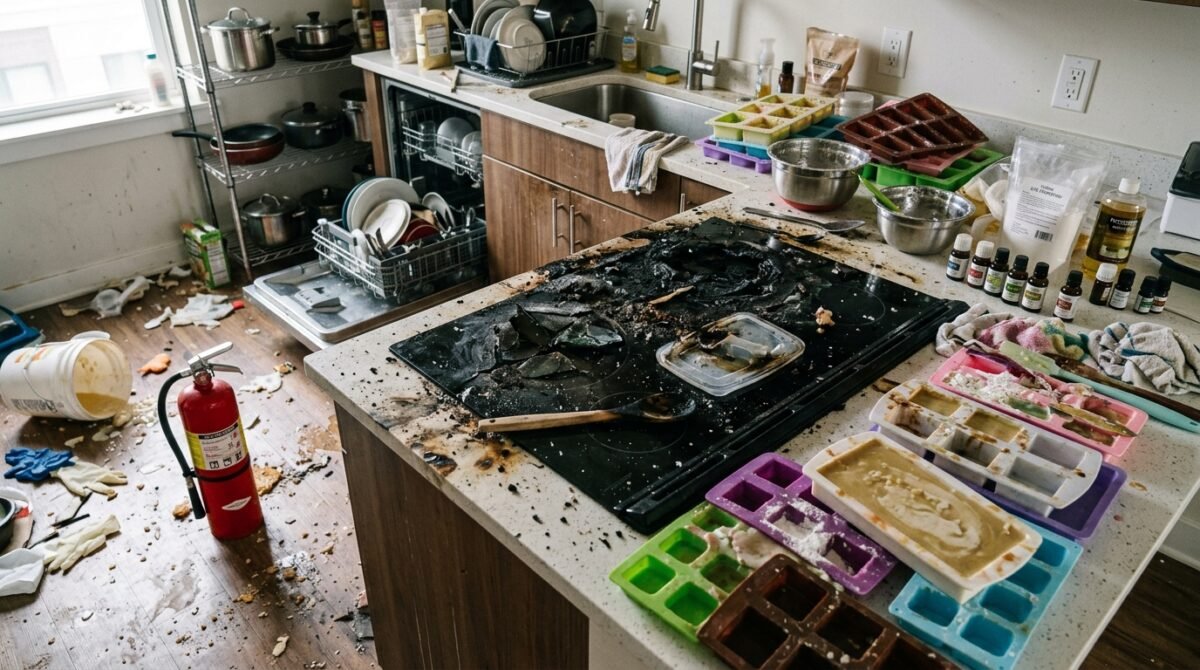
Living with a roommate is often a balancing act, a series of compromises regarding dishes, noise levels, and the occasional awkward guest. However, nothing could have prepared me for the day my roommate, Sarah, decided that our modest shared kitchen was the ideal incubator for a high-volume, small-batch soap manufacturing business. It started innocently enough with a few bags of lye and some essential oils cluttering the pantry, but within weeks, it had spiraled into a full-scale, hazardous laboratory that threatened the structural integrity of our apartment.
The moral dilemma didn’t start with the mess, though that was certainly the catalyst. It began with the complete disregard for my shared living space and the blatant violation of our lease agreement. When I first brought up the lingering fumes of caustic soda and the blocked-up burners, I was met with defensive platitudes about ‘hustle culture’ and ‘building a brand.’ Sarah viewed our kitchen not as a space for preparing food, but as a manufacturing facility she wasn’t paying the rent for.
As the weeks progressed, the kitchen became a no-go zone. The smell of synthetic lavender and harsh chemicals permeated the upholstery of my sofa in the adjacent living room. I found myself eating takeout over the sink in the bathroom just to avoid the caustic dust settling on every surface. The tipping point arrived on a Tuesday evening when the smell of melting plastic and burning rubber forced me to sprint into the kitchen, only to find the glass stovetop bubbling under the weight of a massive, double-boiler soap vat.
The confrontation that followed was less of a conversation and more of a collision of realities. I was looking at a ruined appliance, a potential chemical fire, and a roommate who seemed more concerned with the batch ‘curing’ than the fact that we were currently breathing in hazardous fumes. When the smoke finally cleared, and the reality of the damage set in, I realized that simple diplomacy had failed. I was left with a choice: pay for a new stove that I didn’t break, or involve the authorities to stop a disaster before it actually leveled our building.
The Rise of the Saponification Hustle
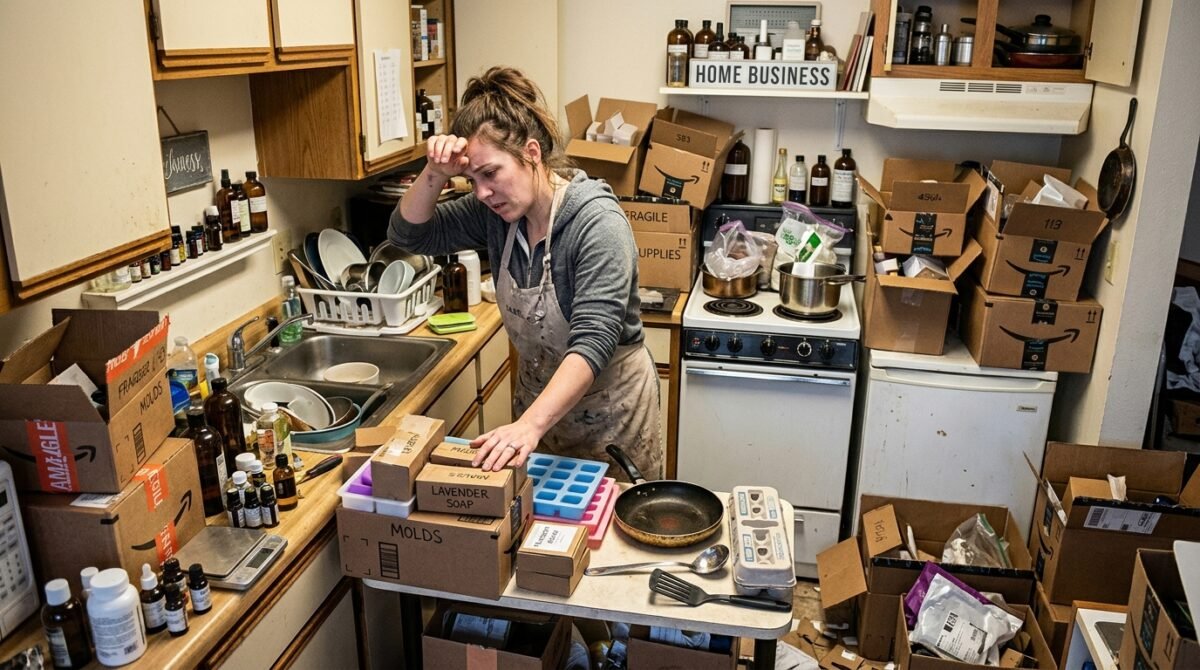
It began during one of those rainy Saturdays when Sarah found a YouTube tutorial that promised financial freedom through artisanal soap making. I didn’t think much of it at first; everyone needs a hobby, and I assumed she’d make a few bars, give them to her friends, and eventually move on to something less messy. I was wrong. The kitchen table was soon buried under stacks of silicone molds, pH testing strips, and jugs of olive oil that seemed to multiply overnight.
The issue wasn’t the soap itself; it was the scale of the operation. She wasn’t just making a few bars for the sink; she was preparing for a craft fair with a production schedule that required the oven to be running for twelve hours a day. My attempts to cook dinner became a logistical nightmare. I had to navigate around hazardous chemicals just to boil a pot of pasta, often while Sarah stood over my shoulder, lecturing me on the dangers of ‘contaminating her product with food particles.’
“You’re really going to cook in here right now? I have a batch of sandalwood base curing in the oven, and the humidity from your boiling water is going to ruin the entire set. Can’t you just order something?”
— Sarah, during a typical Tuesday night kitchen standoff
I tried to set boundaries. I explained that we were not zoned for commercial light manufacturing and that our lease explicitly forbid conducting business operations in the units. She dismissed my concerns with a wave of her hand, promising that the ‘side hustle’ was temporary and that the profits would eventually help us upgrade our living situation. It was a classic case of someone else trying to spend my peace of mind to fund their personal ambitions.
The friction only intensified as the living room started to look like a warehouse. Boxes of raw materials—sodium hydroxide, essential oils, and pigments—blocked the hallway. I felt like a stranger in my own home, trapped behind towers of shipping boxes. When I asked her when the inventory was moving out, she told me that the living room was ‘prime storage space’ and that I should be grateful she wasn’t charging me for the ‘aesthetic improvement’ of the place. The level of delusion was staggering.
Eventually, the kitchen started showing signs of wear. The backsplash was splattered with oil, and the counter had a permanent, sticky residue that felt like a trap for every crumb that landed on it. I tried cleaning it, but the soap base was so potent it seemed to bond with the granite. I was paying half the rent for a home that was rapidly becoming a hazardous, sticky, and completely unlivable workspace for a failing business that wasn’t even mine.
The Night the Stovetop Melted
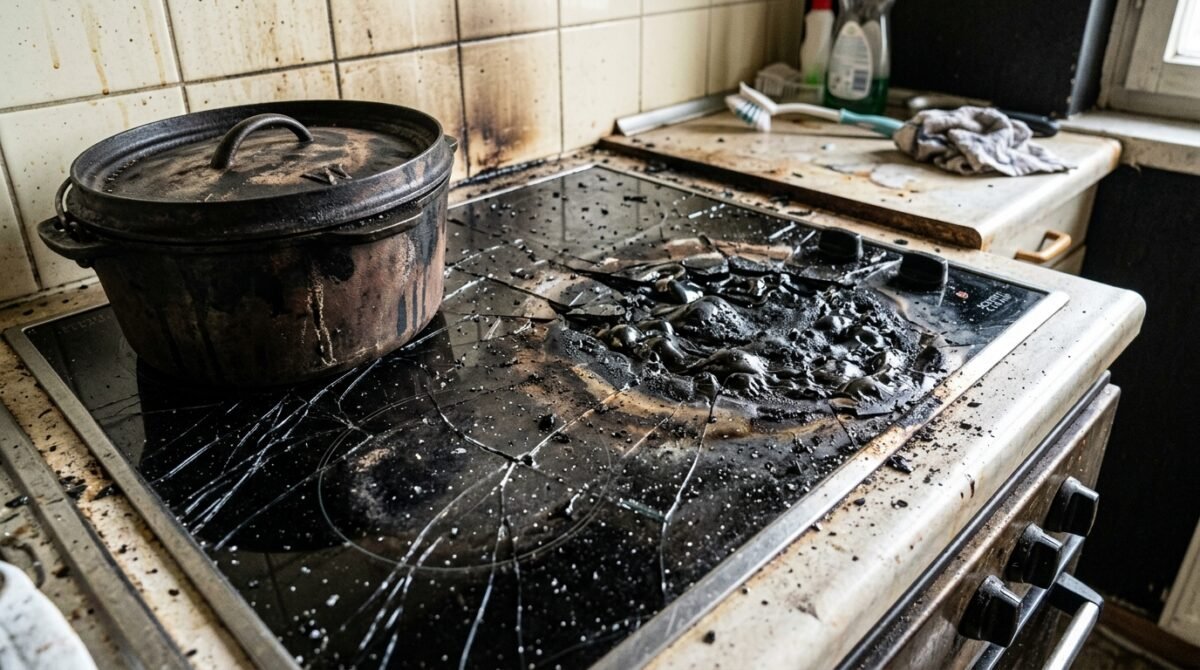
The catastrophe occurred on a rainy Tuesday. I had come home from a long shift at the office, looking forward to nothing more than a quiet dinner. As soon as I unlocked the front door, the smell hit me—not the pleasant, floral scent Sarah usually bragged about, but something sharp, chemical, and distinctly alarming. It was the smell of burning plastic and warped metal. I dropped my bag and ran to the kitchen.
Sarah wasn’t home, but the oven was on at maximum heat. On the stovetop, she had placed an enormous metal pot for a double-boiler setup. However, the pot was significantly larger than the heating element, and the heat had radiated outward, melting the tempered glass surface of our stove. The glass was cracked, warped, and had actually begun to sag into the internal compartment of the unit. Smoke was pouring out from the gap between the stove and the counter.
“I don’t understand why you’re being so dramatic. It’s just a little bit of heat damage. The landlord will probably just charge us a hundred bucks for a new glass top. It’s not like the whole building is going to blow up!”
— Sarah via text message, upon being confronted with the damage
I didn’t argue. I immediately killed the power at the breaker box and dragged the smoking pot into the sink, burning my hands in the process. The stove was completely non-functional, and the smell of melting synthetic components was so thick I had to open all the windows, despite the freezing rain outside. I took photos of everything—the melted glass, the soap residue inside the unit, and the sheer scale of the fire hazard she had created.
When Sarah finally returned an hour later, she didn’t apologize. She walked in, looked at the ruined stove, and complained that her ‘batch’ was ruined. She seemed genuinely incapable of grasping the fact that she had caused thousands of dollars in property damage and nearly started a structural fire. The entitlement was so profound it left me speechless. I realized then that she didn’t see me as a roommate; she saw me as a background character in her life whose sole purpose was to facilitate her poor decisions.
I told her then that I was not paying a cent for the repairs and that she needed to clear the kitchen immediately. Her response was to laugh and tell me that I was ‘overreacting’ because I didn’t want to see her succeed. She had convinced herself that my boundaries were actually jealousy, a psychological defense mechanism that prevented her from ever taking accountability for her actions. I stood in my darkened kitchen, looking at the ruin of our appliance, and knew there was no going back.
The Escalation of the ‘Hustle’ Narrative

After the stovetop incident, Sarah decided to double down. Instead of moving her operations out, she bought a portable induction cooktop and continued her work in the center of the kitchen floor. It was absurd. She was literally standing in the middle of our walkway, stirring vats of lye and oil, creating a slip-and-fall hazard that would have made a safety inspector pass out on the spot. When I asked her how she planned to pay for the stove replacement, she claimed she was ‘reinvesting her capital’ into the business.
I reached out to our landlord, but to my horror, I discovered that Sarah had already talked to him, feeding him some sob story about how she was an ‘aspiring female entrepreneur’ going through a hard time. He was sympathetic, but he also warned us that if there was any further damage, we would both be evicted. Sarah used this as leverage against me, arguing that if I complained, I was essentially trying to get us both kicked out of our home.
“If you call the landlord again, you are literally putting us on the street. Do you want to be homeless because you can’t handle a little bit of mess? I have three orders pending for wedding favors, and I need this kitchen!”
— Sarah’s aggressive text message to me
The situation had become a hostage negotiation. She was holding our lease over my head, knowing that I was the more responsible tenant who actually cared about our credit scores and housing history. Every day, I woke up wondering if the apartment would be filled with fumes, or worse, if the fire alarms would finally go off. The stress was physically manifesting as tension headaches and a complete inability to sleep.
I started documenting everything. I kept a ledger of the days she worked, the materials she brought in, and the specific hazards she created. I also began recording our conversations, just in case she tried to spin the narrative when the landlord finally had to intervene. It felt like I was living with an enemy agent rather than a friend. The camaraderie we once had was completely incinerated, replaced by a cold, calculating standoff.
I realized that she wasn’t going to stop until she was forced to. Her business was failing—she wasn’t actually selling as much as she claimed—but the act of ‘running a business’ gave her a sense of identity that she was unwilling to give up. To Sarah, the soap making wasn’t about the money; it was about the appearance of success, and she was willing to burn our apartment down to maintain that image.
The Breaking Point: A Visit from the Marshal
The final straw was the arrival of a massive shipment of volatile chemicals that she stored in our kitchen cabinet right next to the hot water heater. It was a recipe for a disaster. The fumes were so strong that my neighbors started complaining about the smell of ‘industrial chemicals’ leaking into the hallway. When I confronted her, she told me that the neighbor was just being a ‘hater’ who couldn’t stand seeing a woman succeed.
I decided to stop playing games. I did some research and found out that operating a chemical manufacturing business in a residential unit without proper ventilation or fire suppression systems was a direct violation of city ordinances. I didn’t want to get us evicted, but I knew that a visit from an inspector was the only way to legally force her to stop. I called the local Fire Marshal’s office, identified myself as a resident, and described the conditions.
“Look, I don’t want to ruin her life, but I also don’t want to die in a fire because she decided to mix lye and fats in a room with no ventilation. Please, you have to do something before the whole floor goes up.”
— My recorded message to the local Fire Marshal
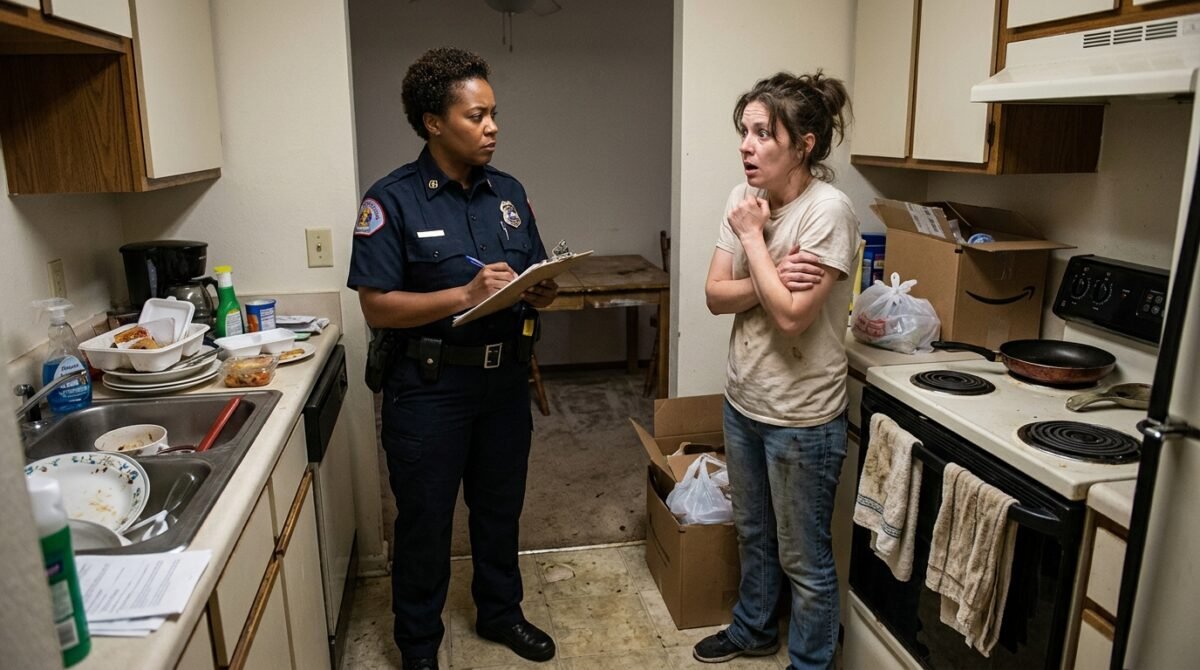
The inspector arrived on a Thursday morning while Sarah was in the middle of a ‘big batch’ push for her supposed wedding favor clients. The look on her face when the official in full uniform walked into our kitchen was one of pure, unadulterated shock. He didn’t even need to ask questions; the evidence was everywhere. The smell alone was enough to prompt an immediate citation.
He spent nearly an hour documenting the hazards, the lack of proper storage, and the state of our electrical system, which was clearly being overloaded by her various heating elements. He issued an immediate cease-and-desist order for all manufacturing activities within the apartment. The look of indignation on Sarah’s face was almost comical; she tried to argue, but the officer shut her down immediately, noting that her ‘business’ was a public safety risk.
As he handed us the documentation, he looked at me and said, ‘You did the right thing. If that lye had spilled near the water heater, this whole wing of the building would have been a crater.’ Sarah, however, was silent. She stood in the middle of the kitchen, surrounded by her ruined stock, as the reality that she had lost the battle finally set in. I felt a sense of relief so profound that I almost burst into tears.
The Aftermath: Moving Out and Moving On

The weeks following the inspector’s visit were incredibly tense. Sarah tried to act as if nothing had happened, even talking about ‘moving the business to a professional kitchen,’ but the damage to our relationship was irreparable. I knew that I couldn’t live with someone who had so little regard for my safety and my future. I began looking for a new place, but I had to be careful; I couldn’t leave her with the full burden of the lease without checking our agreement first.
I consulted with my landlord, explaining the situation and the inspector’s report. To my surprise, he was actually relieved I had called. He had been getting complaints from the other tenants for weeks but didn’t know the full extent of what was happening inside. We agreed on a plan to have her evicted or for her to break the lease early, provided she covered the cost of the stove repair. She didn’t have the money, of course, so she had to sell off all her equipment just to pay the damage deposit.
“You’re the reason I’m failing. You couldn’t just let me be, could you? You had to go and sabotage everything because you’re small-minded and boring. I hope you’re happy in your empty apartment.”
— Sarah’s final text to me after she moved out
Watching her pack up her ‘business’ was a surreal experience. She looked at her molds and her jars like they were precious relics, completely ignoring the fact that she had destroyed a friendship and lost a home over a hobby that never even turned a profit. She left behind a kitchen that was still stained with her failed ambitions, and the smell of lavender lingered for weeks, a ghost of the chaos she had brought into my life.
I spent the next month scrubbing the walls and replacing the stovetop. It was a therapeutic process. Every time I wiped away a streak of dried soap or a spot of oil, I felt a little bit lighter. I was finally in control of my own space again. I could cook whatever I wanted, whenever I wanted, without fearing that I was going to trigger an explosion or a chemical fire. The silence in the apartment was the best thing I had ever heard.
I eventually moved out as well, wanting a fresh start in a different part of the city. I still think about the ‘soap saga’ sometimes, especially when I walk past a boutique that sells artisanal goods. It serves as a reminder of how quickly someone else’s ‘hustle’ can become your nightmare if you aren’t willing to stand your ground and enforce your boundaries. I learned that you cannot reason with someone who believes their ambition excuses their behavior.
The Reddit Verdict: Echoes of the Community

When I finally posted the full story on a popular subreddit, I expected some pushback. People can be weird about ‘hustle culture’ and the rights of roommates. Instead, the response was overwhelming. Thousands of people reached out to share their own horror stories, proving that my experience, while extreme, was far from unique. The thread became a hub for people who had dealt with roommates who thought their personal lives were more important than common-sense safety.
“NTA. You didn’t ‘sabotage’ her business; her business was an unlicensed, dangerous, illegal operation that was literally destroying your home. You saved your own life. Never feel guilty for calling the authorities on someone who puts your safety at risk for a side hustle.”
— u/SafetyFirstAlways (Top Comment, 32.4k upvotes)
Other users pointed out the legal implications, noting that if the building had caught fire, I could have been held liable for not reporting a known hazard. That realization chilled me to the bone. It wasn’t just a matter of ‘snitching’; it was a matter of self-preservation. Many people shared similar experiences with roommates trying to run beauty salons, pet breeding operations, or illegal kitchens in small apartments.
“The level of delusion in these ‘entrepreneurs’ is staggering. They think they’re the next big brand, so they treat the lease like a suggestion. She wasn’t a businesswoman; she was a hoarder with a pipe dream and a death wish. You’re lucky you didn’t end up with a criminal record for her negligence.”
— u/RealistObserver (15.2k upvotes)
Some users even provided advice on how to handle the ‘guilt trips’ that people like Sarah use. They explained that her projection—calling me ‘jealous’ or ‘boring’—was a classic tactic to deflect from her own incompetence. Reading those comments helped me reframe my internal narrative. I wasn’t the bad guy; I was the one holding the line against a person who was spiraling out of control. It was validation that I desperately needed.
There were also some humorous takes, with people joking about the irony of someone making ‘clean’ products in a ‘dirty’ environment. It helped take the edge off the trauma. I realized that humor is often the best way to process things that are too absurd to be real. The story reached the front page, and for a few days, I was inundated with messages of support from people who had been in similar situations.
Ultimately, the community consensus was clear: I had every right to prioritize my home and my safety. The ‘hustle’ doesn’t give you the right to occupy someone else’s space, destroy their property, or put their life at risk. I hope that by sharing this, someone else who is currently living in a similar nightmare finds the courage to take the necessary steps to protect themselves before it’s too late.
Lessons in Boundary Enforcement

Looking back, the biggest lesson I learned was that boundaries are only as strong as your willingness to enforce them. I had spent months trying to be the ‘nice’ roommate, accommodating her ‘small’ requests until they became demands that dictated the quality of my life. I learned that you cannot compromise with someone who sees you as a resource to be exploited. If you don’t say ‘no’ early, they will continue to push until there is nothing left to push against.
I also learned about the importance of documentation. Because I had kept records of our conversations, the condition of the apartment, and the dates of the incidents, I was in a much stronger position when the Fire Marshal and the landlord got involved. Without that paper trail, it would have been my word against hers, and she was very good at playing the victim. Always, always document your grievances, especially if you are living in a shared space.
“Don’t let them gaslight you into thinking your needs are secondary to their dreams. If they want to run a business, they can pay for a commercial space. Don’t subsidize someone else’s failure at the cost of your own sanity.”
— Advice from a fellow commenter on the thread
The experience also made me much more selective about who I live with. I now ask questions about lifestyle, work habits, and boundaries before I even consider signing a lease with anyone. I look for people who are respectful, communicative, and—most importantly—not trying to launch a manufacturing empire from the living room. It’s a small change, but it has made a world of difference in my overall quality of life.
I also realized that I shouldn’t be afraid to involve outside authorities when necessary. There is a stigma against ‘snitching’ or ‘causing trouble,’ but that stigma is exactly what people like Sarah rely on to get away with their behavior. When someone is endangering your health or safety, it’s not snitching; it’s protecting yourself. You are the only person who is going to advocate for your own best interests, so you have to be ready to do it.
In the end, the soap maker didn’t learn a lesson, but I did. I walked away with a newfound appreciation for peace, safety, and the ability to cook a meal in my own kitchen without having to worry about chemical burns. The experience was a trial by fire—literally—but it made me a stronger, more assertive person who isn’t afraid to put their own well-being first.
The Financial Toll of the ‘Hustle’

Beyond the emotional and physical stress, there was a significant financial component to this nightmare that often gets overlooked in these kinds of stories. Sarah was convinced that her business was an investment, but in reality, it was a massive sinkhole of capital. She was spending thousands on raw ingredients, specialized molds, and marketing, all while ignoring the basic costs of living, like rent and utilities. When the business failed, she was left with nothing but debt and a damaged apartment.
She kept trying to convince me to ‘invest’ in her business, promising me a percentage of the profits. I thank my lucky stars every day that I refused. I saw how she managed money—or rather, how she didn’t manage it at all. It was all about the next big sale, the next viral post, the next ‘big batch.’ She had no concept of overhead, depreciation, or risk management. She was playing entrepreneur without any of the foundations that make a business work.
| Expense | My Contribution | Sarah’s Reality |
|---|---|---|
| Stove Replacement | $0 (Sarah’s liability) | Sold assets to cover $800 |
| Cleaning Fees | $0 | Lost security deposit |
| Raw Materials | $0 | $2,500 sunk cost |
| Legal/Fines | $0 | $500 citation fee |
The table above illustrates the sheer disparity between the reality of the situation and the ‘vision’ she had. She lost so much money because she treated our home as a free facility for her vanity project. She was essentially paying for her own failure by sacrificing the security deposit we had both contributed. It was a brutal reminder that when you try to shortcut the cost of doing business by exploiting your living situation, the costs eventually catch up to you in the form of ruined credit and lost opportunities.
I had to be very firm with the landlord to ensure that her portion of the security deposit was the one used to cover the damages. It was a tense negotiation, but I eventually got it through. I wasn’t going to let her walk away without paying for the destruction she caused. She tried to frame it as me being ‘petty’ and ‘vindictive,’ but I viewed it as basic accountability. Why should I pay for her mistakes?
The financial fallout only served to further isolate her from her family and friends, many of whom had also been pressured into ‘supporting’ her business by buying products they didn’t want. The ‘hustle’ had effectively burned all her bridges, both professional and personal. It was a tragic end to a project that started with so much misplaced optimism and ended with a total lack of reflection or remorse.
Reflecting on the ‘Entrepreneur’ Archetype

Sarah’s case is a perfect example of the ‘fake it till you make it’ culture that has become so prevalent on social media. She saw the influencers and the ‘small business owners’ on TikTok, and she thought that meant she could just start a factory in her bedroom. She didn’t see the years of hard work, the proper permits, the business plans, or the professional spaces that these people actually use. She just saw the result, and she wanted it without doing the work.
This entitlement is dangerous because it encourages people to ignore the rules that keep society running. When you think you’re special, or that your ‘hustle’ is more important than your neighbors’ safety, you become a hazard. Sarah didn’t see herself as a bad person; she saw herself as a victim of a system that didn’t ‘support’ her. It’s a common psychological trap that allows people to justify almost any behavior as long as they believe their cause is noble.
“Her behavior is the hallmark of someone who is addicted to the validation of being an ‘entrepreneur’ but is allergic to the actual work required to run a business. She wanted the status, not the substance.”
— u/BusinessPsychology (8.1k upvotes)
I think about how often we see these stories now. There’s a pervasive idea that anyone can be a millionaire if they just have the right side hustle. While there’s nothing wrong with wanting to start a business, there is everything wrong with doing it at the expense of others. Real entrepreneurship is about creating value, not just creating a mess in your living room and expecting others to deal with it.
I’ve developed a much sharper eye for this kind of behavior. If I hear someone talking about their ’empire’ while they’re living in a shared space and ignoring their chores, I immediately see the red flags. It’s not about being cynical; it’s about being realistic. People who are actually building successful businesses usually have the discipline and the foresight to do it the right way, without causing drama or safety hazards.
Ultimately, the experience taught me that success is not just about the goal; it’s about the process. If your process is built on a foundation of lies, safety violations, and the exploitation of your peers, you’re not going to end up with a successful business. You’re going to end up with a ruined apartment, a lost friendship, and a lesson that you’re probably not going to learn until it’s too late.
Reclaiming My Peace

Today, my life is completely different. I live in a quiet apartment where the only thing I do in the kitchen is cook. I’ve developed a deep appreciation for the mundane aspects of a home—the clean surfaces, the smell of fresh food instead of chemicals, and the peace of mind that comes with knowing I’m the only one in charge of my space. The trauma of that experience has faded, but the lessons remain firmly in place.
I’ve learned that it’s okay to prioritize my own comfort. For a long time, I felt guilty for wanting a ‘normal’ living situation, as if my desire for order and safety was somehow a limitation. I’ve let go of that guilt. My space is my sanctuary, and I have the right to curate it in a way that makes me feel safe and productive. I’m no longer the person who allows others to walk all over me in the name of ‘keeping the peace.’
“Your home is your reflection. If you allow someone to fill it with chaos and danger, you’re telling yourself that your peace doesn’t matter. Taking control of your environment is the first step to taking control of your life.”
— A thought from a supportive friend after the ordeal
I still sometimes see Sarah’s posts on social media, though I’ve muted her so they don’t clog my feed. She’s onto something new now—some kind of ‘wellness coaching’ or ‘manifestation’ program. It seems just as flimsy and ill-conceived as the soap business, but it’s not my problem anymore. I’ve detached myself from her narrative, and I have no interest in being a supporting character in her next disaster.
If you’re going through something similar—if your roommate is running a business, a hobby, or just an lifestyle that is negatively affecting your home—please listen to me: you have options. You don’t have to just ‘deal with it.’ Whether it’s setting firm boundaries, talking to your landlord, or in extreme cases, involving the authorities, you have the right to protect your home. You deserve to live in a space where you feel safe, comfortable, and respected.
I’m grateful for the experience in a strange way, because it made me stronger. I know what I’m willing to tolerate now, and I know when to say ‘enough.’ I’ve reclaimed my peace, and that is worth more than any amount of drama or any ‘hustle’ could ever provide. Life is too short to live in someone else’s chaos. Choose yourself, protect your peace, and never apologize for wanting to live in a home that feels like a home.
Conclusion
The saga of the soap workshop was a pivotal moment in my life. It taught me that while empathy is a virtue, it shouldn’t come at the cost of your own safety or sanity. I learned to distinguish between ‘supporting a friend’ and ‘enabling a disaster.’ The most important takeaway is that your home is your sanctuary, and you have the absolute right to set boundaries that protect it.
Reflecting on this, I realize that many of us are taught to be ‘accommodating’ to a fault. We worry about being perceived as the ‘difficult’ one. But there is a massive difference between being difficult and being protective of your rights. Sarah’s soap business was a clear violation of our shared living agreement, and yet I spent months feeling like I was the one doing something wrong by wanting a functional kitchen. Breaking through that cognitive dissonance was the most difficult, yet necessary, step.
I invite you to think about your own living situation. Is there a ‘soap workshop’ in your life? A boundary that’s being pushed? A behavior that you’re tolerating because you’re afraid to speak up? Don’t wait for a melted stovetop to take action. Trust your instincts, document your reality, and prioritize your safety. Your peace of mind is not a luxury; it’s a necessity.
What about you? Have you ever had a roommate whose ‘side hustle’ or lifestyle choices turned your home into a nightmare? How did you handle it, and what did you learn? Join the conversation in the comments below and let’s discuss how to navigate these tricky living situations before they reach a breaking point.
What's your verdict on this dilemma?
Vote below to contribute to the official community consensus.

Have a Dilemma Keeping You Up at Night?
Share your real-life feud, wedding chaos, or relationship crossroads anonymously with our editorial team.
What do you think ?
0 Comments🛡️ Comments are moderated to protect community integrity. Your comment will appear once approved by the editorial team.