
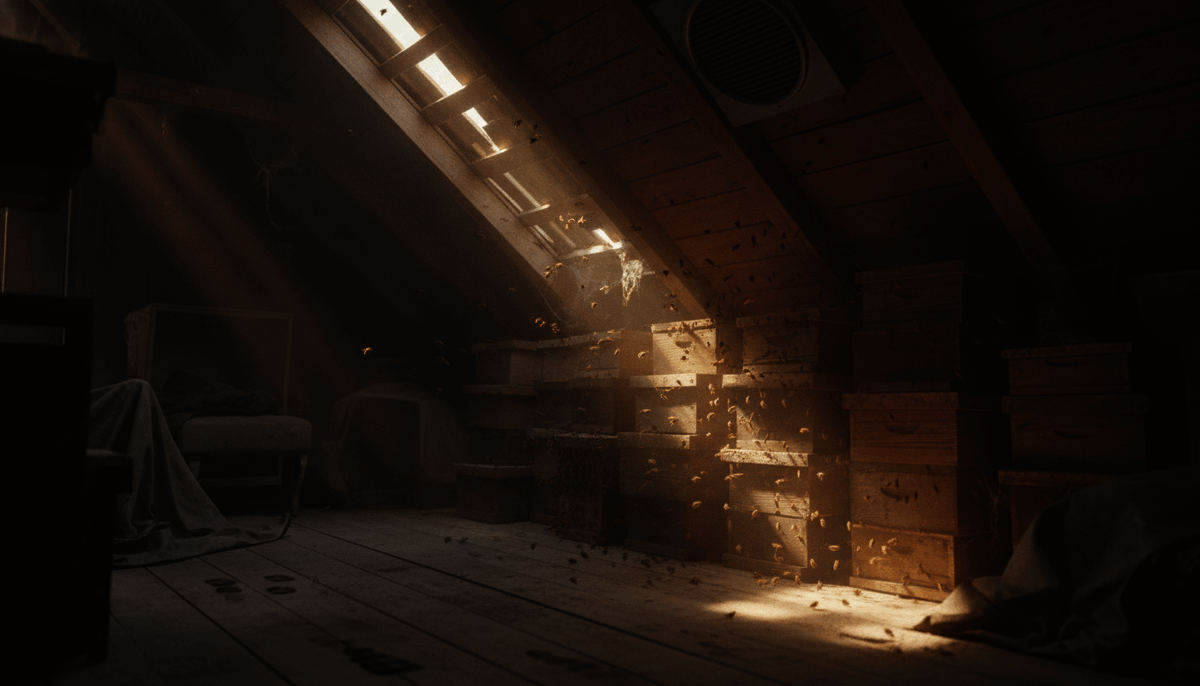
Living with Elias was always a study in controlled chaos. When we signed our lease on this century-old brick apartment building, we were both drawn to its character: the high ceilings, the original molding, and the massive, sprawling attic space that was officially ‘off-limits’ according to our lease agreement. For two years, we coexisted peacefully, navigating the usual roommate squabbles—the forgotten dishes, the uneven utility payments, and the occasional late-night guest. But the peace began to fray last month when a low, vibrating hum started to permeate my bedroom ceiling.
At first, I brushed it off. The building was old; pipes groaned, and the HVAC system was notoriously temperamental. I sent a few casual texts to Elias, asking if he’d noticed any new noises, but he always had a glib, dismissive answer. ‘It’s just the old plumbing, man. Don’t overthink it,’ he’d say, eyes glued to his laptop. I trusted him. We had been friends since college, and even though he could be eccentric, he was never malicious.
The moral dilemma began to take shape the moment I realized the smell of raw honey and beeswax was clinging to my curtains. I wasn’t just hearing things; I was experiencing a full-scale environmental intrusion. The stakes were no longer just about a noisy neighbor or an annoying roommate; they were about our lease, our security deposit, and the terrifying possibility of what could happen if those hives breached the ceiling plaster. I didn’t know then that Elias was operating a clandestine apiary venture right above our heads.
As I began to investigate, I found myself walking a tightrope between being a ‘good friend’ and protecting my own legal standing. The landlord was a stickler for rules, and the fine for unauthorized alterations to the attic was explicitly outlined in our contract. Every day I spent quiet was a day I was technically complicit in a massive violation of our housing agreement. The anxiety was suffocating, and the more I learned about what was happening in our attic, the more I realized I had to blow the whistle on my best friend.
The Hum That Changed Everything
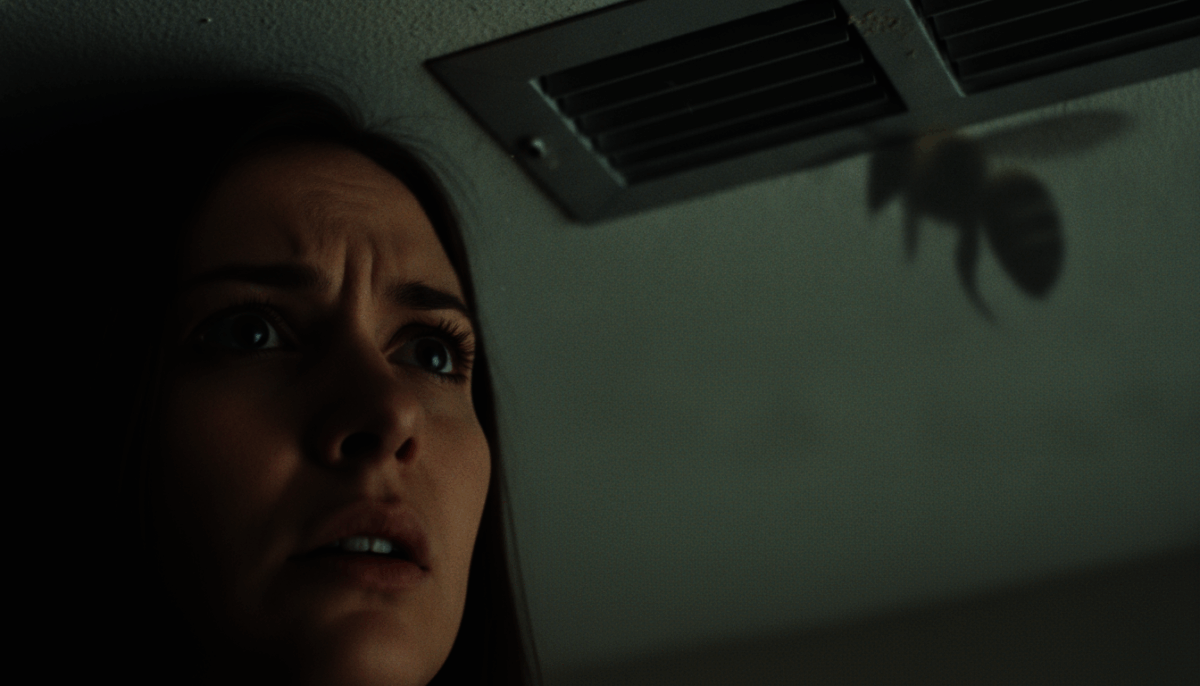
It started as a subtle vibration, a thrumming in the floorboards that I could feel through my mattress. I initially blamed the neighborhood construction, but the sound persisted at 3:00 AM. I tried to ignore it, but when I began waking up with small, sticky spots on my bedroom rug, my skepticism shifted to genuine confusion. I climbed up onto a chair and looked at the ceiling vent, noticing a faint, golden residue dripping from the slats.
I confronted Elias in the kitchen, his morning coffee still steaming on the counter. He looked agitated, his hands shaking slightly as he reached for a spoon. I pressed him, asking why our apartment suddenly smelled like an apiary and why my room sounded like a beehive. He laughed, but it was a brittle, forced sound that didn’t reach his eyes.
“Elias, I need to know why my ceiling is vibrating. I found wax on my carpet. Are you hiding something in the attic? This isn’t funny anymore.”
— Me, confronting Elias in the kitchen
Elias finally sighed, leaning against the counter. He admitted that he had taken up hobbyist beekeeping, but he insisted the hives were ‘contained’ and perfectly safe. He claimed he didn’t want to bother me with the logistics, but he was already planning on selling the honey to a local farmers’ market. The sheer audacity of his logic was staggering; he had effectively turned our shared living space into a commercial agriculture site without a single thought for my comfort or safety.
I felt a surge of adrenaline, a mix of anger and disbelief. He hadn’t just brought in a pet; he had brought in a massive, stinging insect colony into a building that prohibited even small cats. The risk of swarming was high, and he had absolutely no safety protocols in place. As he tried to minimize the situation, I realized he had been planning this for months, slowly sneaking supplies up the pull-down ladder while I was at work.
He begged me to keep it quiet, promising to move them within the week. I was paralyzed by the choice: report him and potentially get us both evicted, or stay quiet and risk a literal infestation of the walls. My silence had already lasted too long, and I realized that every second I waited, I was deeper in the hole with him. The trust I had placed in him for years was dissolving, replaced by the sharp realization that I was living with a complete stranger who was willing to gamble our housing security for a few jars of honey.
The Midnight Inspection of the Attic
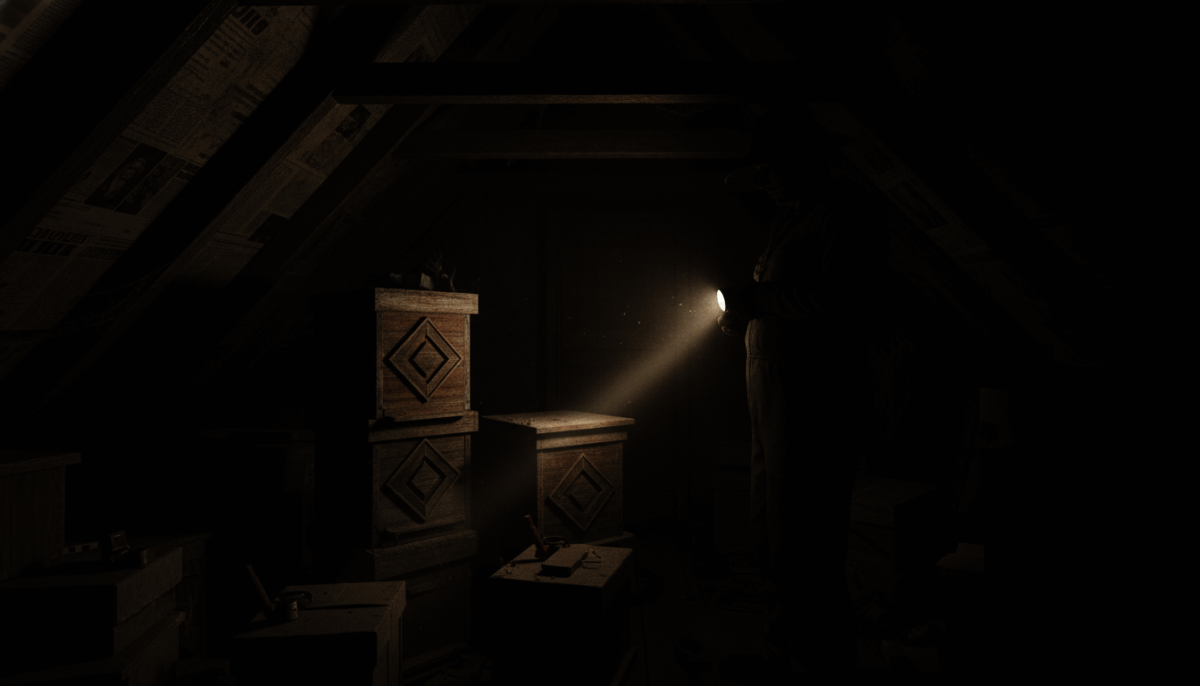
I couldn’t sleep. The humming was louder now, a rhythmic thrum that seemed to pulse through the very walls of my bedroom. Around 2:00 AM, I decided I had to see for myself. I grabbed a flashlight and a heavy pair of gardening gloves, moving silently toward the attic ladder. I knew Elias was sound asleep; he was a heavy sleeper, usually dead to the world until mid-morning.
Pulling the ladder down was the loudest thing I had ever done. Each metal rung creaked with a high-pitched protest that felt like a siren in the silence of the apartment. I climbed slowly, my heart hammering against my ribs, expecting to be swarmed by thousands of angry bees the moment I breached the threshold of the attic. When I finally pushed the heavy wooden door open, the sight that greeted me was beyond anything I had anticipated.
There weren’t just one or two hives; there were five large, wooden Langstroth hives lined up against the rafters. They were active, with bees crawling over the entrance discs, their wings creating that low-frequency drone that had been keeping me awake for weeks. The smell was intense—a thick, cloying scent of honey and pheromones that hung heavy in the stale, hot air of the attic. I shined my light over the area and realized Elias had lined the floor with plastic sheeting, but it was already buckling under the weight of the debris.
“My god, Elias. You didn’t just ‘start a hobby.’ You turned our home into a literal farm. Do you have any idea how much weight this is putting on the ceiling joists?”
— My internal monologue while looking at the hives
I took photos of everything: the hives, the stacks of frames, the jugs of sugar water, and the massive amount of honeycomb that was being built directly onto the wooden beams. It was a structural nightmare. The ceiling was bowing under the weight, and I could see cracks forming in the plaster where the heat from the hive was accelerating the degradation of the house. I was terrified, not just of the bees, but of the ceiling literally collapsing into my living room.
I descended back into the hallway, my hands shaking so violently I almost dropped the flashlight. I didn’t go back to bed. Instead, I sat in the living room, staring at the ceiling and realizing that my friend had been gaslighting me for months. He hadn’t just been negligent; he had been calculated. He knew the risks, he knew the rules, and he decided that his ‘business’ was more important than our legal tenancy or my physical safety.
The realization settled in that this wasn’t an accident. This was a violation. I sat there in the dark, the sound of the hive now sounding like a menacing presence rather than a background noise. I opened my phone and started drafting an email to our landlord, knowing that hitting ‘send’ would effectively end my friendship with Elias and force me to find a new place to live on short notice.
The Confrontation in the Living Room
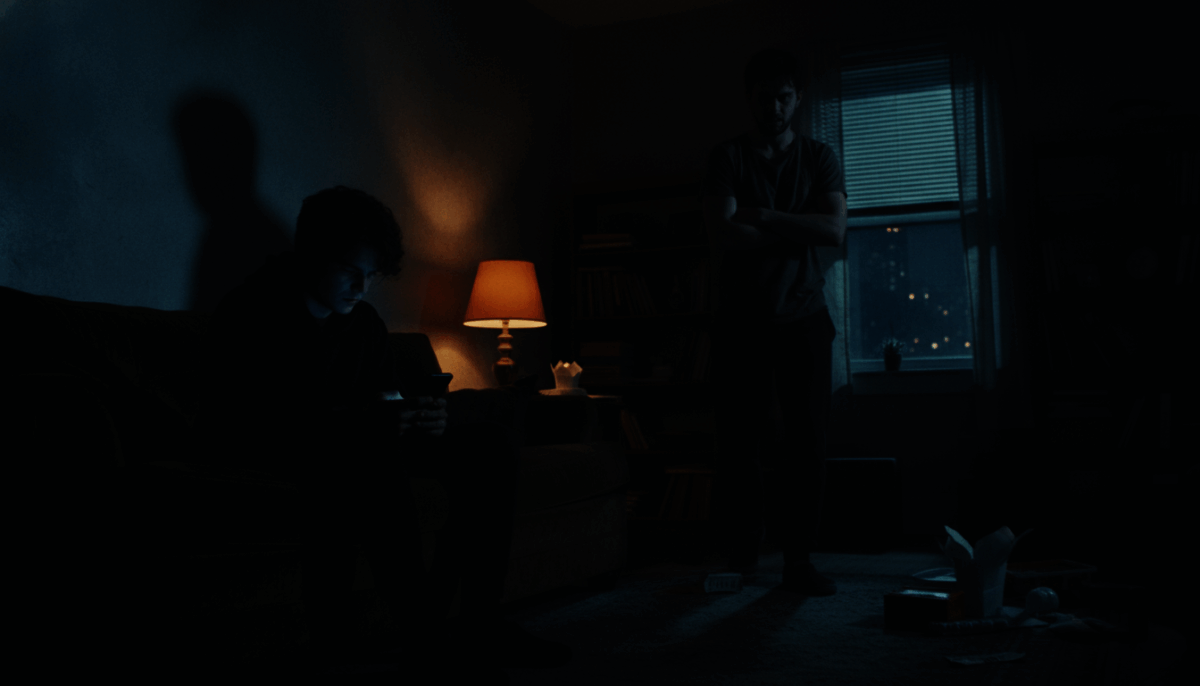
I didn’t wait for morning. I woke Elias up, dragging him out into the living room, and dumped the photos onto the coffee table. His face went pale as he looked at the images of his ‘secret’ operation. He tried to start his usual spiel, the one about how he was ‘giving back to nature’ and how honey was a ‘great side hustle,’ but I cut him off immediately. I was done with the excuses.
The argument that followed was explosive. I told him he had to vacate the hives immediately or I would contact the property management company. Elias flipped, accusing me of being unsupportive and claiming that I was ruining his ‘dream project’ over something as trivial as ‘a few insects.’ He even had the audacity to suggest that I was being petty because I was jealous that he had found a passion project while I was stuck in a corporate job.
“It’s not a passion project, Elias! It’s a liability! We are renting this apartment! We aren’t owners! If the ceiling collapses or someone gets stung, we are both on the hook for thousands of dollars!”
— My shout at Elias during our argument
He paced the room, his eyes wild and defensive. He kept bringing up how much money he had already invested in the bees and the equipment. He genuinely believed that the financial investment gave him the right to compromise our living situation. He didn’t care about the safety of the building or the fact that I had been terrified in my own bedroom for weeks. He only cared about his potential profit margin.
I watched him, feeling a deep, cold detachment. The guy I had known for years was gone, replaced by someone selfish and reckless. He finally demanded that I give him a week to move them, claiming he needed to find a location that wouldn’t kill the colony. I told him he had 48 hours. If the bees weren’t gone by Friday, I was calling the landlord, the local health department, and the city inspector. I didn’t care if it made me the ‘bad guy’ in our social circle.
He stormed off to his room, slamming the door so hard that a picture frame fell off the wall. The rest of the night was spent in a tense, suffocating silence. Every time the floorboards creaked, I jumped, convinced the ceiling was coming down. I spent the night on the couch, staring at the attic access, waiting for any sign of movement. The friendship was officially over; I was just waiting for the logistics of the move to play out.
The Community Weighs In: The Reddit Thread

I couldn’t keep it in anymore. I needed to know if I was being unreasonable, so I posted a burner account thread on a popular subreddit detailing the situation. Within an hour, the post had blown up. Thousands of people were horrified by the health and structural risks, and the consensus was overwhelming. The internet didn’t see a friend; they saw a liability.
I sat there, watching the comments roll in by the hundreds. People were sharing stories about home collapses and legal nightmares involving unauthorized property modifications. It was validating to see that I wasn’t the crazy one, but it also terrified me to see how common this kind of ‘roommate from hell’ scenario really was. My phone wouldn’t stop buzzing with notifications, each one confirming that I needed to protect myself.
“Your roommate is not just being a bad friend, he is putting your life at risk. Bees are heavy, honey is heavier, and structural damage from moisture and weight is a real thing. Call the landlord yesterday.”
— u/HomeInspectorGuy (Top Comment, 18.2k upvotes)
Some of the comments were even more aggressive, telling me to pack my bags and get out before the inevitable legal fallout hit. Others were more nuanced, suggesting I document everything for my own legal protection so the landlord wouldn’t penalize me for Elias’s actions. I started taking notes, building a file of ‘evidence’ that I could present to the management company if things went sideways.
There were a few outliers who claimed that I should just ‘talk it out,’ but they were quickly drowned out by the reality-check comments. Seeing the public reaction made the decision much easier. I realized that my loyalty to Elias was misplaced; he hadn’t shown me any loyalty while he was endangering my security deposit and my health. The internet had spoken, and it gave me the backbone I needed to follow through on my ultimatum.
I started printing out some of the most relevant comments, thinking I might show them to Elias to prove how ‘crazy’ his plan sounded to the rest of the world. Maybe he wouldn’t listen to me, but he might listen to the combined wisdom of twenty thousand internet strangers who were all telling him exactly how bad this idea was. It was a long shot, but I needed to exhaust every option before taking the nuclear route.
The Failed Relocation Attempt
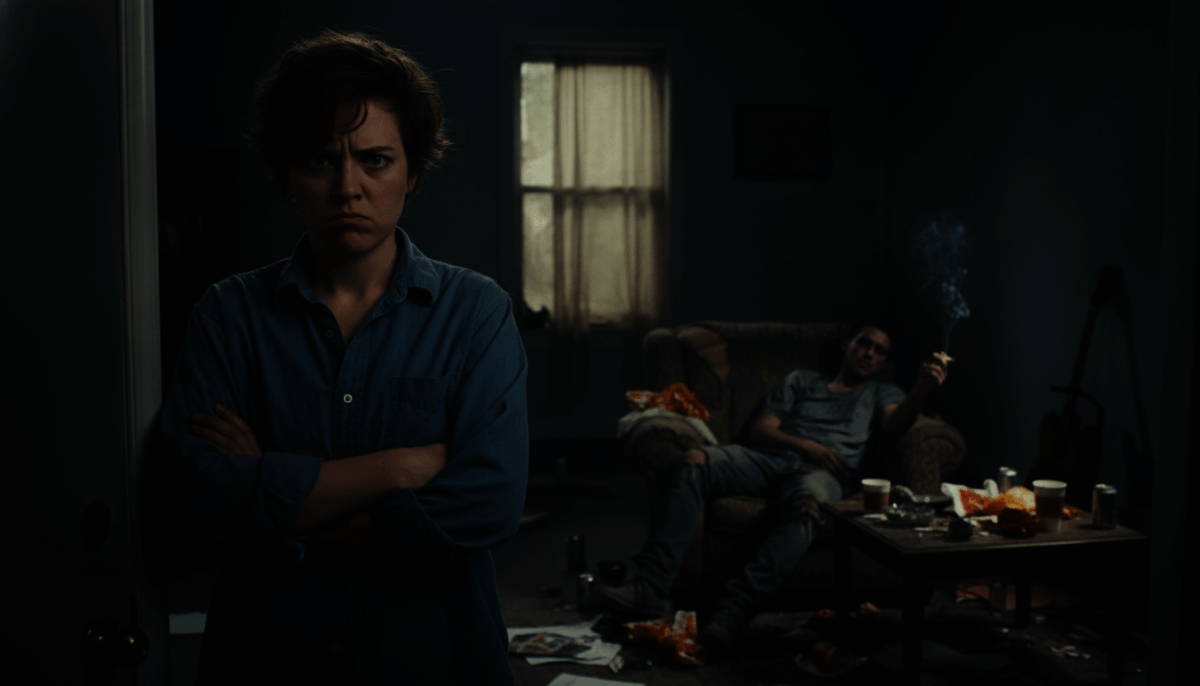
Friday arrived, and the bees were still there. Elias had spent the entire week in a state of frantic, disorganized activity, trying to reach out to local beekeeping associations to find a new home for his hives. But, as it turned out, nobody wanted a swarm of bees that had been raised in an attic with no proper ventilation or care. He was rejected by every club he contacted.
I watched him struggle, feeling almost sorry for him, but my sympathy was short-lived. He hadn’t bothered to research the logistics before bringing the hives in, and now he was reaping the consequences of his arrogance. He came back that afternoon, looking frazzled and defeated, and tried to ask for more time. He told me he had a lead on a farm two hours away, but he needed to borrow my car to move the hives because his own truck was in the shop.
“I am not letting you put fifty thousand bees in my car, Elias. Absolutely not. If you want them moved, call a professional removal service and pay for it yourself.”
— Me, refusing to help Elias move his hives
He begged and pleaded, trying to use our history as leverage. He reminded me of the times he helped me move, the times he lent me money, and the times he had ‘been there’ for me. It was manipulative, and it made me realize how much he had banked on his social capital to cover his bad decisions. I stood my ground, my voice steady despite the tremor in my hands. I was done being his enabler.
The tension was palpable. He looked at me with such genuine hurt that I almost caved, but then I remembered the smell of the honey and the sound of the vibrating walls. I thought about the thousands of dollars we could be sued for if the landlord found out. I stood my ground. He was on his own. He ended up storming out of the apartment, leaving the door wide open behind him, and I knew he was going to try and do it alone, even if it meant getting stung to hell.
He returned hours later, covered in welts and smelling of smoke and wax. He hadn’t managed to move a single hive. He had tried to smoke them out and failed, only succeeding in making them angry. The situation was now worse than ever; the bees were agitated, and the entire house was filled with the smell of the smoke he had used. I realized then that there was no fixing this through compromise. The nuclear option was the only one left.
The Certified Letter to the Landlord

I didn’t tell Elias I was doing it. I spent Saturday morning drafting a formal, documented letter to the property management company. I laid out the facts: the unauthorized attic access, the presence of the hives, the potential structural damage, and the significant risk to other tenants. I attached the photos I had taken and a summary of the situation, making sure to explicitly state that I had been unaware of the operation until it became a nuisance.
I sent it via certified mail, ensuring I had a record of delivery. It was a cold, calculated move, but I had reached the point where my own self-preservation had to come first. I felt a strange sense of relief as I walked away from the post office. The burden of the secret was finally off my shoulders, and the outcome was now in the hands of professionals who could handle the situation objectively.
“I don’t care how you deal with the bees, but you need to get them out before this house falls apart. I’m telling you now so you know I didn’t participate in this.”
— My text message to Elias after sending the letter
When I returned home, Elias was gone. He had taken his gear and a few suitcases, leaving the apartment in a state of disarray. I didn’t know if he was coming back or if he had simply realized the game was up. I spent the afternoon cleaning the living room, trying to get rid of the lingering scent of smoke and wax. I felt like I was scrubbing away the last two years of our friendship, bit by bit.
The landlord called later that evening. His voice was icy and professional. He asked for access to the apartment the next day, and I told him I would be there to let him in. I didn’t try to defend Elias; I just answered his questions truthfully. It was the longest conversation I had ever had with our landlord, and it was entirely focused on the destruction of his property.
I sat in the empty living room that night, listening to the silence. The buzzing in the attic had finally stopped, though I didn’t know if that was because the bees had been moved or because they were dormant. Either way, the era of the ‘attic apiary’ was coming to a close. I felt exhausted, hollowed out by the drama, but also strangely empowered. I had done the right thing, even if it cost me my living situation and my best friend.
The Professional Removal Operation
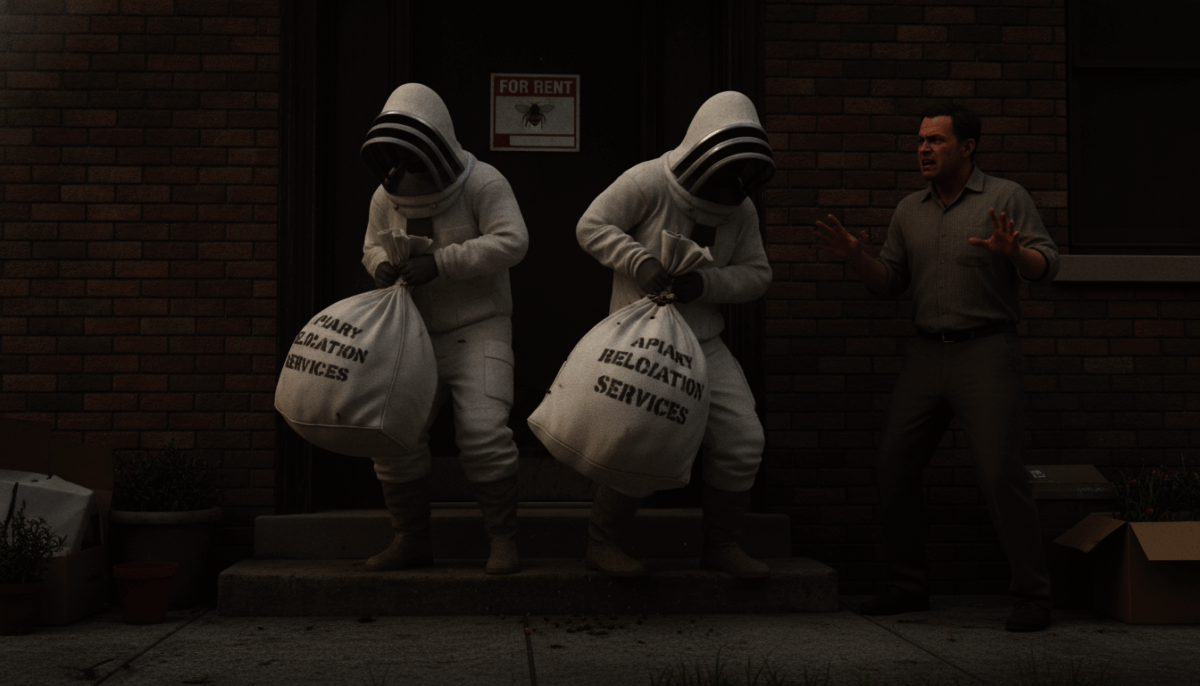
The next morning, the property manager arrived with two men in heavy white bee suits. They looked like astronauts, carrying smokers and specialized vacuum equipment. They moved with a clinical efficiency that was both fascinating and terrifying to watch. I stood to the side, feeling like a bystander in my own home, as they ascended the ladder into the attic. The sounds of their work were muffled, but I could hear the occasional crash of wood and the deep, angry buzz of a disturbed colony.
It took them four hours to extract everything. They came down, one by one, covered in sweat and dead bees. They carried the hives out in heavy, sealed plastic bags, the wood splintered and caked in wax. They explained to the landlord that the weight of the hives had indeed caused the ceiling joists to sag significantly, and there was a high risk of a collapse if they hadn’t intervened when they did. The structural damage was estimated to be in the thousands of dollars.
“You guys are lucky you caught this now. If another month had passed, the honey weight alone could have brought down the entire ceiling in the hallway. This is a massive safety hazard.”
— The professional beekeeper, speaking to the landlord
The landlord turned to me, his expression unreadable. He told me that while he appreciated my honesty, the lease was being terminated immediately for all tenants due to the severity of the violation. We were being evicted. I wasn’t surprised, but the reality of it hit me hard. I had done the right thing, and yet I was still facing the consequences of my roommate’s insanity.
I watched as the team hauled the last of the equipment away. The apartment felt different now—quiet, empty, and strangely sterile. The humming was gone, but so was my home. I looked at the ceiling one last time, seeing the dark, sticky patches where the honey had leaked through. It was a physical manifestation of the mess Elias had made of our lives, and I was the one who had to clean it up.
I spent the rest of the day packing my belongings. I felt a mix of anger, sadness, and relief. I had lost a friend, a home, and my peace of mind, but I was finally free from the toxic environment Elias had created. I realized then that sometimes doing the right thing doesn’t result in a ‘win’; sometimes it just results in the least painful outcome. And in this case, the least painful outcome was starting over from scratch.
The Financial Fallout and Legal Threats

The invoice for the repairs and the ’emergency removal services’ arrived three days later. It was astronomical. The landlord had sent the full bill to both of us, holding us jointly and severally liable for the damages. Elias had completely disappeared, blocking my number and deleting his social media accounts. He had left me to deal with the entirety of the debt, a debt that would take me years to pay off if I didn’t fight it.
I spent my savings on a consultation with a local tenant’s rights attorney. She looked over our lease and the documentation I had provided, and she told me I had a strong case to avoid paying for the structural damage since I hadn’t been a party to the alteration. However, it would require a lengthy legal battle. I felt like I was back in the same cycle of stress, just with a different flavor.
“He left me with the bill, the eviction, and the cleanup. I’m not paying for his hobby, but I have to prove I knew nothing about it until it was too late.”
— My conversation with the lawyer
I started the process of fighting the charge, gathering evidence of my attempts to resolve the situation and my eventual whistleblowing. It was a grueling process of emails, phone calls, and legal filings. I found myself missing the days when my biggest problem was just the vibrating ceiling. Now, I was dealing with credit scores, legal fees, and the crushing weight of a debt I didn’t deserve.
I occasionally heard rumors about Elias through mutual friends. He had moved to a different city and was apparently ‘starting over,’ having already begun a new project of some kind. It enraged me to think that he was out there living his life while I was stuck in the middle of a legal nightmare of his making. He never apologized, never reached out, and never offered to help.
The process of rebuilding my credit and my life began in earnest. I moved into a small, studio apartment that, thankfully, had no attic and no room for any kind of animal or insect. Every time I heard a humming sound—even just a refrigerator running—I would freeze, my heart rate spiking. The trauma of the experience was real, and it would take a long time to shake the anxiety that had become my constant companion.
The Aftermath: Moving On

It has been six months since I moved out of the apartment. I am finally in a place that feels like my own, a quiet, sun-drenched space where the only noise comes from the birds outside. The legal battle is still ongoing, but I have managed to settle most of the claims, and I am slowly, methodically rebuilding my savings. I don’t talk to Elias, and I don’t think I ever will again.
I have learned some hard lessons about boundaries and the importance of speaking up early. If something feels off, it probably is. If a roommate is acting suspiciously, it’s not ‘just a quirk’—it’s a red flag. I’ve realized that being a ‘good friend’ doesn’t mean being a martyr for someone else’s recklessness. I am a lot more guarded now, and I think that’s okay.
“Trust is earned, but it can be destroyed in an instant. I learned that the hard way, but I also learned that I am strong enough to handle the fallout.”
— My reflection on the experience
I still look at ceilings sometimes, just to be sure. It’s a reflex, a phantom habit from a time when my home wasn’t safe. But the panic is fading. I am slowly reclaiming my peace, and I am finding joy in the small things again. The apartment is clean, the air is fresh, and I have no secret hives to worry about. Life is simple again, and that is all I could ever want.
To anyone out there dealing with a roommate who has ‘eccentric’ habits that seem a little too risky or invasive: don’t wait. Don’t let yourself be sucked into their chaos. Document everything, protect your legal interests, and get out if you have to. You aren’t responsible for their mistakes, and you certainly don’t owe them your own safety or financial stability. Your home should be your sanctuary, not a project for someone else’s whims.
I look back on the whole ‘attic bee’ disaster as a strange, dark chapter in my life. It was a bizarre, almost unbelievable experience that cost me dearly, but it also taught me who I am when the chips are down. I am a survivor of a very specific kind of insanity, and I am proud of how I handled it. I am moving forward, one day at a time, and I am never, ever letting anyone turn my house into a farm again.
Conclusion
Looking back at the ‘attic apiary’ saga, it is clear that this wasn’t just about bees—it was about a catastrophic failure of boundaries and the danger of enabling someone else’s reckless behavior. Elias wasn’t just a roommate; he was a person who believed that his personal interests were more important than the rules we agreed to live by, and that the risk of our combined ruin was a price worth paying for his own satisfaction. The lesson here is simple: never underestimate the potential for disaster when someone refuses to respect your living space.
The community support I received during this process was invaluable. It reminded me that even in the most bizarre, isolating situations, there is always someone who has ‘been there,’ and there is always a way out. If you are currently struggling with a roommate who is crossing lines or endangering your security, remember that you have the right to speak up, to document, and to protect your future. Don’t let guilt or history keep you trapped in a situation that is toxic, expensive, or dangerous.
What would you have done in my situation? Would you have confronted him sooner, or would you have been just as paralyzed by the fear of losing your friendship and your home? Let us know in the comments below. Have you ever had a roommate who turned your life into a living nightmare? Share your stories, and let’s keep the conversation going about how to set better boundaries in shared living arrangements.
What's your verdict on this dilemma?
Vote below to contribute to the official community consensus.

Have a Dilemma Keeping You Up at Night?
Share your real-life feud, wedding chaos, or relationship crossroads anonymously with our editorial team.
What do you think ?
0 Comments🛡️ Comments are moderated to protect community integrity. Your comment will appear once approved by the editorial team.