
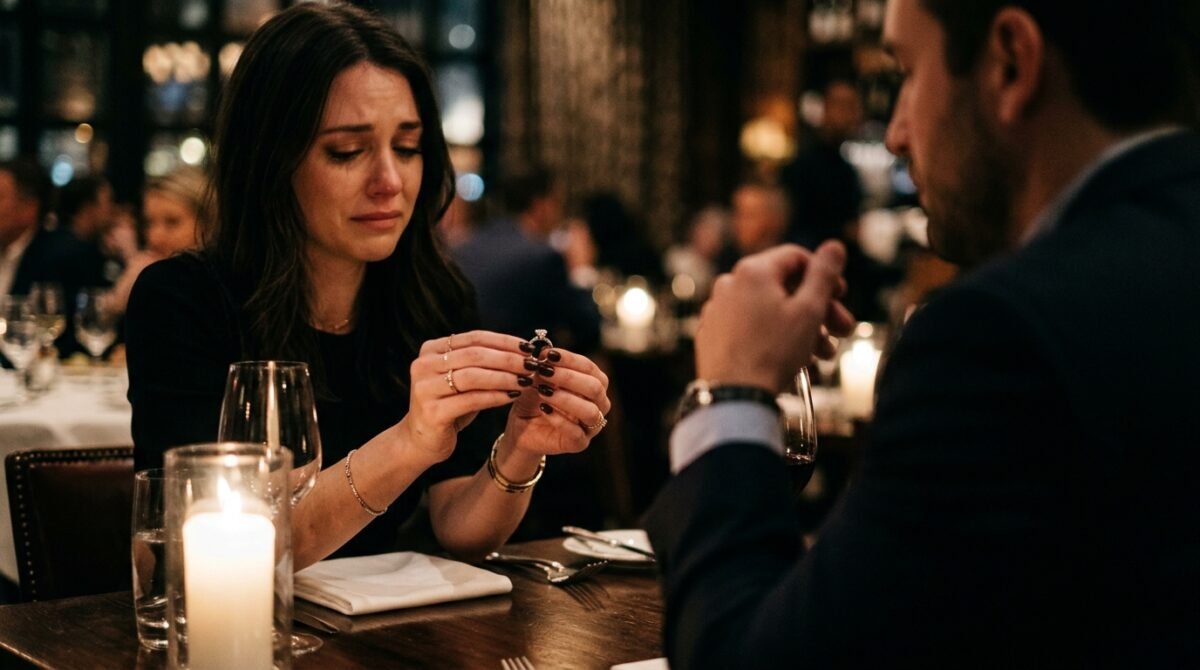
We all enter relationships hoping for a partner who supports our evolution. For three years, I believed Mark was that person. He was charming, ambitious, and seemed to celebrate my independence. We had talked about our future, our careers, and even the mundane details of how we’d share a home. When we got engaged, I felt like the luckiest woman in the world, oblivious to the fact that Mark was already drafting a roadmap for how he intended to curate me like a piece of furniture.
The trouble didn’t start with a bang, but with a thick, leather-bound folder placed on our kitchen table. Mark was a man who believed in ‘clear expectations,’ a phrase he used to mask his deep-seated need for control. When he suggested a prenup, I was actually on board. I had savings, he had properties; it made sense to protect our individual assets. I approached the document with maturity, expecting standard clauses about alimony and property division. I was entirely unprepared for the hidden agenda buried within the legal jargon.
As I flipped through the pages, my heart rate began to accelerate. I expected legalese, not a manual for aesthetic compliance. It wasn’t until I reached Section 8, titled ‘Personal Presentation and Maintenance,’ that the reality of my situation crashed down on me. There, in cold, black-and-white print, were specific prohibitions regarding my appearance. He wasn’t just asking me to be his wife; he was drafting a contract that essentially granted him ownership over my physical identity.
The dilemma wasn’t just about hair. It was about the audacity of a man who thought love was a transaction where he held all the bargaining chips. How do you respond when the person you plan to spend the rest of your life with shows you exactly how little they respect your autonomy? The following account chronicles the unraveling of my engagement, the gaslighting that followed, and why I chose to walk away before the ink ever touched the page.
The Fine Print in the Leather-Bound Folder
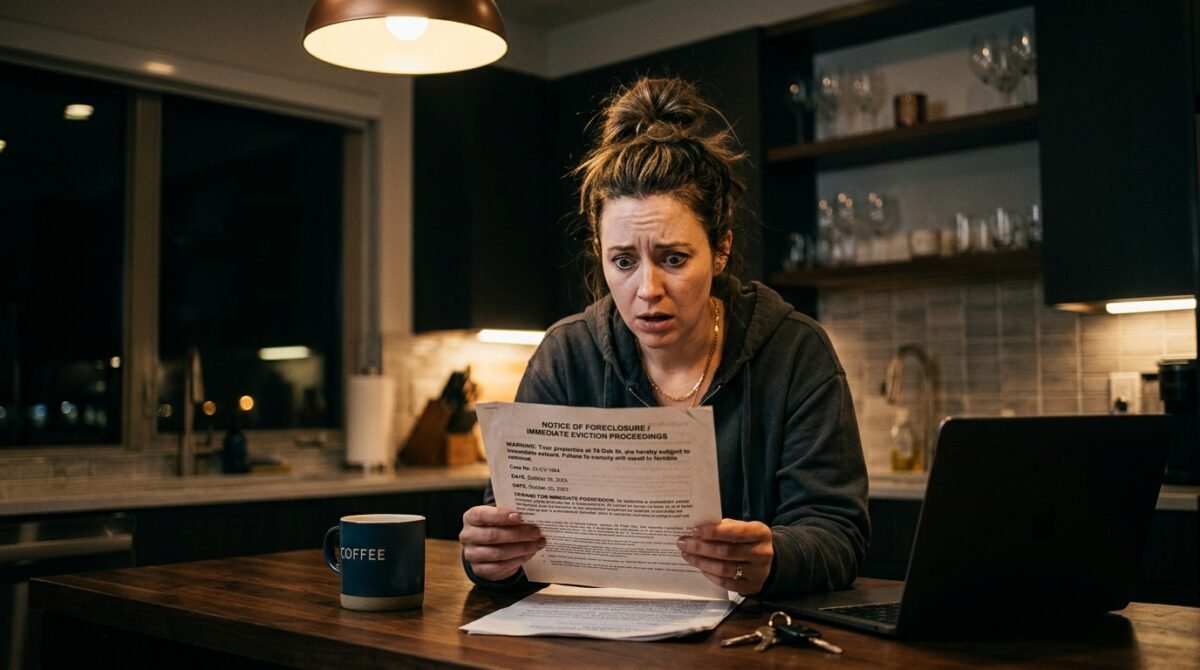
The Tuesday evening started normally enough. We had cooked dinner together, and the ambiance was domestic bliss. Mark cleared the table, but instead of bringing out dessert, he retrieved the folder. He had this smug, self-satisfied look on his face, the kind he wore when he felt he’d ‘solved’ a problem. He told me he’d worked with a high-end firm to draft a document that would ‘protect the sanctity of our union.’ Little did I know, his version of sanctity involved a restrictive covenant on my scalp.
I began reading, initially skimming the dry financial sections. I was impressed by the thoroughness of the asset distribution. It seemed fair—until it wasn’t. My eyes landed on the header for ‘Personal Presentation and Grooming Standards.’ I had to blink twice. I thought it was a joke at first, perhaps a bizarre, tone-deaf prank he’d set up to test my reaction. I looked up at him, waiting for the punchline, but he was staring at his phone, completely oblivious to my growing horror.
“Mark, why on earth is there a clause here stating I must maintain my current hair length and color? And why does it specify a penalty for ‘deviating from current professional aesthetic standards’?”
Mark looked up, his expression shifting from smug to patronizingly patient. He calmly explained that he ‘valued consistency’ and that his social circle expected a certain level of ‘prestige’ from his partner. He acted as if this were a perfectly reasonable request, akin to asking someone to keep the house clean. He didn’t see me as a person; he saw an extension of his brand.
The anger started as a cold knot in my stomach. I realized that for months, he had been subtly critiquing my style. The times he suggested I go blonder, or the offhand comments about how ‘long hair looked more elegant’—it hadn’t been suggestions at all. They were data collection points for this document. He had been planning this control tactic while we were out on dates, holding hands, and pretending to be a team.
I felt a profound sense of isolation. Here was a man I loved, yet he was treating me like a subsidiary company. The clause stated that if I changed my hairstyle without his written ‘approval,’ I would forfeit a portion of the post-marital allowance. It was financial hostage-taking, plain and simple. I sat in silence, reading the lines over and over, trying to find a reason, any reason, to justify his logic, but found nothing but deep, systemic insecurity.
The Gaslighting Conversation in the Living Room

When I finally confronted him, the room temperature seemed to drop. I asked him point-blank if he realized how dehumanizing the clause was. His response was a masterclass in manipulation. He didn’t apologize or acknowledge the breach of trust. Instead, he flipped the script, accusing me of being ‘over-dramatic’ and ‘unable to handle a professional discussion about our future.’ He claimed that in his world, image was currency, and by marrying him, I was entering a ‘partnership’ that required me to play a specific role.
“You’re acting like this is some form of oppression. It’s a prenup, OP. It’s about keeping us on track. You’re beautiful, and I just want to make sure you stay that way for us. Why are you making this a mountain out of a molehill?”
I stood up, my legs shaking. I told him that my hair was my own, not his to curate. I reminded him that I had been a woman with my own sense of self long before I met him. He laughed, a short, sharp sound that felt like a slap. He told me that if I wasn’t willing to ‘invest’ in the image of our marriage, perhaps I wasn’t ‘committed’ to the lifestyle he provided. That was when it hit me: this was never about the hair. It was about testing how much of my identity I would surrender for the sake of his comfort.
The argument escalated. He brought up my job, my friends, and even my past fashion choices, dissecting them with surgical precision to prove that I needed his ‘guidance.’ He claimed that my lack of consistency was a sign of emotional immaturity. It was the classic gaslighter’s playbook: take a reasonable boundary, label it as an unreasonable demand, and then blame the victim for being sensitive.
I looked at him—really looked at him—and saw the mask slipping. Behind the charm was a man terrified of anything he couldn’t control. He needed a trophy, not a partner. The realization was liberating. If he was this controlling before we even said our vows, what would life look like five years from now? Would I have to ask permission to buy a new dress? Would I need a signature to visit my parents? The thought was suffocating.
I walked away from the conversation, locking myself in the guest room. I needed space to breathe and think. I didn’t want to make a rash decision based on anger, but the more I replayed the conversation, the clearer the path became. I wasn’t losing a partner; I was escaping a cage. The realization that I was actually considering whether or not to sign this document was the biggest wake-up call of my life.
The Secret Group Chat Revelation
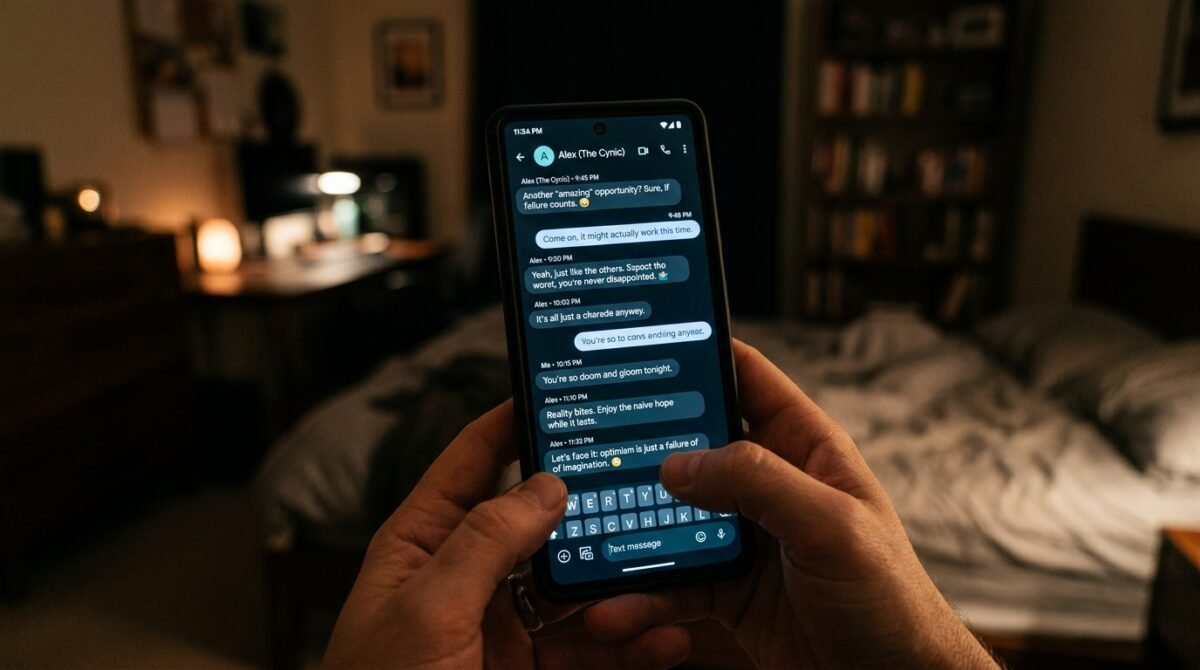
The next morning, I woke up to a notification on my tablet. We shared a connected ecosystem for our devices, a feature I now realized was a massive oversight in privacy. A notification popped up from a group chat titled ‘The Inner Circle.’ My heart sank as I read the messages. Mark had been discussing our ‘disagreement’ with his brothers and his best man. He wasn’t just venting; he was strategizing.
“She’s being difficult about the clause. I think if I threaten to delay the honeymoon, she’ll fold. She needs the security of this marriage more than she needs a haircut. Just keep pushing the ‘we’re a team’ angle.”
— Leaked Message from Mark to his inner circle
The rage I felt was cold and crystalline. He wasn’t just controlling me; he was playing a game with my future. He was calculating my breaking point. I read through the rest of the chat. They were discussing me like a recalcitrant employee. One of his brothers suggested he ‘starve out’ my resistance by being cold for a few days. It was chilling. Everything about our relationship, all the ‘romantic’ gestures, suddenly felt like part of a grand performance designed to keep me in line.
I took screenshots of the entire thread. I didn’t confront him immediately. I needed to be strategic. I spent the day packing a bag while he was at work. I didn’t pack everything—just the essentials and my important documents. The house felt like a museum of a life I was no longer living. Every piece of furniture, every painting we had picked out together, now felt tainted by his manipulative worldview.
I realized that Mark had always been this way; I had just been too blinded by his ‘success’ to see it. He surrounded himself with people who validated his worst impulses. The group chat wasn’t an anomaly; it was his support system for his entitled behavior. I felt a strange sense of gratitude for the prenup. Without it, I might have married him, and it would have taken years to uncover this level of toxicity.
By the time he came home, the air in the house had shifted. I wasn’t the same woman who had sat across from him the night before. I had spent the day mourning the loss of the man I thought he was, and in doing so, I had regained my strength. I sat at the kitchen table, the laptop open, waiting for him to walk through the door. I was ready for the end of this chapter.
The Final Dinner Table Confrontation

Mark arrived home with a bouquet of flowers, clearly intending to ‘reset’ the situation with a grand gesture. He walked in, smiling that rehearsed smile, and placed the flowers on the counter. He started talking about dinner plans, acting as if the previous night’s explosion hadn’t occurred. It was the ultimate display of his arrogance. He expected me to fall in line, to be the agreeable partner he had written into his contract.
“I thought we could move past this, OP. You’re tired, I’m stressed. Let’s just put the document away for a week and focus on the wedding venue.”
I didn’t move. I didn’t take the flowers. I looked him dead in the eye and asked him why he felt he had the right to discuss our private business with his friends as if I were a problem to be solved. His face went pale. He knew exactly what I had seen. He tried to deny it, but I calmly placed my tablet on the table, showing the screenshots. The silence that followed was heavy, stifling, and absolute.
He tried to spin it, claiming he was ‘seeking advice’ because he was ‘worried about our future.’ He doubled down on the idea that men have to manage their households to ensure success. He spoke about ‘tradition’ and ‘legacy,’ words that sounded hollow and pathetic in the face of his blatant manipulation. He didn’t see a human being; he saw an asset that was deviating from the expected ROI.
I stood up and pulled the ring off my finger. It had felt heavy for weeks, like an anchor dragging me down. I placed it on the table next to his precious prenup. The diamond caught the light, but it looked dull to me now. He didn’t move to stop me. He stood there, frozen, likely calculating how this would look to his friends and his family. His concern wasn’t my feelings; it was his reputation.
I told him that the only ‘legacy’ he was building was one of control and loneliness. I told him he should be careful—if he keeps treating people like property, he’ll end up with exactly that: a house full of things, but no one to share them with. I walked out of the kitchen, feeling a weight lift off my shoulders that I hadn’t even realized I was carrying.
The Aftermath and the Public Fallout

The fallout was swift and loud. His family was furious. They called me ‘ungrateful’ and ‘unstable.’ His mother sent me a long, rambling email about how ‘compromise is the foundation of marriage.’ I didn’t respond to any of it. I blocked them all. I didn’t need to justify my exit to people who had clearly been complicit in his behavior. I focused on reclaiming my space and my sanity.
I reached out to my own support system—my sister and a close friend. They had been wary of Mark for a long time, but they hadn’t wanted to overstep. Hearing them validate my decision was the most healing experience of my life. They didn’t ask if I was sure; they asked what they could do to help me move out. I felt surrounded by love and support, the polar opposite of the environment I had just left.
I started noticing the little things I had changed about myself to please him. I went to the salon and got the haircut I had wanted for years—a short, bold bob that made me feel like *me* again. It was a small act of rebellion, but it meant everything. I wasn’t living for his ‘aesthetic’ anymore. I was living for my own happiness.
Mark tried to reach out a few times—apologetic at first, then angry, then bargaining. He claimed he would ‘remove the clause’ if I came back. He didn’t get it. It was never about the hair. It was about the fact that he felt entitled to dictate it in the first place. Once that trust is broken, it cannot be rebuilt. I stayed firm. No contact was the only path forward.
The internet, surprisingly, became a source of comfort. I posted about my experience on a few forums, just to get it off my chest. The outpouring of support was overwhelming. Thousands of people shared stories of their own ‘prenup horror stories’ and boundary violations. It made me realize I wasn’t alone, and that my reaction wasn’t ‘dramatic’—it was self-preservation.
Reddit’s Verdict: The Community Speaks

The thread I started exploded. Within 24 hours, it had over 30,000 upvotes and thousands of comments. People weren’t just sympathetic; they were fierce. It was like a collective roar of ‘Don’t you dare go back.’ The community analysis helped me process the emotional complexity of the situation, providing legal, psychological, and personal perspectives that I hadn’t fully considered.
“This wasn’t a prenup; it was a contract of ownership. You didn’t just dodge a bullet; you dodged a nuclear warhead. The fact that he was discussing you in a group chat as an asset to be managed shows exactly what he thinks of you. Never look back.”
— u/RelationshipGuru88 (Top Comment, 24.3k upvotes)
“As a lawyer, I’ve seen some crazy clauses in my time, but controlling physical appearance is the hallmark of a high-control abuser. It starts with hair length, then it moves to clothing, then it moves to who you can talk to. He was testing your compliance, and you passed the test by leaving.”
— u/LegalEagleEye (12.1k upvotes)
The comments were a mix of validation and shared trauma. Some users pointed out the ‘sunk cost fallacy’—that Mark was betting on me feeling too invested in the wedding planning to walk away. They were right. He used the logistics of the wedding as a weapon, knowing that most people would rather accept a bad deal than face the shame of canceling an engagement.
There were some dissenting voices, of course. A few people argued that ‘every marriage has rules’ and that I should have ‘talked it out.’ But the overwhelming sentiment was clear: boundaries are not negotiable, and an attempt to control someone’s body is a fundamental breach of trust. The community helped me see that my ‘inability to compromise’ was actually ‘an ability to protect my boundaries.’
I spent hours reading through the responses. It was like a collective therapy session. Seeing my story through the eyes of thousands of strangers helped me strip away the guilt that Mark and his family had tried to pile on me. I realized that my decision was the most ‘rational’ thing I had ever done. It wasn’t an emotional outburst; it was a calculated rejection of a toxic future.
The thread became a repository of wisdom. People shared advice on how to spot red flags earlier, how to talk about finances, and how to maintain independence in a relationship. I took it all in. I knew that I would be single for a while, and that was fine. I needed to learn to trust my own instincts again, to value myself outside of the context of a relationship.
Lessons from the Rubble

Looking back now, months later, I see the experience as a turning point. It was a brutal initiation into the importance of self-worth. I learned that you cannot negotiate with someone who views you as a commodity. I learned that love is not a contract; it is a partnership between two equals who respect each other’s autonomy. And most importantly, I learned that my gut instinct is the most reliable guide I have.
I have started going to therapy to unpack the ‘why’—why I stayed so long, why I didn’t see the signs earlier, and why I allowed him to treat me that way. It’s been an illuminating process. I’ve discovered that I have a tendency to want to ‘fix’ things, and Mark exploited that. He presented his toxicity as a ‘flaw’ I could help him overcome, and I fell for it.
I am now in a place of peace. I don’t harbor bitterness, but I also don’t harbor any illusions. Mark is who he is, and he will likely continue to seek out people he can control. That’s his burden, not mine. I have moved on, and I am thriving. I am doing things for myself, pursuing my hobbies, and investing in my own future without asking for permission.
The prenup incident taught me more about myself than any relationship ever has. It showed me the extent of my own strength and the limits of my patience. I now have a very clear ‘checklist’ for any future partners, not in terms of what they provide, but in terms of how they respect my boundaries. If someone ever tries to ‘curate’ me again, I’ll know exactly how to handle it: I’ll walk away before the first meeting.
I am grateful for the ‘haircut clause.’ It sounds ridiculous to say, but that one line of text was the key to my freedom. It forced the mask off, it revealed the truth, and it pushed me into the life I was meant to live. Sometimes, the universe sends you a warning in the most absurd form imaginable, and you just have to be willing to listen.
The Financial Reality: A Breakdown

Many readers asked about the specific financial logistics of the proposed prenup. To clarify, the document was not just about the hair; it was a layered attempt to control my behavior through financial incentives and penalties. I’ve put together a rough breakdown of how the ‘performance clauses’ were structured, just to show how insidious the whole thing really was.
| Clause Type | The Demand | The Financial Penalty |
|---|---|---|
| Aesthetics | Hair color/length compliance | $10,000 reduction in alimony fund |
| Weight | Maintain weight within 5 lbs | $5,000 per violation |
| Social | Must attend all industry events | $2,000 fine per absence |
| Communication | Phone location sharing | Loss of monthly allowance |
The absurdity of these figures is what really drives home the point. He treated marriage like a job description where failure to meet KPIs resulted in a pay cut. I didn’t know the full extent of the weight clause until I read the appendix of the document. That was the moment I stopped reading. I didn’t care about the money; I cared about the fact that he had actually sat down with a lawyer and formalized these demands.
He argued that these were ‘incentives’ to keep our marriage ‘strong.’ I argued they were forms of abuse. There is a fundamental difference between wanting your partner to be healthy and wanting to control their physical form. He blurred the lines, and when I tried to re-establish them, he accused me of being the one who was being ‘difficult.’ It’s the classic gaslighter’s technique—accuse the victim of being the perpetrator.
I think the most shocking thing was that he didn’t see the contradiction. He claimed to love me, but he wanted to own me. He claimed to want a partnership, but he wanted a subordinate. The money was just a tool; the control was the goal. I am thankful I caught this before we signed anything. I can only imagine what the ‘unannounced audits’ would have looked like if I had actually married him.
For anyone reading this who is currently in a relationship where you feel like you’re being ‘managed’ or ‘audited,’ please take this as your sign to run. You are not a project. You are not an investment property. You are a person, and you deserve to be with someone who celebrates you exactly as you are, not someone who tries to edit you into their version of perfection.
Reclaiming My Identity

Since leaving, I have been focused on a complete ‘identity renovation.’ I’ve moved into a new apartment, one that reflects my own taste—bright, colorful, and free of the ‘prestige’ aesthetic Mark loved so much. I’ve reconnected with friends who didn’t fit into Mark’s ‘inner circle.’ I’ve started painting again, a hobby I had abandoned because he thought it was ‘too messy’ for our home.
Every day, I wake up and realize I don’t have to check in with anyone. I don’t have to worry about whether my appearance or my schedule meets a standard I didn’t set. It’s a level of freedom I had forgotten existed. I spent so much time trying to be the woman he wanted that I had completely lost track of who I was. Now, I’m getting to know her again, and it’s wonderful.
I’ve received messages from some of our mutual friends saying they ‘didn’t know it was that bad.’ I tell them that it was ‘that bad’ because I let it be. I let it be because I wanted to believe in the illusion. Now, I prefer the truth. The truth is often messy, but it’s always better than a perfectly curated lie. I am grateful for every single moment of the last few months, even the hard ones, because they were all part of the process of becoming myself.
I’ve even started a small blog where I share my experiences and talk about the importance of boundaries in relationships. It’s been a great way to process everything and help other people who might be in similar situations. The feedback has been amazing. People have shared their own stories, and it’s created a small community of us who have walked away from toxic situations and found our own strength.
I am not looking for a new relationship right now. I’m quite happy being on my own. I have my work, my art, and my friends. And for the first time in a long time, I have myself. I’m no longer waiting for approval, no longer seeking validation, and no longer trying to fit into a box that was designed to shrink me. I am finally, truly free.
Why I Don’t Regret the Ring

People often ask me if I regret the time I spent with Mark. They ask if I wish I had seen the signs sooner. My answer is always no. I don’t regret it because it brought me to this moment. It taught me things that I couldn’t have learned any other way. It showed me my own worth, my own boundaries, and the strength of my own resolve. If I hadn’t gone through that, I wouldn’t be the person I am today.
The ‘ring’—the symbol of our engagement—is gone, but the lesson is here to stay. That ring was a promise of a future I didn’t want. Throwing it back was the most empowering action I have ever taken. It was a physical rejection of the life he was trying to sell me. It was the moment I realized that I held the power in my own hands all along.
I look back at the photos of us together, and I see a woman who was trying so hard to be perfect for someone else. I feel a lot of compassion for her. I want to tell her that it’s okay, that she’s going to be fine, and that the best is yet to come. I hope that by sharing my story, I can reach other women who are in the same position. I hope I can show them that there is life after the ‘perfect’ relationship ends.
We are conditioned to believe that marriage is the ultimate goal, that we should compromise, and that we should ‘work through’ problems. And while that’s true in healthy relationships, it’s not a universal rule. There are some things that should never be compromised. Your autonomy, your identity, and your right to be yourself are not negotiable. If a relationship requires you to lose yourself, then it’s not a relationship; it’s an arrangement.
I am happy. I am whole. I am free. And if that means I have to be ‘difficult’ or ‘stubborn’ or ‘demanding’ in the eyes of people like Mark, then so be it. I’d rather be all of those things than be a puppet in someone else’s life. I’m ready for whatever comes next, and I’m ready to face it as my own person, with no one else’s rules but my own.
Conclusion
My journey from a ‘perfect’ engagement to a hard-won freedom taught me that the most important relationship you will ever have is the one you have with yourself. When Mark tried to use a contract to control my hairstyle, he wasn’t just being a ‘controlling fiancé’—he was revealing a fundamental lack of respect that would have defined every aspect of our lives together. The prenup was not an obstacle; it was a beacon, shining a light on the truth I was too afraid to see.
I’ve learned that ‘compromise’ is often a trap used to dismantle boundaries. There is a world of difference between meeting a partner halfway and being required to surrender your identity to satisfy their aesthetic or social preferences. I am proud that I walked away. I am proud that I chose my own autonomy over a comfortable, but ultimately, suffocating existence.
For those of you navigating your own difficult dilemmas, remember this: your worth is not tied to someone else’s expectations. If you are ever asked to change who you are to be ‘worthy’ of love, run. Real love doesn’t ask for a contract; it offers freedom. It doesn’t want to curate you; it wants to support your growth. You are more than enough exactly as you are.
What about you? Have you ever had a partner try to set unreasonable ‘rules’ for your appearance or behavior? Have you ever walked away from a ‘perfect’ life because you realized it was actually a cage? Share your thoughts and stories in the comments below—let’s keep the conversation going.
What's your verdict on this dilemma?
Vote below to contribute to the official community consensus.

Have a Dilemma Keeping You Up at Night?
Share your real-life feud, wedding chaos, or relationship crossroads anonymously with our editorial team.
What do you think ?
0 Comments🛡️ Comments are moderated to protect community integrity. Your comment will appear once approved by the editorial team.