

Growing up, there was always an unspoken hierarchy in our household. My sister, Clara, was the golden child—the one who needed the expensive ballet lessons, the designer clothes, and eventually, the high-end equestrian lifestyle. I was the responsible one, the one who worked part-time jobs through high school to afford my own car and eventually, a modest studio apartment fund. For five years, I lived on instant noodles and secondhand furniture, diligently funneling every spare cent into a high-yield savings account marked ‘Down Payment’. It was my ticket out of the cycle of living paycheck to paycheck, and I was exactly three months away from closing on a condo.
Then came the phone call. It wasn’t a request; it was a demand wrapped in the guise of family obligation. Clara had found a ‘deal’—a custom, top-of-the-line horse trailer that cost more than my first car. She didn’t have the cash, her credit was ruined by a series of impulsive ‘investments’, and my parents, having exhausted their own retirement funds on her previous whims, decided that my savings were the perfect solution. They didn’t ask; they told me.
The moral dilemma here wasn’t just about money. It was about years of systemic enabling and the assumption that my hard work was merely a resource for someone else’s vanity. The pressure to ‘keep the peace’ and ‘support family’ became a weapon, and for the first time in my life, I realized that if I gave in, I would be sacrificing my future to fund a hobby that belonged to a woman who had never once paid for a coffee for me.
This article chronicles the absolute breakdown of my family dynamic, the explosive confrontations that followed, and the painful realization that sometimes, the people who raised you are the ones most threatened by your independence. What follows is a breakdown of how the ‘family budget’ turned into a battleground, and why I chose to walk away with my dignity, even if it meant losing the people I once called home.
The Sunday Morning Ambush Over Omelets
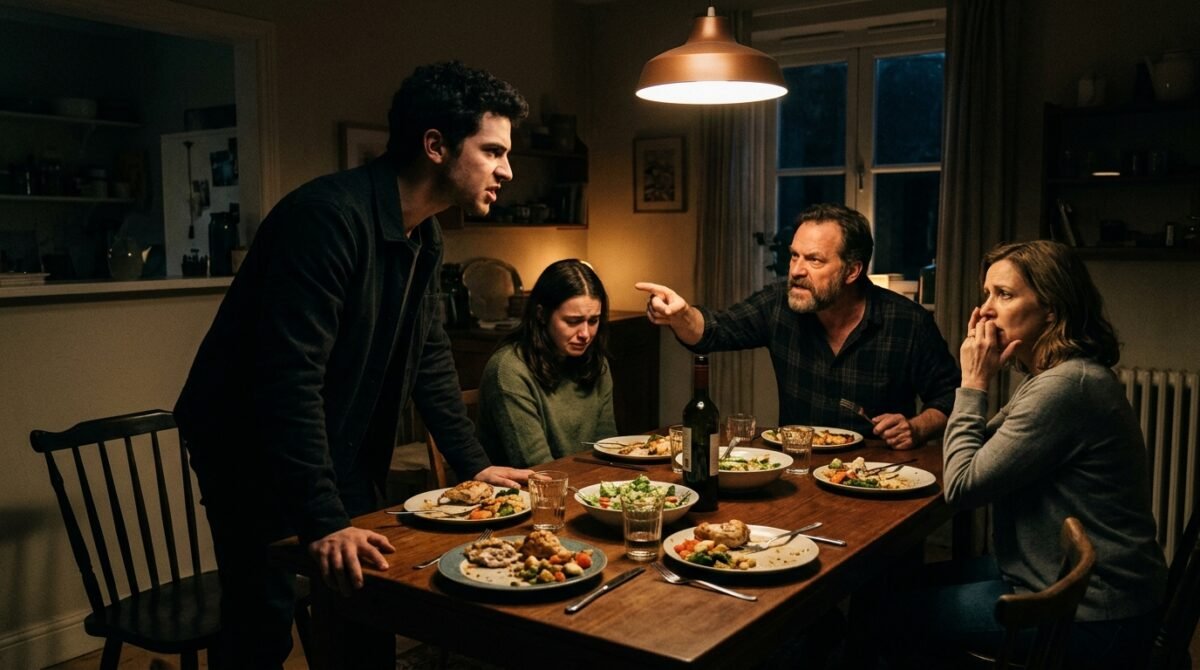
It started as a standard Sunday brunch at my parents’ house. I arrived expecting the usual talk about the weather and my job, but the atmosphere was thick with a strange, performative tension. My mother was hovering, my father was uncharacteristically quiet, and Clara sat at the head of the table, scrolling through her phone with a smug look on her face. The air smelled of expensive espresso, but the mood was sour.
As soon as I finished my first cup of coffee, my father cleared his throat—a sound I had learned to fear over the years. He launched into a speech about ‘family units’ and ‘interconnected success’. I knew immediately that a request for money was coming, but I wasn’t prepared for the sheer scale of the audacity. They didn’t want a loan to help with a medical bill; they wanted my down payment.
“You’ve been so lucky with your job, and we’re so proud. But Clara has this incredible opportunity to move into the professional circuit. This trailer is the missing piece of her career. We need you to transfer the funds to her account by Tuesday.”
— My Father
I sat there, frozen, watching them as if they were speaking a foreign language. My mother chimed in, talking about how ‘the housing market is terrible anyway’ and how I could ‘always rent’ for a few more years. They genuinely believed that my life’s work was a temporary inconvenience compared to Clara’s equestrian dreams.
The silence that followed their declaration was deafening. I looked at Clara, who didn’t even have the decency to look embarrassed. She just tapped her screen, waiting for the confirmation. That was the moment the veil dropped. I realized they didn’t see me as a person; they saw me as a bank account with legs.
I slowly set my fork down, my hands trembling. I didn’t yell. I didn’t cry. I just asked if they were serious, and when they nodded, I stood up. I told them that the money didn’t exist for them, and that I would never, under any circumstances, hand over my future for a trailer. The reaction was immediate and visceral: they acted as if I had just spit on a holy relic.
The Group Chat That Exploded at Midnight
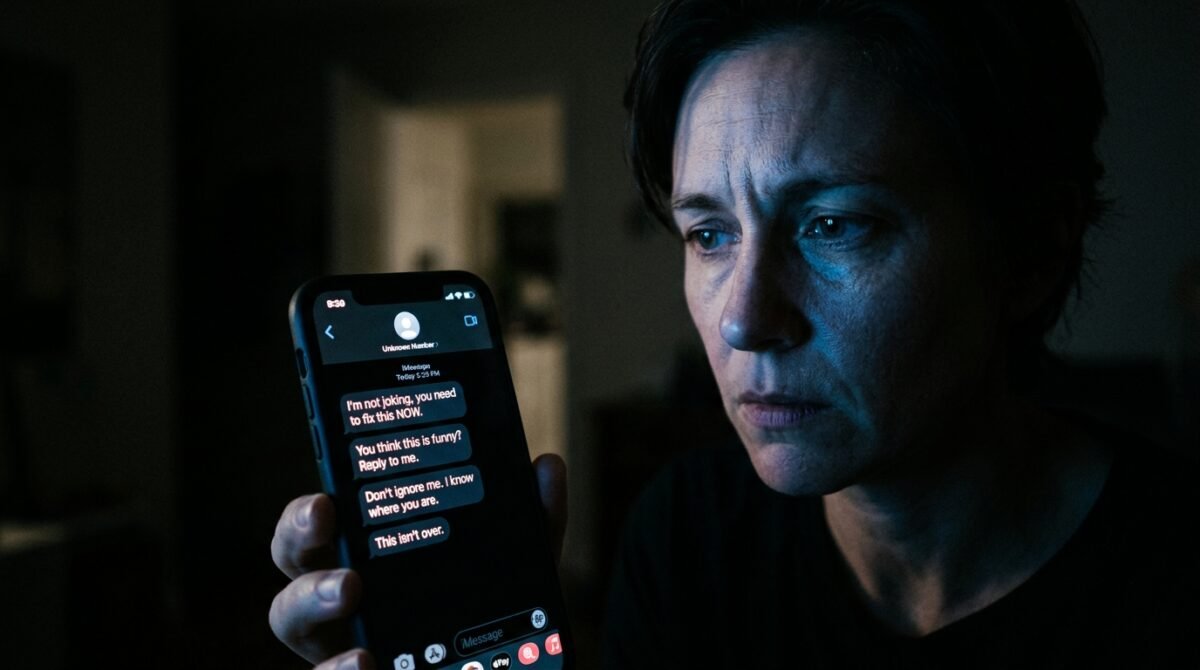
I didn’t even make it home before the notifications started. My phone buzzed incessantly, a cacophony of dings that signaled the family group chat had been activated. It wasn’t just my parents and Clara; my aunt, my uncle, and even my cousin were looped in. The message was a screenshot of a draft transfer form that my father had somehow acquired, already filled out with my account information.
“OP is being incredibly selfish. This isn’t just a trailer; it’s a legacy. If you don’t send the funds, don’t expect to be invited to Thanksgiving. We are a family, not a collection of individuals hoarding wealth.”
— My Mother, via Family Group Chat
The messages flowed in like a toxic tide. My uncle called me ‘cold-hearted’ and ‘materialistic’, clearly having only heard the version of the story where I was the villain. I watched as my life savings were framed as a ‘hoarded resource’ that I was keeping from my own flesh and blood. It was gaslighting of the highest order.
I chose to reply to the group chat just once. I didn’t defend myself against the personal attacks; I simply laid out the facts. I reminded them that I had worked 60-hour weeks for three years, that I had skipped vacations, and that this money was for my housing, not a hobby. I then muted the chat, blocked the participants, and threw my phone onto the passenger seat.
The psychological toll of those messages was immediate. I felt a wave of nausea. Seeing my own family turn into a mob because I wouldn’t capitulate to their demands was a level of betrayal I hadn’t prepared for. It was as if they had been waiting for an excuse to tear me down, and the money was just the catalyst.
Later that night, the texts shifted. My mother switched from ‘family values’ rhetoric to ‘I’m your mother and you owe me’ guilt-tripping. She sent photos of me as a child, trying to pull on my heartstrings to manipulate me into compliance. It was a pathetic display of desperation, and it only confirmed that I had made the right choice.
The Fabricated Emergency and the Legal Threat

By Wednesday, the tone of the communication changed again. My father sent me a formal-looking email, drafted with legalese he definitely didn’t write himself. They were threatening to sue me for ‘reimbursement of upbringing costs’ if I didn’t ‘return’ the money. It was the most absurd, laughable legal threat I had ever seen, yet it still carried the weight of the underlying hostility.
They claimed that because they paid for my college tuition, they were entitled to my future earnings until a certain age. The sheer entitlement was breathtaking. I spent the morning on the phone with a friend who happens to be a paralegal, just to ensure I wasn’t losing my mind. She laughed so hard she nearly dropped her coffee, confirming that there was absolutely no legal basis for their demands.
“If you do not comply with the transfer by Friday, we will be forced to take legal action to recoup our investments in your education. You don’t want a court case on your record, do you?”
— My Father, via email
I didn’t respond to the email. Instead, I went to my bank and added an extra layer of security to my accounts, freezing any potential transfers and adding multi-factor authentication. I also went to the local precinct and had a brief conversation with an officer just to have a record of the harassment in case they tried anything physical.
The stress began to manifest physically. I wasn’t sleeping. I found myself checking the locks on my front door every thirty minutes. The sanctuary I had built for myself, the little condo dream, felt under siege. Every car that pulled into my driveway caused my heart to hammer against my ribs.
It was fascinating to watch how the ‘golden child’ narrative had blinded them. Clara wasn’t even the one emailing me; she was probably busy looking at horse saddles online. She had outsourced the dirty work of bullying me to our parents, who were more than happy to play the part of the aggressors to keep their favorite child happy.
The Interrogation at the Local Coffee Shop

My mother cornered me at the local coffee shop on Thursday. I hadn’t told her where I was, but she had apparently been tracking my location through a shared family app I had forgotten to turn off. She walked in with a look of feigned concern, sitting down without asking and ordering a latte like we were just two friends catching up.
She started by telling me how much Clara was ‘suffering’ because of my selfishness. She described how Clara had cried all night, how she was falling behind in her training, and how this was going to ‘ruin’ her potential career. She used every emotional trigger she had spent twenty years refining to manipulate me.
“You’ve always been the strong one. Can’t you just sacrifice this one thing for your sister? It’s only money, but family is forever. Do you really want to be the one who destroyed our family over a few thousand dollars?”
— My Mother
I looked her in the eye and asked, ‘Why is my sacrifice always the price of your peace?’ I pointed out that if she loved Clara so much, she should have saved for the trailer herself rather than expecting her other child to fund it. I told her that if family is forever, then why was she willing to throw me away for a horse trailer?
She didn’t have an answer. She just started crying, the ‘victim’ card fully deployed. People in the coffee shop started looking, which was clearly her intent—to make me the public villain. I didn’t react. I stood up, left the money for my coffee on the table, and walked out the door, leaving her sitting there with her lukewarm latte.
Walking away felt like shedding a massive weight. I realized that my mother’s tears were not genuine; they were a tool. Once you see the strings, the puppet show loses all its power. I went straight home and deleted the location-sharing app, feeling a sense of liberation I hadn’t known was possible.
The Reddit Verdict: Echoes of Validation

I finally broke down and posted the situation to a popular subreddit for family conflicts. I needed to know if I was crazy. Within an hour, my inbox was flooded with thousands of messages. The support was overwhelming, but the most striking part was how many people had experienced the exact same dynamic.
“This is classic golden child syndrome. You are the ATM, and your sister is the pampered princess. DO NOT give them a single cent. Lock down your credit and go no-contact. They will never respect you as long as you are useful.”
— u/DebtFreeDreamer (Top Comment, 32.5k upvotes)
The comment section was a masterclass in boundary setting. People shared stories of how they had been ‘bank of mom and dad’ until they finally said no. Some warned me about potential identity theft, others gave me advice on how to legally secure my assets. It was the first time I felt like I wasn’t alone.
There were a few dissenters, of course. A few people argued that ‘blood is thicker than water’ and that I should just cave to keep the peace. But they were quickly shouted down by the community. Reading those comments gave me the strength to stand my ground when the inevitable next wave of attacks came.
I spent the whole night reading through the threads. It was like a crash course in emotional intelligence. I realized that the guilt I was feeling wasn’t mine—it was the guilt they had projected onto me. I wasn’t a selfish person for wanting to buy a home; I was a person who had finally realized I was worth more than my bank balance.
The community support provided a buffer. When my father called later that night, I didn’t answer, but I didn’t feel the usual panic. I felt a cold, clear resolve. I wasn’t just defending my money anymore; I was defending my right to exist as an individual separate from their expectations.
The Unannounced Visit and the Police Call

On Saturday morning, my father and Clara showed up at my apartment. I saw them on the security camera before they even reached my door. They weren’t there to apologize; they were there to intimidate. My father was holding a stack of papers, and Clara was looking around my living room like she was shopping for a new interior design scheme.
I didn’t open the door. I spoke through the intercom, telling them clearly that they were trespassing and that if they didn’t leave, I would call the police. My father laughed, thinking I was bluffing, and started pounding on the door. The sound echoed through the hallway, terrifyingly loud in the quiet morning.
“Open this door right now! You are being ridiculous. We just want to talk about this rationally. Don’t make us involve the authorities for something as stupid as a trailer!”
— My Father
I didn’t argue. I called the non-emergency line, and within ten minutes, an officer arrived. The look on my father’s face when he saw the patrol car pull up was priceless. He went from blustering rage to sheepish embarrassment instantly. The officer was firm, telling them to leave and not to return unless they wanted to be charged with harassment.
Clara didn’t say a word. She just looked at me with pure, cold hatred before walking back to the car. That moment—seeing the police escort them off the property—was the final severance. I knew there was no going back to the way things were. The family dynamic had been irrevocably shattered, and in its place was a new, frightening, but free reality.
I sat on my floor for hours after they left, just breathing. The adrenaline was fading, leaving behind a profound sense of exhaustion. But underneath it was a sense of victory. I had protected my home, my money, and my sanity. I wasn’t a child anymore; I was a person who could defend their own boundaries.
The Fallout: Financial Records and Hidden Secrets

In the aftermath, I did some deep diving into my past financial records. I had always assumed my parents were just ‘bad with money’, but what I found was chilling. There were several accounts in my name that I hadn’t opened, mostly revolving around student loans that had been ‘consolidated’ years ago. It appeared they had been using my credit for years.
I spent the following week working with a credit reporting agency to freeze my credit and dispute the unauthorized lines. It was a tedious, painful process, but it uncovered the scale of their deception. They hadn’t just expected me to give them money; they had been siphoning my identity to fund Clara’s lifestyle for half a decade.
| Type of Account | Unauthorized Usage | Status |
|---|---|---|
| Credit Card | $12,000 | Disputed/Closed |
| Student Loan | $25,000 | Fraud Reported |
| Store Line of Credit | $5,000 | Account Frozen |
The betrayal was deeper than I ever could have imagined. It wasn’t just about the trailer; it was about the systematic theft of my future. I felt a mix of rage and relief. The rage was for what they had stolen, but the relief was in knowing that I had finally woken up before they ruined my credit score completely.
I consulted with an attorney, who advised me on how to proceed. It was going to be a long, difficult legal battle to clear my name, but I was ready. The gloves were off. If they wanted a war, I was finally equipped to fight it. They had made a massive miscalculation by thinking I would stay the ‘responsible, quiet one’ forever.
My relationship with my extended family also became clear. Most of them stopped calling once the ‘financial crisis’ went public. It turned out they were only interested in my utility, not my well-being. The ones who stuck around were the ones who had been treated similarly, and we started a support network of our own.
The Quiet Victory of Closing the Deal

Three months later, I walked into the title company office. I was signing the paperwork for my condo. It wasn’t a luxury place, and it didn’t have a horse trailer attached to the back, but it was mine. Every single brick, every square inch of carpet, was paid for with my own sweat and labor. When I held the pen to sign the final document, I felt a wave of peace that I had never known.
I thought about my parents, who were likely still fuming over the ‘lost’ trailer. I thought about Clara, who would have to find another way to fund her ego. They were stuck in the same cycle of entitlement and debt, while I had successfully broken free. The financial freedom I had achieved was worth far more than the temporary discomfort of cutting them off.
“Congratulations. This is a significant milestone. You should be very proud of yourself for reaching this goal on your own.”
— The Real Estate Agent
I didn’t celebrate with my family. I celebrated with the friends who had helped me through the dark months—the ones who brought me coffee when I was stressed and offered their couch when I felt unsafe. We toasted to new beginnings and to the importance of healthy boundaries. It was a modest party, but it was the most genuine one I had ever attended.
The sense of ownership was profound. For years, I had lived as if my life belonged to everyone else. Now, I realized that my life belonged to me. The condo wasn’t just a physical space; it was a testament to my resilience. It was the physical manifestation of every time I said ‘no’ to the people who expected me to be a doormat.
I finally felt like an adult. I was no longer defined by my relationship to my sister or the expectations of my parents. I was defined by my own choices, my own work, and my own integrity. The journey had been costly, but the destination was worth every cent.
Reflecting on the Cost of Boundaries

I often reflect on what would have happened if I had just given in. I would be ‘happier’ in the eyes of my parents, but I would be broke, in debt, and living in someone else’s shadow. The price of peace was my own life. Once I recognized that, the decision became the easiest one I ever made.
Setting boundaries with family is often described as a ‘nuclear’ option, but sometimes you are dealing with a situation that is already a disaster. They had already set the fire; I was just the one who refused to stand in the flames. You don’t owe your life to people simply because they share your DNA, especially when they view you as a resource rather than a person.
I have learned that the people who get angry when you set a boundary are the ones who benefited the most from you having none. My parents’ rage was not a sign that I was wrong; it was a sign that I was finally acting in my own self-interest. It was a sign of my power, not my failing.
I am still in the process of healing. There are days when I miss the family I thought I had, but then I remember the reality of the family I actually have. The grieving process is real, but it is necessary. You cannot move forward if you are constantly looking back at the wreckage you left behind.
I have hope for the future. I am focused on my career, my home, and the relationships that are built on mutual respect rather than obligation. I have learned to recognize the warning signs, and I have surrounded myself with people who value me for who I am, not what I can provide.
Lessons Learned from the Financial Battlefield

If there is one thing I want people to take away from this, it is that your money is your safety net, not a handout for others. Never, under any circumstances, feel guilty for prioritizing your own future. If your family asks for an unreasonable sacrifice, they are not asking for ‘help’; they are asking for your submission.
I learned the hard way that financial transparency with toxic family members is a dangerous mistake. Keep your financial goals, your savings progress, and your major purchases to yourself. If they don’t know what you have, they can’t ask for it. It’s not about being secretive; it’s about being secure.
Don’t be afraid to use the tools available to you. Security cameras, credit freezes, and legal counsel are not ‘escalations’; they are basic necessities when you are dealing with people who refuse to respect your autonomy. Do not feel the need to justify your ‘no’. A ‘no’ is a complete sentence.
Finally, trust your gut. If a family request feels like a violation, it probably is. Don’t let their gaslighting make you doubt your own moral compass. You know when you are being used, and you know what you are worth. Hold onto that truth with everything you have, and never let them talk you out of it.
Life is too short to live it for anyone else. I have made mistakes, I have lost people, and I have faced challenges I never thought possible. But I have also gained something far more valuable: a life that is truly my own, built on a foundation of self-respect and earned independence.
Conclusion
My journey from a ‘compliant daughter’ to an independent homeowner was paved with conflict, but it was a battle for my very existence. The story of the horse trailer was never really about the trailer; it was about the power dynamic that had governed my life for too long. By refusing to sacrifice my future for their vanity, I reclaimed my agency and proved that boundaries are not just suggestions—they are the walls that protect our sanity.
I am currently low-contact with my parents and completely no-contact with my sister. It is a lonely road, but it is a quiet one, free from the constant noise of demands and manipulation. I have found that true family is often something you create, not something you are born into. My life is now my own, and I have never been more grateful for the person I have become through this crisis.
What about you? Have you ever had to draw a hard line with family over money or expectations? How did you handle the backlash, and what did you learn about the nature of those relationships? Let’s share our experiences and support one another in the comments below.
What's your verdict on this dilemma?
Vote below to contribute to the official community consensus.

Have a Dilemma Keeping You Up at Night?
Share your real-life feud, wedding chaos, or relationship crossroads anonymously with our editorial team.
What do you think ?
0 Comments🛡️ Comments are moderated to protect community integrity. Your comment will appear once approved by the editorial team.