
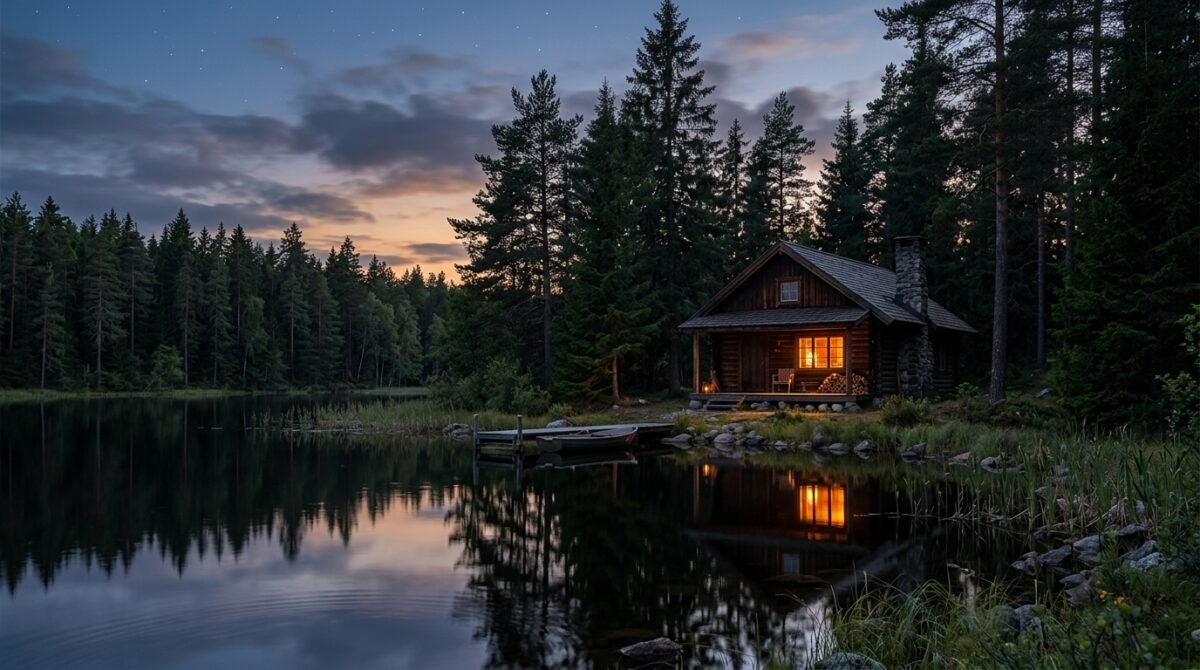
When my grandfather passed away, he didn’t just leave me a pile of assets; he left me his soul. The lakeside cabin, a modest structure of cedar and stone nestled against the edge of a crystal-clear mountain lake, was where I spent every summer of my childhood. It was a place of silence, of fishing off the dock at sunrise, and of learning the value of hard work. My grandfather knew my brother, Greg, lacked that same appreciation. Greg had always been the golden child, the one who coasted through life on charm, and when he found himself unemployed for the third time in two years, the family vultures began circling.
The trouble started during the reading of the will. My parents, who had long coddled Greg, seemed genuinely shocked that the cabin was deeded solely to me. They immediately launched into a campaign of guilt, suggesting that I was the ‘successful’ one and that I had a moral obligation to provide a ‘safe space’ for Greg to ‘find his footing’ during his latest career crisis. I was young, foolish, and eager to keep the peace, so I agreed to let him stay for three months. That was the first mistake in a chain of events that would eventually destroy my relationship with my entire immediate family.
Months turned into a year. The quiet sanctuary of the cabin began to deteriorate into a frat house. I would drive up on weekends to find beer cans scattered across the pristine lawn, the smell of stale smoke clinging to the curtains, and the dock, which I had painstakingly restored, showing signs of rot from neglect. When I finally confronted Greg, he didn’t offer apologies. He offered excuses, shifting the blame onto my parents for ‘encouraging’ his stay. The moral dilemma wasn’t just about the property; it was about the fundamental erosion of boundaries that my family had spent my entire life enforcing.
The situation reached a boiling point when I arrived unannounced one Friday evening to find a group of strangers inside, music blaring, and the interior wood trim scorched from a poorly managed indoor fire pit. That was the moment the veil of ‘dutiful sibling’ dropped. I realized that my family’s entitlement wasn’t just a quirk; it was a weaponized expectation designed to keep me in a perpetual state of service to someone who had never once considered my feelings. I didn’t just want him out; I wanted my grandfather’s legacy back.
This is the story of how I took my home back, the legal nightmare that ensued, and why, for the first time in my life, I chose my own sanity over the approval of people who never truly had my back. It’s a story about the intersection of inheritance, radical boundaries, and the bitter, necessary pill of eviction.
The Three-Month Promise That Turned Into A Nightmare
It began with a simple conversation at the kitchen table. My mother had tears in her eyes, clutching a glass of wine, explaining that Greg was ‘at a crossroads’ and needed the peace of the cabin to ‘reconnect with his ambition.’ I was hesitant, knowing Greg’s track record, but my father interjected with a comment about how families look out for one another. I set the boundary clearly: ‘He stays for three months. He handles the utility bills, he keeps the place clean, and he respects the fact that this is my property.’ I truly believed that a deadline would motivate him.
The first month was deceptive. Greg sent me photos of a clean living room and a stack of firewood, playing the part of the reformed brother perfectly. I was proud of him, thinking that perhaps the isolation of the lake was actually doing him good. I even went so far as to buy him new fishing gear for his birthday, hoping to foster a genuine connection between us that didn’t involve me being his patron. But the mask started to slip as soon as the initial three-month grace period neared its end.
When I called him to discuss his transition plans, the tone changed instantly. He wasn’t talking about moving out; he was talking about how the local job market was ‘in a slump’ and how he was looking at potentially starting a kayak rental business using the lake. ‘I just need a little more time, man,’ he told me, his voice smooth and practiced. ‘You know how Mom gets when I’m stressed. Do you really want to put me on the street right now?’ The manipulation was blatant, but I was still paralyzed by the familial expectations of being ‘the nice one.’
“I don’t think you understand, Greg. This wasn’t a suggestion. You are living in a home that isn’t yours, and you’ve overstayed your welcome by weeks. I need you to start looking for an apartment.”
— Me, during a tense phone call on the 95th day.
The aftermath of that call was a barrage of text messages from my parents. They weren’t just asking me to be patient; they were accusing me of being heartless and ‘weaponizing’ the property against my own blood. They framed my request for privacy and ownership as an act of petty tyranny, completely ignoring the fact that I was footing the tax bill and the insurance premiums while Greg lived rent-free.
Looking back, I realize that the three-month deadline was a trap. By setting a date and not immediately enforcing it the second it passed, I had signaled that my boundaries were flexible. It took me a long time to realize that when you show someone they can walk all over you, they will eventually treat your entire life like a welcome mat. The nightmare wasn’t just the cabin; it was the realization that I was merely a line item in my parents’ plan for their favorite son.
The 6:00 AM Discovery Of The Property Damage
I decided to drive up to the cabin early on a Saturday morning, hoping to surprise Greg and have a serious, face-to-face talk about the eviction notice I was preparing to hand him. I arrived just as the sun was cresting over the lake, the mist clinging to the water. The silence was absolute, but as I pulled into the gravel driveway, I noticed something wrong. The front door was slightly ajar, swaying in the morning breeze. My heart hammered against my ribs as I stepped out of the car, the crunch of gravel echoing too loudly in the quiet.
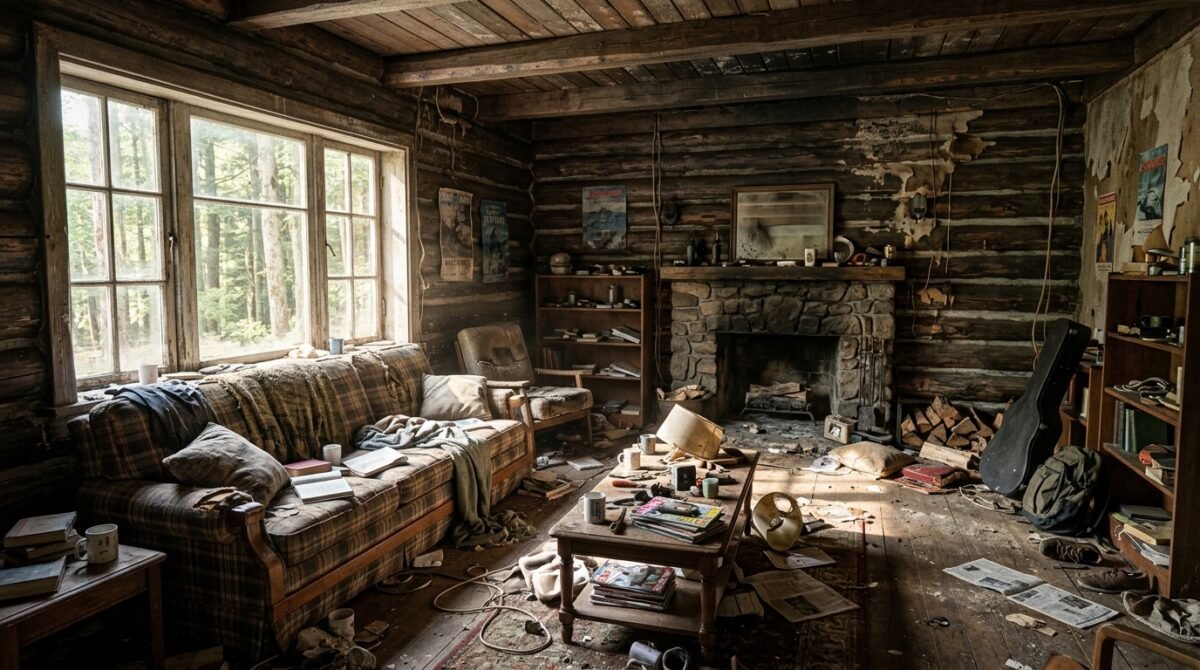
Inside, the scene was horrific. There were empty liquor bottles lining the fireplace mantel, a half-eaten pizza decaying on the coffee table, and the carpet—my grandfather’s pristine original wool rug—was stained with something dark and sticky. I walked into the kitchen, and my blood ran cold. The expensive, hand-carved island my grandfather had spent months building had been used as a cutting board for some kind of DIY project, leaving deep, jagged gouges in the wood. It wasn’t just messy; it was a desecration.
I found Greg asleep on the couch, surrounded by trash. I didn’t wake him up with words; I woke him up by slamming the front door shut. He jumped, disoriented and reeking of stale beer. His first reaction wasn’t shame or apology, but immediate, defensive aggression. He started shouting, asking why I was there so early and why I was invading his ‘personal space.’ The entitlement was so thick it felt like physical pressure in the room.
“You look at this place, Greg! You look at what you’ve done to the wood, the floors, the history of this cabin! This isn’t a frat house, and I am done watching you destroy everything I love.”
— My outburst during the confrontation.
He scoffed, wiping his face and slumping back into the cushions. ‘It’s just a house, man. It’s wood. It’s replaceable. You’re acting like I committed a crime. Why are you so obsessed with things? You have money, you have your own life—why are you hovering over me like a warden?’ His words made it clear: he didn’t view the cabin as a place of memories or a legacy. To him, it was just a resource to be consumed.
I left that morning without serving him the notice, but not because I had changed my mind. I left because I realized that talking to him was useless. He had no concept of ownership, no concept of consequence, and certainly no respect for the boundary I had tried to draw. I drove away with my hands shaking on the steering wheel, realizing that the eviction wouldn’t be a conversation. It would be a legal operation.
The Secret Family Group Chat Exposed

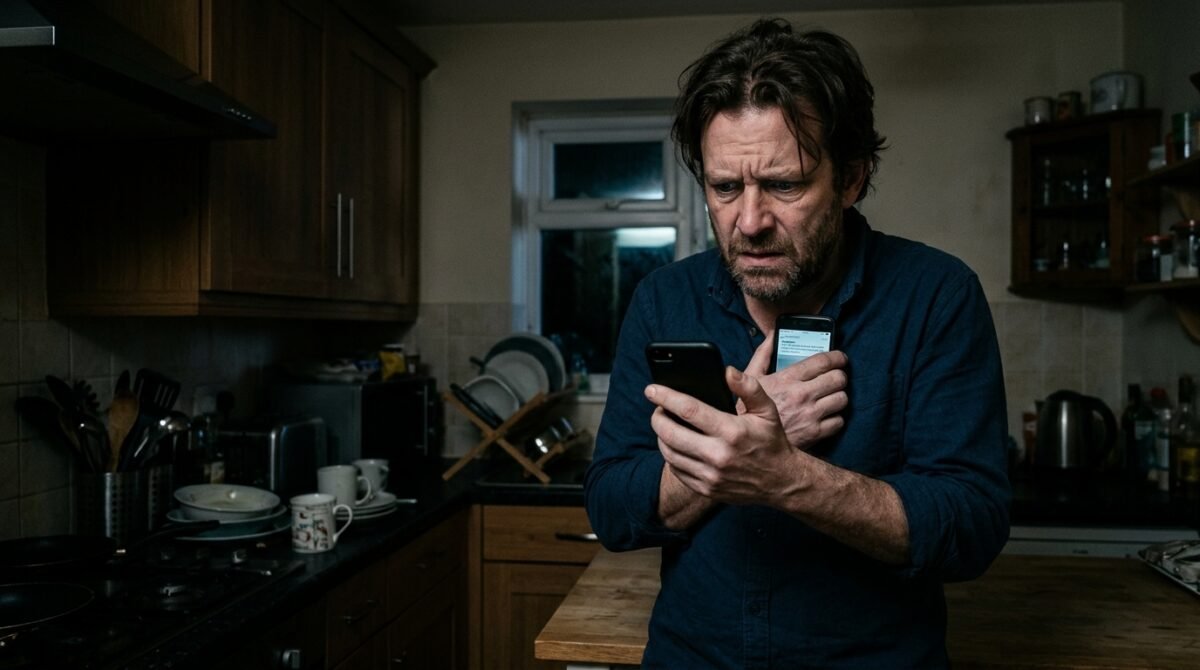
The betrayal deepened when I accidentally left my iPad logged into the family iCloud, which synced with my mother’s phone. A notification popped up while I was working at my office. It was a group chat titled ‘The Cabin Situation.’ Curiosity—and a deep sense of dread—led me to click it. What I read made me physically ill. My mother, my father, and Greg were discussing how to ‘legally’ claim the property as a family asset because I was ‘unfit’ to manage it.
They were talking about finding loopholes in the deed, claiming that because I had allowed Greg to stay there for over a year, he had established ‘tenancy rights’ that could be leveraged to prevent me from selling it or even visiting. My mother was the worst of them, suggesting that if I pushed the issue, they would threaten to cut me off from the rest of the family estate. They viewed my ownership as a technicality they could overcome with enough pressure and legal maneuvering.
“If he wants to play the landlord, let’s make it expensive for him. We can claim the cabin needs major repairs that he’s neglected, and put a lien on the property. He won’t be able to evict Greg if the property is under legal dispute.”
— A text from my mother in the leaked family group chat.
I sat in my office chair for an hour, staring at the screen, watching the messages pile up. They weren’t just defending Greg; they were actively plotting against me. They saw my success and my boundaries as an affront to their control. It wasn’t just about the cabin; it was about the fact that I had dared to become independent of their influence, and they were trying to drag me back down.
I took screenshots of every single message. I knew then that this wasn’t just a family dispute anymore. It was a war. I had been playing by the rules of love and family, but they had been playing by the rules of power. I realized that my desire to keep the peace had been my biggest vulnerability, and I had to stop caring about their feelings if I wanted to protect my future.
I didn’t confront them. I didn’t send a scathing reply. I simply logged out, backed up the screenshots to an external drive, and called a lawyer. The realization that I was essentially an outsider in my own family was painful, but it was also liberating. Once I accepted that they were not my allies, the path forward became incredibly clear.
The Certified Letter That Changed Everything

My lawyer was a woman named Sarah who specialized in property disputes. She didn’t mince words. After reviewing the evidence and the history of the property, she told me that the ‘tenancy’ argument they were planning to use was thin, especially since I had documentation of the initial agreement and the fact that Greg had never paid rent. We drafted a formal eviction notice, but we added a twist: we included a demand for damages regarding the property destruction I had photographed.
The day the certified letter arrived at the cabin, I was sitting in my car a mile down the road. I wanted to be there, not to confront him, but to ensure that if he tried to do something rash, I was nearby to call the police. I watched the mail carrier walk up to the porch. I watched Greg come to the door, sign for the envelope, and then, after reading it, visibly recoil. He spent ten minutes pacing on the porch, then slammed the door and went back inside.
A few minutes later, my phone started exploding. It was a call from my father. I didn’t answer. Then a text from my mother. Then more calls. I put my phone on airplane mode. I had done the work, I had followed the legal process, and I was not going to be bullied into a ‘negotiation’ that would only end with me losing more ground.
“You are making a huge mistake. We are your family. You are literally suing your brother and making him homeless. You will never be invited to another Thanksgiving. Think about what you are doing.”
— A voicemail left by my father after receiving the legal notice.
The threat was clear, but it didn’t hold the weight it once did. The idea of attending a Thanksgiving where I was the black sheep and Greg was the protected victim was no longer a loss to me; it was a relief. I realized that my parents’ love was conditional on my compliance, and I was finally choosing to opt out of that contract.
The next few days were the longest of my life. Every time my phone buzzed, I braced myself for another barrage of vitriol. But I stayed the course. I had the law on my side, and more importantly, I had the moral high ground, even if I was the only one who recognized it. I was no longer the child trying to earn their approval; I was the property owner defending my boundaries.
The Showdown In The Living Room
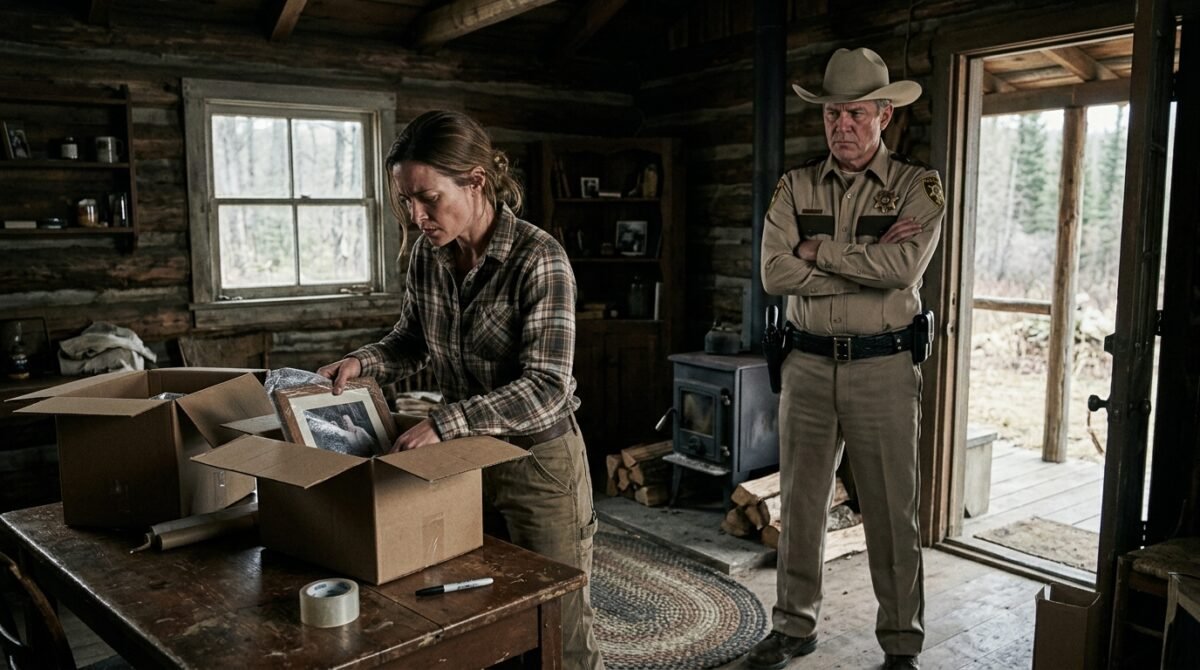
When the legal deadline for him to vacate arrived, I didn’t go alone. I brought a local officer with me, as per my lawyer’s recommendation, to ensure the peace. We pulled up to the cabin to find the front door wide open and Greg standing there with our parents. They were clearly hoping to intimidate me, to use the sheer presence of authority figures to make me back down. But they had forgotten that I had the law on my side, and the sheriff was there to enforce my rights, not theirs.
The conversation was chaotic. My mother was crying, accusing me of being a sociopath, while my father tried to engage the officer in a debate about ‘family property rights.’ Greg just stood in the background, looking smug, clearly thinking that having our parents there would shield him from the consequences of his actions. I didn’t look at them. I looked at the sheriff and handed him the paperwork.
“I am not here to argue with you. I am here to regain possession of my property. The notice was served. The deadline has passed. Greg, please gather your belongings and leave the premises.”
— My calm, rehearsed instruction to my brother.
Greg tried to protest, saying he had ‘nowhere to go,’ but the officer cut him off. He explained that this was a legal eviction, that I had been more than patient, and that any further resistance would result in his arrest for trespassing. The air in the room shifted instantly. The smugness on Greg’s face evaporated, replaced by a look of genuine panic. He realized for the first time that my parents’ words had no power here.
My mother tried to step between us, telling me that I was destroying the family, but I just walked past her to the bedroom. I started packing Greg’s things into boxes. It was a visceral, exhausting experience. Every item I picked up—a shirt with a stain, a broken gadget, a piece of trash—reminded me of how much I had tolerated. I threw it all into the bins with a sense of finality that felt like breaking a fever.
The departure was quiet, save for my mother’s sobbing in the driveway. Watching them leave was one of the hardest things I’ve ever had to do, not because I wanted them to stay, but because it represented the permanent fracture of my family dynamic. As their car pulled away, I turned back to the empty, quiet cabin. It was a wreck, but for the first time in years, it was *my* wreck.
The Aftermath: Rebuilding The Sanctuary

The weeks that followed the eviction were spent in a state of quiet, healing labor. I hired professionals to fix the gouges in the wood, to scrub the smoke damage from the walls, and to restore the integrity of the dock. Every board I replaced felt like a reclaiming of my grandfather’s spirit. I wasn’t just fixing a house; I was erasing the physical manifestations of my family’s entitlement. It was a meditative process, one that allowed me to process the grief of the loss of my family relationships while physically manifesting my boundaries.
I didn’t speak to my parents for months. They sent me emails, letters, and left voicemails, most of them alternating between rage and pathetic attempts at ‘reconciliation’ that always started with me apologizing to Greg. I blocked them one by one, not out of malice, but out of necessity. I needed the silence to rebuild my own sense of self. I needed to understand who I was without the shadow of their expectations hanging over me.
One day, while I was sitting on the dock at sunset, I realized that I didn’t miss them. I missed the *idea* of a family, the fantasy I had been sold as a child, but I didn’t miss the reality of the people they were. I was happy. I was peaceful. And for the first time, I felt like the owner of my own life, not just the owner of a cabin.
“You know, grandpa, I think you’d be proud. Not just that I kept the place, but that I finally learned how to stand up for it. And for myself.”
— A quiet moment of reflection on the dock.
The cabin was once again a place of solitude. I started inviting friends, the ones who respected my boundaries, to join me. We fished, we talked, we enjoyed the quiet. The atmosphere was completely different. It was a place of mutual respect, not one of consumption. I had turned a place of conflict into a place of healing.
My parents eventually stopped calling, though the occasional ‘update’ from distant relatives filtered through. They had apparently moved on to complaining about me to anyone who would listen. But it didn’t bother me. Let them tell their story. I had the truth, the documentation, and the peace of mind that comes from knowing I did what was necessary to protect what was mine.
The Reddit Verdict: Does The Internet Support Me?

I decided to post my story on a popular forum to see if I was as crazy as my parents insisted I was. I laid out the timeline, the property damage, the legal steps I took, and the eventual eviction. I expected a mix of responses, maybe even some people calling me the ‘asshole’ for evicting a family member. Instead, the response was overwhelming. Thousands of people shared their own stories of entitled family members and the necessity of harsh boundaries.
The top comment came from a user who had gone through a similar situation with an inherited house. They explained that my parents were essentially trying to gaslight me into believing that my kindness was a contract they could exploit. It was validating to see that the dynamics I had experienced were not unique to me; they were a well-documented pattern of family dysfunction.
“NTA. You didn’t evict your brother; your brother evicted himself through his actions. You gave him a chance, he abused it, and you took the necessary legal steps to protect your property. Do not let them guilt you into thinking you are the villain for setting boundaries.”
— u/PropertyRightsAdvocate (Top Comment, 28.5k upvotes)
There were, of course, the dissenters. A few users argued that ‘family comes first’ no matter the circumstances, but they were quickly drowned out by the sheer volume of support from people who had been in my position. It was clear that the culture is shifting; more and more people are realizing that biological relation is not a free pass for abuse or exploitation.
The discussion turned into a broader analysis of inheritance and the way family assets are often treated as ‘common property’ by those who didn’t work for them. It was a profound conversation, one that made me feel less isolated. I read every comment, and for the first time, I didn’t feel like the ‘black sheep.’ I felt like a person who had made a hard, necessary choice.
The thread was eventually locked due to the sheer number of replies, but it stayed on the front page for days. It became a point of reference for others in the community, a ‘case study’ on how to handle familial entitlement. I didn’t identify myself, but seeing my story help others reach their own conclusions was the final piece of the puzzle. I had done the right thing.
Lessons Learned: The Cost Of Establishing Boundaries

The most important lesson I learned wasn’t about the law or property management; it was about the psychology of my own family. I realized that my parents had spent my entire life grooming me to be the ‘responsible’ one, the one who would pick up the pieces when Greg failed. They had invested so much in that dynamic that when I finally refused to play my part, they didn’t see me as a person; they saw me as a broken system that needed to be forced back into alignment.
I also learned that boundaries are not just about saying ‘no.’ They are about being willing to endure the consequences of saying ‘no.’ When I set that boundary, I knew it would lead to a loss of family connection. I chose to pay that price. And while it was painful, it was a fair exchange. I traded an abusive, draining relationship for my own sanity and the preservation of a place that meant the world to me.
People often tell me that I should try to ‘bridge the gap’ now that some time has passed. But why? To go back to being the person who pays for someone else’s irresponsibility? To sit at a table where I am constantly criticized? No. The ‘bridge’ was burned long ago, and I have no interest in rebuilding it just to be let down again.
“Boundaries aren’t walls to keep people out; they’re gates that determine who gets to be a part of your life. If someone keeps trying to kick down the gate, you don’t build a bigger gate. You stop letting them near the property line.”
— A piece of advice I received from a therapist during the process.
I’ve moved on. I focus on my work, my actual friends, and the quiet beauty of the lake. I’ve realized that family isn’t just about blood; it’s about the people who respect you, support you, and treat your efforts with the dignity they deserve. If my parents and brother can’t do that, then they don’t deserve a place in my life, regardless of our history.
The cabin is still there, solid and serene. It’s no longer a source of conflict. It’s a testament to the fact that you can stand your ground, even when the world—or your own family—tells you that you’re wrong. I am the owner, I am the protector, and I am, finally, the one in control of my own happiness.
The Current Status: Where Do We Stand Now?

It has been two years since the eviction. I rarely hear from my family, and when I do, it is usually through legal correspondence regarding some absurd, baseless claim about my grandfather’s estate. My lawyer handles it quickly and efficiently, and I don’t even have to see the documents anymore. I have achieved a level of ‘low-contact’ that borders on ‘no-contact,’ and it has been the most productive period of my adult life.
Greg is apparently working a series of odd jobs in a different state. I heard from a cousin that he still blames me for ‘ruining his life.’ It’s a sad narrative for him to cling to, but it’s a narrative that no longer affects me. I am not his keeper, and I am not his enabler. If he wants to believe that I am the villain, he is free to do so. It doesn’t change the reality of his choices or mine.
My parents are still living in the same house, presumably telling their version of the story to anyone who will listen. I’ve stopped worrying about my ‘reputation’ in the family. Let them gossip. Let them tell their lies. My integrity is measured by my actions, and my actions were firm, legal, and necessary. I sleep well at night knowing that I did what I had to do.
“The hardest part wasn’t the eviction. It was admitting to myself that they didn’t care about me. Once I admitted that, everything else was easy.”
— My concluding thought on the experience.
The cabin remains my favorite place on Earth. I have even started making improvements that my grandfather would have loved—a new dock, a better heating system, and a small library area for long winter nights. It’s a living, growing thing now, a place of joy rather than a place of resentment. Every day I spend there is a victory.
I’ve learned to value myself, to set boundaries, and to hold them firm. I have learned that the people who get angry when you set boundaries are the ones who were benefiting from you having none. That single realization has changed the way I interact with everyone in my life, from colleagues to romantic partners. I am a better person for having gone through this, not because it was easy, but because it was necessary.
Why We Need To Stop Romanticizing Toxic Family Ties

We live in a culture that incessantly romanticizes the idea of ‘family loyalty’ at any cost. We are told that blood is thicker than water, that we must forgive and forget, and that parents are always right. But these platitudes are often used to silence those who are being treated poorly by their relatives. They are used to enforce compliance and to discourage independence. It is time we start having a more honest conversation about toxic family dynamics.
If a person would not treat a stranger the way they treat you, then they have no right to expect you to tolerate that behavior just because you share DNA. The expectation of ‘unconditional’ support is often a one-way street, designed to benefit the person who is doing the abusing. True family loyalty is built on mutual respect and care, not on a requirement of servitude.
My story is just one example of what happens when someone decides to stop being a doormat. It’s not always a pretty story. It involves conflict, legal battles, and the loss of relationships. But it also involves the gain of self-respect and the freedom to live your own life. It is worth the cost, even if the price is high.
“The most radical thing you can do for your family is to stop letting them treat you poorly. And if they can’t handle that, they are the ones breaking the family, not you.”
— A thought on the importance of breaking cycles.
I hope that if you are reading this and you are in a similar situation, you realize that you have options. You don’t have to be the martyr. You don’t have to be the person who sacrifices their own future to pay for someone else’s lack of ambition. You are allowed to prioritize yourself, your goals, and your own peace of mind.
It’s a scary path, but it’s a liberating one. You may lose people along the way, but you will also find a version of yourself that you can finally be proud of. And that, in the end, is the only thing that really matters. The cabin is mine, and more importantly, my life is mine.
Conclusion
The journey from a passive victim to an empowered owner was not without its scars. I lost my family, but I kept my integrity. The cabin, once a source of bitter conflict, is now a testament to the fact that we can—and must—draw lines where we need to. My story isn’t just about an eviction; it’s about the courage to choose yourself when everyone else expects you to choose them.
Reflection is a powerful tool. Looking back, the most shocking thing is how long I waited to act. I was terrified of being the ‘bad guy’ in a narrative written by my parents. But I learned that the ‘bad guy’ is simply the one who refuses to let others define their boundaries for them. If this story has resonated with you, I encourage you to look at your own life. Where are you being asked to sacrifice for people who don’t reciprocate your respect? Is it time to finally draw your own line?
I want to hear from you. Have you ever had to make a tough decision regarding family property or boundaries? Did you struggle with the ‘family comes first’ narrative, or did you find peace in distancing yourself? Let’s talk about the reality of these situations in the comments. Your experiences might be the push someone else needs to finally stand their ground.
What's your verdict on this dilemma?
Vote below to contribute to the official community consensus.

Have a Dilemma Keeping You Up at Night?
Share your real-life feud, wedding chaos, or relationship crossroads anonymously with our editorial team.
What do you think ?
0 Comments🛡️ Comments are moderated to protect community integrity. Your comment will appear once approved by the editorial team.