

Childbirth is supposed to be one of the most intimate, vulnerable, and controlled experiences of a woman’s life. We spend months curating birth plans, researching pain management, and selecting exactly who we want in that room to witness the arrival of our children. For Sarah and Mark, the plan was simple: just the two of them, the medical team, and a quiet, peaceful environment. But Sarah’s mother-in-law, Martha, had a different agenda entirely. A woman who believed her faith trumped medical protocol, Martha viewed the birth of her first grandchild not as a private family moment, but as a spiritual performance that demanded a soundtrack.
The tension began weeks before the due date, with subtle comments about ‘blessing the womb’ and ‘welcoming the soul with song.’ Sarah dismissed these as eccentricities, never imagining that a woman could be capable of violating the sanctity of a labor and delivery ward with such calculated audacity. When the contractions started, the last thing Sarah expected to hear outside her hospital room door was the swelling sound of vocal warm-ups and the rhythmic tapping of tambourines.
This isn’t just a story about a boundary being crossed; it is a story about the absolute erasure of a mother’s agency. It delves into the dark side of maternal entitlement, the absurdity of performative religiosity, and the fallout that occurs when someone decides that their personal beliefs are more important than another person’s medical stability. The following account details how an eight-person choir turned a sterile, high-stakes medical environment into a chaotic stage, and how that single decision shattered a family dynamic forever.
As we navigate through the events of that day, we will look at the pre-birth warnings that were ignored, the shocking moment the choir entered the maternity ward, and the subsequent fallout that led to a lifetime ban from the hospital. We will also examine the responses of the online community, who were left equally horrified and fascinated by the sheer audacity on display in one of the most private settings imaginable.
The Pre-Birth Prophecies and the Rejection of the Birth Plan
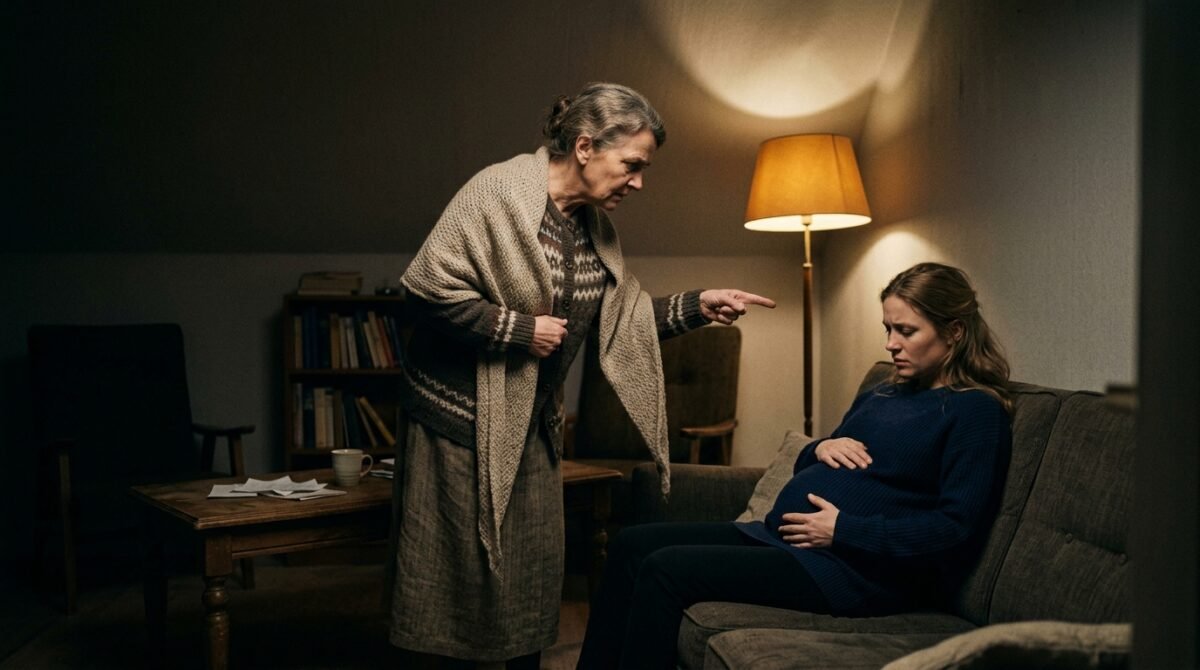
Long before the hospital bag was packed, the friction between Sarah and Martha was palpable. Martha was not a woman who took ‘no’ for an answer, especially when she framed her desires as ‘God’s will.’ She had made it clear during dinner parties and family gatherings that she intended to be present at the birth, a prospect Sarah had gently but firmly shut down months prior. Martha’s response was always a condescending laugh, as if Sarah were simply a child who didn’t know what was good for her.
The ‘choir’ idea was introduced as a joke, or so Sarah thought. Martha spoke of ‘the power of song’ to ease labor pains, citing ancient traditions that she claimed made epidurals unnecessary. Sarah, who had already planned for a standard medical delivery, found these suggestions invasive and frankly, delusional. She repeatedly told Mark that his mother needed to be kept in the dark about the exact timing of the delivery, a request he promised to uphold despite his notorious inability to stand up to his mother.
Tensions reached a breaking point during a Sunday brunch when Martha gifted Sarah a ‘blessing shawl’ and a CD of liturgical music. When Sarah politely declined, saying she wanted a focused, quiet environment, Martha scoffed. She looked Sarah dead in the eye and said, ‘The spirit doesn’t care about your quiet, dear. It cares about the arrival of a new vessel. And you will be grateful for the voices when the time comes.’ It was the first time Sarah realized this wasn’t just talk; it was a manifesto.
Mark’s role in this was, regrettably, that of the classic enabler. He brushed off his mother’s intensity as ‘just how she is,’ failing to understand the visceral discomfort his wife was feeling. He didn’t see the alarm bells; he saw a mother who was overly enthusiastic. The lack of a united front was the crack in the foundation that allowed Martha to build her stage.
“I don’t care what you’ve discussed with the doctors, Mark. If the spirit moves me to sing, I will sing. You wouldn’t deny your child a heavenly welcome, would you?”
— Martha, during a heated exchange over the birth plan
The final warning sign was a text message sent at 3:00 AM on the day of the delivery. It was a simple, cryptic message from Martha that Sarah only saw after the chaos had already begun. It read: ‘Prepare the room. The heralds are arriving.’
The 3:00 AM Arrival and the Audacity of the Lobby
When Sarah’s water broke, the adrenaline and the pain took over, and for a few hours, the outside world ceased to exist. They arrived at the hospital, checked into their room, and the medical staff began their work. Sarah was in active labor, focused entirely on breathing and the instructions of her nurse. Mark was by her side, clutching her hand, but he was also checking his phone incessantly, a detail Sarah was too preoccupied to notice.
Outside the hospital, Martha had been busy. She had gathered members of her church choir, telling them that Sarah had ‘requested’ their presence for a spiritual birthing experience. She promised them it was a joyous occasion and that the hospital was expecting them. It was a web of lies woven with the confidence of someone who truly believes they are doing the right thing, regardless of the destruction they cause in their wake.
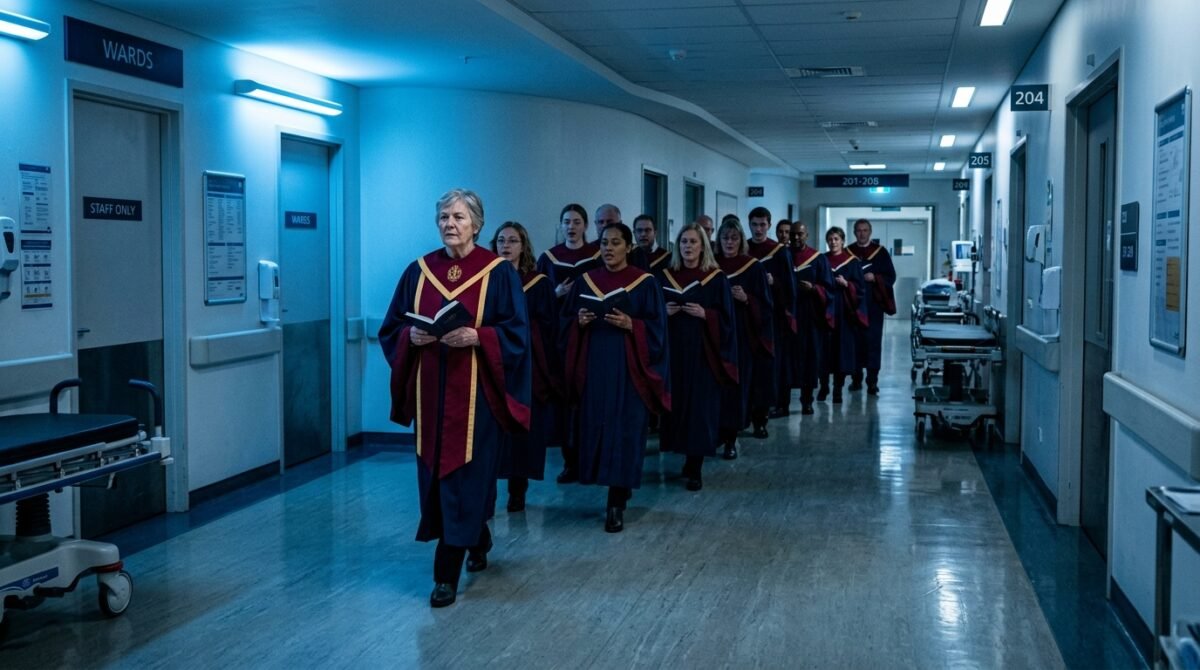
The hospital lobby was quiet at 4:00 AM, the time when most of the world was asleep. The security guard on duty was startled when eight individuals in full choir robes, clutching hymnals and a tambourine, marched through the sliding doors with an air of divine purpose. They weren’t just visitors; they were a procession. Martha led the charge, bypassing the front desk with a practiced ease that suggested she had done this before, even if not in a hospital.
The security guard tried to intercept them, but Martha simply held up a hand and said, ‘We are here for the blessing. We have an appointment with the life coming into this world.’ She used the chaos of the night shift, the sheer confusion of the staff, and her own authoritative presence to maneuver through the corridors. She knew exactly which floor to head to, having stalked the hospital’s layout online weeks prior.
“Ma’am, you cannot bring a choir into Labor and Delivery. This is a sterile environment. Please leave immediately or I will call the police.”
— Hospital Security Guard, attempting to de-escalate the situation
By the time the security guard managed to call for backup, the group was already in the elevator, ascending to the maternity ward. They were singing a low, melodic chant, a sound that began to echo through the quiet halls of the hospital. It was haunting, surreal, and absolutely out of place in a wing designed for medicine and recovery.
The Moment the Music Pierced the Delivery Room
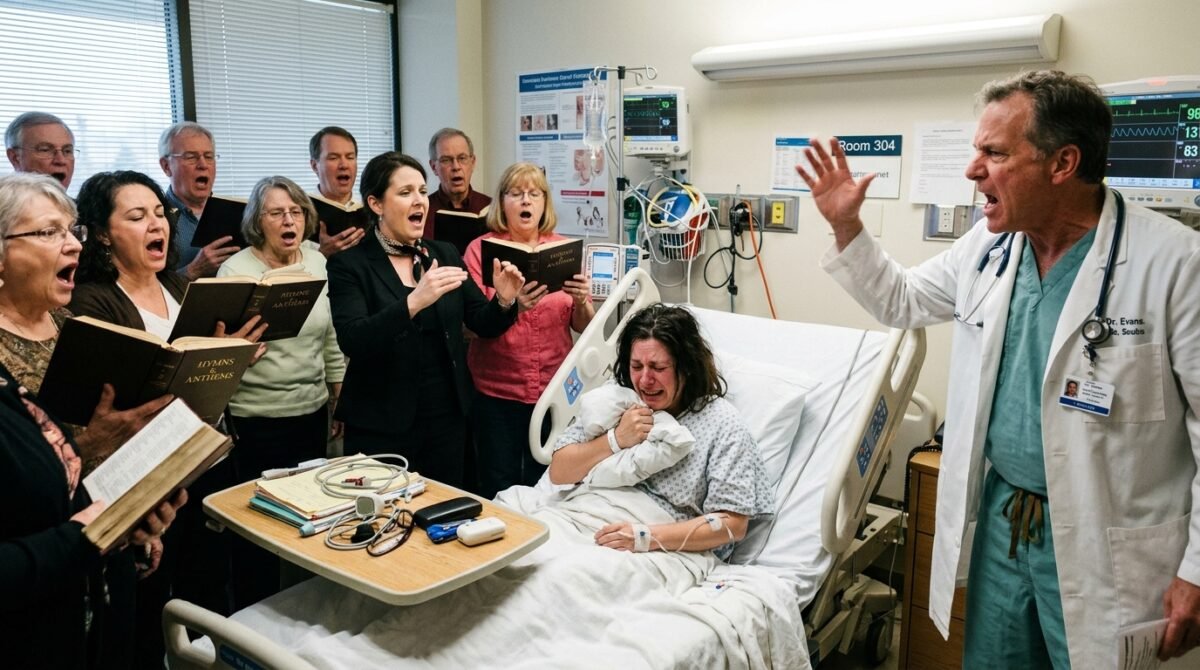
Sarah was in the thick of a contraction, gripping the side of the hospital bed, when the door to her room creaked open. She assumed it was the nurse coming to check her dilation. Instead, she heard the sound of a resonant, bass-heavy ‘Amen’ echoing from the hallway. Then, the door swung wide, and there they were—eight people in choir robes, illuminated by the harsh, clinical light of the hospital room.
Martha stepped into the room first, arms wide, a beatific smile plastered on her face. ‘The music has arrived, Sarah! Let the pain be washed away by the glory of the Lord!’ she announced, while behind her, the choir began to hum a low, vibrating chord. It was so loud, so sudden, that Sarah’s heart began to race. The nurse, who had been in the room, stood frozen for a second, her jaw dropped in pure disbelief.
Sarah didn’t scream; she couldn’t. She was paralyzed by a mixture of shock and rage. The sheer absurdity of the moment was so profound that it felt like a dream. She looked over at Mark, who was cowering near the window, his face pale. He looked terrified of his mother, completely unable to do anything but watch as his wife’s birth experience was hijacked by an impromptu religious concert.
The choir, undeterred by the medical equipment, the IV drips, or the horrified look on the doctor’s face, began to sing a hymn about ‘new beginnings and the light of heaven.’ The sound in the small, enclosed room was deafening. The nurses were shouting for them to stop, but the choir sang louder, their belief in their mission overriding the reality of the medical emergency unfolding before them.
“Get them out! Get them out of here right now! Who let them in? Security!”
— The Lead Obstetrician, screaming over the sound of the choir
The situation was absolute anarchy. One of the choir members was shaking a tambourine near the heart monitor, causing the electronic beeps to sync up with the rhythm of the hymn. Sarah began to sob, not from the pain of labor, but from the violation. It was the most intimate moment of her life, and it had been turned into a circus act.
The Security Intervention and the Hospital-Wide Ban

The hospital security finally arrived in full force, three large men pushing their way through the singing choir. The scene was essentially a brawl, but instead of physical punches, it was a battle of volume and authority. The nurses were physically shielding Sarah, trying to block the view of the intruders, while the doctor was trying to maintain order so he could continue monitoring the baby’s heart rate, which was showing signs of distress.
Martha, for her part, was utterly indignant. She stood her ground, demanding to know why they were being ‘persecuted’ for bringing light into a place of suffering. She actually tried to push past a security officer, claiming that her ‘spiritual authority’ superseded the hospital’s policy. It took the physical removal of the entire group to finally quiet the room, with the head of security eventually having to threaten to call the police to have them arrested for trespassing and creating a public disturbance.
Once the door was shut, the silence that followed was heavy. The doctors scrambled to re-examine Sarah, whose blood pressure had spiked from the stress of the event. It was a terrifying few minutes where everyone wondered if the baby’s heart rate would recover. The nurses were visibly shaken, one of them whispering to Sarah, ‘I have been here twenty years, and I have never seen anything like this. I am so sorry.’
As the chaos settled, the head nurse returned with a somber expression. She informed Mark and Sarah that not only were the choir members banned from the hospital, but Martha herself was now persona non grata. She was officially trespassed from the premises, and if she attempted to return, she would be escorted off by law enforcement. It was an extreme measure, but given the circumstances, it was the only way to ensure the safety of the mother and child.
“I am officially putting your mother on a trespass order. She is never to be allowed in this maternity ward, or any part of this hospital, again. Do you understand?”
— The Hospital Administrator, speaking to Mark
The aftermath was a flurry of paperwork and legal warnings. The hospital staff had to document the entire incident for liability reasons, as the disruption had endangered the mother’s health and potentially the baby’s. Sarah, meanwhile, had to find the strength to focus on the birth, with the echoes of the choir still rattling in her head.
The Fallout in the Waiting Room and the Secret Group Chat

While Sarah was recovering, the situation in the hallway and the hospital’s waiting area was just as volatile. Martha had not gone home. She had retreated to the cafeteria, where she sat with the choir, drinking coffee and complaining about the ‘lack of faith’ in the medical establishment. She was completely oblivious to the trauma she had caused; in her mind, she was a martyr for a divine cause.
Meanwhile, the family group chat—which included Sarah’s parents, Mark’s siblings, and extended relatives—was blowing up. Martha had started by posting a video of their arrival, claiming they were ‘on their way to bless the new life.’ The comments under her post were a mix of confusion and mounting horror as family members realized where they were and what they were doing.
Sarah’s mother, upon seeing the video, went into a rage that rivaled any storm. She began calling Mark, demanding to know why his mother was allowed near the room. The messages were brutal, ranging from disbelief to outright demands for Mark to grow a backbone and protect his wife. Martha, however, was busy defending herself, claiming that the ‘hostile staff’ was being manipulated by the enemy.
The chat was a nightmare of conflicting loyalties. Mark’s sister tried to defend Martha, suggesting she ‘meant well,’ which only served to enrage Sarah’s family further. Sarah, still in the hospital bed, was handed her phone by a nurse who had been told to keep her away from the stress. She saw the messages, and it was the final straw. She didn’t respond to any of them; she simply blocked every single member of Mark’s family who had dared to defend his mother’s actions.
“I don’t care how much she ‘meant well.’ She turned a birth into a stage show. If anyone defends this, consider yourselves cut off from me and the baby.”
— Sarah, sending a final message in the family group chat before deleting it
The breach of trust was absolute. It wasn’t just the event itself; it was the fact that the entire family had been witness to it and had allowed it to escalate to that point. The isolation Sarah felt was profound, but it was also, for the first time, peaceful.
The Confrontation at the Postpartum Recovery Room

Two days later, Sarah was preparing to go home. The atmosphere in the maternity ward was still tense, with extra security detail assigned to her room just in case. Mark had been silent, hovering in the corner, clearly waiting for the axe to fall. When the door opened, he likely expected his mother to sneak in, but it was just the doctor checking her one last time.
Then, the phone rang. It was the front desk. Martha was downstairs, demanding to be let up to ‘see her grandchild.’ The nurse told her in no uncertain terms that she was banned, and that if she did not leave the lobby, the police would be called to remove her. Martha didn’t leave. She stood in the main lobby, loud and boisterous, telling the other visitors about how her daughter-in-law was ‘denying her the right to hold her own kin.’
Sarah decided she had had enough. She asked the nurse to help her get into a wheelchair, and she went down to the lobby. She didn’t go down to talk; she went down to set the boundary in stone. When she arrived, she saw Martha standing near the fountain, a small audience of confused patients watching her. Martha’s face lit up when she saw Sarah, as if she expected a reconciliation.
The confrontation was cold and final. Sarah didn’t yell; she didn’t cry. She looked at Martha with a detachment that was far more devastating than any scream. She explained that the relationship was over, that the choir incident was not a ‘mistake’ but a violation of her personhood, and that she would never be allowed near the child until she sought serious psychological help and apologized in a way that was actually meaningful.
“You are not a grandmother. You are a stranger who broke into my room and terrorized my delivery. You don’t get to see this child. You don’t get to be part of our lives. Leave, and never look for us again.”
— Sarah, directly to Martha in the hospital lobby
Martha’s reaction was immediate and dramatic. She started to sob, claiming that Sarah was ‘possessed by bitterness,’ but nobody was buying it. The security guard stepped closer, and Martha finally realized that her performance was over. She left the hospital, but not before screaming that she would ‘pray for Sarah’s soul’—a line that Sarah didn’t even bother to acknowledge.
The Aftermath: Legal Threats and Family Schisms

The weeks following the birth were not the peaceful bonding period Sarah had imagined. Instead, they were filled with the administrative headache of setting boundaries. Martha, true to her form, didn’t just walk away. She hired a lawyer to send a ‘letter of demand’ regarding ‘grandparental visitation rights.’ It was a laughable attempt to use the legal system to force a relationship that had been irrevocably broken.
Mark was put in the middle, and for the first time, he actually stepped up. He told his mother that if she pursued this legally, he would testify against her, detailing not only the choir incident but also her history of boundary violations and harassment. He had finally seen the light, realizing that his mother’s behavior wasn’t just ‘quirky’; it was destructive. He went no-contact with her, blocking her numbers and moving their family to a new address that she wasn’t allowed to know.
The family was effectively split in two. Relatives who tried to play the role of the ‘peacemaker’ were swiftly cut off by Sarah and Mark. They were tired of the gaslighting, the ‘she’s just an old lady’ excuses, and the total lack of respect for their autonomy. The legal threat from Martha was ignored by their lawyer, who noted that there was zero chance of a court granting visitation rights, especially given the documented hospital trespass.
The peace that eventually settled over their home was hard-won. They spent months in therapy, working through the trauma of the birth and the betrayal of the family members who had sided with Martha. It was a slow process, but for the first time, they were the ones in control. They were the ones setting the rules, and they were the ones deciding who was allowed in their lives.
“We have no obligation to give you access to our child. Your ‘faith’ and your ‘traditions’ stop where our sanity and safety begin. Goodbye, Mother.”
— Mark, in a final email to his mother before blocking her
The lesson was harsh but clear: the people you are related to don’t get a lifetime pass to treat you with disrespect. Sarah’s story became a beacon for others in similar situations, a reminder that you have the right to curate your own circle of support, regardless of bloodlines.
The Reddit Community Reacts: A Symphony of Support

When Sarah finally posted her story on Reddit, the response was overwhelming. It wasn’t just a few comments here and there; the post reached the front page in hours, with thousands of users sharing their own ‘MIL from hell’ stories. The consensus was immediate: Sarah was NTA (Not The Asshole) and had every right to cut her mother-in-law off completely.
The community support was diverse. Some were horrified by the audacity, while others were impressed by the hospital’s swift action to ban the intruder. Lawyers in the comments section weighed in, confirming that the hospital was well within its rights to trespass her and that any legal attempt by the MIL to sue for visitation would be dead on arrival, given the extreme circumstances of the birth disruption.
What stood out most was the shared sense of disbelief. Many people couldn’t fathom how anyone could be so self-centered that they thought a choir was a good idea in a delivery room. The discussions quickly pivoted from just the story itself to the larger issue of boundaries and the entitlement of older generations when it comes to their children and grandchildren.
There were also many comments from people who had similar experiences, albeit less dramatic. The validation Sarah received was life-changing for her, helping her move past the guilt that she had initially felt for ‘tearing the family apart.’ The consensus was that she hadn’t torn anything apart; she had simply refused to allow the destruction to continue.
“I am a nurse, and I have seen it all, but this? This is next-level narcissism. You are absolutely in the right. The fact that she thinks her ‘blessing’ is more important than your medical care is sociopathic. Stay strong, OP.”
— u/NurseGrace (Top Comment, 32.1k upvotes)
The thread became a repository of advice for others dealing with toxic in-laws, with users sharing resources on how to set boundaries, how to handle legal threats, and how to heal from family trauma. It turned a painful experience into a source of strength for others.
Finding Solace in the Quiet of New Boundaries

Today, Sarah and Mark are doing well. The dust has settled, and they are enjoying the quiet of their lives, away from the chaos that once threatened to consume them. Their child is growing up in a home where boundaries are respected, where ‘no’ means ‘no,’ and where the only ‘music’ in the room is the sound of family playing together, not a chorus of intruders.
The trauma of that day still lingers, of course. Sarah still flinches at the sound of sudden loud noises or choirs on the television. She has done the work to heal, through professional therapy and the steady support of her partner. She knows that what happened was not her fault, and she has let go of the need for Martha to ‘understand’ or ‘apologize.’ She realized that someone who would do that would never be capable of the introspection required for a genuine apology.
They have built a new, chosen family. Friends who supported them during the crisis have become closer than blood. They have created their own traditions, ones that don’t involve anyone else’s ‘divine’ demands. It is a life that is simple, clean, and entirely theirs. The memory of the choir is now just a bizarre, horrifying story they tell to emphasize how far they have come.
For those still in the thick of it, Sarah’s advice is simple: trust your gut. If something feels off, if you feel pressured, or if you feel like your needs are being ignored, you have the right to walk away. You don’t have to explain yourself, and you don’t have to compromise. You are the architect of your own family, and you get to decide who is allowed to enter your space.
“I finally realized that I was trying to negotiate with someone who didn’t respect my humanity. Once I stopped negotiating and started setting boundaries, the chaos stopped.”
— Sarah, reflecting on her healing journey
The final chapter of this saga is a testament to the fact that peace is possible, even after the most traumatic events. You can rebuild, you can heal, and you can thrive on the other side of a major life disruption.
Reflecting on the Limits of Maternal Entitlement

When we look at the broader implications of this story, it’s impossible to ignore the theme of maternal entitlement. Martha’s actions were an extreme manifestation of a common problem: the belief that parents have an ownership stake in their children’s life milestones. From weddings to births, we see this over and over, where the desire to control the narrative overrides the emotional and physical well-being of the primary individuals involved.
This case serves as a cautionary tale about what happens when boundaries are not established early and enforced rigorously. The ‘choir’ was not the start; it was the culmination of years of small violations that were overlooked, rationalized, or ignored. It was the result of a culture that tells us we must ‘keep the peace’ and ‘respect our elders,’ even when those elders are actively harming us.
We need to have an honest conversation about what it means to be a grandparent or a parent. It is a privilege, not a right. It is a relationship built on mutual respect and consent. When that respect is shattered, the privilege should be revoked. This isn’t about being ‘spiteful’; it’s about protecting the environment in which our children grow up.
The internet’s reaction to this story shows that the tide is turning. People are less likely to accept toxic behavior under the guise of family duty. We are seeing a shift toward a more proactive, boundary-focused approach to family dynamics. This is a positive development, one that encourages more young parents to prioritize their own health and the health of their families over the toxic demands of their relatives.
“We are not the supporting cast in our parents’ lives. We are the leads of our own stories. It’s time we acted like it.”
— A community member’s summary of the thread
As we close this chapter, let us remember that the most important thing is the health and safety of the family you are building. Everything else is secondary, and everything else is negotiable, but your peace of mind is not.
Conclusion
The story of the ‘choir-interrupted’ birth is a surreal, alarming reminder that boundaries are not just suggestions; they are the walls that keep our lives intact. What Sarah experienced was an extreme violation, but the underlying dynamic is one many people recognize—the feeling that someone else’s ego is being prioritized over your own life-changing moments. The fallout of this incident proved that when you finally stand your ground, the people who were truly invested in your well-being will stay, and those who were only interested in their own performance will eventually fade into the background.
Ultimately, the choice to go no-contact was the healthiest decision for Sarah and Mark. It allowed them to transform a space of trauma into a foundation for healing. The hospital’s decisive action in banning the intruder was the first step in reclaiming their agency, and the support of the online community provided the validation needed to stop the cycle of guilt. Today, they serve as a powerful example of how to walk away from toxicity and build a life defined by respect, peace, and mutual love.
What about you? Have you ever had to draw a hard line in the sand with family members who refused to respect your boundaries during a major life milestone? Does the idea of an ‘unscheduled guest’ at your most intimate moments sound like a nightmare, or do you think there’s ever an exception for ‘family tradition’? Share your thoughts and experiences in the comments below—let’s talk about what it really means to protect your family’s peace in the face of overwhelming pressure.
What's your verdict on this dilemma?
Vote below to contribute to the official community consensus.

Have a Dilemma Keeping You Up at Night?
Share your real-life feud, wedding chaos, or relationship crossroads anonymously with our editorial team.
What do you think ?
0 Comments🛡️ Comments are moderated to protect community integrity. Your comment will appear once approved by the editorial team.