
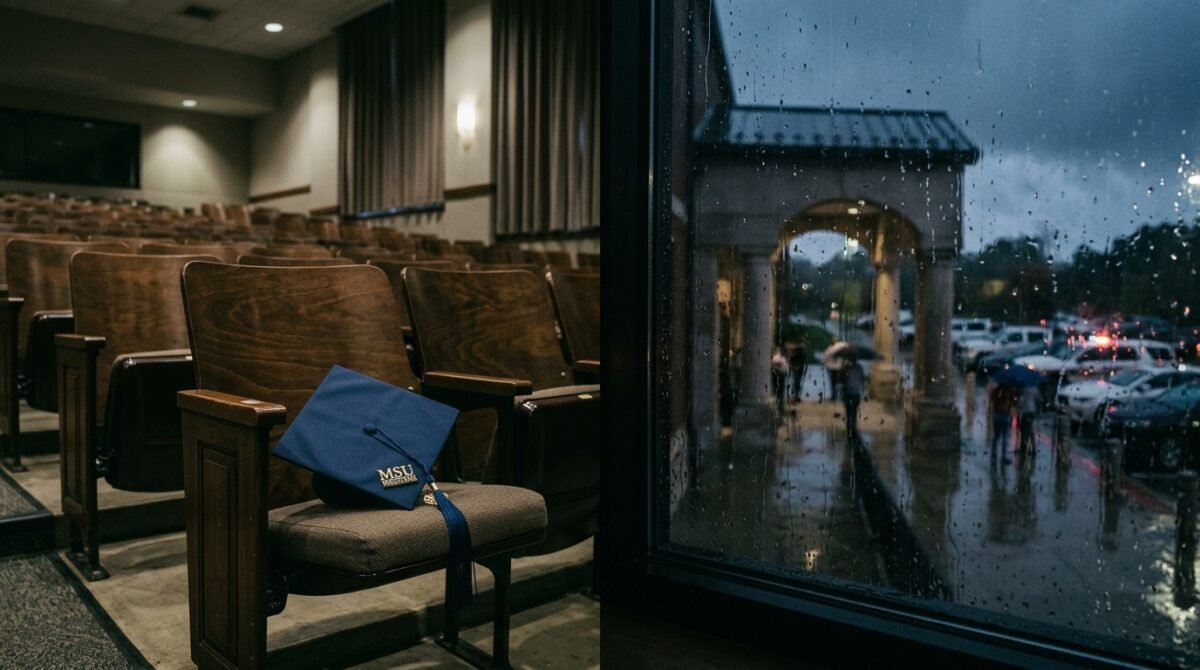
For seven years, I lived in the shadow of medical school. Every missed birthday, every skipped holiday, and every exhausted night spent under the hum of a flickering desk lamp was a down payment on a single, singular day: the morning I would cross the stage to receive my MD. My parents had promised me, years ago, that they would be in the front row. They insisted that despite my brother’s chaotic history—a trajectory marked by petty theft, substance abuse, and a general lack of accountability—they understood that my graduation was a milestone that belonged to me alone.
But the toxicity of family dynamics often hides in the quiet expectations of the ‘responsible child.’ I was the one who never caused trouble, the one who worked through summer breaks, and the one who assumed that my consistency made me bulletproof in their eyes. I didn’t realize that being the ‘safe’ option made me the easiest one to sideline when a crisis—manufactured or otherwise—demanded their immediate, undivided attention. I was not a priority; I was merely a reliable constant, and constants are often taken for granted until they vanish entirely.
The week leading up to the ceremony was a blur of excitement and dread. My brother, Kevin, had been spiraling for months, and I knew the warning signs. Yet, I clung to the hope that for once, just once, the drama would stay contained. I had ordered the flowers, reserved the hotel rooms, and sent the itineraries. I wanted a normal family memory, something to anchor the start of my residency. I didn’t ask for a parade; I just asked for their presence.
When the morning arrived, my phone remained suspiciously quiet. The air in the locker room felt heavy with the realization that the people who raised me were not coming. Instead of seeing my mother’s face in the crowd, I saw a text notification that turned my blood to ice. It wasn’t an apology, and it wasn’t a congratulations. It was a request for me to help pay the legal fees, sent under the guise of an explanation. That was the moment the dream died, replaced by a cold, sharp clarity that would alter my trajectory forever.
The Seven-Year Investment In A Seat That Stayed Empty

The morning of my graduation was supposed to be the culmination of my life’s work. I remember waking up at 5:00 AM, my heart racing with a mixture of nerves and anticipation. I had laid out my suit the night before, meticulously checking the collar and ensuring my shoes were polished. I had spent seven years in the trenches—the anatomy labs, the grueling clinical rotations, the sleepless nights spent memorizing pharmacology until my eyes burned. My parents had been the ones to drop me off at my first day of college, tears in their eyes, promising they would be there for the finish line.
As the ceremony began, the auditorium started filling up. I saw families hugging their graduates, fathers wiping away tears, and mothers clutching bouquets of flowers. My eyes scanned the front row again and again, hoping to see my father’s familiar grey suit or my mother’s favorite scarf. The seat I had saved for them remained empty. A sinking feeling settled in my gut, a heavy, familiar ache that whispered I should have known better. I told myself maybe they were stuck in traffic, or perhaps they had trouble finding parking.
But the ceremony started, and the names began to be called. ‘Doctor,’ they said before my name. Each syllable was a testament to the work I had done, but every time I looked back at the empty chairs, the triumph felt hollow. I was surrounded by hundreds of people, yet I had never felt more isolated. It wasn’t just the absence of their physical bodies; it was the deafening silence of their lack of effort. I realized then that they weren’t just running late—they weren’t coming at all.
I managed to finish the walk across the stage with a forced smile. I gripped my diploma tightly, the paper feeling flimsy and insignificant against the weight of the betrayal. My colleagues congratulated me, patting me on the back and asking where my family was. I lied. I told them they had a last-minute emergency, a vague, socially acceptable excuse that protected them even as they were actively destroying the foundation of our relationship. It was the last time I would ever cover for them.
“I spent seven years working for this. I just wanted my parents to see me succeed, not once, but for the first time in my life. I was a ghost at my own celebration.”
By the time I reached my hotel room, the adrenaline had completely worn off. I was physically exhausted and emotionally hollowed out. I sat on the edge of the bed, my graduation gown draped over the chair like a discarded skin. The silence in the room was absolute, amplified by the city lights outside. I reached for my phone, not to celebrate, but to confront. The reality of what had happened was waiting for me in the inbox, a digital manifestation of their priorities.
The Text That Shattered The Illusion
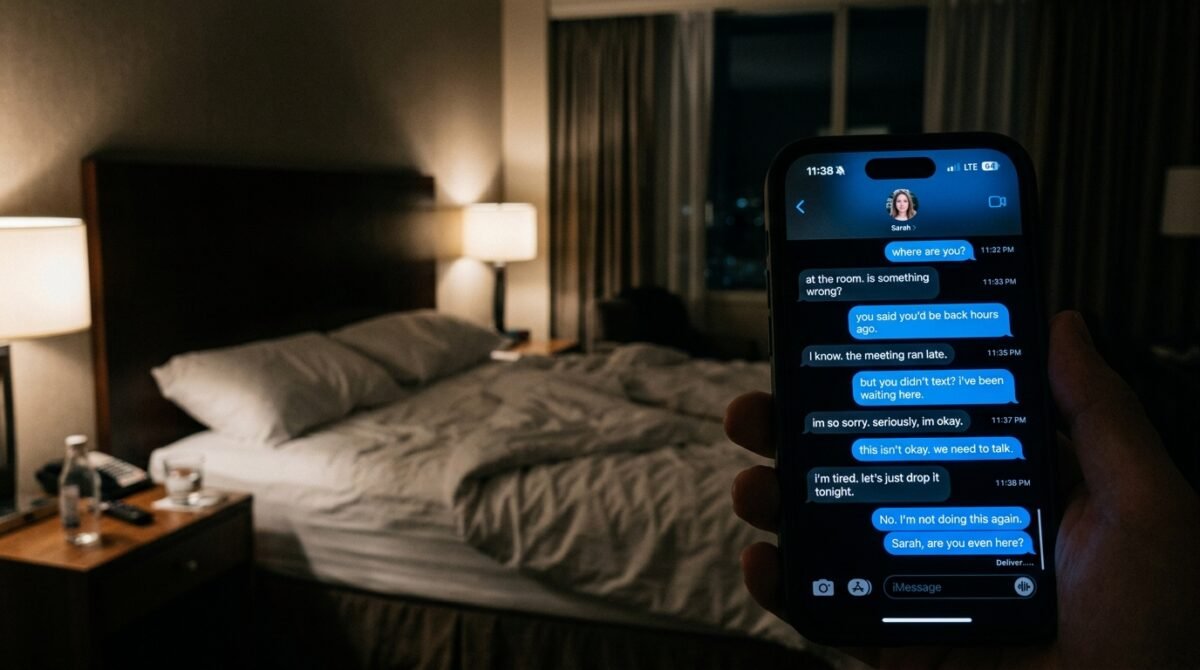
When I finally checked my phone, I didn’t see a ‘Congratulations’ text or a photo of them stuck in traffic. I saw a series of messages from my mother, sent two hours before the ceremony started. The content was so casual, so horrifyingly nonchalant, that I had to read it three times to ensure I wasn’t hallucinating. My heart hammered against my ribs, a frantic, irregular rhythm that mirrored the chaos of the words on the screen.
The messages weren’t about my graduation. They were about Kevin. He had been arrested again—this time for something significantly more serious than his usual minor offenses. My parents weren’t driving to the auditorium; they were driving to the local county jail to post his bail. They had decided that my achievement, the result of nearly a decade of intense labor, was secondary to the immediate, urgent needs of a son who repeatedly chose to ruin his own life.
“Kevin got into a mess again and we have to go to the courthouse. We aren’t going to make it to the ceremony. Can you please check your savings and help us with the bail money? This is a family crisis.”
— Text from Mom, 8:45 AM
The audacity of the request left me breathless. They weren’t just skipping my milestone; they were asking me to subsidize the very behavior that had made our family home a battlefield for years. They expected me to sacrifice my financial security to bail out a man who had never supported me, never cared about my goals, and certainly never acknowledged the weight of the burden I carried. The ‘family crisis’ wasn’t my brother getting arrested; the crisis was that they had allowed this dynamic to persist until it consumed everything.
I looked at the screen, the blue bubbles glowing in the dark hotel room. I felt a strange sense of detachment, as if I were looking at the life of someone else. For years, I had been the ‘good’ child. I had been the one who didn’t ask for things, the one who stayed quiet, the one who navigated around Kevin’s explosions with the grace of a hostage negotiator. I had believed that if I was good enough, if I worked hard enough, I would eventually earn their respect. That text was the answer to my question: I would never be enough.
I didn’t reply immediately. I couldn’t. The sheer rage boiling up inside me was too dangerous to put into words. I needed to process, to breathe, and to accept that the bridge I had spent years building was currently being burned by the very people I was trying to reach. I turned my phone off and stared at the ceiling, the ceiling fan spinning in slow, hypnotic circles. I had a choice: continue the cycle, or break it entirely.
The Confrontation At The Dinner Table
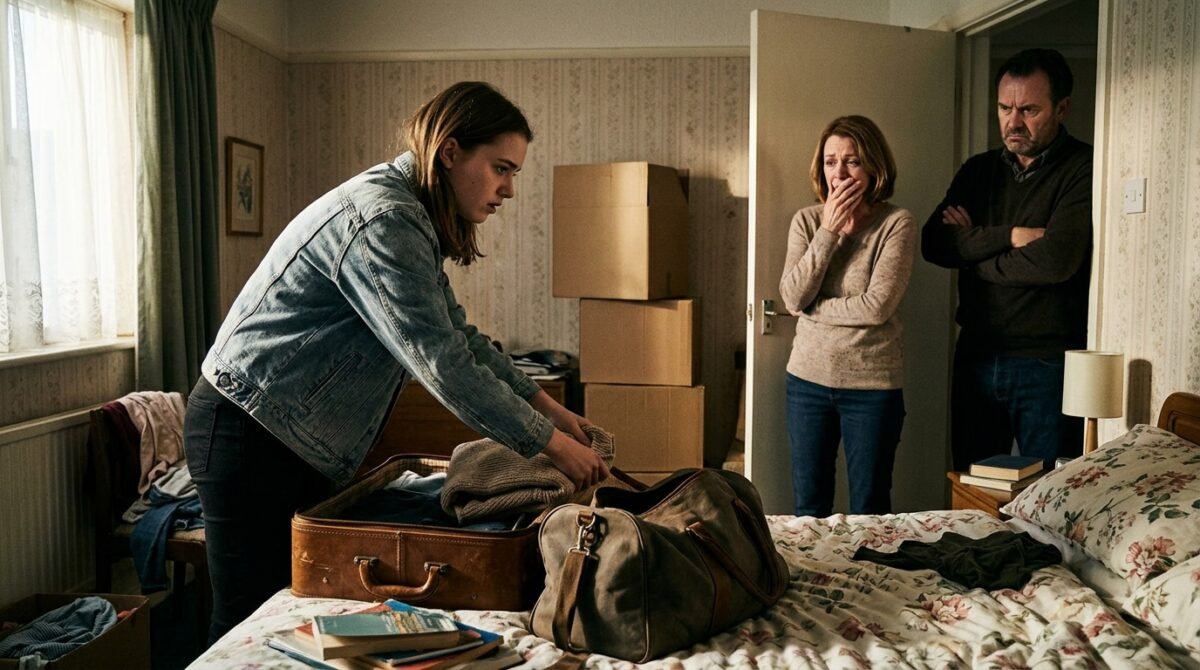
Two days later, I drove home. I didn’t go to celebrate; I went to collect my things. I had a few boxes of personal items, old medical textbooks, and sentimental trinkets that I still kept in my old room. When I walked through the front door, the house felt small, suffocating, and filled with the ghosts of arguments past. My parents were in the living room, talking in hushed, urgent tones. Kevin was nowhere to be seen, likely nursing a hangover or planning his next disaster.
My mother looked up, her face a mask of practiced concern. She didn’t offer a hug or a ‘congratulations.’ Instead, she asked immediately if I had seen her text about the money. The lack of self-awareness was staggering. It was as if the graduation hadn’t even happened, as if my accomplishment was a minor, inconvenient footnote in the grand, tragic opera of their lives. I didn’t say a word. I walked past them, headed straight for my room to start packing.
My father followed me, his brow furrowed in annoyance. He wanted to know why I was acting this way, why I was being so cold. He told me that family sticks together, that I needed to understand the complexity of the situation. He tried to frame their absence as an act of selfless love for Kevin, implying that I was the one being selfish for dwelling on my graduation when my brother was ‘in trouble.’ The gaslighting was so textbook it was almost funny, if it hadn’t been so devastating.
“You’re an MD now, you should be the one to help. Family isn’t about being there for the good times; it’s about being there when things fall apart. Kevin needs you.”
— Father during the confrontation
I stopped packing and turned to face him. I told him, with a clarity that seemed to startle him, that I was not a bank, I was not a parent to my brother, and I was certainly not a prop for their dysfunction. I told him that my graduation wasn’t a ‘good time’—it was the result of a life of sacrifice that they had just spat on. I told him that I wasn’t just leaving for the day; I was leaving for good. The look on his face shifted from annoyance to shock, but it was too late. The decision had been made in the quiet of my hotel room, and there was no going back.
The air in the room was thick with the weight of years of unspoken resentment. My mother entered the room, sensing the shift in energy. She tried to cry, to play the victim, to guilt-trip me into staying for ‘just one meal.’ I ignored her, finishing my packing with efficient, cold movements. I didn’t shout. I didn’t cry. I was simply done. I walked past them, out the front door, and into my car, leaving the house I grew up in behind me for the last time.
The Fallout: When The Family Group Chat Exploded
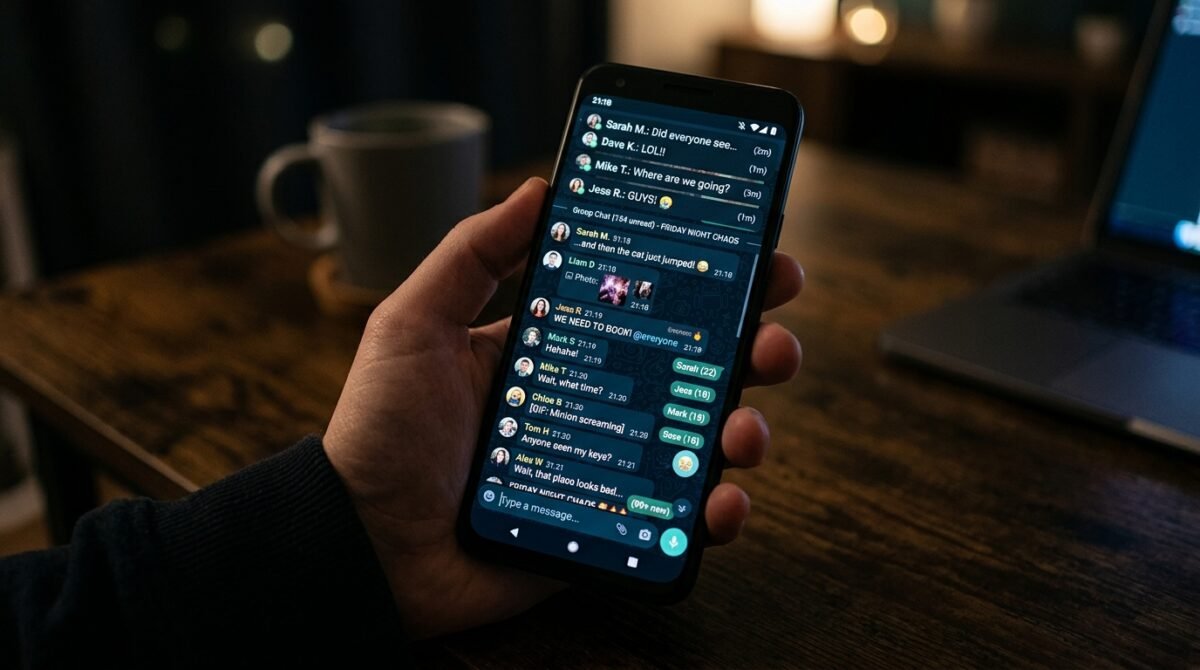
The next morning, my phone started buzzing. It wasn’t just my parents; it was my aunt, my grandmother, and a few cousins who had heard a skewed, heavily edited version of the story from my mother. The family group chat, which had previously been used for birthday wishes and holiday plans, became a courtroom. I was the defendant, and they were the judge and jury. The accusations flew in rapid-fire succession, each one more absurd than the last.
They claimed I was being heartless, that I was abandoning my family at their lowest point, and that my medical degree had gone to my head. They argued that because I was the ‘successful’ one, I had a moral obligation to foot the bill for Kevin’s legal woes. It was a classic display of enabler logic: the one who follows the rules is responsible for fixing the mess created by the one who doesn’t. I watched the notifications pile up, a stream of vitriol that served only to confirm my decision was the right one.
“How can you be so selfish? Your brother is in jail and your parents are struggling. This is when family matters most. You’ve changed, and not for the better.”
— Aunt in the family group chat
I didn’t argue. I didn’t try to explain the seven years of sacrifice or the empty seat in the auditorium. I knew that nothing I said would break through their narrative. They needed a villain, and I was the most convenient target. I typed a single, final message into the group chat, laying out the boundary clearly. I told them that I would no longer be a part of a family that prioritized criminality over achievement and that I was cutting off all contact with my parents until further notice.
The response was immediate and hysterical. My phone wouldn’t stop ringing. My mother called me twelve times in an hour; my father left voicemails that alternated between threats and desperate pleas. I blocked them all. One by one, I muted or left the family threads, effectively erasing the noise from my digital life. It felt like shedding a heavy winter coat in the middle of summer. I was finally, truly, on my own.
I spent the next few days in a state of strange, quiet peace. I finished moving into my apartment, organized my new books, and started prepping for my first clinical rotation as a resident. I didn’t check social media. I didn’t look for updates. I had achieved the goal I had been working toward for nearly a decade, and while the celebration had been ruined, the career was still mine. I had the knowledge, the degree, and for the first time, I had my life back.
The Reddit Trial: Does Being Successful Mean You Are The Family ATM?

Naturally, I went to Reddit to vent, not expecting the tidal wave of support that followed. I posted the story on a popular relationship subreddit, expecting a few comments, but the thread exploded. Within hours, there were thousands of comments, debates, and upvotes. The community reaction was a fascinating mirror to the dynamics I had just escaped. There were the ‘NTA’ (Not The A-hole) supporters, the nuanced ‘ESH’ (Everyone Sucks Here) philosophers, and the occasional devil’s advocate who tried to preach the importance of ‘forgiveness.’
The thread became a hub for people who had experienced similar situations—the ‘golden child’ who was never acknowledged, the ‘responsible sibling’ who was always drained of resources. It was validating to see that I wasn’t alone, that this wasn’t just a quirk of my family, but a common, toxic pattern. The comments section was a goldmine of shared trauma and, more importantly, shared strength. Some users offered legal advice, others offered emotional support, and a few just offered a digital shoulder to cry on.
“OP, you aren’t the ‘successful’ child to them. You are the ‘convenient’ child. You were the safety net they used to ignore the hole they were digging with their other son. You did the right thing by leaving. Do not let them guilt you back into the fire.”
— u/StoicResilience (Top Comment, 32.5k upvotes)
The intensity of the debate was overwhelming. People argued about the cultural expectations of family duty, the intersection of wealth and responsibility, and the validity of cutting off parents who fail to show up. It was a digital town square, and for the first time, I was the one being heard. I didn’t engage much, but reading through the comments helped me realize that the ‘guilt’ I felt wasn’t mine—it was theirs. It was the guilt they had projected onto me for years to keep me compliant.
Of course, there were the dissenting voices. Some users insisted that parents are human, that they make mistakes, and that cutting them off is a ‘drastic overreaction.’ I found those comments surprisingly easy to ignore. Those people didn’t know the seven years of missed events, the constant anxiety of living with a volatile brother, or the feeling of being an afterthought. They were viewing my life through a lens of ‘idealized family,’ a concept that had never existed in my world.
The thread eventually reached the top of the subreddit, and I received hundreds of DMs. Some were from strangers offering congratulations on my graduation, others were from people asking how I found the courage to finally speak up. I realized that my story wasn’t just about me; it was about the struggle for autonomy that so many people face. By choosing myself, I had provided a roadmap for others to do the same, and that felt like a far greater graduation than the one I had missed.
The Financial Ledger Of Obligation

After the dust settled, I took the time to map out the financial cost of my family’s dysfunction. It was a stark, sobering exercise. For years, I had been paying for ‘little things’—a tank of gas here, a groceries delivery there, the occasional ‘loan’ that was never intended to be repaid. I created a spreadsheet, a ledger of the hidden costs of enabling my brother and supporting parents who refused to hold him accountable. The numbers were staggering.
The table below summarizes the ‘invisible’ tax I paid to be part of the family. It wasn’t just money; it was the opportunity cost of my time and my energy, which were finite resources I had squandered on people who never once asked if I was okay. Looking at the total, I felt a wave of nausea. I had been paying for my own exploitation, funding the very lifestyle that kept me in a state of perpetual anxiety and, eventually, led to my graduation being skipped.
| Category | Estimated Annual Cost | The Reality of the Impact |
|---|---|---|
| Brother’s ‘Loans’ | $5,200 | Never repaid, used for substances. |
| Family ‘Emergencies’ | $3,800 | Mostly bail or legal fees. |
| Emotional Labor | Priceless | Constant stress, burnout, therapy. |
| Total Financial Drain | $9,000+ | Could have been my residency fund. |
The realization that I had spent nearly ten thousand dollars a year just to maintain a ‘peace’ that was anything but peaceful was the final nail in the coffin. I could have used that money to pay down my student loans, to travel, or to invest in my own future. Instead, I had been treating my family like a failing business that I was desperate to keep afloat. The ledger was clear: the business was insolvent, and I was the primary creditor who would never get paid back.
I decided then and there that my finances would be the first thing I locked down. I moved my accounts, changed my passwords, and set up a trust for my future residency costs. I stopped being the person who could be ‘called on’ for money. I became the person who was unavailable. It was a small, practical change, but it felt like building a fortress wall around my life. The era of the ‘family ATM’ was officially over, and the feeling of control was intoxicating.
It wasn’t about being greedy; it was about being sustainable. I couldn’t be a doctor if I was constantly broke, and I couldn’t be a person if I was constantly being used. I had to choose between their comfort and my own survival. The ledger provided the objective proof I needed to silence the remaining, nagging voices of guilt in my head. I wasn’t being mean; I was being smart. And in the world of medicine, smart decisions are the ones that save lives—including my own.
The Professional Rebirth: Life After The Ceremony

Life in residency began a few weeks later. It was everything I expected: fast-paced, grueling, and deeply rewarding. For the first time, I wasn’t carrying the weight of my family’s drama on my shoulders. I was just Dr. [Last Name]. I was defined by my skills, my dedication, and my patients, not by the dysfunction of a family that couldn’t see my value. The hospital became my new home, and my colleagues became the family I chose.
I found that the skills I developed navigating my family’s chaos were actually quite useful in the ER. I could handle high-stress situations with calm, I could de-escalate volatile patients, and I could spot a lie or a deflection from a mile away. My past, which had felt like a burden, was suddenly a resource. I was better at my job because of the very things that had made me miserable in my personal life. It was a strange, poetic irony.
I remember one night, a particularly difficult shift where I had to deliver bad news to a family who was acting exactly like my own. They were argumentative, blaming the staff, and making the patient’s health secondary to their own emotional outbursts. I stayed calm, I held my ground, and I guided them through the process without losing my composure. After they left, my attending physician pulled me aside and told me I handled it with incredible professionalism. I just smiled, thinking of my own graduation day.
“You have a gift for keeping your cool when everyone else is falling apart. It’s a rare trait in a first-year resident. Keep that focus, and you’re going to be an exceptional doctor.”
— My Attending Physician
I realized then that I had moved on. The anger was fading, replaced by a cool, clinical detachment that served me well. I still thought about my parents, sure. Sometimes I’d see a movie or hear a song that reminded me of them, and a pang of sadness would flicker through me. But it wasn’t the crushing, suffocating guilt of before. It was the sadness of mourning someone who was still alive—the parents I had once believed they were, and the parents I realized they would never be.
I started building a life that was entirely mine. I made friends who didn’t ask for favors, I dated people who respected my time, and I took up hobbies that had nothing to do with being ‘responsible.’ I was, for the first time, not just surviving. I was living. And the most beautiful part was that no one was waiting in the wings to drag me back down. I had set my boundaries, and I had enforced them, and the world hadn’t ended. In fact, it had finally begun.
The Unsolicited Letter That Changed Nothing

Six months into my residency, a thick, heavy envelope arrived at my apartment. It was addressed in my mother’s familiar, loopy handwriting. I stared at it for a long time, my hand hovering over the trash can. I knew what it was—the standard ‘we miss you’ letter, likely filled with revisionist history and pleas for me to ‘come home for the holidays’ because ‘family is all we have.’ The temptation to open it was there, but it was countered by the memory of the empty seat at my graduation.
I didn’t open it. I took a photo of the envelope, unopened, and sent it to my therapist. She had been instrumental in helping me process the fallout, and she had warned me that this day might come. She had told me that when you set a boundary, the people on the other side will often try to kick it down with ‘love.’ But love doesn’t skip your medical school graduation to bail out a criminal. Love doesn’t demand you finance their mistakes. Love isn’t a weapon; it’s a foundation.
I shredded the letter without reading a single word. It felt like the final, definitive act of my independence. I didn’t need to know what they had to say because I already knew. They would say that I was being cruel, that they had learned their lesson, that things would be different this time. They would say whatever they needed to say to get me back into the fold so they could go back to the status quo. But the status quo was toxic, and I was finally healthy.
“I’m not holding a grudge. I’m holding a boundary. There’s a difference between being vengeful and being protective of your own mental health.”
— My final journal entry regarding the letter
The act of destroying the letter was incredibly freeing. It was a physical manifestation of my decision to leave the past behind. I didn’t need their closure; I had my own. I had built a life that didn’t require their approval, and that was the ultimate victory. I wasn’t waiting for them to change; I was changing, and I was thriving in the process. The letter was just paper, and paper burns.
I went about my day, heading to the hospital for a twelve-hour shift. I felt lighter than I had in years. The ghost of the girl who was always trying to please everyone had finally been laid to rest. In her place was a woman who knew her worth, who understood her value, and who refused to be a pawn in someone else’s game. I was no longer the ‘responsible’ daughter; I was a surgeon in training, and that was more than enough.
Why The Sunday Dinner Table Went Silent Forever

Looking back at the trajectory of my family, I realize that the ‘Sunday Dinner’ was the true site of the decay. For years, we sat around that table pretending that everything was fine. We talked about the weather, we talked about my studies, and we ignored the fact that my brother was slowly destroying everything around him. We ignored the fact that my parents were enabling him, and we ignored the fact that I was dying inside, trying to maintain the facade of a ‘normal’ family.
The silence at the table was the loudest thing in the house. It was a silence built on denial. When Kevin would storm in, smelling of booze and bad decisions, we would all just keep eating, our forks clicking against the china with rhythmic, desperate precision. My parents would offer him a plate, never once asking where he had been or what he had done. And I would sit there, my heart pounding, wishing I could just scream until the walls came down.
The final Sunday dinner I attended was the one right before the graduation. I tried to bring up the ceremony, to talk about my excitement, to ask if they had their tickets. And my mother just brushed it off, talking about Kevin’s ‘new job opportunity.’ I sat there, looking at the familiar faces, and realized I didn’t recognize them. They were strangers in a house I had outgrown. I was the only one living in reality, and in a house of mirrors, the one who speaks the truth is the enemy.
“We don’t talk about that here. Can’t we just have one nice meal without you bringing up your graduation or Kevin’s problems? Let’s just eat.”
— My mother at the last family dinner
That was the moment the table truly went silent, for me. I stopped participating in the charade. I stopped trying to force a conversation that they were terrified to have. I sat there in silence, a witness to my own family’s slow-motion collapse. I realized that they didn’t want a daughter; they wanted a participant. They wanted someone to help them keep the mirrors polished so they wouldn’t have to look at their own reflections.
I left that dinner early, and I never went back. I often wonder if they still have those Sunday dinners, if they still sit there in that suffocating silence, pretending that everything is okay. But it doesn’t matter. I’m not at that table anymore. I’m at a different table, one filled with friends, laughter, and honest conversation. I’m at a table where I don’t have to apologize for my success or hide my pain. I’m finally home.
The Final Verdict: Why No Contact Was The Only Path

People often ask if I regret it—if I wonder if I should have reached out, if I should have ‘forgiven and forgotten.’ The answer is always a hard no. Forgiveness is not a blank check; it is a process that requires accountability. My parents never apologized for the graduation. They never apologized for the years of neglect. They never acknowledged that they had failed me. You cannot build a bridge to someone who refuses to walk to the middle.
No contact wasn’t a punishment; it was a survival strategy. It was the only way to stop the bleeding. When you have a wound that won’t heal because someone keeps picking at it, you have to cut off access to the wound. I had spent my entire life being that wound, open and exposed, waiting for them to be the ones to heal me. I finally realized that I was the only one who could do that. I had to sew myself shut, and I had to do it alone.
I’ve learned that family is not just blood. It’s a group of people who support, love, and respect you. By cutting off my biological family, I made space for a chosen family that actually earns the title. I have friends who check in on me, colleagues who celebrate my milestones, and a community of people who, even through a screen, have shown me more kindness than my parents ever did. The void they left wasn’t empty; it was a clean slate.
“You didn’t lose your family. You lost a group of people who made you feel like you were losing yourself. You gained your life back.”
— A close friend and colleague
I am a better doctor because of this. I am a better friend because of this. And most importantly, I am a better human being. I have learned that your worth is not tied to what you can provide for others, or how well you can navigate a crisis, or how quiet you can be. Your worth is inherent. And if the people around you don’t see it, then you are in the wrong room. I walked out of that room, and I haven’t looked back since.
So, to anyone reading this who is currently in the same position: you are not crazy. You are not selfish. You are not a bad person for wanting to be treated with respect. You are a person, and you deserve to be celebrated. If your family can’t do that, then find the ones who will. It’s hard, it’s painful, and it’s the most terrifying thing you’ll ever do—but it’s also the most important. You owe it to yourself to be free.
Conclusion
The story of my graduation is not really a story about a ceremony. It is a story about the moment I finally woke up. It was the moment I stopped waiting for the world to validate me and started validating myself. The journey from the auditorium to the life I lead today has been the most difficult, rewarding, and necessary path I have ever traveled. I have lost a family, yes, but I have found a self.
I hope that in sharing this, someone else finds the courage to walk away from a dynamic that is slowly killing them. You don’t need permission to prioritize your own life. You don’t need a justification to set a boundary. You are the protagonist of your own story, and it is time you started acting like it. The seat might have been empty that day, but my life has never been fuller.
What about you? Have you ever had to walk away from someone you loved because the relationship was destroying your own sense of self? What was the ‘graduation moment’—that single event that finally made the wall crumble? Share your story below. I’m here to listen, and I’m here to tell you that you are not alone.
What's your verdict on this dilemma?
Vote below to contribute to the official community consensus.

Have a Dilemma Keeping You Up at Night?
Share your real-life feud, wedding chaos, or relationship crossroads anonymously with our editorial team.
What do you think ?
0 Comments🛡️ Comments are moderated to protect community integrity. Your comment will appear once approved by the editorial team.