
I always considered my home a sanctuary. After working fifty-hour weeks as a project manager, my weekends were strictly reserved for silence, a glass of wine, and the kind of stillness that only a detached house in the suburbs can provide. My sister-in-law, Jessica, had always been the ‘hustler’ of the family—the type of person who viewed every social interaction as a networking opportunity. But I never expected that my love for my sister-in-law would eventually lead to a full-scale legal and emotional showdown over the sanctity of my own property.
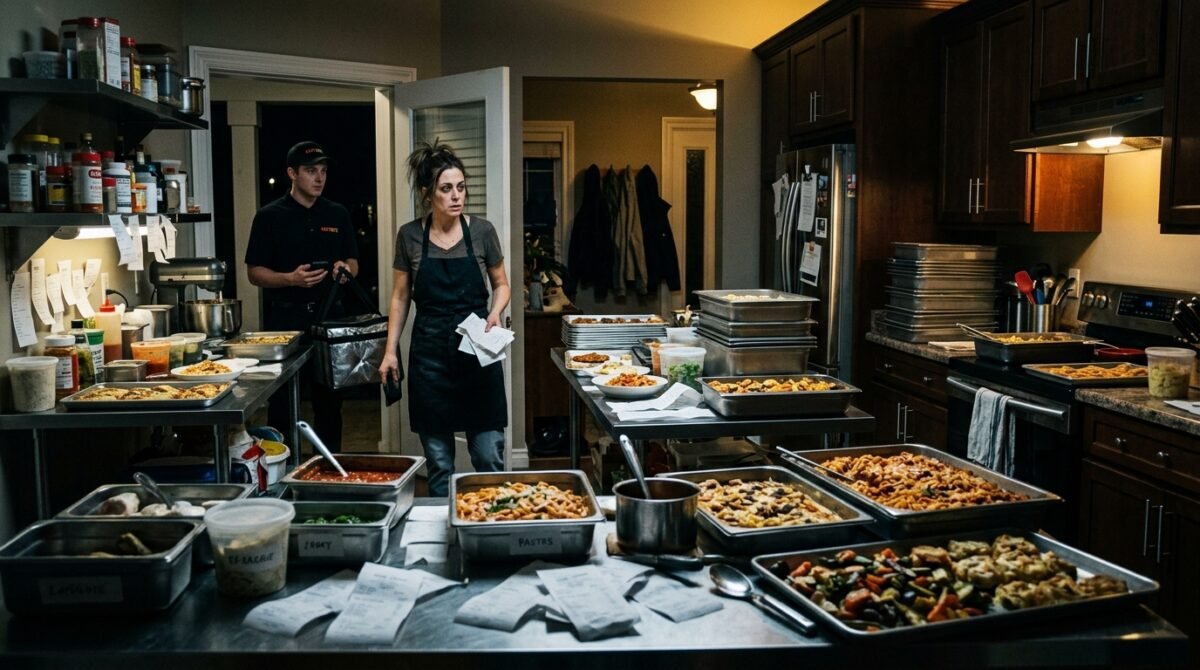
It started with a casual request: ‘Could I just prep a few things for a small event at your place since you have the double oven?’ It seemed harmless enough. I was happy to help family. I didn’t realize that ‘a few things’ was actually a euphemism for a clandestine commercial operation. Within three weeks, my kitchen had been transformed into a hub of activity, with industrial prep tables appearing in my pantry and the scent of garlic and fryer oil permanently embedded in my curtains.
The moral dilemma didn’t hit me until I returned home early from an appointment to find a total stranger—a third-party delivery driver—shouting at my Ring doorbell because he couldn’t find the ‘pickup station.’ My home, my safe space, had been turned into a ghost kitchen, and I wasn’t even getting a cut of the profits. I wasn’t just annoyed; I was being exploited in the most invasive way possible.
What followed was a slow unraveling of family dynamics. As I stood my ground, the accusations began. I was ‘selfish,’ ‘unsupportive of family dreams,’ and ‘stingy with resources that were just sitting there.’ But the line had to be drawn. This isn’t just about a kitchen; it’s about the fundamental disrespect that occurs when someone decides your boundaries are merely suggestions.
The Trojan Horse of Family Favors

The request came on a Tuesday night via text. Jessica was smooth. She knew exactly how to appeal to my better nature, frame it as a ‘little experiment,’ and keep the scope vague. At the time, I thought I was being a supportive aunt and sister-in-law. I believed in her dream of starting a catering business, and if a double oven was the catalyst, who was I to stand in the way?
She arrived on Thursday with three coolers and a folding table. She promised to be in and out. By Saturday, there were five large crates of fresh produce stacked against my island. She didn’t ask if it was okay; she just moved my decorative bowl to the floor and set up shop. I was too polite to say anything then, fearing I would look like the ‘difficult’ one in the eyes of my in-laws.
“Hey, just wanted to let you know that since your kitchen is so spacious, I’ve decided to use it as my main prep zone for the next few weekends. It’s helping me save so much on commercial rental fees! You’re a lifesaver, truly.”
— Text message from Jessica
I read that message in the grocery store aisle. My stomach dropped. The phrase ‘main prep zone’ felt like a cold splash of water. It wasn’t a request anymore; it was an announcement of ownership. I sat in my car for twenty minutes, trying to figure out how to respond without starting a war, but the truth was, the war had already started beneath my feet.
The following week, the noise began. It wasn’t just the chopping and the clanking of pots; it was the sheer volume of her ‘staff’—two friends she’d hired to help with prep—coming and going as they pleased. They had codes to my smart lock. They knew where the spare keys were. My home felt like a public transit station, and I was just the live-in janitor.
The Delivery Driver Incident
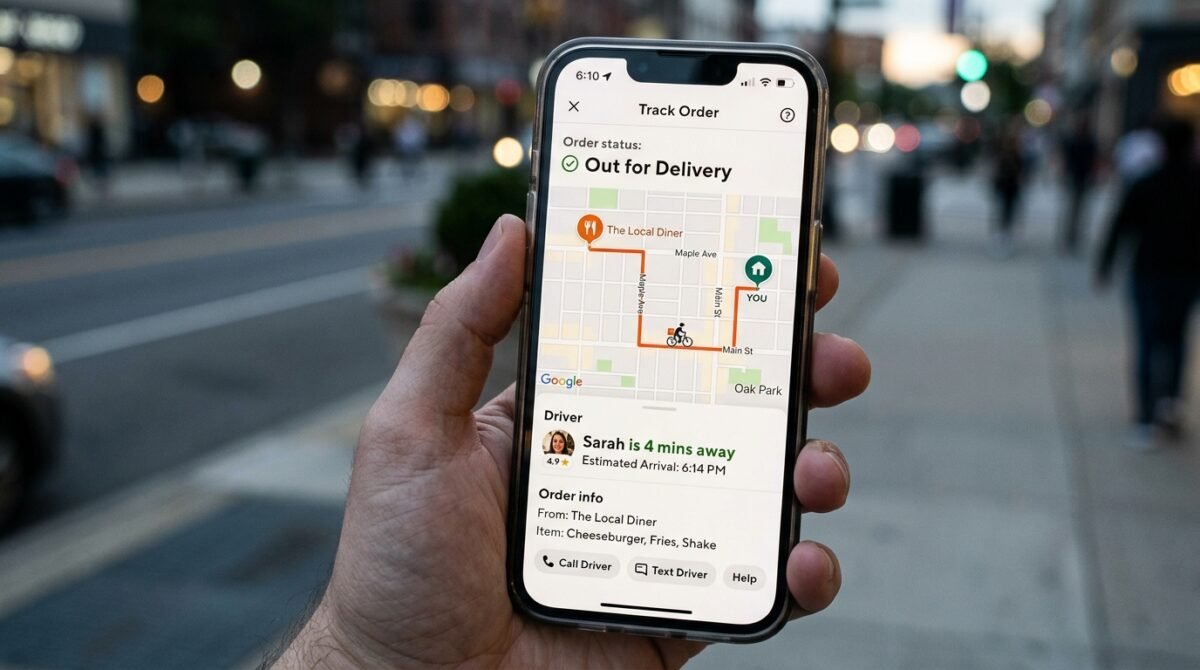
The breaking point was not a dramatic argument, but a series of electronic pings. I was working from home, trying to focus on a presentation, when my Ring doorbell chimed. Then it chimed again. And again. I checked the camera feed to see a man in a neon vest, holding a thermal delivery bag, looking confused and impatient on my porch.
I opened the door, ready to tell him he was at the wrong address. Instead, he shoved a receipt at me. ‘I’m here for the order for ‘Jess’s Kitchen.’ They told me to come to the side door. Is this the place?’ I stared at the man, then at the boxes behind him, then at the side door where I could clearly hear music and laughter echoing from my own pantry.
“I’m sorry, sir. There is no business operating out of this address. You are at a private residence. Please leave my property immediately, or I will be forced to call the police.”
— My response to the confused driver
The driver looked annoyed, but he walked away. I didn’t go back to work. I marched straight into the kitchen. The scene was surreal. Jessica was plating sliders for a corporate order, her friends were laughing over a Spotify playlist, and my kitchen—my pride and joy—was covered in a fine layer of flour and grease. The air was thick with the smell of onion and heavy, artificial smoke.
I told them to stop. I told them to pack it up. Jessica barely looked up, dismissing me with a wave of her hand. ‘You’re overreacting, it’s just one order! We’ll be done in twenty minutes. Don’t be such a buzzkill.’
When the Family Group Chat Turns Toxic
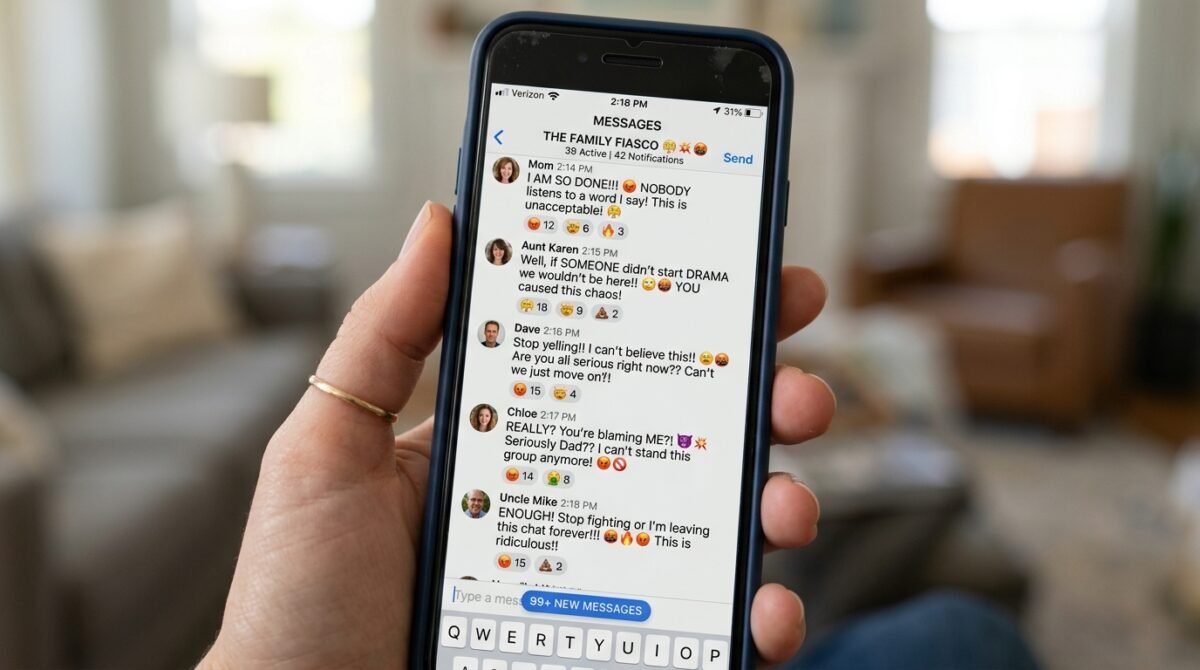
I didn’t wait for her to finish. I changed the smart lock code while they were still inside, trapping them briefly until they had to ask to be let out. It was a petty move, but I was past the point of civility. I demanded they leave everything behind and vacate by the end of the hour. Predictably, Jessica didn’t just leave; she took to the family group chat to paint me as the villain.
Within an hour, my phone was buzzing incessantly. My mother-in-law, my husband’s siblings, and even distant cousins were weighing in. I wasn’t just ‘stingy’; I was ‘trying to sabotage Jessica’s future.’ The narrative they were spinning was that I had invited her to use the kitchen and then ‘abruptly’ pulled the rug out from under her for no reason.
“I can’t believe you’d do this to her. She’s finally making something of herself, and you’re acting like a gatekeeper. It’s just a kitchen, for heaven’s sake. What is wrong with you? Do you really have to be this petty?”
— My husband’s mother in the group chat
I didn’t engage with the madness. I screenshot the entire thread and sent a single, calm message. I detailed the unauthorized commercial activity, the use of my personal smart lock codes, and the fact that a commercial entity was operating without insurance or permits in a residential zone. The silence that followed was deafening.
The toxicity was palpable. My husband tried to mediate, but even he didn’t quite grasp the legal liability I was facing. He saw ‘helping family,’ I saw ‘potential bankruptcy if someone slipped on my floor and sued me.’ It was a fundamental disconnect in how we viewed safety and boundaries.
The Threat of Legal Liability
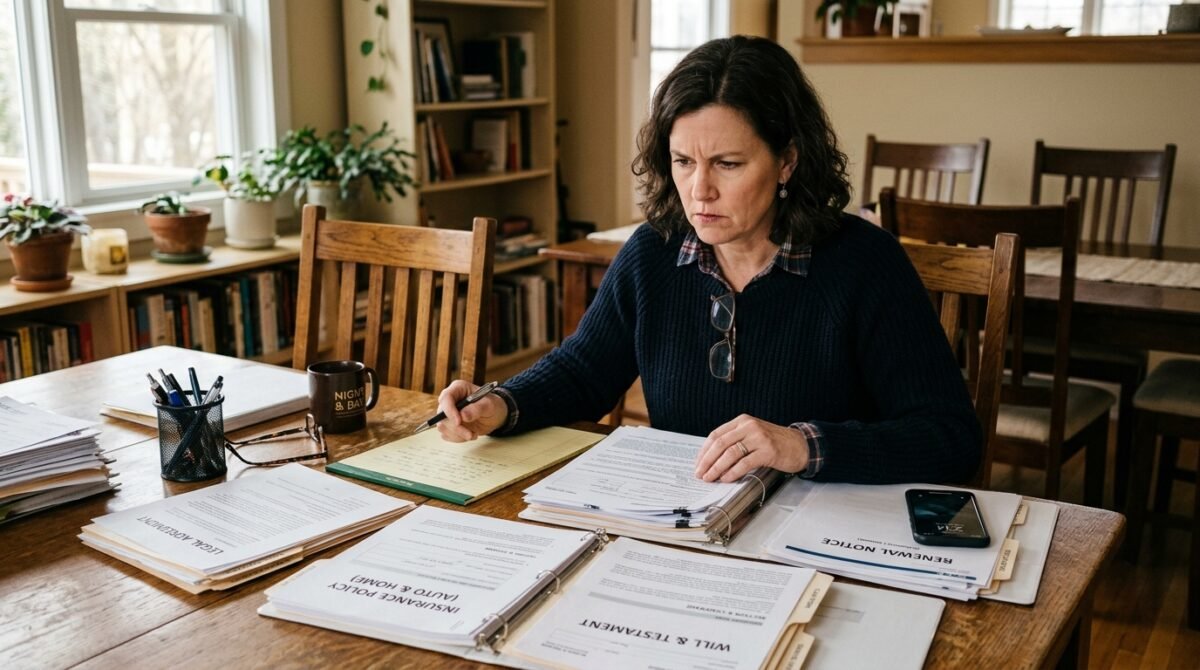
I spent the next forty-eight hours doing deep research. I realized that if Jessica’s ‘business’ had caused a fire, or if one of her helpers had gotten injured while working in my kitchen, my homeowner’s insurance would have laughed at me. I wasn’t just losing my kitchen; I was risking my mortgage and my financial future.
I invited Jessica and her partner over for a formal meeting. No food, no hustle, just a printout of the liability clauses from my insurance policy. I sat them down and explained that this was not about me being unsupportive; it was about me being an adult who understood the consequences of their actions.
“If you want to run a business, you need a commercial license, health department inspections, and liability insurance. You cannot use my house as a shield for your lack of planning. It’s over, Jessica. The kitchen is officially closed.”
— My ultimatum to Jessica
She tried to laugh it off, but her partner, who actually had a brain for business, looked at the papers I handed her and turned pale. He realized immediately that they had been inches away from a disaster. He started packing their things while Jessica fumed in the living room, arms crossed, refusing to acknowledge the reality of the situation.
It felt like a victory, but a hollow one. The kitchen was quiet again, but the air between us was permanently changed. The family dynamic had shifted from ‘supportive’ to ‘resentful,’ and I knew that this was only the beginning of the fallout.
The Reddit Verdict: Echoes of Approval and Dissent

I posted my story to the ‘Am I The A**hole’ subreddit under a throwaway account, needing a sanity check. I expected a mix of opinions, but the sheer volume of support was overwhelming. People who had been through similar ‘family hustle’ nightmares shared their own horror stories, validating that my boundary setting was not just okay, but necessary.
“NTA. Your home is not a free business incubator. The fact that she was inviting delivery drivers to your house without your permission is a massive red flag. She was using you, and you were right to shut it down before you ended up in a lawsuit.”
— u/KitchenNightmareFan (12.4k upvotes)
Of course, there were dissenters. Some commenters, likely people who had ‘Jessica’ tendencies themselves, argued that I was being cold. They claimed that family should sacrifice for each other. It was fascinating to see the split in perspective, confirming that for some, the concept of ‘private property’ ends where ‘family entitlement’ begins.
Reading the comments helped me realize that I wasn’t the problem. The problem was an expectation that family resources are community property. I spent the evening reading through the threads, finding comfort in the shared experiences of others who had finally stood up for their personal space.
The Aftermath: Silence in the Family Circle
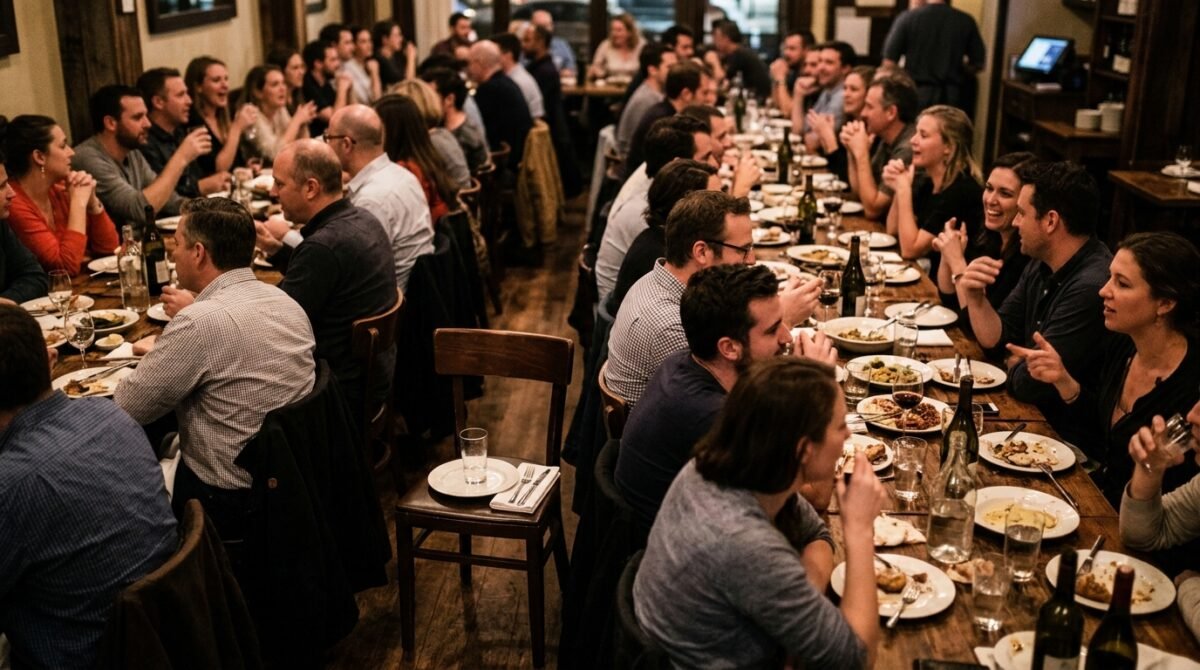
Following the ‘incident,’ Thanksgiving was a cold affair. I was not greeted with the usual warmth. My mother-in-law barely made eye contact, and Jessica didn’t speak to me at all. I was the ‘villain’ who ruined the ‘big dream.’ My husband stuck by my side, which I appreciated, but the tension was thick enough to cut with a knife.
I kept to myself, engaging in small talk and focusing on the food—which, ironically, was not made in my kitchen. The irony was not lost on me, but I didn’t point it out. There was no point in winning an argument if it meant further alienation. I had chosen my peace over their approval.
“I hope you’re happy. She’s had to move everything to a cramped apartment basement because you wouldn’t let her use your space. I hope the pride of being ‘right’ is worth the damage you’ve done to this family.”
— A text from my sister-in-law a month later
I didn’t respond to that text. I just archived it. She was clearly struggling, and I felt a twinge of empathy, but it didn’t change the fact that her struggle was not my responsibility to solve at the cost of my own stability.
Life went on. I started redecorating the kitchen, replacing the industrial prep feel with warmer tones and personal touches. It was a way of reclaiming my space, layer by layer, scrub by scrub, until it felt like mine again.
The Unannounced 6:00 AM Kitchen Intrusion
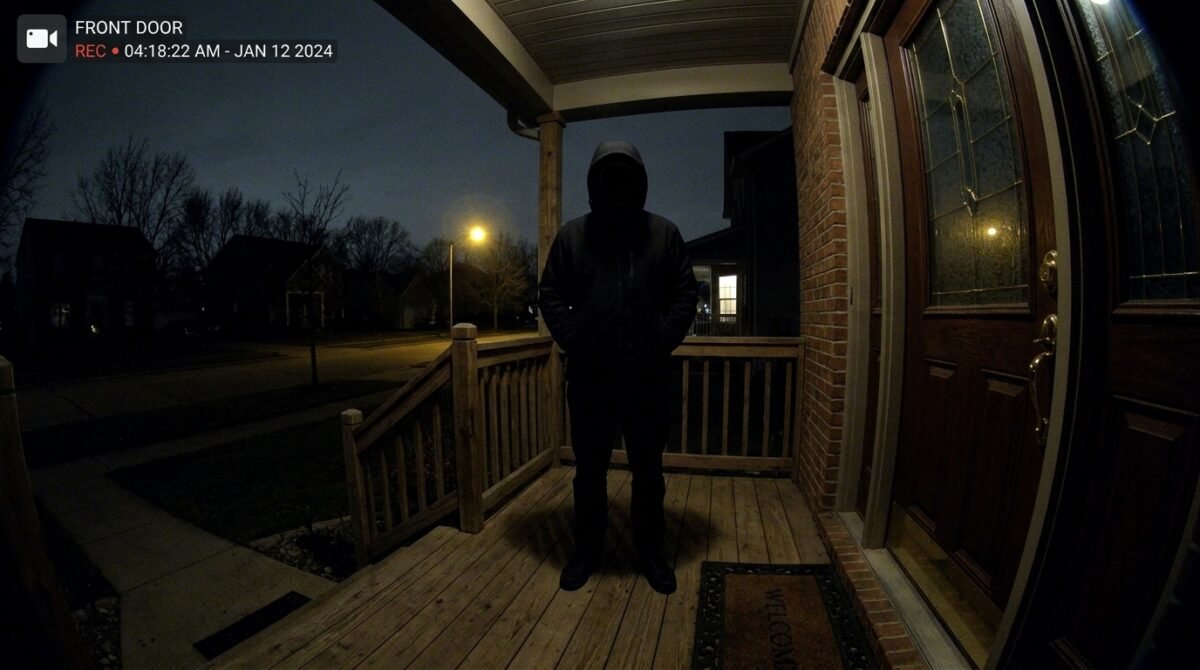
Just when I thought it was over, Jessica tried one last desperate move. I woke up at 6:00 AM to the sound of my back door rattling. I grabbed my phone, ready to call the police, and saw on my security camera that it was Jessica, trying to get in with an old spare key she had somehow kept or copied.
I didn’t open the door. I spoke through the Ring doorbell’s two-way audio. ‘Jessica, if you are on my porch in five seconds, I’m calling the police for trespassing.’ She froze, looking straight into the camera, her expression a mix of desperation and pure, unadulterated rage.
“You’re really going to call the cops on family? Over a few bags of flour? You are heartless. I have orders to fill and my current place has no oven! Just let me in for two hours!”
— Jessica through the doorbell camera
I called the police anyway. I didn’t want to play the game of ‘let her in for just two hours.’ That was exactly how this whole thing started. I wanted a record of her behavior. When the officers arrived, they were professional but clearly annoyed at the ‘family drama.’ They gave her a formal warning for trespassing.
That was the final nail in the coffin. She was furious, but she finally understood that I was not a resource to be tapped. The boundary had been reinforced with the weight of law enforcement, and she finally backed off.
Reflecting on the Cost of Boundaries

Looking back, the financial cost was minimal—some cleaning supplies, a few extra utilities—but the emotional cost was high. I had to face the reality that my family didn’t see me as an individual with rights, but as a utility provider. It was a painful realization, but one that was necessary for my growth.
I learned that when you set a boundary, people will push against it. They will call you names, they will try to make you feel guilty, and they will test your resolve. But if you hold firm, you eventually find a new normal. A normal where you don’t feel guilty for saying ‘no.’
“Boundaries aren’t about keeping people out. They are about defining what you are willing to tolerate. Once you establish that, you’ll find that the people who truly respect you will stay, and the ones who don’t will drift away.”
— A piece of advice from my therapist during this time
I’ve kept that advice close to my heart. My relationship with my in-laws is still strained, but it’s honest. We don’t pretend anymore. And honestly? The honesty is worth far more than the superficial harmony we had before.
The kitchen is now my favorite room in the house. It’s clean, it’s mine, and no one is allowed to use it for anything other than my own cooking. It’s a small victory, but one that I cherish every single day.
Lessons in Financial Independence

Jessica eventually found a legitimate commercial space to rent. She had to take out a loan and actually pay for her own overhead, just like any other business owner. I heard through the grapevine that she’s actually doing quite well now, which I’m happy about. But she had to learn the hard way that dreams don’t come for free.
If I had let her continue, she might have failed anyway, and I would have been the one blamed for the failure. By stepping out of the way, I allowed her to either succeed or fail on her own merits. That is the only real way to support someone.
“Sometimes the most supportive thing you can do for someone is to stop making their problems your own. Let them face the consequences of their ambition; that is the only way they will ever learn to succeed.”
— My closing thoughts on the matter
I have no regrets. The conflict, the stress, and the family drama were a small price to pay for the peace of mind I have now. I’ve learned that I am capable of holding my ground, even when the pressure is immense. That is a lesson that will serve me for the rest of my life.
If you are in a similar situation, don’t let anyone guilt you into giving up your space. Your home is yours. Protect it, cherish it, and never let anyone turn it into a ghost kitchen for their own ambitions.
The Final Verdict: Why No Means No

Ultimately, this story is about the power of the word ‘no.’ It’s a small, two-letter word, but it carries the weight of your own identity. When you stop saying ‘yes’ to appease others, you start saying ‘yes’ to yourself.
The fallout was temporary, but the lesson was permanent. I am no longer the person who will sacrifice their own needs to keep the peace. I am the person who sets boundaries and stands by them, regardless of the consequences. That is a position of strength, not selfishness.
“Standing your ground is rarely easy, but it is always necessary. When you value your own space, others will eventually learn to value it too. And if they don’t? Then they don’t deserve to be in your space to begin with.”
— Final reflection
I hope this story serves as a reminder to anyone struggling with family boundaries. You are not a resource. You are a person with rights. And you have every right to protect your peace, your property, and your boundaries, no matter what anyone else thinks.
Thanks for reading my journey. It hasn’t been easy, but it has been worth it. I’m finally home.
Conclusion
Looking back at the entire ordeal, I realize that the ghost kitchen was never really about the food. It was a test of my autonomy. By standing my ground, I didn’t just save my kitchen; I established a new precedent for how I am treated by my extended family. It wasn’t an easy transition, and there were many nights I spent wondering if I had done the right thing, but the peace of mind I have now is priceless.
My relationship with Jessica remains distant, but it is now built on the reality of boundaries rather than the illusion of unconditional access. I’ve realized that true support doesn’t mean enabling someone’s poor choices; it means holding them to the same standards you hold yourself. My home is once again a place of comfort, not a place of conflict.
I am curious to hear from you. Have you ever had a family member treat your home or your resources as their own, disregarding your comfort? How did you handle the pushback, and did you regret your decision? Let’s talk in the comments below.
Discussion Poll:
- Did I overreact by involving the police when she tried to enter the house?
- Should I have offered a compromise, like letting her use the kitchen on one day a week?
- Is it ever okay to prioritize ‘family harmony’ over personal financial liability?
What's your verdict on this dilemma?
Vote below to contribute to the official community consensus.

Have a Dilemma Keeping You Up at Night?
Share your real-life feud, wedding chaos, or relationship crossroads anonymously with our editorial team.
What do you think ?
0 Comments🛡️ Comments are moderated to protect community integrity. Your comment will appear once approved by the editorial team.