
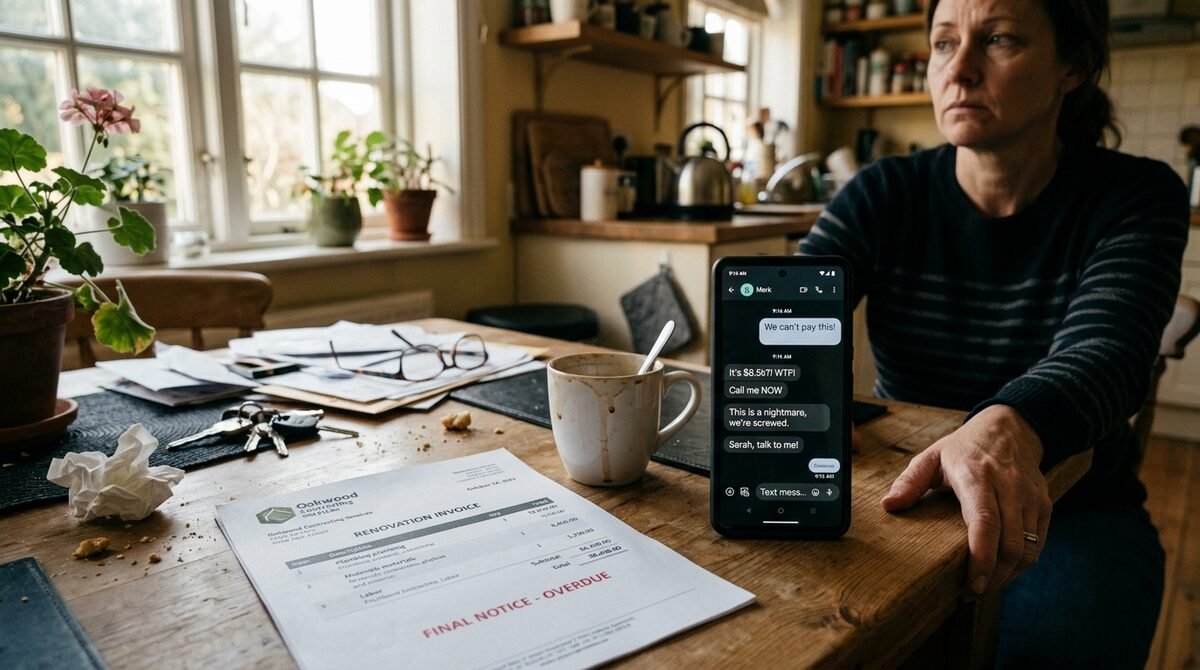
We have all heard the phrase ‘family helps family,’ but there is a distinct, jagged line between helping out in a pinch and becoming an unpaid, live-in nanny for an entire month. My sister, Sarah, has always been the golden child of our family—the one who could do no wrong, even when she was dropping the ball on the most fundamental responsibilities. When she called me three months ago, sobbing about a ‘career-saving’ opportunity that required a last-minute trip to Tulum, she made it sound like a five-day weekend. I agreed, thinking I was helping a sister in need. I didn’t know then that I had just signed up for four weeks of sheer, unadulterated chaos.
The agreement was simple: I would watch her two young boys, ages six and eight, while she attended a ‘wellness retreat’ that was supposedly essential for her networking. She promised she would be back in a week. That week turned into two, then three, then finally four. During that entire month, my home became a war zone of toys, sugary meltdowns, and neglected homework. I missed my own deadlines, sacrificed my gym routine, and endured sleepless nights, all while Sarah posted filtered photos of herself on white sand beaches, sipping margaritas with people she claimed were ‘investors.’
By the time she finally rolled back into town, bronzed and relaxed, the resentment had solidified into a cold, hard resolve. I wasn’t just tired; I was finished being a doormat. When she walked through my front door, expecting me to be grateful for the ‘experience’ of bonding with my nephews, she found something else entirely. She found a formal, itemized invoice sitting on the kitchen island, complete with a professional hourly rate, overtime charges, and a ‘last-minute scheduling’ penalty fee.
This is the story of what happened when I decided that my labor had value, even if my own sister didn’t think so. The fallout wasn’t just a simple argument; it was a total breakdown of my family dynamic. It forced me to look at the people I loved through a lens of objective, financial reality. Some people called me a hero for standing up for myself, while others labeled me the villain of the year. I suppose it depends on whether you value blood over boundaries.
The Initial SOS That Sounded Like a Simple Favor

It started on a Tuesday evening, the kind of quiet, predictable night I cherish. I was working on a project for my firm when my phone pinged with a FaceTime request from Sarah. She looked frantic, her hair pulled back into a messy bun, and I could hear the boys screaming in the background. She began with the usual platitudes about how much she missed me and how the boys were just dying to see their aunt. Then, she dropped the hammer.
She told me she had been invited to a high-profile wellness and networking summit in Tulum. She claimed it was a ‘career-defining’ move that would change her trajectory. She pleaded, using the classic ‘I have no one else’ line that has haunted our family dynamic for years. She promised it would be five days, max. I felt the guilt tugging at my heartstrings, but I also felt a familiar sense of dread. Sarah is not known for her adherence to timelines.
“Please, it’s just five days. The boys adore you, and you know how much this trip means to my career. If I don’t go, I’m stuck in this dead-end job forever. You’re the only person I trust with them.”
— Sarah, during the initial FaceTime call
I pressed her on the details, asking if she had backup childcare. She waved the concern away with a manicured hand, insisting that her ‘contacts’ were already sorted and she just needed me to bridge the gap for that short week. Against my better judgment, I agreed. I took leave from my own work, stocked the fridge with snacks I knew the boys liked, and rearranged my home office to accommodate a makeshift play area.
Little did I know, the ‘five-day’ window was a complete fabrication. By the second day of her trip, she was already texting me about ‘unexpected networking opportunities’ that were keeping her in Mexico. I didn’t see it as a red flag then; I saw it as Sarah being Sarah. I was wrong. I was being set up to be the free childcare provider for an entire month, and the clock was already ticking on my patience.
The Extended Stay and the Vanishing Mother

The first week went by in a blur of chaos. I was managing their virtual school, preparing three meals a day, and trying to hold onto my sanity while my nephews turned my living room into a wrestling ring. When the fifth day arrived, I expected to get a text about her flight details. Instead, I got a message filled with emojis and excuses about how the ‘energy’ in Tulum was too good to leave just yet.
I called her immediately, my voice tight with irritation. She didn’t pick up. She responded with a voice note, explaining that she had extended her stay for an ‘extra week’ because she had met someone who was opening a massive boutique hotel. She promised she would pay me back, but never specified how. I was trapped. I couldn’t just drop the kids off at the airport or leave them on her doorstep. I was the responsible adult, and that was exactly what she was counting on.
“I know it’s longer than we planned, but you’re a saint! The kids are having the time of their lives with you, and honestly, you’re better at this than I am. I’ll make it up to you, I promise!”
— Text message from Sarah, Day 8
By the third week, the resentment was palpable. I was exhausted, my work performance had dipped, and I had spent nearly $800 of my own money on groceries and entertainment just to keep the boys occupied. Every time I tried to bring up her return, she would pivot to how ‘stunning’ the sunset was or how she was finally ‘finding herself.’ It was infuriating. I realized then that she wasn’t just neglecting her kids; she was offloading her life onto me because she knew I wouldn’t say no.
I started keeping a log. Every hour I spent cooking, cleaning, and driving them to sports practice was recorded. I didn’t do it out of pettiness at first, but out of a desperate need to feel like my time still had value. I was documenting the ‘nanny services’ I never agreed to provide. When she finally texted me on day 28 to say she was ‘coming home soon,’ I didn’t feel relief. I felt a cold, sharp, and necessary clarity.
The Grand Homecoming and the Financial Reality Check
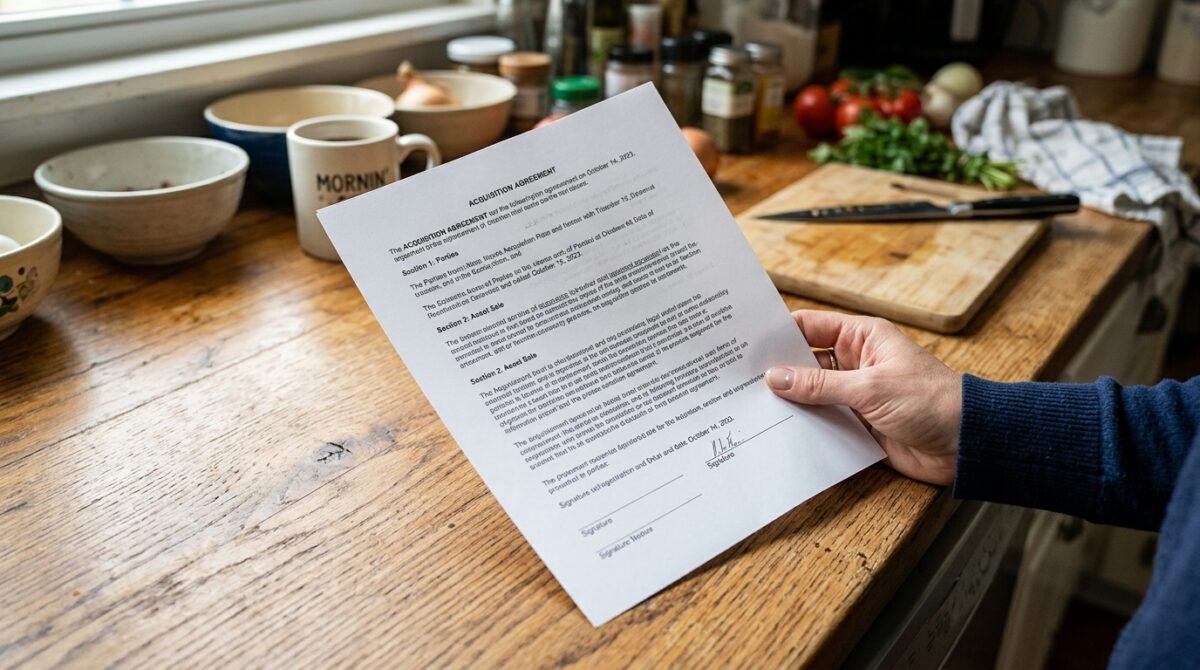
When Sarah finally walked through my door on a Tuesday, she looked like she had just stepped out of a magazine. She was tanned, relaxed, and carrying a pile of souvenir shopping bags. She didn’t even ask how I was doing. She walked straight to the boys, gave them a quick hug, and then looked at me as if I were a service provider who had done a mediocre job. She barely thanked me, instead launching into a long, self-absorbed story about the people she met.
I waited until she had finished her monologue. I had the invoice printed on crisp, professional letterhead, sitting in an envelope on the island. I handed it to her while she was mid-sentence about the ‘vibrations’ of the jungle. Her expression went from smug to confused as she pulled the document out. She didn’t read it at first; she just stared at the header: ‘Statement of Services Rendered: Professional Childcare and Household Management.’
“What is this? Are you joking? You’re charging me for watching your own nephews? This is family, not a business deal. I thought we were close.”
— Sarah, after opening the invoice
The total came to $4,200. I had calculated a fair hourly rate for childcare, plus a surcharge for the ‘last-minute’ nature of the request, and a reimbursement for the groceries and activities I had fronted. She looked at the number, then up at me, her eyes narrowing. She didn’t see the work I had put in; she saw an attack on her lifestyle. She thought I was being petty, but I was being precise.
I told her, calmly, that if the relationship was truly family-based, she wouldn’t have treated me like a disposable resource for four weeks. I told her that my time had a price, and if she wanted to outsource her parenting, she should have paid for a professional nanny, not exploited her sister. The silence in the room was heavy, thick with the weight of years of unspoken grievances finally being dragged into the light.
The Family Group Chat Explosion

Within an hour of Sarah leaving my house—empty-handed and furious—my phone started blowing up. The family group chat, which usually consisted of birthday wishes and holiday plans, was suddenly a war zone. Sarah had clearly gone to our parents, painting a picture of me as a heartless mercenary who was shaking down her own sister for money. My mother was the first to chime in, her tone dripping with disappointment.
“I honestly cannot believe you would do this to your sister. She’s had such a hard year, and you’re acting like a stranger. Delete that invoice and apologize to her immediately. This is not how we treat our own blood.”
— Mom, in the family group chat
Then came my brother, who had been absent for the entire duration of the month. He called me ‘toxic’ and ‘opportunistic,’ claiming that I was just jealous of Sarah’s success. It was fascinating to watch them rally around her without ever asking me how my month had been or what I had sacrificed to make her vacation possible. They were protecting the ‘golden child’ narrative, and I was the one threatening to destroy it with the truth.
I didn’t back down. I typed out a long, detailed response in the chat, itemizing exactly what had happened over those four weeks. I mentioned the school runs, the skipped work meetings, the grocery bills, and the fact that Sarah had stopped answering my calls for days at a time. I told them that if they thought my labor was worth nothing, they were welcome to volunteer for the next month of her ‘career-defining’ trips.
The chat went silent after my message. It was the kind of silence that precedes a storm. I knew that by standing my ground, I had effectively removed myself from their good graces, but for the first time in my life, I felt a strange sense of liberation. I wasn’t just the sister who helped; I was the sister who drew a line in the sand, and I had no intention of moving it.
The Reddit Verdict: Echoes of Validation

I posted a summary of the situation on Reddit, feeling like I was losing my mind. I needed to know if I was actually the villain. The response was overwhelming. Within twelve hours, the post had reached the front page, with thousands of people chiming in from every corner of the world. The majority were firmly on my side, calling out the blatant entitlement of my sister and the ‘enabler’ behavior of my parents.
“NTA. Your sister didn’t ask for a favor; she stole a month of your life. The fact that she went to Tulum while you were stuck with the kids is not just inconsiderate, it’s parasitic. Keep the invoice active and don’t budge.”
— u/AssertiveBoundaries (Top Comment, 32.5k upvotes)
There were, of course, dissenting opinions. A few people argued that family should always support family, regardless of the circumstances. Those comments were quickly swamped by people who had been in similar situations, sharing stories of ‘serial exploiters’ in their own families. It became a therapeutic space for many of us to vent about the people who use ‘family’ as a weapon to avoid personal responsibility.
One comment, in particular, resonated with me. It was from someone who had been a professional nanny for twenty years. They broke down the math of my invoice, confirming that I had actually undercharged for the level of care I provided. That validation was all I needed. I wasn’t being mean; I was being professional in the face of someone who refused to recognize the cost of her own choices.
The thread became a repository of advice on how to handle the inevitable family fallout. People warned me that Sarah would try to gaslight me, that my parents would try to guilt-trip me into submission, and that the only way to win was to stay completely firm. It was a digital support group that gave me the armor I needed to face the next round of family drama.
The Second Confrontation: A Visit from Dad

Two days after the group chat explosion, my father showed up at my front door. He didn’t call ahead. He just stood there, looking disappointed, holding a box of pastries as a peace offering. He wanted to ‘talk it out,’ which I knew was code for ‘tell you why you’re wrong and how you can fix it.’ We sat in the kitchen, and he started with the standard lecture about how sisters should have a bond that transcends petty money issues.
I let him talk for ten minutes. I didn’t interrupt. I just watched him, realizing how much he had enabled Sarah her entire life. Whenever she failed, he picked up the pieces. Whenever she made a mistake, he smoothed it over. He had never forced her to face the consequences of her actions, and now he was trying to do the same thing with me. I finally stopped him, my voice steady but firm.
“Dad, you’ve been cleaning up Sarah’s messes for twenty years. That’s your choice. But I am not an extension of your parenting. I am an adult with my own life, and I am done being the silent sacrifice for her lifestyle.”
— My words to my father, during his attempt to mediate
He was stunned. He had never heard me speak like that. He tried to argue that it would make family gatherings awkward, that I was being ‘unforgiving,’ but I kept pointing back to the fact that Sarah had never apologized for the month-long absence or the lack of communication. I told him that if I was ‘unforgiving,’ it was only because I had been pushed to the absolute limit.
He left the pastries on the counter and walked out, his shoulders slumped. He hadn’t ‘won,’ and I hadn’t ‘caved.’ It was a stalemate, but it was the first time I had ever stood up to him. The house felt quiet afterward, a different kind of silence than before. It was the silence of boundaries being set, and it felt like the first breath of air after being underwater for a long time.
The Legal Threat and the Final Straw

The following week, I received a letter in the mail—not a handwritten apology, but a legal-looking notice from an acquaintance of Sarah’s who claimed to be a paralegal. It was a poorly drafted document threatening ‘legal action’ if I didn’t ‘cease and desist’ from ‘harassing’ my sister for money. It was laughable, but it was also a sign of how far she was willing to go to avoid paying up. She was escalating instead of owning her mistakes.
I took the letter to a real lawyer. He read it, laughed, and told me that it held zero legal weight. He explained that there was no contract, but there was also no legal basis for her to claim my services were free. He advised me to send a formal, written demand for the amount owed, documented with the hours and expenses I had logged. It wasn’t about the money anymore; it was about the principle of the matter.
“You don’t get to threaten me with legal action for asking to be compensated for a month of work you forced on me. If you want to involve lawyers, then let’s do it properly. Here is the final invoice, due by the 30th.”
— Excerpt from my final email to Sarah
I sent the email with the documentation attached. I CC’d my parents on the email. I knew it would cause an explosion, but I didn’t care. I was tired of the whispers and the behind-the-back manipulation. I wanted everything out in the open. The response was immediate—a barrage of calls from my mother, all of which I ignored. I knew if I picked up, I would only be subjected to more emotional blackmail.
I turned my phone on ‘Do Not Disturb.’ I spent the rest of the evening reading a book, feeling completely detached from the chaos I had unleashed. For the first time, I realized that I wasn’t losing my family; I was losing the burden of being their servant. The legal threat had been the final straw, the moment that confirmed Sarah would never grow up as long as she had people to blame for her own failures.
The Sunday Dinner That Never Happened

Sunday dinner at our parents’ house was a sacred tradition. Everyone was expected to attend, no matter what. This time, I didn’t go. I sent a text to my mom on Saturday, letting her know I wouldn’t be making it. The response was immediate and frantic, full of guilt-tripping about how ‘the family was falling apart’ and how my absence would ‘ruin the day.’ I didn’t engage. I just reiterated my decision and turned off my phone.
I spent that Sunday doing things I actually enjoyed. I went for a hike, cooked a meal for myself, and caught up on my own work. I thought about the dinner table, the awkward silences, and the inevitable pointed questions about ‘why I couldn’t just get over it.’ I realized that those dinners had become a performance, a place where I was expected to smile and pretend that I wasn’t being exploited.
“I’m not coming to dinner. I need space to process the way this family has treated me over the last month. When you’re ready to discuss the issue fairly, let me know. Otherwise, I’m done.”
— Text message to my mother before turning off my phone
I felt a pang of sadness, certainly. I missed the idea of what a family dinner should be, but I didn’t miss the reality of what it had become. By staying away, I was reclaiming my Sunday. I was proving that I wasn’t a hostage to their expectations. It was a small act, but in the context of my family history, it was revolutionary.
The next day, my brother texted me to tell me I had ‘really hurt mom.’ I didn’t reply. I had reached a point where I realized that their feelings were their responsibility, not mine. I wasn’t the one who had left their kids for a month, and I wasn’t the one who had threatened their sister with legal action. The responsibility for the family ‘falling apart’ lay squarely on those who had broken the foundation, not on the one who was simply trying to survive the debris.
The Slow Drift Toward No-Contact

As the weeks turned into months, the communication slowed to a trickle. Sarah never paid the invoice, and I never expected her to. But the act of sending it had created a permanent rift. She stopped trying to reach out, and my parents stopped trying to force me to apologize. We were drifting into a state of quiet, distant non-contact. It wasn’t the dramatic, cinematic explosion that some might have expected; it was just a slow, steady fade.
I found that I didn’t miss the constant drama. I had more energy for my career, more time for my friends, and a deeper sense of peace in my own home. I realized that the chaos I had been living through was a choice—not mine, but theirs—and that by refusing to participate, I had finally stepped out of the line of fire. It was a lonely transition, but it was also the most honest I had ever been with myself.
“The hardest part of setting boundaries is the silence that follows. But that silence isn’t empty—it’s full of peace. I don’t regret standing up for myself, even if the cost was my place in their inner circle.”
— My internal reflection, written in my journal
I still see photos of the kids on social media, from a distance. They are growing, and I miss them, but I know that I cannot be the person who sacrifices everything to compensate for their mother’s instability. I hope that one day they will understand why I had to leave, and why I had to draw the line where I did. I hope they learn that they, too, are allowed to say ‘no’ to the people who take too much.
I’ve started therapy, which has been a lifesaver. It’s helped me process the guilt that I was conditioned to feel, the ‘golden child’ complex, and the weight of being the ‘responsible one’ for so long. I am learning that I don’t have to carry everyone else’s burdens. I can be a loving sibling, a supportive aunt, and a caring person, but I can no longer be a martyr. And honestly? That feels like the greatest success of all.
Reflecting on the Cost of Boundaries

Looking back at the entire saga, I often wonder if there was another way. Could I have been gentler? Could I have set the boundary earlier? Maybe. But I also know that in my family, any boundary is treated like an act of war. If I had tried to say no in week two, they would have called me selfish. If I had said no in week three, they would have called me cruel. By waiting until the end, I was able to see the full extent of the exploitation, and that clarity gave me the strength to follow through.
The invoice was never really about the money. It was a communication tool. It was a way of saying, ‘I see what you are doing, and I am putting a price on it because you refused to respect my value.’ It was a mirror held up to Sarah and my parents, and they hated what they saw. They didn’t want a reflection of their behavior; they wanted a silent, compliant enabler who would keep the family illusion alive.
“Sometimes, the only way to get people to respect your time is to treat it like a business. If you aren’t prepared to lose the relationship, you aren’t prepared to set a boundary.”
— A piece of advice I read online that I now live by
I have learned that the people who get the angriest when you set boundaries are usually the ones who benefited the most from you having none. That’s a lesson I’ll carry with me for the rest of my life. It has changed how I approach my friendships, my romantic life, and my professional interactions. I am no longer looking for permission to exist or to prioritize my own needs.
I don’t know if I will ever reconnect with Sarah. Perhaps in time, when we are both in different places, there will be room for a conversation. But for now, the distance is necessary. It is the protective wall I built to keep my life, my sanity, and my self-worth intact. And if that makes me the villain in her story, then I’m perfectly okay with that. I am finally the hero of my own.
Conclusion
The story of the Tulum invoice has become a permanent fixture in my family’s lore, though it is usually whispered about as a ‘dark chapter’ rather than a turning point. They still don’t understand the why, and perhaps they never will. But the feedback from the online community, the validation of total strangers who have dealt with similar familial parasites, has been incredibly healing. It reminded me that I am not alone in this, and that the struggle for self-respect is one that many people are fighting every single day.
Reflecting on this, I realize that boundaries are not just about protecting your time or your money; they are about protecting your soul. When you allow yourself to be used, you erode your own worth. When you stand up for yourself, you reclaim it. The silence from my family is not a failure; it is a clean slate. It is the space in which I can finally be who I am, without the crushing weight of their expectations or the exhaustion of their constant, preventable crises.
I invite those of you reading this to think about your own ‘Tulum’ moments. Have you been the one holding the bag for someone else’s vacation? Have you been the one who was expected to sacrifice your own life, health, or career for someone who wouldn’t even think twice about doing the same for you? If so, know that you are not a bad person for wanting to be treated with dignity. You are not a bad person for asking for compensation—or just for saying no.
What do you think? If you were in my position, would you have sent the invoice, or would you have just cut ties and walked away? Do you think blood ties should trump financial compensation for labor, or is there a point where family becomes a business of its own? I’d love to hear your experiences in the comments below. Let’s keep this conversation going.
What's your verdict on this dilemma?
Vote below to contribute to the official community consensus.

Have a Dilemma Keeping You Up at Night?
Share your real-life feud, wedding chaos, or relationship crossroads anonymously with our editorial team.
What do you think ?
0 Comments🛡️ Comments are moderated to protect community integrity. Your comment will appear once approved by the editorial team.