
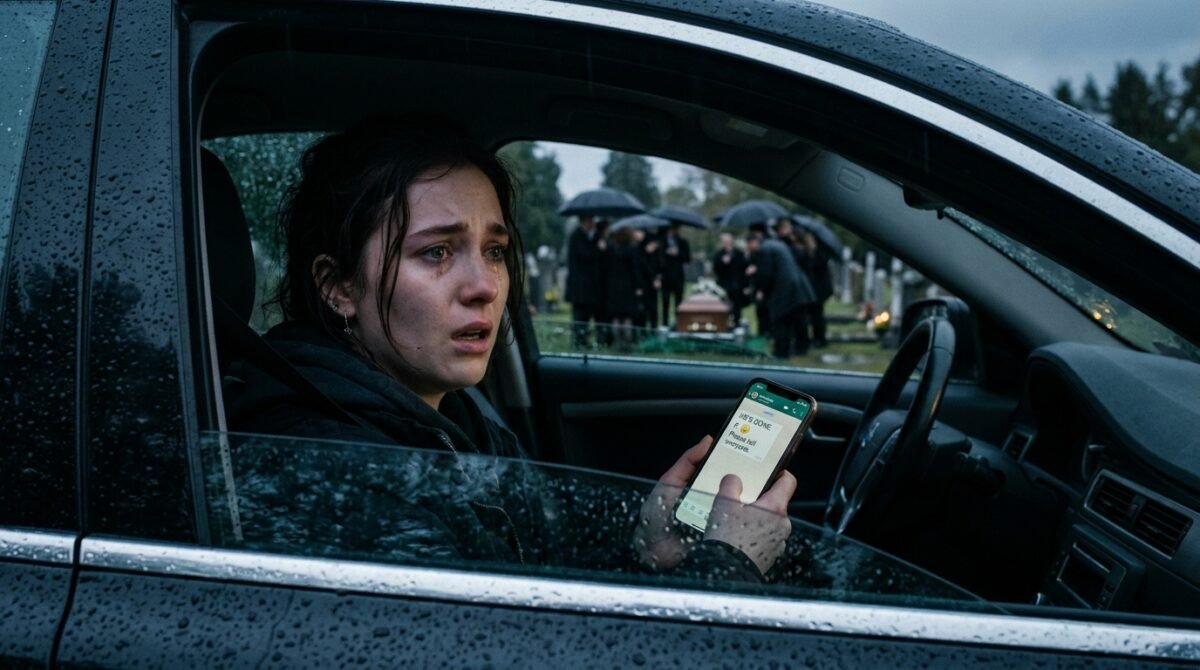
Friendship is often described as the chosen family we collect along the way. For Sarah and me, that bond had spanned nearly two decades. We had navigated the awkward teenage years, the transition into adulthood, and every heartbreak in between. Yet, none of that history could have prepared me for the callous, transactional reality that shattered our bond during one of the most vulnerable moments of her life.
When Sarah’s grandmother passed away, I didn’t hesitate. I cleared my work calendar, packed a bag, and volunteered to drive her the five hours to her hometown. It wasn’t about the mileage or the gas money; it was about holding her hand when the grief felt heavy. I wanted to be the steady presence she needed while she navigated the logistics of a funeral and the emotional weight of saying goodbye.
The weekend itself was grueling. We spent hours sorting through old photos, sitting in uncomfortable wooden pews, and fielding endless phone calls from distant relatives. I acted as her buffer, her chauffeur, and her emotional anchor. I thought we were closer than ever, forged in the fires of shared tragedy. Little did I know, Sarah was keeping a ledger.
Three days after returning home, my phone buzzed with a notification that changed everything. It wasn’t a thank you note or a message checking in on how I was coping with the emotional drain of the weekend. It was an itemized invoice, delivered with cold, corporate efficiency. The audacity of the request didn’t just insult my intelligence; it revealed a fundamental disconnect in our values.
This is the story of how a twenty-year friendship crumbled over a few gallons of gasoline. It is a lesson in realizing that sometimes, the people we hold closest are merely waiting for the right moment to turn our kindness into a billable service. Here is how I set my boundaries and why, in the end, silence was the only answer.
The Five-Hour Drive Into the Unknown

The journey started under a gray, overcast sky. Sarah was visibly shaking when she climbed into the passenger seat, her eyes swollen from days of crying. I had already mapped out the route, packed snacks, and prepared a playlist of calming music. My intention was simple: to make the transit as painless as possible for a friend who was currently experiencing the worst week of her life.
We spent the first hour in silence, the hum of the tires against the pavement the only soundtrack to her grief. As we drove, I watched her trace the patterns of the rain on the glass, lost in thought. I felt like the supportive friend I was supposed to be. I was honored to be the person she leaned on. I covered the cost of our coffee and lunch stops without a second thought, viewing it as a small contribution to ease her burden.
“I don’t know what I would do without you here, really. Having you in the car makes the drive seem less like a funeral procession and more like a bridge to somewhere manageable.”
— Sarah, during the first leg of the trip
At no point during those five hours did money enter the conversation. Why would it? We were in the middle of a personal crisis. I was there to be a pallbearer for her spirits, not a paid contractor. I was paying for my own time and energy to ensure she wasn’t alone. It never occurred to me that she was mentally tallying the fuel consumption or the wear and tear on her vehicle.
Looking back, the signs of her detachment were perhaps there, hidden in her preoccupation with the car’s fuel efficiency gauge or her complaints about gas prices at the highway exits. I brushed them off as the nervous energy of someone stressed about the funeral expenses. I was wrong. She wasn’t worried about the funeral costs; she was already calculating how to offset the burden of her own life onto mine.
We arrived at the funeral home just as the sun began to set. The mood was somber, and the air was thick with the scent of lilies and damp earth. I helped her check in, introduced her to the director, and spent the evening playing the role of the supportive companion. I was exhausted, but I felt satisfied that I had fulfilled my promise to her.
The Spreadsheet That Ended Everything
The return trip was equally somber, marked by the finality of the weekend. We said our goodbyes to her family, and I drove her home, dropping her off at her apartment door with a hug that felt like a closing chapter. I went home, crawled into bed, and finally allowed myself to decompress from the sheer weight of the last three days. I expected a ‘thank you’ text or perhaps a call later that week once she had processed the events.
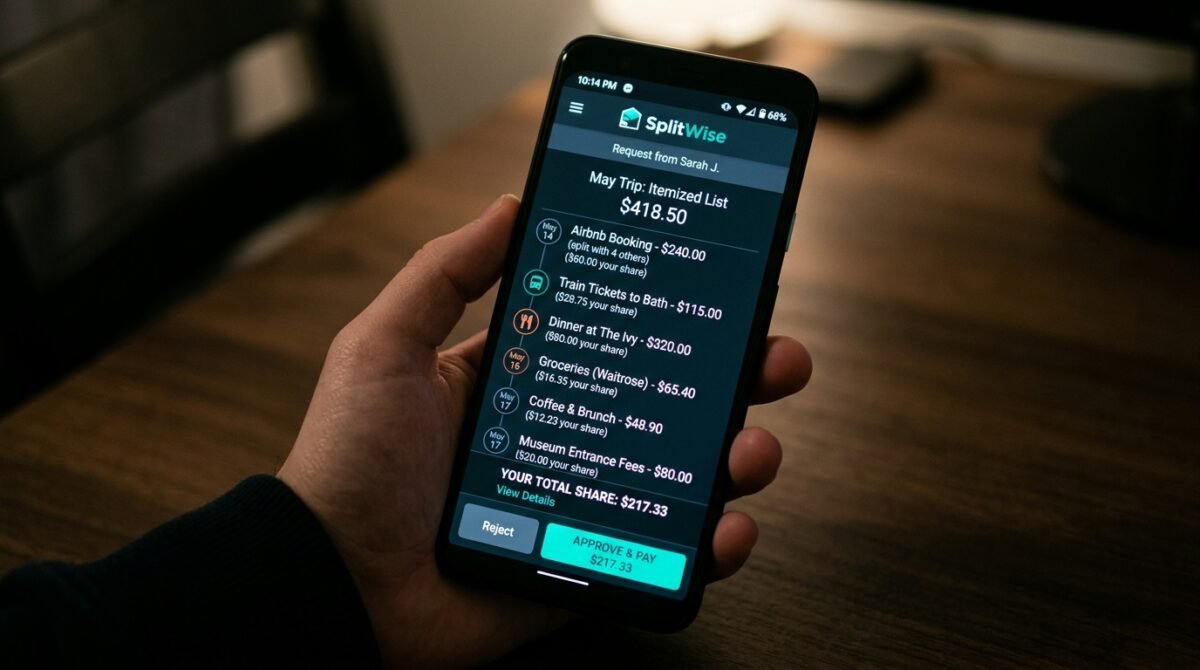
What I got, forty-eight hours later, was a notification from a finance app. It was a formal request for money. I stared at my screen for a solid minute, thinking it was a mistake. Perhaps she had accidentally clicked the wrong button? I opened the message, and my heart sank. It wasn’t an accident. It was a breakdown, complete with a total amount that made me laugh out loud in pure, shocked disbelief.
“Hey! Glad we made it back safe. I went ahead and calculated the fuel costs for the trip plus a small percentage for the car usage. It comes out to $145.20. I’ve sent you a request on the app. Thanks for coming!”
— The text message I received from Sarah
The audacity was staggering. She had itemized the trip. She included gas, a ‘convenience fee’ for the wear and tear of her vehicle, and even a small portion of the tolls. It felt less like a request from a best friend and more like a receipt from an Uber driver who had just realized they were being exploited.
I sat in my living room, the cold glow of my phone illuminating the absolute absurdity of the situation. How do you respond to that? How do you tell your best friend that you are not a taxi service, especially when you spent your weekend mourning her own grandmother? The betrayal wasn’t about the money—I had a hundred and fifty dollars—it was about the commodification of our friendship.
I felt a strange sense of clarity. The ambiguity of our relationship, which I had spent years trying to nurture, suddenly became crystal clear. I wasn’t a partner in this friendship; I was a line item. I was a resource to be managed, and when that resource proved inconvenient, it was invoiced. The emotional labor I provided was rendered worthless, while the gas in her tank was treated like a debt to be collected.
The Confrontation of the Century

I didn’t reply immediately. I knew that if I responded in the heat of the moment, I would say things I couldn’t take back. I needed to know if she truly understood what she had done, or if she was so emotionally detached that she had genuinely convinced herself this was ‘normal’ behavior. I finally called her the next day, my voice steady despite the adrenaline pumping through my veins.
When she picked up, she sounded upbeat, almost cheerful, which only made my blood boil further. I dove straight into the topic, skipping the pleasantries. I asked her if she had sent the invoice as a joke. Her reaction was a masterclass in deflection and entitlement, justifying the bill as a ‘fair split’ of the expenses she had incurred during the trip.
“Sarah, I am not a ride-share service. I spent my weekend being there for you while you buried your grandmother. The fact that you think it’s appropriate to invoice me for the gas I helped you burn while supporting you is beyond insulting.”
— My response to her over the phone
She countered by arguing that ‘money is just money’ and that our friendship shouldn’t be affected by a simple reimbursement request. She claimed she was ‘broke’ from the funeral expenses and needed to recoup every cent she could. I told her that if she was that strapped for cash, she should have asked me to help cover the gas beforehand, rather than springing an invoice on me after the fact.
The conversation devolved into a cycle of her gaslighting me about my reaction. She insisted I was being ‘sensitive’ and ‘dramatic’ about a minor financial transaction. She couldn’t see—or refused to see—that the issue wasn’t the currency; it was the utter lack of respect for the time and emotional energy I had invested in her. She treated me like a stranger she had hired on Craigslist.
I hung up the phone before I could lose my temper entirely. It was the most satisfying thing I had done all week. The silence that followed was heavy, but it was the silence of a bridge burning. I had realized that no amount of explanation would ever make her understand why her behavior was wrong. Some people are just wired to see the world through a lens of ‘me’ and ‘mine,’ and there is no room for friendship in that narrow view.
The Digital Fallout and Public Scrutiny
Naturally, the drama didn’t end with our phone call. Sarah, clearly feeling defensive and perhaps needing validation, took the story to our mutual friends. She framed it as me being an ‘unreasonable’ person who refused to pay a fair share for a road trip. She omitted the part about the funeral, or at least minimized it, painting the trip as a casual vacation we had taken together.
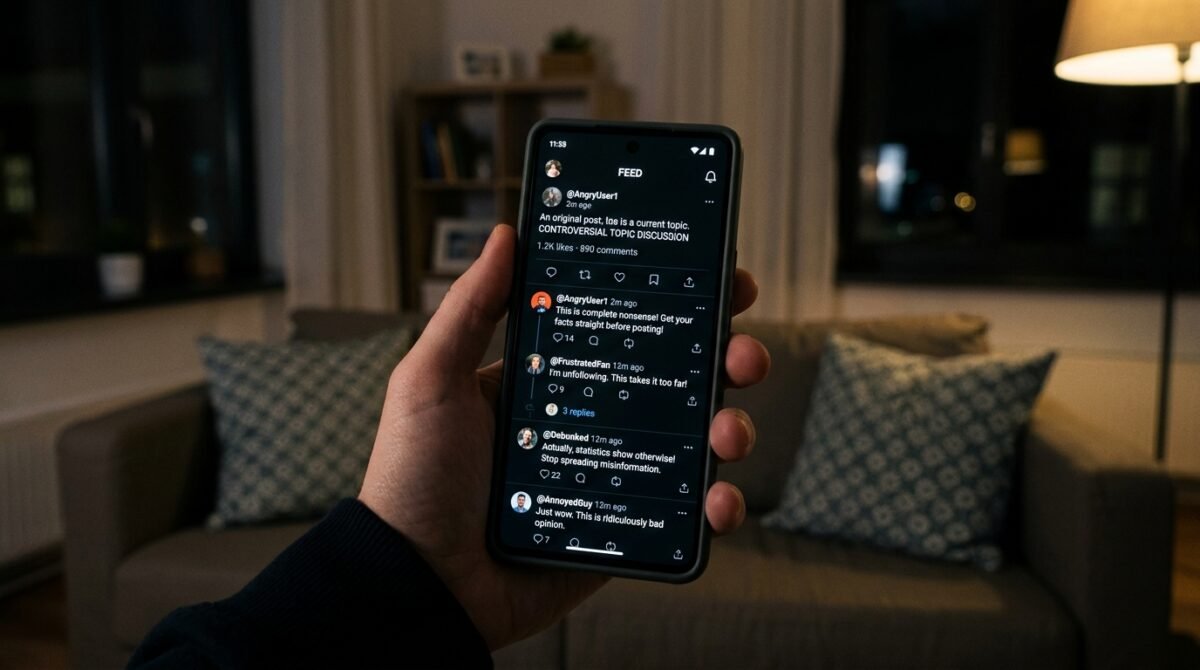
My phone started buzzing with messages from people I hadn’t spoken to in weeks. Some were confused, some were accusatory, and a few were rightfully curious. I found myself in the position of having to defend my character against a narrative that was fundamentally dishonest. It was exhausting. I decided to post a redacted screenshot of the invoice on my private social media, without naming her, just to vent the frustration to my inner circle.
“Imagine being asked to pay for ‘wear and tear’ on a car after you spent your entire weekend supporting a friend through a family funeral. Is this what friendship has come to? Feeling like a business transaction?”
— My social media post that sparked the debate
The responses were overwhelming. Most of my friends were shocked. They couldn’t believe someone would have the audacity to send a bill in such a sensitive context. A few ‘devil’s advocate’ types suggested that maybe she was just really struggling financially and didn’t know how to ask for help, but even they agreed the invoice was the wrong way to go about it.
The group chat, which had been dormant for months, suddenly erupted into a war zone. People were taking sides, digging up old grievances, and questioning the health of our entire friend group. It felt like the fallout from a nuclear bomb. I realized that by exposing the truth, I had inadvertently shattered the social fabric of our entire circle. But honestly? It was worth it to stop gaslighting myself.
I watched as the drama unfolded, realizing that Sarah’s actions had exposed the true colors of several other people in my life. Some were enablers who thought her behavior was acceptable, while others stood by me, horrified by the lack of decency. The divide was stark. I wasn’t just losing a best friend; I was recalibrating my entire social ecosystem.
Reddit Weighs In: The Verdict

I eventually turned to the internet. I needed an objective perspective, away from the biased opinions of our mutual friends. I posted the story to a popular subreddit, keeping the details anonymous. The response was immediate and overwhelming. Thousands of people chimed in, and the consensus was loud, clear, and incredibly validating. I wasn’t crazy; I was being exploited.
“You didn’t ‘accompany her on a trip.’ You provided emotional labor and support during a bereavement, which is the cornerstone of any decent friendship. The fact that she invoiced you for gas makes her a transactional vulture, not a friend. Block her and find people who value you as a person, not a wallet.”
— u/SupportiveStranger (Top Comment, 32.5k upvotes)
The community support was a balm to my frazzled nerves. Comment after comment reinforced that my reaction was proportional to the insult. People shared their own horror stories of ‘friendship transactions,’ giving me a broader perspective on how pervasive this kind of entitlement can be. It wasn’t just about the funeral; it was about the lack of basic human kindness.
Several users pointed out the ‘wear and tear’ fee as the most egregious part of the invoice. It was a detail I hadn’t even fully dwelled on, but the internet caught it immediately. They saw it for what it was: a move by someone who saw me as an asset to be depreciated rather than a human being. It was a cold, calculated move that stripped the friendship of any remaining sentimentality.
The thread became a repository for similar stories, acting as a strange, collective therapy session. I read about people being charged for electricity while house-sitting, or asked to pay for snacks at a birthday party they were forced to attend. It helped me realize that this wasn’t about me failing as a friend; it was about Sarah failing as a human.
By the time I finished reading the comments, I felt a weight lift off my chest. The validation from thousands of strangers was more powerful than the opinions of the people in my immediate orbit. I finally felt empowered to make the clean break I had been contemplating since the moment that first notification arrived on my phone.
The Final Block

I didn’t send a long, dramatic goodbye message. I didn’t feel the need to explain my reasons one last time, because she clearly wasn’t listening. I simply went into my settings, opened her contact profile, and hit the block button. It was a quiet, digital finality that felt incredibly profound. I deleted the thread of our messages, the invoice, and the shared photo albums.
In the days that followed, there was a strange, lingering sense of loss. Despite everything, I missed the version of Sarah I thought I knew. I had to remind myself that the person I was grieving didn’t really exist; the person who would invoice a friend for funeral support was the real version, and she had been there all along, hidden behind a facade of shared history.
“It’s not about the money, and it never was. It’s about the fact that when I was there for you at your lowest point, you were keeping score. That isn’t a friendship. That is a transaction, and I am closing the account.”
— The final thought I had before hitting ‘Block’
I started noticing how much mental space I had been dedicating to this relationship. I was constantly checking my phone, worrying about her approval, and walking on eggshells to avoid triggering her ‘financial’ side. With her gone, that pressure evaporated. I felt lighter. I started spending more time with people who didn’t keep spreadsheets of our shared experiences.
I learned a valuable lesson about the difference between a ‘history’ friend and a ‘growth’ friend. History friends are people we keep around because we have a shared past, even when the present relationship is toxic. Growth friends are the ones who support our evolution and stand by us without conditions. I had been clinging to a history friend for way too long.
My life began to change in small, subtle ways. I stopped feeling the need to over-explain myself. I stopped volunteering for things I didn’t want to do. I set boundaries with other people in my life, realizing that my kindness was a finite resource that deserved to be spent on those who actually appreciated it.
Reflecting on the Emotional Toll

Looking back now, months later, I am struck by how quickly a narrative can shift from ‘best friends’ to ‘strangers’ when a fundamental boundary is crossed. It makes me wonder how many other people are walking around with resentment because they are too afraid to speak up about the ‘invisible invoices’ they receive from their loved ones.
I had to do a lot of internal work to get over the betrayal. I felt foolish for having invested so much time into a person who clearly didn’t view me with the same value. I questioned my own judgment. How had I missed the signs? Was I too eager to be the ‘good friend’ that I ignored the red flags?
“We often confuse loyalty with stupidity. I was loyal to a fantasy of who she was, and I was stupid for ignoring the reality of how she treated me when it really mattered.”
— My internal reflection on the friendship
I realized that I was looking for a return on my investment, not in money, but in emotional connection. When the return didn’t come, I felt defrauded. But friendship isn’t an investment account. It’s a mutual exchange of support, care, and presence. When one person stops contributing to that exchange, the partnership is effectively over.
I started seeing a therapist to help untangle the guilt I felt about cutting her off. They helped me realize that boundaries aren’t an act of aggression; they are an act of self-preservation. I wasn’t being mean by blocking her; I was protecting my peace. I was reclaiming my worth in a way that didn’t depend on her validation.
The process of healing was slow. There were days when I wanted to reach out, to check if she was doing okay, or to see if she had realized her mistake. But every time that urge hit, I remembered the invoice. I remembered the cold, calculated list of expenses. That was all the closure I needed. The bill had been paid in full—by the end of our friendship.
The Aftermath: Moving Forward

Sarah eventually reached out through a mutual friend, asking why I had ‘ghosted’ her. I told the mutual friend exactly why: I didn’t need to explain myself to someone who treated my support as a business expense. I was done with the drama, and I wasn’t interested in a re-negotiation of our terms. I was moving on.
I feel stronger now. I have a new group of friends who understand the value of reciprocity. We don’t track who bought the last round of drinks or who drove the extra mile. We just exist in a space of mutual trust. It is a relief to know that I don’t have to keep a mental ledger of every small favor I do.
“You know, I don’t think I’ve ever felt this relieved. It’s like a weight I didn’t know I was carrying has been lifted off my shoulders. I’m finally just… existing without being evaluated.”
— A conversation with a new friend
I still occasionally see her on social media, living her life. She looks the same, but my perception of her has completely transformed. She is just a person I used to know, a chapter in my life that ended on a sour note. I no longer feel the sting of betrayal, just a distant, objective acknowledgment of what went wrong.
I have learned to listen to my gut in the future. When a situation feels wrong, it usually is. When a boundary is violated, it’s a sign to address it immediately, not to let it fester until it turns into a bill. I’ve become much more confident in saying ‘no’ and much more selective about who gets the privilege of my company.
Life is too short to be invoiced for basic human decency. If you are reading this and you find yourself in a similar situation—where you are being used, exploited, or kept on a ledger by someone you thought was a friend—take this as your sign. You are worth more than the cost of a tank of gas. Don’t be afraid to close the account.
The Lessons Learned in the Rubble

One of the biggest lessons I took away from this entire ordeal is the importance of pre-emptive communication. If I could do it all over again, I would have set the expectations for the trip before we even left the driveway. Not because I thought she would bill me, but to ensure that we were both on the same page regarding our roles in that weekend.
But even then, would it have mattered? A person who is capable of sending a bill for a funeral trip is likely someone who views all interactions through a lens of personal profit. Maybe the disaster was inevitable. Maybe the invoice was just the catalyst for a breakdown that was already written in the stars.
“Sometimes, we don’t choose to burn bridges; we just notice that the fire was started by the other person long before we walked across. We just stop trying to put it out.”
— Final takeaway
I have also learned to appreciate the people in my life who would never dream of doing such a thing. I have a friend who, when I was struggling, showed up at my door with groceries and didn’t even ask for a thank you. That is the kind of friendship I want to nourish. That is the kind of support I want to provide.
I’ve become much more attuned to the ‘vibes’ of my relationships. If I feel like I’m performing, or if I feel like I’m constantly being monitored, I step back. Life is too short to treat every encounter like a contract negotiation. I’m choosing simplicity and genuine connection over the complexity of transactional bonds.
If you’re still holding onto a friendship that feels like a burden, remember that you are allowed to walk away. You don’t need a formal resignation letter or a final argument. You just need the realization that you deserve better. And trust me, once you make that decision, the peace that follows is worth everything you might have ‘lost’ in the process.
Community Reflection: The Price of Empathy

The discussion on Reddit continued long after I had moved on. It highlighted a very real cultural issue: the monetization of our personal relationships. We are living in an era where we are encouraged to ‘side hustle’ every aspect of our lives, and unfortunately, that mindset is bleeding into our friendships.
People shared how they started to see boundaries as ‘unfriendly’ or ‘mean,’ when in reality, they are the only thing that makes a healthy friendship possible. The community helped me realize that I wasn’t just standing up for myself; I was participating in a larger cultural shift toward valuing our mental and emotional space.
“The most important thing I learned from this thread is that ‘No’ is a complete sentence. You don’t have to justify your boundaries to anyone, especially not to someone who is busy itemizing your existence.”
— u/BoundariesMatter (15.2k upvotes)
It’s fascinating to think about how different our lives would be if we all just agreed to be more generous with our time and energy. But until that happens, we have to protect ourselves. We have to be our own advocates, especially when the people we love seem to forget the basic tenets of friendship.
I’ve come to realize that the ‘funeral invoice’ was a test. A test of my boundaries, my self-worth, and my commitment to myself. I passed that test by failing the bill. I didn’t pay it, and I didn’t let her define the value of our friendship. I reclaimed that power, and I haven’t looked back since.
So here is my advice to anyone in a similar spot: block the number, delete the app, and move on. You don’t owe anyone an explanation for why you chose your own well-being over a toxic relationship. The bill is closed, and you are officially free to move on to better, more authentic connections.
Conclusion
The story of my friendship with Sarah didn’t end with a grand speech or a dramatic showdown in a courtroom. It ended with a quiet, firm boundary. It ended because I chose to value my own mental peace over the convenience of maintaining a broken social connection. In the end, the most important lesson wasn’t about the money; it was about knowing exactly when to walk away.
We all have people in our lives who are waiting for the right moment to ask for more than we should be expected to give. The key is to recognize that our worth is not determined by the services we provide, but by the kindness we offer freely. When that kindness is met with a bill, it is time to close the account.
I want to hear from you. Have you ever had a friend cross a boundary that fundamentally changed how you view them? Have you ever had to cut ties because of an act of entitlement that caught you off guard? Let’s discuss in the comments below—your stories might just help someone else realize they deserve better.
Poll: What would you have done?
A) Paid the invoice immediately to avoid the drama.
B) Confronted them calmly but refused to pay.
C) Blocked them instantly without a word.
D) Asked them to explain the logic and then decided.
What's your verdict on this dilemma?
Vote below to contribute to the official community consensus.

Have a Dilemma Keeping You Up at Night?
Share your real-life feud, wedding chaos, or relationship crossroads anonymously with our editorial team.
What do you think ?
0 Comments🛡️ Comments are moderated to protect community integrity. Your comment will appear once approved by the editorial team.