

Marriage is built on trust, but beneath that thin veneer of shared life lies the bedrock of financial security. For fifteen years, Mark and I meticulously funneled every spare penny into a custodial trust fund for our daughter, Chloe. It was our promise to her future, a guarantee that she would never have to choose between her dreams and her tuition bills. That dream, however, was shattered on a Tuesday morning in July when I received a routine notification from our bank.
The account, which should have held nearly $120,000, was showing a balance of $42.18. At first, I assumed it was a system glitch—a banking error that would be corrected with a simple phone call. My heart hammered against my ribs, a dull, rhythmic thud that signaled something far more sinister than a technical bug. I spent three hours on the phone with the bank’s fraud department, only to learn the funds hadn’t been stolen by a hacker; they had been withdrawn through authorized transfers initiated by my husband, Mark.
When I finally found the evidence, it wasn’t hidden in a dark corner of the web; it was sitting in our harbor, a sleek, twin-engine beast of a vessel named ‘The Midlife Miracle.’ Mark, who had spent the last decade complaining about his stagnant career, had decided that his happiness took precedence over his daughter’s education. He hadn’t just dipped into the account; he had gutted it to finance a lifestyle he couldn’t afford and didn’t earn.
This isn’t a story about a misunderstanding or a simple lapse in judgment. It is a story about the absolute, cold-blooded betrayal of a father toward his child and a husband toward his spouse. I didn’t scream, I didn’t cry in front of him, and I certainly didn’t beg for an explanation. I walked into the study, locked the door, and began the process of dismantling the life he thought he could build on the wreckage of our daughter’s future.
My journey into forensic accounting wasn’t just about recovering the money; it was about exposing the rot that had been festering beneath the surface of our marriage for years. When you discover your partner has sacrificed your child’s security for a luxury toy, the marriage is already dead. All that remains is the legal autopsy.
The Tuesday Morning Notification That Changed Everything

I remember the exact shade of the morning light filtering through the kitchen blinds when the email alert chimed. It was meant to be a simple check; Chloe was entering her junior year of high school, and we were due for our annual ‘college savings’ review. I opened the banking app with a sense of routine complacency, expecting to see the steady, compound-interest growth we had monitored for over a decade.
The screen flickered. The familiar account title—’Chloe’s Future’—was there, but the number next to it was a jarring, singular digit. A sense of nausea washed over me, cold and immediate. I refreshed the page, assuming my internet connection was failing, but the result remained the same. $42.18. My knees actually buckled, forcing me to lean against the marble island for support.
I called the bank immediately, my voice shaking so hard the representative had to ask me to repeat myself twice. I was convinced it was identity theft. I spent the next twenty minutes frantically reciting my security answers, my mind racing through worst-case scenarios involving international hackers or phishing scams. The representative’s voice was clipped and professional, lacking the urgency I felt in my gut.
“Ma’am, I am looking at the transaction history now. The transfers were initiated via the primary account holder’s authenticated mobile device over the course of the last four months. These were wire transfers to a high-end marine brokerage firm.”
The name of the firm hit me like a physical blow. Mark had mentioned a ‘buddy’ in the marine industry once, a passing comment about boats he’d love to own ‘one day when the market turns.’ I hung up the phone without thanking the agent, the silence of the house suddenly feeling heavy, oppressive, and suffocating. The reality didn’t just dawn on me; it crashed into me with the force of a tidal wave.
I didn’t confront him immediately. Instead, I sat in that kitchen for two hours, staring at the empty space where my trust for Mark used to exist. I looked at the photos on the wall—Chloe at her graduation, our family vacation to the mountains, the ‘happy’ life we had curated for social media. It was all a stage set, and I was the only one who didn’t know the play had been canceled.
The Marina Confrontation

I drove to the marina in a blur of controlled, icy rage. I didn’t call him. I didn’t send a text. I just needed to see the physical manifestation of his theft with my own eyes. When I pulled into the parking lot, the midday sun was glinting off the water, creating a blinding, distorted reflection that made me feel lightheaded. I walked down the long, wooden pier, my heels echoing against the planks like a ticking clock.
There it was, docked in a premium slip. A twenty-eight-foot speed boat, pristine white with navy blue accents. It looked aggressive, expensive, and completely out of place in our modest life. Mark was there, polishing the hull with a cloth, looking every bit the carefree yacht owner. He looked up, his face breaking into a wide, boyish grin that I had once found charming. Now, it looked like the face of a stranger.
“Honey! You weren’t supposed to come down until Saturday. I wanted to surprise you with a maiden voyage. Isn’t she a beauty? It’s a total game changer for our weekends.”
I didn’t answer him. I stood at the end of the slip, my arms crossed tightly over my chest, watching him buff a spot on the side of the boat. He continued to chatter about engine specs and fuel efficiency, seemingly oblivious to the fact that his wife was standing there experiencing the most profound moment of betrayal in her life. I waited for him to stop, for the reality of my presence to finally penetrate his ego.
When he finally stopped to look at me, he noticed the stillness. He stopped smiling. I finally spoke, my voice devoid of emotion. I didn’t need to ask if he used the college fund; I knew. I asked him if he had any idea how much that boat cost in terms of our daughter’s future. He started to stammer, his face flushing a deep, mottled red that had nothing to do with the sun.
“It’s an investment,” he sputtered, trying to maintain his bravado. “I’ll flip it in two years for a profit. I just needed the liquidity to jump on the deal. I’ll replace the money before Chloe even finishes high school. You’re overreacting to a temporary financial maneuver, not a crime.” That was the moment I realized he didn’t just steal the money; he didn’t even think he had done anything wrong.
The Forensic Accountant’s Findings

By the time I reached out to a forensic accountant, the bridge was already burning. I didn’t want to hear Mark’s excuses about ‘market returns’ or ‘smart investments.’ I wanted a paper trail that would hold up in a court of law. I hired a professional, a woman named Sarah who specialized in divorce and white-collar fraud, and gave her full access to our joint accounts, the trust fund statements, and Mark’s credit card history.
The report she handed me two weeks later was a masterclass in deception. It wasn’t just the $120,000 for the boat. Over the last three years, Mark had been systematically draining our emergency savings, taking out small personal loans in my name without my knowledge, and funneling money into a separate, private account he had set up at a digital bank. The boat was the crescendo, not the start, of his financial infidelity.
Sarah sat me down in her office, her demeanor calm and clinical. She laid out the spreadsheets, pointing to the patterns of behavior that I had been too trusting to notice. Every time I thought we were ‘tightening our belts,’ Mark was actually siphoning off funds to cover his secret lifestyle. The betrayal was deeper than just the college fund; it was a wholesale theft of our family’s stability.
“The sheer level of coordination required to hide these transfers is significant. This wasn’t an impulsive purchase. He has been planning this for years, intentionally isolating these funds to ensure you wouldn’t notice until the account was effectively empty. This is a clear case of financial abuse.”
I felt a strange sense of relief reading those words. To have it labeled—to have the chaos of my life organized into clear, undeniable numbers—was cathartic. I wasn’t crazy. I wasn’t being dramatic. I was the victim of a calculated, long-term fraud perpetrated by the person who had vowed to protect me and our family above all else.
I left her office with a folder full of evidence and a plan. Mark thought he was sailing off into the sunset; he didn’t realize he was actually heading straight into a hurricane of legal consequences. The forensic report would be the anchor that kept him from ever claiming ignorance or accidental misuse of funds in the eyes of a judge.
The Family Dinner That Ended in Silence
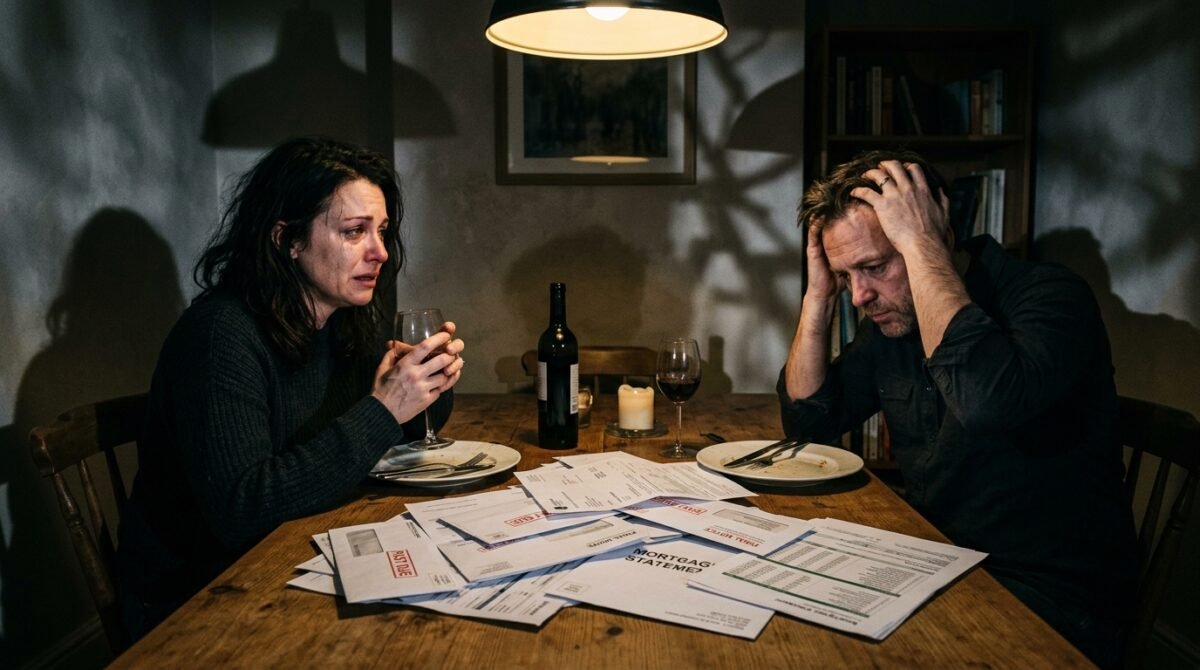
I invited Mark to dinner at home that Friday. I made his favorite meal—a slow-roasted brisket—and poured a glass of wine for each of us. The irony was not lost on me. He walked in, smelling of the harbor, his confidence slightly bruised but still present. He thought I had ‘cooled down,’ that I was ready to accept his ‘investment’ logic and move on to the next chapter of his boat-owner life.
We ate in a heavy, strained silence. He tried to make small talk about the local sports team and the weather, his voice filling the void. I let him talk, watching him like a specimen under a microscope. He looked so comfortable, so entitled to the life he had built, unaware that the floorboards were about to be pulled out from under him. I didn’t say a word until he had finished his second glass of wine.
I pulled the forensic report from under my chair and slid it across the table. It made a soft, scraping sound against the mahogany. He looked at it, then at me, his smile faltering. He didn’t pick it up immediately. He just stared at the cover, his hands resting on his lap. The air in the room seemed to thin out, the atmosphere becoming sharp and electric.
“I’ve had a forensic accountant look into our finances, Mark. I know about the boat, the personal loans in my name, and the secret accounts. I know exactly how much you’ve stolen from Chloe and from me. Do not insult my intelligence by lying.”
He turned pale, the color draining from his face until he looked almost translucent in the dim dining room light. He reached for the report, his fingers trembling as he flipped through the pages. Each page turn was a confession he couldn’t deny. He tried to speak, to offer some pathetic justification, but the words died in his throat. He looked at me with a mix of shock and, for the first time, genuine fear.
He realized then that the ‘angry wife’ he could manipulate was gone. In her place was a woman who had documented his ruin. He tried to stand, perhaps to leave, perhaps to argue, but he simply fell back into his chair, the weight of the evidence crushing his fragile sense of superiority. That dinner wasn’t a conversation; it was the funeral for our marriage.
The Legal Ultimatum

The following morning, I served him with the separation papers and a formal demand for the immediate liquidation of the boat. I didn’t want the boat; I wanted the cash returned to the trust fund account, plus interest, and I wanted his name removed from every single account we shared. I told him he had forty-eight hours to comply before I filed a police report for financial fraud and embezzlement of custodial assets.
He spent those forty-eight hours in a frantic state. He called me incessantly, his voice alternating between rage and pathetic, blubbering apologies. He tried to frame it as a ‘misunderstanding’—a word he would learn to hate in the coming weeks. He tried to involve our extended family, telling his mother that I was ‘holding him hostage’ over a business venture, but the truth had a way of leaking out.
My family was a wall of support. When my father heard what happened, he didn’t call Mark; he called his lawyer. He told me that if Mark didn’t return the money, he would personally finance the litigation to ensure Mark ended up with nothing but the boat and a mountain of legal bills. The solidarity was overwhelming. I wasn’t just fighting for Chloe; I was fighting for the integrity of our lives.
“You have two days, Mark. The boat goes on the market, and the funds are returned to the escrow account managed by my attorney. If you try to sell the boat privately at a loss to spite me, I will pursue the difference as damages in our divorce settlement. You have no leverage. You have only choices.”
He finally broke. On the second day, he signed over the power of attorney for the sale of the boat to a broker chosen by my team. He was physically and emotionally defeated, his ‘Midlife Miracle’ becoming the anchor that dragged his reputation to the bottom of the bay. Watching him sign those papers was one of the most satisfying moments of my life.
It wasn’t about the money anymore. It was about the principle. He had attempted to commodify our daughter’s future for his own vanity, and he deserved the public humiliation that would inevitably follow as the truth circulated through our social circle. He was no longer the man I married; he was a cautionary tale I had helped write.
The Internet Weighs In

I shared my story on an anonymous forum, needing to know if I was missing some nuance of the law or marriage. I expected a mix of support and skepticism, but the reaction was instantaneous and overwhelming. Thousands of people, many of them complete strangers, rallied around the injustice of the situation. The post went viral within hours, becoming a focal point for discussions on financial infidelity and parental responsibility.
People shared their own stories of similar betrayals—spouses hiding debts, parents stealing from college funds, the long-term damage of secrets. It was a community of support that I hadn’t realized existed. The consensus was clear: Mark was a villain in his own story, and I was absolutely right to go the route of legal, forensic intervention. The validation was a balm for the trauma I had been suppressing.
“OP, you are doing the right thing. This isn’t just about a boat; it’s about the fact that he viewed his daughter’s future as his personal piggy bank. Do not feel guilty for a second. His choice to steal from a child makes him the architect of his own destruction. Let the court handle him.” — u/JusticeForChloe (Top Comment, 45.2k upvotes)
Of course, there were the contrarians, the ones who suggested I was ‘destroying a family’ over a financial mistake. But they were drowned out by the chorus of voices reminding me that a family is built on respect, and Mark had discarded that long ago. Seeing the sheer scale of the public outrage reinforced my resolve. I wasn’t being cruel; I was being fair.
I read every comment, finding solace in the collective wisdom of the internet. It was a strange experience to see my personal agony distilled into a viral headline, but it served as a powerful reminder that I wasn’t alone. This wasn’t just my story; it was a rallying cry for anyone who had been blindsided by a partner’s hidden selfishness.
The thread became a repository of legal advice, emotional support, and even a few humorous anecdotes about people who had caught their spouses in similar, ridiculous lies. It turned my trauma into a lesson, a narrative that I could control. I stopped looking at the comments after a few days, but the support remained, a bedrock of solidarity that kept me steady through the upcoming divorce proceedings.
The Reality of the Financial Damages

As the legal process dragged on, the full extent of the financial damage became clear. It wasn’t just the $120,000 for the boat; it was the loss of interest, the penalties for early withdrawal, and the tax implications that would haunt us for years. Mark had cost us nearly $150,000 in total, a sum that he had no way of replacing. He had effectively bankrupted our future-proofing, leaving us to start from scratch.
We sat in mediation, the atmosphere sterile and suffocating. Mark looked haggard, his skin grey, his eyes rimmed with exhaustion. He wasn’t the vibrant, carefree boat owner anymore. He was a man who had lost everything—his marriage, his daughter’s respect, and his financial standing—all for a vessel that he barely had the chance to enjoy. The irony was palpable in the silence of the room.
The mediator, a woman with a sharp, no-nonsense approach, reviewed the forensic report with a grimace. She had seen thousands of divorce cases, but she admitted that this was one of the most egregious cases of financial betrayal she had encountered. She pushed Mark to admit his fault, to document the timeline of his deception, and to agree to a settlement that prioritized Chloe’s future above all else.
“You have two options, Mr. Henderson. You can sign the settlement as it stands, which includes a structured repayment plan for the stolen funds and a forfeiture of all marital assets, or we go to court, where a judge will see the same evidence and likely rule even more harshly against you. This is your final chance to maintain a shred of dignity.”
Mark signed. He didn’t fight it anymore. He knew he had lost. The repayment plan was strict, garnished directly from his paycheck for the next decade. He would have to work overtime, cut his personal expenses, and live a life of austerity, all to pay back the money he had stolen from his own daughter. It wasn’t justice in the sense that our life was restored, but it was accountability.
I watched him sign the papers, feeling a sense of closure that I hadn’t expected. The anger had dissipated, replaced by a cold, clinical acceptance of the situation. The money would return to the account, but the relationship was permanently broken. There was no ‘moving past’ this; there was only moving forward, separately.
Chloe’s Perspective

The hardest part of the entire ordeal was telling Chloe. She was sixteen, old enough to understand the gravity of the situation but young enough to be devastated by her father’s choice. I didn’t sugarcoat it. I told her the truth, using age-appropriate language but refusing to hide the fact that her father had prioritized a luxury purchase over her future.
I expected her to cry, to get angry, to lash out at me. Instead, she was silent. She sat on her bed, staring at her laptop screen, her expression unreadable. When she finally spoke, her voice was quiet, steady, and terrifyingly mature. She asked me if he had ever truly cared about her dreams, or if he just cared about the ‘idea’ of being a good father.
“I don’t hate him, Mom. I think I just feel… nothing. He’s a stranger to me now. If he can do that to me, what else has he been doing? I don’t want to see him for a while. Please, just tell him to stay away until I’m ready.”
That was the final blow. Her detachment was more painful than any argument we could have had. She had processed the betrayal and decided that he was no longer a person she wanted in her life. It was a mature, if tragic, conclusion for a teenager to reach. She began attending therapy, focusing on her own goals, and I made sure she had all the support she needed to pursue her passions.
We spent the next few months rebuilding our lives, just the two of us. We turned the study into a reading room, painted the walls a brighter, cleaner color, and focused on the future. The money started trickling back into the account, slowly but surely, a physical reminder that we were reclaiming our power. Chloe excelled in her studies, her drive fueled by a desire to succeed on her own terms.
She didn’t need his money. She had her own strength, a resilience that she had forged in the fire of this betrayal. I watched her grow, proud of the woman she was becoming, and relieved that she had learned such a valuable, if painful, lesson about the importance of independence and integrity. We were okay. We were better than okay.
The Aftermath and Lessons Learned

It has been a year since the incident. The boat is sold, the money is almost entirely recovered, and the divorce is finalized. Mark is living in a small apartment, working long hours, and occasionally seeing Chloe for supervised dinners when she feels up to it. The ‘Midlife Miracle’ is a ghost of a past life, a cautionary tale that we tell ourselves to keep our priorities in check.
I’ve learned that trust isn’t a static state; it’s a dynamic agreement that requires constant communication and transparency. I’ve also learned that people show you who they are through their actions, not their words. Mark told me he loved us, but his actions said otherwise. I no longer judge people by what they promise; I judge them by what they do when the pressure is on.
I’ve become more involved in my own finances, taking charge of our investments, and ensuring that I am never again caught off guard by a partner’s secret life. I’ve found a new sense of autonomy, a strength that I didn’t know I possessed until I was forced to stand on my own. The trauma has left scars, but it has also cleared the path for a future that is entirely mine.
“The most important lesson I learned is that you cannot sacrifice your own security for the sake of someone else’s comfort. Financial independence is the ultimate form of self-love. I’m never going to be in a position where I’m surprised by a bank statement again.”
I look back at the woman who stood on that pier, shivering with rage, and I feel a profound sense of empathy for her. She was scared, broken, and unsure of what to do. But she acted. She stood up for her child, for her rights, and for the truth. She survived the hurricane, and she came out the other side stronger, wiser, and entirely free.
We still have hard days. The memory of the betrayal occasionally resurfaces, a dull ache in the chest, but it doesn’t consume us anymore. We have moved on, and in the process, we have discovered that we are capable of enduring far more than we ever thought possible. We are the architects of our own lives, and we aren’t letting anyone else hold the blueprints.
A Final Note on Financial Infidelity

Financial infidelity is the silent killer of relationships. It is the slow, deliberate erosion of trust that happens when one partner keeps secrets from another. It doesn’t start with a luxury speedboat; it starts with a secret credit card, a hidden debt, or a small, ‘unimportant’ purchase that is never disclosed. It is a slow-motion car crash that most people don’t see coming until it is far too late.
If you suspect something is wrong in your financial life, don’t wait for a sign. Take charge. Check your accounts, review your credit reports, and have the hard, uncomfortable conversations now before they become life-altering ones. There is no shame in being suspicious when your intuition is screaming at you. There is only the risk of losing everything if you ignore it.
I share my story not for sympathy, but for awareness. I want other women—and men—to know that they have options, that they have power, and that they don’t have to accept a life of betrayal. You deserve to be in a relationship where your trust is honored, not exploited. You deserve a partner who views your goals as their own, not as an obstacle to their personal gratification.
“If you are in a position where you feel like you are walking on eggshells with your finances, look closer. The red flags are there; they are just waiting for you to see them. Don’t be afraid to pull the thread. The truth is always worth the cost of the tapestry.”
My life is different now, but it is authentic. I am no longer part of a stage play; I am living a real, honest life, defined by my own choices and the success of my daughter. I am grateful for the lessons I’ve learned, even if the tuition was far higher than it should have been. I am ready for whatever comes next, and I’m going into it with my eyes wide open.
Remember: trust is earned, not given. And it can be lost in an instant. Guard it, protect it, and never, ever let someone else take control of the future you have worked so hard to build for yourself and your loved ones. The boat is gone, but the lesson remains—and it’s worth more than any vessel on the water.
Conclusion
The story of the stolen trust fund serves as a stark reminder of the fragile balance between love and law. When the person meant to be your partner becomes your greatest financial threat, the resulting wreckage is often profound. Yet, through this process, I discovered a latent strength and a community of support that I never knew existed. My journey from betrayal to autonomy wasn’t just about recovering a balance sheet; it was about reclaiming my agency.
We are all vulnerable to the people we love, but we are also capable of protecting ourselves. I hope my experience encourages anyone currently doubting their own financial situation to take that first step toward transparency and protection. No boat, no lifestyle, and no luxury is worth the cost of a broken family.
What about you? Have you ever had to deal with a partner’s financial secrecy, or have you ever had to draw a hard line in the sand to protect your family’s future? Let’s talk about it in the comments below. Do you think I was too harsh, or was my forensic approach the only way to handle a betrayal of this magnitude?
What's your verdict on this dilemma?
Vote below to contribute to the official community consensus.

Have a Dilemma Keeping You Up at Night?
Share your real-life feud, wedding chaos, or relationship crossroads anonymously with our editorial team.
What do you think ?
0 Comments🛡️ Comments are moderated to protect community integrity. Your comment will appear once approved by the editorial team.