
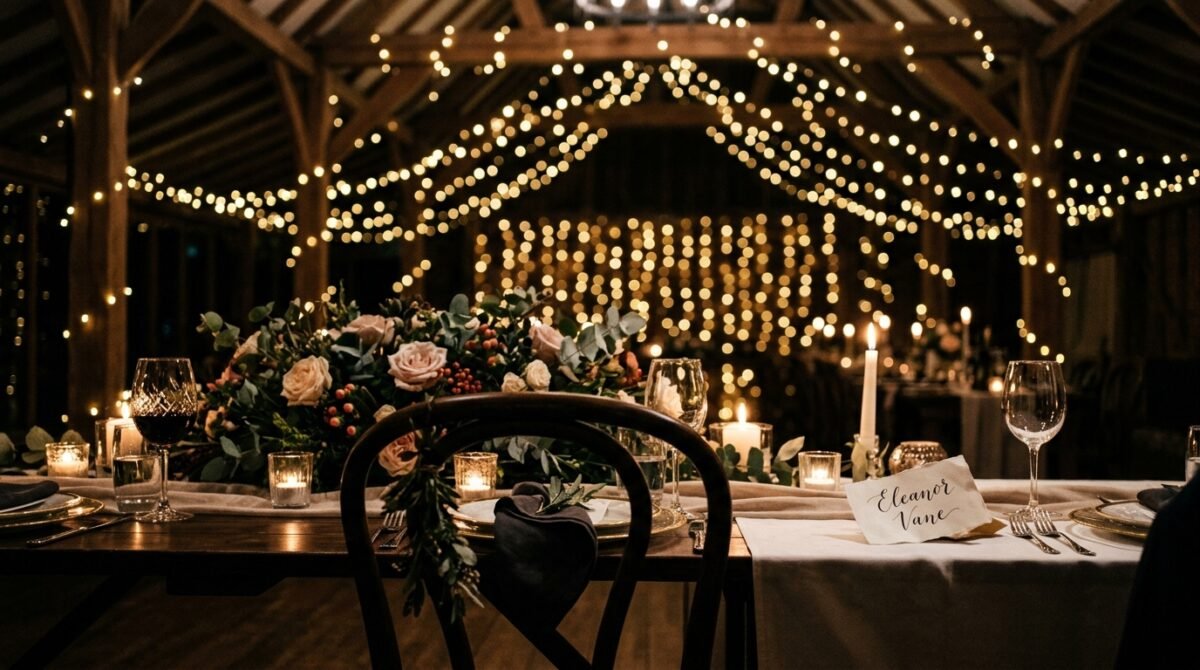
We have all heard the horror stories about bridezillas and nightmare grooms, but I never expected to be the protagonist in my own cautionary tale of wedding reception etiquette. For months, I had been the unofficial assistant to my ‘best friend’ Mark’s wedding. I helped with the seating charts, I handled the RSVP tracking, and I personally ensured my own severe Celiac disease was flagged with the caterers, confirming a dedicated gluten-free meal months in advance.
It wasn’t just about the food. It was about the principle, the planning, and the underlying assumption that my needs were an inconvenience to be managed rather than a priority to be respected. When I sat down at that table, exhausted after hours of helping the bridal party navigate their own chaos, I expected the dinner I had been promised. I did not expect to watch the groom—the man I had known since college—literally hand my plate to someone else.
The moment that dinner tray slid across the table to his groomsman, a man who had no dietary restrictions whatsoever, I felt the internal snapping of a bond that had lasted nearly a decade. The sheer audacity, the casual disregard for my health, and the dismissive wave of his hand when I tried to speak up told me everything I needed to know about where I stood in his life.
This isn’t just about a plate of food. It is about the entitlement that grows in the dark corners of long-term friendships where one person stops seeing the other as an equal. I didn’t cause a scene; I didn’t flip the table. I stood up, called an Uber, and systematically erased him from my existence before the dessert was even served. Here is how it all went down, and why, in the world of wedding etiquette, some bridges are meant to be burned.
The Months of Unpaid Labor

Long before the day of the ceremony, I was already knee-deep in the logistics of Mark and Sarah’s nuptials. I wasn’t just a guest; I was essentially the unpaid event coordinator. I spent my weekends stuffing invitations, debating floral arrangements, and acting as a buffer between the mother-of-the-bride and the venue manager. Every time I mentioned my dietary needs, I was met with a chorus of ‘don’t worry, we’ve got you covered’ from both of them.
I kept a meticulous spreadsheet of RSVPs, and right there in bold, red font was my specific requirement: Gluten-Free/Celiac Safe. I paid for my own hotel room, I bought the expensive bridesmaid-adjacent dress they insisted on, and I even chipped in for the pre-wedding brunch that Sarah had ‘forgotten’ to budget for. There was a level of expectation that I would simply absorb the costs and the stress because, as Mark said, ‘That’s what best friends are for.’
The irony of the situation wasn’t lost on me even then. I was constantly told how much they appreciated me, but that appreciation rarely translated into actual consideration. Whenever I brought up the meal, Mark would chuckle and say, ‘You’re so dramatic about the gluten thing. It’s just a wedding, you’ll find something to eat.’ I didn’t realize then that he wasn’t just dismissing my health; he was conditioning me to be invisible in the face of his convenience.
Looking back, the signs of his selfishness were everywhere. He would borrow money for ‘wedding emergencies’ that never seemed to get repaid, and he would constantly reschedule our catch-up calls to accommodate whatever whim Sarah had at that moment. I felt like a side character in a play I was helping to write, but I kept pushing through, hoping that once the big day was over, things would return to normal.
The weeks leading up to the event were a blur of late-night panic texts and frantic errand running. I was the one who drove to the florist at 6:00 AM because of a delivery error, and I was the one who spent the night before the wedding steaming linens in a cramped hotel suite. I was running on fumes, sustained only by the promise of a celebratory dinner and the hope that I could finally relax once the vows were exchanged.
The Moment the Plate Changed Hands
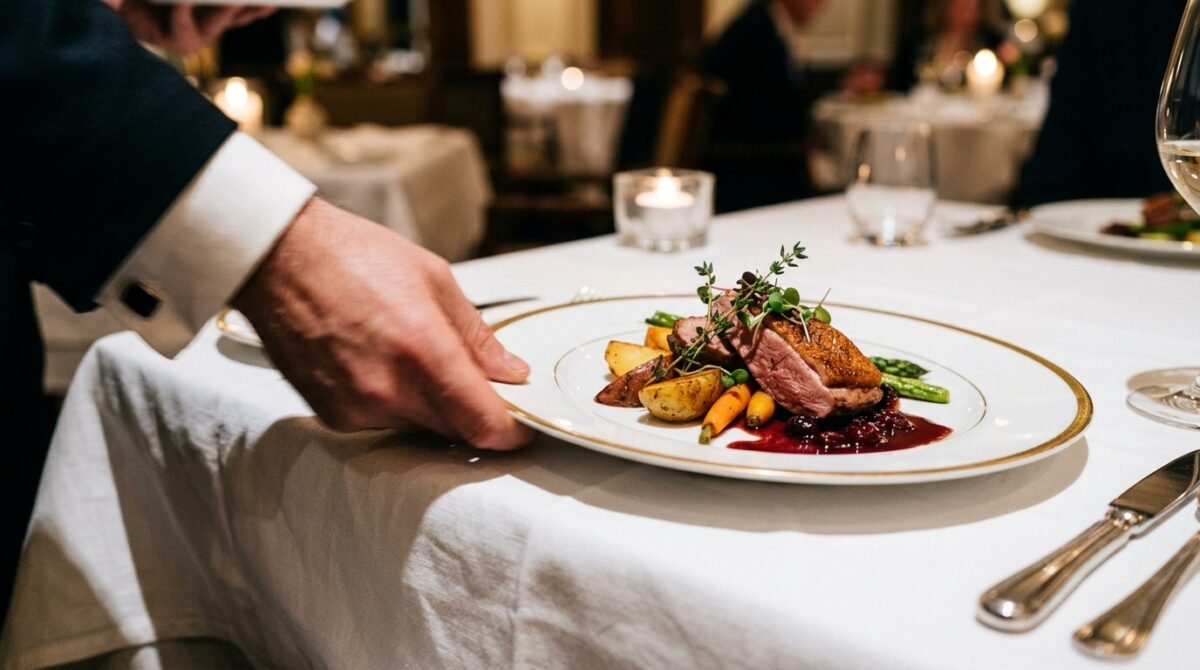
The reception was in full swing, and the air was thick with the smell of expensive catering and the sound of clinking champagne glasses. I finally sat down at the table, my stomach growling. I had been on my feet for nearly ten hours, helping with everything from the photography schedule to the misplaced place cards. I was genuinely starving, and I knew exactly what my meal was: a safe, gluten-free grilled chicken and vegetable dish that I had confirmed with the kitchen staff only an hour earlier.
A waiter approached the table, carrying a special tray clearly marked with a yellow ‘GF’ sticker. He placed it right in front of me with a polite nod. I exhaled, feeling a massive wave of relief. I reached for my napkin, ready to tuck into the meal, when Mark leaned over from the head table. He had spotted the tray, and his face lit up—not with relief for me, but with opportunity.
“Hey, Dave!” Mark shouted to his groomsman, who was sitting three seats down. “I know you’re starving. Here, take this one. It looks better than the beef anyway!”
Before I could even process what was happening, Mark had reached over, snatched my plate from in front of me, and slid it down the table to Dave. The waiter looked confused, but because it was the groom, he didn’t dare intervene. I sat there in stunned silence, my mouth slightly agape, watching my dinner being devoured by someone who had absolutely no idea—and no care—about the cross-contamination risks or the effort that had gone into securing that meal.
I looked at Mark, expecting him to notice my shock. Instead, he just laughed and turned back to his bride, completely oblivious to the fact that he had just deprived his ‘best friend’ of the only thing she could safely eat at the entire reception. The entitlement was so casual, so reflexive, that it hit me harder than if he had insulted me directly. To him, my meal was just a commodity to be traded for his own social standing.
The Cold Reality of Being Invisible
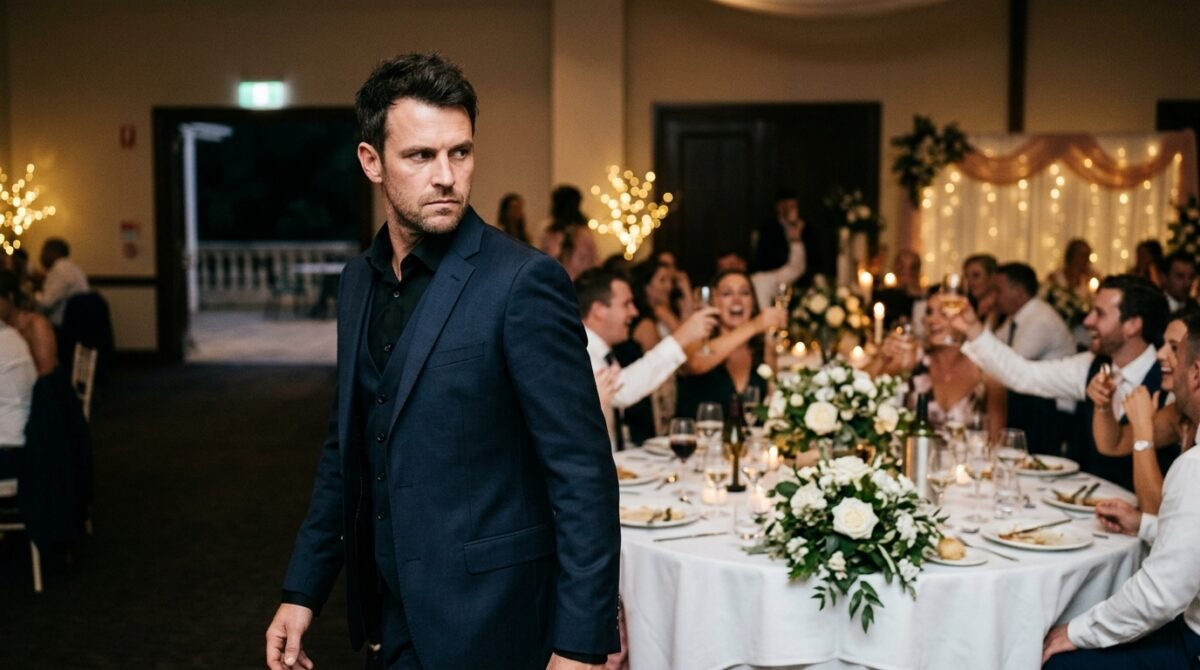
I didn’t say anything immediately. I was too shocked to speak. I sat there for a moment, waiting for someone—anyone—to realize what had happened. Dave, the groomsman, was already halfway through the chicken, oblivious to the fact that I was now sitting in front of an empty placemat. I looked at the other guests at the table, hoping for an ally, but they were all busy chatting, their plates already half-consumed.
I eventually flagged down the waiter. ‘Excuse me,’ I whispered, my voice trembling slightly. ‘That was my meal. I have a medical requirement. Is there any way you can bring me another?’ The waiter looked sympathetic but shook his head. ‘I’m so sorry, miss. That was the only gluten-free preparation we had on the floor. Everything else in the kitchen contains flour for the sauce. We’d need at least forty minutes to prep something new from scratch.’
Forty minutes. That was the length of the toasts and the start of the dancing. I wasn’t just being denied food; I was being told that my health was secondary to the comfort of a guy who simply wanted a tastier option. I felt a cold, hard knot of realization form in my stomach. This wasn’t a mistake; it was a character statement. Mark didn’t care. He had never cared.
I stood up and walked over to where Mark was sitting. He was mid-laugh, holding a glass of wine, looking radiant and entirely unbothered. I leaned down and whispered, ‘Mark, you gave away my meal. That was the only thing I could eat. I’m going to have to leave.’
He didn’t even turn his head properly. He just waved a hand at me and said, ‘Oh, come on. Just eat the salad, don’t be so dramatic. You’re ruining the vibe. Go grab a drink at the bar and stop making this about you.’ The dismissiveness was absolute. The ‘vibe’ was more important than my basic human needs. That was the moment the friendship died.
The Silent Departure
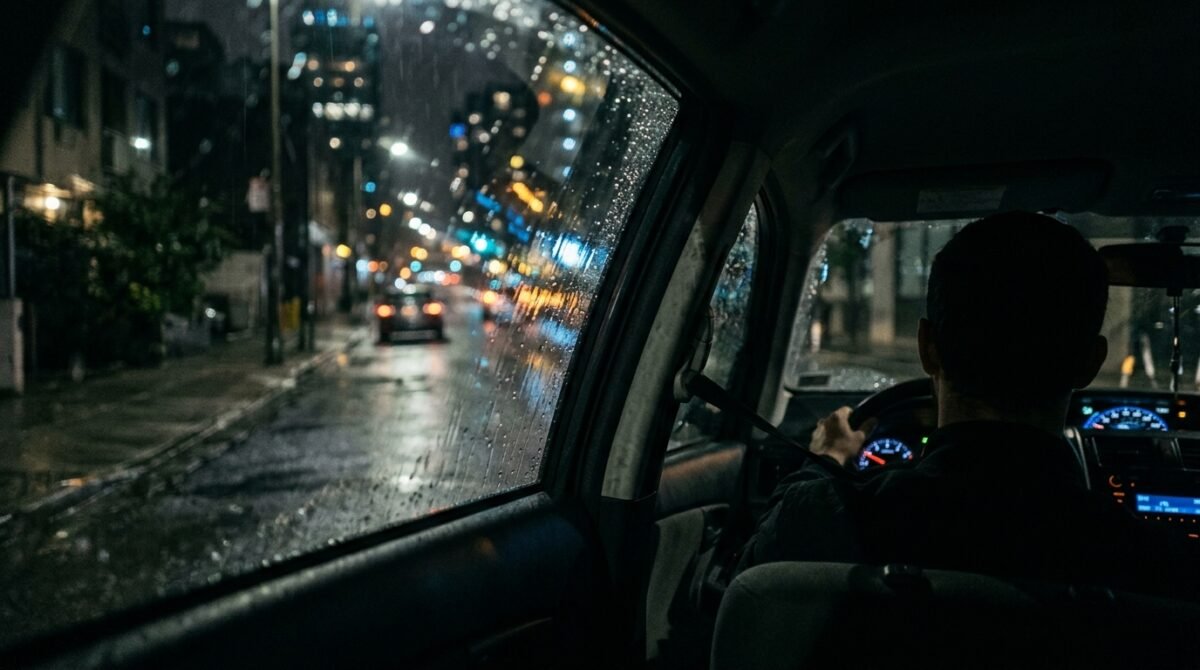
I didn’t argue. I didn’t scream. I didn’t cause a scene. I walked back to my seat, picked up my purse, and simply walked out of the venue. The walk to the lobby felt like a slow-motion sequence in a movie. I could hear the music playing, the laughter, the clinking of glasses, and for a split second, I felt a pang of guilt. Was I overreacting? Was it really just a plate of food?
But as I stepped out into the cool night air, the clarity hit me. If he couldn’t respect me enough to keep his hands off my dinner—a dinner he knew I had vetted for weeks—what else was he doing? How many other ‘favors’ had he taken from me without a second thought? The Uber app was already open on my phone. I didn’t even look back to see if anyone had noticed I was gone.
I sat in the back of the Uber, my heart rate finally starting to slow down. I felt a strange sense of liberation. For months, I had been tied to his schedule, his needs, his drama. By stepping into that car, I was severing the tether. I didn’t want to explain myself to anyone, and I certainly didn’t want to hear his excuses. I was done.
Once I got home, I didn’t change out of my dress. I just sat in my living room, the quietness of my apartment contrasting sharply with the chaotic noise I had just left behind. I opened my phone and went straight to the block button on every platform. Instagram, WhatsApp, Facebook, phone calls—he was gone. No dramatic text, no long explanation. Just silence.
The Fallout in the Group Chat
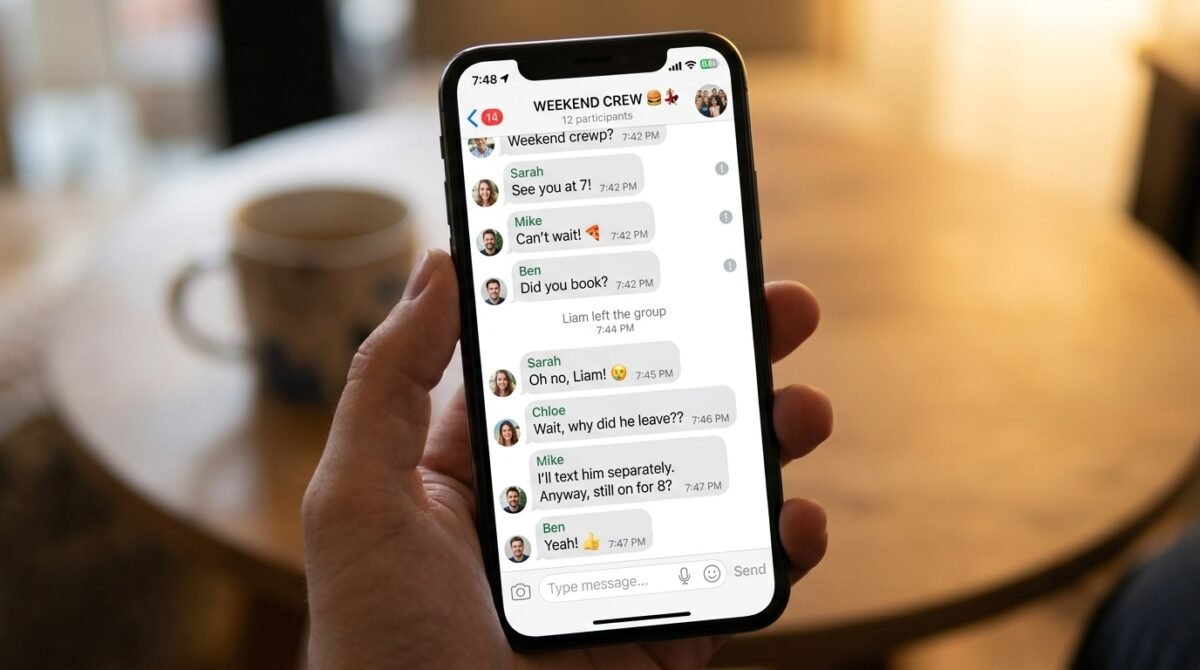
The next morning, I woke up to a flurry of notifications that I had already muted. My phone was buzzing with messages from mutual friends, all asking the same thing: ‘Where did you go? Mark is furious that you left without saying goodbye.’ I couldn’t help but laugh. He was furious? The man who stole my dinner was mad at me for leaving?
I opened the group chat, curious to see the narrative he was spinning. It was exactly what I expected. He had painted himself as the victim of my ‘unpredictable mood swings’ and ‘the tantrum I threw over a plate of food.’ He conveniently left out the part where he was the one who snatched the plate off my table.
“I just wanted to make sure Dave had enough to eat since he’s been working so hard, and she literally stormed out like a child. I’ve never seen such entitlement at a wedding.”
— Mark, in the Wedding Group Chat
I took a deep breath and decided to reply, just once. I didn’t want to fight; I wanted to set the record straight for those who actually mattered. I posted a single, neutral message explaining that I had a medical condition, that the meal was a specific accommodation I had spent months coordinating, and that the groom had given it away without asking. Then, I left the group chat.
The impact was immediate. I saw the ‘typing’ bubbles pop up from five different people at once. I didn’t stay to read the fallout. I knew that by speaking the truth, I had already done enough. The people who valued my side of the story would reach out privately, and the ones who preferred his version of reality weren’t worth my time anyway.
The Unsolicited Apology
Three days later, I got a call from an unknown number. Against my better judgment, I answered. It was Sarah, the bride. She sounded tired, stressed, and surprisingly conciliatory. She claimed she didn’t know what had happened until after the wedding, and that she was ‘so sorry’ for the confusion. She asked if I could ‘please just smooth things over’ because Mark was ‘really upset’ and it was ruining their honeymoon.
I listened in silence. When she finished, I told her that my issue wasn’t with her, but that I couldn’t be friends with someone who treated me with such blatant disregard. I told her that the issue wasn’t the food—it was the fact that Mark thought his comfort was worth more than my health. She tried to defend him, saying ‘he’s just a guy, he doesn’t think about these things,’ and that was the final straw.
If being ‘a guy’ is an excuse for being a jerk, then I wanted no part of that world. I told her that I wished them the best, but that my involvement in their life was officially at an end. I hung up the phone before she could say another word. I felt powerful. For the first time in our friendship, I was the one controlling the narrative.
I didn’t feel guilty. I didn’t feel like I was holding a grudge. I felt like I was finally setting a boundary that I should have set years ago. The relief was palpable. I spent the rest of the day deleting photos, archiving old conversations, and reclaiming the space in my head that I had been dedicating to their drama for far too long.
The Reddit Verdict: NTA
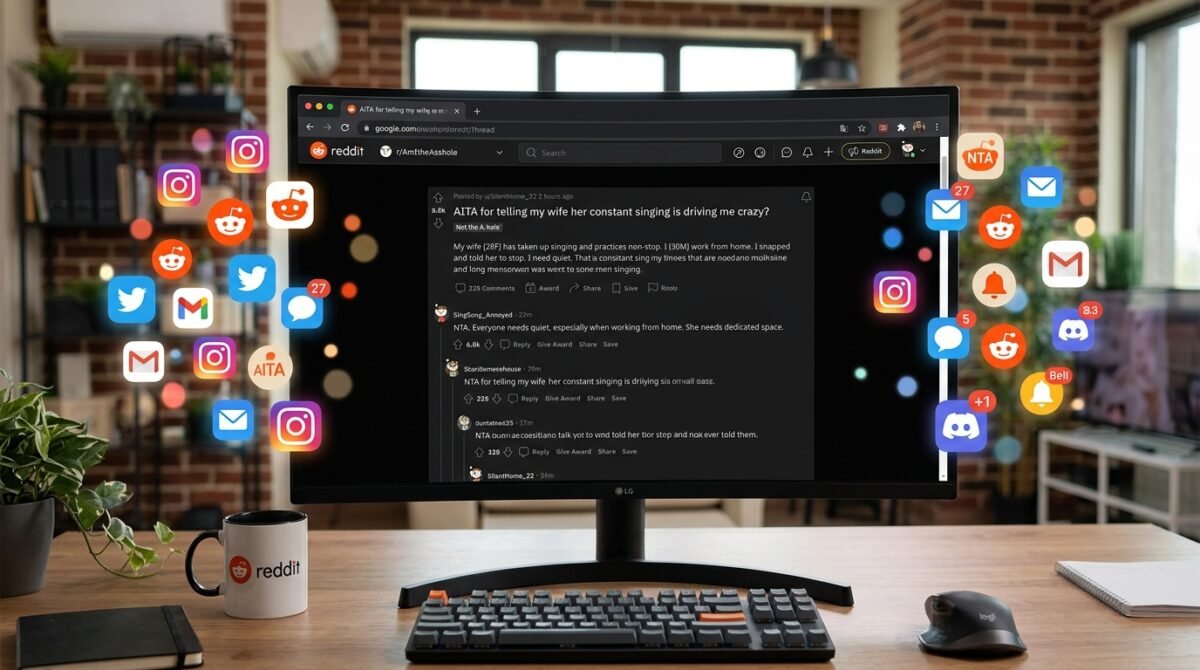
I posted the story on a popular subreddit anonymously, not for validation, but for perspective. I wanted to see if I was crazy. The response was overwhelming. Within hours, the post had thousands of upvotes and hundreds of comments. People were outraged on my behalf, specifically about the lack of respect for medical dietary restrictions.
“This isn’t just about a meal. It’s about the groom literally taking food out of your mouth to give to his friend. That is a massive power move of disrespect. You are NTA. Cut him off completely.”
— u/RedditUser99 (Top Comment, 15.2k upvotes)
There were people who argued that I should have been ‘the bigger person’ and just eaten a snack later, but they were quickly drowned out by others who understood the frustration of chronic illness. The consensus was clear: the groom’s behavior was not just rude; it was a symptom of a deeply toxic dynamic where my needs were always going to be the first to be sacrificed.
It was validating to see that I wasn’t just being ‘dramatic.’ The community pointed out that in a long-term friendship, the expectation is reciprocity and care. When that breaks down, especially in a high-stress environment like a wedding, it’s often indicative of a much larger rot in the foundation of the relationship. I read every comment, and it helped me solidify my decision to stay no-contact.
I felt a strange sense of community with strangers who had been through similar betrayals. It made me realize that I wasn’t alone in this, and that walking away is often the healthiest choice you can make. The comments provided me with the armor I needed to stop second-guessing myself. I was finally moving on.
Why I’m Better Off Now
It has been six months since that wedding. My life has changed in ways I didn’t expect. I have more time, more energy, and a lot less stress. I realized how much of my emotional bandwidth I was wasting on someone who didn’t respect me. I’ve started investing that time back into my own hobbies, my career, and the friends who actually show up for me.
I’ve learned that the people who tell you to ‘just get over it’ are usually the ones who benefit from you being a doormat. When you start setting boundaries, the people who were used to walking all over you will be the loudest in their protests. They’ll call you difficult, dramatic, or selfish. Let them. Their labels don’t change the reality of your worth.
I haven’t heard from Mark or Sarah since that day. I assume they’re still living their lives, and I’m sure they have a version of this story where I’m the villain. That’s fine by me. I know what happened. I know how I felt. And most importantly, I know that I deserved better than to be an afterthought at a celebration I helped make happen.
I’ve also become much better at saying no. I don’t feel the need to explain my reasons for every decision I make, and I don’t feel obligated to sacrifice my comfort for someone else’s ‘vibe.’ I’ve reclaimed my autonomy, and honestly? It tastes better than any wedding meal ever could.
The Lessons in Boundaried Living

Looking back, the biggest lesson I learned wasn’t about weddings or catering—it was about self-respect. We are taught to be ‘polite’ and ‘accommodating,’ especially as women, but there is a point where politeness becomes self-sabotage. I gave away so much of myself to that friendship that when the time came for me to need even the smallest scrap of consideration, there was nothing left to give.
I now look at my relationships differently. I ask myself, ‘Does this person respect my boundaries?’ and ‘Do they celebrate my needs, or do they see them as an obstacle?’ If the answer isn’t a resounding yes, I know to keep my distance. I’ve learned that a true friend would never, under any circumstances, take the food off my plate, especially knowing it was my only option.
I’ve also learned that people will tell you exactly who they are through their actions, not their words. Mark said we were best friends, but his actions said otherwise. I stopped listening to the words and started watching the actions, and it has saved me from so much heartache. It’s a simple shift in perspective, but it has changed my life entirely.
I’m grateful for the ‘dinner incident,’ as I call it now. It was the catalyst I needed to stop wasting my life on people who didn’t value me. It was a painful moment, but it was also a turning point. Sometimes, you need a moment of extreme disrespect to realize that you’ve been standing in the wrong place for far too long.
A Final Word to the Readers

If you take anything away from my experience, let it be this: you are allowed to walk away. You don’t need permission to leave a situation where you are being treated as an object instead of a human. You don’t owe anyone your presence if that presence comes at the cost of your health, your sanity, or your self-respect. People will be mad, yes, but their anger is not your responsibility.
I’ve received so many messages from people who have had their own ‘wedding nightmares’ or ‘friendship betrayals.’ The stories are all remarkably similar—a gradual erosion of boundaries followed by a singular, shocking event that makes it impossible to look away. If you’re currently in a situation where you feel small, ignored, or taken for granted, listen to your gut. It’s trying to tell you something.
You are worthy of more than just a seat at the table. You are worthy of being fed, being respected, and being valued for who you are, not just for what you can do for someone else. Don’t wait for a dramatic, public explosion to realize that your boundaries matter. Start enforcing them today, even in the small ways. You’ll be surprised at how much clearer your life becomes when you stop apologizing for taking up space.
I’m finally in a place where I’m surrounded by people who would never dream of stealing my dinner. And if they did? They wouldn’t have to worry about me walking out—they’d be out of my life before the plate even hit the table. That is the kind of peace that everyone deserves.
Conclusion
Reflecting on this journey, it’s clear that the ‘dinner incident’ was never really about the food. It was a litmus test for the health of a long-standing friendship that had long since become one-sided. Walking away wasn’t an act of petulance; it was a necessary declaration that my health and my dignity were not up for negotiation. Through the process of going no-contact and navigating the fallout, I’ve found a level of self-assurance I didn’t know I was capable of.
The lessons learned here are universal: true friendship is reciprocal, boundaries are essential for your sanity, and sometimes, the bridge you burn is the one leading you to a much better place. I hope my story serves as a reminder that your needs are never an ‘inconvenience’—they are a core part of who you are, and you deserve to be surrounded by people who prioritize them just as much as you do.
Community Poll: Would you have walked out, or would you have stayed and tried to ‘make peace’ for the sake of the wedding?
- I would have walked out immediately (The only way to set a standard).
- I would have stayed, but I would have brought it up after the honeymoon.
- I would have made a scene right there at the table.
- I wouldn’t have cared about the food, but I would have confronted him later.
What's your verdict on this dilemma?
Vote below to contribute to the official community consensus.

Have a Dilemma Keeping You Up at Night?
Share your real-life feud, wedding chaos, or relationship crossroads anonymously with our editorial team.
What do you think ?
0 Comments🛡️ Comments are moderated to protect community integrity. Your comment will appear once approved by the editorial team.