

My prize rabbit, Barnaby, isn’t just a pet. He is a multi-award-winning Holland Lop that I have raised, groomed, and conditioned for national show circuits for over three years. He is part of my identity, my hobby, and my financial investment. My brother, Mark, has always been the ‘cool uncle’ who believes that kids should be allowed to explore, often at the expense of everyone else’s boundaries. When he visited last weekend with his four-year-old son, Leo, I was hesitant but optimistic that a Sunday lunch could pass without incident.
I was wrong. While I was in the kitchen prepping a salad, the sound of a crinkling wrapper and a strange, hyperactive thumping echoed from the living room. I walked in to find Leo holding an empty packet of high-caffeine energy chews—the kind I keep in my gym bag for long runs—and Barnaby frantically darting around his enclosure, heart racing, pupils dilated, and clearly in medical distress. My brother’s response wasn’t alarm; it was a shrug and a comment about ‘kids being curious.’
What followed was a frantic three-hour emergency trip to the exotic animal vet, a series of expensive diagnostic tests, and a terrifying night spent monitoring a rabbit whose heart rate was hitting dangerous levels. By the time I got home, the adrenaline had faded, replaced by a cold, hard sense of injustice. The vet bill was over $1,200. I didn’t yell. I didn’t start a fight. I simply did what I felt was the only logical step: I itemized the expenses, added a surcharge for the professional grooming sessions Barnaby missed due to his recovery, and sent the invoice to my brother.
This isn’t just about money. It’s about the fact that my brother refuses to parent his child and expects the world to be a soft-padded room where no consequences exist for his family’s negligence. When the invoice hit his inbox, the calm atmosphere of my family dynamic shattered. Now, I am being accused of being ‘heartless’ and ‘petty.’ But is it really petty to hold someone accountable for endangering a living creature, or is this just the price of admission for someone who refuses to learn?
The Morning of the Incident: A False Sense of Security
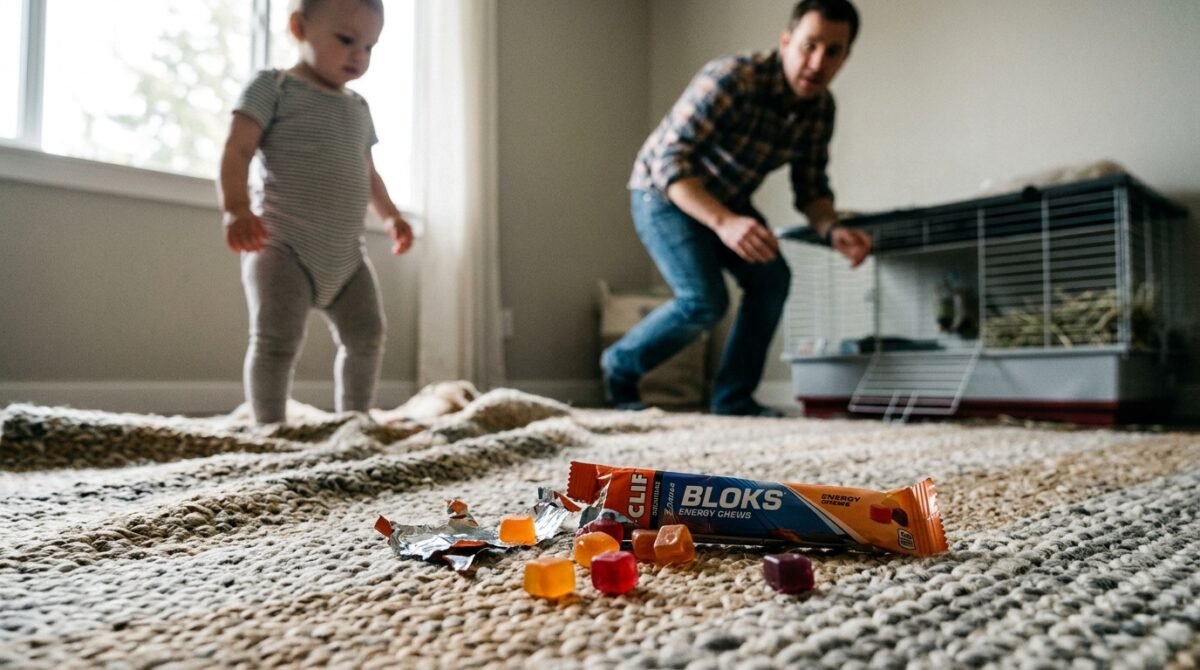
The day started with the best of intentions. The sun was streaming through the bay windows, and I had spent the entire morning grooming Barnaby for an upcoming regional competition. He was in peak condition, his coat pristine and his disposition calm. When Mark arrived with little Leo, I made it explicitly clear that the rabbit room was off-limits. I even locked the primary latch on the enclosure, a mistake I would later regret assuming would hold back a curious toddler with the assistance of an ‘indulgent’ father.
My brother entered the home with the typical chaotic energy that accompanies a toddler who has had too much sugar. I had specifically asked them to leave their bags in the hallway, but Mark had let Leo drag his backpack—the one containing my gym gear—into the living room. I didn’t think much of it at the time, distracted by the clatter of plates and the need to get the roast in the oven. The atmosphere was light, filled with the usual banter of brothers who hadn’t seen each other in a month.
I remember joking with Mark about his latest work project, never suspecting that the very item I used to keep myself awake during long drives was sitting right there, inches away from my pet. We sat at the dining table, barely thirty feet from the living room, shielded by a partition wall. It was the lack of sound that eventually alerted me. Silence in a house with a toddler is rarely a good sign, and silence in a house with a rabbit who usually chattered when happy was even more concerning.
“Mark, did you see where Leo went? He’s been quiet for a while. I hope he isn’t messing with the electronics again.”
“Relax, he’s probably just playing with his blocks. Kids need space to explore, you know? You’re always so wound up about that rabbit.”
I didn’t answer. I stood up and walked toward the living room, my heart sinking as I saw the shredded packaging of an energy supplement brand that is absolutely lethal in high doses to small animals. The sight of Barnaby, usually a picture of regal composure, frantically spinning and thumping in a panic, sent a jolt of pure terror through my chest. I didn’t need to ask what happened; the evidence was scattered on the rug like a crime scene.
The Emergency Run to the Exotic Animal Clinic

The drive to the emergency vet was a blur of high-speed maneuvers and prayers. Barnaby’s breathing was shallow and rapid, his eyes wide with a terror that I felt mirrored in my own soul. I had my phone on speaker, calling the clinic to warn them we were coming. The vet on call was blunt—caffeine toxicity in rabbits can lead to cardiac arrest within minutes if not treated aggressively. The staff was ready when I skidded into the parking lot, and they whisked him away into the back before I could even finish filling out the intake paperwork.
Mark had followed behind in his own car, but he arrived ten minutes later, looking more annoyed by the traffic than worried about the animal. He walked into the waiting room, still holding his phone, clearly texting someone. When he saw me pacing, his expression was one of mild irritation. He sat down and started complaining about how this had ruined their afternoon plans, as if my rabbit’s life was an inconvenience to his Sunday schedule.
I couldn’t even bring myself to scream at him in the clinic. The gravity of the situation kept me grounded in a terrifying, clinical reality. Every minute felt like an hour. I watched the clock on the wall, praying for a nurse to come out with good news. The financial cost was the last thing on my mind—or so I thought. I was willing to pay anything to keep Barnaby alive, but the realization of *why* I was here, because of someone else’s negligence, began to boil under the surface of my panic.
“He’s going to be fine, stop being so dramatic. It was just a snack. Kids don’t know the difference between a treat and a supplement.”
“It was an energy chew, Mark. It’s poison to him. Do you understand that? You let him open my bag. You weren’t watching him.”
“I was checking my emails! I shouldn’t have to babysit him every second when he’s just playing in your living room.”
When the vet finally emerged, she was grim. Barnaby had to be sedated, given IV fluids, and placed under constant monitoring to stabilize his heart rate. I signed the authorization forms without looking at the estimated costs. I didn’t care about the price tag, but I did care about the fact that my brother’s lack of oversight had brought us to this point. I looked at Mark, and I saw a stranger. I saw someone who didn’t respect my home, my boundaries, or the life of a creature I loved dearly.
The Invoice Heard ‘Round the Family Group Chat
I spent the night at the clinic, finally bringing Barnaby home at 4:00 AM. He was weak, disoriented, and required a strict regimen of medication over the next week. The invoice, totaling $1,245.50, arrived in my inbox while I was waiting for his first dose of antibiotics. I didn’t think twice. I attached a polite but firm cover letter, scanned the documents, and emailed it to Mark. I also sent a copy to my parents, mostly to ensure they knew exactly why I was so furious, as I knew Mark would try to spin the narrative.
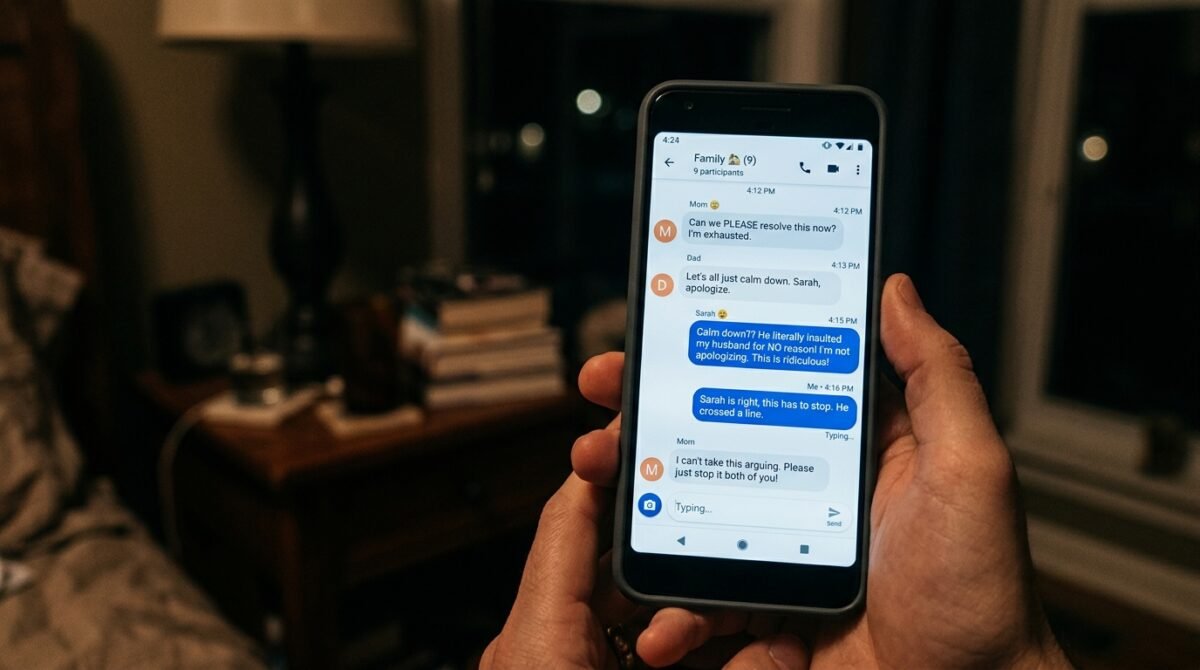
The response was immediate. The family group chat, which usually consists of birthday wishes and holiday plans, suddenly turned into a battleground. My mother, the family mediator, tried to play both sides, but Mark was not interested in mediation. He was interested in outrage. He felt attacked, humiliated, and, most of all, financially burdened by what he called ‘an accident that could have happened to anyone.’
The audacity of his defense was staggering. He wasn’t apologizing for the danger he put my pet in; he was apologizing for the fact that I was demanding he take responsibility for it. He argued that since I keep ‘dangerous things’—referring to the energy chews—in my house, the fault lay with me for not locking them away in a safe, rather than his child for eating them. The logic was circular and infuriating.
“Are you serious? You’re charging me for your own lack of childproofing? You keep stimulants in reach of a toddler and expect me to pay for your ‘show rabbit’ medical bills? This is absurd.”
— Sent by Mark in the Family Group Chat
I didn’t engage in a long back-and-forth. I simply replied that the supplements were in a zippered gym bag in a private room, and that a four-year-old opening a bag and feeding it to a pet was a failure of supervision, not of home design. The rest of the family stayed quiet, but I could feel the tension radiating through the screen. My father eventually chimed in, telling me not to be ‘petty’ and that family shouldn’t charge family. But that was exactly the point: family shouldn’t treat other family members’ property—and pets—with such reckless disregard.
The Anatomy of an ‘Accident’
The days that followed were a masterclass in gaslighting. Mark started calling other relatives, painting a picture of me as a cold-hearted person who cared more about a ‘rodent’ than his own nephew. He conveniently left out the fact that the ‘rodent’ was currently on heart medication because of his son’s actions. My aunt called me on Tuesday, suggesting that perhaps I should just drop the matter to ‘keep the peace.’ She didn’t seem to understand that the peace had been broken long before I sent the invoice.
I started keeping a log. I documented every conversation, every medical report, and every time Mark tried to shift the blame. I realized that this wasn’t an isolated incident. It was the culmination of years of Mark refusing to acknowledge any boundaries. Whether it was borrowing money he never paid back, showing up unannounced, or letting Leo destroy my electronics, Mark operated under the assumption that the world was his playground and I was his personal cushion.
I felt a strange sense of detachment. It was almost like watching a movie where I was the protagonist but had no emotional stake in the outcome. I knew that by asking for the money, I was effectively declaring war. But what kind of war was it? A war of principles. If I didn’t hold him accountable now, when would it stop? What would Leo get into next? A bottle of household cleaner? A sharp tool? The ‘accident’ could have been much worse, and it was time for Mark to realize that actions—even those of his child—have real-world consequences.
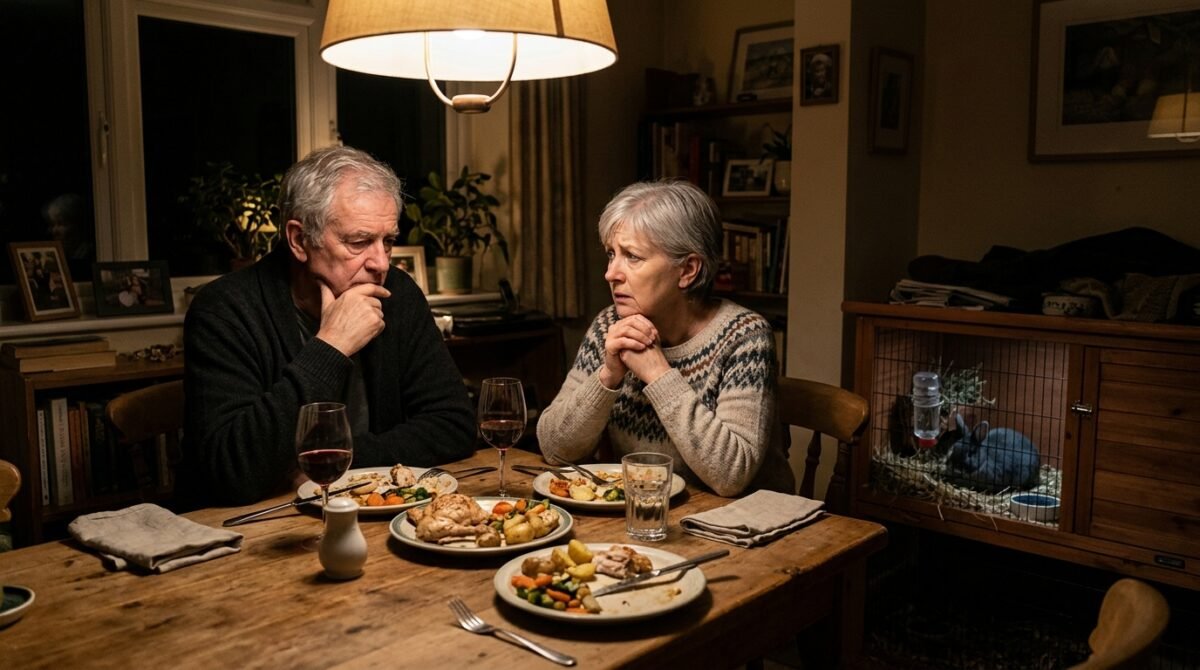
I invited my parents over for dinner, minus Mark. I wanted them to see Barnaby, to see the reality of the recovery process. My mom teared up when she saw his condition, and my dad finally looked ashamed. They realized that this wasn’t a minor ‘oopsie.’ They saw the medical equipment, the specialized diet, and the toll it had taken on me. It was the first time they truly understood why I was holding my ground. Sometimes, seeing is believing.
The Reddit Verdict: Echoes of the Internet

I turned to the internet to see if I was losing my mind. I posted the situation on a popular subreddit, keeping names anonymous but laying out the facts. Within hours, the post blew up. The sheer volume of responses was overwhelming, but the consensus was surprisingly supportive. People were outraged on my behalf, pointing out that negligence is not an ‘accident’ and that my brother’s behavior was a massive red flag for his own parenting and his respect for others.
One comment in particular stood out. It was a long, detailed breakdown of why the ‘family shouldn’t charge family’ argument is a trap used by manipulators. It resonated with me so deeply that I saved a screenshot. The validation helped me realize that my desire for accountability wasn’t petty; it was a healthy boundary. I wasn’t just fighting for the $1,200; I was fighting for the principle that my life and my responsibilities deserve respect.
“Your brother sounds like the type of person who thinks the world owes him everything. He wasn’t watching his kid, his kid almost killed your pet, and now he wants you to pay for it? Absolutely send the bill. If he doesn’t pay, take him to small claims. People like this only learn when it costs them money.”
— u/JusticeForBarnaby (Top Comment, 32.4k upvotes)
The community support gave me the courage to stay the course. I stopped checking the family group chat and muted the notifications. I realized that my brother was trying to shame me into submission, and that by continuing to argue, I was only giving him more ammunition. The court of public opinion had spoken, and while it didn’t change my brother’s mind, it certainly changed mine. I wasn’t going to back down. I would stand by the invoice, and I would wait.
The Small Claims Court Ultimatum

Two weeks passed, and the bill remained unpaid. Mark had gone from angry to dismissive, treating the entire thing as a joke I would eventually get over. He sent me a link to a rabbit breeders’ forum where he found ‘cheaper rabbits,’ as if that somehow justified the medical cost of saving my specific animal. That was the moment I realized he would never pay voluntarily. It wasn’t about the money; it was about the power dynamic. He didn’t want to admit he was wrong.
I sent one final message. It was a formal, cold, and calculated ultimatum. I didn’t use emojis or exclamation points. I laid out the timeline of the incident, the evidence of the negligence, and the proof of the medical expenses. I stated that if the full amount was not received by the end of the month, I would be filing a claim in small claims court. I didn’t want to do it, but I needed to know that I had exhausted every avenue of civil resolution.
The reaction was a mix of shock and disbelief. My brother called me, his voice trembling with a mix of rage and genuine fear. He couldn’t believe I would actually sue him. He called it ‘family betrayal,’ and ‘the end of our relationship.’ I listened to him rant for ten minutes before I simply hung up. I realized then that our relationship had been an illusion, maintained only by my willingness to be the one who constantly gave in.
“You’re really going to take your own brother to court over a rabbit? You’re dead to me if you do this. Is this really worth losing your family over?”
“It’s not about the rabbit, Mark. It’s about you finally having to accept responsibility for your actions. And honestly? If this is what ends our relationship, then it was already over.”
Filing the paperwork was the most cathartic experience of my life. It was a tangible step toward closure. Whether I won or lost, the act of standing up for myself was the victory. I wasn’t the victim of a chaotic family member anymore; I was the architect of my own boundaries. I felt a weight lift off my shoulders that I hadn’t even realized I was carrying.
The Day of the Hearing: A Quiet Realization

The day of the small claims hearing, the courtroom was sparsely populated. I sat on one side of the aisle, my heart pounding in my chest. Mark sat on the other, staring at the floor. He hadn’t brought a lawyer, and neither had I. The judge was a no-nonsense woman who looked as though she had seen a thousand petty family disputes before. When it was my turn to speak, I didn’t get emotional. I kept it to the facts: the duty of care, the breach of that duty, and the direct financial consequence.
Mark’s defense was weak. He tried to argue that I had ‘invited’ them over, and therefore I assumed the risk of having a child in my home. The judge looked at him over her spectacles and asked a single, piercing question: ‘Does inviting someone into your home negate their responsibility to supervise their own children?’ Mark stumbled, trying to pivot to the ‘dangerous items’ argument, but the judge wasn’t having it.
Watching the proceedings, I felt a strange sense of clarity. The arguments that had seemed so complex and painful in the group chat were reduced to simple legal tenets. Negligence is negligence, regardless of the blood relationship. I wasn’t there to destroy my brother; I was there to enforce a rule of conduct that should have been obvious. The judge took the case under advisement, but the look on her face suggested that my argument was the stronger one.
Leaving the courthouse, we didn’t speak. Mark walked to his car, and I walked to mine. There was no ‘make-up’ lunch, no reconciliation, no ‘let’s move past this.’ It was just an ending. I realized that some bridges don’t need to be rebuilt; sometimes, they need to be burned so you can stop trying to walk across them. I drove home, the silence in the car reflecting the newfound peace in my life.
The Aftermath: Setting New Boundaries

The judge ruled in my favor. It wasn’t a fortune, but it was enough to cover the vet bills and the court costs. When I received the check, I didn’t feel a surge of triumph. I felt a quiet satisfaction. It was the closing of a chapter. My brother paid, but he stopped speaking to me entirely. He blocked me on all social media, and for a long time, the family avoided mentioning his name in my presence. It was the silence I had needed for years.
The impact on my life was profound. I became much more selective about who I allowed into my home. I stopped being the ‘accommodating brother’ and started being the ‘boundary-setting individual.’ I invested in a better security system and a more secure room for Barnaby, but more importantly, I invested in my own mental health. I stopped feeling guilty for protecting my space and my interests.
People often ask me if I regret it. ‘Was the relationship worth $1,200?’ they ask. And my answer is always the same: The relationship wasn’t worth $1,200—it was worth the integrity of my own life. If a relationship is based on one person constantly violating boundaries and the other person silently accepting it, then it’s not a relationship; it’s a hostage situation. I’m glad I’m free.
“Boundaries aren’t walls to keep people out; they’re gates to keep the wrong ones from entering. You did the right thing by teaching him that actions have costs.”
— A supportive friend, over coffee
I still have Barnaby. He’s healthy, happy, and continues to win ribbons at every show. He’s a reminder of what I fought for, but he’s also a reminder that I am capable of defending my world. I don’t miss the drama. I don’t miss the chaos. I miss the family I thought I had, but I’ve found a much more peaceful life in the reality of the one I have now.
Reflecting on the ‘Petty’ Label

Society has a funny way of labeling people who stand up for themselves. If you defend your property, you’re ‘petty.’ If you defend your time, you’re ‘selfish.’ If you defend your peace, you’re ‘difficult.’ I’ve had to learn to wear those labels like armor. If being ‘petty’ means I don’t pay for other people’s mistakes, then I’ll be petty every single day of the week. There is a profound freedom in stoping the need to be liked by people who don’t respect you.
Looking back at the whole ordeal, I see the patterns I missed for years. The energy chew incident wasn’t the start; it was the breaking point. It was the straw that broke the camel’s back. And honestly? I’m grateful for that straw. Without it, I might have spent another decade being a doormat. The financial cost was small compared to the emotional dividend of finally standing on my own two feet.
I’ve learned that people who hate boundaries are usually the ones who benefit from you having none. My brother loved that I was a pushover. He loved that he could drop his son off and ignore him, knowing I’d clean up the mess. When I took that power away, he didn’t know how to react. His reaction wasn’t a reflection of my character; it was a reflection of his own inability to adapt to a world where he couldn’t control everyone.
I’m happier now. My home is a sanctuary, not a battleground. I’ve found that when you set clear, firm boundaries, the people who belong in your life will respect them, and the people who don’t will eventually remove themselves. It’s a natural sorting process, and it’s one of the best things that has ever happened to me. I don’t regret a single day of the struggle.
Lessons from the Rabbit Hole

What did I learn? I learned that your peace is worth more than the comfort of those who refuse to acknowledge it. I learned that you don’t owe anyone access to your life, your home, or your pet, especially if they have a track record of negligence. And most importantly, I learned that holding people accountable is an act of self-love, not an act of malice. By letting my brother face the consequences of his actions, I gave him the only opportunity he’d ever had to actually grow up.
Whether he takes that opportunity is entirely up to him. I’ve done my part. I’ve stood my ground, I’ve navigated the legal system, and I’ve maintained my own integrity throughout the entire process. I don’t hold a grudge. I don’t spend my days wishing him ill. I simply exist in a space where I no longer have to worry about his next ‘accident’ becoming my next tragedy.
If you find yourself in a similar situation—dealing with a family member who refuses to respect your boundaries—ask yourself: ‘If this person weren’t my family, would I allow them to treat me this way?’ The answer is almost always no. We hold family to a different standard, but that standard should be higher, not lower. We should expect more respect from family, not less.
Take the stand. Send the invoice. File the claim. Do whatever you need to do to protect your sanity. It might be uncomfortable, it might be painful, and you might lose some relationships along the way, but you will find yourself in the end. And that, I promise you, is worth more than any peace you could ever buy by keeping quiet.
Conclusion
The story of Barnaby and the energy chews wasn’t about a rabbit; it was about the cost of being a doormat in a family that prides itself on ‘letting things go.’ By forcing the issue, I didn’t just get my money back—I reclaimed my life from the gravitational pull of my brother’s chaos. It serves as a reminder to all of us that boundaries are not just suggestions; they are the foundation of healthy relationships. When someone repeatedly refuses to respect them, the only rational step is to enforce them, no matter the social fallout.
What about you? Have you ever had to draw a line in the sand with a family member, even if it meant risking the relationship? Was it worth it, or do you look back with regret? Let’s discuss in the comments below. Do you think I was right to sue, or should family always take the hit for each other’s mistakes?
What's your verdict on this dilemma?
Vote below to contribute to the official community consensus.

Have a Dilemma Keeping You Up at Night?
Share your real-life feud, wedding chaos, or relationship crossroads anonymously with our editorial team.
What do you think ?
0 Comments🛡️ Comments are moderated to protect community integrity. Your comment will appear once approved by the editorial team.