
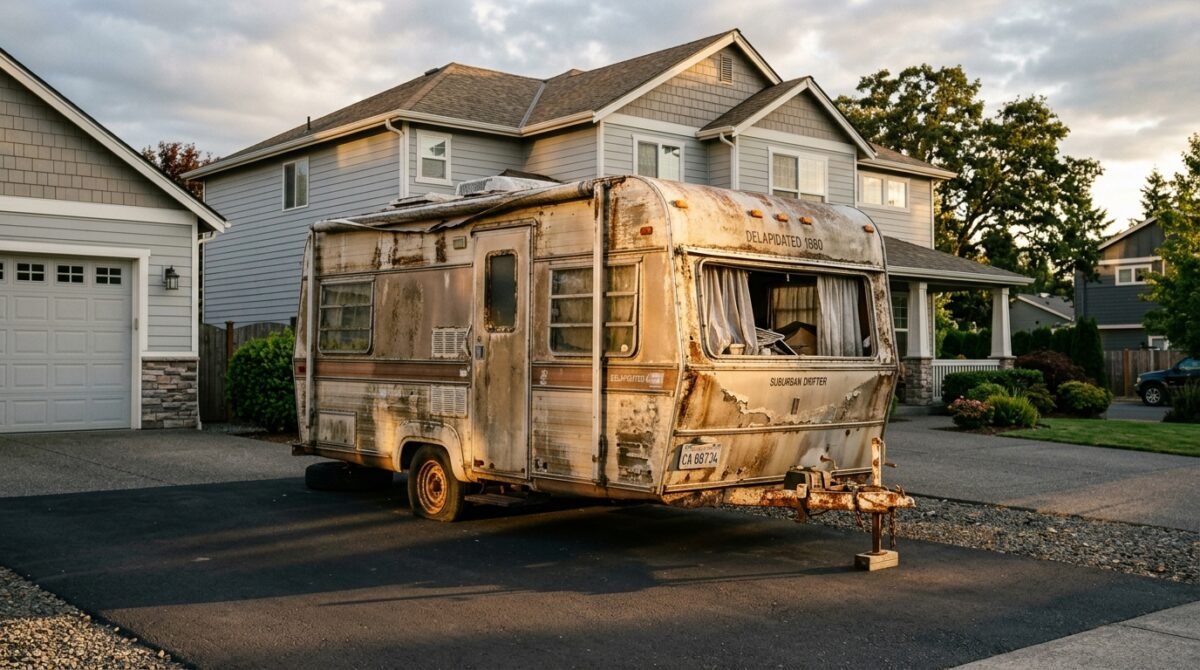
We moved into our quiet, suburban cul-de-sac three years ago with one primary goal: peace. My husband, Mark, and I spent months renovating our home to create a sanctuary where we could finally exhale after years of high-pressure corporate jobs. We respected our neighbors, maintained our landscaping, and enjoyed the quiet sanctity of our own space. That was, of course, until Mark’s parents, Linda and Robert, decided that our driveway was the perfect long-term storage facility for their mid-life crisis on wheels.
It started with a simple, ‘just for two weeks’ request. A vintage, rotting camper that looked like it had been salvaged from the bottom of a swamp appeared on a Tuesday afternoon. We were told it needed a ‘minor tune-up’ and that it would be gone before the first frost. That was six months ago. As the seasons changed, the camper became a permanent, eyesore fixture, leaking mysterious fluids onto our pristine concrete and attracting the neighborhood wildlife.
The moral dilemma wasn’t just about the aesthetics; it was about the fundamental erosion of our boundaries. Every time I brought it up, I was met with laughter, dismissive waves of the hand, and accusations of being ‘cold’ and ‘unwelcoming.’ Linda and Robert treated my home like an extension of their own property, ignoring my polite requests, my firm demands, and eventually, my silent resentment. They assumed that because we were family, their entitlement was a birthright.
When the HOA threatened us with a five-figure fine, I realized that the time for polite discourse had long passed. I gave them one final warning—a deadline that they ignored with chilling indifference. By the time I decided to act, I wasn’t just clearing a driveway; I was reclaiming my life. What happened next was a chain reaction that tore the family apart, leading to a confrontation that none of us will ever forget.
The Two-Week Lie That Lasted Half a Year

The arrival of the camper was marked by the distinct sound of a rusted trailer hitch scraping against my driveway. I stood at my front window, watching in horror as Robert maneuvered the monstrosity into the center of the concrete. It was a 1982 model, covered in layers of grime, with a window taped shut by duct tape that had long since lost its stickiness. Mark was at work, and I was left to confront his parents as they climbed out of their truck, beaming as if they had just gifted us a treasure.
I remember the specific tone of voice Linda used when she explained the situation. It wasn’t a request; it was a notification. She didn’t ask if we had space or if we minded the eyesore. She simply stated that the storage fees at the local lot were ‘too high’ and that this was a temporary necessity. At the time, I was too stunned to argue, and honestly, I wanted to keep the peace. I thought two weeks was a negligible timeframe.
The problem was that the ‘two weeks’ came and went. Then a month passed. Then, the summer turned into a humid, rainy autumn. The camper became a breeding ground for spiders and rust. Whenever Mark tried to bring it up, he was shut down by his father with a condescending remark about ‘not helping family when they are down.’ It was a calculated manipulation that made us feel like villains for simply wanting our driveway back.
“You have a two-car garage and an empty driveway, don’t be so dramatic. It’s just sitting there. It’s not like it’s hurting anyone.”
— Linda, during a tense Sunday dinner
The accumulation of junk didn’t stop with the camper. Soon, there were boxes of old magazines, broken lawn chairs, and bags of ‘repurposed’ materials piled around the tires. The local wildlife began to nest in the undercarriage, and the smell of damp, rotting upholstery began to drift into our front yard every time the wind shifted. It was an occupation, not a favor.
I started documenting the decline of our curb appeal. I took photos of the oil stains spreading across the driveway and the letters from the HOA warning us of impending fines. When I showed these to Mark, he sighed and looked at the floor. He was caught in the middle, but his inaction was, in practice, a form of consent. I realized then that if I didn’t take the lead, nothing would ever change.
The HOA Ultimatum and the Final Warning
The notification from the Homeowners Association arrived in a crisp, white envelope that felt like a death warrant for my composure. It was a formal notice of violation, citing the ‘unauthorized storage of recreational vehicles’ and a daily fine that was staggering. If the camper wasn’t moved within 72 hours, we would be looking at a financial disaster. I didn’t wait for Mark to come home. I called Linda directly, my voice shaking with a mix of fury and necessity.
I didn’t yell. I used the quiet, measured tone that you use when you know there is no point in shouting. I told her about the fine. I told her that the deadline was non-negotiable. I told her that if the camper remained on my property after Thursday at 5:00 PM, I would consider it abandoned property and handle it accordingly. She laughed—a high, dismissive sound that echoed through the phone line.
“You wouldn’t dare. That camper is worth thousands of dollars. If you touch it, I’ll have you arrested for theft and destruction of private property. Just deal with the HOA. That’s what you pay your dues for.”
— Linda, over the phone
I hung up and felt a strange sense of clarity. For the first time in months, I stopped looking for their approval. I wasn’t asking for permission anymore; I was exercising my rights as a homeowner. I spent the next three days calling local scrap metal companies and junk removal services. I found a scrapper who specialized in ‘expedited removal’ and didn’t ask questions as long as the title was ‘in progress’ or, in this case, completely absent.
I sent one last text message to the family group chat, just to ensure there was no ambiguity. I wanted the record to be clear. I stated the time, the date, and the consequence. I knew they would ignore it, but I needed the digital trail. The silence that followed in the group chat was heavy, a suffocating vacuum that told me they were already preparing their counter-attack.
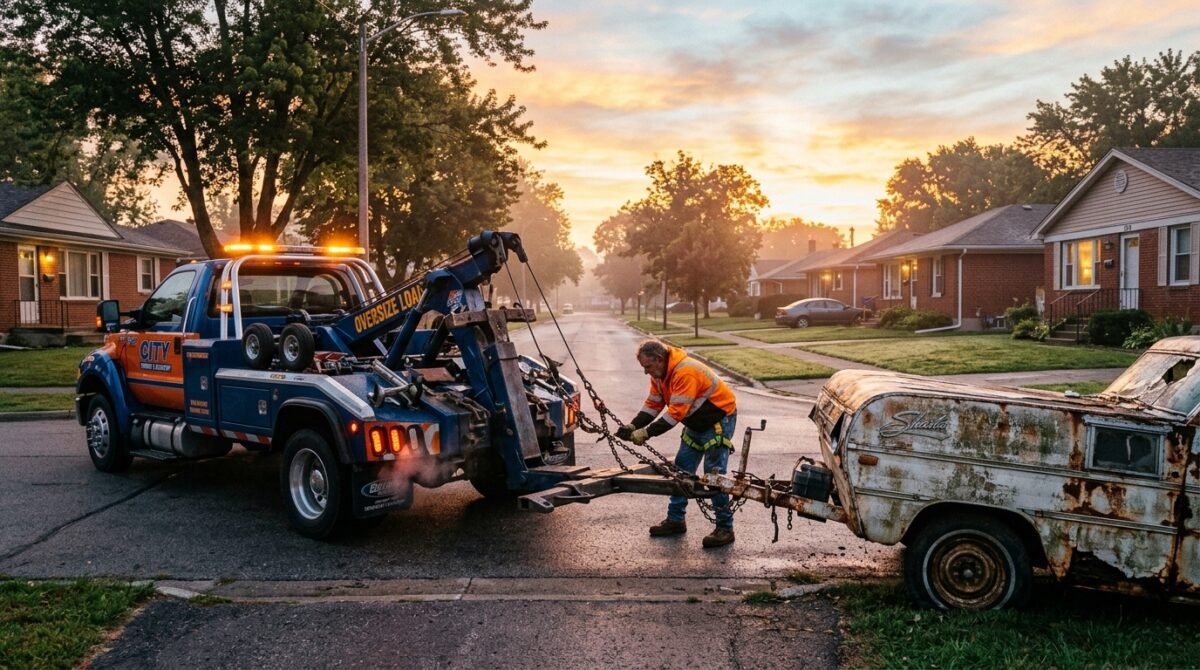
The scrapper arrived on Friday morning, just as the sun was cresting over the rooftops. He was a man of few words, wearing heavy gloves and smelling of gasoline. He looked at the camper, looked at me, and asked, ‘You sure about this, ma’am?’ I looked at the rusted frame, the duct-taped windows, and the stain it had left on my home’s integrity. I nodded. ‘Take it. I don’t want to see it again.’
The Day the Driveway Became a Ghost Town
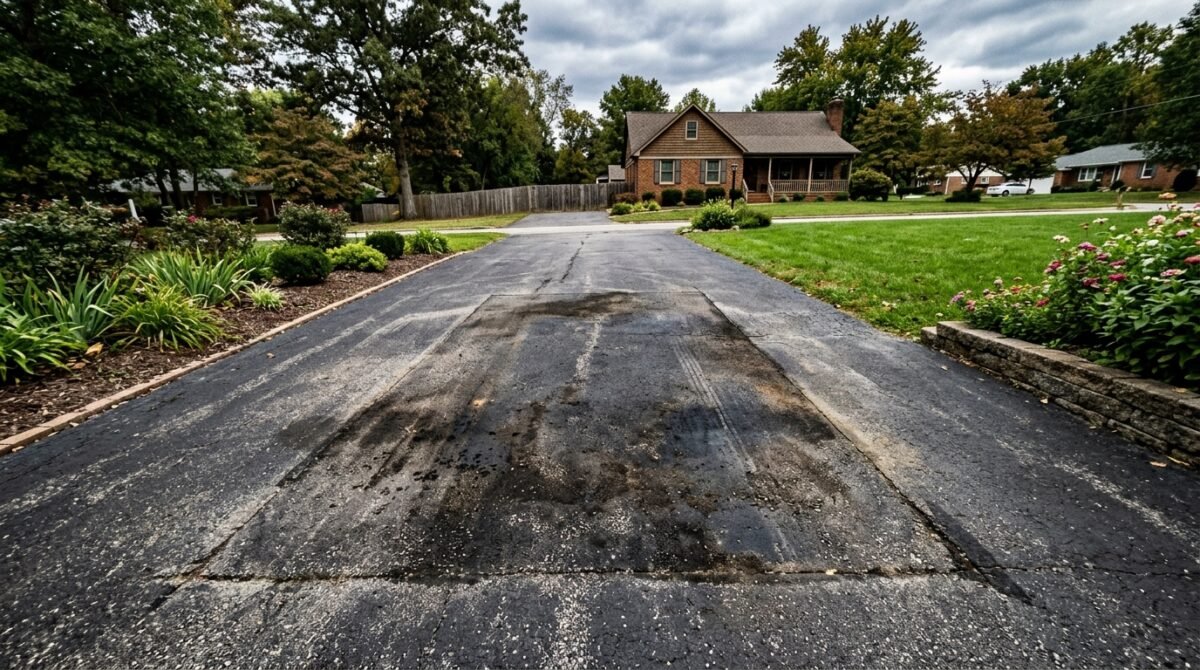
Watching that camper being winched onto the back of the truck was one of the most cathartic experiences of my life. It groaned and shuddered, shedding pieces of rust and fiberglass like a dying beast. As it slid away, it revealed a patch of concrete that had been shielded from the sun for months—a pale, clean rectangle against the rest of the driveway. It was beautiful. My driveway was finally mine again.
The scrapper didn’t waste time. He hooked up the chains, checked the tension, and pulled away without a backward glance. I stood in the middle of the empty space, feeling the cool morning air against my face. I had done it. I had bypassed their drama and solved the problem with brutal efficiency. I felt a rush of adrenaline, followed by the sinking realization that the fallout was going to be nuclear.
I grabbed the power washer from the garage and started to scrub the oil stains. I worked for three hours, ignoring my phone, which had started to buzz incessantly. My mother-in-law was calling. Then my father-in-law. Then Mark. I let them all go to voicemail. I needed to finish the work. I needed to erase the last physical trace of their presence before I faced the emotional tsunami they were about to unleash.
“Where is it? Where is my camper? I just drove past your house and the driveway is empty. What have you done? Call me right now!”
— Voicemail from Linda, 10:14 AM
By the time I finished, the driveway was immaculate. The neighbors, who had undoubtedly been watching from their own windows, were nowhere to be seen. I walked back into the house, washed my hands, and poured a glass of water. I sat at the kitchen island, looked at my phone, and braced myself for the inevitable. The peace I had reclaimed for my property was going to be paid for in blood.
Mark walked through the door at 6:00 PM, his face white. He had clearly been in contact with his parents. He didn’t even say hello. He walked into the kitchen and slammed his keys onto the counter. ‘They are on their way over,’ he said, his voice barely a whisper. ‘And they are absolutely livid. You have no idea what you’ve done, do you?’
The Front Door Confrontation
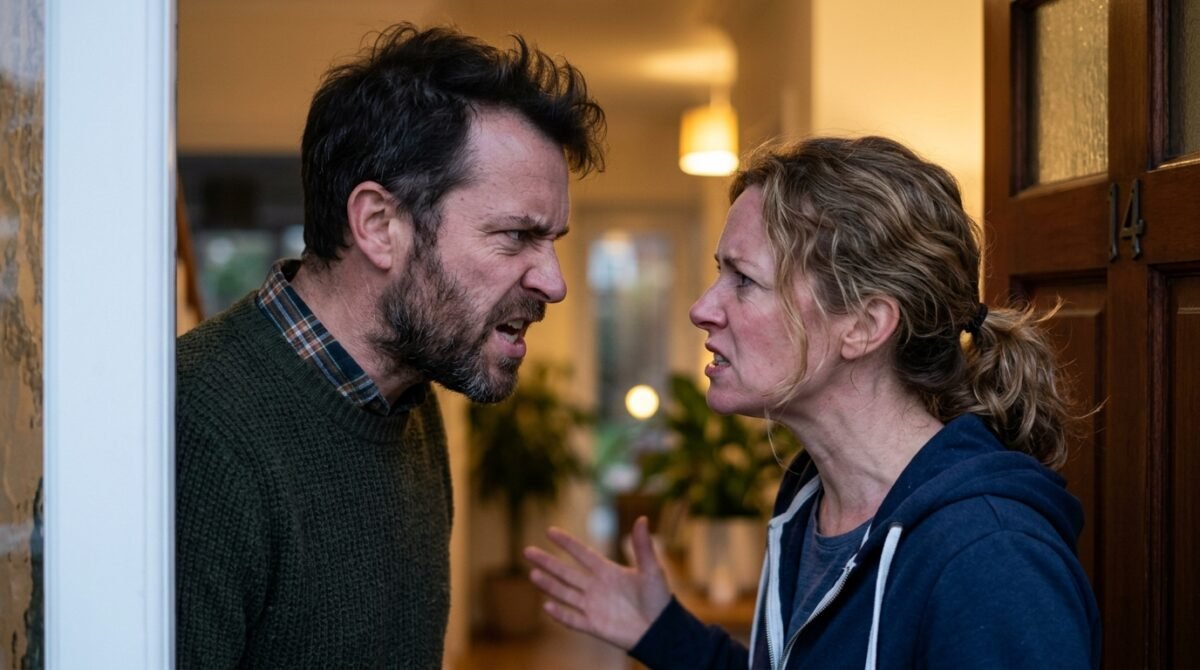
The screech of tires on the pavement was our first warning. Linda and Robert didn’t even park in the driveway; they blocked the street entirely. I watched through the peephole as they marched up the walkway, their faces contorted with rage. Robert was carrying a folder, presumably filled with documents he thought gave him ownership over my life, while Linda looked like she was ready to tear the siding off the house.
I opened the door before they could knock. I wanted them to know that I wasn’t hiding. I stood firmly in the threshold, my arms crossed, maintaining eye contact. Mark stood behind me, looking like a deer caught in the headlights. The tension in the air was thick enough to choke on; it felt as though the oxygen had been vacuumed out of the entryway.
“You greedy, heartless witch! Do you have any idea how much that camper was worth to us? That was an heirloom! That was our retirement project!”
— Linda, screaming at the top of her lungs
I didn’t flinch. I let her finish her tirade, letting the sound of her voice fade into the background. When she finally stopped for air, I spoke in a calm, flat tone. I explained the HOA fines. I showed them the copies of the warning letters I had saved. I pointed to the clean spot on the driveway where their trash had rotted our concrete for half a year.
Robert tried to interject, waving his folder. ‘We had an agreement that it would be there until we were ready!’ he shouted. ‘Agreement?’ I retorted. ‘An agreement requires two consenting parties. You had a hostage situation. You turned my home into your storage unit and ignored every single request I made to move it. You had your chance. The deadline passed. It’s gone.’
The conversation quickly devolved into a shouting match. Linda was crying, then screaming, then threatening legal action. Robert was pacing back and forth, calling me names that I wouldn’t repeat in polite company. Mark finally found his voice, but instead of supporting me, he tried to mediate, which only served to enrage them further. It was a chaotic, ugly scene that lasted for nearly twenty minutes.
Eventually, I told them to leave. I told them that if they didn’t step off my porch, I would call the police for trespassing. The shift in their demeanor was instant; they were shocked that I would actually escalate to that level. They retreated, but not before promising that this was not over. They left me standing in my doorway, my heart pounding, feeling both liberated and utterly exhausted.
The Digital Fallout and the Family Chat
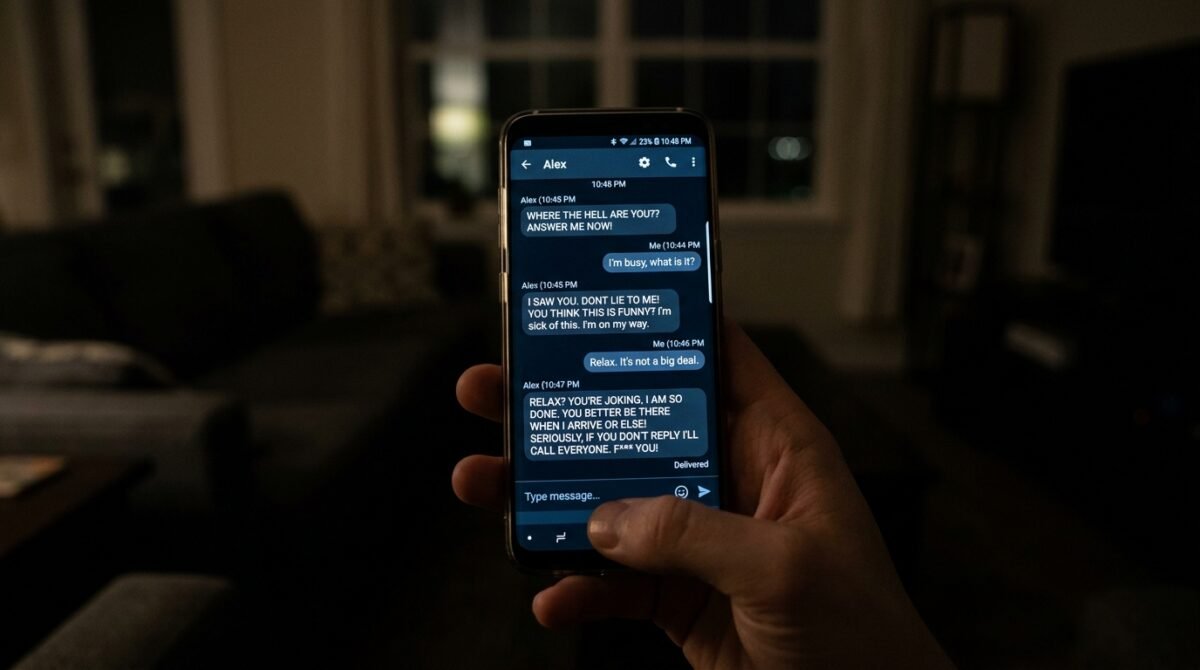
The aftermath wasn’t confined to my front porch. Within minutes, the family group chat exploded. My sister-in-law, who hadn’t even been present, began chiming in with accusations of ‘betrayal’ and ‘cruelty.’ It seemed that Linda had told a very specific version of the story—one where I was a monster who stole a precious family heirloom in a fit of inexplicable rage. The notifications were relentless, a constant stream of vitriol vibrating against the kitchen table.
“How could you do this to them? They are your family! You’ve destroyed a piece of their history for a bit of driveway space. I don’t know who you are anymore.”
— Sarah (Sister-in-law), in the Family Group Chat
I took a screenshot of the HOA violation notices and posted them directly into the group chat. I didn’t add any commentary. I just let the cold, hard facts speak for themselves. The silence that followed was palpable. It wasn’t an apology, of course—people like that never apologize—but the accusations of ‘theft’ suddenly became much harder to maintain when faced with official, stamped documents of my rights.
Mark sat with me, finally reading through the messages. He saw the way his family had been manipulating the narrative, painting me as a villainous outsider. He saw the way his sister had jumped to conclusions without asking a single question. It was a wake-up call for him. For the first time, he realized that his family’s love came with strings, and those strings were designed to control our domestic life.
I spent the next two hours muting the chat. I realized that responding was a trap. Every word I wrote would be twisted, every defense would be used as fuel for their indignation. I decided to go ‘radio silent’ until I could process the emotional exhaustion. I needed to see how Mark would handle his own family. This was his test, not mine. If he stood by me, we might have a future. If he folded, I knew where the door was.
The messages continued to pour in, but I turned my phone face down. I focused on the quiet of the house. The camper was gone. That was the reality. No matter what they said in that group chat, no matter what names they called me, the physical manifestation of their disrespect had been removed. I had regained control over my physical environment. The emotional fallout was the price of admission, but looking at my clean driveway, I knew I would pay it again in a heartbeat.
The Reddit Trial: How the Internet Reacted

I knew I needed perspective, so I posted the story on a popular ‘Relationship Advice’ subreddit. I kept it objective, focusing on the timeline, the HOA fines, and the refusal of my in-laws to cooperate. I didn’t expect the level of vitriol that would be directed at my in-laws, nor the sheer volume of support I received. The post went viral within hours, with thousands of people sharing their own stories of boundary-crushing relatives.
“This is the textbook definition of entitlement. You gave them a deadline, they ignored it, and they faced the consequences. Do not feel bad. You are not responsible for their ‘heirloom’ if they let it rot in your driveway for six months.”
— u/ReasonPrevails (Top Comment, 32.5k upvotes)
The consensus was overwhelming. The majority of commenters pointed out that the in-laws had treated my property like a dump and that their ‘outrage’ was a classic deflection tactic. Many people shared stories of parents who used ‘family’ as a shield to act with impunity. It was validating to see that I wasn’t crazy, and that my reaction wasn’t disproportionate to the boundary violation I had faced for months.
There were, of course, the dissenting voices. Some argued that I should have consulted Mark more, or that I could have sold the camper rather than scrapping it. I read those comments carefully, but I kept coming back to the fact that I had been pushed into a corner by the HOA. If I had tried to sell it, the process would have taken weeks. I didn’t have weeks. The camper had to leave, and the scrapper was the only one who could make it disappear on my timeline.
“ESH. You should have communicated the finality of the move more clearly to your husband before taking action. He’s in a tough spot between you and his parents. But the in-laws are definitely YTA for parking it there in the first place.”
— u/MediatorGuy (Controversial Comment, 1.2k upvotes)
The discussion taught me a lot about the nature of boundaries. A boundary is not a suggestion; it is a wall that you build to protect your peace. If people choose to walk through that wall, they have to deal with the rubble. I had spent months trying to be the ‘nice’ one, the ‘accommodating’ one, and all it got me was a ruined driveway and a pile of trash. The internet gave me the strength to stand by my decision.
I stopped checking the comments after the first 24 hours. The initial validation was all I needed to solidify my resolve. I had taken a stand, and the world had confirmed that I was well within my rights to do so. The next step was facing the reality of my relationship with Mark and his parents, which felt like a much more daunting task than dealing with a rusted piece of metal.
The Silence at the Sunday Dinner Table
We didn’t go to the next Sunday dinner. We didn’t go to the one after that, either. My mother-in-law sent a flurry of messages, some pleading, some threatening, and some that were just downright bizarre. She tried to frame the whole thing as a ‘misunderstanding’ and asked us to come over to ‘talk it out.’ I knew what ‘talking it out’ meant: it meant sitting there and being berated for our lack of respect.
Mark and I had a long, difficult conversation about his family’s role in our lives. He finally admitted that he had been afraid of them his entire life. He had been conditioned to prioritize their needs and their feelings over his own, and by extension, our marriage. Seeing the way I stood my ground had actually given him the courage to see the pattern. It was a turning point in our relationship, but it was also a painful one.
“I’ve realized that I’ve been letting them walk all over us for years. Not just with the camper, but with everything. I’m done, but I need you to know that this is going to be a long road.”
— Mark, during a quiet evening at home
We established a set of rules for engagement. No more unannounced visits. No more using our home as a storage unit. If they wanted to visit, they had to ask in advance, and if they couldn’t be respectful, the visit would end immediately. It felt like we were parents disciplining a child, which was a strange role reversal, but one that was absolutely necessary given their behavior.
The first time they showed up unannounced after the incident, I didn’t open the door. I watched through the window as they stood on the porch, waiting. When they didn’t leave after five minutes, I called the police. I didn’t want to do it, but I needed to show them that my rules were absolute. The police arrived, spoke to them on the sidewalk, and they finally drove away. It was a humiliating experience for them, but it was the only way to get the message across.
The silence from the family was heavy, but it was also peaceful. For the first time since we moved into this house, I didn’t feel like I was under siege. I could walk out to my car and not worry about what was blocking the driveway. I could garden without worrying about who was watching from the camper window. The physical space we had reclaimed was a metaphor for our emotional freedom.
I knew they would never forgive me. And honestly? I didn’t care. The forgiveness they wanted would only come at the expense of my dignity and my property rights. I had made my peace with the fact that our relationship with them would never be the same. And looking back, that was the greatest gift that the camper had given us—the realization that we were better off without their ‘support.’
The Legal Threats That Never Came
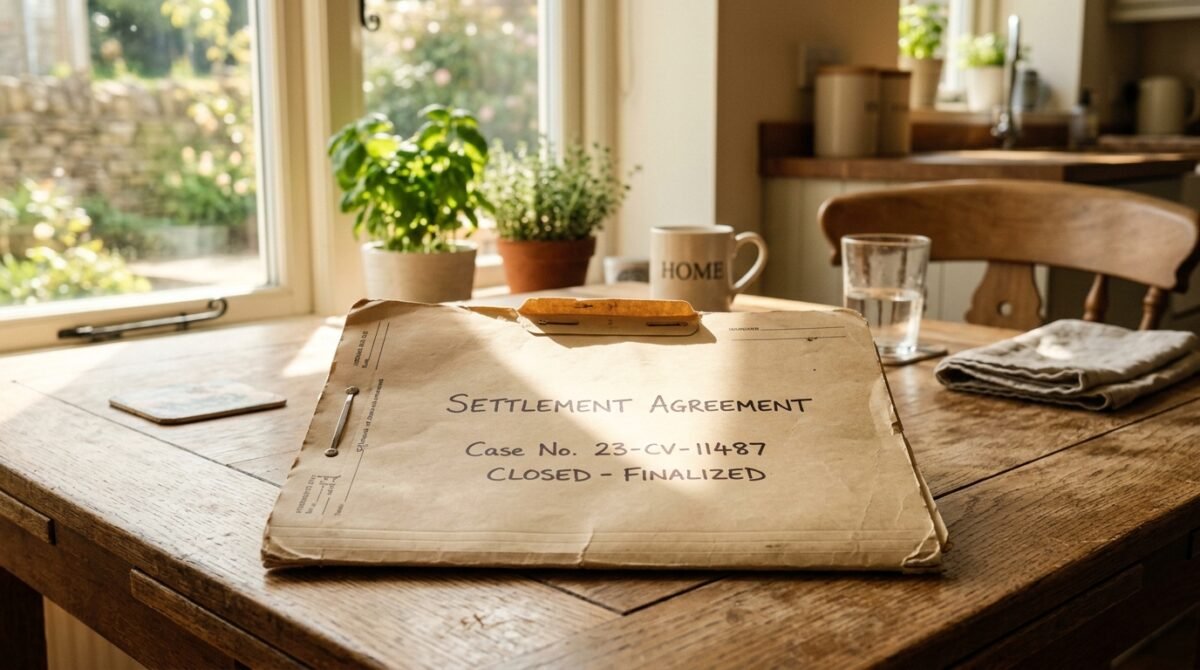
For weeks, I waited for the certified letter. My father-in-law had mentioned that he was talking to a lawyer, and I had braced myself for a lawsuit. I kept all the documents—the notices from the HOA, the text message logs, the photos of the driveway, the receipt from the scrapper. I had a file folder ready for a court appearance that I hoped would never happen. But the letter never arrived.
It turns out that when you tell a lawyer that you left an unregistered, non-functioning vehicle on someone else’s property for months against their express wishes, the lawyer isn’t very interested in helping you sue. The financial reality of the situation was that the camper was worth more as scrap than it was as a legal asset. They would have spent more in filing fees than the value of the trailer itself.
It was another lesson in their brand of manipulation: they use the threat of authority to control people who don’t know their rights. Once they realized that I had documented everything and that I wasn’t going to be bullied, their legal posturing evaporated. It was all a bluff, just like the camper being an ‘heirloom.’ They didn’t care about the history; they cared about the power.
“I told you they wouldn’t actually sue. They know they’re in the wrong. They just wanted to see if they could scare you into apologizing.”
— A friend who works in legal services
The relief of not having to go to court was immense, but it also made me angry. They had tried to destroy my peace of mind over a lie. They had threatened me with legal action for taking care of my own property. It reinforced the decision to go low-contact. You can’t have a healthy relationship with people who view you as a resource to be exploited rather than a person to be respected.
I started focusing on the house again. We planted new flowers along the driveway where the camper had sat. We power-washed the concrete until it was bright white. We reclaimed the space completely. Every time I pulled into the driveway, I felt a sense of victory. I had fought for my home and I had won. The legal threats were just empty noise in the background of our new, boundary-enforced life.
It was a strange transition, moving from a position of constant conflict to one of quiet detachment. I stopped checking their social media. I stopped asking Mark for updates on what they were saying. We were building a wall, not just around our home, but around our emotions. It was the only way to ensure that their drama couldn’t seep into our daily lives ever again.
Reflections on Boundary Setting

Looking back at the whole ordeal, I realize that the camper wasn’t the root cause of the problem; it was merely the catalyst. The root cause was years of accumulated entitlement and a complete lack of respect for our autonomy. If it hadn’t been the camper, it would have been something else. The incident was a necessary explosion that forced a long-overdue reckoning within our family dynamic.
Setting boundaries is uncomfortable. It makes people angry, and it often leads to conflict. But the alternative—letting people trample over your needs and your rights—is far more damaging in the long run. I spent so many months feeling anxious and resentful, and it took a drastic, irreversible action to finally feel like myself again. I learned that you don’t need to justify your boundaries to people who are actively trying to ignore them.
I also learned the value of a support system. Having Mark finally on my side, and having the validation of the online community, made all the difference. It’s easy to feel like you’re the problem when you’re being gaslit by your own family. Having external voices confirm that my reaction was reasonable helped me stay the course when the pressure was at its peak.
“A boundary is not a wall to keep people out; it’s a gate to protect your peace. You’re allowed to close the gate whenever you need to.”
— Advice from a therapist
We are in a much better place now. The communication with my in-laws is minimal and transactional. We don’t do the big holiday dinners, and we don’t do the unannounced ‘check-ins.’ We’ve found a peace that we never thought was possible. The house feels like our home again, and the driveway is just a driveway—a simple, functional space that I don’t have to worry about anymore.
If you’re in a similar situation, my advice is simple: don’t wait for the situation to fix itself. People who are comfortable exploiting your kindness won’t stop just because you ask them nicely. Document everything, know your rights, and don’t be afraid to take the actions necessary to protect your peace. It might be messy, it might be painful, but the clarity you get on the other side is worth every bit of the struggle.
Life After the Camper: The New Normal

These days, when I pull into my driveway, I don’t look for the camper. I don’t look for signs of oil or trash. I just pull in, get out, and walk through my front door. It’s a mundane, simple act, but it’s one that I cherish. It represents the restoration of my life, the reclamation of my autonomy, and the victory of my own sanity over the chaos of others.
Mark and I have moved on. We’ve started new traditions that don’t involve his parents. We spend our weekends the way we want to, not the way we’re expected to. We’ve built a circle of friends who respect our space and our time. The contrast between our old life and our new life is striking, and I find myself grateful for the camper incident every single day, even if it was hell to go through.
We still get the occasional passive-aggressive text from Linda, but we’ve learned to ignore them. We don’t engage, we don’t justify, and we certainly don’t argue. We’ve realized that their misery is their own to manage, and we are no longer willing to be the dumping ground for it. It’s a level of emotional maturity that I didn’t think I could reach, but it’s been the most rewarding part of the whole journey.
“You’ve changed. You’re more relaxed, more yourself. I haven’t seen you this happy in years.”
— A close friend, commenting on my demeanor
I hope this story helps others who are struggling with difficult family members. It’s not easy to draw a line in the sand, especially when that line pits you against the people who are supposed to love you. But your home, your life, and your mental health are worth more than any family obligation. You don’t have to be a martyr for the sake of ‘keeping the peace’ when the peace you’re keeping is only for them.
The driveway is clean, the house is quiet, and I am finally at peace. And that is the only outcome that ever really mattered. The camper is gone, the drama is fading, and I am finally free to live my life on my own terms. I hope that if you’re reading this, you find the strength to set your own boundaries, no matter how hard it might feel in the moment.
Conclusion
The saga of the camper serves as a powerful reminder that boundaries are not just suggestions; they are the foundation of a healthy, functioning life. When we allowed our in-laws to treat our driveway as their personal storage, we didn’t just lose the use of our concrete; we lost our sense of security and respect within our own home. Taking that decisive action—scrapping the camper—was the moment we chose ourselves over their entitlement.
It wasn’t an easy path. The fallout was dramatic, the family tension was high, and the emotional toll was significant. But looking at the peace we’ve cultivated since then, I wouldn’t change a single thing. We’ve learned that ‘family’ is not a blank check to ignore boundaries, and that those who truly care about you will respect your space, not try to fill it with their own garbage.
What about you? Have you ever had to take drastic measures to reclaim your property or your peace from entitled relatives? Do you think I was too harsh, or did I do exactly what was necessary to protect my home? Share your thoughts and your own experiences of ‘boundary battles’ in the comments below. Let’s discuss where the line should be drawn when ‘family’ starts to feel like a burden.
What's your verdict on this dilemma?
Vote below to contribute to the official community consensus.

Have a Dilemma Keeping You Up at Night?
Share your real-life feud, wedding chaos, or relationship crossroads anonymously with our editorial team.
What do you think ?
0 Comments🛡️ Comments are moderated to protect community integrity. Your comment will appear once approved by the editorial team.