
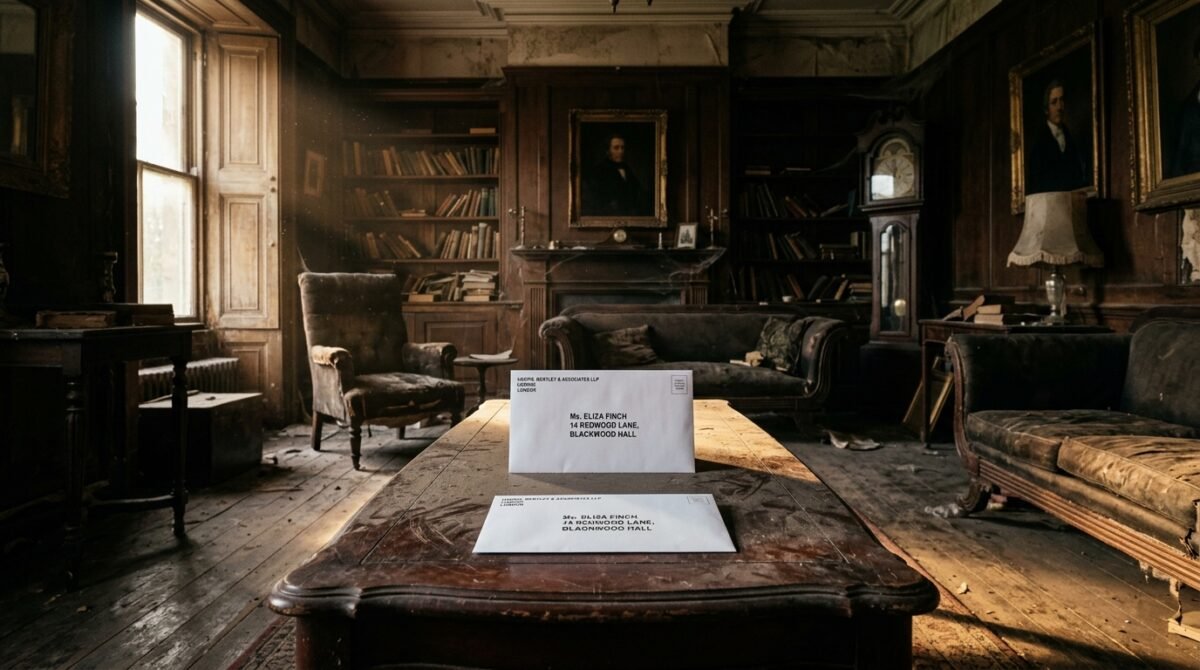
Death has a strange way of turning silence into noise. For three years, my grandfather lived in a drafty, creaky Victorian house on the edge of town, his health steadily declining while his family—my aunts, uncles, and cousins—remained conveniently busy with their own lives. I was the only one who showed up. I was the one who drove him to his oncology appointments, the one who shoveled his driveway during the record-breaking blizzards, and the one who sat with him in the quiet, dim kitchen, listening to stories of his youth that everyone else deemed ‘too long’ or ‘too repetitive.’
When he finally passed, the silence that had defined his final years was instantly shattered. The vultures didn’t just circle; they landed on the front porch with measuring tapes, real estate brochures, and a collective sense of entitlement that was as staggering as it was predictable. They didn’t come to grieve. They came to calculate. The house, a sprawling property that had seen better days, was worth a significant amount to a developer, and suddenly, the man who had been ‘too much trouble to visit’ was their ‘beloved patriarch’ whose legacy needed to be ‘honored through equitable distribution.’
But the will had been finalized six months before he died. He knew exactly who was there when it mattered, and he knew exactly who was waiting for him to expire to secure a down payment on their next luxury vehicle. When the lawyer read the document, the air in the room grew heavy, not with mourning, but with a palpable, icy tension. I was the sole executor and beneficiary. The house was mine. And the moment the probate process began, the masks slipped completely off.
This isn’t just a story about real estate. It is a story about the true cost of neglect and the audacity of people who believe blood ties entitle them to the fruits of labor they never shared. My refusal to ‘split’ the proceeds wasn’t born out of greed; it was born out of a profound sense of justice for a man who spent his final years longing for family that only appeared when his heart stopped beating.
The Unexpected Arrival of the Mourning Brigade
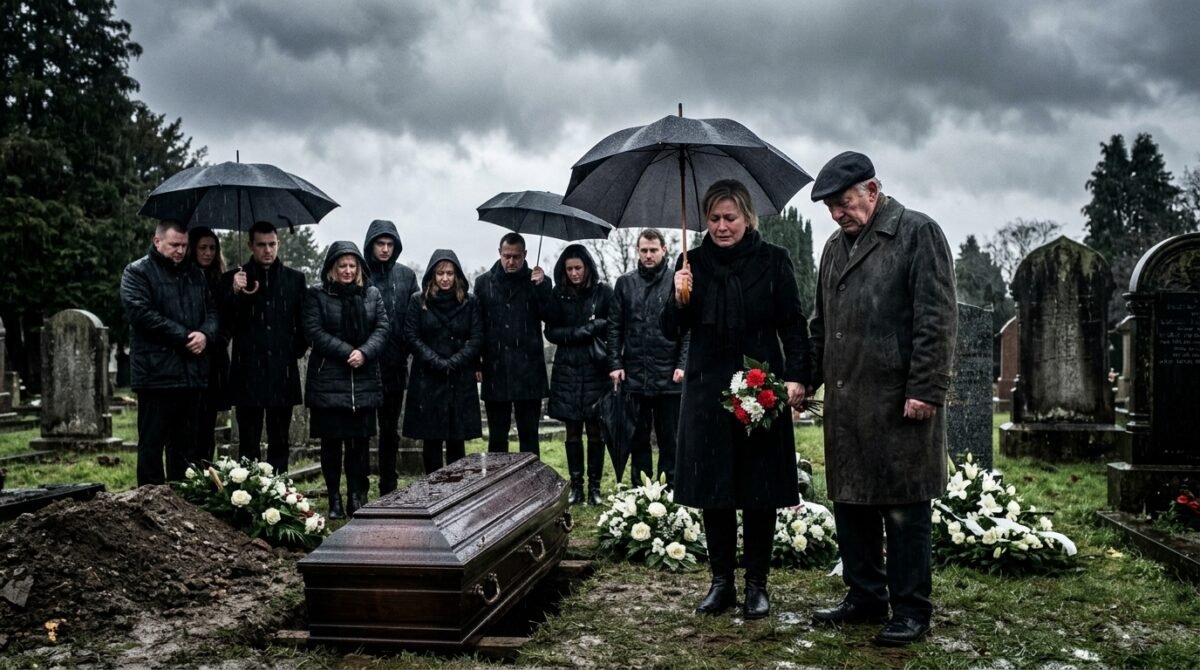
The funeral was a spectacle of performative grief that I found physically nauseating. My Aunt Linda, who hadn’t spoken to Grandpa since 2019, wore a veil that looked like it had been purchased from a costume shop. She spent the entire service dabbing eyes that were bone dry, periodically leaning over to me to whisper about how ‘terrible’ it was that the house had fallen into such disrepair.
I sat in the front pew, my hands clenched in my lap, trying to maintain some semblance of decorum. Beside me, my cousin Mark was checking his stocks on his phone, occasionally looking up to offer a somber nod to the casket. The performance was exhausting to watch, a transparent bid for sympathy that felt like a slap in the face to the man resting in the box.
As we left the cemetery, the transition from ‘grief’ to ‘business’ was instantaneous. Before we had even reached our cars, the questions began. It wasn’t about his favorite memories or his final wishes; it was about the property taxes, the structural integrity of the roof, and when the ‘inventory’ of the house would be open to the rest of the family.
“You know, sweetheart, since you’re so young, you’ll need our help handling the sale. We should probably clear out the attic together this weekend so we can get it on the market by the first of the month. It’s what he would have wanted.”
— Aunt Linda, while touching my arm in a way that felt like a threat.
I looked at her, noting the way she avoided my eyes. She didn’t want to help; she wanted to ensure that I didn’t hide anything valuable. She wanted to be present for the ‘discovery’ of assets. I felt a cold knot of anger tighten in my stomach, the realization dawning on me that these people had no shame. They were already spending money they hadn’t earned.
That night, I retreated to the house, the silence of the hallways offering the only comfort I had known in days. The house was filled with memories of the times I had spent here—the board games, the burnt toast, the long conversations about regret. I knew every creak in the floorboards and every drafty window. This wasn’t just a piece of property to me; it was the last bastion of a man who deserved better than this swarm of scavengers.
The 6:00 AM Kitchen Intrusion
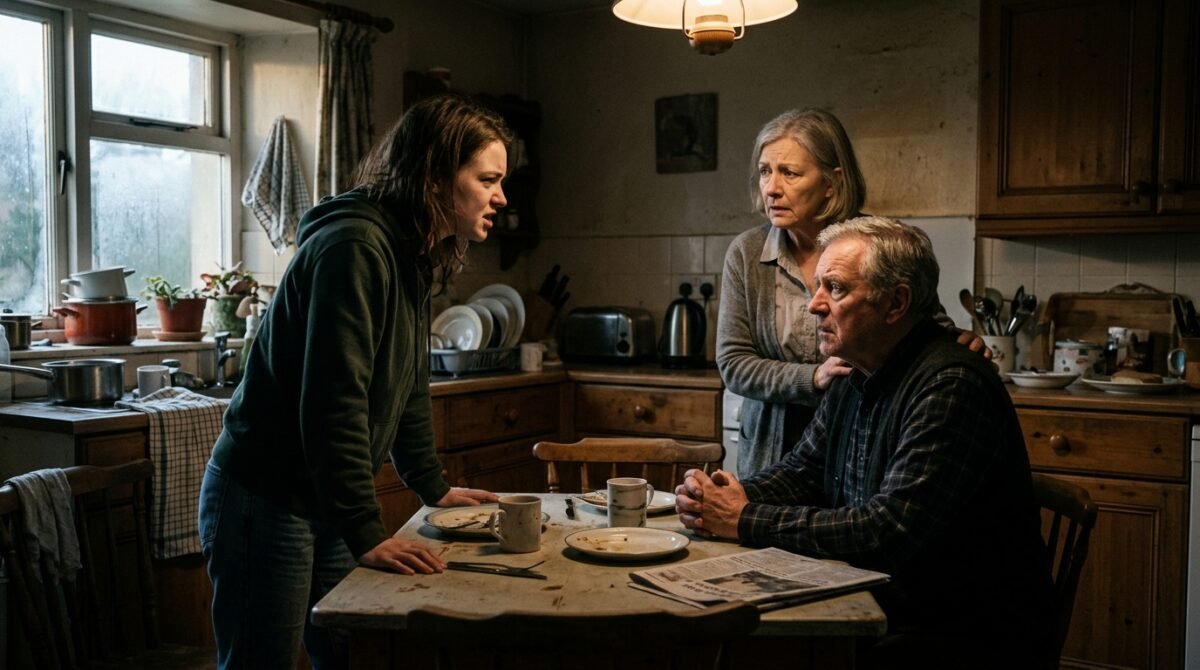
I was startled awake at dawn by the distinct sound of a key turning in the front door. My heart hammered against my ribs. I scrambled out of bed, grabbing the nearest heavy object, a brass candlestick, and rushed toward the foyer. Standing in the middle of the kitchen, rummaging through the junk drawer, were my uncle Gary and his wife, Sarah. They looked startled, but not embarrassed.
“What are you doing here?” I demanded, my voice shaking with adrenaline. Gary didn’t even drop the handful of old keys and receipts he was holding. He just sighed, as if I were the one acting unreasonably. He looked at me with a mix of pity and annoyance, the classic manipulator’s tool to make the victim feel like the aggressor.
“We’re just helping you get a head start. We know you’re overwhelmed, and honestly, the house is a mess. We thought we’d see if there were any important documents or deeds we should secure before the appraiser gets here. You should be thanking us, not standing there with a weapon.”
— Uncle Gary, attempting to frame his breaking and entering as an act of service.
I stood my ground, my knuckles white as I gripped the candlestick. The audacity was breathtaking. They hadn’t called, they hadn’t knocked—they had simply assumed they had the right to walk into the house as if they lived there. It was a power move, a clear attempt to establish dominance over the property before I could fully realize my legal standing.
“Put everything back,” I said, my voice cold and steady. “And then you need to leave. I am the sole owner of this property. I have the locks being changed today. If I see you on this property again without my explicit permission, I will call the police. This is not a request.”
Sarah laughed, a sharp, patronizing sound. “You’re acting so dramatic. We’re family. You really think you’re going to alienate your own blood over some furniture and a house that you didn’t even pay for? You were lucky enough to be the ‘favorite,’ but that doesn’t mean you own the family’s legacy.” I didn’t argue. I simply pointed to the door until they marched out, muttering curses under their breath.
The Group Chat Explosion
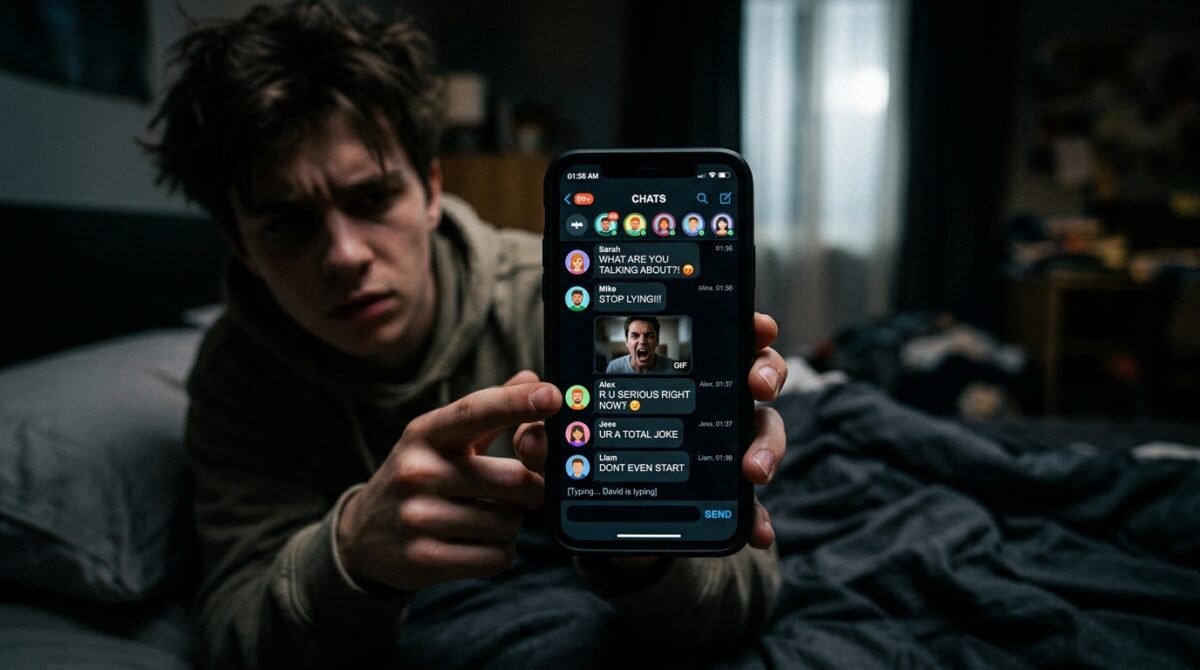
The fallout from the morning intrusion hit the family group chat by noon. My phone wouldn’t stop buzzing, a relentless stream of vitriol and entitlement that made my head spin. They weren’t just complaining about the house; they were rewriting history, painting themselves as the neglected, loving family who were being cruelly shut out by a greedy, manipulative ‘favorite’ child.
“I cannot believe the disrespect. After we spent years making sure Grandpa was taken care of, to be treated like intruders in his home by his own grandson? It’s heartbreaking. We aren’t asking for the world, just what is fair.”
— Aunt Linda, in the family group chat.
“Fair? You haven’t visited in three years. I have the logs of every single visit. You were never there. Don’t talk to me about fairness.”
— My response in the group chat.
The chat exploded. They accused me of gaslighting, of stealing, of being a ‘bitter, isolated youth’ who was taking advantage of a confused old man. It was a masterclass in projection. Every single one of them had a reason for why they couldn’t visit—work, kids, distance, stress—but they all seemed to think those excuses were irrelevant when it came to the payout.
I spent the next hour documenting every single text. I knew I would need this for the lawyer. They were painting a picture of a hostile takeover, and I needed to ensure that the narrative remained grounded in the reality of their absence. It was physically exhausting to read their insults, the way they twisted my care for him into some sort of sinister scheme to ‘brainwash’ him against them.
By the time I muted the chat, I felt completely drained. The realization hit me that there was no winning with these people. They weren’t looking for a compromise; they were looking for a surrender. And they weren’t going to get it. I walked through the house, turning off the lights in every room, feeling a strange, protective urge to keep this place safe from the chaos they were trying to inject into my life.
The Legal Reality Check
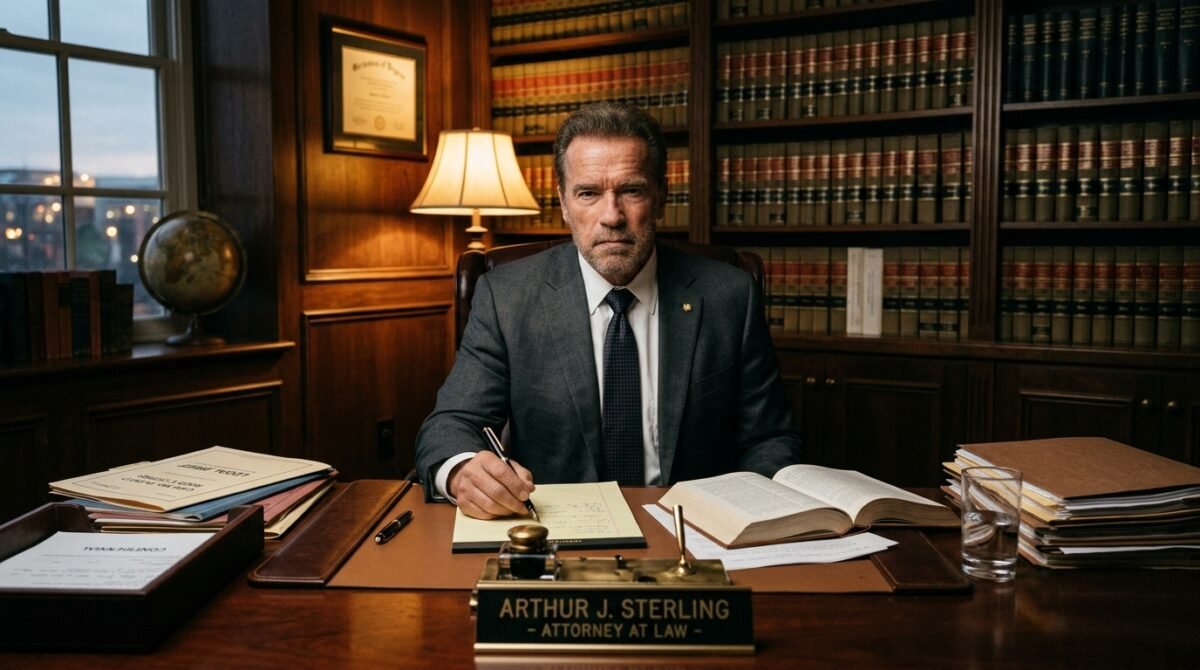
Two days later, I sat in the office of my grandfather’s estate attorney. Mr. Henderson was a man of few words, his desk immaculately organized. He looked over the pile of papers I had brought—the logs of my visits, the receipts for medical expenses, and the printed transcripts of the texts from my family. He listened to my account of the incident at the house with a calm, stoic expression.
“They don’t have a leg to stand on,” he said, his voice clipped and professional. “The will is ironclad. He was of sound mind, the documentation is clear, and the distribution is explicit. You are under no legal obligation to give them a single penny. The house is yours to do with as you please, whether that means keeping it or selling it for a profit.”
A wave of relief washed over me, but it was quickly replaced by a sense of impending dread. I knew that knowing the law wouldn’t stop them. They weren’t fighting me on legal grounds; they were fighting me on emotional and social grounds. They wanted to make my life so miserable that I would pay them off just to make them go away. It was a extortion attempt disguised as a family dispute.
“They are going to try to intimidate you. They will threaten lawsuits, they will involve other family members, and they will try to make you feel guilty. Do not engage. Every time you explain yourself, you give them another opening. Let me handle the communication. From now on, they only talk to me.”
— Mr. Henderson, the estate attorney.
I felt a strange sense of vindication. I had spent so long being the ‘quiet one’ who just took the abuse, and now I had the armor of the law to protect me. I left the office feeling like I could breathe for the first time since the funeral. The path forward was clear: I would sell the house, I would keep the proceeds, and I would cut the cord with these people forever.
Driving back to the house, I looked at the neighborhood, the trees lining the street that had been witness to my grandfather’s lonely years. I felt a surge of resolve. This money would be used to build my own future, a future that I would share with people who actually mattered, not with those who viewed human beings as assets to be liquidated.
The Escalation of Hostilities
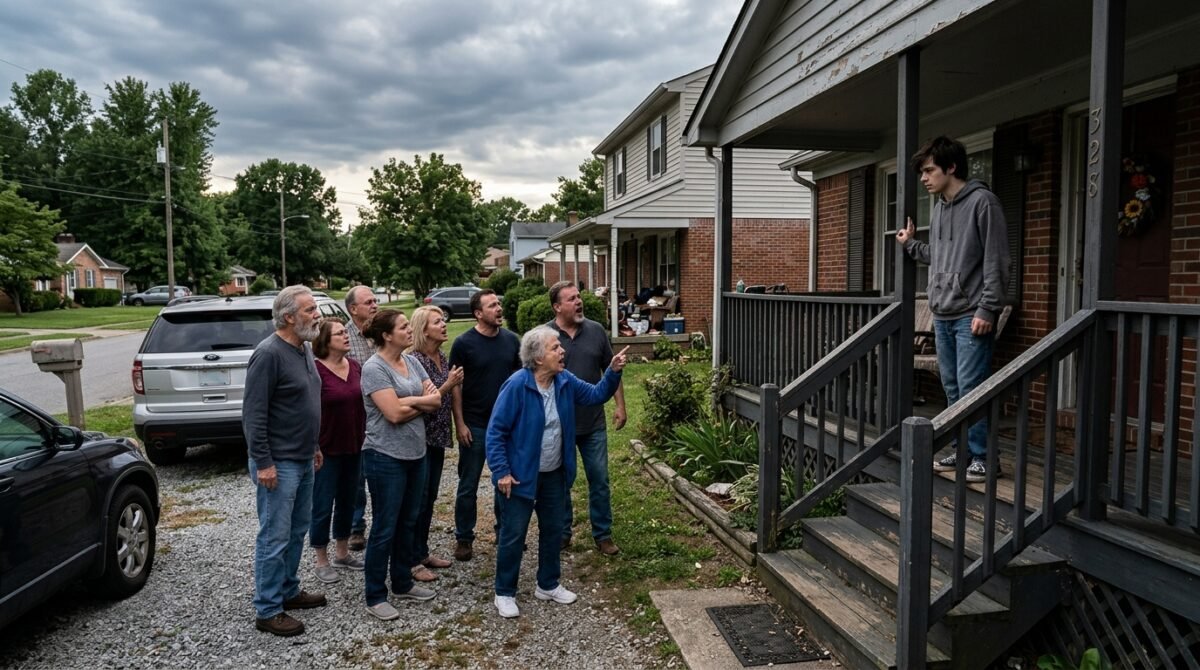
When the ‘For Sale’ sign finally went up, the reaction was immediate. They didn’t just call; they showed up at the house in force. It was a Saturday afternoon, and I was meeting with a contractor to discuss some repairs. I looked out the window to see three cars pulling into the driveway. My aunt, my uncle, and two cousins I hadn’t spoken to in years stepped out of their vehicles.
They looked like they were ready for a fight. They didn’t come to talk; they came to block the driveway, to stand in the way of progress. I walked out onto the porch, my heart racing, but my resolve firm. I had told the realtor to call the police if anyone harassed me, and I was ready to use that option if things got out of hand.
“We just want to talk! Is that so much to ask? You’re selling the only thing that connects us to him, and you’re doing it behind our backs like a thief! You think because you have a fancy lawyer you can just erase us?”
— My cousin, shouting from the driveway.
I didn’t yell back. I just looked at them with a detached curiosity. It was fascinating to see the level of entitlement they were projecting. They genuinely believed that they were the victims here. They genuinely believed that their inaction was irrelevant compared to their ‘right’ to the money. I realized then that they didn’t even see the house as a home; it was just a pile of cash they felt owed to them.
“I’m not erasing you,” I said, my voice projecting clearly. “You erased yourselves three years ago when you stopped calling. You stopped visiting. You stopped caring. This house is being sold to cover the debts he left behind and to secure my future. I owe you nothing. Please leave.”
The standoff lasted for twenty minutes. My realtor, a seasoned woman who had clearly dealt with worse, quietly recorded the entire interaction on her phone. Seeing her do that seemed to deflate their bravado. They realized they were creating evidence for a harassment charge. They finally retreated, but the look in their eyes was one of pure, unadulterated hatred. I knew this wasn’t the end.
The Online Smear Campaign
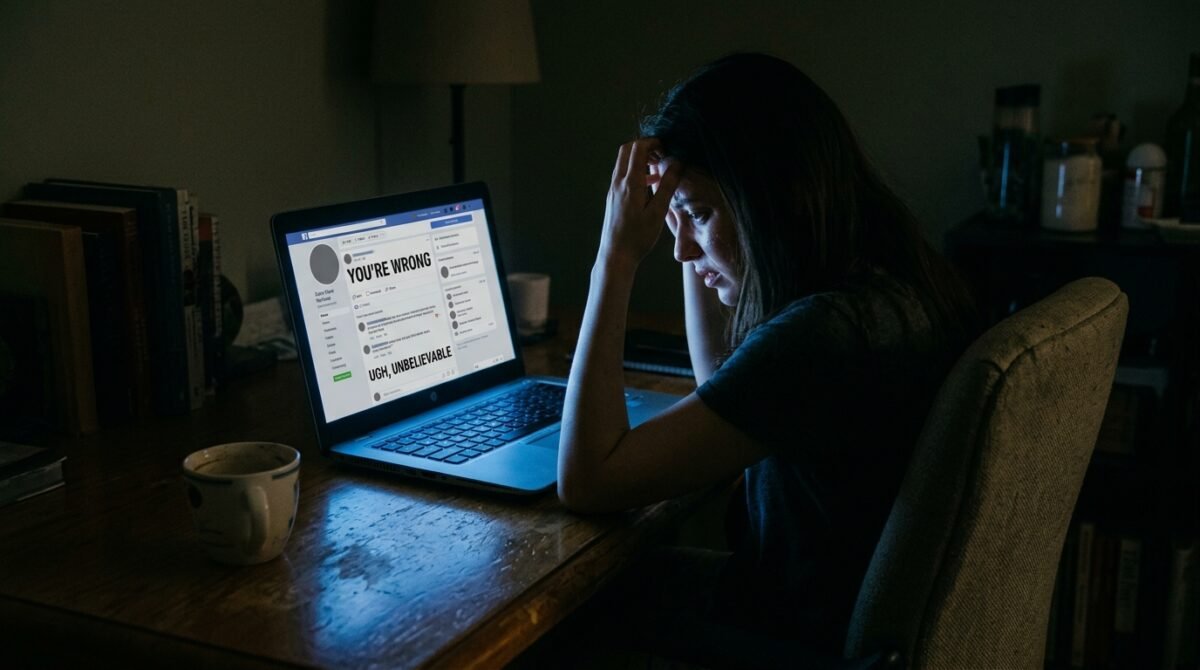
By that evening, the story had migrated to Facebook. They were posting screenshots of my texts, heavily edited to make it look like I was mocking them for being ‘poor’ or ‘unsuccessful.’ They were tagging mutual friends, family members, and even some of my professional contacts, trying to destroy my reputation. It was a coordinated, vicious attack designed to isolate me.
I watched as comments rolled in from people who didn’t know the truth. ‘How could you do this to your own flesh and blood?’ ‘Money isn’t worth losing your family.’ ‘You should be ashamed of yourself.’ It stung, more than I expected. The internet is a cruel place when it only gets one side of the story, and they were experts at crafting a narrative that made me look like the villain.
I had a choice: fight back in the comments, or stay silent and let the truth come out through the legal proceedings. I chose the latter. I made a single post on my own page: ‘I am grieving the loss of my grandfather while being harassed by family members who only want to profit from his death. I will not be discussing this publicly, and I have legal counsel handling all matters.’ Then, I went completely dark.
“The amount of audacity it takes to ignore a dying man for years and then demand his estate is staggering. You are doing the right thing. Don’t let them bully you into giving them a cent. Keep your head down and let the lawyers do the talking.”
— A supportive comment from an old friend, one of the few who knew the full story.
The silence was my best defense. Every time they posted, it just looked more unhinged. They were tagging me in rants that grew increasingly incoherent. They were losing control, and that was the most satisfying part of the whole situation. They were showing everyone exactly who they were, and it wasn’t the ‘grieving family’ they were trying to portray.
I stayed in the house during the final days, packing up my grandfather’s belongings. I found photos of him when he was younger, smiling, happy, surrounded by people who loved him. It reminded me that he was more than just the house they were fighting over. He was a person, a life lived, and I was going to make sure that his legacy wasn’t just this petty, greedy dispute.
The Final Walkthrough
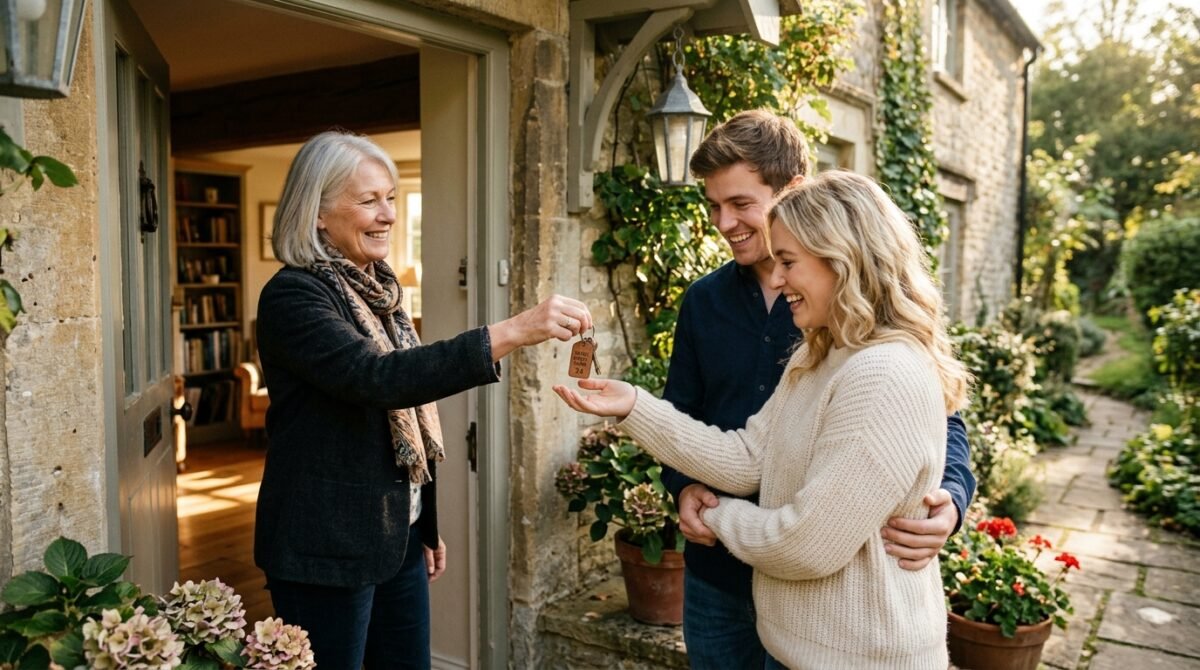
The day of the closing, the house was finally empty. It felt strange to see it so bare. The echoes were louder, the dust motes dancing in the afternoon sun in a way I hadn’t noticed before. I walked through every room one last time, touching the walls, saying a silent goodbye to the man who had been my friend when no one else would be.
The buyers were a young couple with a child, excited to make this house a home. They had no idea about the drama, the vultures, or the legal threats. I was happy to hand over the keys to them. They saw a future here, while my family only saw a past they wanted to monetize. It was a perfect ending to a chapter that had been far too long.
My phone remained muted in my pocket. I knew the messages were still coming in—the threats, the desperate pleas, the final attempts to manipulate me—but I didn’t care. I had reached the point where their opinions no longer had any weight. They were ghosts in my life, and I was finally exorcising them.
“I hope you rot with that money. You’ll never have the support of this family again. You’re on your own now.”
— A final text from Aunt Linda, received five minutes before the closing.
I read it, deleted it, and blocked the number. It was the easiest thing I had ever done. The closing went smoothly. Mr. Henderson was there to handle the signatures, his presence a shield against any last-minute drama. I walked out of that building a free person. I had money in the bank, peace in my heart, and an empty space in my life where a toxic family used to be.
The drive away from the house felt like shedding a layer of heavy, suffocating skin. I wasn’t just leaving a property; I was leaving behind the obligation to be nice to people who didn’t deserve my kindness. I was choosing myself, my future, and the memory of a man who actually loved me, rather than the greed of those who just wanted his belongings.
The Reddit Verdict: Echoes of Approval

When I finally posted the full story on a popular forum, the response was overwhelming. It wasn’t just the support; it was the sheer number of people who had dealt with the exact same ‘vulture’ behavior. The comments section became a space for shared trauma and validation, a testament to the fact that blood does not, in fact, always mean love.
The top comment was from someone who had gone through a similar legal battle, and their advice was a comfort I hadn’t known I needed. It confirmed that the path I had taken—the firm, no-contact approach—was the only one that led to true healing. The validation was a soothing balm, a reminder that I wasn’t crazy for drawing a line in the sand.
“You didn’t inherit a house; you inherited the price of your grandfather’s solitude. The money is your compensation for being the only person who cared when it mattered. Do not give them a single cent. If they wanted the house, they should have been there to help take care of the man who lived in it. NTA (Not The Asshole) a thousand times over.”
— u/JusticeForAll (Top Comment, 32.5k upvotes)
“The audacity of these people is just insane. My cousins did this to my grandmother. They showed up with a u-haul before she was even cold in the ground. The best thing you can do is never speak to them again. They will never change, and they will never be satisfied. Congratulations on your freedom.”
— u/FamilyDramaSurvivor (14.2k upvotes)
Reading through these stories, I realized that my situation wasn’t an anomaly. It was a common, ugly feature of human nature. People see an inheritance as a lottery win, forgetting that someone had to die for it to exist. The community’s perspective helped me detach from the guilt they had tried to heap upon me. I was doing exactly what I needed to do.
The debate in the comments was fierce, with a few people playing devil’s advocate about ‘family unity,’ but the overwhelming majority stood with me. They saw the transaction for what it was: a fair exchange for years of emotional labor and care. My grandfather had chosen me, and his choice was his final act of love. I honored that by ensuring his wishes were carried out exactly as he intended.
The Aftermath: Building a New Life

Six months later, life looks completely different. I used the money to pay off my student loans, invest in a small business I had been dreaming of, and set aside a nest egg that allows me to sleep soundly at night. I don’t feel the weight of the past anymore. The anxiety that used to follow me around like a shadow has dissipated, replaced by a quiet, steady confidence.
I haven’t spoken to any of those relatives since the closing. I hear through the grapevine that they are still complaining, still telling anyone who will listen about the ‘theft’ of the inheritance, but it doesn’t bother me. Their narrative has no power here. They are strangers to me now, and I prefer it that way. My life is filled with people who earn their place at my table, not those who demand it.
I still think of my grandfather, but the memories are no longer stained with the image of that greedy, shouting crowd. I remember the laughter in the kitchen, the way he would tell the same joke three times and still find it funny, and the genuine gratitude in his eyes when I arrived to help. That is the legacy he left me, and it’s worth more than any real estate deal.
“Family isn’t about blood. It’s about who shows up when life gets hard. I learned that the hard way, and I’ve never been happier than I am now that I’ve stopped trying to force relationships with people who only view me as a means to an end.”
— A reflection from my personal journal.
The lesson I learned is simple: you cannot buy family, and you shouldn’t let them bankrupt your soul. Protecting your peace is the most important thing you can do. Sometimes, that means walking away from the people you were told you had to love. And sometimes, that means keeping exactly what is yours, because you earned it with the one thing they weren’t willing to spend: your time.
Conclusion
The story of my grandfather’s house is not a story of greed; it is a story of accountability. In a world where family expectations often outweigh personal boundaries, I chose to prioritize the reality of the situation over the fantasy of a ‘happy family’ that never existed. The inheritance was the catalyst for a hard-won liberation, a reminder that we are responsible for our own happiness.
Reflecting on this experience, I realize that true family is a choice. We don’t owe our loyalty to individuals who only value us for what they can extract. By setting these boundaries, I didn’t lose a family; I gained the freedom to build a life that is truly my own, untainted by the bitterness and entitlement of the past. The house is gone, the money is allocated, but the lesson remains: never let the ghosts of other people’s expectations haunt your future.
What about you? Have you ever had to draw a line in the sand with family members who felt entitled to your time, money, or resources? Do you believe that blood ties necessitate a level of support that defies all logic, or is there a point where we are allowed to walk away? Share your thoughts and experiences in the comments below—let’s discuss the true cost of setting boundaries.
What's your verdict on this dilemma?
Vote below to contribute to the official community consensus.

Have a Dilemma Keeping You Up at Night?
Share your real-life feud, wedding chaos, or relationship crossroads anonymously with our editorial team.
What do you think ?
0 Comments🛡️ Comments are moderated to protect community integrity. Your comment will appear once approved by the editorial team.