
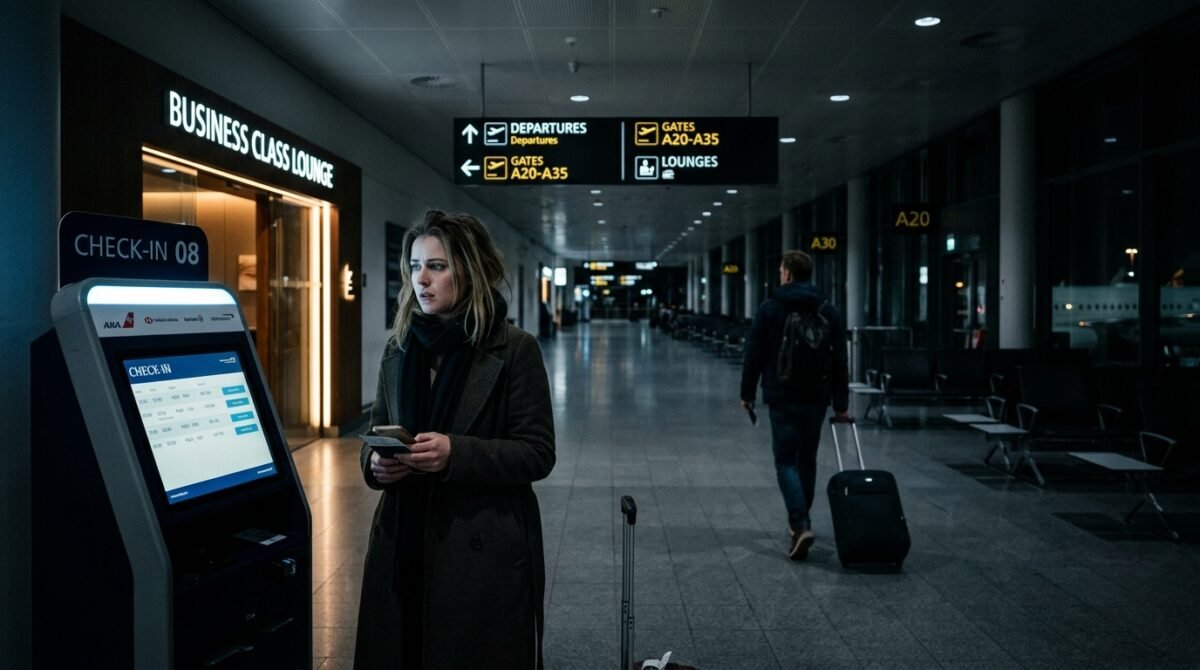
We have all heard the horror stories. The wedding disasters, the secret bank accounts, the hidden betrayals that come to light right when things are supposed to be perfect. But for Sarah, a 28-year-old marketing executive, the breaking point didn’t happen at the altar. It happened at 11:30 PM under the harsh, buzzing fluorescent lights of Terminal 4, just hours before an international red-eye flight to Bali.
Mark had been talking about this trip for months. It was meant to be their ‘last hurrah’ before the wedding—a two-week escape to finalize their vows and reconnect after a grueling year of planning. They had saved for months, splitting every expense down to the penny. Or so Sarah thought. The silence that fell over the check-in counter when the agent casually mentioned the upgrade wasn’t just awkward; it was the sound of a three-year relationship shattering in real-time.
As the agent smiled and handed over the boarding passes, the reality hit Sarah like a physical blow. Mark hadn’t just ‘found’ a deal. He had prioritized his own sleep, his own comfort, and his own luxury, while leaving his partner to endure ten hours in a middle seat, pressed against the bulkhead. The betrayal wasn’t the upgrade itself—it was the premeditation, the secrecy, and the absolute disregard for her humanity.
In this deep dive, we explore the anatomy of a breakup that happened in the span of thirty seconds. We look at the red flags that were ignored, the financial gaslighting that characterized their partnership, and the moment Sarah finally realized that she was not a teammate, but merely an accessory in Mark’s carefully curated life of self-importance.
The Illusion of the Shared Journey
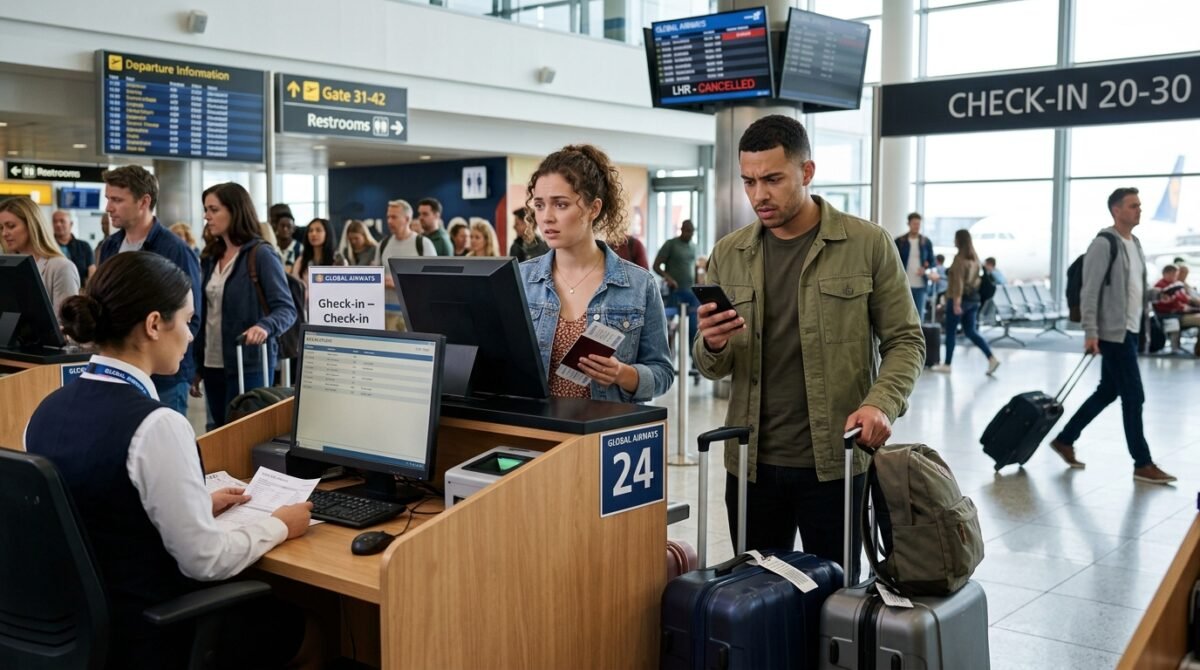
To understand why I walked away, you have to understand the dynamic that defined our relationship. Mark was always the ‘planner.’ He loved spreadsheets, travel apps, and, most importantly, control. He framed his desire to manage our finances and our itineraries as a gesture of care, a way to ‘take the burden off’ my shoulders. For a long time, I bought into that narrative. I thought we were a unit, moving through life with shared goals and mutual respect.
Looking back, the signs were always there, hidden in plain sight. Every time we went out to dinner, the bill would mysteriously be paid by him, only for me to receive a ‘reimbursement request’ later that evening. It felt efficient at first, but it quickly morphed into a system where I was constantly paying for his convenience. He viewed my time and my comfort as secondary to his own logistical preferences.
The Bali trip was sold to me as an experience of a lifetime. We had both been working overtime for months. We were exhausted, frayed, and in desperate need of a reset. Mark was the one who insisted on booking the flight, claiming he had found a ‘great price’ through his corporate travel portal. I trusted him. That trust was the first casualty of the evening.
When we arrived at the airport, he was unusually nervous. He kept checking his phone, tapping his foot, and steering me toward the kiosks. I assumed he was just stressed about the international travel requirements, but in hindsight, he was doing everything in his power to keep me away from the desk where the truth would inevitably be revealed.
“Just let me handle the check-in, Sarah. You go grab us some water. I don’t want us to lose our place in line because you’re busy browsing the gift shops.”
— Mark, two minutes before the incident
I didn’t think twice. I walked to the nearby kiosk, filled two bottles with water, and returned to find him already standing at the counter, his face pale and his eyes darting toward the boarding passes being printed. I should have known then that something was fundamentally wrong. The atmosphere felt charged, heavy with a secret that was waiting to burst.
The Agent’s Fatal Slip
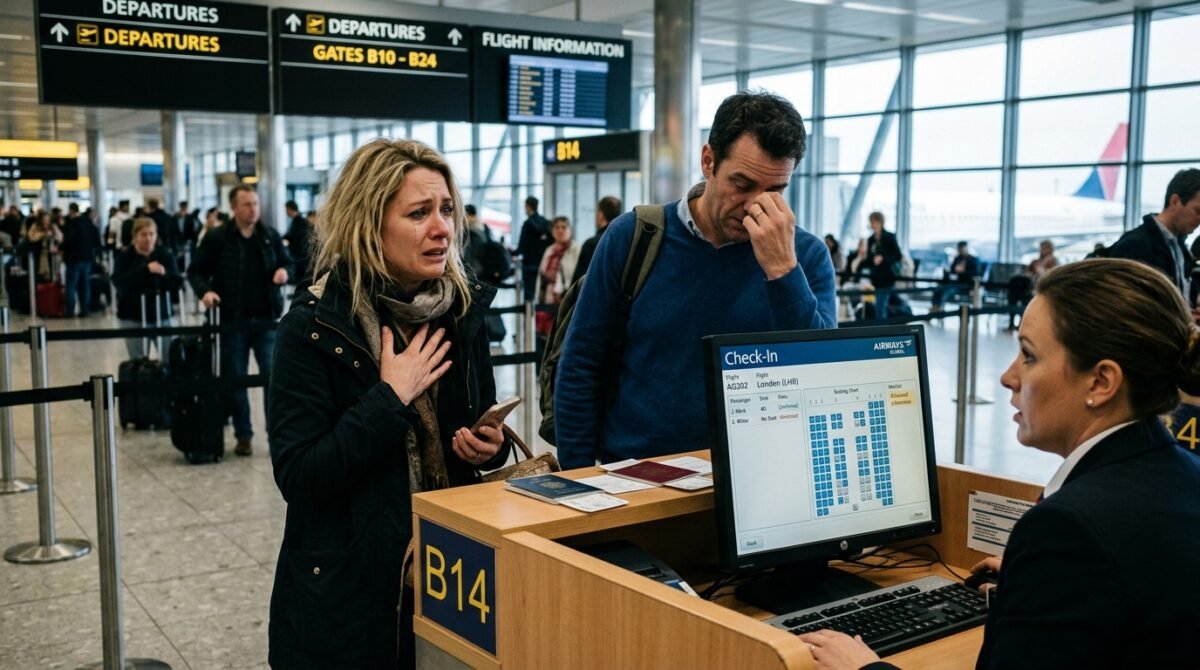
The moment of truth was entirely accidental. The check-in agent, a pleasant woman with a tired smile, was scanning our passports when she made the mistake that changed my life. She looked at the screen, then at Mark, and finally at me, her expression shifting from professional politeness to a look of genuine confusion.
“Sir,” she said, her voice clear in the quiet late-night terminal. “I see here that you have processed a premium cabin upgrade for the flight to Bali. However, the passenger accompanying you is still listed in the standard economy bulkhead seat. Would you like me to process an upgrade for the second passenger as well, or are we keeping the bookings separate for this leg of the journey?”
The silence that followed was absolute. I felt the air leave my lungs. Mark didn’t blink. He didn’t offer an explanation. He just stood there, staring at the monitor, his knuckles white as he gripped his carry-on suitcase. The agent, sensing the tension, looked between us, her hand hovering over the keyboard, realizing she had just walked into a minefield.
I looked at the screen. There it was, clear as day: one Business Class seat assigned to Mark, and one Economy ‘Standard’ seat assigned to Sarah. The cost of the upgrade—a sum that would have covered half our dinner budget for the entire trip—was already processed. He had used the joint savings account we had specifically set aside for ‘shared travel experiences’ to fund his own comfort.
“Are you kidding me, Mark? You upgraded your own seat? With our savings? While I’m stuck in the middle seat for fourteen hours?”
— Sarah, at the check-in counter
Mark’s reaction wasn’t one of apology. It was one of annoyance. He rolled his eyes, as if I were a child failing to grasp a complex business decision. He started talking about ‘maximizing assets’ and ‘needing to be rested for the meetings’ he claimed he had to attend upon arrival. It was a lie, and we both knew it. There were no meetings. Just him, a glass of champagne, and a flat-bed seat, while I sat in the dark.
The Logic of Narcissism
As we moved away from the counter, the confrontation intensified. Mark insisted that he was doing this for ‘us.’ He argued that because he was the one ‘managing’ the trip, he deserved the upgrade as a ‘consulting fee.’ The sheer audacity of the claim left me breathless. He really believed that my comfort was a luxury that could be sacrificed for his own convenience.
“It’s a fourteen-hour flight, Sarah,” he explained, his voice low but sharp. “I’m a bigger guy. I need the space. If I arrive exhausted, the whole trip is ruined anyway. You’re small; you’ll be fine in the bulkhead. I’m actually saving us money in the long run by making sure I can function when we land.”
I realized then that this wasn’t an isolated incident. It was the culmination of three years of small, incremental erosions of my self-worth. Every time I had asked for a compromise, he had framed it as me being ‘unreasonable’ or ‘demanding.’ He had successfully conditioned me to accept his selfishness as a form of pragmatic logic. But standing there, with my passport in my hand and his business-class upgrade mocking me, the veil finally dropped.
I looked at him—really looked at him. I saw a man who didn’t love a partner; he loved an assistant. He loved someone who would subsidize his lifestyle and tolerate his whims. The engagement ring on my finger suddenly felt like a shackle. I felt a surge of clarity that was as cold as it was liberating.
“You didn’t just buy an upgrade, Mark. You bought a ticket to show me exactly where I stand in your hierarchy. And I’m done being at the bottom.”
— Sarah to Mark
He scoffed, thinking I was just being dramatic. He walked toward the security line, fully expecting me to follow him, to apologize for my ‘outburst,’ and to take my place in the economy line while he sipped sparkling water in the lounge. He didn’t realize that in that moment, the power dynamic had completely inverted.
The Final Boarding Call
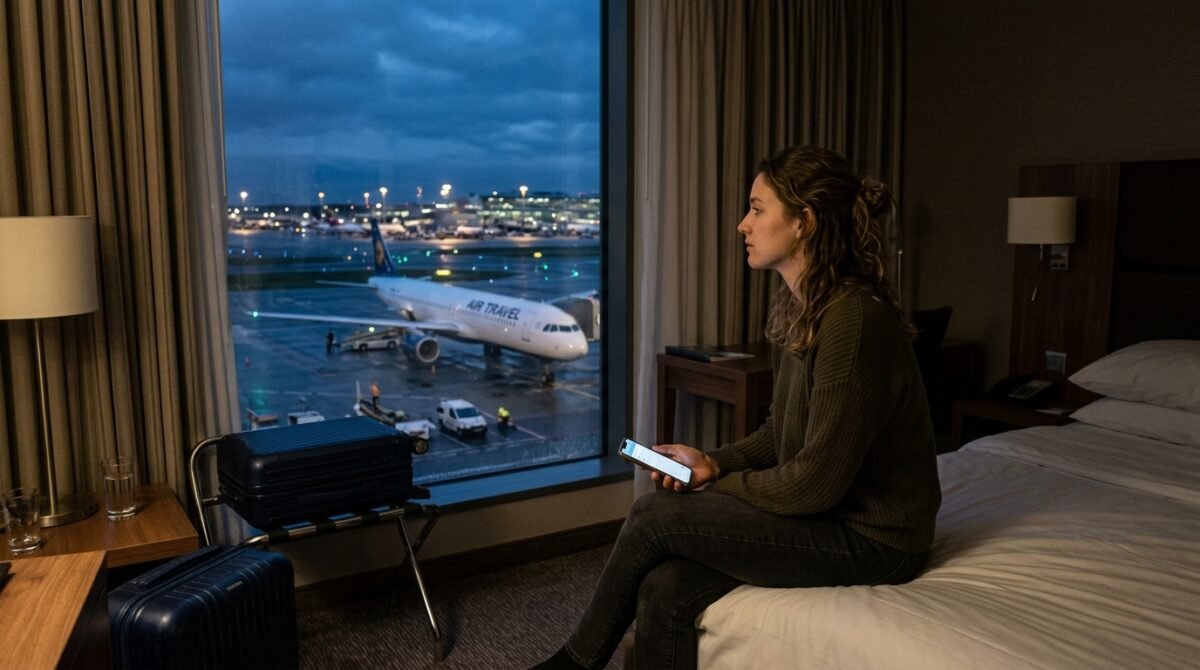
I didn’t follow him. I stayed at the check-in counter, watching his back as he walked toward the security gate. I had my carry-on bag with me. My passport was in my hand. I walked up to the agent who had inadvertently saved my future. She looked at me with sympathetic, tired eyes, probably having seen a dozen breakups in her career.
“I’m not taking that flight,” I told her. I asked her if I could cancel my ticket and get a credit. She couldn’t refund the money—it was a non-refundable fare—but she could rebook the flight to my home city for the next morning. It cost me an extra $300, the last of my personal cash, but it was the best money I ever spent. I was going home. But not to the apartment we shared.
I pulled out my phone and sent a single text to his sister, who was the only person in his family I truly trusted. I told her what happened. I didn’t need to embellish; the facts were damning enough. Then, I turned my phone off. I didn’t want to hear his excuses, his yelling, or his attempts to ‘reason’ with me. I was done.
I spent the night in an airport hotel. I didn’t sleep, but for the first time in three years, I felt peaceful. I felt light. I spent the hours documenting every time he had used my money for his benefit, every ‘loan’ I had given him that was never repaid, and every time he had gaslit me into believing I was the problem. I was building a case—not for court, but for my own sanity.
“He’s going to be furious when he realizes you aren’t on that plane. He’s already calling me, screaming that you’ve ‘abandoned’ him. I told him he’s a massive idiot. Don’t go back to him, Sarah.”
— Mark’s sister, via text message
The realization that even his family saw him for what he was confirmed my decision. He was a master manipulator who had been hiding in plain sight. He relied on my silence and my compliance, and by breaking both, I had effectively dismantled his entire world.
The Fallout in the Group Chat
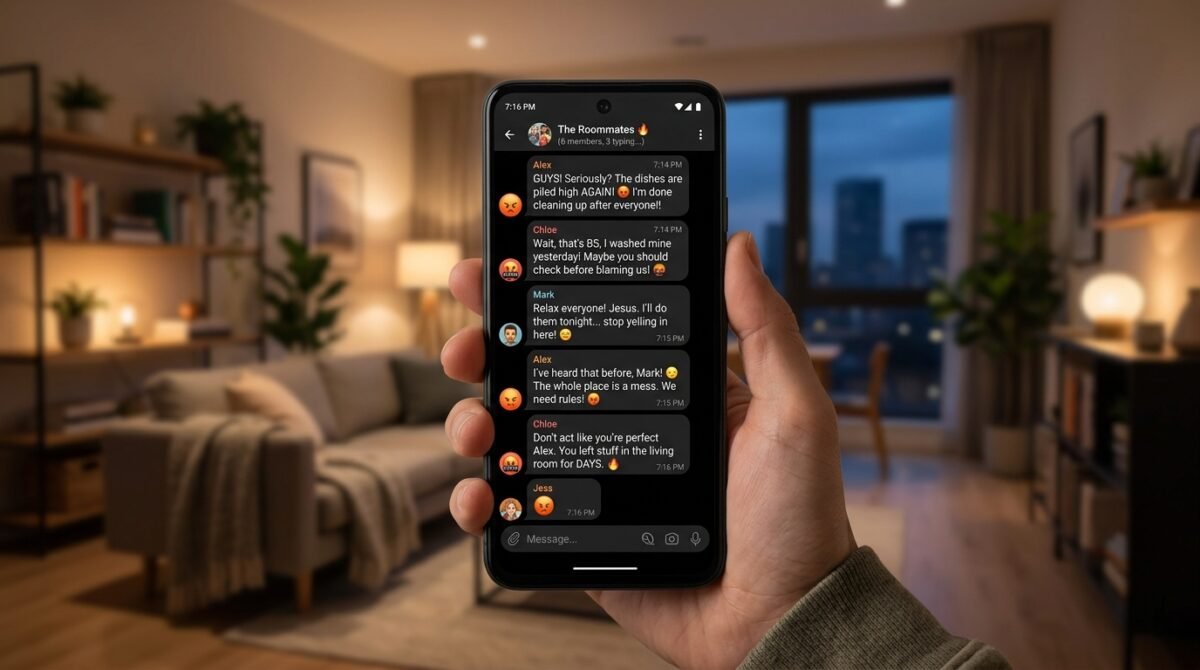
By the time I landed back home, my phone was a graveyard of notifications. Mark had realized I wasn’t on the flight midway through his boarding process. He had tried to call me, text me, and even messaged me on LinkedIn. When that didn’t work, he took his grievances to the family group chat. He painted himself as the victim, claiming I had abandoned him at the airport over a ‘petty disagreement about seat assignments.’
The group chat was a battlefield. His mother was defending him, saying that he worked hard and deserved the upgrade. His brother, however, was having none of it. The screenshots he sent me were glorious. It was the first time I realized how many people had been watching his behavior and waiting for someone to finally call him out.
“Are you serious? You spent $2,000 of the joint vacation fund on yourself and left your fiancé in economy? You’re not a victim, Mark. You’re a narcissist. I’m surprised she didn’t leave you at the altar.”
— Mark’s brother, in the family group chat
The discussion escalated. People began chiming in with their own stories of Mark’s ‘financial efficiency,’ which was just a polite way of saying he was a cheapskate who thrived on exploiting those closest to him. The illusion he had crafted of being a high-flying, successful professional was crumbling. He was revealed as a man who needed to feel superior, even at the cost of his own integrity.
I didn’t participate in the chat. I just read it. It was like watching a documentary about a life I was no longer a part of. Every accusation leveled against him felt like a weight being lifted off my shoulders. I wasn’t the crazy one. I wasn’t being ‘demanding.’ I was simply a person who had finally reached their limit with a man who had no limits of his own.
I spent the next three days moving my things out of our apartment. I did it while he was still in Bali, living his ‘best life’ in a resort that was likely just as hollow as his character. I took only what was mine. I left behind the furniture he had ‘paid for’—even though I knew I had funded the life that allowed him to make those payments. I left the keys on the counter and walked away.
The Financial Audit

Once the dust settled, I sat down to do a full financial audit. For the past three years, I had been operating under the assumption that our finances were being managed fairly. I discovered that ‘fair’ was a concept Mark had twisted to his advantage. He had been using my credit card to pay for his personal subscriptions, his gym membership, and even his occasional ‘business’ lunches.
I created a spreadsheet to track the damage. Seeing it all in one place was sickening. I had been paying for my own exploitation. I had been the one funding the very man who thought so little of me that he would abandon me in a middle seat while he sipped wine in business class. It wasn’t just about the money; it was about the power dynamic. Money was his primary tool for control.
| Category | My Contribution | Mark’s Contribution |
|---|---|---|
| Rent/Utilities | 50% | 50% |
| Joint Travel Fund | 60% | 40% |
| Personal Expenses | 100% | 0% (charged to me) |
The realization that I had been subsidizing his life felt like a slap in the face. I had been working extra shifts to ‘keep up’ with his lifestyle, while he was coasting on my financial stability. The upgrade incident wasn’t an anomaly; it was the final, most egregious example of his character. He viewed people as tools, and I was the most useful tool he had ever had.
I didn’t bother trying to get the money back. I considered it the cost of my freedom. The $1,400 he had ‘saved’ for his upgrade was a small price to pay for the realization that I deserved someone who wouldn’t just look out for themselves. I blocked his number, his email, and his social media. I wanted a clean break, a total erasure of his influence on my life.
The silence that followed was deafening. But for the first time in years, it was a silence I owned. I wasn’t waiting for a text, or an explanation, or an apology that would never come. I was simply existing, for the first time in a long time, on my own terms. I was back to being Sarah, not ‘Mark’s fiancé.’
The Reddit Verdict
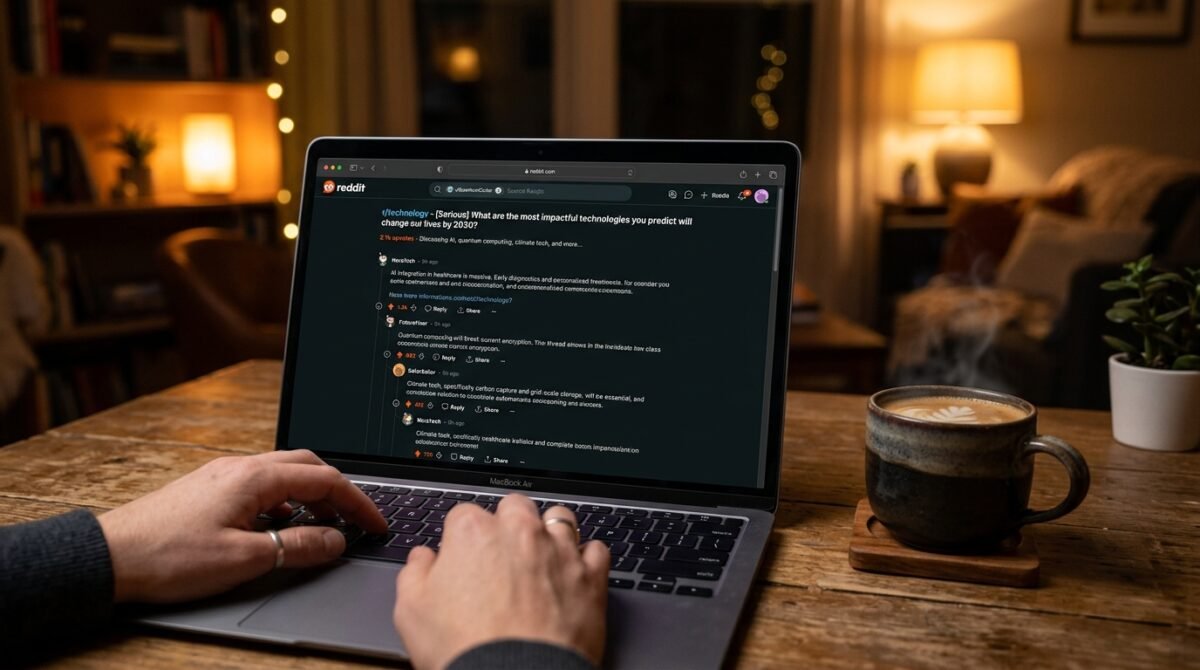
I decided to share my story on Reddit, mostly to see if I was truly as crazy as Mark made me feel. The response was overwhelming. Within hours, the post hit the top of the subreddit, with thousands of people weighing in. The consensus was not just supportive—it was validating in a way I hadn’t expected.
“NTA. This isn’t just about a seat upgrade; it’s a massive red flag. He essentially told you that his comfort matters more than your shared experience. Walk away and don’t look back. You just saved yourself a lifetime of resentment.”
— u/RelationshipGuru, 32.5k upvotes
The comments were filled with people sharing their own stories of partners who prioritized themselves in small, seemingly insignificant ways that eventually destroyed the relationship. Many pointed out that people like Mark don’t change; they just find new victims who haven’t yet learned to set boundaries. The term ‘weaponized selfishness’ was thrown around a lot, and it perfectly described what I had been living through.
There were a few people who argued that I should have talked to him, that I should have given him a ‘second chance.’ I read those comments with a sense of pity. They clearly hadn’t lived through the slow, agonizing process of being devalued by someone you love. You don’t have a ‘conversation’ with a narcissist; you have a performance where you try to justify your right to exist.
The community support gave me the courage to move forward with the next steps of my life. I started looking for a new apartment, one that was all mine. I signed up for a course I had been putting off because Mark thought it was ‘too expensive.’ I began to reclaim the parts of myself that I had sacrificed for the sake of his comfort.
“The way he tried to gaslight you by calling it a ‘consulting fee’ is straight out of the Narcissist Playbook. He wasn’t looking for a partner; he was looking for a servant. You’re lucky you found out now instead of after the wedding.”
— u/TruthSeeker99, 18.2k upvotes
It was heartening to see that so many strangers understood the gravity of the situation. It confirmed that my instincts were right all along. I wasn’t being dramatic; I was being observant. And that observation had saved me from a future that would have been nothing but a long, slow decline into invisibility.
Reflections on the ‘Last Hurrah’

Thinking back on that night, I realize that the trip to Bali was never going to work out. Even if he hadn’t upgraded his seat, something else would have happened. He would have complained about the hotel, or the food, or the weather, and I would have spent the entire time trying to appease him, trying to make him happy. That was the role I had been cast in: the perpetual peacekeeper.
I look at photos of us from a year ago, and I barely recognize the person staring back at me. She looks tired, slightly hunched, as if she’s constantly bracing for impact. She’s smiling, but it’s a smile that doesn’t reach her eyes. She’s a person who has forgotten how to take up space, because she’s too busy making sure someone else has all the room they need.
The breakup wasn’t just about the seat. It was about the realization that I had spent three years of my life trying to build a foundation on shifting sand. Mark was not a partner; he was a project. And I was a project that he had grown bored of, or perhaps, a project that he simply felt he didn’t need to manage anymore because he had ‘won’ the engagement.
I feel a profound sense of gratitude for that check-in agent. She didn’t know it, but she was the instrument of my liberation. By simply doing her job, she blew up a structure of lies and manipulation that I hadn’t been strong enough to dismantle on my own. It was a chaotic, painful, and messy way to end a relationship, but it was the only way it could have ended.
“I thought we were building a future. Turns out, he was just building a pedestal for himself and expecting me to be the cement.”
— Sarah, reflecting on the relationship
If there is one thing I’ve learned, it’s that you should never, ever ignore the small signs of selfishness. They are never small. They are the cracks in the dam, and if you don’t address them, they will eventually cause the whole structure to collapse. I’m just glad I was standing on the right side of the collapse when it finally happened.
The Aftermath: Rebuilding Self-Worth

Rebuilding my life hasn’t been easy, but it has been incredibly rewarding. I’ve started therapy to unpack the years of gaslighting and to understand why I allowed myself to be treated this way for so long. It’s been a process of unlearning the habits of compliance and relearning how to stand up for my own needs and desires.
I’ve reconnected with friends I had pushed away during the relationship—friends who were waiting for me to wake up and see the truth. They’ve been an incredible support system, helping me navigate the aftermath and reminding me of who I was before I met Mark. It’s amazing how much of your personality you lose when you’re constantly shrinking yourself to fit someone else’s ego.
I’m finally doing the things I love without feeling guilty about the cost or the time. I’m traveling again, but this time, it’s on my terms. I choose the seats, I choose the destinations, and I choose the company. I don’t have to worry about whether my choices will annoy someone else or if I’m being ‘unreasonable’ for wanting a little bit of comfort for myself.
The most surprising thing about this whole ordeal is how much lighter I feel. The anxiety that used to follow me like a shadow is gone. I’m no longer waiting for the other shoe to drop, because I know that I’m the one who controls the shoes now. I’ve taken back the power that I surrendered so willingly, and I’m never giving it away again.
“My worth is not defined by his perception of it. And for the first time in my life, I truly believe that.”
— Sarah, on her path to recovery
I know there will be other relationships in my future, but they will be built on a foundation of mutual respect and equality. I’ve set a very high bar now, and I’m not going to lower it for anyone. If someone can’t value my comfort as much as their own, they don’t deserve to be a part of my journey.
Lessons from the Departure Lounge

If you take anything away from my story, let it be this: pay attention to the way your partner treats you when they think no one is watching, or when they think they have you ‘secured.’ The way they handle money, the way they handle small disagreements, and the way they prioritize your needs are the true indicators of their character.
Don’t be afraid to walk away. It doesn’t matter how long you’ve been together, how much money you’ve invested, or how many plans you’ve made. Your happiness and your dignity are worth more than any commitment, no matter how ‘official’ it looks on paper. The sunk cost fallacy is a trap; don’t let it keep you in a life that doesn’t fit you.
Trust your instincts. If something feels off, it probably is. If you feel like you’re constantly apologizing for taking up space, you’re in the wrong place. And if you find yourself sitting at an airport, feeling the weight of a decision you didn’t make, remember that you always have the power to say ‘no.’ You can always turn around.
I am grateful for that night at the airport. It was the hardest night of my life, but it was also the most important. It was the night I stopped being a supporting character in someone else’s drama and started being the protagonist of my own. And that, more than any luxury flight, is the true journey.
“The most expensive thing you can ever pay for is a relationship that costs you your self-respect.”
— Sarah’s concluding thought
I hope my story encourages others to re-evaluate their own lives and to realize that they are worthy of so much more than they’ve been settling for. You don’t have to wait for a public blowup at an airport to realize your worth. You can choose to be happy today, right now, by setting the boundaries you need to protect your own peace and dignity.
Conclusion
The story of the Bali flight has become a cautionary tale for many of my friends and readers. It serves as a reminder that the most significant betrayals often happen in the quiet moments, in the small decisions that reveal the true nature of a person’s heart. My journey from that check-in counter to where I am today has been a long one, but it has been worth every step.
I am no longer the woman who would sit in economy while her fiancé sat in business class. I am no longer the woman who would pay for someone else’s luxury while she struggled to keep her head above water. I have reclaimed my voice, my money, and my life. And I have learned that the most important seat you will ever secure is the one you make for yourself in your own world.
How about you? Have you ever had a ‘check-in counter’ moment—a split-second realization that changed everything about your relationship? Have you ever walked away from a situation that everyone else thought was ‘fine’ but you knew was toxic? I want to hear your stories in the comments below. Let’s create a space where we can talk about the real, messy, and often painful truths of relationships, and how we can all move toward a life of genuine equality and mutual respect.
What's your verdict on this dilemma?
Vote below to contribute to the official community consensus.

Have a Dilemma Keeping You Up at Night?
Share your real-life feud, wedding chaos, or relationship crossroads anonymously with our editorial team.
What do you think ?
0 Comments🛡️ Comments are moderated to protect community integrity. Your comment will appear once approved by the editorial team.