
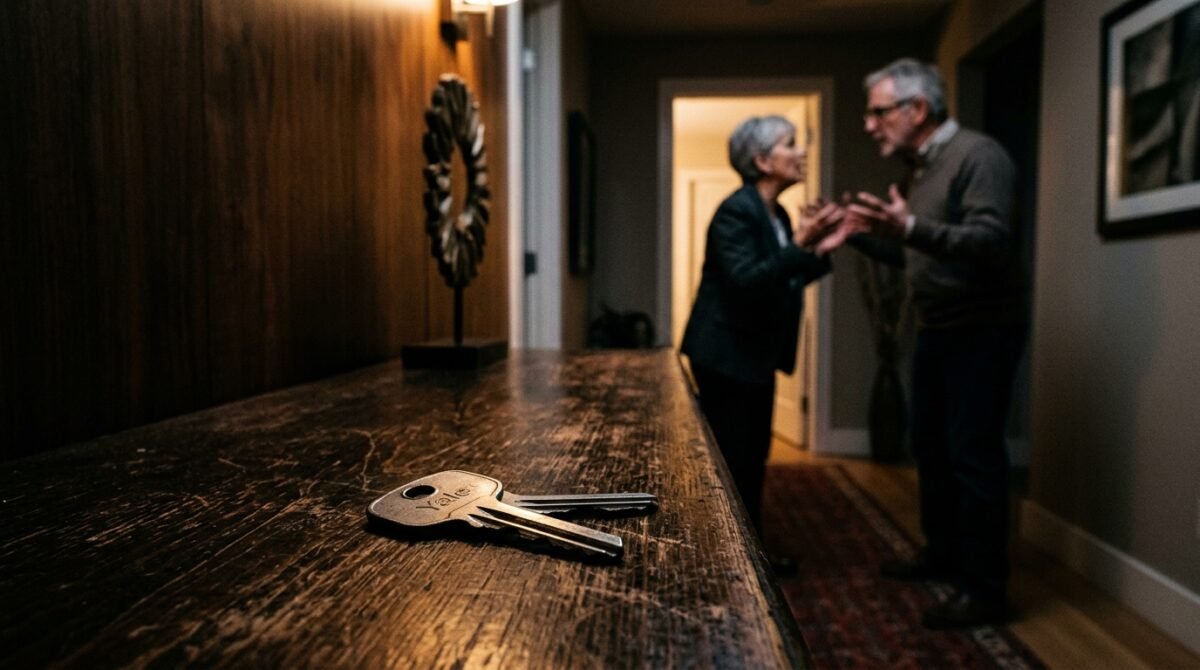
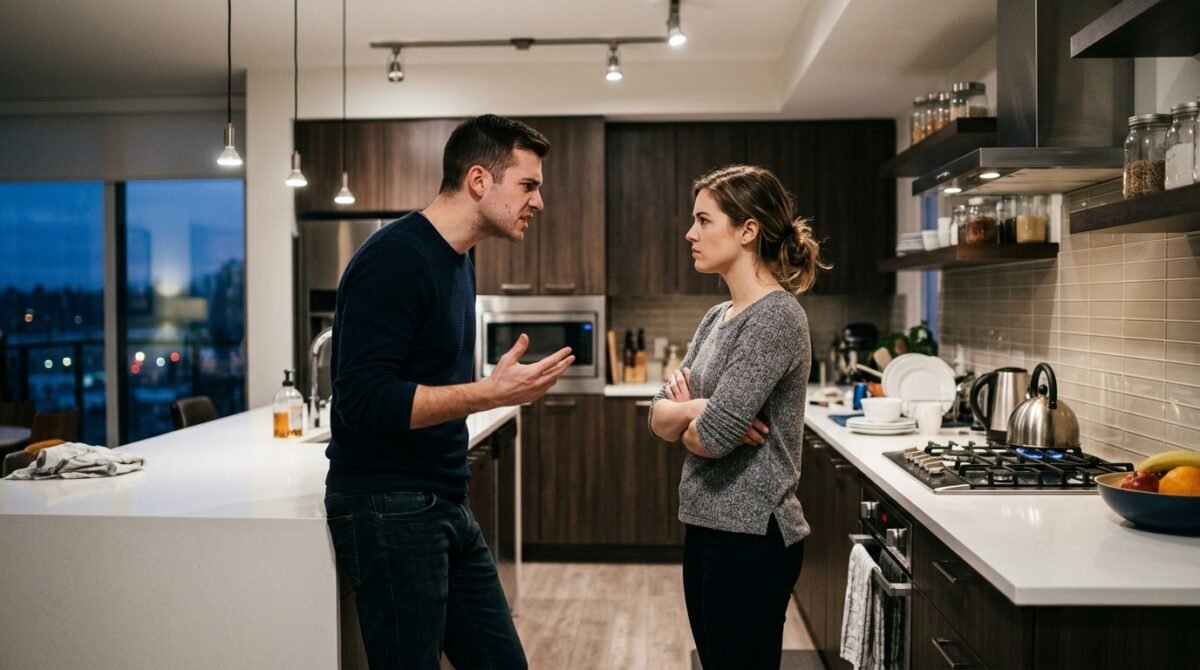
Privacy is not a privilege; it is a fundamental human right. Yet, for my husband, Mark, and me, the concept of boundaries seemed to be a foreign language that his parents, Linda and Robert, simply refused to learn. We had just moved into our first apartment—a beautiful, sun-drenched space that felt like our first real step into adulthood. It was our sanctuary, a place where we could finally exhale after years of living in cramped rentals and stressful living conditions.
The trouble began the very first week we moved in. It wasn’t a subtle request or a polite inquiry; it was a demand wrapped in the guise of ‘family love.’ They wanted a key. Not for emergencies, they insisted, but for ‘convenience.’ The idea of them having free, unannounced access to our home, our bedroom, and our personal belongings sent a cold shiver down my spine. I knew exactly what would happen: the unannounced cleaning sessions, the rearranged furniture, and the inevitable judgment of our lifestyle.
Mark, ever the peacekeeper, found himself trapped between the proverbial rock and a hard place. He wanted to please his parents, but he also valued our relationship. I, however, had reached my limit. Years of subtle boundary-stomping had culminated in this one, massive request. I realized that if I gave them a real key, I would be handing over the keys to my own happiness. I decided to take a gamble that would either solve our problem or burn everything to the ground.
I went to the hardware store and bought a blank key. I had it cut to look like a standard house key, but I knew, with absolute certainty, that it wouldn’t open a single lock in our building. It was a decoy, a tactical move in a war of nerves I didn’t want to fight, but was forced into. Little did I know, the fallout would be far more explosive than I could have ever imagined, leading to a family rift that would change our dynamics forever.
This is the story of how a small, harmless lie about a piece of metal became the catalyst for a total reconfiguration of our family life. It is a tale of entitlement, the struggle for independence, and the realization that sometimes, the only way to protect your peace is to stop playing by the rules of those who refuse to respect you.
The Sunday Dinner Ultimatum
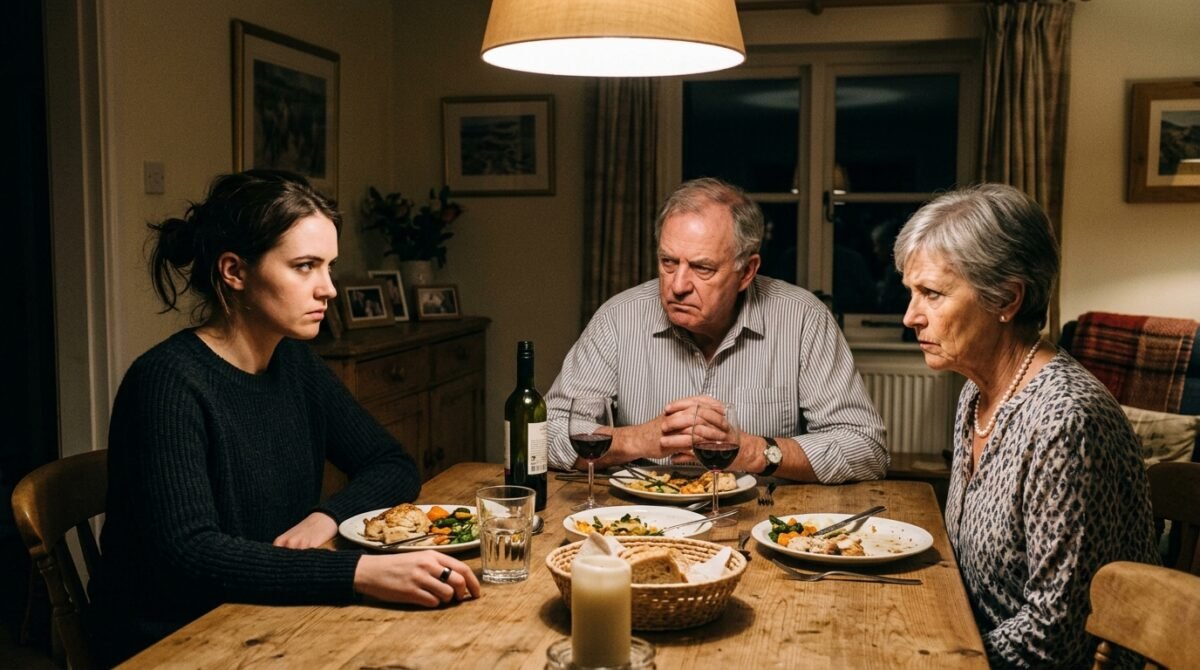
The demand wasn’t made over the phone or in a text; it was delivered during the most sacred of times: Sunday dinner. We were at their house, a place filled with heavy oak furniture and the lingering scent of pot roast. The atmosphere was thick with the weight of unspoken expectations. Linda, with her signature sharp gaze, set her fork down and looked directly at me. It was the kind of look that felt like a surgical incision.
“We’ve been thinking,” she began, her voice dripping with an artificial sweetness that never quite reached her eyes. “Since you two are still settling in, and Mark is so busy with his new job, we really should have a key. You know, just in case of a leak or if you accidentally lock yourselves out. It’s what parents do, honey. It’s about safety.”
Mark shifted uncomfortably in his chair, looking everywhere but at me. He knew where this was going, and he was already sweating. I felt a surge of adrenaline, a fight-or-flight response triggered by the sheer audacity of the request. I took a slow sip of my wine, trying to steady my racing heart. I knew that if I said no directly, I would be painted as the villain who was isolating their son from his family.
“We aren’t comfortable with anyone else having a key, Linda. We really value our privacy as a newly married couple. We’ve set up a system with the building manager for emergencies.”
— My response during the dinner
The table went deathly quiet. Robert, who usually stayed out of the fray, cleared his throat and leaned forward, his face hardening. He started talking about how he had paid for the down payment on the first month’s rent, implying that the financial contribution bought them an equity stake in our personal lives. It was manipulative, and frankly, disgusting.
I looked at Mark, waiting for him to step in, to defend our autonomy. He stayed silent, staring at his plate as if it were the most interesting thing in the world. That silence was the moment I realized I was on my own. If I wanted to maintain the sanctity of my home, I had to be the one to hold the line, even if it meant playing a dangerous game.
The Hardware Store Deception
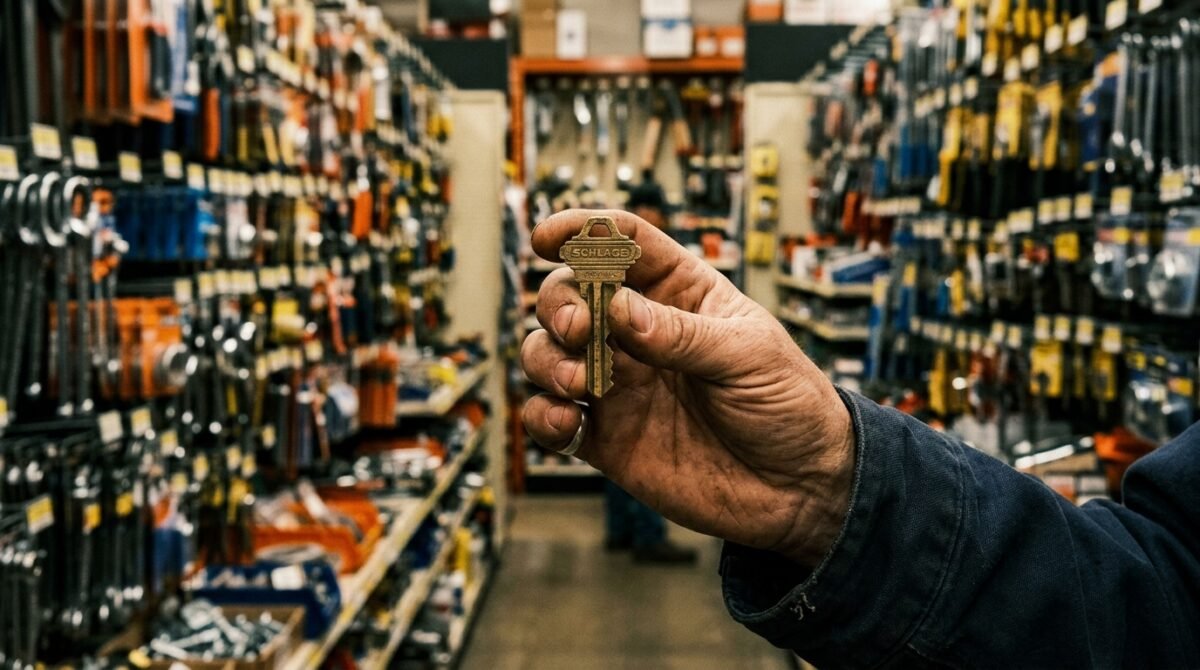
The next day, I found myself in the local hardware store. The aisles were quiet, smelling of sawdust and metal. I held the blank key in my hand, feeling its cold weight. It was a simple object, yet it held so much power. I asked the clerk to cut a key for a completely different building—a generic apartment complex lock that I knew wouldn’t fit our high-security deadbolt. It was a petty, childish move, but in that moment, it felt like justice.
I walked out of the store with the key in a small envelope. My hands were shaking, not just from the adrenaline, but from the realization of what I was doing. I was lying to my in-laws. I was setting a trap. I knew that eventually, they would try to use it, and they would be humiliated. But at this point, the alternative—letting them walk into my home whenever they pleased—was simply not an option I could live with.
When I got home, I placed the key on the kitchen island. I didn’t tell Mark what I had done. I knew he would panic. I knew he would try to ‘fix’ it, to make it right for his parents, and that would ruin the entire plan. I had to handle this alone. I felt like a spy in my own home, concealing a secret that would inevitably explode.
I spent the afternoon cleaning, scrubbing the counters until they sparkled, thinking about how they would react when the key didn’t turn. Would they call us? Would they storm over? Would they eventually stop asking? The fear was there, but it was overshadowed by a strange sense of vindication. For too long, I had been the one to compromise, the one to bend, and the one to apologize. This was my line in the sand.
I hid the real spare key in a fireproof safe in the back of our closet. The decoy key sat on the counter, waiting for the inevitable. I felt like I was holding a live grenade, and I couldn’t wait for it to detonate. I wanted to see if they would actually try it, if they would prove my suspicion that they didn’t care about ’emergencies’ at all.
The Unannounced 6:00 AM Intrusion
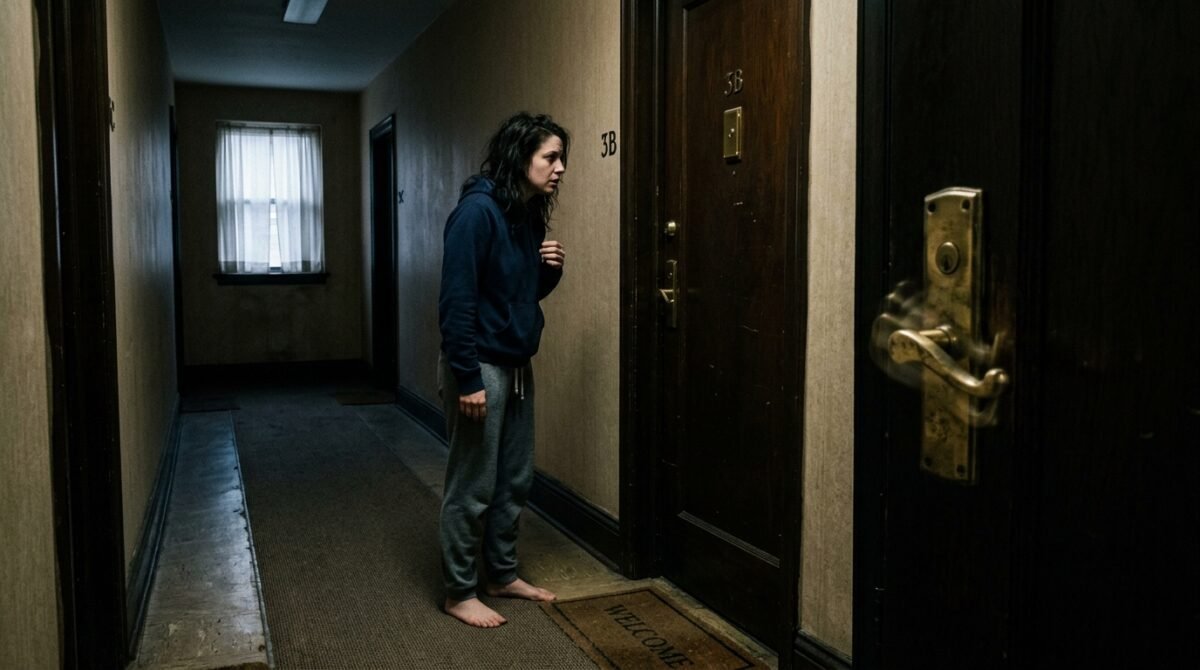
The inevitable happened on a Tuesday. I was still asleep, curled up under the duvet, when I heard the distinct sound of someone fiddling with our front door lock. It was 6:00 AM. The sun was barely peeking through the blinds. My heart stopped. I nudged Mark, who was still fast asleep, and held my breath. The sound continued—the jiggling, the force, the frustration of the key failing to turn.
“Mark, wake up,” I whispered, my voice trembling. “Someone is at the door.” He groaned, rolling over, but I was already out of bed, grabbing my robe. I crept to the hallway, listening. I could hear muffled voices on the other side. It was Linda and Robert. They weren’t just checking in; they were letting themselves in. The audacity of it made me sick to my stomach.
I stood by the door, listening to them grow increasingly agitated. The key they had, the one I had given them, wasn’t working. They were trying to force it, grunting, whispering aggressively to each other. “It’s stuck! Why is it stuck? Maybe we’re using the wrong side?” Robert whispered loudly. I leaned my head against the door frame, feeling a wave of grim satisfaction wash over me.
“Robert, move aside. You’re doing it wrong. Just jiggle it! If they changed the locks, I swear I’m going to lose my mind. They promised us access!”
— Linda, heard through the front door
I realized then that they hadn’t just come to ‘check’ on us. They had come to do exactly what I feared: enter our home, unannounced, while we were vulnerable. They had brought grocery bags with them, probably planning to invade our fridge or clean our bathroom without asking. They were treating our home like an extension of their own, and my decision to give them the wrong key had just saved me from a nightmare.
I didn’t open the door. I stood there, silent as a ghost, watching the door handle turn and shake. Finally, after ten minutes of frustration, I heard them stomp away, muttering curses under their breath. They walked to their car, and I heard the engine start. I went back to the bedroom, climbed back into bed, and stared at the ceiling, feeling a strange mixture of terror and triumph.
The Morning After: The Confrontation
By noon, my phone was blowing up. I had turned it on silent, but the notifications were piling up like a ticking bomb. Multiple missed calls from both Linda and Robert. A series of increasingly frantic, then increasingly hostile, text messages. Mark was at work, blissfully unaware of the drama, and I was dreading the moment he came home to check his own phone.
I finally opened the messages. They were a masterclass in manipulation. They started with “Are you okay? We were worried because we couldn’t get in,” and devolved into “How dare you change the locks without telling us? We are family! This is disrespectful and ungrateful!” They were framing their intrusion as an act of concern, and my lack of access as a personal attack.
I decided to respond, but I kept it brief. I needed to document everything. I sent a simple, cold message: “We haven’t changed any locks. The key you have is the one I gave you. If it doesn’t work, perhaps there is an issue with the lock itself. We were sleeping at 6:00 AM and didn’t appreciate the intrusion.”
“Intrusion? We are your parents! We came to bring you fresh produce and check the smoke detectors. You are acting like we are intruders in your own home. You owe us an explanation right now!”
— Text message from Linda
I didn’t reply. I knew that any further engagement would just be fuel for their fire. I sat at my laptop, documenting the timestamps of the messages and the timing of their ‘visit.’ I knew I needed to be ready when Mark got home. I was going to have to explain the lie, and I knew it wouldn’t be pretty. The guilt was starting to creep in, but the memory of them trying to force their way into our private space at dawn kept me grounded.
When Mark finally walked through the door, he looked pale. He had already seen the messages. He didn’t even say hello; he just threw his keys on the counter and looked at me, his eyes wide with disbelief. “What is going on, Sarah? My mom says you gave them a broken key. She’s saying you humiliated them at the door.”
The Secret Group Chat Revelation
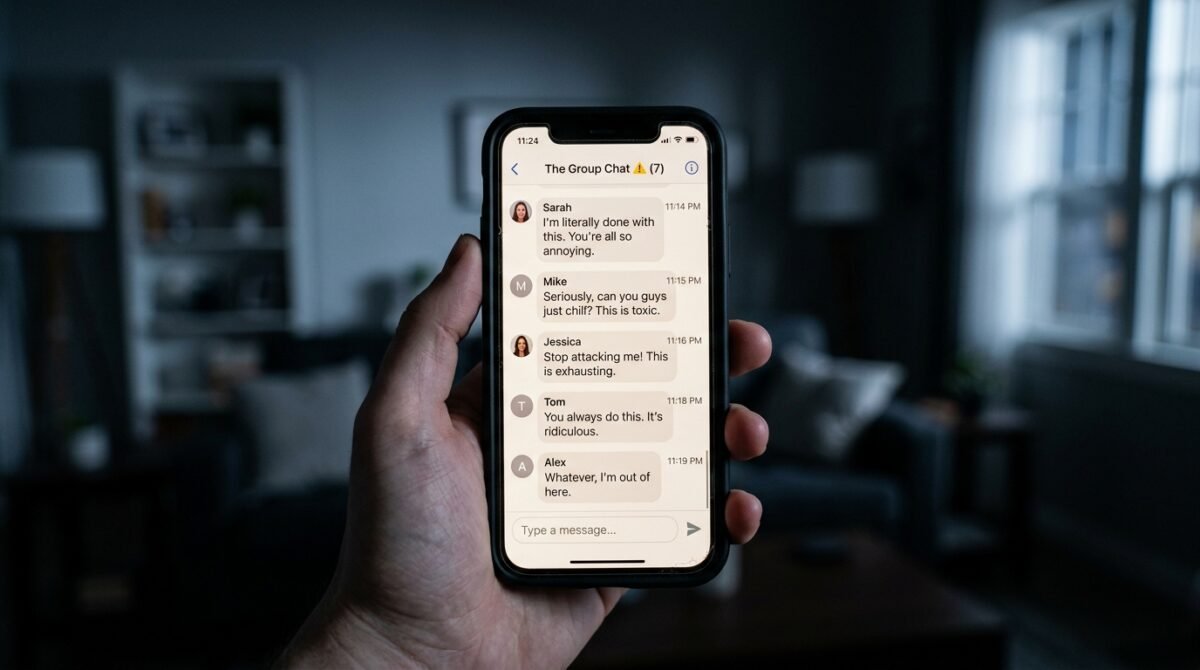
The fallout wasn’t limited to just us. It seemed that in their anger, Linda and Robert had taken their grievances to the extended family group chat. By the time I sat down to eat dinner with Mark, my phone was pinging constantly with messages from his aunts, his cousin, and even his sister. They were all piling on, calling me ‘controlling,’ ‘difficult,’ and ‘insecure.’
I pulled up the group chat, my fingers hovering over the screen. It was like reading a script of a soap opera where I was the villain. They were dissecting my character, questioning why Mark had married me, and suggesting that I was ‘brainwashing’ him. It was incredibly painful to read, but it was also eye-opening. I saw how easily they could manipulate the narrative, how quickly they could turn the entire family against me with half-truths.
Mark was reading over my shoulder, his face turning red. He was clearly mortified. He started typing a reply to his mother, trying to defend us, but I stopped him. “Don’t,” I said, my voice steady. “If you engage, you’re just giving them more power. Let them talk. They’re showing everyone exactly who they are.”
“I don’t understand why Sarah is being so difficult. We only want to help them. She is clearly trying to keep Mark away from us. Any advice on how to handle her?”
— Linda in the Family Group Chat
The replies were predictable. His aunt suggested I was having a ‘mental episode.’ His cousin suggested that Mark needed to ‘put his foot down.’ It was a coordinated campaign of gaslighting, and it was working. I felt a deep sense of isolation, but also a strange sense of clarity. These people didn’t want a relationship with us; they wanted control over us. And they were willing to burn bridges to get it.
I realized then that this wasn’t just about a key. It was about power. It was about whether our marriage was a partnership between two adults, or a subsidiary of their family empire. I looked at Mark and saw the conflict in his eyes. He loved them, but he also saw the toxicity. He was caught between his past and his future, and I knew I had to be the one to help him choose.
A Reddit Community Weighs In
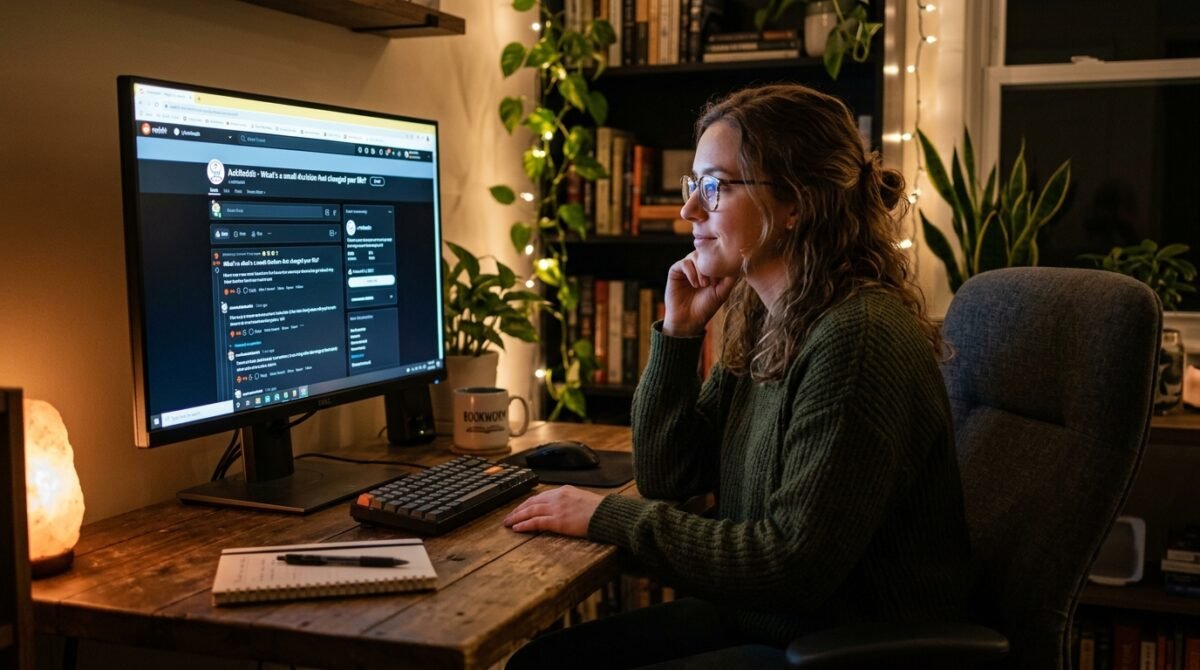
I needed perspective, so I did what any millennial in a crisis would do: I posted our story on a popular relationship advice subreddit. I scrubbed the names and locations, but kept the details raw. Within an hour, the post had blown up. The comments section became a battlefield, and for the first time, I felt like someone understood the insanity of what we were dealing with.
Most people were on my side, defending my right to privacy. They pointed out that unannounced visits at 6:00 AM are a major boundary violation, regardless of who is doing it. Some even called it ‘stalking behavior.’ The support was overwhelming, and it gave me the validation I had been lacking. I wasn’t crazy. I wasn’t being difficult. I was being a victim of boundary-stomping.
“This isn’t about a key. This is about them viewing your home as their property. Give them an inch, they take a mile. The decoy key was a brilliant, if petty, move. Stay strong, OP. Do not apologize.”
— u/BoundaryWarrior (Top Comment, 32.4k upvotes)
Of course, there were the dissenters. Some people argued that family is family, and that I should be ‘grateful’ for their support. They called me ‘cold’ and ‘spiteful.’ But even those comments served a purpose—they showed me how different people define family boundaries, and why it is so important to establish your own, even if it upsets others.
The thread became a repository of similar stories. People shared their own horrors—in-laws who showed up with their own furniture, in-laws who had keys and would rearrange kitchens while the couple was at work. It was a massive, communal therapy session. I read every single comment, feeling my resolve harden with each one. I wasn’t alone, and I wasn’t wrong.
I showed the thread to Mark. He spent hours reading the stories, his expression shifting from defensive to horrified. Seeing that other people had gone through this, and that his parents’ behavior was considered textbook ‘toxic,’ was the turning point for him. He finally understood that this wasn’t just a difference of opinion; it was a systemic issue that needed to be addressed.
The Certified Letter of ‘Forgiveness’
Three days later, a certified letter arrived. It was from Robert. It was typed, formal, and icy. It demanded an ‘immediate apology’ for the ‘public humiliation’ we had caused them, and it warned that if we didn’t ‘correct our behavior,’ there would be ‘consequences.’ They were actually threatening us. It was so surreal, I almost laughed.
The letter went on to list all the things they had ‘done for us’—the financial help, the help with the move, the ‘sacrifices’ they had made. It was a classic guilt trip, intended to make me feel small and ungrateful. But reading it now, it just felt pathetic. It was the desperate clawing of people who were losing their grip on their son.
“We have decided to suspend our financial support for your future endeavors until you acknowledge your disrespectful behavior and return the key. This is not a request; it is a necessity for the health of our family.”
— Excerpt from the certified letter
I left the letter on the kitchen table for Mark to find. I didn’t say a word. I just watched him read it, his face turning from pale to a deep, angry red. He finally realized that they weren’t just being pushy; they were actively trying to punish us for standing up for ourselves. The illusion of their ‘love’ was finally shattered.
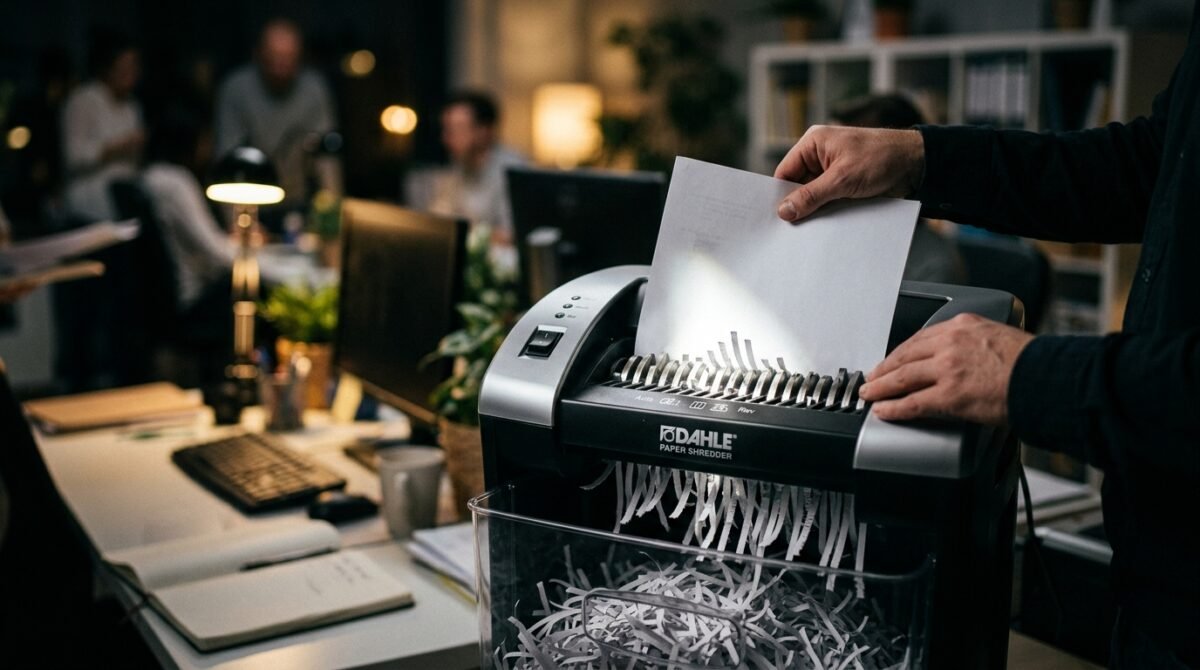
He walked over to the shredder in our office, took the letter, and fed it through. The sound of the paper being destroyed was one of the most satisfying things I have ever heard. He looked at me and said, “We don’t need their money. We don’t need their permission. And we certainly don’t need their keys.” It was the most liberating thing he had ever said to me.
We spent the rest of the evening planning our own path forward. We discussed cutting off the financial ties they had been using to hold us hostage, and we made a pact: no more secrets, no more apologies for boundaries, and no more allowing them to dictate our lives. It was the start of a new chapter, one that we were writing on our own terms.
The Silence of the Lambs

For two months, we went completely no-contact. No calls, no texts, no social media interaction. We blocked them on our phones and restricted their access to our social media profiles. It was incredibly difficult at first. The guilt of cutting off his parents haunted Mark, and I felt the weight of being the ’cause’ of the rift. But slowly, the anxiety began to fade.
Our home became a true sanctuary. We didn’t have to worry about the doorbell ringing at odd hours or the fear of finding someone in our kitchen. We spent our weekends focusing on each other, decorating our space, and building a life that was uniquely ours. We realized how much energy we had been wasting on managing their emotions, and how much better our lives were without that constant drain.
The extended family eventually stopped asking. They realized that their attempts to intervene were falling on deaf ears, and that Mark was no longer the boy who could be easily manipulated. It was a silent victory, but a profound one. We were no longer characters in their drama; we were the authors of our own lives.
I started noticing the small things. The way our house felt quiet and peaceful. The way Mark seemed lighter, more relaxed, and more connected to me. We were finally becoming the couple we were meant to be, unburdened by the expectations of the past. The ‘key’ incident, as we started calling it, became a symbol of our independence, a reminder of the day we finally decided to say ‘no.’
We still get the occasional forwarded email from a distant relative, trying to ‘bridge the gap,’ but we delete them without a second thought. We have established a firm boundary: we will have a relationship with them when they are ready to respect us as adults, and not a moment before. Until then, we are perfectly happy in our private, key-protected world.
Why They Will Never Change

Looking back, I realize that Linda and Robert were never going to change. Their behavior wasn’t a phase or a misunderstanding; it was a deep-seated pattern of control that had likely governed their lives for decades. They didn’t view us as adults because they didn’t view anyone as an adult—everyone was just a pawn in their game.
Trying to reason with them, to explain our side, or to ‘fix’ the relationship would have been an exercise in futility. They weren’t looking for understanding; they were looking for submission. And once I realized that, the guilt finally vanished. I wasn’t being mean; I was being protective. I was protecting our marriage, our home, and our sanity.
Many people struggle with this, wanting to hold onto the hope that their parents will eventually ‘see the light.’ But sometimes, the most loving thing you can do for yourself is to accept that they won’t. You have to stop waiting for their approval and start living for your own. You have to stop building your life around their expectations and start building it around your own values.
I know that some people will still judge us. They will say that we are ‘ruining’ the family, that we are being ‘entitled.’ But those people don’t have to live in our home. They don’t have to deal with the 6:00 AM intrusions or the passive-aggressive guilt trips. We have to live our lives, and we have chosen to do so with integrity and self-respect.
The key incident was just the catalyst. The real work was in the months that followed—the difficult conversations, the healing, and the realization that we are stronger together. We have built a foundation of trust that can withstand any storm, and we have learned that the most important key to our home is the one that locks the door to those who don’t belong inside.
Lessons in the Aftermath

If I could go back, would I do anything differently? Maybe I would have been more direct from the start. Maybe I wouldn’t have used a decoy key. But then, I wouldn’t have learned what I needed to learn. That petty act of defiance was exactly what I needed to break free from the cycle of people-pleasing that I had been trapped in for years. It was the spark that forced the fire.
We learned that boundaries are not negotiable. You don’t ask for permission to have a life; you just live it. You don’t apologize for wanting privacy; you just protect it. And you certainly don’t let anyone—not even family—make you feel guilty for being an adult. These are the lessons that have shaped our marriage, and they are lessons I will carry with me forever.
We have also learned the value of a support system. Reading the comments from strangers on Reddit, knowing that we weren’t alone in this, was a crucial part of our healing. It reminded us that there is a world of people who value autonomy and respect, and that we are part of that community. We are not the odd ones out; we are the ones who are finally choosing to live authentically.
Today, our home is a place of peace. We have filled it with things we love, memories we’ve made together, and the quiet comfort of knowing that we are safe. We don’t have to look over our shoulders, and we don’t have to worry about who might be walking through the door. We are, for the first time, truly at home.
And to those who are still struggling with their own in-laws or toxic family members: stay strong. Your boundaries are valid. Your privacy is non-negotiable. And you deserve to live a life that is yours, not theirs. Don’t be afraid to change the locks, in every sense of the word.
Conclusion
Our journey from the brink of a total family collapse to a place of reclaimed peace has been transformative. It taught us that the most significant battles we fight are often not against enemies, but against the weight of expectations. We realized that setting a boundary is not an act of hostility, but an act of self-preservation. By refusing to give in to the unreasonable demands of those who sought to control our space, we gained something far more valuable than a functioning key: we gained our independence.
The experience of the ‘decoy key’ has become a family legend—a small, slightly rebellious chapter in our story that reminds us to stand our ground. We are no longer the couple that apologizes for existing; we are the couple that defines our own parameters for love and connection. If you are currently navigating similar waters, know that your feelings are valid. You are the architect of your home, and you are the gatekeeper of your peace.
We want to hear from you. Have you ever had to resort to unconventional methods to protect your boundaries? What was the moment you realized you had to draw a line in the sand? Share your stories in the comments below—let’s create a space where we can support each other in reclaiming our autonomy.
Poll:
What would you have done if your in-laws demanded a spare key to your home?
1. Given them the key and set strict rules.
2. Refused directly and accepted the conflict.
3. Used a decoy key to buy time.
4. Ignored the request and hoped they forgot.
What's your verdict on this dilemma?
Vote below to contribute to the official community consensus.

Have a Dilemma Keeping You Up at Night?
Share your real-life feud, wedding chaos, or relationship crossroads anonymously with our editorial team.
What do you think ?
0 Comments🛡️ Comments are moderated to protect community integrity. Your comment will appear once approved by the editorial team.