
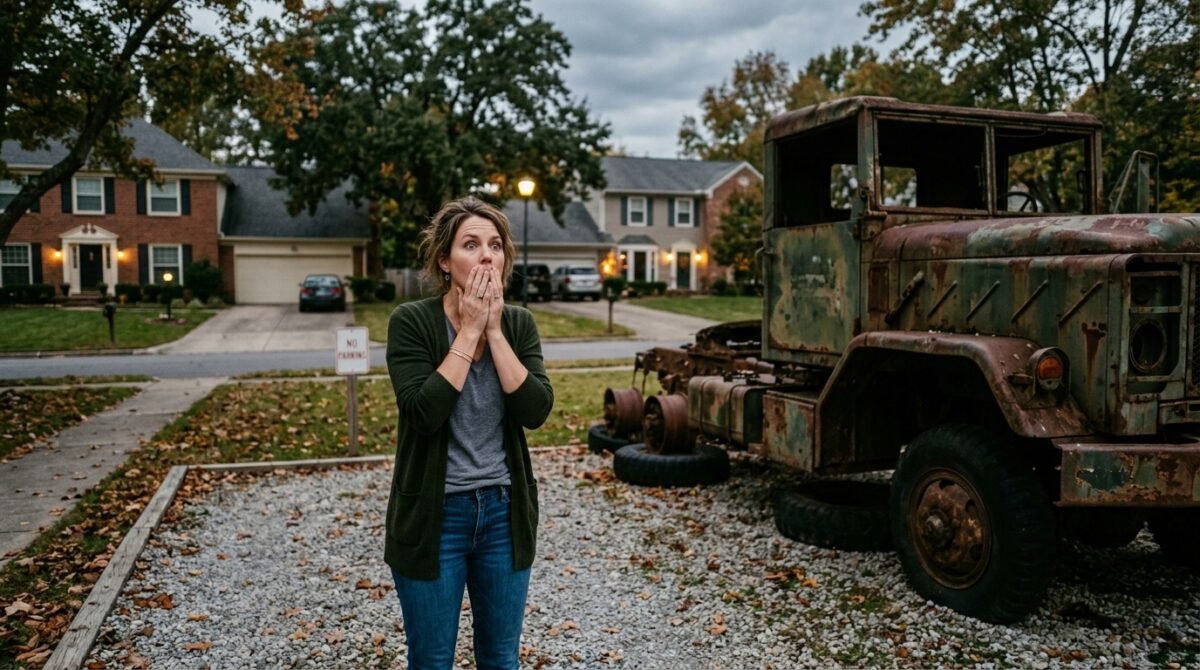
We all have that one thing—the object that represents our independence. For me, it was my hybrid sedan. It was the first car I bought entirely on my own, a symbol of the hard work I put into my career before I even met Mark. It was reliable, fuel-efficient, and paid off in full. It was my safety net. When my mother fell ill last month, that car became my lifeline, ferrying me back and forth across three state lines to be by her bedside while she navigated a sudden health crisis.
Mark, my husband of four years, had always been obsessed with ‘projects.’ He viewed life through the lens of what he could build, repair, or transform. I supported his hobby because I believed in his vision—up until the point that vision began to cannibalize my own livelihood. I left for three days to help my mother settle into a rehabilitation center, leaving behind a functioning, modern vehicle. I returned to find that vehicle gone, and in its place, a hulking, rusted-out military truck hull that looked like it had been salvaged from a scrap yard in the 1970s.
The betrayal wasn’t just about the money; it was the audacity. He hadn’t asked. He hadn’t even hinted. He had simply decided that his desire to restore a vintage army vehicle outweighed my need for a commute-worthy car. When I confronted him, he didn’t apologize; he smiled, expecting me to be impressed by his ‘investment.’ That moment of disconnect was the beginning of the end of our marriage, a realization that he didn’t see me as a partner, but as a resource to be tapped for his whims.
This story isn’t just about a car; it’s about the erosion of boundaries in a relationship when one partner views the other as an extension of their own ego. It’s a case study in how financial abuse, even when masked as ‘hobbies’ or ‘investments,’ can dismantle the trust that holds a household together. As I look back on the events of that week, I see the warning signs that I was too blinded by love to notice until the keys to my life were traded away for a pile of rust.
The Three-Day Absence and the Silent Driveway
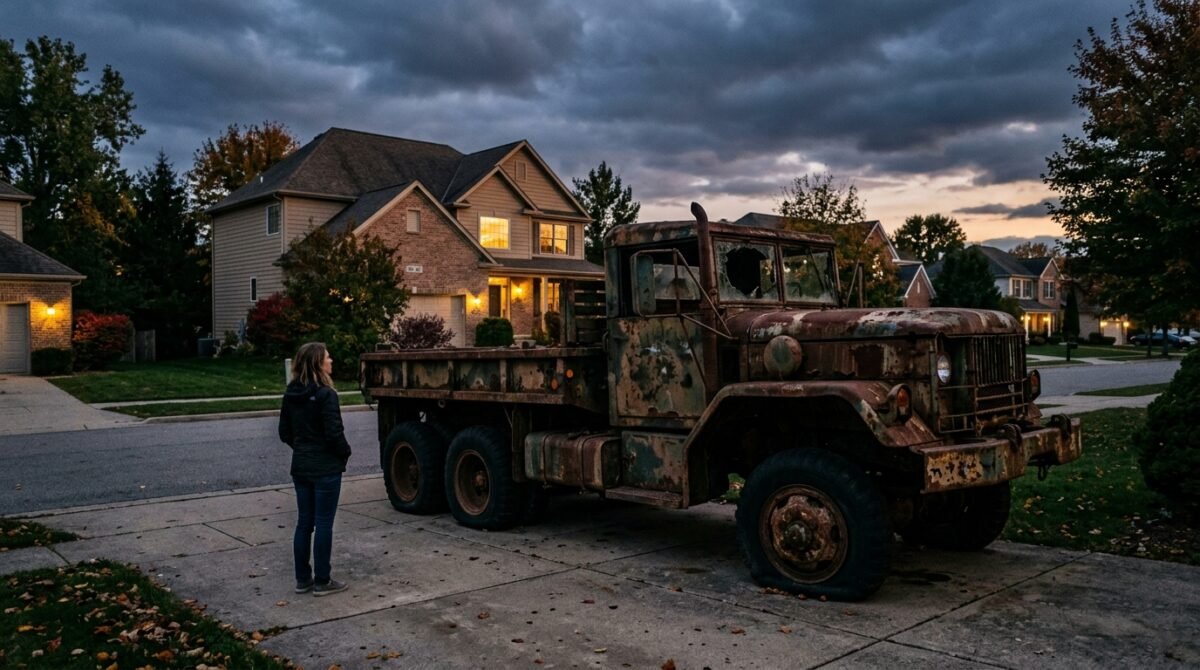
The drive back from my mother’s rehabilitation facility was long and emotionally draining. All I wanted was to pull into my driveway, collapse into my own bed, and breathe a sigh of relief. My car, a 2021 Hybrid, had performed flawlessly, navigating the winding mountain roads with ease. It was my quiet space, my sanctuary of organization and reliability. I had spent the last seventy-two hours in hospital waiting rooms and sterile hallways; the thought of my familiar sedan was the only thing grounding me.
As I rounded the corner onto our street, my heart skipped a beat. The spot where my car usually sat was occupied by something massive, metallic, and jagged. It was a dark olive-drab, rusted-out military truck hull, perched awkwardly on blocks. I slowed my car to a crawl, my mind struggling to process the visual. Where was my sedan? Had Mark moved it to the street? I pulled into the neighbor’s driveway and hopped out, my heels clicking sharply against the pavement.
I walked around the hulking piece of metal, looking for any sign of my car. There was nothing. Just the sharp, metallic smell of rust and the sight of oil staining our driveway—a stark contrast to the clean, manicured space I had left just days prior. My phone vibrated in my pocket, but I didn’t care to look. I walked toward the front door, my hands trembling. I needed answers, and I needed them immediately.
“Mark? Are you home? Where is my car? Please tell me you didn’t touch my car while I was gone.”
The house was eerily silent. I pushed open the door and found Mark in the living room, surrounded by blueprints and greasy tools. He looked up, his face lighting up with a boyish, oblivious grin that made my blood run cold. He didn’t see the fear or the anger in my eyes; he only saw his new project.
“You’re back! I was just about to call you. You have to see it in person—the frame is pristine, even if the body has a bit of character. It’s a goldmine, honey. A total steal,” he said, gesturing toward the window. I stood there, frozen, the reality of the situation beginning to sink in. He wasn’t talking about a repair; he was talking about a replacement. My car wasn’t just moved; it was gone.
The Transaction That Sold My Independence
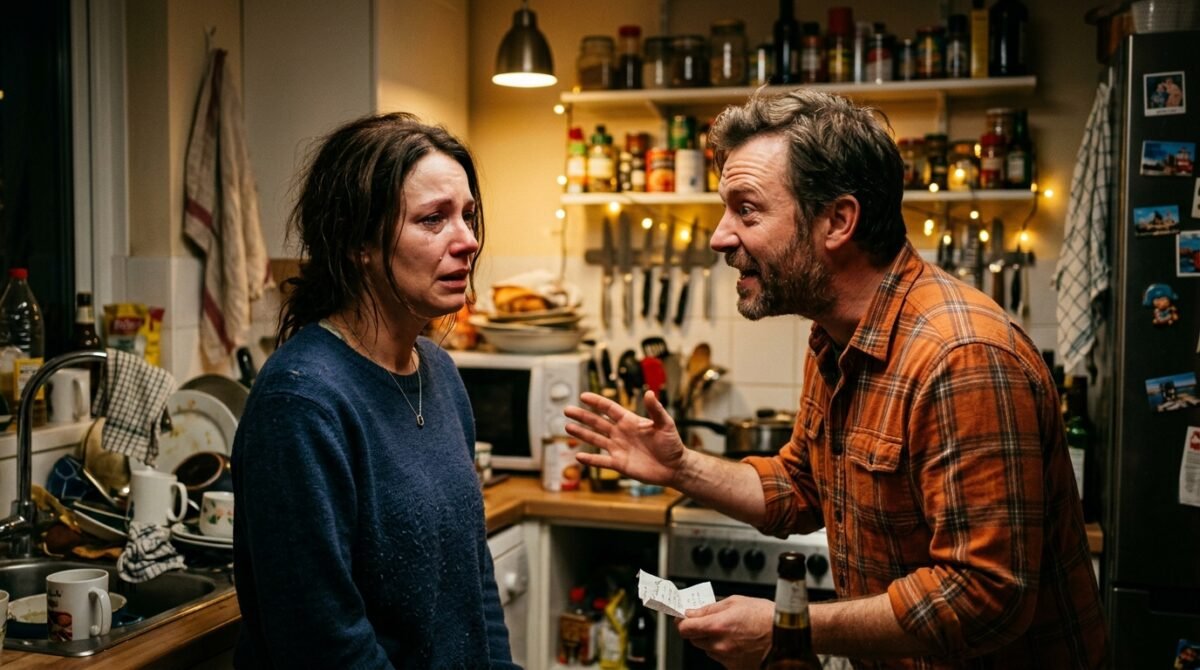
I didn’t scream. I didn’t throw things. I stood in the center of the kitchen, feeling a strange, detached numbness. I looked at Mark, really looked at him, and realized he had no idea what he had done. To him, this was a trade—an upgrade of passion over utility. He spent the next twenty minutes explaining how he had found a ‘collector’ who was willing to take my sedan as a direct trade for the truck frame and the cash difference, which he had already sunk into new parts for the engine.
“It was an investment, don’t you see? The sedan was depreciating every day. This truck, once restored, is a classic. It’s worth ten times what your little hybrid was. You’ll be driving a piece of history, not a commuter appliance,” he explained, pacing the floor with the frantic energy of someone who truly believes they’ve outsmarted the world. He was so proud of his financial maneuvering that he didn’t even notice I hadn’t taken off my coat.
I asked him the only question that mattered at that moment: “Did you ask me?” He paused, his smile faltering for a split second before he brushed it off with a wave of his hand. “I knew you’d say no because you’re always so cautious. I wanted to surprise you. I wanted us to have something we could work on together. It’s for the future, for our future!”
“You didn’t surprise me, Mark. You stripped me of my autonomy. That car was the only thing I owned that was truly mine. You sold my freedom to buy your toy.”
The conversation spiraled quickly. He tried to gaslight me, telling me I was being ungrateful and narrow-minded. He claimed that because we were married, ‘his’ and ‘mine’ were antiquated concepts. He insisted that the money he saved on maintenance would pay for the truck, but he refused to acknowledge that I now had no way to get to work the next morning.
I spent the rest of the evening calling dealerships and ride-sharing services, my hands shaking so hard I could barely type. The financial reality was brutal: to get a reliable vehicle back, I would have to take out a high-interest loan. Mark watched me, growing increasingly agitated that I wasn’t celebrating his ‘genius.’ He didn’t understand the breach of trust; he only understood the mechanical potential of his new junk pile.
The Unintended Consequences of a Toxic Decision

The fallout was swift and professional. My boss at the office was less than understanding when I explained that my ‘husband had traded my car for a truck.’ It sounded like a bad sitcom trope, the kind of lie people tell when they’ve lost their minds. I was forced to take unpaid leave for the remainder of the week while I scrambled to secure transportation. The financial hit was immediate: the cost of a rental car for a week was nearly a third of my monthly paycheck.
Mark continued to treat the truck as the centerpiece of our lives. He spent hours in the driveway, power-washing layers of grime off the rusted steel. Neighbors started to stop by, not to admire the truck, but to ask what on earth was happening. One neighbor, Mrs. Gable, actually asked me if we were planning on opening an auto salvage yard in our cul-de-sac. The embarrassment was suffocating.
Every night, I would come home to a kitchen full of tools and a husband who wanted to talk about gear ratios and differential locks. I stopped engaging. I stopped asking how his day was. I spent my nights in the guest room, staring at the ceiling, calculating how many years it would take to rebuild my savings. I was grieving the loss of my security, but I was also grieving the loss of my respect for my husband.
“I don’t want to hear about the engine, Mark. I want to know how I’m supposed to get to work tomorrow without begging for a ride. I am thirty-four years old, not a teenager asking for a lift.”
He would sigh, looking at me like I was the unreasonable one. He started sleeping in the living room, claiming that my ‘bad energy’ was ruining his focus. The irony was lost on him. He felt like the victim because I wasn’t cheering for his hobby, while I felt like a prisoner in my own life. The divide between us was no longer a disagreement; it was a chasm of values.
I began to realize that this wasn’t an isolated incident. I started looking back through our finances, digging through bank statements I had previously trusted him to handle. I found small, recurring ‘investments’ in various projects that I had never been told about. He had been slowly draining our shared savings for years, always promising a big payout that never materialized. The truck was just the final, most visible straw.
The Reddit Trial: Seeking Validation in the Digital Void
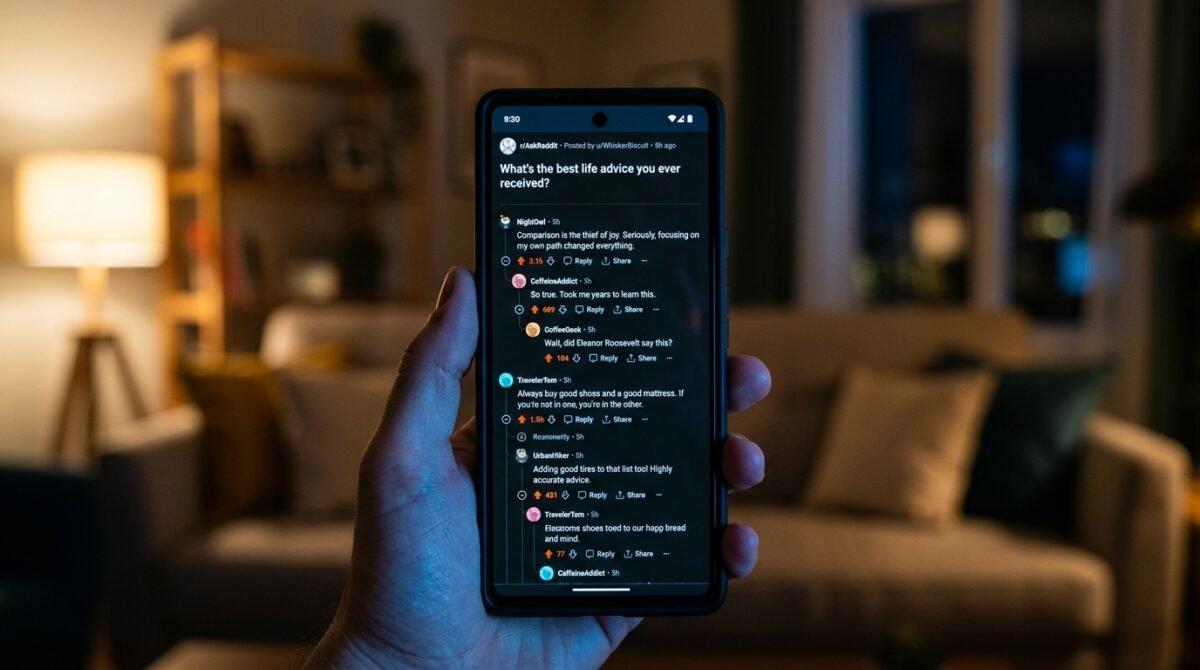
I finally broke. Late one Tuesday night, I opened a throwaway Reddit account and posted the story in the ‘Relationship Advice’ subreddit. I didn’t sugarcoat it. I laid out the timeline: my mother’s illness, the trip, the return, the truck, and the financial betrayal. I was looking for a reality check. Was I crazy for being this angry? Was I being ‘the ungrateful wife’ he claimed I was?
The response was immediate and overwhelming. Within three hours, the post had reached the front page. People were horrified. The comments weren’t just supportive; they were a collective scream of frustration on my behalf. Users were analyzing the financial abuse, the boundary violations, and the sheer lack of respect inherent in his actions. It was the first time I felt heard in months.
“He didn’t just sell your car. He sold your ability to leave. This is a classic ‘move’ to keep a spouse dependent and under control. Leave him. Take the truck, sell it for scrap, and use the money for a lawyer.”
— u/BrokenTrustButFree (28.4k upvotes)
Reading the comments was a therapeutic experience. One user pointed out that selling a spouse’s vehicle without their knowledge constitutes a form of financial control that often precedes domestic abuse. Another shared a similar story about a partner who spent their rent money on a ‘business opportunity.’ The validation was painful but necessary; it turned my confusion into clarity.
Mark eventually found out about the post. He saw my laptop open when I went to the bathroom. He didn’t confront me with questions; he confronted me with rage. He felt humiliated that ‘strangers on the internet’ were judging his life. He demanded I delete the account and write a retraction. That was the moment I knew there was no path to reconciliation.
“You’re telling people I’m an abuser? Over a truck? Are you that pathetic that you need strangers to tell you how to feel?” he yelled, his face turning a shade of red I had never seen before. I didn’t argue. I didn’t defend myself. I just picked up my purse, walked to my sister’s house, and didn’t look back. The thread remained, and for the first time, I felt powerful.
The Hard Truth About Financial Infidelity

My sister, Sarah, was the one who finally made me see the pattern. She sat me down with a pot of coffee and a printout of our joint account history. She had been worried for a long time but didn’t want to overstep. Looking at the numbers, the reality was stark. Over the past two years, Mark had spent nearly forty thousand dollars on various ‘hobbies’ and ‘side hustles’ that resulted in zero income. The sedan was the last significant asset we had that was liquid.
He wasn’t just a dreamer; he was a black hole. Everything I earned, everything we saved together, was being funneled into his ego. The truck wasn’t an investment; it was an anchor. Sarah helped me contact a divorce attorney the next day. The lawyer was blunt: the truck, as a joint asset purchased during the marriage, was technically half mine, but the sedan was gone, likely sold through a private, undocumented party to avoid a paper trail.
I realized that Mark had likely sold my car to a friend or someone he knew in his ‘car group’ to keep the transaction off the books. This wasn’t a mistake; it was a calculated move. He knew if he did it legally, there would be a paper trail and I would have been notified. He had bypassed the system to strip me of my agency.
“It’s not just a car, and it’s not just a truck. It’s a systemic dismantling of your life. He didn’t want you to have a way out. This is classic financial entrapment.”
— My Divorce Attorney
The realization was terrifying. I had been living with a stranger who was actively working against my stability. I spent the next few weeks staying with Sarah, avoiding all contact with Mark. He sent dozens of texts, ranging from pathetic apologies to aggressive demands for me to ‘come home and work this out like a normal couple.’ I didn’t respond to a single one.
I started attending therapy to deal with the gaslighting. My therapist helped me understand that my ‘caution’ wasn’t a flaw; it was the only thing that had kept me afloat. I had been compensating for his recklessness for years without even realizing it. The guilt I felt for ‘abandoning’ the marriage started to fade, replaced by a cold, hard resolve to reclaim my life.
The Final Showdown at the House
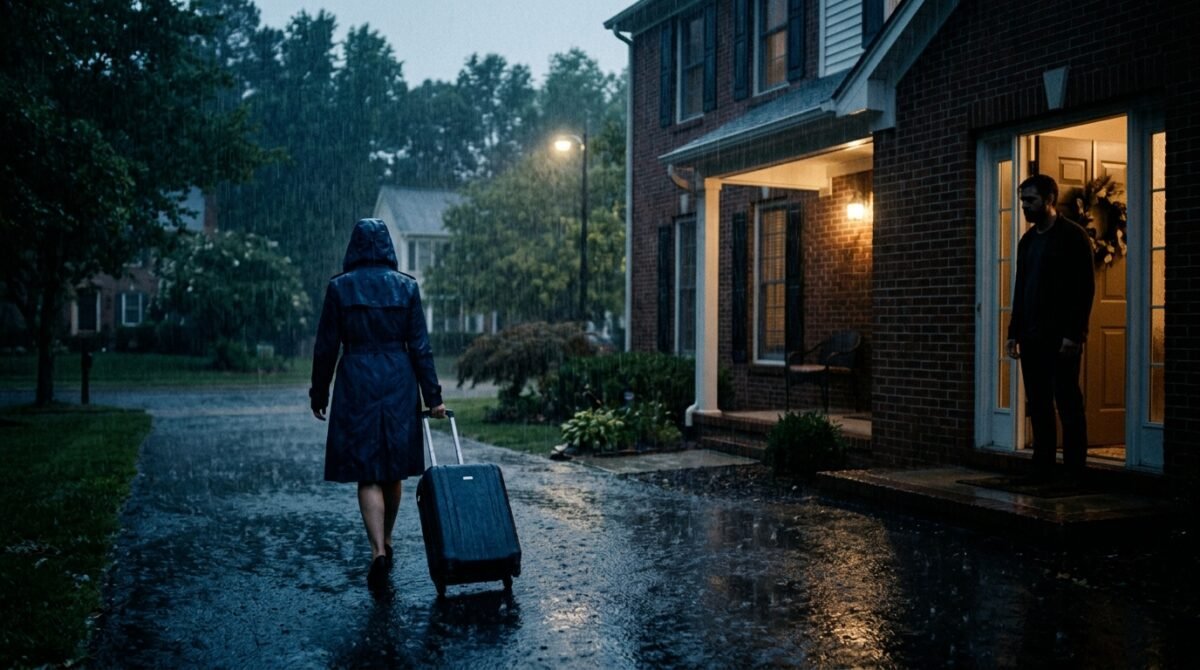
I returned to the house with my brother and a police escort to collect my personal belongings. Mark was there, and the sight of him made me realize how much I had detached. The house felt smaller, dingier, and filled with the remnants of a life I no longer wanted. He tried to corner me in the kitchen, but my brother stood between us, a silent wall of protection. Mark looked disheveled, the truck still sitting in the driveway, looking even more pathetic in the rain.
“I can fix this, we can sell the truck and get you a new car, please, just talk to me,” he pleaded, his voice cracking. It was a performance, one I had seen a dozen times before. He wasn’t sorry for the betrayal; he was sorry that he had lost his audience and his housekeeper. He needed me there to subsidize his life, and he was realizing that the resource was gone.
I looked at him and said nothing. I didn’t want to explain why it was over. I didn’t want to give him the satisfaction of a debate. I gathered my things—my books, my clothes, my sentimental items—and walked out the door. The last thing I saw was him standing in the middle of that kitchen, looking lost and angry, a man who had traded his life for a pile of scrap metal.
“I hope the truck makes you happy, Mark. Because that’s all you have left.”
The silence in the car on the way back to my sister’s place was the most peaceful thing I had ever experienced. I wasn’t just leaving a house; I was leaving a cage. I felt a weight lift off my shoulders that I hadn’t realized I was carrying. The financial damage would take years to repair, but the emotional clarity was worth every penny.
That night, I blocked his number, his email, and his social media profiles. I didn’t want to hear about his progress on the engine. I didn’t want to know when he finally finished the project. For the first time in four years, I was only responsible for myself. And that, I realized, was the greatest luxury of all.
Reflections on the Road to Recovery
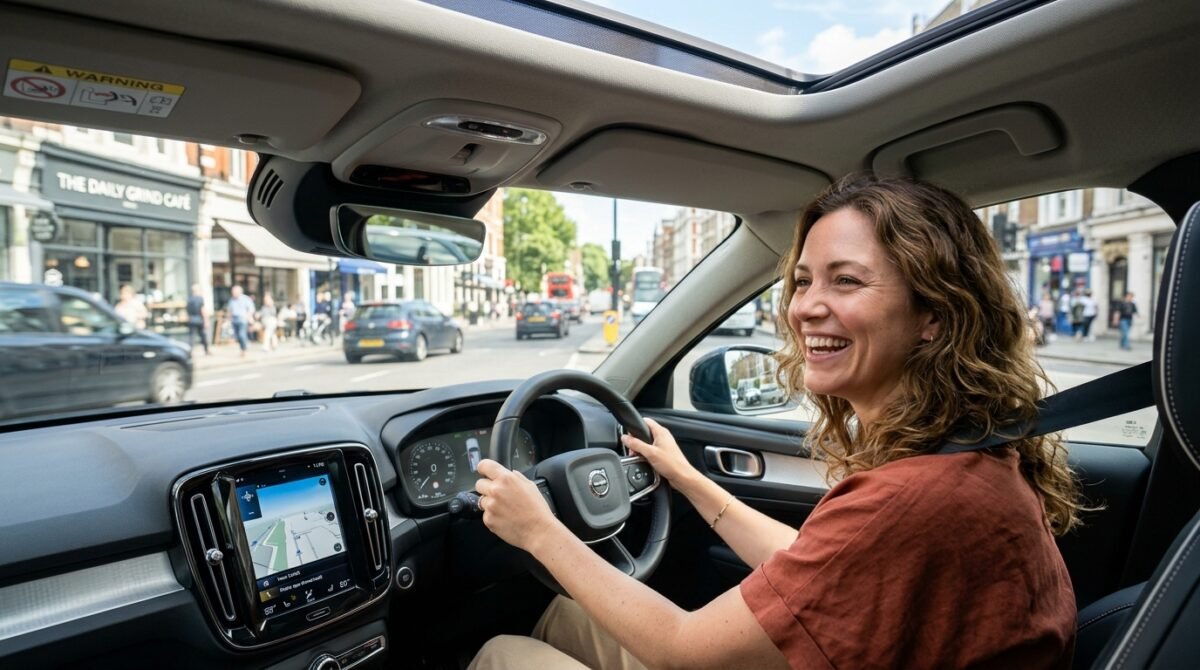
Months later, I’m sitting in my new apartment, a small, cozy space that I pay for entirely on my own. I have a new car, a modest, reliable model that I chose because it fits my needs, not because it fits an aesthetic. Every time I turn the key, I feel a sense of pride that I never felt when I was with Mark. It’s a simple pleasure, but it’s mine. I don’t have to worry about it being sold, traded, or tinkered with.
The divorce process was grueling. The judge was appalled by the ‘truck incident,’ and it helped my case significantly. I was able to walk away with my dignity and enough of my savings to start fresh. Mark, on the other hand, is still trying to get the truck running. My mutual friends tell me he’s moved on to his next ‘big idea,’ which involves a failing cryptocurrency scheme. It’s sad, but it’s no longer my problem.
I still read the Reddit thread sometimes. It’s a reminder of how close I came to losing myself. The comments remind me that I wasn’t alone in my struggle and that there are thousands of people who understand exactly what it feels like to have your trust violated in such a bizarre and public way. The community support was the catalyst for my change, and for that, I am eternally grateful.
“Sometimes you have to lose everything to realize that you were the one holding it all together. Never apologize for protecting your own security.”
I’ve learned that the most important investment you can make is in your own boundaries. When you start compromising your needs to accommodate someone else’s whims, you’re not building a relationship; you’re building a foundation of resentment. I look back on the hybrid sedan not as a car, but as a sacrifice that eventually bought me my freedom. It was a high price to pay, but the return on investment has been priceless.
I’m dating again, but the bar is incredibly high. I don’t look for someone who can ‘fix’ things; I look for someone who respects that I am already whole. I don’t need a partner to complete me; I need a partner who complements the life I’ve worked so hard to build. And if they ever try to touch my car, they’ll find the door very quickly.
Community Perspectives: The Reddit Verdict

Looking back at the thread, it is fascinating to see how the community distilled the entire saga into lessons about red flags. Many users pointed out that the truck wasn’t the issue—the issue was the total lack of consultation on a major financial decision. It’s a common theme in toxic relationships: the ‘big reveal’ meant to force a partner into acceptance, effectively removing their right to say no.
One user, a financial counselor, provided a breakdown of why this behavior is so dangerous. It’s not just about the money; it’s about the psychological power dynamic. By unilaterally disposing of an asset that provided me with independence, Mark was actively trying to force a state of dependency. That insight changed how I viewed the entire marriage, helping me realize it wasn’t just a series of ‘bad mistakes’ but a pattern of control.
“This wasn’t a ‘hobby gone wrong.’ This was a calculated move to strip you of your agency. He knew you’d say no, so he removed your ability to choose. That is the definition of controlling behavior.”
— u/RelationshipRedFlagExpert (15.2k upvotes)
Another user shared their own experience, having dealt with a spouse who ‘traded’ their wedding ring for a motorcycle. It seems that the specific object doesn’t matter; the pathology is the same. It’s about the thrill of the trade and the dominance over the partner’s resources. The Reddit community served as a mirror, showing me that while my situation felt unique and insane, it was part of a larger, well-documented pattern of behavior.
The debate in the comments section regarding ‘financial infidelity’ was particularly eye-opening. Some argued that all assets should be merged, while others insisted on a ‘yours, mine, and ours’ model. However, everyone agreed that the fundamental breach was the lack of communication. If you are in a partnership, you don’t make decisions that affect the other person’s ability to live their life without them. Period.
Ultimately, the consensus was overwhelming. I was not the villain, I was not being ‘stuck-up,’ and I was not failing as a wife. I was a person who had been taken advantage of by someone who didn’t respect me. Reading those thousands of comments, I realized that I wasn’t crazy. I was just in a situation that had become unsustainable, and leaving was the only logical, healthy choice.
Financial Ledger: The True Cost of a ‘Project’

When I finally sat down with my accountant to settle the divorce assets, we put together a rough ledger of the ‘truck project’ and the associated costs. Seeing it on paper was a wake-up call that I hope any reader can learn from. The cost wasn’t just the car; it was the ripple effect of instability that followed. My credit score took a hit, my savings were depleted, and the stress of the situation impacted my health.
| Category | Cost (USD) | Impact |
|---|---|---|
| Hybrid Sedan (Fair Market Value) | $22,500 | Total loss of primary transport |
| Rental/Alternative Transit | $1,800 | Unplanned monthly expense |
| Legal/Divorce Fees | $5,000 | Required to exit the marriage |
| Truck Scrap Value | $500 | Worthless as an investment |
| Total Financial Damage | $29,800 | The price of a ‘hobby’ |
The ledger shows that a single, unilateral decision created nearly thirty thousand dollars in damage. This doesn’t even account for the mental health costs or the lost time I spent cleaning up the mess. My accountant noted that this is a classic example of how financial infidelity, if left unchecked, can grow into a catastrophe that affects a person’s long-term stability.
The truck, when finally assessed by a professional, was found to have a compromised frame, meaning it was literally a death trap. Mark had spent thousands on parts for an engine that would never have been safe to drive on the road. The ‘investment’ was a total loss from the very beginning. This wasn’t a case of a ‘misguided dream’; it was a case of someone who refused to perform due diligence because he liked the idea of being a hero who ‘finds hidden treasures.’
I share this not to dwell on the money, but to highlight the danger of the ‘project’ mentality. If your partner is constantly looking for the ‘big win’ at the expense of your daily stability, you are not in a partnership. You are in a high-risk financial relationship where you are the only one holding the safety net. Learn from my ledger: check your bank accounts, monitor your assets, and never, ever assume that your partner’s ‘hobby’ is harmless.
Moving Forward: The Power of ‘No’

Today, I have a newfound appreciation for the word ‘no.’ In my marriage, I was conditioned to always be the ‘yes’ person—the one who enabled, supported, and sacrificed. I thought that was what it meant to be a good wife. I was wrong. A good partner is someone who can tell you ‘no’ when your ideas are reckless, and someone who respects when you say ‘no’ to their demands.
I’ve started a new chapter of my life where my needs aren’t negotiable. I work, I save, and I invest in things that bring me long-term security. I no longer feel the need to justify my spending or my decisions to anyone but myself. It’s a liberating feeling, one that I wish I had discovered years ago. The trauma of the ‘truck saga’ will always be a part of my history, but it no longer defines my future.
To anyone reading this who feels like their boundaries are being eroded: trust your gut. If you feel like you’re losing your footing, it’s because you probably are. You don’t need permission to protect your own life, your own finances, or your own sanity. The people who truly love you will respect your boundaries; those who don’t are only interested in what they can take from you.
“Your autonomy is not a gift you give to your spouse; it is a fundamental right you hold for yourself. Protect it with everything you have.”
I’m finally at peace. The rust and the truck are gone, replaced by the clarity of knowing exactly who I am and what I deserve. I’ve realized that the most reliable ‘vehicle’ in my life is my own resolve. And that’s a power that no amount of money or bad decisions can ever take away from me again. I’m moving forward, one step at a time, and for the first time in my life, I’m the one behind the wheel.
As I look back, I don’t feel anger toward Mark anymore. I feel a sense of pity. He spent his life chasing shadows and projects, never realizing that the most valuable thing he had was the partner he was betraying. I’ve found my happiness in the mundane, the reliable, and the secure. And honestly? I wouldn’t trade it for all the ‘classic’ trucks in the world.
Conclusion
The story of my hybrid sedan and the rusted truck hull is more than just a viral tale; it’s a mirror held up to the complexities of modern relationships and the subtle ways financial control can manifest. It serves as a reminder that we must be vigilant about our boundaries and the sanctity of our personal autonomy. When a relationship shifts from a partnership of equals to a dynamic of convenience and control, the results are almost always disastrous.
I hope that by sharing this, someone else out there realizes they aren’t alone in their frustration or their struggle. Whether you’ve faced financial betrayal, boundary-crossing hobbies, or the slow erosion of your independence, know that your voice matters and your boundaries are valid. You deserve a life built on mutual respect, not on the broken pieces of your own security.
What about you? Have you ever had a partner whose ‘hobbies’ or ‘projects’ crossed the line into your own personal space or financial security? How did you handle the situation, and what would you do differently today? Let’s keep the conversation going in the comments below—your experiences might be the validation someone else needs to reclaim their own life.
What's your verdict on this dilemma?
Vote below to contribute to the official community consensus.

Have a Dilemma Keeping You Up at Night?
Share your real-life feud, wedding chaos, or relationship crossroads anonymously with our editorial team.
What do you think ?
0 Comments🛡️ Comments are moderated to protect community integrity. Your comment will appear once approved by the editorial team.