
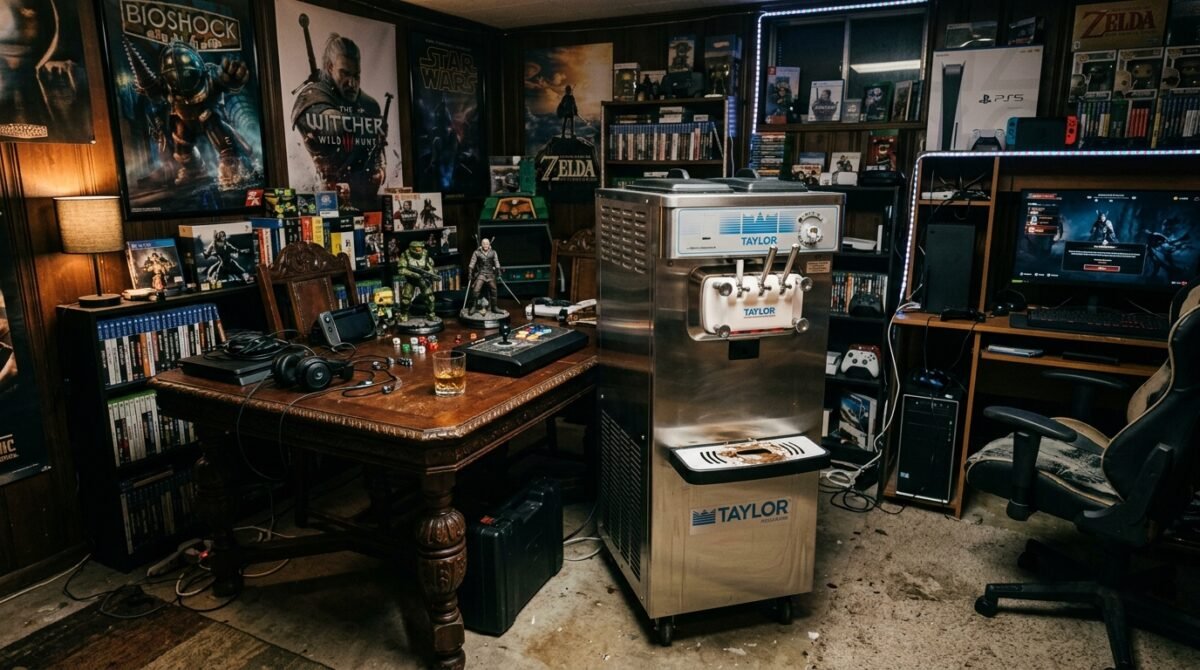
Marriage is built on trust, shared values, and mutual respect for the items we bring into our shared life. But what happens when that respect is completely discarded in favor of a fleeting, expensive whim? My husband, Mark, has always had a streak of impulsivity, but I never imagined it would lead him to betray the memory of my great-grandfather. The piece in question wasn’t just a table; it was a handcrafted, mahogany masterpiece that had survived three generations, two world wars, and countless family celebrations. It was the heart of our dining room, a silent witness to my childhood, and the one thing I made explicitly clear was off-limits for his ‘upgrades.’
The trouble began when Mark became obsessed with an artisan ice cream business idea. It started as a hobby, but quickly spiraled into a financial drain. He wasn’t just buying ingredients; he was pouring our savings into high-end equipment, justifying each purchase as an investment in our future. I tried to support him, but when I came home to find my dining room empty and my great-grandfather’s table gone, the air left my lungs. He didn’t just sell it; he practically gave it away to a local restaurant owner just to cover the down payment on a commercial-grade ice cream machine. The violation was absolute.
When I confronted him, his dismissive attitude was the final straw. He told me it was ‘just a piece of wood’ and that I was being unreasonable for clinging to the past instead of supporting his ‘entrepreneurial spirit.’ The audacity of his claim—that my family’s legacy was worth less than a churn—left me cold. I realized then that if he could treat my history with such casual indifference, I needed to show him exactly what it felt like to have his own personal space invaded by something he didn’t want, in a way he couldn’t ignore.
I tracked down the restaurant owner. Thankfully, he was a decent man who recognized the quality of the wood and hadn’t yet refinished it. I paid a premium to ‘buy back’ my own family heirloom. Once it was back in my possession, I didn’t put it in the dining room—I put it in his den. It took up every square inch of his workspace, effectively forcing him to interact with the history he had so callously tried to erase. The fallout, as you can imagine, was immediate, explosive, and entirely worth the cost of the re-purchase.
The Disappearing Act of 3:00 PM
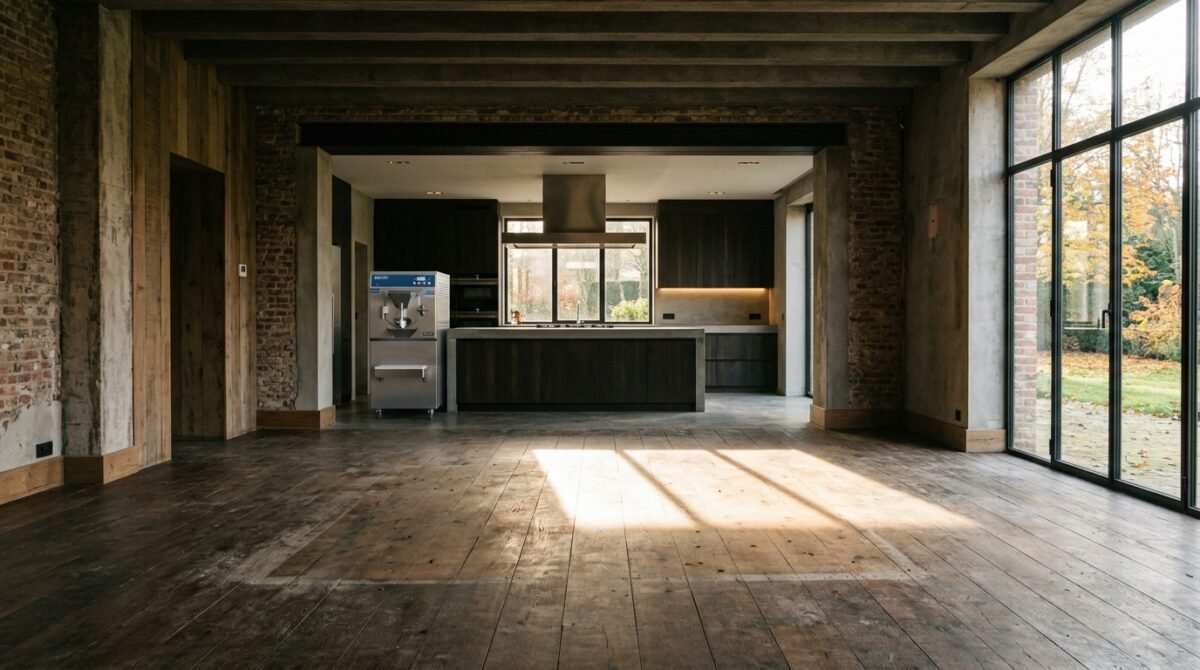
I arrived home from work expecting the usual quiet of our suburban house, but something felt fundamentally wrong the moment I stepped into the foyer. The house was too echoey. The warm, grounding presence of the mahogany dining table—the anchor of our home for the last five years—was missing. My pulse quickened as I moved toward the dining room, my heart sinking when I saw the bare, scratched floorboards where the heavy, carved legs had rested since we moved in.
I immediately called Mark, my hands trembling as I dialed. He picked up on the second ring, his voice airy and overly cheerful, which only heightened my sense of dread. I demanded to know where the table was, and his response was a masterclass in gaslighting. He told me he’d ‘rearranged things’ and that I needed to relax because he had a surprise for me in the kitchen. When I told him the kitchen was empty, the silence on the other end of the line was deafening.
“Mark, where is the table? It has been in my family for eighty years. Tell me you didn’t touch it.”
“Babe, you’re overreacting. It was bulky and dark and didn’t fit the ‘modern artisan’ vibe I’m going for with the ice cream business. I found it a good home. It’s helping us build our future!”
I hung up on him, the rage simmering behind my ribs. He had decided, without a single conversation, that my heritage was an aesthetic inconvenience. The betrayal felt physical, a sharp pain in my chest that made it hard to breathe. I walked into the kitchen, and there it was: a gleaming, monstrously expensive commercial ice cream machine sitting on our kitchen island like a trophy of his arrogance.
I spent the next two hours scouring his computer, finding the email receipt from the local bistro. He hadn’t just sold it; he had practically handed it away for a fraction of its value. The realization that he valued a machine for his side-hustle over my emotional connection to my great-grandfather shattered the last remnants of my patience. I didn’t cry. I just started making phone calls to find out where the table had been delivered.
By the time Mark returned home, expecting a celebratory bowl of homemade gelato, I was already gone. I had spent the afternoon negotiating with the bistro owner, who was horrified to learn the table had been sold behind my back. I told him I was coming back for it, regardless of the price. The look on the owner’s face when he realized the situation told me everything I needed to know about my husband’s character: even a stranger understood the value of my family history better than my own partner.
The Logistics of Retribution
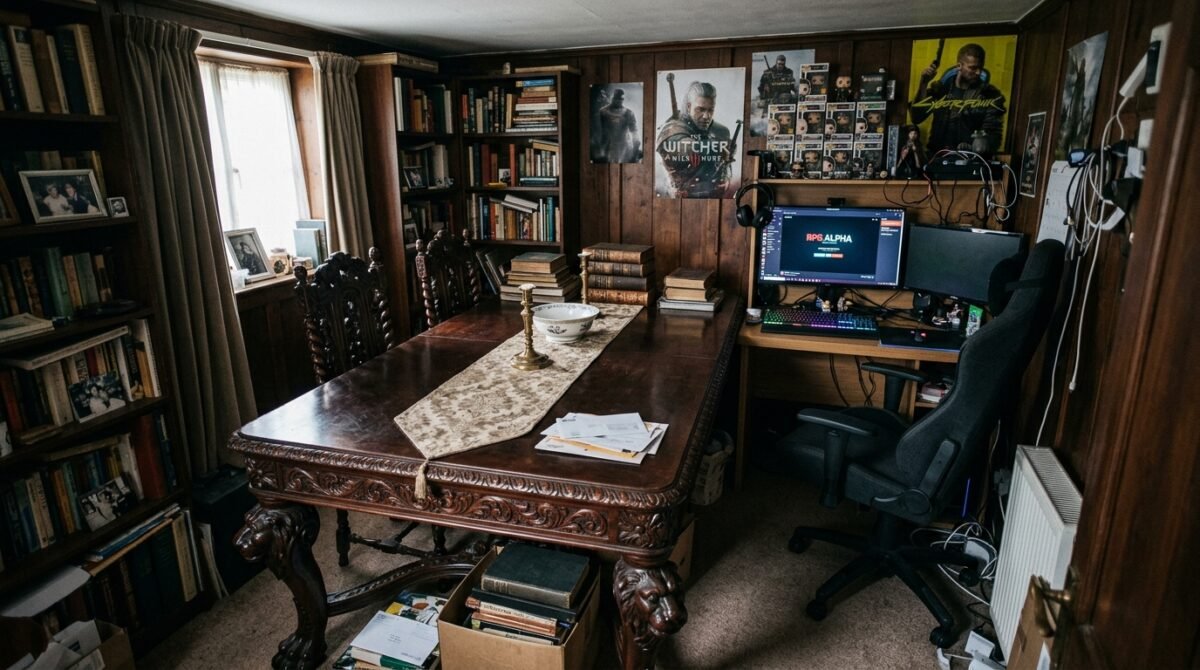
The transaction to get the table back was far from simple. The bistro owner, a kind man named Arthur, had already begun the process of sanding down the finish to make it ‘modern.’ I had to pay him back the full price he paid Mark, plus a ‘restoration fee’ just to stop him from destroying the original patina. When I finally arranged for the movers to bring it back, I didn’t take it to the dining room. I had a different destination in mind: the den.
The den was Mark’s sanctuary. It was where he kept his gaming PC, his expensive sound system, and, of course, where he spent most of his time avoiding household responsibilities. It was a cramped space, barely large enough for his desk and a single armchair. Bringing a massive, solid mahogany dining table into that room was a logistical nightmare, but the movers were more than happy to take the extra cash to make it happen. We had to take the door off its hinges, but we managed to shoehorn it in.
The result was spectacular. The table took up nearly every square inch of the room, forcing his desk into a corner and rendering the armchair completely inaccessible. It was a massive, immovable monument to his mistake. I stood in the doorway, admiring how the dark, rich wood dwarfed his pathetic gaming setup. I felt a surge of vindication that was almost intoxicating. The room was no longer a place for him to hide; it was a place where he was forced to confront the item he had discarded.
I spent the rest of the evening waiting for him to come home from his ‘business meeting.’ I had even placed a single, small, hand-painted coaster in the center of the table, just to add a touch of domestic mockery to the scene. I wanted to see his face when he realized his private retreat had been occupied by the very thing he tried to sell. The anticipation was thick, a heavy weight in the air that seemed to vibrate with impending conflict.
When the front door finally opened, I stood in the kitchen, casually sipping water. I heard him walk through the house, whistling to himself. He headed straight for his den, probably intending to relax after a long day of ‘entrepreneurship.’ I didn’t follow him immediately. I wanted the silence of the house to be the first thing to greet him when he opened that door and found his life had literally been upended by a piece of history.
The Sound of a Shattered Man-Cave
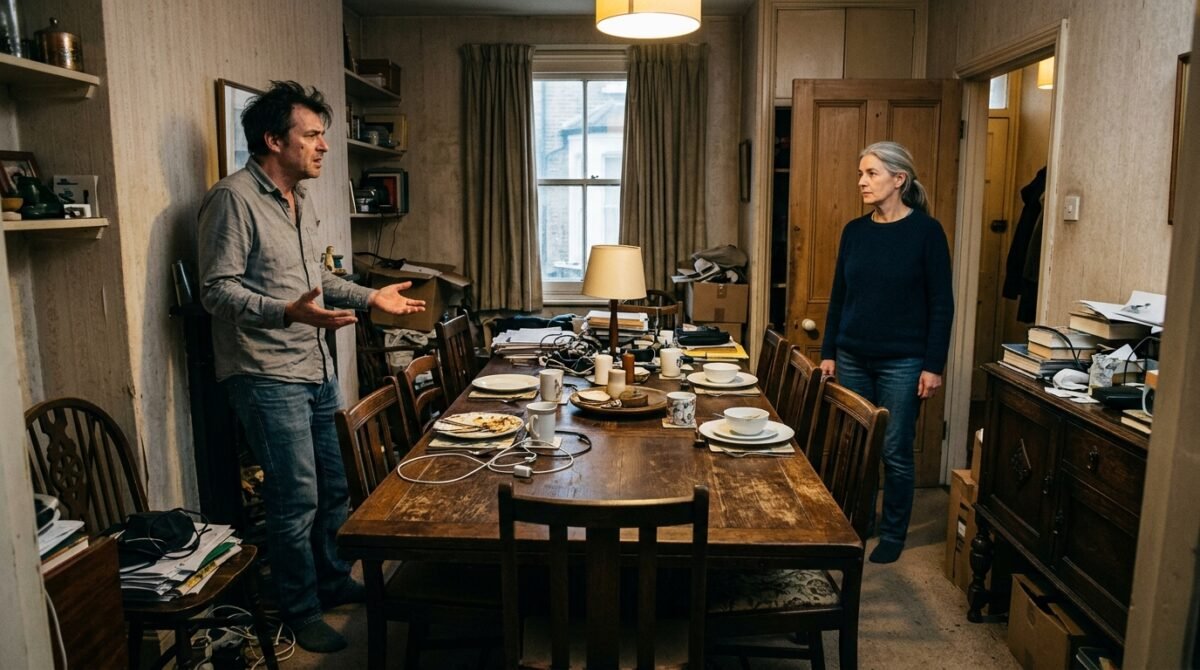
The silence was broken by a dull thud, followed by a string of curses that echoed through the hallway. Mark had collided with the edge of the table as he tried to enter his den. I walked calmly toward the door, leaning against the frame as he stood there, red-faced and bewildered, staring at the massive slab of wood that now occupied his domain. He looked at me, his eyes wide with genuine shock, as if he couldn’t comprehend how the universe had conspired to spite him.
“What is this? Are you insane? I can’t even walk in here! This is my space, my office, my gaming room! Why would you do this?”
“You said it was ‘just a piece of wood’ that didn’t fit the ‘vibe’ of the house. I decided it fit the vibe of your office perfectly. Besides, it’s a family heirloom. It deserves to be in a place of honor, don’t you think?”
He paced the small space, his frustration mounting as he realized he couldn’t even reach his keyboard. He tried to shove the table, but it was far too heavy to move, even by an inch. The sheer weight of the mahogany seemed to mock his frantic, modern movements. He looked at me, his face a mixture of anger and disbelief, but I just smiled. There was no room for him to be the victim here; he had set the terms of this exchange when he sold my history for an ice cream machine.
He tried to argue that I had spent our shared money to buy it back, ignoring the fact that he had ‘invested’ our savings without my permission. The irony of him complaining about financial responsibility while surrounded by the physical weight of his own betrayal was not lost on me. He kept pointing at his monitor, which was now blocked by the massive grain of the table, as if the loss of his digital escapism was the true tragedy of the day.
I told him clearly: the table stays. If he wanted to move it, he could find a place in the house where it belonged—but since he had already ‘modernized’ the dining room with his industrial appliances, there was no space left for it there. I was effectively turning his den into a dining room for one, a constant, physical reminder of the value of the things he chooses to discard. He didn’t like it one bit, but for the first time in our marriage, he was the one without a move to make.
As he continued to rage, I retreated to the living room, leaving him to sit on the floor in the corner of his now-occupied den. It was the most satisfying moment of my adult life. The power dynamic had shifted, and for the first time, he understood that my patience had a hard, mahogany-encased limit.
The Online Judgment of the Masses

I didn’t wait long to post the story on Reddit. I needed to know if I was the villain, or if I had simply balanced the scales. The response was overwhelming. Within hours, the post had gained thousands of upvotes, with people from all over the world weighing in on the ‘Ice Cream Table War.’ The community was vicious, protective, and surprisingly supportive of my unconventional form of justice.
“This is legendary. You didn’t just reclaim your property; you reclaimed your dignity. The fact that he sold a generational heirloom for a commercial kitchen appliance is grounds for a serious re-evaluation of the entire relationship. Keep that table in the den until he learns to respect your boundaries!”
— u/HistoryBuff99 (Top Comment, 32.1k upvotes)
The comments sections became a battleground of their own. Some users pointed out the financial red flags of his business ventures, while others focused on the emotional abuse inherent in discarding a partner’s family history without consent. It was validating to see that so many people recognized the severity of his actions. I spent hours reading through the advice, feeling less like a ‘crazy wife’ and more like a woman who had finally found her voice.
Then there were the ‘devil’s advocate’ comments, which I found surprisingly amusing. A few users argued that the table was ‘just furniture’ and that I was being overly dramatic. I replied to one of them, explaining the history of the piece—how it was made by hand by a man who had nothing else to leave his family—and watched as the community swarmed the commenter, effectively burying their argument in a sea of downvotes.
The most eye-opening part of the experience was realizing how many other people had experienced similar ‘disposals’ by their partners. I read story after story of spouses selling collectibles, heirlooms, or hobby gear without permission, all under the guise of ‘decluttering’ or ‘financial planning.’ It made me realize that this wasn’t just about a table; it was about the fundamental lack of respect Mark had for my individuality.
The internet had spoken, and the consensus was clear: I wasn’t the one who had crossed the line. I was merely the one who drew a new, firmer line in the sand—or in this case, in the mahogany. The validation I received gave me the courage to continue enforcing my boundaries, even when Mark tried to play the victim to his mother and our friends.
The Inevitable Group Chat Leak

It wasn’t long before the ‘Ice Cream Table’ incident made its way into our family group chat. My mother-in-law, a woman who rarely misses an opportunity to weigh in on our marriage, messaged the whole family with a link to my Reddit post, which she had somehow discovered. She was horrified, calling me ‘childish’ and ‘vindictive’ for ‘holding my husband’s business dreams hostage.’ The chat exploded in seconds.
“I cannot believe you would embarrass our family like this. That poor boy is trying to start a business and you are acting like a petulant child. Move that table back to where it belongs immediately!”
— Mother-in-law (Family Group Chat)
I didn’t back down. I replied by detailing exactly how much the table was worth, the emotional history behind it, and the fact that Mark had sold it without even asking me. I also included the dollar amount he had spent on the ice cream machine—a figure that caused several of his siblings to chime in with their own shock. It turned out, Mark had been ‘borrowing’ money from other family members for his ‘investments’ as well.
The group chat went silent for a moment before the tide turned. His own sister, who had been burned by a similar loan, started listing the times Mark had made ‘impulsive decisions’ that affected everyone else. It was a beautiful, chaotic moment of vindication. I wasn’t the villain anymore; I was just the one who had been the first to stand up to the behavior that everyone else had been enabling for years.
Mark was furious that I had ‘aired our dirty laundry,’ but the truth was, the laundry had been dirty for a long time. By bringing it into the open, I had stripped him of the ability to control the narrative. He couldn’t play the role of the ‘misunderstood entrepreneur’ if everyone knew he was a liar and a thief of family legacies.
The text messages continued for days. I eventually muted the chat, but not before seeing his father tell him to ‘grow up and apologize to your wife.’ It was the kind of validation I hadn’t even realized I needed. Mark was officially on notice, and he knew it.
The Sunday Dinner Silence
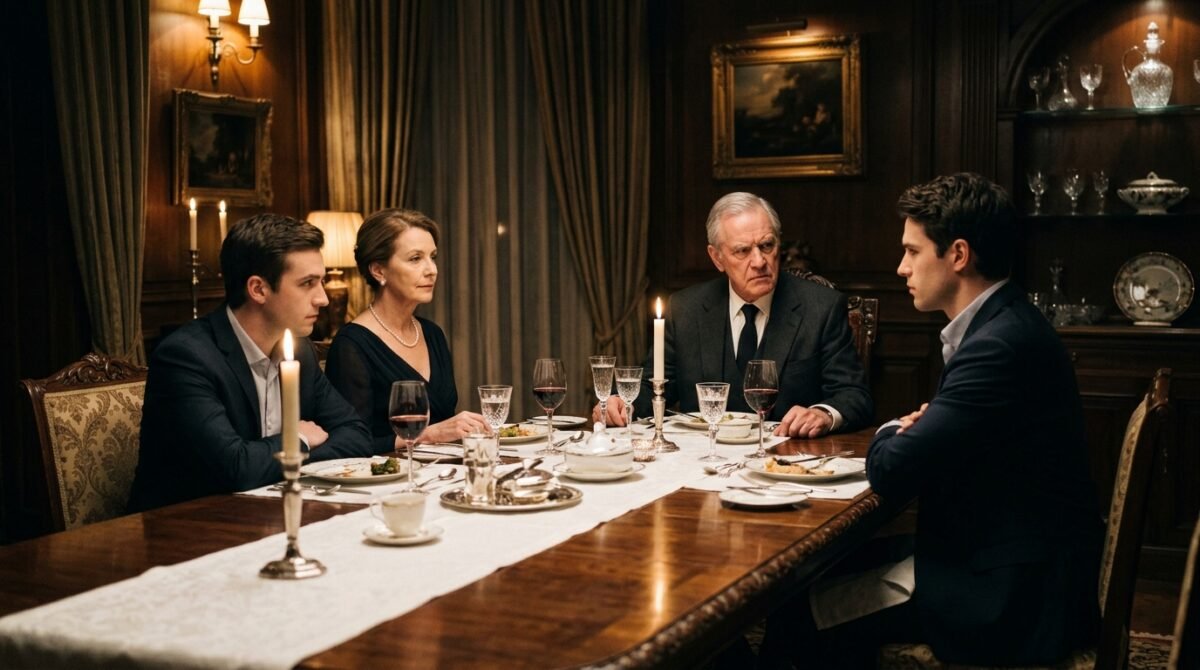
The next Sunday dinner at his parents’ house was the most awkward event of my life. The air was thick enough to cut with a knife. Mark refused to make eye contact with me, and his mother acted as if I were a ghost at the table—or perhaps an uninvited, heavy piece of mahogany. We sat there, the sound of silverware scraping against plates the only noise in the room, until his father finally cleared his throat.
He looked directly at Mark and asked about the table. The entire table of people went dead silent. Mark tried to shrug it off, muttering something about ‘misunderstandings,’ but his father wasn’t having it. He gave a lecture on the importance of family, legacies, and the respect due to one’s partner. For the first time, I saw Mark shrink. He wasn’t the confident, visionary entrepreneur in this room; he was a young man being schooled by the person he respected most.
“A man who can’t respect his wife’s family history won’t last long in this house, Mark. That table was more than wood. It was her grandmother’s memory. You don’t sell memories for a churn.”
“I get it, Dad. Can we please just drop it?”
I didn’t say a word. I just sat there, listening to the rebuke. It felt like justice. The rest of the dinner was a blur of polite, strained conversation, but the message had been delivered. My husband’s family, who had previously coddled him, were now holding him accountable. It changed the dynamic of every subsequent family interaction, and for the better.
Driving home, the silence in the car was different. It wasn’t the cold, angry silence of the past; it was a heavy, contemplative quiet. Mark didn’t try to defend himself. He didn’t try to gaslight me. He just looked out the window, processing the fact that his actions had consequences that extended far beyond our front door.
When we got home, the table was still in the den. I went to bed, and he stayed in the living room. It was the first night we hadn’t shared a bed in years, and yet, I slept better than I had in months. I had reclaimed my space, my history, and my dignity. The table wasn’t just furniture anymore; it was a symbol of my boundaries.
The Professional Appraisal
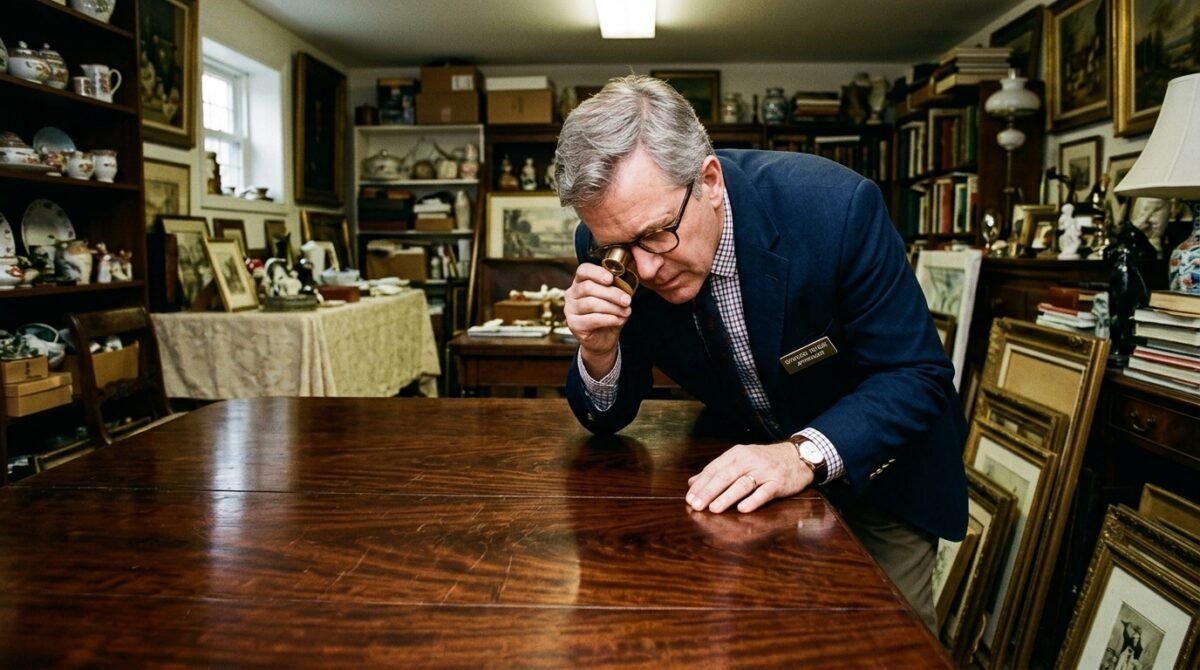
To settle the matter of the table’s true value once and for all, I hired a professional appraiser. When he arrived, he was absolutely stunned by the quality of the mahogany and the craftsmanship of the joinery. He spent nearly an hour examining the piece, running his hands over the carvings and checking the markings on the underside. He told me it was a rare piece, likely from the early 19th century, and that its value was significant—far more than what Mark had sold it for.
I invited Mark into the den to hear the appraisal. As the appraiser explained the history and worth of the table, Mark’s face went pale. He had sold a small fortune for a piece of equipment that was already showing signs of wear and tear. The appraiser looked at him and said, ‘You didn’t just sell furniture, sir; you sold a piece of history that should have been protected.’ It was the final nail in the coffin of his excuse that it was ‘just junk.’
“I have appraised thousands of tables, but this one is special. It’s an heirloom, not a commodity. Selling this was an incredibly unwise decision, both financially and sentimentally.”
— Professional Appraiser
Mark didn’t say anything, but the look of realization in his eyes was priceless. He realized that his lack of knowledge had led him to make a massive mistake. The appraiser’s professional validation of my feelings made it impossible for Mark to continue acting as if I were the one in the wrong. He had been reckless, and the evidence was now clear for all to see.
The appraiser’s report sat on the table for weeks, a constant reminder of the disparity between what Mark thought the table was worth and what it actually was. I didn’t frame it or hang it up; I just left it there, alongside the coasters and the dust. It was a quiet, clinical assessment of his failure to respect my belongings.
After the appraiser left, Mark tried to initiate a conversation, but I just walked away. There was nothing left to say. The value had been quantified, the mistake had been exposed, and the boundary had been reinforced. I was moving forward, and he was left to sit with the reality of his own poor judgment.
Negotiating a New Reality

The weeks that followed were defined by a strange, new status quo. I insisted on a new financial agreement: all ‘investments’ over a certain amount had to be discussed and agreed upon in writing. I also required him to pay back the full market value of the table into a savings account that only I could access. If he wanted to be an entrepreneur, he would have to do it with his own money, not by liquidating my life.
He resisted at first, but I was firm. I told him that if he couldn’t agree to these terms, our marriage was effectively over. It was the hardest thing I’d ever said to him, but it was necessary. The prospect of losing the marriage finally forced him to take me seriously. He signed the agreement, and we began the process of rebuilding the trust he had shattered.
“I’m not trying to control you, Mark. I’m trying to protect us. If you can’t see the value of what you sold, then you don’t deserve the privilege of being part of this family’s future.”
We started seeing a marriage counselor who specialized in financial infidelity. It turned out that his obsession with the ice cream business was a way of compensating for his own feelings of inadequacy in his career. It was a breakthrough moment that allowed us to address the root cause of his impulsivity rather than just the symptoms. The table in the den remained, a silent observer of our weekly sessions.
Slowly, the dynamic began to change. He started asking for my opinion before making decisions, even small ones. He began to show an interest in the history of my family, asking questions about the table and the man who made it. It wasn’t an immediate fix, but it was a start. The table was no longer a symbol of punishment; it was a starting point for a different kind of conversation.
I kept the table in the den for six months. It was a long time to live with the inconvenience, but it was a necessary sacrifice. It reminded us both of the day the foundation cracked and the work required to fix it. Eventually, we decided to move it back to the dining room, but not before we had a long, heartfelt conversation about what it really represented.
The Return to the Dining Room

When we finally moved the table back to the dining room, the house felt complete again. But it felt different. The room didn’t just hold furniture; it held a history, a story, and a lesson. We invited his parents over for dinner, and for the first time in a long time, the atmosphere was warm and genuine. We sat around the table, the same table that had caused so much drama, and we laughed.
Mark had sold the ice cream machine, too. He had realized that he didn’t really love the business; he just loved the idea of being successful. He had found a new, more grounded job that he actually enjoyed, and he seemed lighter, more present, and more attentive. The desperation to ‘make it big’ had faded, replaced by a sense of contentment that I hadn’t seen in years.
I watched him interact with his father, and for the first time, he didn’t feel the need to prove himself. He was just being a son, a husband, and a man who understood his place in the world. The table, once a symbol of conflict, was now the centerpiece of our reconciliation. It had weathered the storm, just as we had.
“I’m sorry, again. For everything. I look at this table now and I just think about how close I came to losing everything because I was chasing a shadow.”
I told him I forgave him, but that the lesson would stay with us. We established a ‘no-sell’ policy for any family items, and we agreed that all financial decisions would be transparent. It was a small, simple change, but it had a massive impact on the security of our marriage. We were finally on the same page, and it felt like we had earned our way to this peace.
The table was polished and shining under the chandelier. It looked more beautiful than ever, as if it had been waiting for us to figure things out. It wasn’t just a piece of wood anymore; it was the story of our survival. And as we toasted to our future, I knew that no matter what happened next, we had the strength to navigate it together.
Reflecting on the Unbreakable Bond
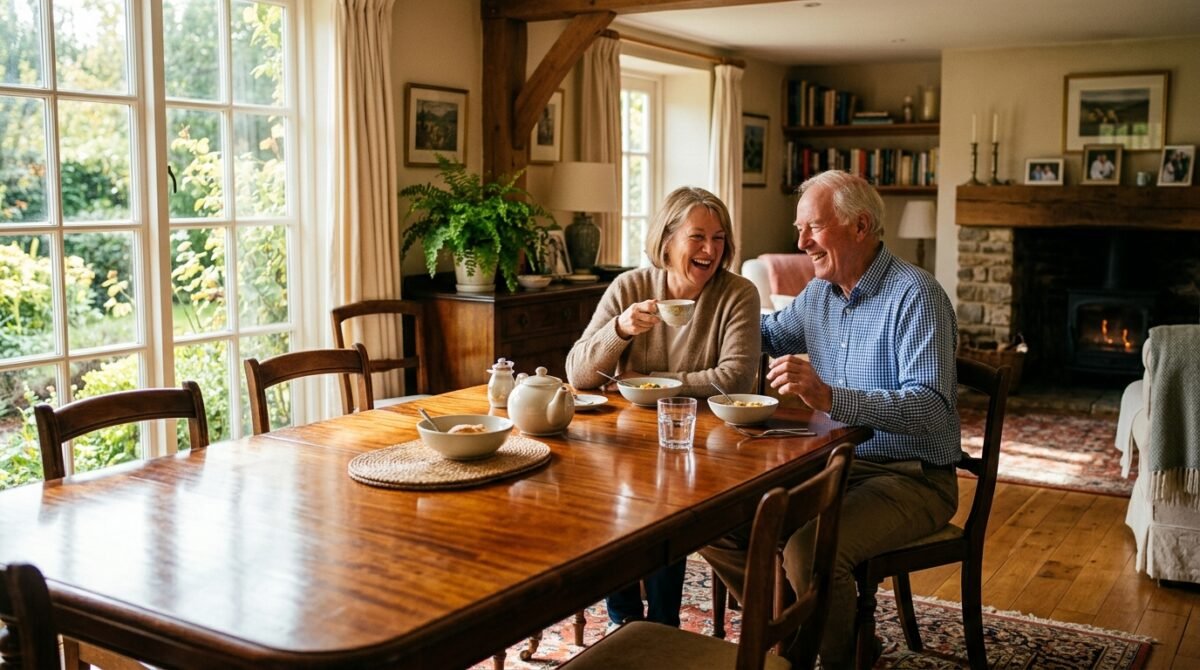
Looking back, the entire incident feels like a fever dream. The anger, the betrayal, the social media drama, and the weeks of living with a giant piece of furniture in a tiny den—it all led to a deeper, more honest connection. I realized that my attachment to the table was about more than just an object; it was about the security of my identity, which I had felt was being erased by Mark’s impulsive life choices.
I learned that boundaries are not just for others; they are for me to enforce, and that I have the power to protect my peace. I also learned that forgiveness is a process, not an event, and that it requires as much work from the person who caused the hurt as it does from the person who was hurt. We both grew, and we both changed, and we both became better partners for it.
The Reddit community, which I initially thought would just be a source of entertainment, became a source of strength. Reading the stories of others helped me realize that I wasn’t alone, and that my reaction was justified. It was a digital community that held me up when my real-life support system was feeling the strain of the drama. I’ll always be grateful for that.
So, what about the ice cream machine? It’s gone. And honestly, I don’t miss it. I make ice cream the old-fashioned way now—with a hand-cranked maker that I inherited from my grandmother. It takes longer, it’s more work, and it tastes better because it’s a shared experience. That’s the lesson, really: the things that matter most aren’t the ones that come easily; they’re the ones you put the work into.
We’re stronger now. We’re more transparent. And we’re still here, sitting at the mahogany table, making memories of our own. The table has seen its share of drama, but it has also seen our growth, and I’m confident that it will be a part of our home for many, many years to come.
Conclusion
The story of the mahogany table is one I’ll tell for the rest of my life. It was a test of my resolve, a challenge to my marriage, and a testament to the fact that sometimes, you have to create a little bit of chaos to restore order in your own life. When I moved that table into the den, I wasn’t just moving furniture; I was moving the needle on our relationship, forcing a confrontation that was long overdue.
If you find yourself in a similar situation—where your boundaries are being ignored and your history is being treated as disposable—don’t be afraid to take a stand. You don’t have to be the martyr. You don’t have to ‘keep the peace’ at the expense of your own heart. Sometimes, the most loving thing you can do for a relationship is to show your partner exactly what the cost of their indifference really is.
I’d love to hear your thoughts. Have you ever had to draw a hard line with a partner over something they thought was ‘no big deal’? How did you handle the fallout, and what did it reveal about your relationship? Let’s keep the conversation going in the comments below.
What's your verdict on this dilemma?
Vote below to contribute to the official community consensus.

Have a Dilemma Keeping You Up at Night?
Share your real-life feud, wedding chaos, or relationship crossroads anonymously with our editorial team.
What do you think ?
0 Comments🛡️ Comments are moderated to protect community integrity. Your comment will appear once approved by the editorial team.