

I had been dreading the appointment for weeks. A root canal is never a pleasant experience, but with a two-year-old toddler named Leo to consider, the logistics were a nightmare. My husband, Mark, had begrudgingly agreed to take the morning off work to watch our son while I spent three hours in the dentist’s chair, enduring the drill and the numbing injections. It was supposed to be a partnership; a simple ‘I cover you, you cover me’ arrangement that had defined the last two years of our parenting journey.
When I stumbled through the front door, my jaw throbbing and my mouth still hanging slightly open from the local anesthetic, I expected a glass of water, perhaps a sympathetic ‘how are you feeling?’ instead, I found the house in an unnervingly pristine state. Mark was sitting at the kitchen island, his laptop open, staring at me with a look of clinical detachment that sent a shiver down my spine. The atmosphere was thick with a tension I couldn’t quite place, but my post-operative haze made me dismiss the red flags.
He didn’t get up to help me with my coat. He didn’t ask how the procedure went. Instead, he reached into a neat stack of papers beside his coffee mug, pulled out a single sheet, and slid it across the cold granite countertop. It was a crisp, white piece of printer paper with a header written in bold, professional-looking font: ‘Childcare Services Rendered – Invoice #001’. My heart sank as I watched my husband, the man I had vowed to build a life with, treat our home like a small business transaction.
I stared at the paper, unable to speak through my swollen face. The items were listed with terrifying precision: ‘Four hours of primary caregiving,’ ‘Meal preparation and cleanup,’ ‘Activity supervision,’ and even a ‘Premium rate for emergency scheduling.’ The total, calculated at an hourly rate that mirrored his actual professional consultancy fee, was jarring. This wasn’t a joke. The way he tapped his pen against the table confirmed it. My husband hadn’t just watched our son; he had decided to monetize his fatherhood, and in that moment, the foundation of our marriage began to crack.
The Morning of the Incident

The morning started with the usual chaos. Leo was screaming because he wanted juice, I was frantic trying to find my dental referral, and Mark was pacing the kitchen, checking his watch every thirty seconds. He had made it clear from the moment I booked the appointment that this was an ‘inconvenience’ to his workflow. I had tried to be accommodating, waking up early to prep lunches and set out toys, hoping to minimize the disruption to his precious schedule.
We had a brief, heated exchange before I left. He complained that watching Leo meant he would fall behind on his client emails, and I countered that his work-from-home flexibility was the only reason we didn’t need daycare for those extra four hours. I felt guilty, as I often did, for needing help with my own health. I didn’t realize that while I was in the chair being poked and prodded, he was busy drafting an invoice.
When I arrived back home, the silence in the house was deafening. Leo was napping, and Mark was in full ‘corporate’ mode. There was no warmth, no intimacy, just the clicking of his mouse. When he slid that paper over to me, it felt like a slap in the face. It wasn’t just the money; it was the sheer audacity of quantifying his time as a father as if it were a billable service for a stranger. It was a cold, calculated move meant to put me in my place.
“Are you actually serious with this, Mark? You’re charging me for watching our own child while I have a root canal?”
— Me, struggling to talk through the anesthesia
He just shrugged, his eyes never leaving his screen. He argued that his time was worth more than he was making by ‘babysitting,’ and that since I was ‘incapacitated,’ the extra effort should be compensated. He was completely blind to the fact that I had spent the last two years doing the exact same thing for free, often while balancing my own part-time remote job. The entitlement was staggering.
The Breakdown of the Ledger

As I looked closer at the invoice, the absurdity became even more pronounced. He had broken down the morning into fifteen-minute increments. He had included a charge for ‘unexpected diaper change overhead’ and an ‘energy surcharge’ for playing in the backyard. It was a masterpiece of pettiness. I felt a wave of nausea, and it had nothing to do with the dentist’s drill or the lingering effects of the lidocaine.
I tried to confront him about it, but he remained calm, almost annoyingly so. He explained that since our finances were ‘separate’—a system we had adopted when we bought the house to maintain independence—this was just a matter of balancing the scales. He truly believed that because I was the one who *needed* the time off, he was entitled to a cut of my potential earnings, or rather, a direct payment for his ‘lost time.’ He was treating our toddler like an asset that he was leasing back to me.
The argument escalated quickly once the initial shock wore off. I pointed out all the times I had covered for him when he had late-night client calls or sudden travel requirements. He dismissed those as ‘part of the household management’ that I had ‘agreed’ to handle. The gaslighting was so precise, so rehearsed, that I wondered if he had been planning this for weeks, waiting for a moment to ‘correct’ the power dynamic in our home.
“You want a transaction, Mark? Fine. Let’s talk about the last two years of uncompensated domestic labor and childcare I’ve provided while you were ‘in the zone’ for your projects. Where is my invoice for that?”
— My response to his demand
He didn’t blink. He just stared at me, waiting for me to pull out my checkbook. He didn’t see the irony; he didn’t see the cruelty. He saw a debt, and he expected it to be paid. That was the moment I realized my husband didn’t see me as a partner; he saw me as a client, and a difficult one at that.
The Midnight Group Chat Leak

The next day, I found out the worst part. I wasn’t the only one who had seen this ridiculous invoice. Mark had shared a photo of it in his ‘bros’ group chat, captioned with something about ‘teaching the wife a lesson about the value of my time.’ One of his friends had jokingly replied, ‘Send it to her and see if she pays, lol,’ and Mark had actually done it. It wasn’t just a private argument; it was a performance for his friends.
I only discovered this because I was looking for a photo on his phone while he was in the shower. I saw the notification pop up on the lock screen: a reply from his buddy, ‘Did she bite? Does she realize how much your time is worth yet?’ My hands started shaking. The betrayal felt physical. It wasn’t just that he treated me like an employee; he was mocking our marriage to his friends to stroke his own ego.
I waited for him to come out of the bathroom. I didn’t yell; I didn’t scream. I just held the phone out. He didn’t even try to deny it. He looked annoyed that I had seen his private messages, not ashamed that he had humiliated me. He stood there, dripping wet, towel around his waist, and told me that it was ‘just banter’ and that I was being ‘too sensitive’ about a joke he shared with his friends.
“It’s just a joke, stop overreacting. My friends and I talk about all sorts of stuff. You’re making this into something it isn’t.”
— Mark, defending his group chat mockery
The lack of remorse was the final nail in the coffin. It wasn’t about the money, and it wasn’t about the babysitting. It was about the complete lack of respect. He didn’t care about my pain, my dental recovery, or the stability of our household. He cared about his ‘value’ and his status among his peers. The bridge wasn’t just burning; it had already collapsed.
The Reddit Community Weighs In

I turned to the internet for validation, or maybe just to see if I was losing my mind. I posted the story on a popular forum, keeping the details anonymous. I wanted to know if I was actually the one being unreasonable. Was I just being ‘too sensitive’? Was it normal for spouses to invoice each other for basic parental responsibilities? The response was immediate and overwhelming.
Thousands of people weighed in within the first hour. The consensus was not just in my favor; it was a tidal wave of outrage. People were calling for a divorce, pointing out the financial abuse, and highlighting the misogynistic undertones of his behavior. The ‘invoice’ had become a symbol of everything that was wrong with our dynamic. I spent the night reading through the comments, feeling a strange mixture of validation and terror.
Some of the comments were brutal, aimed squarely at Mark. Others were supportive, offering me advice on how to protect my assets and how to prepare for the inevitable fallout. It was clear to everyone except him that what he had done was not just a misunderstanding or a ‘joke’—it was a declaration of war on the partnership we were supposed to share. The sheer volume of people saying ‘Leave him’ was impossible to ignore.
“This is not a marriage; this is a hostile business merger where you are the failing asset. Please, look into a lawyer immediately. This behavior is symptomatic of deep-seated contempt.”
— u/LegalEagle88 (Top Comment, 45.2k upvotes)
Reading these comments, I realized that I wasn’t just dealing with a jerk; I was dealing with a man who felt entitled to treat me as less than human. The ‘joke’ narrative he was peddling was just a tactic to keep me in line, to make me doubt my own perception of reality. The internet gave me the clarity I had been lacking for months.
The Cold Reality of the Joint Account

A few days later, I checked our joint savings account. I noticed a transfer that shouldn’t have been there. Mark had taken the liberty of ‘paying’ himself for the babysitting hours, taking the money directly from our shared emergency fund. He had calculated his hourly rate, added a ‘convenience fee,’ and moved the funds to his personal checking account. He didn’t even tell me he had done it.
When I confronted him, he was defensive, claiming that since we were ‘separate’ in some areas, he was just taking what he was owed for his time. The sheer audacity of stealing from our emergency savings—money we had set aside for our son—to pay himself for babysitting his own child was, quite frankly, beyond comprehension. He was effectively robbing our child to pay for the privilege of being a father.
I felt a cold rage settle into my bones. This wasn’t about money anymore; it was about control. He was testing his boundaries, seeing just how much he could get away with before I pushed back. He was essentially telling me that his time was more valuable than our family’s safety net. I had to act, and I had to act quickly, before he emptied the rest of our accounts.
“I took what I earned. You were busy, I did the work, I got paid. That’s how the world works, isn’t it?”
— Mark, justifying his theft from the emergency fund
I realized then that this was the end of the line. I started gathering my documents, moving my personal savings, and contacting a lawyer. I couldn’t live with a man who treated our marriage like a contract he could renegotiate at his own convenience. The ‘invoice’ was the catalyst, but the rot had been there for a long time.
The Sunday Dinner Table Silence
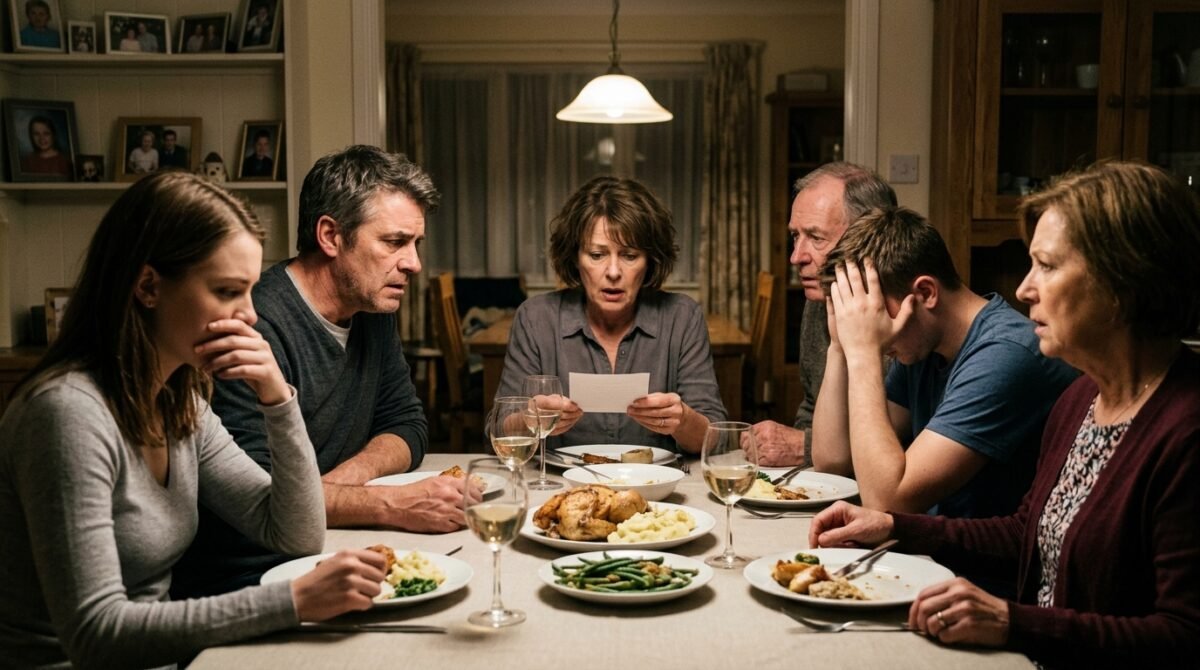
We had a family dinner with his parents that weekend. Mark had the audacity to bring up the ‘invoice’ as a funny story, expecting his parents to side with him on the ‘value of time’ argument. He painted me as the hysterical wife who didn’t understand the ‘professional value’ of his work-from-home setup. He looked so confident, so sure that he was in the right.
The silence that followed his story was heavy and thick. His mother, a woman who had raised four children while working part-time, didn’t laugh. She just looked at him with a mixture of pity and disappointment that I hadn’t seen before. His father, a man of few words, simply put down his fork and stared at his son. It wasn’t the reaction Mark expected, and the look on his face was one of pure bewilderment.
I didn’t say a word. I didn’t have to. The environment he had created for himself—this facade of professional superiority—was crumbling in front of the people he most wanted to impress. I watched as he tried to backpedal, explaining that it was ‘just a joke’ to his friends, but the damage was done. They saw him for exactly what he was: a man so disconnected from reality that he would charge his own wife for child care.
“Mark, you are a father. You don’t get ‘invoiced’ for raising your own son. You should be ashamed of yourself.”
— His father, silencing the room
That dinner was the final turning point for me. Seeing his parents react the way they did solidified my decision. I wasn’t just imagining the madness; it was visible to everyone around us. I knew then that I wasn’t leaving a misunderstood man; I was leaving a man who had fundamentally lost his sense of humanity.
The Legal Consultations and New Boundaries
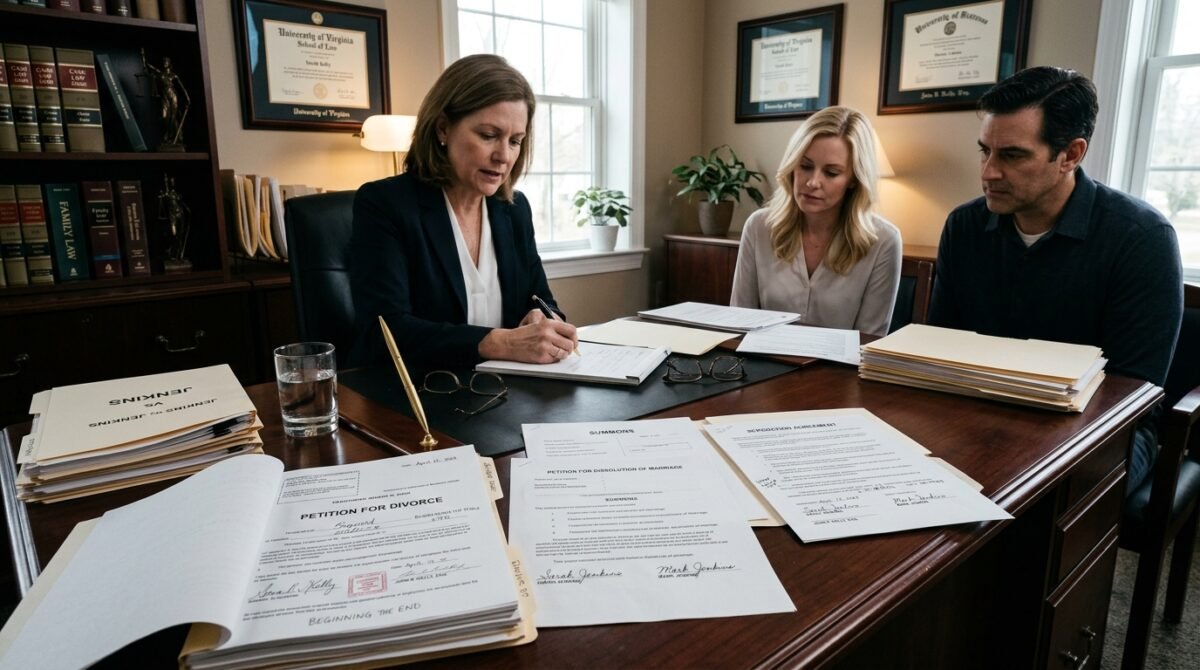
The days following the dinner were a whirlwind. I met with a family law attorney, and the conversation was eye-opening. She walked me through the implications of our financial arrangements, the history of our contributions, and what my rights were regarding our joint assets. She was professional, empathetic, and, most importantly, she confirmed that what Mark had done—taking money from the emergency fund—was a significant red flag in a divorce proceeding.
We started the process of documenting every instance of financial control and emotional manipulation. It felt like I was building a case against a stranger, not the man I had married. Every receipt, every bank statement, every text message became a piece of evidence. The emotional weight was heavy, but the clarity of the legal process gave me the strength to keep going.
Mark was in a constant state of denial. He believed that if he just apologized or ‘explained’ the situation better, everything would go back to normal. He didn’t understand that the ‘invoice’ wasn’t just a mistake; it was a symptom of a deep, systemic failure in his perception of our relationship. He was still trying to negotiate with me as if I were a business entity, unable to grasp that the human element of our marriage had already dissolved.
“I’ve booked therapy, I’ve deleted the group chat. Can we just move on? You’re making a huge deal out of nothing.”
— Mark, attempting to negotiate the end of our marriage
I realized that he would never understand why the invoice was so damaging because he didn’t respect me enough to value my contributions. To him, my work was ‘support,’ and his work was ‘the main event.’ There was no room for us as equal partners in his world, only for the roles he had assigned us.
The Final Confrontation

I finally sat him down to tell him that I was filing for divorce. The look on his face was not one of shock, but of genuine confusion. He honestly didn’t see the connection between the invoice and the end of our marriage. He tried to pivot to the ‘it was just a joke’ defense one last time, but I stopped him. I told him that I wasn’t leaving because of the invoice; I was leaving because of the person who thought it was okay to write it.
We talked for hours. I told him about the years of feeling minimized, the constant struggle to prove that my time and my work were as important as his, and the way his casual comments had eroded my sense of self-worth. He listened, but I could tell he wasn’t hearing me. He was still calculating the ‘cost’ of the divorce, thinking about the alimony, the child support, and how it would affect his personal net worth.
It was heartbreaking to realize that even in our final, most vulnerable moment, he was still focused on the numbers. He asked about the house equity and the retirement accounts before he asked about how we were going to handle the co-parenting of our son. That was the last bit of proof I needed. The man I had loved was gone, if he had ever truly existed, and the man remaining was a stranger to me.
“You’re really doing this? Over a piece of paper? You’re going to blow up our lives over a joke?”
— Mark, in his final attempt to deflect blame
I stood up and walked out of the room. I didn’t look back. I had my documents, I had my plan, and for the first time in years, I had my autonomy. The road ahead would be difficult, but it would be mine, and that was worth more than any invoice he could ever dream up.
Reflecting on the Roots of the Resentment

Looking back, I realize the signs were always there. The way he would talk about ‘my’ money and ‘our’ bills, the way he would dismiss my career goals as ‘hobbies,’ and the constant need for me to justify my domestic efforts. I had spent so much time trying to be the ‘supportive wife’ that I had forgotten to be a partner. I had allowed the imbalance to grow until it became the foundation of our life.
It’s easy to blame the invoice, but the invoice was just the mask falling off. He had been viewing our marriage through a transactional lens for a long time, and I had been too busy trying to keep the peace to notice. I had been training him to treat me like a subordinate, and he had learned the lesson all too well. It was a hard pill to swallow, but it was necessary for my own growth.
I’ve learned that a partnership requires more than just living under the same roof. It requires a shared vision, mutual respect, and an understanding that both people are contributing to the whole in ways that can’t always be measured in dollars and cents. You can’t quantify love, and you certainly can’t charge for it. The moment you start measuring your contributions to each other as a debt, you’ve already lost the essence of what makes a marriage work.
“I thought we were building something together. I didn’t realize we were just keeping score.”
— My internal reflection on the wreckage
I am starting over now. It’s not easy, and there are days when I still feel the sting of what happened, but I am free. I am no longer an employee in my own home, and I am no longer responsible for managing the fragile ego of a man who sees everything as a transaction.
The Aftermath and Moving Forward

Today, I am in a much better place. The divorce is finalized, and we have established a strict co-parenting plan that leaves very little room for ambiguity. We communicate through a co-parenting app, and all discussions are kept strictly to the needs of our son. There are no more invoices, no more ‘jokes’ about the value of time, and no more power struggles over domestic labor.
My son is happy, and I have found a sense of peace that I haven’t felt in years. I am focusing on my career, my health, and my relationship with my family. I am rediscovering the person I was before I became ‘the person who had to manage the invoices.’ It’s a slow process, but it’s one that I am incredibly proud of. I have regained my voice, my independence, and my self-respect.
To anyone out there who feels like they are being treated as a secondary participant in their own marriage: pay attention to the red flags. If your partner starts talking about ‘value’ and ‘debt’ instead of ‘support’ and ‘partnership,’ take a step back and look at the bigger picture. You deserve to be treated with respect, and you deserve a partner who views you as an equal, not as a client. Don’t wait for the invoice to show up before you realize you’re being exploited.
“I used to think that a strong marriage meant compromising until you were almost invisible. Now I know that a strong marriage is one where you are both fully seen, fully valued, and never, ever kept on a ledger.”
— My final thoughts on the experience
Thank you to everyone who shared their perspectives on my post. Your support, your advice, and even your harsh truths helped me find the courage to walk away. You helped me see that I was not crazy, that I was not ‘too sensitive,’ and that I deserved so much better. I hope my story serves as a reminder that your worth is not a billable service.
Conclusion
The story of the itemized babysitting invoice is more than just a viral anecdote about a petty husband; it is a profound cautionary tale about the erosion of partnership in the face of transactional thinking. When we begin to treat our domestic lives—our most intimate relationships—as a series of debits and credits, we lose the very essence of what makes a life together meaningful. The commodification of care is the death of connection.
This situation sparked a massive debate across the internet, drawing in people from all walks of life who had experienced similar, albeit often less extreme, forms of financial and emotional belittlement. It serves as a reminder to all of us that we must be vigilant in identifying the signs of contempt in our relationships before they manifest as literal bills sent to our spouses. Love is not a balance sheet, and a partner is not an independent contractor.
We want to hear from you. Have you ever experienced a moment where your partner treated your contribution to the family as a ‘service’ rather than a partnership? How did you address the imbalance, and what did it reveal about the health of your relationship? Share your thoughts in the comments below, and let’s keep the conversation going about what truly constitutes a fair and equitable partnership.
What's your verdict on this dilemma?
Vote below to contribute to the official community consensus.

Have a Dilemma Keeping You Up at Night?
Share your real-life feud, wedding chaos, or relationship crossroads anonymously with our editorial team.
What do you think ?
0 Comments🛡️ Comments are moderated to protect community integrity. Your comment will appear once approved by the editorial team.