
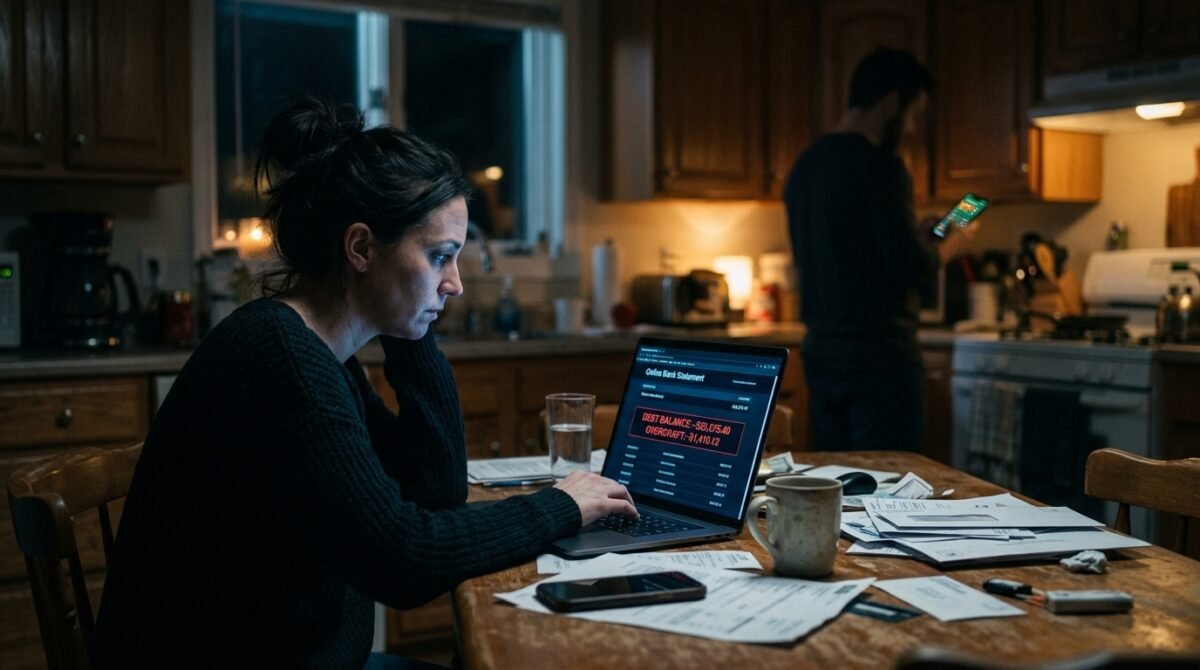
For years, I believed we were building a future. We were the couple that everyone pointed to as the ‘financially savvy’ ones in our friend group. We had a joint checking account, a shared savings goal for a down payment on a house, and a mutual understanding that anything over five hundred dollars required a conversation. Or, at least, that is what I thought the agreement was. Marriage, in my eyes, was supposed to be a partnership of radical transparency, especially when it came to the numbers that dictate the quality of our daily lives.
The illusion shattered on a Tuesday afternoon. I was tracking a minor discrepancy in our monthly grocery budget when a notification pinged on our shared tablet. It was a digital statement from an bank I didn’t recognize, linked to an email address I rarely checked—one my husband, Mark, had set up years ago for ‘fantasy sports logistics.’ Curiosity turned to cold dread as I clicked the link. The balance was not a miscalculation. It was a staggering forty-five thousand dollars, all accrued through high-stakes entry fees, premium league subscriptions, and mid-season draft buy-ins that I had never authorized.
The moral dilemma hit me harder than the financial shock. Was this an addiction? Was this a betrayal of trust or a symptom of a deeper, darker disconnect in our marriage? I stood in the kitchen, the sunlight streaming through the window in a way that felt mocking, realizing that while I was clipping coupons and planning for a future mortgage, Mark was gambling our stability on virtual athletes and imaginary points. The trust I had built for seven years dissolved in the span of five minutes.
This wasn’t just about the money. It was about the audacity of the deception. It was about the hours he spent at his computer, pretending to ‘research stats’ while he was actually digging our financial grave. I knew then that I couldn’t simply ‘have a talk’ and hope for the best. The foundation was rotten. I needed to act, and I needed to act in a way that protected myself before the entire structure collapsed under the weight of his secret life.
The Tuesday Afternoon Revelation

I remember the stillness of the house. It was the kind of quiet that usually feels peaceful, but that day, it felt heavy, like the air right before a thunderstorm. I had been trying to reconcile our budget for the upcoming summer vacation. Mark had told me we were ‘tight’ on cash because of a project he was working on at his job, which seemed perfectly plausible given the economic climate. I opened the browser to verify a payment I thought had gone through, and the autofill feature did something I hadn’t expected.
It populated a username I didn’t recognize for a portal I had never visited. When I logged in, the dashboard was clean, minimalist, and terrifyingly efficient. The header read ‘Total Current Balance: $45,210.00.’ I felt the blood drain from my face, leaving me lightheaded. I clicked the transaction history, expecting to see medical emergencies or perhaps a secret business venture gone wrong. Instead, I saw a repeating pattern: ‘FantasyPros Pro-League,’ ‘High-Stakes Draft Network,’ and ‘Elite Keeper League Buy-In.’
I sat there, frozen, as the reality set in. Every ‘lost’ weekend where Mark had been glued to his laptop wasn’t about bonding with his college friends or keeping up with hobbies. It was a systematic draining of our potential future. He had opened this card in his name, sure, but the address linked to it was our home. He had been intercepting the paper statements for months, likely using an online mail-forwarding service or simply arriving home before I did every single day to clear the box.
“I just wanted to win one, just once. The rush of the draft, the feeling of beating the guys… I didn’t mean for it to get this big. I thought I could win it back with the championship prize money.”
— Mark, during the initial confrontation
When he walked through the door at 6:00 PM, he was humming a tune, oblivious to the fact that his entire world was about to change. I didn’t scream. I didn’t throw anything. I simply turned the laptop screen toward him and waited. The color drained from his face so rapidly that he actually looked gray. He didn’t even try to lie at first; he just stared at the screen, his mouth opening and closing like a fish out of water.
The silence stretched on, becoming an entity of its own in the room. He walked toward me, but I stepped back, holding up my hand to stop him. The betrayal wasn’t just in the money—it was in the sheer amount of time he had spent crafting a persona that was the exact opposite of the man standing in my kitchen. He had been drinking coffee with me, laughing at my jokes, and talking about our future kids, all while knowing this financial anchor was pulling us down.
The Dismantling of Our Shared Accounts

By Wednesday morning, the emotional shock had transitioned into a cold, clinical determination. I knew that if I stayed in the status quo, I would be legally and financially liable for the mess he had created, or at the very least, my credit score would be dragged into the mud alongside his. I spent the morning on the phone with my bank, separating our accounts. I moved my salary to an individual account at a completely different institution, one he had no access to and no knowledge of.
It felt like I was performing surgery on our marriage. Every transfer was a painful reminder of the life we had planned—the house in the suburbs, the dream trip to Italy, the small emergency fund we had built together. I watched the joint account balance drop as I withdrew my share. It wasn’t about stealing; it was about securing the assets I had worked for before he decided to gamble them away on fantasy sports.
Mark was frantic. He spent the entire day calling my office, leaving voicemails that started with promises of therapy and ended with desperate pleas about how he ‘just needed a chance to fix it.’ He didn’t seem to grasp that the ‘fixing’ phase ended the moment I saw that statement. He thought this was a mistake we could budget our way out of, like a blown transmission or a surprise medical bill. He didn’t understand that for me, the relationship had died the moment he decided I was someone to be manipulated.
I eventually blocked his calls. I couldn’t deal with the gaslighting or the promises that were worth less than the paper they were written on. I sent him a single text message explaining that I had moved out to my mother’s place until I could figure out my next legal steps. I needed space, not just from him, but from the reminders of the life I had curated with a person who didn’t exist.
“You are acting like this is a business transaction. We are married. This is about us, not just your money or my money. If you walk away now, you are abandoning the team we built.”
— Mark, in a text message sent at 2:00 AM
The irony of him calling it a ‘team’ after he had been playing for a different league entirely was not lost on me. I spent the rest of the day gathering documentation—every statement I could find, every email correspondence, and a log of the dates I had discovered the debt. I wasn’t just protecting my money; I was building a fortress to protect my life from the fallout of his addiction.
The Intervention of the In-Laws

My mother-in-law, Susan, was the first one to call after I moved out. She was under the impression that we were just going through a ‘standard marital spat’ and that I was overreacting. She wanted to ‘mediate’ the situation over coffee. I knew Susan; she was a woman who valued appearances above everything else, and the idea that her son had a gambling addiction that cost us forty-five thousand dollars was a stain on the family honor she couldn’t tolerate.
We met at a quiet cafe near my office. She started by talking about how ‘boys will be boys’ and how Mark had always been ‘a bit impulsive’ with his hobbies. I listened, my heart turning into a stone in my chest. When I finally dropped the actual number—$45,000—the air left the conversation. Her face went pale, and she stopped mid-sentence, clutching her handbag as if it were a life raft.
She tried to pivot. She suggested that perhaps the debt wasn’t entirely his fault, perhaps I was ‘too controlling’ with the budget, which forced him to hide things. I didn’t even get angry. I just looked at her and asked if she would have said the same thing if I had been the one gambling away our future. The silence was deafening. She couldn’t answer, and in that moment, I realized where Mark had learned to deflect accountability.
“He is a good man, he just has a weakness for the thrill. Surely you can pay off half and let him work off the rest? You two have a mortgage to think about. Don’t throw it all away over some numbers.”
— Susan, during our coffee meeting
It was clear that the expectation was for me to absorb the blow and pretend nothing happened. They wanted me to be the silent partner who funded the rehabilitation of a man who hadn’t even shown genuine remorse. I told Susan that I wasn’t paying a dime of that debt and that I was speaking to a divorce attorney. The look on her face was one of pure, unadulterated horror—not for me, but for the social embarrassment of an impending divorce.
I left her there, struggling with the bill. I realized then that my support system wasn’t going to be his family. I was entirely on my own, which was both terrifying and incredibly liberating. I wasn’t doing this for anyone else’s approval anymore; I was doing it for my sanity, my credit, and my future peace of mind.
The Digital Breadcrumbs of Deception
After the initial move, I began to dig deeper into the digital history of the accounts. I needed to know the scope of this. I found that he had been creating fake accounts on social media to participate in ‘expert’ analysis forums. He was spending upwards of six hours a day, even during his work hours, obsessing over draft picks and player stats. He wasn’t just playing; he was living in a digital fantasy world that required constant financial injections to maintain his ‘elite’ status.
There were hundreds of emails from gambling sites addressed to ‘M. Miller,’ confirming his deposits. The dates tracked back three years. Three years of living a lie. Three years of me wondering why we couldn’t afford a vacation, why he was always tired, and why he seemed so emotionally distant during our dinners. It wasn’t just about the money; it was the theft of our time. He had been present in body, but his mind had been entirely elsewhere, calculating odds and chasing losses.
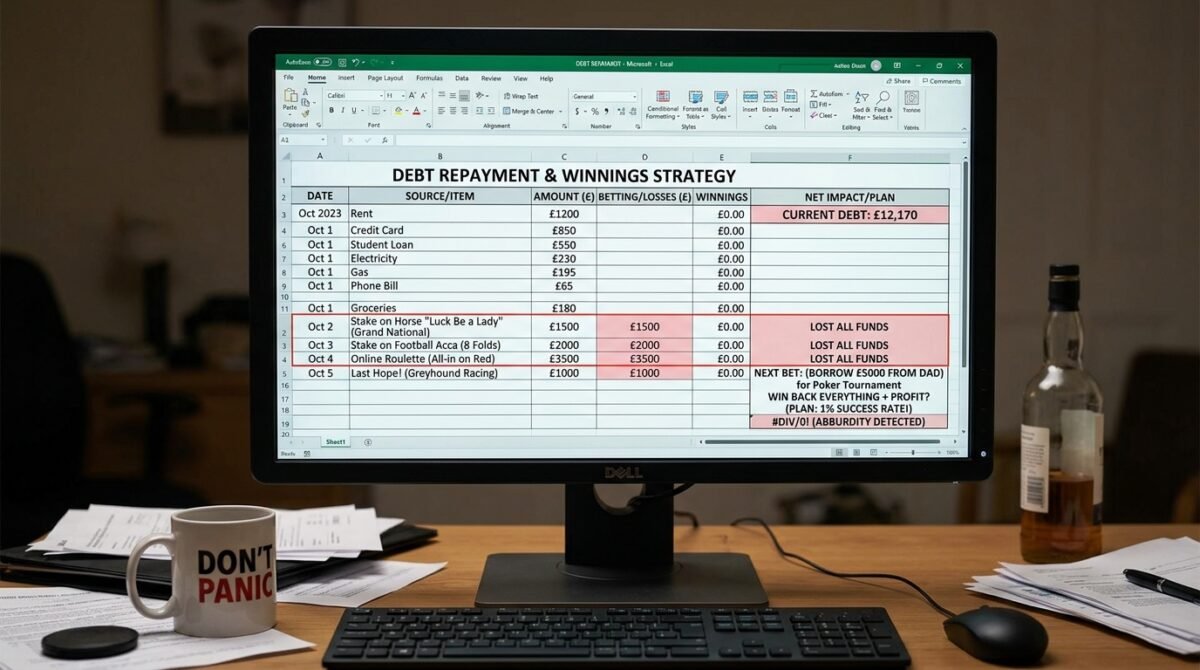
I found a spreadsheet he had hidden in a cloud folder. It wasn’t a budget; it was a ‘Recovery Plan.’ It detailed how he would eventually win a massive tournament and pay off the credit card in one fell swoop. It was delusional. He had built his entire life strategy around the statistical probability of a miracle. I felt sick looking at it. The sheer arrogance of thinking he could outsmart a system designed to take money from people exactly like him was staggering.
“If I just get the first seed in the playoffs, the entry fee for the Championship is covered, and the grand prize is $60k. I just need this one win, and then I can stop. I swear to god, I can stop.”
— A note found in his secret ‘Recovery Plan’ spreadsheet
I took screenshots of everything. I knew that in a divorce settlement, proof of dissipation of marital assets would be crucial. I wasn’t going to let him claim that this was a ‘family expense’ or some shared hobby. This was a unilateral choice, and the consequences had to be his alone. The documentation was my armor. Every file I saved felt like I was reclaiming a piece of myself that he had tried to bury under his gambling obsession.
Reddit Weighs In: The Community Verdict

I posted my story anonymously on a popular relationship advice sub, needing to know if I was losing my mind. The response was immediate and overwhelming. Thousands of people commented, shared, and debated the nuances of financial infidelity. It was the validation I didn’t know I needed. The consensus was clear: I had not only done the right thing, but I had potentially saved myself from a lifetime of financial ruin.
The comments ranged from personal stories of survivors who had been in similar marriages to harsh warnings about the legal realities of joint debt. I read every single one, feeling less isolated with each passing hour. People analyzed the ‘fantasy sports’ angle, noting that for many, it is a gateway drug to full-blown gambling addiction. The psychological profile they described—the ‘need to win’—was a perfect match for Mark’s behavior.
“This is not a hobby. This is a severe addiction. He is gambling away your future for the hit of dopamine that comes with a ‘draft win.’ Do not touch that debt with a ten-foot pole. Talk to a lawyer immediately to protect your assets.”
— u/FinanceExpert4U (Top Comment, 18.2k upvotes)
Others warned me about the ‘sunken cost’ fallacy. Many urged me to cut ties completely before he convinced me to consolidate the debt or ‘help him out.’ It was the reality check I needed. I realized that my empathy for him was his greatest weapon, and I had to stop being the ‘supportive wife’ because that role no longer existed in the reality of our marriage. The community gave me the permission to be selfish with my future.
There were, of course, the contrarians who argued for ‘forgiveness’ and ‘couples counseling,’ but they were quickly drowned out by those who understood that financial betrayal is as profound as physical infidelity. When you marry someone, you enter a contract of trust. When they breach that contract so violently, the relationship changes fundamentally. I wasn’t just a spouse; I was now a survivor of a systematic financial predator.
The Confrontation at the Dining Table

The final confrontation happened at our house, two weeks after I had left. I had to go back to get the rest of my personal belongings—the items he hadn’t already tried to ‘sell’ to cover his losses. Mark was there, looking unkempt and desperate. He had clearly not been sleeping. He tried to initiate a conversation, his tone shifting from pleading to angry, then back to pleading again. It was a masterclass in manipulation, but for the first time, I was immune to it.
He tried to show me a ‘new, better’ system he had found, something that would guarantee a return. I laughed. I couldn’t help it. The idea that he was still trying to pitch me a scheme while his credit score was cratering was so absurd that I didn’t know whether to cry or laugh. I told him that I was filing for divorce and that he was responsible for the entire $45,000 balance. He started to yell, accusing me of being cold and unloving, claiming I was the reason he felt the need to escape.
“You’re really going to walk away? Over money? After everything we planned? You are proving that you never actually loved me if you can turn your back on me when I’m down.”
— Mark, during our final argument
I looked at him and said the words I had been practicing for days. ‘I am not turning my back on you. I am turning my back on a stranger who lied to me for three years. I loved the person I thought you were, but that person doesn’t exist.’ I didn’t stay to hear his response. I packed the last of my boxes and walked out the door, feeling the weight of the last three years lift off my shoulders with every step.
The drive away from the house was the most peaceful I had felt in years. I knew there would be legal battles, that the divorce would be messy, and that the financial fallout would follow me for a while, but it was all manageable. It was a tangible problem with a tangible solution. The hidden, festering rot of the secret debt was gone, replaced by the clarity of the truth. I was free.
The Legal Reality Check

My lawyer was blunt. She explained that while the debt was in Mark’s name, because we had joint assets and a commingled income, there would be a fight over whether that debt was ‘marital.’ If the court determined that the debt was used for ‘family purposes’—a stretch, given the nature of the gambling—it could be split. My goal was to prove it was ‘dissipation of assets,’ which would mean he had to account for every dollar of that $45,000 as his sole responsibility.
We spent weeks gathering the bank records, the email chains, and the forum logs. It was exhausting, but it was necessary. I learned more about the mechanics of bankruptcy and divorce law than I ever wanted to know. I realized that my ‘financial partnership’ had actually been a ticking time bomb. If I hadn’t found that card, he likely would have kept going until he had drained our savings, our retirement, and perhaps even taken out a second mortgage on our home without my knowledge.
The legal process was a grind. Every motion, every response, every discovery request was a reminder of what he had done. But it was also empowering. I wasn’t a victim anymore; I was a litigant. I was using the system to protect myself, to enforce the boundaries he had violated. I saw the look of surprise on his lawyer’s face when we presented the ‘fantasy sports’ evidence. They knew they had no ground to stand on.
“The law is not on his side here. We can prove that he was not only hiding the debt but actively using marital income for personal, high-risk gambling. He is looking at a very difficult settlement.”
— My attorney, during a consultation
The settlement negotiations were tense. Mark tried to argue that I had benefited from his ‘wins’ in the early stages, but we were able to prove that those ‘wins’ were just reinvested into his gambling. He had never brought a single cent of that fantasy money into our shared life. He had been a black hole of financial resources, and the court was beginning to see it exactly that way.
The Aftermath and Personal Healing

Moving on wasn’t just about the money. It was about rebuilding my sense of self. I had to learn how to trust my intuition again. I had ignored so many red flags—the late nights, the sudden defensiveness, the ‘secret’ logins. I realized that I had wanted to believe in the ‘perfect’ life so badly that I had blinded myself to the reality of the man I was with. That was the hardest part to swallow: admitting that I had been a participant in my own deception.
I started therapy, not to ‘save’ the marriage, but to understand why I had stayed so long. My therapist helped me see that I had been playing the role of the ‘stabilizer’ in the relationship, constantly trying to fix things for him. It was a pattern I had to break. I spent time reconnecting with friends I had drifted away from and focusing on my own career, which I had neglected while trying to manage our ‘shared’ financial stability.
The healing was non-linear. Some days I felt incredibly angry, wanting to scream at the sky for the time I had lost. Other days I felt a profound sense of relief, grateful that I had caught the debt before it grew to a life-ruining amount. I began to appreciate the simple things—the quiet of my own apartment, the peace of mind knowing my paycheck was my own, and the lack of tension in my daily routine. I was learning that being alone was infinitely better than being in a relationship built on lies.
“I used to think my happiness depended on us succeeding together. Now I realize that my happiness is independent of anyone else’s choices. I am the architect of my own life, and I will never let someone else hold the blueprints again.”
— From my personal journal
I started setting hard boundaries, not just in relationships, but in all areas of my life. I became more transparent with my own finances, even with myself. I stopped trying to be the ‘perfect’ partner and started being the ‘honest’ one. It was a shift that changed everything, from how I interacted with my family to how I approached my work. The betrayal, as painful as it was, became the catalyst for the most significant growth of my life.
The Final Settlement

The divorce was finalized six months later. The judge ruled that the $45,000 credit card debt was entirely Mark’s responsibility, classified as personal debt incurred without marital consent or benefit. It was a complete vindication. I walked out of the courtroom feeling like I had finally closed the book on the most difficult chapter of my life. I didn’t get back the time, but I got back my future, and that was worth more than any sum of money.
Mark was left with the debt, the fallout of his addiction, and the wreckage of his reputation. I heard he moved back in with his parents, who were still trying to manage his ‘fantasy sports’ habit. It wasn’t my problem anymore. I had moved on. I had started a new, quiet life in a different part of the city, one that felt like it was finally mine. I wasn’t looking for another ‘partnership’ anytime soon; I was enjoying the process of being whole on my own terms.
I look back at the person I was when I found that laptop screen and I barely recognize her. She was scared, fragile, and desperate to save a dream that was already dead. I am proud of the woman I am today—the one who stood up, took control, and refused to let someone else’s addiction define her worth. The lesson was expensive, but it was invaluable. I learned that trust is not a given in marriage; it is something that must be earned, every single day, through transparency and integrity.
“You cannot build a house on a foundation of sand. I tried to do it, and it cost me everything I had. But it also taught me that I am capable of building something far stronger on my own.”
— My closing thoughts at the end of the divorce
I am now in a place where I can talk about this without the emotional charge that once threatened to overwhelm me. I share this story not for pity, but to warn others. Check your finances. Be involved. Do not let ‘trust’ become an excuse for ignorance. You are the only person who will truly look out for your future, and that is a responsibility you should never, ever outsource.
Conclusion
My journey through the wreckage of a secret financial life was a crucible, but it forged a version of me that I finally respect. The $45,000 wasn’t just a loss of money; it was the price of admission for the truth. Sometimes, the most devastating events in our lives are the ones that push us toward the reality we were too afraid to face. I am not the same person I was, and for that, I am grateful.
We often talk about marriage as a union of two souls, but we forget the practical, sometimes harsh, reality of the financial contract it represents. When one party breaks that contract through deceit, the entire premise of the marriage is invalidated. I walked away because I realized that a partner who hides a gambling addiction is a partner who has already left the relationship in every way that counts.
I want to hear from you. Have you ever discovered a secret that completely dismantled your relationship, financial or otherwise? How did you handle the fallout? Did you find the strength to leave, or did you try to work through the betrayal? Let’s talk about it in the comments below. Your stories might just be the catalyst someone else needs to reclaim their own future.
What's your verdict on this dilemma?
Vote below to contribute to the official community consensus.

Have a Dilemma Keeping You Up at Night?
Share your real-life feud, wedding chaos, or relationship crossroads anonymously with our editorial team.
What do you think ?
0 Comments🛡️ Comments are moderated to protect community integrity. Your comment will appear once approved by the editorial team.