
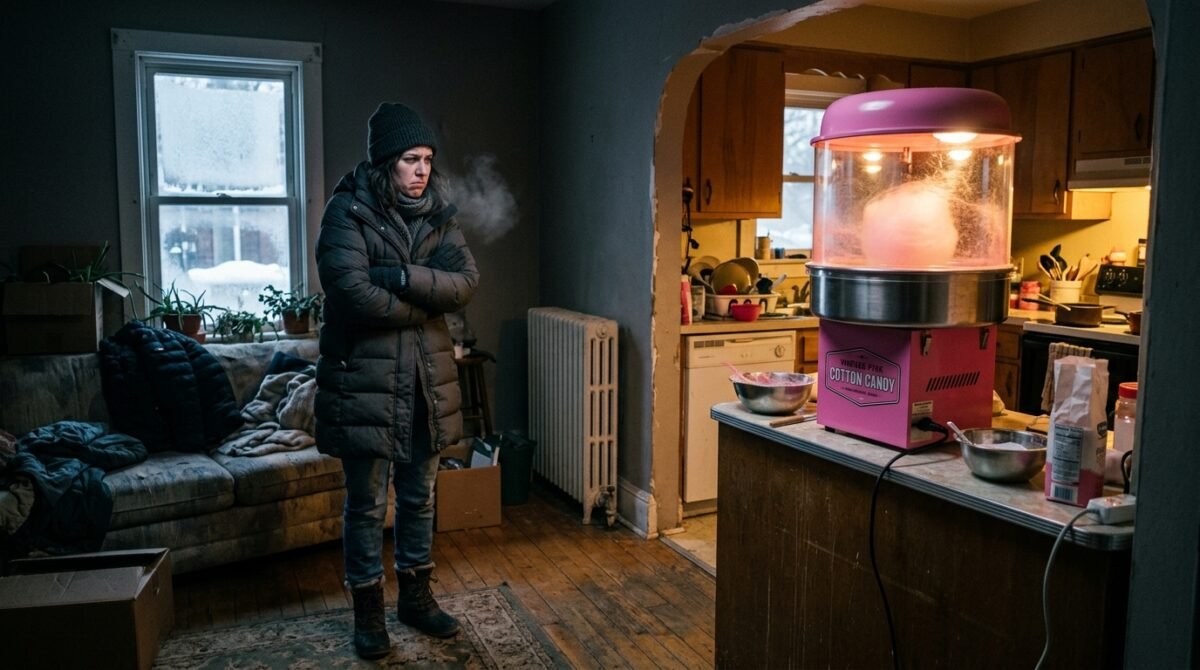
It started with a subtle draft. One evening in late October, as the first true bite of autumn chill settled over our quiet suburban street, I pulled my cardigan tighter around my shoulders while sitting on the living room sofa. We had lived in this house for three years, and while the charm of the 1950s architecture was undeniable, the lack of modern insulation was a glaring, shivering reality. We had spent the last six months aggressively saving every extra penny from our paychecks into a high-yield savings account we affectionately labeled ‘The Warmth Fund.’ It was supposed to cover the professional installation of blown-in insulation and new, energy-efficient window seals before the snow hit.
My husband, Mark, had been the one to manage the account. He was always the ‘numbers guy,’ the one who took pride in spreadsheets and projected growth. I trusted him implicitly with our future security. When I brought up the insulation contractors on a Tuesday night, expecting him to confirm that we had the $7,200 required to start the work, his face went uncharacteristically pale. He busied himself with a glass of water, avoiding eye contact with the precision of a trained actor. I didn’t think much of it at the time, chalking it up to a long day at the office, but the knot in my stomach told me otherwise.
The revelation didn’t come through a confession. It came through a delivery truck. A massive, eighteen-wheeler pulled into our narrow driveway at 8:00 AM on a Friday morning. Expecting a small box of kitchen supplies, I walked out to sign for the package, only to find the delivery driver wrestling a crate the size of a small refrigerator off the hydraulic lift. The side of the crate was branded with neon-bright lettering: ‘THE SUGAR-SPIN PRO: INDUSTRIAL COTTON CANDY SYSTEM.’ My heart dropped through the floorboards.
I stood there in the driveway, breath hitching in the cold air, realizing exactly where the ‘Warmth Fund’ had gone. There, in the middle of our frozen home, stood a monstrosity designed for fairgrounds and carnivals, a machine capable of producing thousands of sugar cones an hour. As I watched the driver haul it toward our garage, I felt a wave of cold that had nothing to do with the thermostat. This wasn’t just a purchase; it was a total abandonment of our shared stability for a whimsical, sugary pipe dream.
The dilemma now wasn’t just about the money. It was about the fundamental erosion of trust. Mark had spent our insulation budget on a commercial appliance with no business plan, no storage space, and no discussion. As I looked at the machine, I knew our marriage was at a crossroads. Could I forgive a betrayal of this magnitude, or was this the final, sticky straw in a relationship built on hidden agendas and misplaced priorities?
The Morning the Driveway Turned Into a Midway
The sound of the delivery truck’s air brakes was the loudest thing I had ever heard in our quiet neighborhood. When the driver asked where to place the crate, I was still standing there in my bathrobe, shivering despite the morning sun. ‘Is this… is this really for us?’ I managed to choke out. The driver, a seasoned pro who clearly didn’t care about the domestic carnage he was delivering, just shrugged and pointed at the label. It was indeed addressed to Mark, with a ‘fragile’ sticker plastered over the industrial-grade motor housing.
I didn’t let him put it in the house. I had him drop it in the detached garage, my mind racing with the financial logistics of what I had just witnessed. A machine like that cost thousands—even used, it was a major investment. My fingers trembled as I pulled up our banking app on my phone. The balance that had sat comfortably at over seven thousand dollars just forty-eight hours ago was now sitting at a pathetic four hundred and twelve dollars. The transaction description simply read: ‘SugarSpin Industrial Supplies – Fulfillment Center.’
I retreated into the house and locked the door, feeling like a stranger in my own home. My phone buzzed incessantly with notifications that I ignored. I knew Mark would be home for lunch, as he often was on Fridays. I had two hours to figure out how to confront the man who had traded our comfort for a literal sugar-daddy fantasy. The air in the house felt thinner, colder, and more oppressive than ever before.
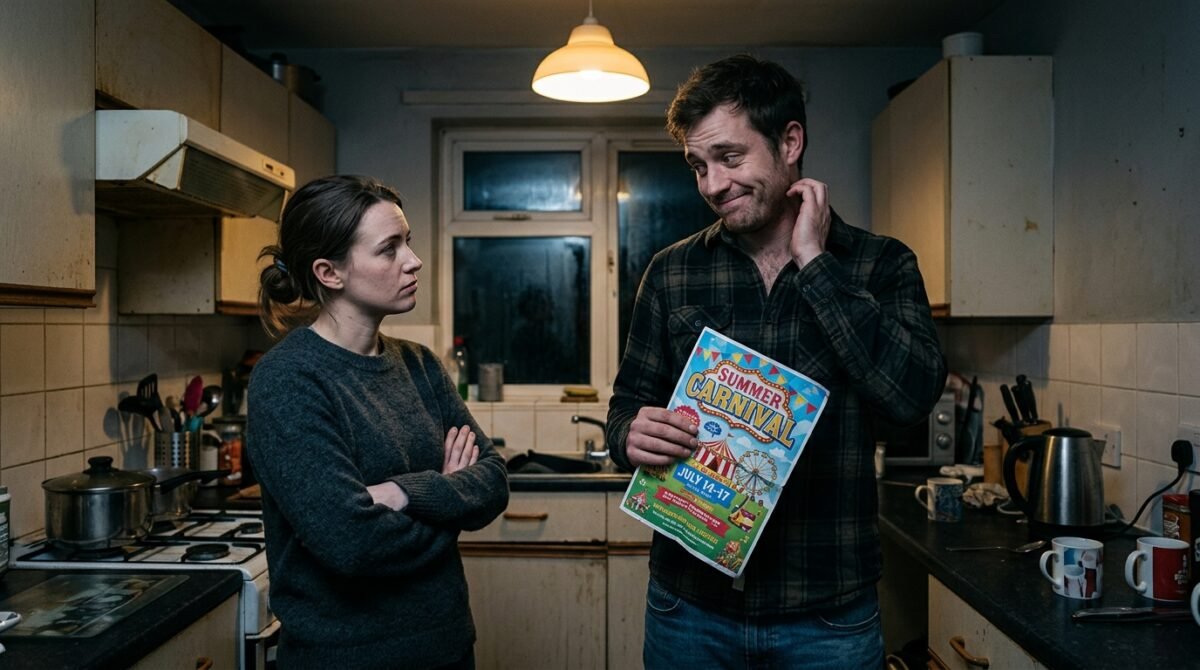
“Mark, I don’t care how you spin this. I saw the receipt. I saw the bank statement. You spent the insulation budget on a cotton candy machine? Are you having a midlife crisis, or have you finally lost your mind completely?”
— Me, during the initial confrontation in our kitchen
When he finally walked through the door, he had the audacity to look excited. He was wearing his work sweater, a faint smile playing on his lips, totally unaware that the bomb had already detonated. He began talking about ‘side hustles’ and ‘weekend festivals’ before he even saw my face. The sheer disconnect between his reality and the freezing, uninsulated house we lived in was maddening. He wasn’t just delusional; he was completely detached from the reality of our shared life.
I waited for him to reach the kitchen before I dropped the hammer. The look on his face shifted from excitement to immediate, defensive panic. He started talking about ‘market research’ and ‘passive income streams’ as if that would somehow make the house warmer. The silence that followed his stuttered explanation was deafening, broken only by the hum of the refrigerator that was desperately trying to keep up with the encroaching winter cold.
The ‘Sugar-Spin’ Business Plan That Never Existed
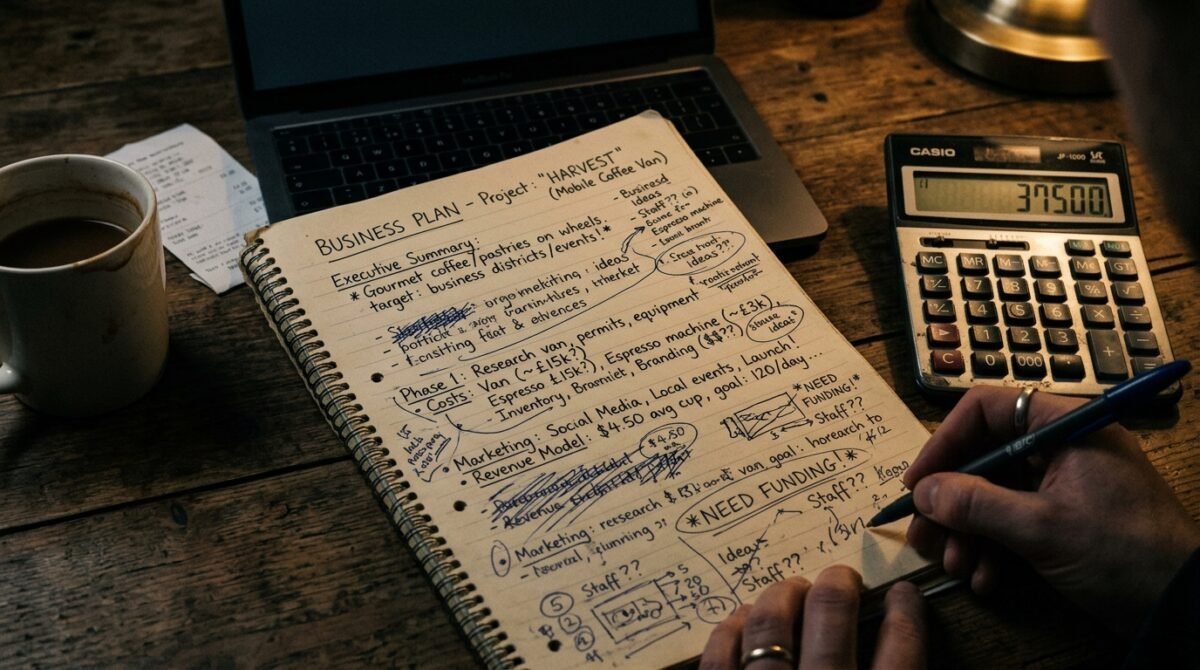
After the initial shock wore off, the absurdity of his ‘business plan’ began to unfold. He had spent weeks—maybe even months—secretly researching this purchase, lurking in online forums dedicated to food cart operators and carnival equipment. He had convinced himself that by renting this machine out for local birthday parties and corporate events, he would double our money within a year. It was a classic case of ‘get rich quick’ syndrome applied to the confectionery industry.
He laid out his ‘projections’ on the kitchen table, using a scrap of paper from a notepad. He had accounted for the cost of sugar, the cost of paper cones, and the potential rental fees for ‘premium’ events. What he hadn’t accounted for was the fact that we lived in a town where the average temperature for four months of the year was below freezing, making outdoor events virtually impossible. He hadn’t even checked if the machine required a special power circuit, which our aging house certainly didn’t have.
I watched him pace, his hands gesturing wildly as he talked about ‘brand presence’ and ‘market saturation.’ It was like watching a child try to explain why he bought a toy instead of groceries. He truly believed he was being entrepreneurial, not irresponsible. He kept repeating the phrase, ‘This is our future,’ as if a machine that spun sugar into air was the key to our retirement.
“Do you understand that we don’t have enough electricity in the kitchen to run your machine? You’ve bought an expensive, seven-thousand-dollar doorstop that is literally preventing us from heating our home. How is this our future?”
— My response to his business pitch
The more he spoke, the more I realized that this wasn’t just about a machine. It was about his inability to communicate, his tendency to make unilateral decisions, and his utter lack of respect for our shared financial goals. He had treated our savings like his personal play money, assuming I wouldn’t notice or that I would just fall in line once the ‘profits’ started rolling in. It was a slap in the face to every sacrifice I had made over the last three years to get us to this point.
I asked him about the insulation company. I asked him if he had even considered calling them to cancel the service or if he just hoped they wouldn’t show up. His silence was his answer. He had essentially set a match to our plans and was now trying to convince me that the resulting fire was a ‘growth opportunity.’ I realized then that I wasn’t just dealing with a financial mistake; I was dealing with a partner who had fundamentally broken the contract of our marriage.
The Cold Reality of the Second Floor

By the following weekend, the temperatures plummeted. We were forced to huddle in the living room with space heaters, which were doing little to keep the upstairs bedrooms from turning into iceboxes. Sleeping in the house became an exercise in endurance. I wore three layers of clothes to bed, including a hat and gloves, while Mark sat in the den, staring at the closed garage door as if waiting for the cotton candy machine to magically start printing money.
The irony was suffocating. We were shivering in a house that we literally couldn’t afford to keep warm because of a machine that required a warm environment to operate properly. I found myself crying in the middle of the night, not just from the cold, but from the realization that my husband had prioritized a fantasy over my physical comfort. The betrayal felt physical, a cold weight in my chest that no amount of blankets could alleviate.
I started looking into return policies, but of course, Mark had purchased it from a private seller on a liquidation site. ‘All sales final’ was stamped in bold on the invoice. He had bought it ‘as-is,’ meaning we were stuck with a massive, heavy piece of industrial metal that was currently worth nothing more than its scrap value. I called the company that listed the machine, only to find out they had gone out of business the day after he bought it.
“I just need you to admit you made a mistake. If you say you’re sorry, if you commit to selling it for whatever you can get back, we can move forward. But please, Mark, stop talking about the cotton candy. It’s making me hate you.”
— A desperate plea during a 2:00 AM argument
Mark’s reaction was to double down. He started scouring the internet for ways to make the machine work in a cold climate, buying extra heating lamps and specialty kits that cost us even more money. It was the sunk cost fallacy in real-time. Every dollar he spent trying to ‘fix’ the mistake only served to further ruin our financial standing. He was so deep in his delusion that he couldn’t see how much he was hurting us.
I began to keep a ledger. Every cent spent on ‘maintenance,’ every cent spent on electricity for the space heaters, every cent we lost on not having proper insulation. The total was climbing, and it was a visual representation of my crumbling marriage. I started hiding my own paycheck in a separate account, realizing that if I didn’t take control of our finances, we would be destitute by spring.
The Reddit Thread That Went Viral

Out of sheer desperation and a need for external validation, I posted our situation to a popular relationship subreddit. I kept it anonymous, but the details were too specific to be anything but true. I titled it: ‘My husband spent our home renovation fund on a cotton candy machine, and now I’m freezing. AITA?’ I didn’t expect much, maybe a few comments of sympathy, but I was wrong. The post blew up overnight, reaching the front page within twelve hours.
The reactions were immediate and brutal. Thousands of people weighed in, most of them calling out the financial infidelity. I spent the next two days reading through comments, feeling a strange mix of relief and horror as strangers validated my anger. It wasn’t just me; everyone saw exactly how insane this situation was. The thread became a masterclass in ‘how to destroy a marriage in one purchase.’
“This is not a quirk. This is financial abuse. He took money that was for your basic physical safety and spent it on a whim without your knowledge. You need to leave, or at the very least, take total control of the finances today.”
— u/FinanceTruthSeeker (Top Comment, 32.5k upvotes)
Some users even started offering advice on how to get rid of the machine or how to sue him for the money. There were people who worked in home construction explaining exactly how much damage our house was sustaining by not being insulated. The ‘science of the cold’ became a recurring theme in the comments, making me feel even more anxious about the state of our home. It was a surreal experience, reading about my life as a cautionary tale for thousands of people.
Mark eventually saw the thread. I left my laptop open on the kitchen counter, and he didn’t even try to hide his browsing. He was horrified, not by his actions, but by the fact that the ‘internet’ was against him. He tried to convince me that the people in the comments didn’t understand his vision. It was the final nail in the coffin of my respect for him. He was more concerned with his reputation among strangers than with the actual, tangible, physical hardship he had caused me.
The fallout from the Reddit post wasn’t just online. It forced me to see my life through the lens of objective, external scrutiny. The excuses he had been feeding me for years—the ones I had accepted out of love—suddenly looked like the manipulative, gaslighting tactics they were. I started to see the pattern of his behavior across other aspects of our life, and it terrified me.
The Day the Power Went Out
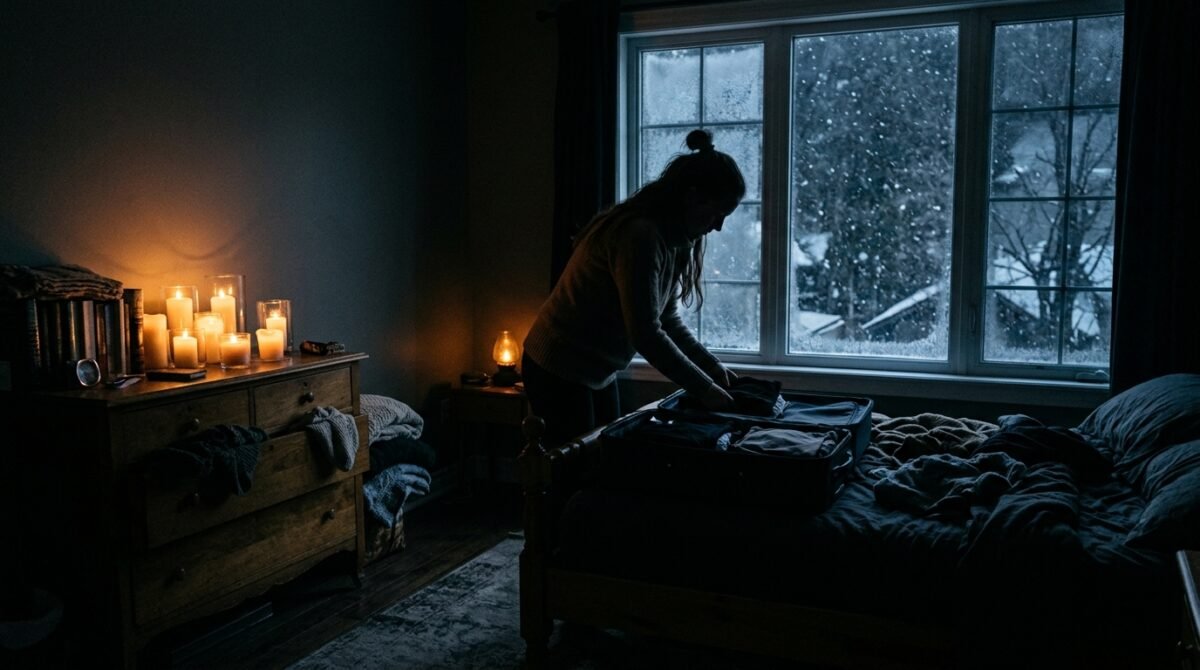
It was only a matter of time. With two heavy-duty space heaters running constantly, our outdated electrical panel finally gave up the ghost. It happened on a Tuesday night in the middle of a blizzard. One moment, we were huddled in the living room with the heat cranking, and the next, the entire house was plunged into absolute darkness. The silence that followed was terrifying, followed quickly by the sound of the wind rattling the window panes.
We were left in a house that was rapidly losing heat. I had to scramble to find flashlights while Mark immediately started blaming the electrical company. He wouldn’t admit that it was his own obsession with the space heaters—heaters required because of the missing insulation—that had pushed the system to its breaking point. We spent the night wrapped in every blanket we owned, huddled together for warmth, but the distance between us was wider than ever.
The next morning, the house was nearly freezing inside. I didn’t even look at him. I packed a bag and drove to my sister’s house, leaving him there with his silent, expensive machine and our dead electrical panel. It was the first time I had ever walked away from a fight, and it felt like the most liberating thing I had ever done. I knew I couldn’t go back until the situation was rectified, but I wasn’t even sure if I wanted to go back at all.
“Don’t call me. Don’t text me until you have a plan to get rid of that machine, pay for the electrical repairs, and hire the insulation company. I’m done being the one who pays for your fantasies.”
— The text message I sent him from my car
My sister, Sarah, was the one who finally made me see the light. She sat me down with a cup of hot tea and a plate of food, and for the first time in months, I felt warm. She didn’t judge me; she just listened. She reminded me that I was a woman of value and that I deserved a partner who cared about my comfort as much as his own. She helped me realize that this wasn’t about a machine; it was about the end of an era where I put myself last.
While I was at her house, I received a barrage of texts from Mark. They went from angry to pleading to bargaining. He was trying everything to get me to come home, but none of his messages mentioned the machine, the insulation, or the electrical repairs. He was still trying to ignore the root cause of the problem. That was the moment I knew for sure that the marriage was effectively over.
The Legal Reality Check

I consulted a lawyer, not to file for divorce immediately, but to understand my rights. I was terrified that I might be held responsible for the debt he had incurred. My lawyer, a stern woman with a penchant for black coffee and blunt truths, explained that since our assets were commingled, the bank might see it as a joint debt. This was a nightmare I hadn’t fully considered. I had to act fast to protect what little I had left.
We spent hours going over our finances. She helped me set up a plan to separate my accounts and protect my future. She also provided me with the language I needed to present to Mark. It was time for a formal ultimatum. If he wanted to keep the marriage, he had to take responsibility, and that included selling the machine, even at a loss, and taking out a personal loan if necessary to fund the insulation project.
Mark’s reaction to the legal documents was a mix of denial and fury. He couldn’t believe I was involving lawyers. He called it an ‘overreaction’ and tried to gaslight me into thinking I was the one being unreasonable. But for the first time, I didn’t engage. I just let the lawyer handle the communication. It was a powerful shift in the dynamic, moving from an emotional, messy fight to a clear, professional boundary.
“We have a clear path forward, Mark. You sell the machine, you sign for a loan to cover the insulation, or I file for legal separation. There is no middle ground here. You destroyed our security, and you are the only one who can fix it.”
— Formal notice prepared by my lawyer
I realized then that Mark had always relied on my tendency to be the ‘reasonable’ one to get away with his antics. By stepping out of the role of the ‘enabler,’ I was forcing him to face the reality of his actions. It was the hardest thing I had ever done, but it was also the most empowering. I was finally reclaiming my life from the shadow of his poor decisions.
The machine was still sitting in the garage, a silent, mocking testament to his foolishness. I made sure to have the lawyer include a clause that the sale of the machine had to be verified. I wasn’t going to let him hide it or try to use it again. It had to be gone, and every cent from the sale had to go toward the restoration of our home’s comfort. It was a cold, hard requirement, and I was not going to budge.
The Failed Sale of the ‘Sugar-Spin’
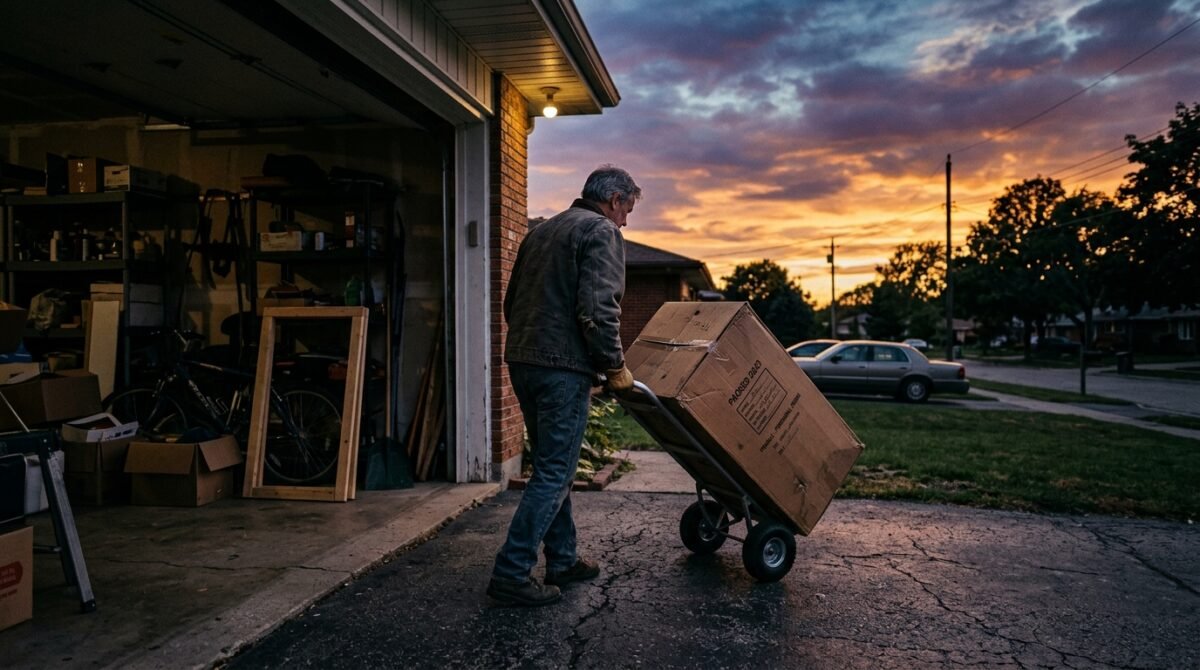
Mark tried to sell the machine, but the reality of the market was even harsher than he anticipated. Nobody wanted a used, overpriced commercial cotton candy machine. He listed it on every site imaginable, dropping the price lower and lower, but the only responses he got were from scammers or people asking if it could be used for other, illegal purposes. He was desperate, and his desperation was starting to show in his communications with me.
He spent weeks trying to find a buyer, wasting even more time and money on listing fees and shipping estimates. It was pathetic to watch him try to salvage his ‘business.’ He was so convinced that he was just one sale away from being a success that he couldn’t see how much he was alienating everyone around him. He lost his focus at work, he stopped talking to his friends, and he became a shell of the man I had married.
I, on the other hand, was starting to heal. I had moved into a small apartment of my own, and for the first time in years, I was warm. I had my own routine, my own space, and my own bank account. I didn’t care about the cotton candy machine anymore; I only cared about the fact that I was no longer responsible for it. The distance was doing me good, and I was finally starting to see a future without the weight of his poor decisions.
“I don’t care if you sell it for ten dollars, Mark. Just get it out of the house. I’m tired of hearing about your ‘market research.’ It’s over. Move on, or let me.”
— My final message to him before I stopped responding
The machine finally sold to a local elementary school that needed it for a fundraiser. They didn’t pay much—certainly not what he had spent—but it was enough to cover a small fraction of the insulation cost. He was devastated by the ‘loss,’ still clinging to the idea that he could have made a fortune. He didn’t understand that the true loss was the time, the trust, and the marriage itself.
Watching him drop off the machine was a strange, cathartic moment. It was the physical manifestation of our problems being taken away, leaving behind a void that was, in some ways, more painful than the presence of the machine itself. The garage was finally empty, but so was the life we had built. It was a stark reminder that some things, once broken, can’t be easily put back together, no matter how much you want them to be.
The Final Inspection

With the machine gone, Mark finally started the work on the house. He hired a contractor to fix the electrical panel and another to install the insulation. I went back to the house one last time to oversee the work, feeling like a stranger. The house was cold, smelling of insulation and dust, and the energy between Mark and me was brittle, ready to snap at any moment. He wanted me to see the ‘progress,’ hoping it would win me back.
But the progress was too little, too late. The insulation was going in, and the house was getting warmer, but the emotional damage was already done. We walked through the rooms in silence, the hum of the new heating system a constant, low-frequency reminder of everything we had gone through. I looked at the walls, knowing what was behind them, and felt nothing. The house was no longer my home; it was just a building where we had once tried to build a life.
Mark kept talking about the future, about how we could finally start fresh now that the ‘business’ was behind us. He had no clue that for me, the future was elsewhere. He thought the solution to our problems was just fixing the house, but the problem was the man who had let it go to ruin in the first place. I had changed, and he hadn’t. He was still the same man who thought a cotton candy machine was a good idea, and I was the woman who finally knew better.
“You’ve done the work, Mark. The house is warm, the electrical is fixed. But we are not. You didn’t just break the house; you broke us. And I don’t think I can ever trust you with my future again.”
— My final words to Mark during our last walkthrough
Leaving the house that day was the final, definitive step. I didn’t look back. I got in my car and drove away, feeling a weight lift off my shoulders that I hadn’t even realized I was carrying. The house was warm now, but my heart was cold toward him. It was a strange, paradoxical feeling, but it was the most honest I had felt in a long time.
The legal separation was finalized shortly after. We didn’t have much to divide, and the process was surprisingly quick. The cotton candy machine was a distant memory, a cautionary tale that would follow us both for the rest of our lives. I moved on, and so did he, but we did so in opposite directions, forever shaped by the winter of our discontent.
The Aftermath and Lessons Learned

Looking back, the entire experience feels like a fever dream. How did I get here? How did I let myself be treated this way for so long? These are questions I still ask myself, but I’ve stopped beating myself up about it. I was in love, and love can make you blind to a lot of red flags. The important thing is that I finally opened my eyes. I took control of my life, my finances, and my own happiness.
I’ve learned that financial trust is just as important as emotional trust in a relationship. If you can’t be transparent about money, you can’t be in a partnership. I’ve also learned that you can’t ‘fix’ someone else if they don’t want to be fixed. Mark had his own journey to go through, and I couldn’t be the one to carry him through it. I had to prioritize my own well-being, and that meant walking away.
My advice to anyone else going through something similar? Don’t wait until you’re freezing in your own living room. Trust your gut when something feels off, and don’t be afraid to take control of your financial life. You are your own best advocate, and you deserve a partner who respects that. And for heaven’s sake, if your spouse buys a commercial cotton candy machine, run.
“It’s not about the machine. It’s about the fact that they didn’t even consult you. That’s the real tragedy. You were a side character in his life, and you deserve to be the lead.”
— Feedback from my therapist during our final session
Today, I live in a warm, cozy home that I pay for myself. I have a savings account that is strictly for emergencies, and I have a partner who respects my input on every financial decision we make. It’s a simple life, but it’s mine, and it’s built on a foundation of trust and respect. The past is exactly that—the past. And I wouldn’t trade my current peace for anything in the world.
I still see cotton candy occasionally at fairs or festivals, and I don’t even flinch. It’s just sugar and air, a fleeting, sugary treat that disappears the moment you taste it. Just like the marriage I once thought was forever. It was a lesson in how to survive, how to thrive, and how to finally, truly be free.
Community Perspectives: The Final Verdict

When I shared an update on the subreddit, the community response was overwhelming. People were relieved that I had finally left and supportive of my decision to reclaim my life. The thread became a repository for other people’s stories of financial betrayal, a collective space for healing and shared understanding. It was a reminder that I was never alone, and that my experience could help others find their own strength.
The consensus was unanimous: I had done the right thing. Many users pointed out that financial abuse often starts small—a hidden purchase here, a lie about a bank balance there—and escalates until it’s too late. My story was a stark warning, and I felt proud to have shared it, even if it was born out of pain. It turned my trauma into a tool for others, which was the best outcome I could have hoped for.
I received messages from people who were currently in similar situations, asking for advice on how to get out. I directed them to resources for financial independence and support groups, knowing that the first step is often the hardest. If I could help even one person avoid the freezing, lonely winter I endured, then the entire ordeal was worth it.
“Reading your updates gave me the courage to finally open my own bank account. Thank you for showing us that we don’t have to stay in a situation that is destroying us. You are a hero to many of us.”
— u/HopefulSoul (Top Comment, 15.2k upvotes)
The internet can be a cruel place, but it can also be a source of immense solidarity. The community that formed around my post was a testament to that. We shared our pain, our frustrations, and our triumphs, and in doing so, we made each other stronger. I’ll always be grateful for the anonymous strangers who held my hand through the darkest parts of my divorce.
So, to everyone who commented, thank you. You were my sounding board, my support system, and my reality check. You helped me see that I wasn’t the crazy one, and that I was capable of so much more than I thought. The ‘Cotton Candy Disaster’ is now officially closed, and I’m looking forward to a life that is much, much sweeter.
Conclusion
The saga of the ‘Sugar-Spin’ machine is finally over, and what remains is a lesson in the fragility of trust and the strength of the human spirit. I walked through the fire, and although I bear the scars, I have emerged on the other side as a stronger, more independent woman. My life is now my own, and the decisions I make, no matter how small, are based on my own needs and those of the partner I choose to share my life with.
Financial infidelity is a silent killer of relationships, often hidden behind the facade of ‘entrepreneurship’ or ‘investments.’ If you find yourself in a situation where your partner is making major financial decisions without your input, or if you feel that your basic needs are being ignored for their whims, speak up. Don’t wait until the power goes out or the house gets cold. Your voice matters, and your comfort is non-negotiable.
What about you? Have you ever had a partner make a financial decision that left you stunned, hurt, or betrayed? How did you handle it, and what did it teach you about your relationship? Join the conversation in the comments below—your story might just give someone else the courage they need to take back their own power.
What's your verdict on this dilemma?
Vote below to contribute to the official community consensus.

Have a Dilemma Keeping You Up at Night?
Share your real-life feud, wedding chaos, or relationship crossroads anonymously with our editorial team.
What do you think ?
0 Comments🛡️ Comments are moderated to protect community integrity. Your comment will appear once approved by the editorial team.